Knitted Weekender Bag Capacity: Litre Planning, Load Paths and Carry Comfort
A knitted weekender bag is judged by what it holds and how it carries, and the two pull against each other. The 45 litre band at 520 x 320 x 280 mm is the one most programmes choose: it takes two nights of clothing plus shoes, carries 14 kg, and holds its flat shape with a 2.5 mm base board. Junctions rate about 560 N. Minimum 100 pcs, sampling 7 working days, bulk 30 days, FOB Xiamen.
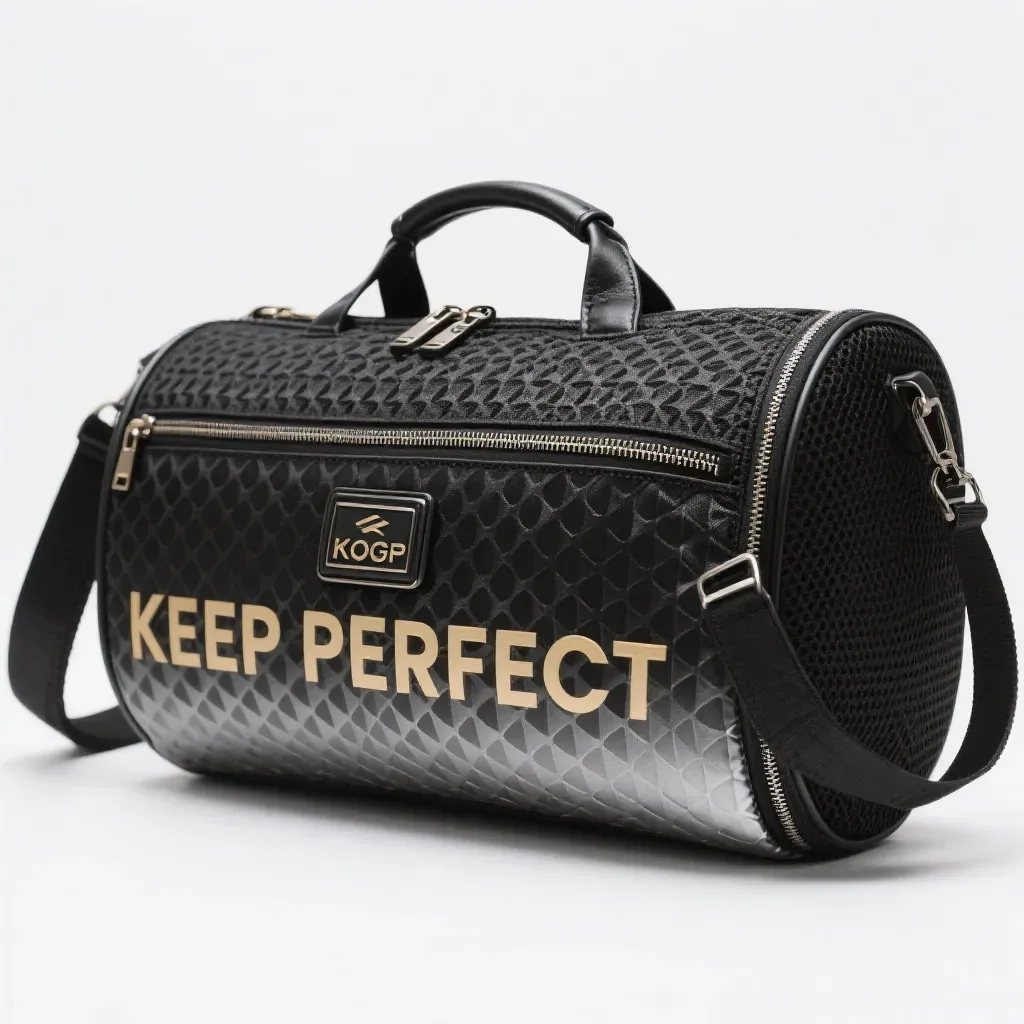
Three Capacity Bands Compared
Weekender capacity is not a single decision, because the same bag has to work as a cabin bag, a gym weekender and a two-night travel bag depending on the customer. Three bands cover the market, and the differences that matter are not the litre figures but the carry configuration and the freight cube that come with each.
| Band | Dimensions (mm) | Holds | Loaded weight | Carry configuration | Cycle time |
|---|---|---|---|---|---|
| 32 L | 460 x 280 x 250 | One night, gym kit | 9 kg | Two handles, 240 mm drop | 16.2 min |
| 45 L | 520 x 320 x 280 | Two nights, shoes, wash kit | 14 kg | Handles plus 45 mm strap | 19.6 min |
| 60 L | 580 x 360 x 320 | Long weekend, bulky coat | 18 kg | Handles plus 60 mm strap | 24.1 min |
The 45 L band is the one most programmes land on because it is the largest size that still works as a cabin bag on most carriers, and it is the smallest size that takes a pair of shoes without compressing the clothing compartment. That combination is narrow, which is why the 45 L band dominates order volumes rather than the 32 L bag that photographs better and the 60 L bag that holds more.
What 45 L Actually Holds: A Packing Test
Litres are an abstraction until they are filled. A 45 L knit weekender at 520 x 320 x 280 mm takes two shirts, a pair of trousers, a wash kit, a pair of shoes in the end compartment and a light jacket, packed in that order. Run as a physical packing test rather than a calculation, because knit compresses and a bag that measures 45 L packs more than a rigid case of the same volume.
Compression is the advantage worth naming. A knitted body yields by roughly 8 percent under packing pressure, which means a 45 L bag accepts a load that a hard-shell 45 L case rejects. That is a genuine selling point for a travel category, and it should be demonstrated on a packing test rather than claimed on a spec sheet.
The packing test also settles the compartment question, which no amount of dimension work does. A shoe compartment at one end is the feature that makes a 45 L bag work for two nights, because shoes are the item that contaminates everything else. Knitting that compartment with a coated interior and a bound mouth keeps the rest of the bag clean.
Carry Configurations Compared
Every weekender over about 35 litres needs two carry modes, because a bag that weighs 14 kg cannot be carried by hand through an airport and cannot be carried on one shoulder for long either. The standard answer is two knitted handles plus a detachable strap, and the three configurations below are the options a buyer chooses between.
Handles only
Two tubes at 240 mm drop. Cleanest look and lowest cycle time, but 14 kg in one hand is uncomfortable beyond a few hundred metres.
Handles plus 45 mm strap
The default. A detachable tube adjustable 900 to 1400 mm, rated about 560 N at the junction. Covers hand and shoulder carry.
Handles plus 60 mm strap
Used at 60 L and above. Wider tube with a padded section over the crown, for loads past 16 kg carried for longer periods.
Backpack harness
Two padded straps for hands-free carry. Adds two junctions and a load case the knitted body has to be reinforced for.
The detachable strap is the detail that keeps one body saleable in two ways. Because the strap is knitted as a tube in the same programme and attached with hardware rather than sewn in, one body can be listed as a holdall and as a shoulder bag without a second tooling or a second programme file.
Load Path at 14 kg and the 560 N Junction
At 14 kg a weekender is the heaviest loaded style in a knit range, and its load path is more complex than a tote because either carry mode can be used at any moment. Handles carry the load vertically across four junctions; the strap carries it diagonally across two. Both have to be reinforced, which is why the junction rating here is about 560 N rather than the 520 N used on a tote.
- Capacity
- 45 L at 520 x 320 x 280 mm; 32 L and 60 L bands available
- Gauge and yarn
- E7, 600D recycled polyester, 360 g/m2
- Loaded weight
- 14 kg, against a 9 kg figure at 32 L and 18 kg at 60 L
- Junction reinforcement
- 18 tighter courses at handle ends, 14 at strap ends
- Junction rating
- About 560 N under ISO 13934-1
- Base
- 900D panel with a removable 2.5 mm recycled board
- Handles
- Two knitted tubes, 240 mm drop, 28 needles on E7
- Strap
- 45 mm tube, adjustable 900 to 1400 mm, detachable
- Cycle time
- 19.6 minutes per 45 L body
- Wash shrinkage
- 2.8 percent, graded into the pattern before knitting
- Dimensional tolerance
- +/- 6 mm, applied to the washed finished state
- Compartments
- Coated shoe end, wet pocket, and a trolley sleeve at about 200 x 140 mm
- Decoration limit
- Jacquard marks hold cleanly to about 140 mm wide at E7
Eighteen courses of reinforcement at the handle ends against fourteen at the strap ends is not an inconsistency. The four handle junctions carry the full weight when the bag is lifted by hand and they are used far more often in an airport, so they take the heavier specification. The strap junctions carry a diagonal load for shorter periods.
Base and Structure: Keeping a Wide Bag Flat
A 45 L weekender is wide enough to bow in the middle when it is set down loaded, and that is the structural problem this silhouette has to solve. The base panel knits at 900D rather than the 600D body yarn, a removable 2.5 mm recycled board sits in a knitted pocket, and the wall-to-base transition graduates stitch density over 16 courses.
Floor contact is the wear hot spot, as it is on a bucket or a gym bag. The base is rated at about 24,000 rubs under ASTM D4966, which is the highest figure in a knit range, because a weekender is dragged as often as it is set down. Board thickness at 2.5 mm rather than 2.0 mm reflects the longer span it has to support.
Compartments: Shoe, Wet and Trolley Sleeve
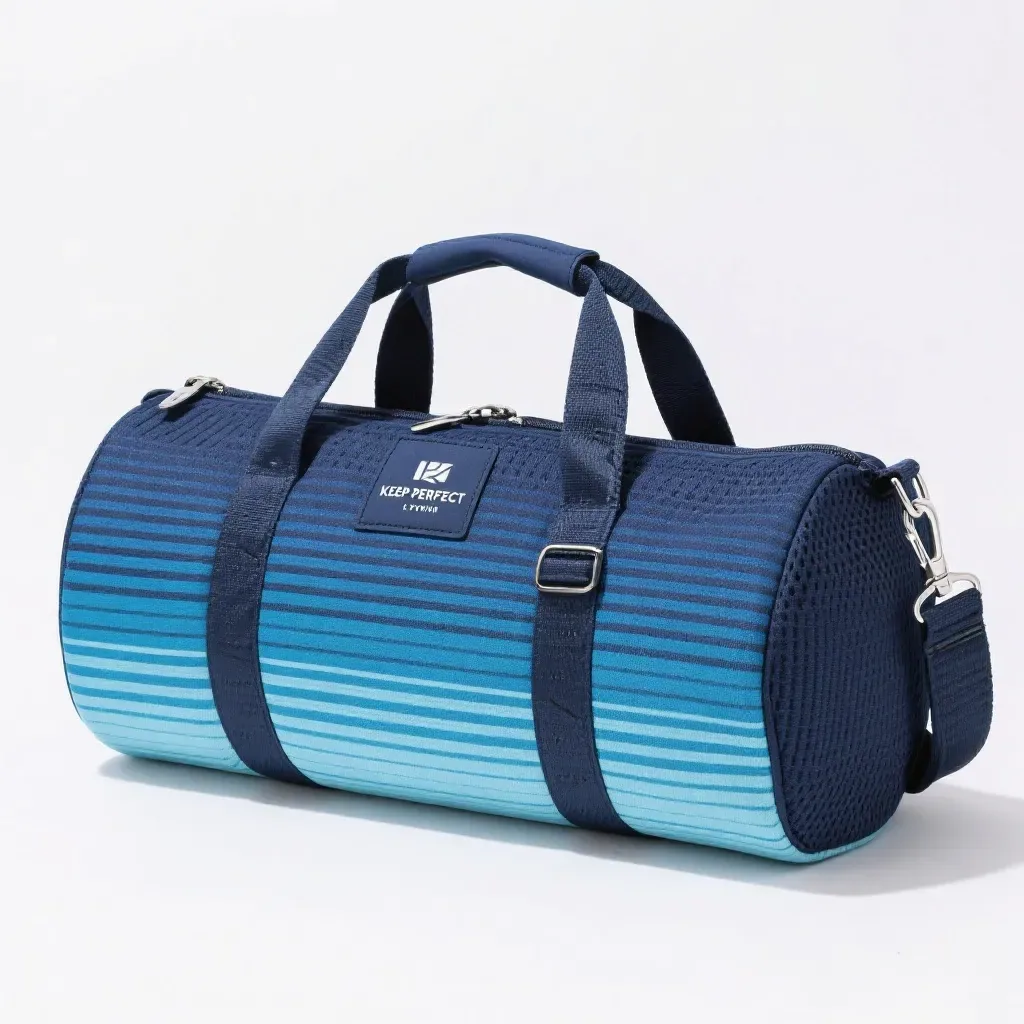
Three compartments turn a large knitted body into a travel bag. A shoe compartment at one end with a coated interior, a wet pocket for a wash kit, and a trolley sleeve on the back panel so the bag slides over a case handle. Each is knitted rather than sewn, so each adds structure without adding a seam.
The trolley sleeve is the compartment most often forgotten, and it is the one that gets noticed first at an airport. A knitted panel at 200 x 140 mm with an open top and a bound bottom edge slides over most case handles, and it lies flat against the back panel when it is not in use, so it adds no visible bulk and nothing to catch on a seat or a conveyor.
Decoration and Colour on a Large Travel Body
A 45 L body gives more decoration room than any other knit style, and that room is usually used badly. A jacquard mark holds cleanly to about 140 mm wide at E7, which is a large mark, but placing it centrally on the main face means it is partly hidden whenever the bag is carried on the shoulder. Offsetting the mark toward the top third keeps it visible in both carry modes.
Two-tone construction is the option that suits this silhouette best. Knitting the base panel, the shoe compartment mouth and the trolley sleeve in a contrast yarn gives a travel bag a technical appearance without any artwork at all, and it costs nothing beyond the second yarn feed. It also hides soiling at the base, which matters on a bag that is set down on airport floors.
Colour choice should be made with the compartments in mind. A light body with a dark base reads well and wears better than the reverse, because the areas that contact the ground are the ones that stain. Because the 100 pcs minimum applies per colourway, a two-colour body does not raise the order minimum for a first programme.
Shrinkage and Tolerance at 45 L
Wash shrinkage on a 600D body at E7 is 2.8 percent, which on a 520 mm width is about 15 mm of movement. Every panel is graded up individually so the washed bag hits its target dimension, and the tolerance of +/- 6 mm is applied to the finished washed state rather than to the state off the machine.
The 15 mm figure is worth stating to a buyer because it explains why an approval sample and a bulk bag can measure differently. A bag measured hot off the needle bed reads short, and a bag measured after washing reads at spec. Writing the measurement condition into the tech pack removes that as a source of dispute.
Compliance and Labelling for Travel Goods
A weekender sold into travel channels carries the same compliance load as a gym bag plus a fibre-content declaration that has to be accurate. OEKO-TEX STANDARD 100 covers the body, REACH Annex XVII governs the EU market, and California Proposition 65 applies to any metal hardware on the strap and the closure.
The recycled content claim needs the Global Recycled Standard behind it, because a travel buyer will ask for documentation before a percentage goes on a label. Textile Exchange publishes the standard and its transaction certificate process, and the documentation is arranged at yarn procurement rather than at shipment.
Timing, Freight and How the Weekender Fits a Capsule
Sampling runs 7 working days from an approved tech pack and bulk production runs 30 days from sample approval, on a minimum of 100 pcs per style and colourway. A 45 L body knits in about 19.6 minutes, which is the longest cycle in a knit capsule and the main reason this style sits at the top of a range on price.
Freight is the second cost to watch. A 45 L bag packs flat with the board loose, so twelve units fit a carton of roughly 640 x 440 x 320 mm, against 640 x 440 x 460 mm with boards fitted. On an air-freighted first order that difference is material, and it is why the removable board is specified here more than anywhere else.
Final inspection follows AQL 2.5 under ISO 2859-1 with travel-specific defect items: base board fit, trolley sleeve alignment, shoe compartment coating integrity and strap adjustment range. Those four catch the failures that matter on a bag used at an airport rather than in a showroom.
The weekender shares the 600D yarn and colour reference with the rest of the range, so it sits naturally beside a knitted duffel bag, a knitted gym bag and a large knitted shopper tote. One colour approval therefore covers four silhouettes at 100 pcs per style.
Plan a weekender that packs and carries
Send the trip length, capacity band and carry preference. The team returns a capacity spec, a 7-working-day sampling plan and an FOB Xiamen quote. Start a weekender programme.
Frequently Asked Questions
What capacity is a knitted weekender bag?
45 litres at 520 x 320 x 280 mm is the band most programmes choose. It is the largest size that still works as a cabin bag and the smallest that takes shoes without compressing clothing. 32 L suits one night and 60 L suits a long weekend.
How much does a 45 L weekender hold?
Two shirts, trousers, a wash kit, shoes in the end compartment and a light jacket, packed in that order. Knit yields about 8 percent under packing pressure, so it accepts a load that a rigid case of the same volume would reject. Running that as a physical packing test is better than calculating it from dimensions.
Does a weekender need both handles and a strap?
Yes above about 35 litres. A 14 kg bag cannot be carried by hand across an airport or on one shoulder for long. Two handles at 240 mm drop plus a detachable 45 mm strap adjustable to 1400 mm covers both modes. One body then lists as both a holdall and a shoulder bag with no second tooling.
How strong are weekender handle junctions?
About 560 N under ISO 13934-1 with 18 tighter courses at each handle end. That is higher than the 520 N used on a tote because a heavier load is lifted by hand far more often in travel use. The bag is lifted by hand far more often in travel use than a tote ever is.
Why do handle and strap junctions differ?
Handle ends take 18 tighter courses and strap ends take 14, because the four handle junctions carry the full weight vertically when the bag is lifted by hand, while the strap carries a diagonal load for shorter periods. Handle junctions carry the full weight vertically, strap junctions a diagonal share.
How is a wide weekender kept flat?
A 900D base panel, a removable 2.5 mm recycled board and a wall-to-base transition that graduates stitch density over 16 courses. Without all three a 45 L bag bows in the middle when it is set down loaded. Board thickness at 2.5 mm rather than 2.0 mm reflects the longer span it supports.
What compartments should a weekender have?
A coated shoe compartment at one end, a wet pocket for a wash kit and a trolley sleeve on the back panel at about 200 x 140 mm. The trolley sleeve is the one most often forgotten and the one noticed first at an airport.
How much does a weekender shrink in washing?
2.8 percent on a 600D body at E7, about 15 mm across a 520 mm width. Every panel is graded up individually and the +/- 6 mm tolerance applies to the washed state rather than to the bag off the machine. The tolerance of plus or minus 6 mm applies to the washed state, not the bag off the machine.
Why can a sample and a bulk bag measure differently?
Because knit relaxes after knitting and again after washing. A bag measured hot off the needle bed reads short, while a washed bag reads at spec, so the measurement condition has to be written into the tech pack. Writing the measurement condition into the tech pack removes it as a source of dispute.
What compliance applies to a weekender bag?
OEKO-TEX STANDARD 100 for the body, REACH Annex XVII for the EU market, and California Proposition 65 for metal hardware on the strap and closure. Recycled content claims are documented under the Global Recycled Standard. Documentation is arranged at yarn procurement rather than at shipment.
How long does a weekender take to knit?
About 19.6 minutes for a 45 L body, the longest cycle in a knit capsule, which is why this style sits at the top of a range on price. A 32 L body takes about 16.2 minutes and a 60 L body about 24.1 minutes.
What are the ordering and shipping terms?
Minimum 100 pcs per style and colourway, sampling 7 working days from an approved tech pack, bulk 30 days from sample approval. Inspection follows AQL 2.5 under ISO 2859-1 and shipment is FOB Xiamen. Inspection follows AQL 2.5 under ISO 2859-1 and boards ship loose to cut cube.
People Also Ask
Is 45 L the right weekender size for most ranges?
Usually. It is the largest band that works as a cabin bag on most carriers and the smallest that takes shoes without crushing clothing, so it covers both the travel and the gym-weekender use cases.
Does knit pack more than its stated litre figure?
Yes, by about 8 percent under packing pressure. The body yields where a rigid case does not, which is worth demonstrating on a physical packing test rather than claiming on a spec sheet.
Should the base board be removable on a weekender?
Yes, more than on any other style. Shipping it loose cuts a carton of twelve from about 640 x 440 x 460 mm to roughly 640 x 440 x 320 mm, which matters on an air-freighted first order.
Can one body be sold two ways?
Yes. Because the strap is knitted in the same programme and attached with hardware rather than sewn in, one body lists as both a holdall and a shoulder bag with no second tooling.
Why is the weekender the most expensive knit style?
Cycle time. At about 19.6 minutes for a 45 L body it uses the most line time per unit in a capsule, and the base reinforcement and compartments add material on top of that.
Sources and further reading
Every figure on this page is either our own programme data or attributed below. Open the originals before you write them into a specification.
- ASTM D4966 Abrasion Resistance of Textile Fabrics (Martindale)ASTM International Method behind the roughly 24,000-rub rating for the 900D weekender base panel.
- ASTM D5034 Breaking Strength and Elongation of Textile Fabrics (Grab Test)ASTM International Used to check the handle junctions on a 45 L weekender at 14 kg.
- OEKO-TEX STANDARD 100OEKO-TEX Limit-value testing for the 600D body yarn and the coated shoe compartment.
- Global Recycled Standard (GRS)Textile Exchange Documents the recycled content declared on the fibre label of the 600D weekender yarn.