Knitted Gym Bag Features That Matter: Airflow, Lining, Wash Cycles and Load Rating
A knitted gym bag has to solve four problems at once: airflow, a wet compartment, odour control and a 10 kg load. The specification that works is an 18 L body at E7 in 600D recycled polyester with a 150D elastane plating, E14 open-work ventilation zones at about 40 percent open area, a coated wet pocket and a removable base board. Sampling takes 7 working days, bulk 30 days, minimum 100 pcs per style and colourway, FOB Xiamen.
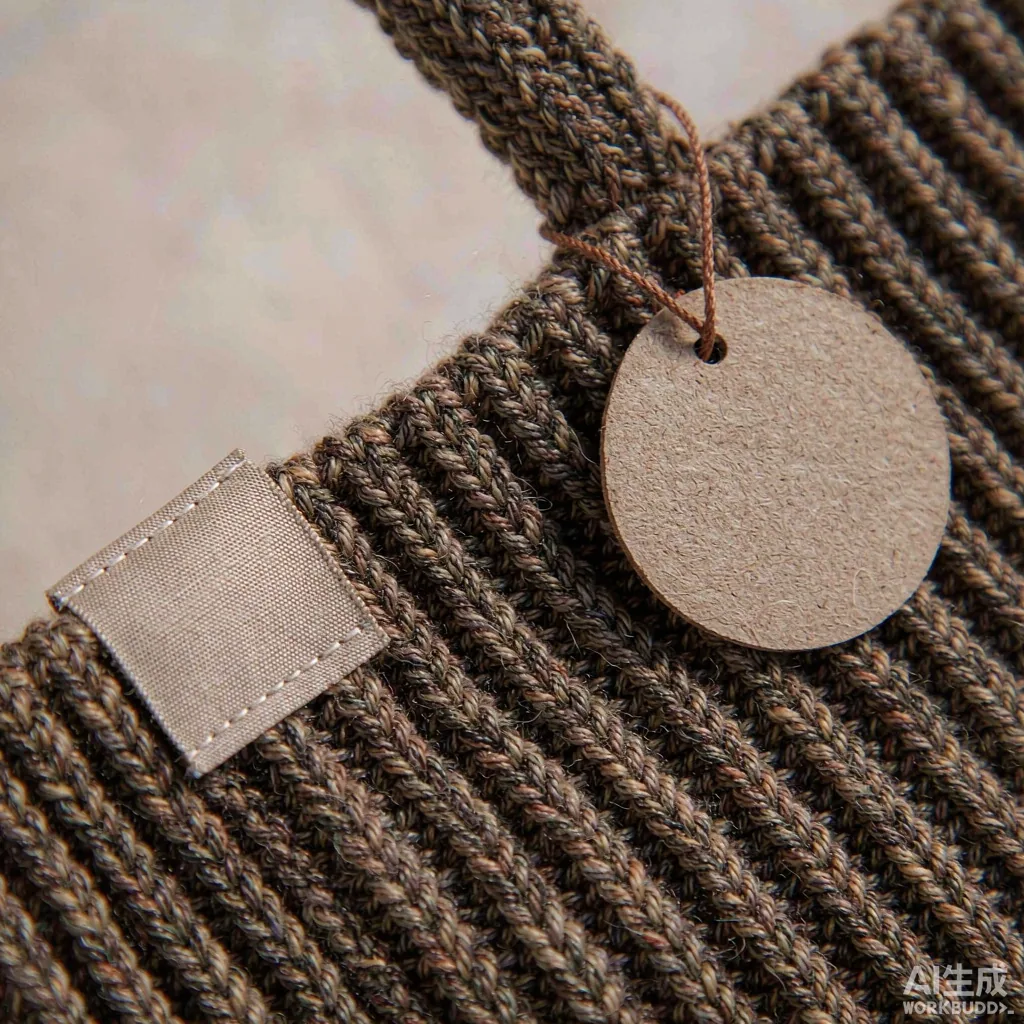
Three Gym Bag Constructions Compared
Gym bag briefs arrive with a feature list rather than a specification, so the first job is to map the list onto a construction. Three constructions cover the market: a single-layer knit with no lining, a double-layer knit with a coated wet pocket, and a knit body with a full removable liner. Each one answers the same four problems differently and each carries a different cycle time.
| Feature | Single-layer knit | Double-layer with wet pocket | Knit with full removable liner |
|---|---|---|---|
| Body weight | 280 g/m2 | 340 g/m2 | 300 g/m2 plus liner mass |
| Airflow | Good, through open-work zones | Moderate, pocket blocks one panel | Reduced while the liner is fitted |
| Wet storage | None | Coated pocket at one end | Full liner, machine washable |
| Cycle time | 11.2 min | 14.8 min | 12.6 min plus liner operation |
| Wash durability | About 25 home cycles | About 25 home cycles | Liner rated separately |
| Best end use | Light gym and yoga | Swim and training | Team kit and club programmes |
The middle column is the one most programmes land on. A single-layer body is lighter and faster but has nowhere to put wet kit, which is the single most common complaint about gym bags. A full liner solves everything but adds a secondary operation and a separate wash care instruction, which is more complexity than a 100-piece first order usually justifies.
Airflow: Knitted Open-Work Zones Against Punched Eyelets
Ventilation is the feature knit does better than cut-and-sew. Open-work zones can be knitted directly into the body at E14 while the rest of the bag runs at E7, giving roughly 40 percent open area in the panels where damp kit sits, with no eyelet hardware, no punched hole and no raw edge to fray. Punched eyelets in a woven body need grommets and leave sharp edges inside the bag.
Air permeability is measured rather than claimed, and ISO 9237 is the reference method for airflow through a textile surface. The practical target for a gym bag panel is a figure high enough that a damp towel left overnight is dry by morning. Because the open-work zones are knitted rather than cut, they also keep their shape: a punched hole elongates under load, a knitted aperture does not.
The Wet Compartment: Why a Pouch Is Not Enough
A wet compartment has to be waterproof at the seam, not just at the fabric. That is the detail that separates a pocket that works from one that leaks into the main body after the third use. The working answer is a coated knitted pocket with the coating carried up to the mouth of the pocket and a bound edge, rather than a coated panel sewn in flat, which leaves the join as the weak point.
- Capacity
- 18 L standard; 24 L for team and swim programmes
- Body gauge and yarn
- E7, 600D recycled polyester with 150D elastane plating
- Ventilation zones
- E14 open-work, 6 panels, about 40 percent open area
- Wet pocket
- Coated knit, bound mouth, coating carried above the water line
- Base
- Removable 2.0 mm recycled board in a knitted pocket
- Cycle time
- 14.8 min for the double-layer construction at 18 L
- Wash durability
- About 25 home laundering cycles to ISO 6330 4N
- Load rating
- 10 kg carried, strap junction rated about 460 N
- Shrinkage
- 2.4 percent, graded into the pattern before knitting
- Handle option
- Two tubes at 28 needles on E7, about 38 mm wide, padded over the crown
Placement matters as much as construction. Putting the wet pocket at one end rather than along a side keeps the main compartment usable when the pocket is full, and it keeps the damp load away from the strap junction, which is the area already carrying the most stress. Where a brief calls for a shoe compartment, the same construction works with a wider mouth and a stiffer board.
Odour Control and Wash Cycle Durability
Odour control on a gym bag is a finish question, and the finish has to survive washing rather than just smell neutral on day one. Antibacterial finishes are rated against ISO 20743, which measures antibacterial activity on textile products, and a buyer should ask for the rating after 25 home laundering cycles rather than on unwashed fabric. A finish that washes out in five cycles is not a feature.
Antibacterial finish
Applied to the body and the wet pocket, rated to ISO 20743 and re-tested after 25 wash cycles to confirm the finish survives laundering.
Open-work ventilation
Six knitted panels at E14 with about 40 percent open area. No hardware, no punched holes, and the apertures do not elongate under load.
Removable liner
A full liner that comes out for washing. Adds a secondary operation but lets the bag be cleaned without washing the whole body.
Ventilated base board
A 2.0 mm recycled board with drilled vent paths, so air reaches kit resting against the base and not just the sides.
The wash instruction has to be written for the finished bag, not for the fabric. A coated wet pocket, a removable board and an antibacterial finish each carry their own care constraint, and the lowest common denominator governs the label. Writing the label at spec stage avoids the situation where a bag is returned because a buyer followed an instruction the construction cannot support.
Load and Strap Logic at 18 L and 24 L
An 18 L gym bag loaded with kit, shoes and a towel typically reaches 6 to 8 kg, and a 24 L bag reaches 10 kg. At that load the strap junction, not the body, is what fails. The junction is reinforced with 14 tighter courses and rated at about 460 N under ISO 13934-1, and the strap is knitted as a 45 mm tube rather than the 32 mm default used on lighter day bags.
The base takes the second-highest load. A 2.0 mm recycled board in a knitted pocket keeps the bag from bowing when it is set down loaded, and the base panel is knitted at 900D rather than the 600D body yarn. Floor contact is the abrasion hot spot: the base is rated at about 22,000 rubs under ASTM D4966, which is the same order of figure used on a bucket bag base.
Handle geometry follows the same load logic. A 24 L bag is usually carried by two handles rather than one strap, and those handles are knitted as tubes at 28 needles on E7, roughly 38 mm wide, with a padded section over the crown. Two handles spread the load across both shoulders and stop the bag swinging, which matters more at 10 kg than at 6 kg.
Team and Club Programmes: What Changes at 24 L
A club order behaves differently from a retail one. The bag is usually one colour, carries one large mark, and is ordered in a size that swallows a full kit including shoes, which pushes capacity from 18 L to 24 L and the strap from 32 mm to 45 mm. Because the mark is large, a knitted-in jacquard is rarely sharp enough and an intarsia block is specified instead.
Numbering and personalisation are the two requests that change the production plan. A knitted number can be worked into the body per unit without a secondary operation, but it means each bag is a distinct programme file rather than one repeated file, which adds machine programming time across a run. The practical approach is to knit the body standard and add the personalisation as a removable label or patch.
Care instructions also need to be written for a club context, where bags are washed together and often hot. A 30-degree wash with no tumble dry is the instruction that protects the coated pocket and the antibacterial finish, and it should appear on a sewn label rather than only on a hangtag that is discarded at first use.
Closure Options for a Gym Bag Opening
A gym bag opening has to be wide enough to take a shoe and secure enough to survive being thrown into a car boot. A #5 coil zipper across the top is the default, with the mouth stabilised by 10 courses knitted at a tighter setting so the tape does not pucker. A drawcord top with a cord lock is lighter and faster to produce but leaves the opening loose when the bag is not full.
A magnetic or cam closure reads well on a lifestyle gym bag but is rarely strong enough at this size. Where a brief calls for a cleaner look, the answer is usually a zipper under a knitted flap rather than a closure substitute, because the flap hides the hardware without removing it. ASTM D2061 is the reference for rating zipper strength when the closure needs a number.
Labelling and Compliance for a Gym Bag
A gym bag touches skin, holds damp kit and is sold in every major market, so three compliance regimes usually apply at once. OEKO-TEX STANDARD 100 covers limit values for substances in the knitted body, California Proposition 65 matters for metal hardware and coated pockets sold into California, and REACH Annex XVII governs restricted substances for the EU market.
Fibre content labelling needs the plating yarn accounted for, not just the face yarn. A 600D recycled polyester body with a 150D elastane plating is declared as both, and the recycled claim is documented under the Global Recycled Standard so the percentage on the label can be supported. Getting this right at spec stage is faster than fixing a label after a shipment is held.
Programme Timing and Where Cost Moves
Sampling runs 7 working days from an approved tech pack and bulk production runs 30 days from sample approval, on a minimum of 100 pcs per style and colourway. The three variables that move unit cost most are the coated wet pocket, the antibacterial finish and the removable board. Removing the board saves a component and freight cube; removing the finish saves a process step.
Machine time is the fourth variable and the one buyers rarely see. The double-layer construction takes 14.8 minutes at 18 L against 11.2 minutes for a single-layer body, so roughly a third more line time per unit. Across 7 production lines running at about 200,000 pcs per month that is absorbed easily, but it is the reason a 24 L bag with every feature costs noticeably more than an 18 L bag without them.
Building the Gym Bag Into a Knit Capsule
The gym bag is the technical anchor of a knit capsule and its construction carries into adjacent styles. The open-work ventilation logic transfers to a knitted beach bag, the wet pocket transfers to a knitted weekender bag and the base board detail transfers to a knitted bucket bag. All four can share one 600D yarn lot and one colour reference.
Sharing that lot is what makes a four-style capsule at 100 pcs per style realistic for a first knit order. See the knitted bag collection for how these silhouettes are grouped and the sustainable knit bags pillar for how the recycled content claim is documented.
Spec a gym bag that survives the season
Send capacity, wet-pocket requirement and finish preference. The team returns a feature spec, a 7-working-day sampling plan and an FOB Xiamen quote. Start a gym bag programme.
Frequently Asked Questions
What capacity should a knitted gym bag use?
18 L suits training and yoga where the load is clothing and a towel. 24 L suits swim and team kit where shoes and a wet pocket are involved. An 18 L bag loaded normally reaches 6 to 8 kg and a 24 L bag reaches about 10 kg, which changes the strap specification.
How is airflow built into a knitted gym bag?
By knitting open-work zones at E14 into a body that otherwise runs at E7, giving about 40 percent open area in the panels where damp kit sits. There is no eyelet hardware and no punched hole, and the knitted apertures do not elongate under load.
Why does a wet pocket leak after a few uses?
Usually because the coating stops short of the pocket mouth or the panel was sewn in flat. The coating has to be carried above the water line and the mouth bound, so the join is not the weakest point in an otherwise waterproof compartment. The coating should be carried above the water line so the join is not the weakest point.
Does an antibacterial finish survive washing?
It should be rated to ISO 20743 and re-tested after 25 home laundering cycles rather than on unwashed fabric. A finish that washes out after five cycles is not a feature, and the test report should show the figure after washing. The test report should show the figure after washing rather than on unwashed fabric.
What strap width does a gym bag need?
45 mm rather than the 32 mm used on lighter day bags, because a loaded gym bag reaches 8 to 10 kg. The junction is reinforced with 14 tighter courses and rated at about 460 N under ISO 13934-1. Two handles at 38 mm spread the load further and stop the bag swinging against the leg.
How is the gym bag base protected?
The base panel knits at 900D instead of the 600D body yarn and is rated at about 22,000 rubs under ASTM D4966. A 2.0 mm recycled board sits in a knitted pocket to stop the bag bowing when it is set down loaded.
Which closure works best on a gym bag opening?
A #5 coil zipper across the top, with 10 courses knitted at a tighter setting to stabilise the mouth so the tape does not pucker. A drawcord top is lighter but leaves the opening loose when the bag is not full. A zipper under a knitted flap hides the hardware without giving up the closure.
What compliance applies to a knitted gym bag?
Three regimes usually apply together: OEKO-TEX STANDARD 100 for the knitted body, California Proposition 65 for metal hardware and coated pockets, and REACH Annex XVII for the EU market. Fibre content must declare the plating yarn as well as the face yarn. Fibre content must declare the plating yarn as well as the face yarn on the label.
How long does a gym bag programme take?
Sampling takes 7 working days from an approved tech pack and bulk runs 30 days from sample approval. The minimum is 100 pcs per style and colourway, and shipment is FOB Xiamen with CIF and DDP available. Shipment is FOB Xiamen, with CIF and DDP quoted where a landed figure is needed.
What moves the unit cost most on a gym bag?
The coated wet pocket, the antibacterial finish and the removable board, in that order. Machine time is the hidden fourth variable: 14.8 minutes for the double-layer build against 11.2 minutes for a single layer. Across seven lines running at about 200,000 pcs a month that difference is absorbed easily.
Can the base board ship separately?
Yes. The 2.0 mm recycled board lifts out of its knitted pocket so the bag ships flat, cutting carton cube by roughly a third. It is fitted at the destination warehouse or at the retail back of house. It is fitted at the destination warehouse or at the retail back of house.
How many wash cycles should a gym bag survive?
About 25 home laundering cycles to ISO 6330 4N is the working target for the body, with the antibacterial finish re-checked after the same number. Shrinkage across those cycles is 2.4 percent, graded into the pattern. The antibacterial finish is re-checked after the same number of cycles before sign-off.
People Also Ask
Is a knitted gym bag better ventilated than a woven one?
Generally yes, because ventilation can be knitted in as open-work structure rather than added as hardware. E14 panels in an E7 body give about 40 percent open area with no grommets and no raw edges inside the bag.
Should a gym bag have a removable liner?
Only for team or club programmes where the bag is washed often. It adds a secondary operation and a separate care instruction, which is more complexity than a 100-piece first order usually needs.
Why is the wet pocket placed at the end of the bag?
It keeps the main compartment usable when the pocket is full and keeps the damp load away from the strap junction, which already carries the highest stress in the whole bag.
What abrasion figure should a gym bag base carry?
About 22,000 rubs under ASTM D4966, achieved by knitting the base at 900D rather than the 600D body yarn. Floor contact is the abrasion hot spot on any bag that is set down loaded.
Can a gym bag share a yarn lot with other styles?
Yes. The 600D recycled polyester used on the body carries into beach, weekender and bucket styles, so one colour approval covers a four-style capsule at 100 pcs per style.
Sources and further reading
Every figure on this page is either our own programme data or attributed below. Open the originals before you write them into a specification.
- OEKO-TEX STANDARD 100OEKO-TEX Limit-value testing applied to knitted gym bag bodies that hold damp kit against skin.
- Proposition 65 ListCalifornia OEHHA Checked against metal hardware and coated wet pockets sold into California.
- ASTM D4966 Abrasion Resistance of Textile Fabrics (Martindale)ASTM International The method behind the roughly 22,000-rub rating for the 900D gym bag base.
- Global Recycled Standard (GRS)Textile Exchange Documents the recycled content declared on the fibre content label of the 600D body yarn.