Knit Bag Quality Control: Building an AQL 2.5 Inspection and Test Protocol for Seamless Knitted Bags
Knit bag quality control is easiest to understand through one real failure. A European retail buyer ordered 12,000 seamless knitted gym totes, specified AQL 2.5 to ISO 2859-1, received 315 units inspected at general inspection level II — and still shipped a pallet that came apart at the handle root. The inspection had been honest; the protocol was incomplete. This guide rebuilds that protocol properly: acceptance limits frozen before production, AQL 2.5 sampling explained cell by cell, abrasion to ISO 12947, tensile to ISO 13934-1, tear to ISO 13937-2, colour fastness to ISO 105 and AATCC 8, plus a defect classification that actually fits knitted structures.
The Shipment That Nearly Went Out
A single case explains the whole subject: a 12,000-piece knitted gym tote passed an honest AQL 2.5 inspection and still reached store with handle roots pulling out at 180 N, because the purchase order defined appearance criteria in detail and never defined a mechanical acceptance limit for the one joint carrying the load.
The programme had been built sensibly in every other respect. The buyer had frozen a dimensioned drawing, asked for grades on colour fastness, specified a developed sample, and arranged pre-shipment inspection with an independent agency. The inspector worked from a checklist six pages long covering panel dimensions, print placement, stitch count, thread ends and carton marking. Nothing on those six pages described how hard you could pull on a handle before it failed.
That is a very common shape of problem. AQL sampling is a statistical filter for visible defects, not a strength test. Inspecting 315 pieces from a lot of 12,000 and finding fewer than 15 major defects tells you the lot looks acceptable. It says nothing whatsoever about whether a weld point, a bar-tack, or a loop-to-webbing interface will hold 8 kg of equipment on day eleven.
The resolution, once the parties stopped arguing about blame, was structural. The protocol was rebuilt around two tracks running in parallel: attribute inspection to AQL 2.5 under ISO 2859-1 for appearance and construction, plus laboratory testing to named methods for the mechanical properties that inspection cannot observe. That two-track structure is what the rest of this guide describes, and it is the lowest-cost piece of paperwork in any bag programme.
Four Rules That Case Establishes
The rules that come out of that case are four: define mechanical limits as numbers rather than adjectives, run attribute inspection and laboratory testing as parallel tracks, classify defects against knitted structure rather than against sewn construction, and require both tracks to close before any certificate of inspection is issued.
- Every load-bearing joint carries a numeric acceptance limit. If the handle root has no stated newton figure, it has no acceptance limit at all.
- Attribute inspection and laboratory testing are different disciplines. A visual checklist cannot substitute for a pull-off-tester reading.
- Knitted defects need their own taxonomy. Dropped stitches, ladders and course variation have no meaningful equivalent in woven sewn goods.
- Both tracks close before release. An inspection report without attached test results is only half a release document.
Those four rules cost nothing to adopt and remove most of the disputes that follow a disputed shipment. They also change behaviour upstream. Once a numeric handle pull figure exists in writing, the construction is engineered to meet it during development rather than argued about afterwards.
For buyers still deciding how to compare different constructions before reaching quality control, the knit vs traditional bags reference sets out how substrate choice changes the test profile, and the knit bag sourcing guide explains where these acceptance limits belong in the RFQ.
Setting Acceptance Limits Before Production Starts
Acceptance limits must exist in writing before bulk knitting begins, because every limit agreed afterwards becomes a negotiation rather than a specification — and negotiations about whether something is acceptable are resolved by whoever is holding the goods, not by whoever is right.
- Fabric weight
- 320 g/m², tolerance ±12 g/m²
- Abrasion resistance
- 30,000 rubs minimum, ISO 12947-2, 9 kPa
- Grab tensile
- 620 N minimum, ISO 13934-1
- Tear resistance
- 32 N minimum, ISO 13937-2
- Rubbing fastness
- Grade 4 dry, Grade 3-4 wet, ISO 105-X12
- Laundering fastness
- Grade 4 after 5 cycles, AATCC 61 method 2A
- Light fastness
- Grade 4, ISO 105-B02, 40 hours xenon
- Handle root strength
- 250 N minimum, 5 cycles
- Dimensional change
- within ±3% after relaxation and wash
- Colour difference
- Delta E no more than 1.5 under D65
- Inspection level
- General level II, single sampling, AQL 2.5
Two of those rows are the ones most often missing from a real purchase order: handle root strength and dimensional change. The first is the joint that fails in the field. The second is the reason a bag that measured perfectly at inspection changes size in a humid warehouse three weeks later, particularly at the panel tolerances typical of carry products.
Notice also that each row names its method. A tensile figure without ISO 13934-1 beside it is not comparable, because strip testing and grab testing return different numbers on identical fabric, sometimes by more than 20%. Writing the method into the row is the lowest-cost way to prevent a later argument about whether a result passes.
AQL 2.5 Under ISO 2859-1: How Sampling Actually Works
AQL 2.5 means that at general inspection level II with single sampling, a lot of 12,001 to 35,000 pieces draws 315 samples and is accepted when 14 or fewer defects are found and rejected at 15 — the sample-size code and the accept-reject pair both come from the lot size, not from buyer preference.
The standard is built on code letters. Lot size determines a letter, the letter determines the sample size, and the sample size plus the chosen AQL determines the accept and reject numbers. Nobody invents a number in this chain, which is precisely what makes it useful as a shared reference across parties that have never met.
| Lot size | Code letter | Sample size | Accept | Reject |
|---|---|---|---|---|
| 501 to 1,200 pcs | J | 80 | 5 | 6 |
| 1,201 to 3,200 pcs | K | 125 | 7 | 8 |
| 3,201 to 10,000 pcs | L | 200 | 10 | 11 |
| 10,001 to 35,000 pcs | M | 315 | 14 | 15 |
| 35,001 to 150,000 pcs | N | 500 | 21 | 22 |
AQL itself is frequently misread. An acceptance quality limit of 2.5 does not promise that only 2.5% of units are defective. It describes a sampling risk allocation: lots at or better than 2.5% defective will usually be accepted, and the plan is designed around that protection for the producing side paired with switching rules that tighten when quality slips.
Those switching rules are the part most buyers forget to specify. Normal inspection tightens to tightened inspection after a defined run of accepted lots, and can relax to reduced inspection after consistently good results. Writing into the contract that tightened inspection applies after two rejections out of five consecutive lots gives the protocol teeth that a single static AQL figure does not have.
Abrasion Testing to ISO 12947: Reading Martindale Numbers
A Martindale result only means something once four parameters are stated together: the endpoint, the applied pressure, the abrasive fabric and the part of ISO 12947 used — typically 9 kPa with standard wool abrasive and a two-thread-break endpoint under ISO 12947-2, giving 30,000 rubs as the working target for a 600D knitted body.
ISO 12947-1 defines the apparatus and auxiliary materials, while parts 2 through 4 define how specimens are abraded, how mass loss is determined and how appearance change is assessed. A report quoting a rub count without naming which part it followed should be treated as uninformative, because rub counts from different parts are not interchangeable.
Endpoint definition
A specification should say what failure looks like. Two-thread break is the usual endpoint for bag knits, but fabric breakdown and mass loss are also permitted, and they return noticeably different counts on identical fabric.
Applied pressure
9 kPa is the standard figure for apparel-weight panels and the practical figure for bag bodies. Some specifications quote 12 kPa, which pushes results down by a material margin, so always compare like against like.
Abrasive fabric
Standard wool abrasive is default. Substituting a different abrasive changes the count considerably, which is why requests should name standard wool rather than simply Martindale tested.
Specimen orientation
Knitted fabric is anisotropic. Course direction and wale direction abrade differently, so specimens should represent the orientation actually exposed to wear, usually the base and handle contact zone.
Report age
A report is evidence about one yarn lot at one gauge. Anything older than 12 months should be refreshed, particularly where recycled content suppliers rotate between batches.
Base and edge
Bag structures wear at folds and edges far earlier than at flat mid-panel. Testing the flat panel alone systematically overstates field performance, so include a folded specimen where relevant.
Seamless knitting has one specific advantage here and one specific risk. The advantage is that there is no sewn seam sitting across the highest-abrasion path, since the base transitions into the body through knit structure rather than through a stitched join. The risk is that loop relief concentrates abrasion on the raised wales, which is why the stitch structure used at the base usually differs from the mid-panel structure.
Tensile, Tear and Seam Strength: Three Different Questions
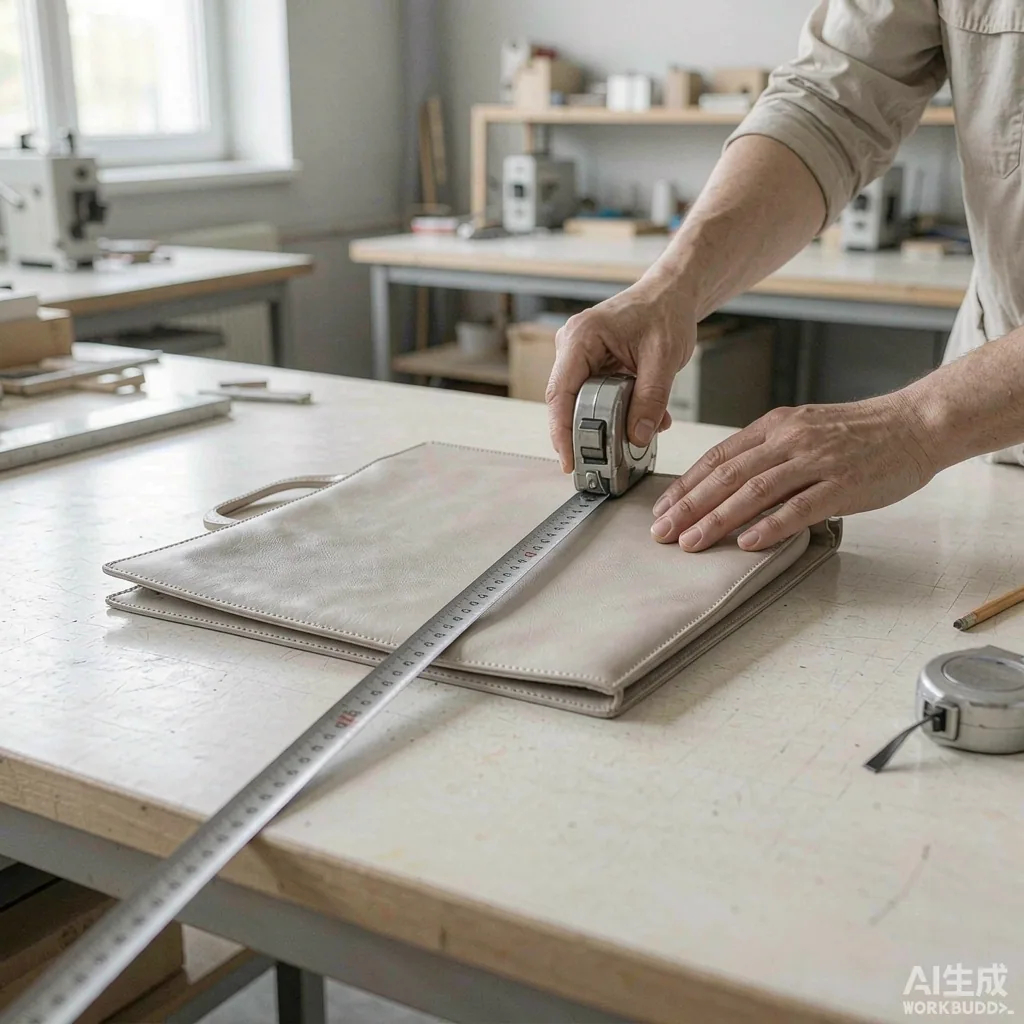
Tensile, tear and seam strength answer three distinct questions, and specifying only one of them leaves the other two unanswered: grab tensile to ISO 13934-1 describes how much load the panel holds, tear resistance to ISO 13937-2 describes how a nick propagates, and handle pull-off describes whether the load path to the shoulder actually survives.
ISO 13934-1 is the strip method: a 50 mm wide specimen, a 200 mm gauge length and a 100 mm per minute extension rate. ASTM D5034 is the grab method used across much of North America, running at roughly 300 mm per minute. Both are valid, both are widely accepted, and the numbers they produce on one fabric are not directly comparable, so name exactly one on the purchase order.
Tear behaviour is where knitted structure departs most sharply from woven. A ripstop relies on a reinforcement grid to stop propagation; a knit relies on loop geometry, and a single broken loop can release its neighbours down the wale. That is exactly why an anti-ladder stitch is programmed under high-stress zones, and why tear resistance should be tested in both course and wale direction.
- Panel strength: 620 N grab minimum to ISO 13934-1, tested with the specimen representing the base contact zone.
- Tear resistance: 32 N minimum to ISO 13937-2, tested in both course and wale directions, low result reported.
- Handle root: 250 N minimum held for 5 cycles, measured at the exact geometry the finished bag uses.
- Webbing joint: where webbing is inserted rather than knitted, test the joint rather than the webbing alone.
- Anti-ladder check: propagate one deliberately broken loop and confirm the structure arrests rather than runs.
Colour Fastness to ISO 105 and AATCC 8, 61 and 16
Colour fastness should be specified as four separate grades rather than one — typically Grade 4 dry and Grade 3-4 wet rubbing to ISO 105-X12 or AATCC 8, Grade 4 after five accelerated laundering cycles to AATCC 61 method 2A, and Grade 4 light fastness after roughly 40 hours of xenon arc exposure to ISO 105-B02.
Disperse-dyed polyester behaves differently from cotton here, and programmes switching from canvas to knit often over-specify as a result. PET holds disperse dye well and generally reaches Grade 4 rubbing comfortably. The wet rating is typically half a grade lower, and that is normal and acceptable for retail rather than a defect — specifying Grade 4 wet as well is often specifying something unnecessary.
Light fastness becomes relevant for bags displayed near windows or used outdoors. ISO 105-B02 uses xenon arc exposure and compares against blue wool references, and a fabric rating one grade below its target may still be entirely fit for purpose indoors. Match the requirement to actual product exposure rather than to habit.
| Property | Method | Working target | Notes |
|---|---|---|---|
| Rubbing, dry | ISO 105-X12 / AATCC 8 | Grade 4 | Crockmeter, white cotton cloth |
| Rubbing, wet | ISO 105-X12 / AATCC 8 | Grade 3-4 | Half a grade below dry is normal for PET |
| Laundering | AATCC 61 method 2A | Grade 4 | Accelerated domestic wash cycles |
| Light exposure | ISO 105-B02 | Grade 4 | Xenon arc, around 40 hours |
| Perspiration | ISO 105-E04 | Grade 4 | Relevant for gym and strap contact |
| Water spotting | ISO 105-E07 | Grade 4 | Relevant for outdoor and beach programmes |
Dimensional Stability, Weight and Panel Geometry
Dimensional change should be limited to ±3% after relaxation and washing, measured on the finished panel after 48 hours of rest rather than straight off the machine, because loop geometry relaxes about 1.5 to 2.5% in the first two days and measuring too early inflates every subsequent tolerance problem.
Weight carries its own tolerance, typically ±12 g/m² around a 320 g/m² target. This matters more than it appears: a panel running 12 g/m² light across 20,000 units represents roughly 300 kg of yarn not delivered, and it usually shows up in accelerated abrasion results rather than in anything visible.
Panel geometry for knitted bags covers three checks that have no woven equivalent: course alignment, measured as skew across the panel width; loop density consistency, compared between the start and the end of a lot; and edge condition at the transition between structures. All three are visible under reasonable light and belong on the attribute inspection checklist.
Specify that panels rest for at least 48 hours at ambient temperature before any dimension is verified. Measuring immediately after knitting captures relaxation as a failure, which then gets argued about for weeks and corrected by nothing more than time.
Defect Classification for Knitted Structures
A usable defect taxonomy for knit bags has three classes — critical defects that create safety or regulatory exposure at zero tolerance, major defects that shorten service life at AQL 2.5, and minor defects affecting appearance only at AQL 4.0 — and the knitted-specific entries belong in the major and minor classes rather than being absorbed into generic terminology.
Generic checklists borrowed from sewn goods miss the failure modes that actually occur. A generic list asks about broken stitches and open seams; a knit list needs to ask about dropped stitches, ladders longer than a defined number of courses, course density variation within one panel, yarn contamination from a neighbouring colour, and bar-tack coverage at the handle root.
| Class | AQL | Typical defects on knit bags |
|---|---|---|
| Critical | 0 | Sharp or protruding metal, lead above CPSIA limits, restricted azo dye above REACH Annex XVII limits, missing child-safety warning |
| Major | 2.5 | Handle root failure below 250 N, ladders running more than 5 courses, open structure at the base transition, wrong dimensions beyond tolerance, print adhesion failure |
| Minor | 4.0 | Loose yarn ends longer than 5 mm, slight course skew within tolerance, minor colour variation above Delta E 1.5 but below 2.0, light creasing from packing |
Setting minor defects at AQL 4.0 rather than 2.5 is deliberate. It concentrates inspection sensitivity where it affects the customer's experience of the product and avoids rejecting lots over differences nobody will ever notice — a pattern that, applied too strictly, ends with every lot rescreened and every shipment late.
The Inspection Report: What Must Be on It
A release-worthy inspection report carries nine elements: the standard cited with its edition, lot size and sample size, the accept and reject numbers applied, findings by defect class with photographs, referenced ISO or AATCC test reports, the laboratory accreditation number, carton count and packing details, the inspector's identity, and a conclusion stated as accept, reject or hold.
Missing accreditation number is the most common gap. Test reports should come from a laboratory accredited to ISO/IEC 17025, because accreditation means an external body has assessed competence and method control, not merely that the equipment exists. A report from an unaccredited laboratory still has value, but considerably less weight if the numbers are later contested.
Photographs deserve equal attention. They should be labelled with the defect classification, and preferably include one shot showing the defect in context rather than every image as a close crop. Nearly every later disagreement is about scale and frequency, and context photographs settle both quickly.
Finally, record how the conclusion was reached. Where a lot is held rather than accepted, the report should state what would resolve it: rework with 100% screening of a named defect, a price adjustment agreed in writing, or replacement of a stated number of units. Without that, a hold simply becomes a slower rejection with more emails attached.
Running the Two Tracks Together on a Live Programme
In practice the two tracks run on one timeline: approval samples are tested before the first bulk panel is knitted, in-process defects are logged daily against the defect classes above, attribute inspection happens at around 80% packing completion or later, and laboratory samples are drawn from the production lot rather than from retained development inventory.
Drawing test samples from production rather than from development stock is the point most often skipped, and it is the single largest source of optimistic results. Development samples were knitted on a machine set up for minutes; production was knitted on machines running for hours. Testing the first tells you nothing reliable about the second.
Then close both tracks together. With 7 working days allocated to sampling, 30 days to bulk production and lots inspected to AQL 2.5 under ISO 2859-1, the whole protocol fits comfortably inside a standard programme calendar — provided the mechanical limits were written down at RFQ stage, which is the one step nobody can retrofit.
Require three retained counter-samples per lot, signed off by both parties and held for 24 months. When a claim arises twelve months after delivery, a signed retained sample settles in a day what correspondence could not resolve in a quarter.
Build the protocol with us
Send a specification and expected order volume, and the team will return a proposed acceptance limit table with ISO and AATCC methods named for each row, so the inspection covers the joints that actually carry load and not only the visible surface.
Frequently Asked Questions
What does AQL 2.5 mean for a knit bag shipment?
AQL 2.5 is an acceptance quality limit used with ISO 2859-1 sampling tables. At general inspection level II with single sampling, a lot of 12,001 to 35,000 pieces draws 315 units, accepts with 14 or fewer defects and rejects at 15. It describes sampling risk allocation rather than a guaranteed defect percentage.
How many bags should be inspected from a lot of 12,000 pieces?
Under ISO 2859-1 at general inspection level II, a lot in the 10,001 to 35,000 range uses code letter M and a sample size of 315 pieces. With AQL 2.5 the lot accepts at 14 defects and rejects at 15. Always state the inspection level, single or double sampling, and the normal or tightened state.
Which ISO standard covers Martindale abrasion testing?
ISO 12947 covers the Martindale method in several parts. Part 1 specifies the apparatus and auxiliary materials, while parts 2 through 4 cover specimen breakdown, mass loss and appearance assessment. A bag programme normally quotes part 2 with a 9 kPa load, standard wool abrasive and a two-thread-break endpoint.
How many Martindale rubs should a knitted tote reach?
A 600D PET knit body generally targets 30,000 rubs to ISO 12947-2 at 9 kPa with standard wool abrasive and a two-thread-break endpoint. Base and folded zones abrade earlier than flat mid-panel areas, so including a folded specimen in the test plan avoids overstating the result relative to field behaviour.
What is the difference between ISO 13934-1 and ASTM D5034?
ISO 13934-1 is the strip method, using a 50 mm specimen, 200 mm gauge length and 100 mm per minute extension. ASTM D5034 is the grab method widely used in North America, running at roughly 300 mm per minute. Both are accepted, but results are not interchangeable, so name one method per purchase order.
Why do knitted bags develop ladders when snagged?
Knitted fabric consists of interlocking loops, so a broken loop can release the loops below it along the wale. Specifying anti-ladder stitch in high-stress zones usually arrests propagation. Tear resistance should then be tested to ISO 13937-2 in both course and wale direction, with the lower result reported.
Which colour fastness grades should I specify?
Four separate grades work well for a 600D PET knit: Grade 4 dry and Grade 3-4 wet rubbing to ISO 105-X12 or AATCC 8, Grade 4 after five AATCC 61 method 2A laundering cycles, and Grade 4 to ISO 105-B02 after around 40 hours of xenon exposure. Perspiration matters for gym programmes.
How should defects be classified on a knit bag inspection?
Use three classes: critical defects at zero tolerance for safety and regulatory exposure, major defects at AQL 2.5 where service life shortens, and minor appearance defects at AQL 4.0. Knitted-specific entries include ladders longer than five courses, course density variation, yarn contamination and bar-tack coverage at the handle root.
What handle strength should a knitted tote be tested to?
A working figure is 250 N minimum held for five cycles, measured at the exact geometry of the finished bag rather than on a flat webbing coupon. The joint, not the fabric, is nearly always the limiting factor, so bar-tack coverage at the root deserves explicit coverage in both the specification and the checklist.
How long should panels rest before dimensions are measured?
Panels should rest for at least 48 hours at ambient temperature before any dimension is verified. Loop geometry relaxes roughly 1.5 to 2.5% during that first period, and measuring too early records normal relaxation as a defect. Dimensional change after washing should stay within plus or minus 3%.
What should a complete inspection report contain?
Nine elements: the standard with edition, lot size and sample size, the accept and reject numbers, findings by defect class with labelled photographs, referenced ISO or AATCC test reports, the ISO/IEC 17025 accreditation number, packing details, inspector identity, and a clear accept, reject or hold conclusion.
How often should laboratory tests be repeated?
Refresh any report older than 12 months, and repeat testing whenever yarn lot, gauge or dye lot changes. A certificate describes one lot at one gauge, so report validity follows the material rather than the calendar alone. This matters particularly where recycled content suppliers rotate between batches.
Should testing samples come from production or retained stock?
Always from the production lot. Development samples were knitted on a machine set up for minutes, while production machines run for hours. Testing retained development inventory systematically flatters results and is one of the largest sources of a shipment passing inspection yet underperforming in use.
How is tightened inspection triggered under ISO 2859-1?
ISO 2859-1 includes switching rules that move between normal, tightened and reduced inspection based on consecutive lot outcomes. Because the exact thresholds should be contractual, write them into the purchase order, for example applying tightened inspection after two rejections among five consecutive lots.
Do critical defects use the same AQL as appearance defects?
No. Critical defects carry zero tolerance because they involve safety or regulatory exposure such as lead above CPSIA limits or restricted azo dyes above REACH Annex XVII thresholds. Appearance-only issues usually sit at AQL 4.0, while functional failures belong at AQL 2.5, keeping inspection sensitivity where customers notice it.
What does a held inspection conclusion mean in practice?
A hold should name what resolves it: rework with 100% screening of a stated defect, a written price adjustment, or replacement of a stated number of units. Without that, a hold simply becomes a slower rejection. Require the report to state the route rather than leaving the outcome open to later negotiation.
People Also Ask
What is AQL 2.5 in bag quality control?
AQL 2.5 is an acceptance quality limit used with ISO 2859-1 sampling tables. For a lot of 12,001 to 35,000 pieces at general inspection level II, inspectors draw 315 units and accept with 14 or fewer defects, rejecting at 15. It allocates sampling risk rather than guaranteeing defect percentages.
Which tests matter most for knitted bags?
Abrasion to ISO 12947-2, typically 30,000 rubs at 9 kPa, grab tensile to ISO 13934-1 around 620 N, tear to ISO 13937-2 around 32 N, and colour fastness to ISO 105-X12 or AATCC 8. Handle root pull strength matters as much, since most field failures are joint failures rather than fabric failures.
How do you inspect a seamless knitted bag?
Run two parallel tracks: attribute inspection to AQL 2.5 under ISO 2859-1 covering dimensions, course alignment, ladders and finish, plus laboratory testing to named ISO and AATCC methods for mechanical properties. Draw production-lot samples rather than development stock to avoid optimistic results.
Why do knitted bags pass inspection but fail in use?
Because attribute inspection checks appearance, not strength. Visual criteria detect ladders, ends and skew, but cannot read whether a handle root survives load. Programs that specify numeric acceptance limits, such as 250 N held for five cycles, usually resolve this along with the correct ISO of the test method.
What is ISO 2859-1 used for?
ISO 2859-1 defines attribute sampling schemes indexed by acceptance quality limit for lot-by-lot inspection. It sets lot-size code letters, sample sizes and accept or reject numbers, plus switching rules between normal, tightened and reduced inspection. Note that edition should always be cited explicitly in contracts.
Sources and further reading
Every figure on this page is either our own programme data or attributed below. Open the originals before you write them into a specification.
- ISO 2859-1:1999 — Sampling procedures for inspection by attributes, Part 1: AQL-indexed sampling schemesISO Source of the general inspection level II code letters and the accept-reject pairs used in this guide.
- ISO 2859-1 (current revision) — Sampling schemes indexed by acceptance quality limitISO Current edition following the withdrawal of ISO 2859-1:1999 in 2026; always cite the edition in inspection contracts.
- ISO 12947-1:1998 — Martindale abrasion testing apparatusISO Defines the apparatus and auxiliary materials behind the 30,000-rub abrasion targets quoted here.
- AATCC colorfastness test methodsAATCC AATCC 8 rubbing and AATCC 61 accelerated laundering, the North American equivalents referenced alongside ISO 105.
- OEKO-TEX STANDARD 100OEKO-TEX (Hohenstein) Restricted substance testing; certificate numbers resolve on the OEKO-TEX verification page.
- Regulation (EU) 2024/1781 — Ecodesign requirements for sustainable productsEUR-Lex (European Union) Drives declared durability evidence, which makes documented test reports part of EU market access rather than optional.
How the Original Programme Ended
The gym tote programme recovered, and it is worth knowing how. Handle roots were re-engineered with wider bar-tack coverage, an anti-ladder stitch was programmed under the load path, and a numeric 250 N acceptance limit was written into the specification. Nothing about the visual appearance changed at all, which is a fair summary of how most genuine quality improvements actually look.
The second insight was about cost. The whole remediation cost less than the margin earned on the order, while the aviation for shipping replacement stock would have cost considerably more. Written acceptance limits are inexpensive protection, and they are least expensive when agreed at RFQ stage rather than negotiated once goods are already built.
The third was that none of it was adversarial once the numbers existed. Arguments about quality are almost always arguments about unstated expectations. Put the newtons, the grades, the tolerances and the methods into one table before knitting starts, and most of the conflict in this category simply never arises.