Sustainable Knit Bags: Recycled Content, Certification, Compliance and Claim Proof, Answered Question by Question
Sustainable knit bags rest on four testable things: recycled input verified by a chain of custody, restricted-substance compliance in the finished article, evidence for any claim printed on the label, and a construction route that wastes less material than cutting. Knitted construction has one structural advantage here because the body is knitted to shape rather than cut from cloth. The commercial frame is unchanged: MOQ 100 pcs per style or colourway, sampling 7 working days, bulk 30 days, AQL 2.5 to ISO 2859-1, FOB Xiamen.
What Does Sustainable Actually Mean for a Knitted Bag?
For a knitted bag, sustainability means four measurable things: verified recycled input, documented restricted-substance compliance, honest end-of-life design, and a claim on the label that survives audit. Anything that cannot be shown on a certificate or measured in a test belongs in brand language, not in a specification. Buyers should treat each of the four as a separate line item in the brief, because they are sourced separately and evidenced separately.
- Recycled input: proven through a recognised standard with a transaction certificate attached to the shipment.
- Compliance: demonstrated against the restricted-substance rules of the destination market, not just against the fibre mill's declaration.
- End of life: designed as a single material family wherever the product architecture allows it.
- Claim honesty: every number printed on a label, hangtag or product page traceable to a certificate date.
The order matters as much as the list. Input and compliance are bought, evidenced and audited separately, and mixing them is how programmes lose their audit trail. A bag can carry certified recycled yarn and still fail a restricted-substance test on its hardware, which is why the finished article needs testing rather than assumed.
How Much Recycled Content Can a Knitted Body Carry?
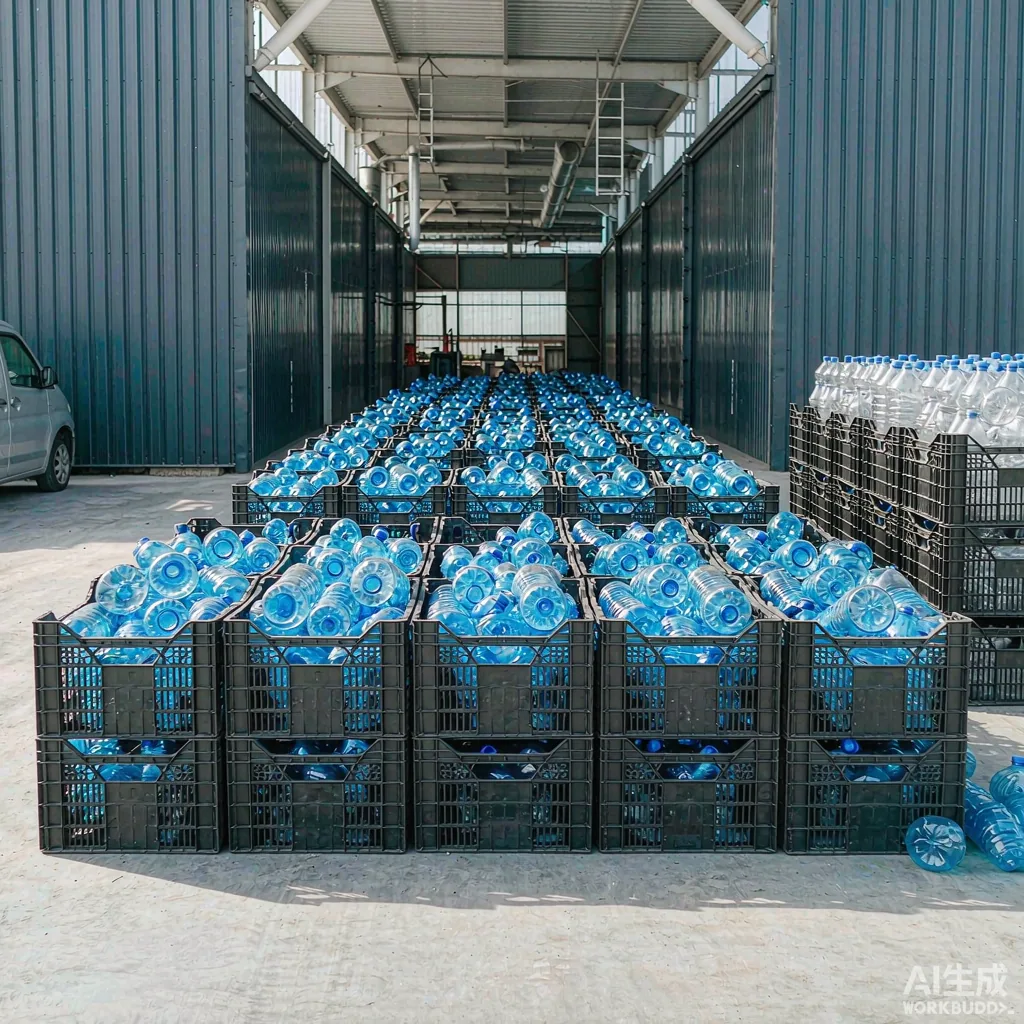
A knitted body can run at high recycled content without losing strength, because the yarn rather than the structure carries the load. Textile Exchange sets the Global Recycled Standard above the Recycled Claim Standard, requiring at least 50% certified recycled content plus social and environmental criteria at the processing site. A 12 L tote body at 420 gsm consumes roughly 340 g of polyester, which corresponds to the flake yield of about 20 post-consumer bottles.
| Scheme | Minimum recycled content | What it verifies | Document you receive |
|---|---|---|---|
| GRS | 50% certified recycled content | Recycled input, chain of custody, plus social and environmental criteria | Scope certificate plus transaction certificate per shipment |
| RCS | Lower than the GRS threshold | Recycled input and chain of custody | Transaction certificate per shipment |
| OEKO-TEX STANDARD 100 | No recycled content requirement | Finished article tested for harmful substances | Certificate listing article classes covered |
| REACH declaration | No recycled content requirement | Restricted substances and SVHC above 0.1% w/w | Supplier declaration against Annex XVII entries |
| Prop 65 assessment | No recycled content requirement | Listed substance exposure for the California market | Assessment record and warning decision |
| CPSIA documentation | No recycled content requirement | Lead, phthalates and tracking for children's items | Test report, certificate and tracking label record |
Which Certification Actually Covers the Bag in the Carton?
A certificate held by the yarn spinner does not cover the bag you receive; only a transaction certificate travelling with your shipment does. This is the single most common gap in recycled claims. Ask for the scope certificate that covers the site handling your input, then the transaction certificate that names your order, then check that the dates make sense in sequence. A scope certificate alone is not evidence of recycled content in a specific delivery.
- Scope certificate
- Covers a named site and process; valid for a fixed period and audited annually
- Transaction certificate
- Covers a named shipment; issued per delivery; this is what the buyer should file
- Article listing
- OEKO-TEX certificate must list the finished article class, not only the yarn
- Date logic
- Transaction date must fall inside the scope certificate validity window
- Doubling rule
- Recycled content cannot be claimed twice along one chain for the same input
How Does REACH Restricted-Substance Law Reach a Knitted Bag?
A knitted bag placed on the European Union market is an article under REACH, which means two obligations apply: restrictions listed in Annex XVII, and declaration where a substance of very high concern exceeds 0.1% weight by weight in the article. The entries that most often touch textile bags concern azo dyes, nickel release from metal hardware, lead in coatings and cadmium in pigments, plus certain phthalates and flame retardants.
- Ask for a declaration against Annex XVII entries relevant to textile articles, signed and dated for the product rather than for the mill.
- Test metal hardware for nickel release and lead content separately from the knit body; two different supply chains, two different risks.
- Keep every declaration attached to the technical file, because market surveillance asks for the document, not for the intention.
- Re-test when a colourway changes. A new pigment can introduce a restriction that the old colourway never touched.
- Remember that the obligation sits with the party placing the article on the Union market, which is usually the buyer's entity.
Where Do California Prop 65 and CPSIA Fit?
Selling into the United States brings two separate regimes. California Proposition 65 requires either a warning or evidence that exposure to a listed substance is below the applicable safe-harbor level, and the list changes frequently. CPSIA governs products intended for children, requiring third-party testing by an accepted laboratory, a Children's Product Certificate, permanent tracking information and limits on lead and certain phthalates. A bag marketed to adults can avoid CPSIA; one marketed to children cannot. Two practical habits keep both regimes manageable. First, test by component rather than by finished bag alone: metal hardware, coatings and printed areas each carry different exposure paths. Second, retest whenever a colourway or hardware finish changes, because pigment and plating changes routinely alter results even when the construction has not moved.
European Union buyers ask for a REACH declaration and an Article path file; United States buyers ask for Prop 65 handling and, for juveniles' goods, CPSIA test reports plus a Children's Product Certificate. Build both files during sampling, because neither can be produced retroactively in the last week before loading.
How Much Waste Does Knitting Avoid Compared with Cutting?
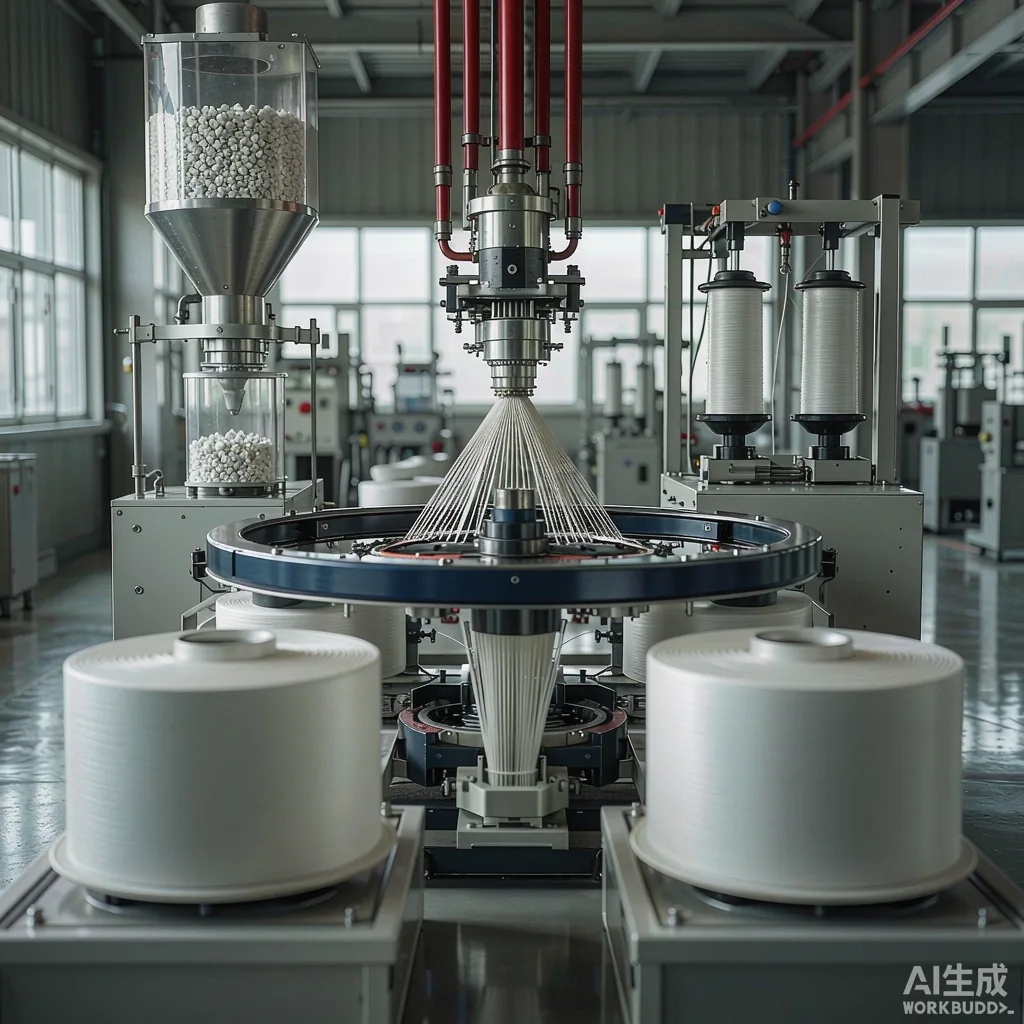
Whole-garment knitting produces a body with only the yarn it needs, removing the cutting loss that conventional panel knitting cannot avoid. Shima Seiki, whose WHOLEGARMENT machines produce three-dimensional knit structures directly, puts the material loss from cutting and sewing at roughly 30% for conventional panel production. Seam-free shaping also removes most post-knit operations, which cuts energy and transport movements inside the supply chain rather than just material.
- Conventional panel route
- about 30% material loss described as coming from cutting and sewing
- Shaped knitting
- loss reduced to around A4 per knitted piece plus seam waste
- Whole-garment knitting
- yarn consumed equals yarn in the finished body
- Post-knit operations
- removing joins also removes labour, thread, lining and associated handling
- Programme effect
- no cut-and-sew offcut stream to sort, store or dispose of
Can a Knitted Bag Be Designed as One Material?
Monomaterial design is the most underrated lever in sustainable knit bags, because recycling a bag made from one polymer family is straightforward while recycling a bonded laminate is not. The practical target is a body, thread, webbing and binding from one polymer family, with hardware either removable or minimised. Full separation is rarely possible, so prioritise the components by weight and by how easily a consumer can remove them.
Polyester only
Body in rPET with polyester webbing, polyester thread and polyester binding. Removable metal feet and badging keep recycling realistic.
Nylon only
Body in recycled nylon with matched webbing and thread. Higher abrasion performance, tighter recycling stream, worth it for heavy shapes.
Avoid mixed laminates
Foam backing, TPU films and padded linings turn a recyclable knit into a composite. Use spacer knit structure for cushioning instead.
Hardware by design
Fix hardware so a consumer can remove it with simple tools. Nobody recycles a bag they need a screwdriver and a knife to strip.
The practical compromise is usually weight-weighted rather than absolute. Hardware typically represents a small share of a knitted bag by mass, so keeping it removable protects recyclability without demanding a hardware-free design. Linings are different: a bonded or padded lining can be 30% or more of a bag's mass, and replacing it with a spacer knit course improves the end-of-life position much more than removing a zip pull ever will.
How Is a Claim Substantiated on the Label?
A printed claim is a legal statement, so it needs the same discipline as a test figure. Every number on a hangtag should have a source document behind it, every word should match what the certificate actually says, and every claim should be dated. Vague environmental language without a traceable basis is increasingly a compliance risk in several jurisdictions, not merely a marketing one.
Claim proof checklist
- Name the recycled percentage and back it with the transaction certificate that covers the shipment.
- Use certification marks only where the finished article itself is certified, not only the input.
- Keep the certificate validity dates visible in the technical file alongside the claim.
- State what is certified and what is not, rather than implying whole-product coverage.
- Date every claim and review it at each reorder, because certificates expire and processes change.
What Belongs in a Sustainability Brief?
A sustainability brief is a short document that prevents expensive misunderstandings. It should state the destination markets, the recycled target, the certificate set required, the assessment light for colour, and whether the article is intended for children. Write it before sampling, because every one of these items changes what can be quoted and how long the documents take to assemble.
- Destination markets, because EU and US documentation requirements differ materially.
- Target recycled content, stated as a percentage, with the scheme named.
- Certificate set required: GRS, OEKO-TEX STANDARD 100, REACH declaration, Prop 65 assessment, CPSIA where relevant.
- Colourway count and whether each colourway needs its own test evidence.
- Whether the article is intended for children, which triggers the CPSIA test and tracking route.
- End-of-life intent: monomaterial target, hardware removability, recycled or recycled-content packaging.
- Who holds the technical file and how long the evidence is retained after shipment.
Specify a compliant sustainable knit bag programme
Tell us the destination markets, recycled target and certificate set you need. We return a compliance plan and a firm FOB Xiamen quote covering every document line in the first reply. Start on the contact page.
What Does Good Look Like Twelve Months Later?
A programme that is still running comfortably a year later will have its certificates current, its transaction certificates filed against every shipment, and its claims unchanged since launch. Nothing about that is difficult; it is simply a matter of building the evidence habit in the first season rather than retrofitting it in the third. Start with one recycled yarn platform and one clean document set, then widen the range once the evidence habit is working. See knit bag materials and yarns for input choices, custom knit bag programmes for the ordering route, knit bag quality control for the test protocol and knit versus traditional bag construction for the comparison against cut-and-sew.
Frequently Asked Questions
What recycled content can a sustainable knit bag carry?
A knitted body routinely runs at high recycled content without losing strength, because the yarn carries the load rather than the structure. Textile Exchange sets the GRS threshold at a minimum of 50% certified recycled content plus social and environmental criteria at the processing site, while the RCS threshold is lower and covers input and chain of custody only.
Is GRS better than RCS for knit bags?
GRS covers more, so it usually answers more buyer questions. It requires a higher minimum recycled content, adds social and environmental requirements at the site, and restricts certain chemicals in processing. RCS verifies recycled input and chain of custody only. Most retail programmes specify GRS, while RCS suits buyers who need verified input without the wider audit scope.
What evidence proves recycled content in a specific shipment?
The transaction certificate issued for that shipment. A scope certificate only shows that a named site and process were audited; it says nothing about the goods you received. Check three things: the transaction certificate names your order, the dates fall inside the scope certificate window, and the same input is not claimed twice along the chain.
Does OEKO-TEX certification prove recycled content?
No. OEKO-TEX STANDARD 100 is a product test for harmful substances and sets no recycled content requirement at all. It is still valuable, particularly for the finished article rather than only the yarn, but it answers a different question. Buyers usually need both documents: one proving input, one proving chemical safety on the delivered bag.
Which REACH entries matter for textile bags?
The entries that most often touch textile articles concern azo dyes, nickel release from metal hardware, lead in coatings, cadmium in pigments, certain phthalates and flame retardants. Beyond listing them, ask for a declaration written against the finished article and remember the obligation sits with the party placing the article on the Union market. New colourways need re-testing.
How is a substance of very high concern handled in a bag?
Where a candidate substance of very high concern exceeds 0.1% weight by weight in the finished article, it has to be declared. In practice most bag programmes avoid the issue by choosing inputs known to be free of listed substances and documenting that choice in the technical file, with a test report on metal hardware kept alongside the textile declaration.
When does CPSIA apply to a knitted bag?
CPSIA applies once the product is intended for children. It then requires third-party testing at an accepted laboratory, a Children's Product Certificate, permanent tracking information on both article and packaging, and limits on lead and certain phthalates. A bag marketed to adults sits outside the children's product route, so the intended end user must be stated clearly in the brief.
What does Prop 65 require for a bag sold in California?
Prop 65 requires either a warning where exposure to a listed substance occurs, or evidence that exposure stays below the applicable safe-harbor level. Because the listed substances change frequently, most programmes run a periodic assessment rather than a one-off check, and document the decision for the specific materials used at that time. Keep the assessment with the shipment file.
How much less waste does whole-garment knitting create?
Whole-garment knitting consumes only the yarn present in the finished body, avoiding the cutting loss inherent in conventional panel routes. Shima Seiki puts that cutting and sewing loss at roughly 30% in conventional production. The secondary gain is smaller but real: fewer post-knit operations means less thread, lining, handling and internal transport per completed article.
Can a knitted bag be recycled at end of life?
It can, if the bag is designed for it. Keep the body, thread, webbing and binding in one polymer family, avoid foam laminates by using spacer knit structure for cushioning, and fit hardware that can be removed with simple tools. A mixed-laminate bag is a composite and behaves as one, which most recycling streams cannot process economically.
Does recycled yarn cost more than virgin yarn?
Recycled polyester at commercial counts such as 300D and 600D generally sits close to virgin pricing, with availability rather than price being the practical constraint. Certification adds administrative cost more than material cost. Planning matters: recycled lots are often smaller, so booking the lot early in the 30 day bulk window protects the schedule more than any other single action.
How should a sustainability claim be worded on the label?
State the number, the scheme and nothing vague. A claim such as 50% recycled polyester should carry a transaction certificate behind it, and certification marks should only appear where the finished article itself is certified. Date the claim, review it at each reorder, and never imply coverage wider than the certificate actually grants.
People Also Ask
Are knitted bags more sustainable than sewn bags?
Knitted-to-shape bodies generally are, because they avoid the roughly 30% cutting loss typical of conventional panel production and remove many joining operations. The advantage grows when a single polymer family is used and can shrink quickly once laminates or mixed trims enter the design.
Do I need both GRS and OEKO-TEX for one bag?
Usually yes, because they prove different things. GRS evidences recycled input and chain of custody; OEKO-TEX STANDARD 100 evidences that the finished article passed testing for harmful substances. Retail programmes commonly request both alongside a REACH declaration for the European Union market.
Can recycled yarn meet hard-wearing durability tests?
Yes. Recycled polyester filament runs at 300D and 600D counts, and a well-engineered body routinely passes 20,000 Martindale rubs to ISO 12947-2 and 400 N handle-root tests. Durability depends far more on gauge, gsm and reinforcement placement than on whether the fibre is recycled.
What documents should be requested for the US market?
Ask for a California Prop 65 assessment and, where the product is intended for children, CPSIA third-party test reports, a Children's Product Certificate and tracking label records. General Certificates of Conformity apply to regulated non-children's products, so confirm which category the bag falls into first.
How long do sustainability certificates remain valid?
Most standard certificates run for a defined period, typically audited annually, while transaction certificates cover a single named shipment. Review every claim at each reorder, because expired scope certificates invalidate implied coverage and because processes and inputs change between seasons.
Sources and further reading
Every figure on this page is either our own programme data or attributed below. Open the originals before you write them into a specification.
- Recycled Claim Standard and Global Recycled StandardTextile Exchange Source for GRS requiring a higher minimum recycled content than the RCS, plus social and environmental criteria.
- OEKO-TEX STANDARD 100 testing for harmful substancesOEKO-TEX Referenced because the finished article, not only the yarn, must be listed on the certificate.
- Substances restricted under REACH, Annex XVII listECHA Restrictions applied to textile articles placed on the European Union market, including azo dyes and nickel release.
- About Proposition 65OEHHA The California requirement to warn of listed substance exposure or evidence absence below safe-harbor levels.
- WHOLEGARMENT knitting and its sustainability effectShima Seiki Source for the approximate 30% material loss attributed to cutting and sewing in conventional panel production.
Related reading: knit bag sourcing covers documents and due diligence in full, and knit bag packaging explains recycled mailers, carton counts and shipping marks.