Knit Bag Brand Guide: From a Blank Page to a Launched Knitted Bag Collection
A knit bag brand does not start with a logo, it starts with a gauge. Holding every piece in a first collection to one machine gauge and one yarn count is what makes the shades match, the price architecture hold and the reorder possible; the branding, photography and copy come after that decision, not before it. This page works through a launch as ten questions in order — purpose, size of the range, silhouettes, colour, price architecture, naming and copy, photography, merchandising, care and warranty, and the 90-day timeline.
Question One: What Is This Collection Actually For?
A first knit bag collection has to answer one question — who carries it and where — and that answer decides the gauge, the yarn count, the price band and the size of the range before any of them are debated.
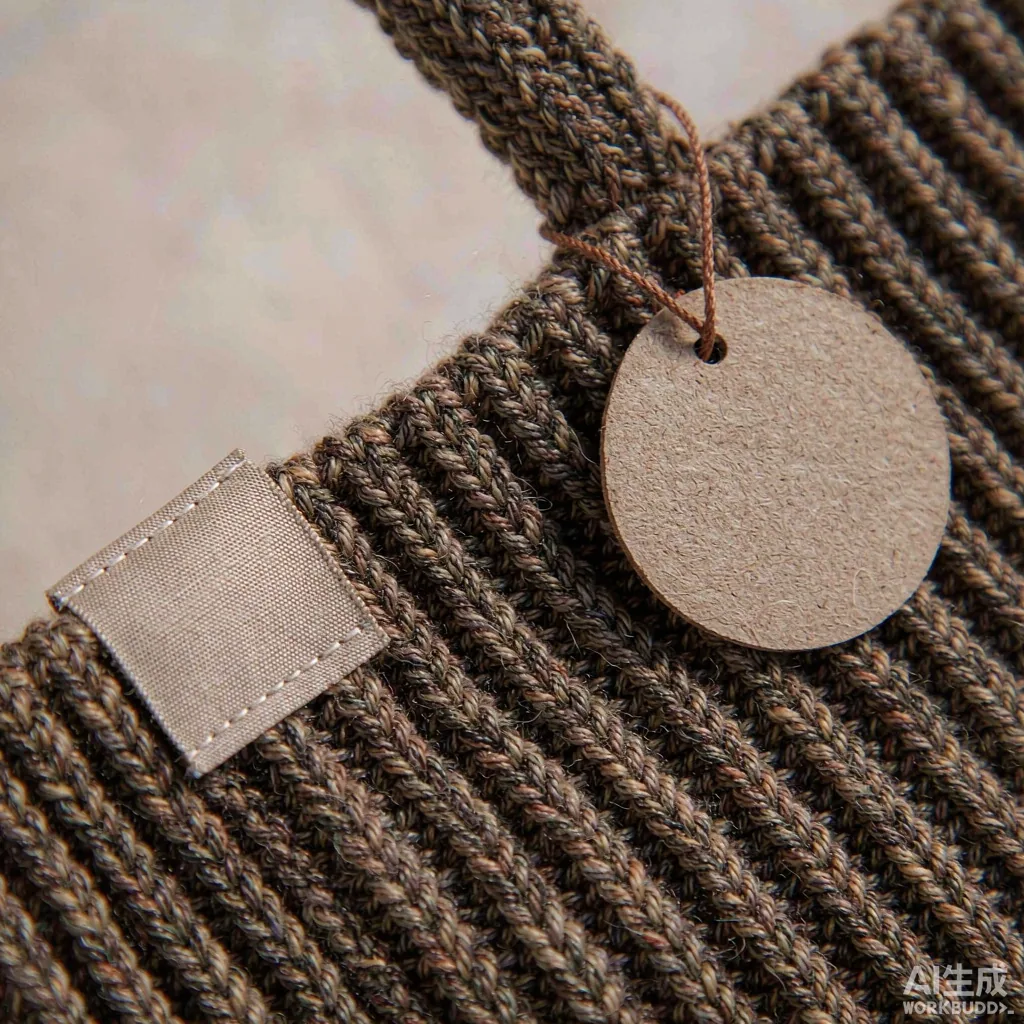
Three positioning paths cover most launches, and each one points at a different machine setting. A promotional or gifting range is logo-led and runs light: 150D recycled polyester at E14, about 240 g/m², one or two silhouettes and a price built on volume. A retail own-brand range is the default: 300D recycled polyester at E12, about 320 g/m², three silhouettes and four colourways. A design-led range goes the other way: 600D at E7 or a jacquard at E12, about 520 g/m², fewer pieces and a higher price ladder.
Skipping this question produces a recognisable failure: a range that mixes E14 and E7 pieces, three yarn counts and two dye routes, and therefore cannot hold a consistent shade across a reorder. The collection looks varied and behaves like six unrelated products. Picking one positioning path at the start is what allows the range to be developed as one programme with one knit file per silhouette, one yarn lot and one certificate set.
Question Two: How Many Pieces Does a First Collection Need?
Twelve is the number that works: three silhouettes in four colourways, or four silhouettes in three, giving twelve SKUs at 100 pcs each and a first buy of 1,200 pieces at about USD 5,760 on a USD 4.80 FOB price.
| Range size | Total pieces at 100 pcs per SKU | First buy at FOB USD 4.80 | When it suits |
|---|---|---|---|
| 6 SKUs — 2 silhouettes, 3 colourways | 600 pcs | about USD 2,880 | A test drop or a single-channel launch |
| 12 SKUs — 3 silhouettes, 4 colourways | 1,200 pcs | about USD 5,760 | The default first collection |
| 18 SKUs — 3 silhouettes, 6 colourways | 1,800 pcs | about USD 8,640 | A range wide enough for two channels |
| 24 SKUs — 4 silhouettes, 6 colourways | 2,400 pcs | about USD 11,520 | Only after a reorder signal exists |
Six SKUs is too thin to hold a shelf or a category page; twenty-four spreads set-up cost across too many colourways before any of them has proved itself. Twelve works because the minimum of 100 pcs applies per style and per colourway, so twelve SKUs is twelve lines of 100 pcs, and the set-up on the yarn, the label and the carton is amortised across 1,200 pieces rather than 600. It is also small enough that a reorder decision can be made on real sell-through rather than on a forecast.
Question Three: Which Silhouettes Carry the Range?
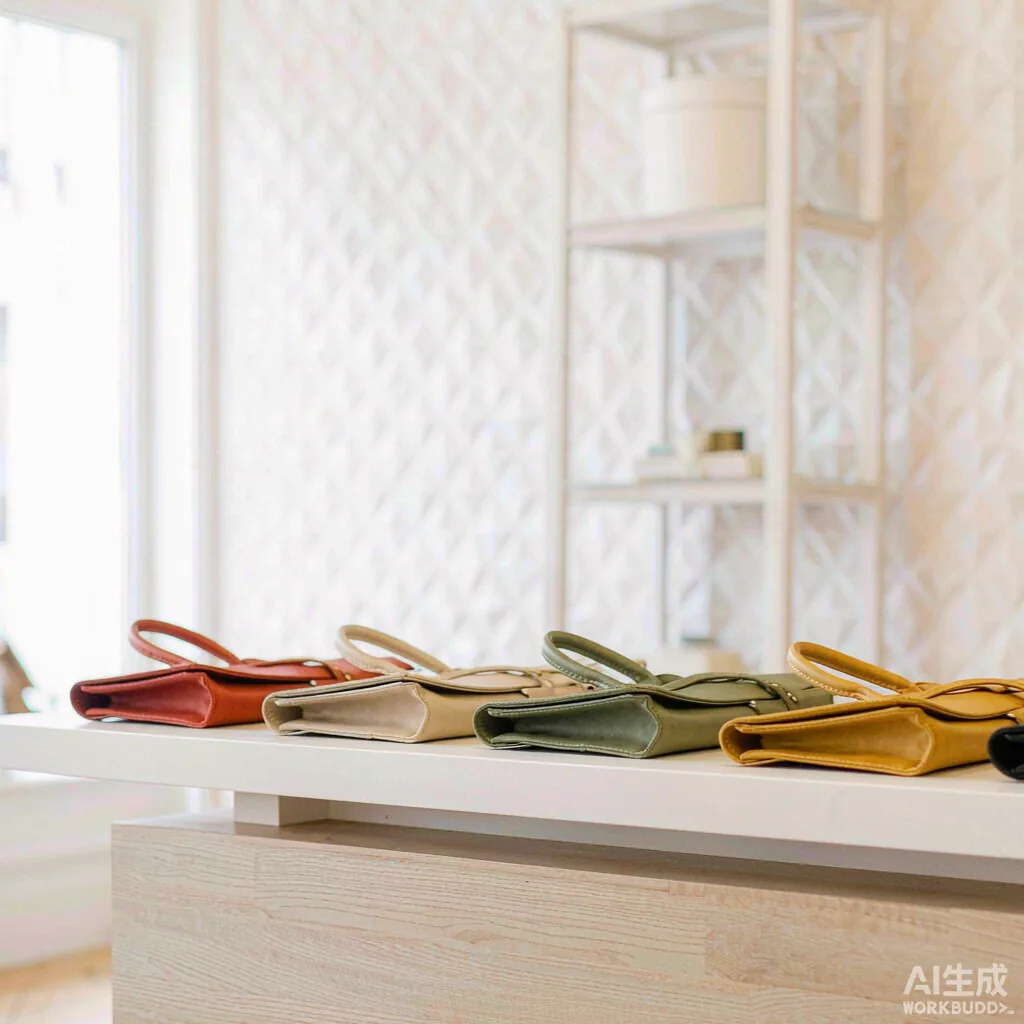
Three silhouettes cover a first range — a tote at about 34 x 38 cm, a shoulder or crossbody piece at about 26 x 20 cm, and a pouch or utility piece at about 22 x 15 cm — plus one hero piece knitted at a coarser gauge to anchor the top of the price ladder.
The tote
34 x 38 cm, 300D recycled polyester at E12, about 320 g/m², finished weight near 280 g. The volume piece and the one that carries the range's price perception.
The crossbody
26 x 20 cm at the same gauge and yarn, with a knitted strap channel rather than a sewn webbing strap, so the whole body stays one polymer.
The pouch
22 x 15 cm, knitted in the same yarn with a bonded base. The entry price point and the piece most often bought as a second item.
The hero
600D at E7 or a jacquard at E12, about 520 g/m², with hardware and a structured base. Not a volume piece; it sets the ceiling the core is measured against.
Keeping the tote, the crossbody and the pouch on the same gauge and yarn count is the single decision that makes the range look intentional, because shade, hand feel and drape then match across the shelf. The hero piece is allowed to break the rule deliberately — a coarser gauge and a heavier yarn — and that contrast is what makes the ladder legible to a shopper who sees the range on one page.
Question Four: How Do You Build a Colour Strategy on a Knit Machine?
Work to a 60/30/10 split — 60% of the buy in core neutrals, 30% in seasonal shades and 10% in an accent — and hold the whole range to one yarn count and one dye route so a reorder matches a drop made six months earlier.
- Core neutrals take 60% of volume: black, ecru and a mid grey that works in every channel
- Seasonal shades take 30%: two shades that can be rotated without changing the knit file
- Accent takes 10%: one shade per season, used on the pouch where the risk is smallest
- Dope dyeing is specified where shade consistency between lots matters more than shade range
- A lab dip is approved against a reference swatch, and the swatch is kept for the reorder
- One yarn lot serves the whole drop wherever the volume allows it, which is the real shade control
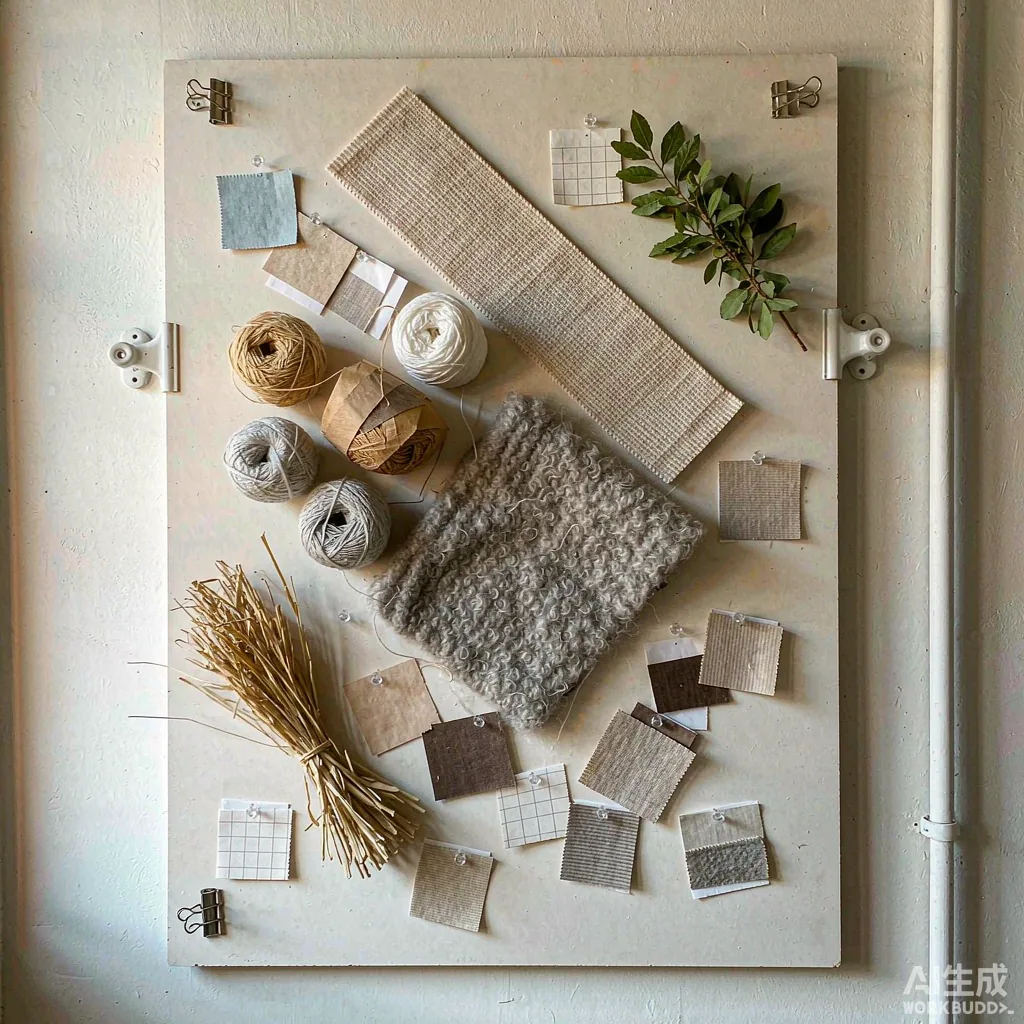
Two knit-specific points sit behind that list. A knitted body shows shade differently from a woven one, because the stitch structure throws light unevenly, so a colour approved on a flat swatch can read a shade darker on the finished piece — the reference should be a knitted swatch, not a yarn wrap. And because a reorder is knitted months later, the shade record that matters is the dye recipe and the lot reference, not the Pantone number quoted in the brief.
Question Five: What Should the Price Architecture Look Like?
Three tiers are enough: an entry piece at USD 24, a core piece at USD 34 and a hero piece at USD 48 retail, which on a keystone of about 2.5x landed cost corresponds to FOB prices of roughly USD 4.80, USD 6.80 and USD 9.60.
| Tier | Specification | FOB Xiamen | Retail position |
|---|---|---|---|
| Entry — the pouch | 300D rPET at E12, bonded base, plain label set | about USD 4.80 | USD 24, the impulse price |
| Core — the tote | 300D rPET at E12, structured base, branded hangtag | about USD 6.80 | USD 34, the volume price |
| Upper core — the crossbody | 300D rPET at E12 with a knitted strap channel | about USD 7.60 | USD 38, the gift price |
| Hero — the structured piece | 600D at E7 or jacquard at E12, hardware | about USD 9.60 | USD 48, the anchor price |
The hero piece is not there to sell in volume; it is there to make the core price look reasonable. That is the whole function of the top tier, and it is why the hero should carry the most visible construction work — jacquard, a coarser gauge, hardware — rather than simply a higher margin. The other rule worth holding is that the entry price is set by the pouch and not by marking the tote down: cutting the core price to fill the entry slot trains the shopper to wait for the next reduction.
Question Six: How Should the Products Be Named and Written?
Name with a silhouette word plus a specification number — Loop 300, Carry 600 — and write each product description in 45 to 60 words, with the construction first, the use second and the care third.
- Naming pattern
- Silhouette word plus yarn count: Loop 300, Fold 300, Carry 600
- Colourway naming
- Neutral, mineral or botanical families, reused every season so the range reads as one family
- Description length
- 45 to 60 words, construction first, use second, care third
- Specification block
- Yarn count, gauge, GSM, finished dimensions, fibre content and percentage
- Care line
- Hand wash at 30 °C, reshape while damp, dry flat, do not tumble dry
- Claim rule
- Every environmental claim is followed by the certificate that supports it
- Words to avoid
- Vague sustainability language with no document behind it, and superlatives nobody can verify
The specification block is where a knit bag wins or loses the sale, because the shopper is comparing a body they cannot touch. Denier, gauge and GSM in that order tell a reader more than any adjective: 300D at E12 at about 320 g/m² describes a bag that drapes, while 600D at E7 at about 520 g/m² describes one that stands up on its own. Writing those three numbers on every product page is the least expensive merchandising decision in the range.
Question Seven: What Does Knit Photography Need That Woven Photography Does Not?
Six frames per SKU, and two of them are knit-specific: a 1:1 macro of the stitch structure and a shot of the piece folded flat, because a buyer judges a knitted body on its surface and on how it collapses.
- Hero frame — the piece standing or hanging, lit raking from one side so the surface structure shows
- Stitch macro — a 1:1 frame filling the crop with the knit surface, no styling
- Folded flat frame — how the piece collapses, which is how most buyers will store and ship it
- Scale frame — the piece next to a hand or a 30 cm ruler, because dimensions alone do not land online
- Colourway row — all shades of one silhouette in a single frame, shot in one pass for consistent white balance
- In-use frame — worn or carried, with the brand context the channel needs
Two technical points decide whether the set is usable. Colourways must be shot in one pass under the same white balance, because a knitted surface shifts more than a flat woven one between setups and a mismatch shows immediately in a colourway row. And the macro frame is not decoration: it is the image that answers the question a shopper actually has about a knitted bag, which is whether the surface looks like a fabric or like a knit.
Question Eight: How Is a Knit Range Merchandised on the Page?
Lead with the construction claim, put GSM and denier inside the specification block, and show the colourway row above the fold — those three elements answer the questions a buyer asks about a knitted bag before any styling question.
Elements every knit bag product page needs
- A construction claim in the first line: knitted to shape, single-polymer body, no cut edges
- Yarn count, gauge and GSM in the specification block, in that order
- The colourway row above the fold, so the range reads as a collection
- A care line and a fibre content line with percentages, not just a fibre name
- The certificate behind any recycled-content or substance claim, named rather than implied
- A cross-link to the other two silhouettes, so the range is shopped as a set
Merchandising a knit range also means being honest about what it is not. A knitted body has a different hand feel and a different recovery from a laminated woven one, and a page that sets those expectations — soft, light, folds flat, single polymer — converts better than a page that tries to borrow the language of structured luggage. The reviews and returns data from the first season usually confirm this within six weeks.
Question Nine: What Care and Warranty Copy Does a Knitted Bag Need?
State the fibre content with percentages, give a four-line care instruction — hand wash at 30 °C, reshape while damp, dry flat, do not tumble dry — and offer a two-year warranty against manufacturing defects, with snags repaired rather than replaced.
- Content line: 100% recycled polyester, with the percentage stated for blends
- Care line: hand wash at 30 °C, reshape while damp, dry flat, no tumble dry
- Snag guidance: a snag is lifted back with a latch hook, not cut, because the knit is continuous
- Pilling expectation: grade 4 or better after 7,200 revolutions, tested to ISO 12945-2
- Dimensional expectation: within 3% in length and width after the agreed wash cycle
- Warranty: two years against manufacturing defects, with a repair-first policy
The repair-first policy is worth stating explicitly, because it turns the most common knit bag complaint — a pulled thread — into a service moment instead of a return. It also fits the construction: a continuous knitted body can be lifted back into shape with a latch hook in a way a cut panel cannot, and saying so on the page sets an expectation that reduces returns on the first drop.
Question Ten: What Does a 90-Day Launch Timeline Look Like?
Ninety days is the realistic minimum from approved sample to live listing: 7 working days for sampling, 30 days for bulk, 30 to 35 days of sea transit, and the remaining weeks for photography, copy and channel setup.
- Day 1 to 14: fix the gauge and yarn count, develop the sample in 7 working days, and freeze packaging artwork in the same week
- Day 10 to 20: allocate one GTIN per SKU — twelve SKUs means twelve numbers — and approve the lab dips
- Day 15 to 45: bulk runs in the 30-day window while labels, hangtags and cartons land in parallel
- Day 40 to 45: pre-shipment inspection sampled to AQL 2.5 (ISO 2859-1), then loading and the document set
- Day 45 to 80: sea transit of 30 to 35 days to Northwest Europe, or 18 to 22 days to the US west coast
- Day 70 to 85: photography set — six frames per SKU, colourways shot in one pass
- Day 80 to 90: product copy, specification blocks and channel setup, with the EAN-13 verified before listing
- Day 90: launch, with the reorder trigger set at 35% sell-through in the first six weeks
Two dates move that plan more than any other: the sample approval date, because everything downstream is counted from it, and the holiday shutdowns in the production calendar — Chinese New Year in January or February and the National Day holiday in early October. A launch planned around a March or September shelf date has to be booked before those shutdowns rather than after them, which in practice means starting nine months out from the shelf date rather than three.
Answering the Ten Questions in Order
The ten questions only work in sequence: purpose sets the gauge, the gauge sets the range size, the range sets the silhouettes, the silhouettes set the colour split, and only then does the price architecture mean anything.
A launch built in that order arrives with one yarn lot, one certificate set, twelve GTINs allocated before artwork, six photographs per SKU and a reorder already specified — which is the difference between a collection and a batch of unrelated bags. The mechanics underneath are unchanged from any other knit bag programme: 100 pcs per style and colourway, 7 working days of sampling, 30 days of bulk, inspection to AQL 2.5 (ISO 2859-1) and FOB Xiamen terms.
Build your knit bag collection
Send the positioning, the silhouettes you have in mind and the target shelf date. The knit programme team will return a gauge and yarn recommendation, a range size with the piece count, a price architecture and the 90-day calendar. Start the collection on the contact page.
Frequently Asked Questions
How many pieces should a first knit bag collection have?
Twelve SKUs is the default: three silhouettes in four colourways, or four in three. At 100 pcs per style and colourway that is a first buy of 1,200 pieces, about USD 5,760 at a USD 4.80 FOB price. Six SKUs is too thin to hold a shelf, and twenty-four spreads set-up cost across colourways that have not proved themselves.
Should every piece in a knit collection use the same gauge?
Yes, with one deliberate exception. Holding the tote, crossbody and pouch to one gauge and one yarn count is what makes shade, hand feel and drape match across the shelf. The hero piece is allowed to break the rule with a coarser gauge and heavier yarn, and that contrast is what makes the price ladder legible.
How should a knit bag colour range be split?
Use 60% of the buy in core neutrals, 30% in seasonal shades and 10% in an accent, and hold the whole range to one dye route. Approve colour on a knitted swatch rather than a yarn wrap, because stitch structure changes how a shade reads on the finished piece, and keep the dye recipe for the reorder.
What price should a knit bag collection launch at?
A three-tier ladder works: USD 24 for the entry pouch, USD 34 for the core tote and USD 48 for the hero piece, on a keystone of about 2.5x landed cost. That corresponds to FOB prices of roughly USD 4.80, USD 6.80 and USD 9.60. The hero piece exists to make the core price look reasonable, not to sell in volume.
How should knit bag products be named?
Use a silhouette word plus a specification number, such as Loop 300 or Carry 600, and reuse the same colourway families every season so the range reads as one family. Product descriptions run 45 to 60 words with construction first, use second and care third, and every environmental claim is followed by the certificate behind it.
What photography does a knitted bag need?
Six frames per SKU: a hero frame lit raking from one side, a 1:1 stitch macro, a folded-flat frame, a scale frame with a 30 cm reference, a colourway row and an in-use frame. The macro and the folded-flat frames are knit-specific and are the two that answer what a shopper wants to know about the surface.
Why must colourways be photographed in one pass?
A knitted surface shifts more than a flat woven one between lighting setups, so colourways shot across several sessions rarely match in a colourway row. Shooting all shades of one silhouette in a single pass under one white balance keeps the row consistent, which matters because the row is usually the first thing a shopper sees.
What care instructions does a knit bag need?
Four lines: hand wash at 30 °C, reshape while damp, dry flat, and do not tumble dry. The fibre content line states the percentage, not just the fibre name, and the page sets expectations for pilling at grade 4 or better after 7,200 revolutions and dimensional change within 3% after the agreed wash cycle.
What warranty should a knit bag brand offer?
Two years against manufacturing defects with a repair-first policy. A snag in a continuous knitted body is lifted back with a latch hook rather than cut, so stating that on the page turns the most common complaint into a service moment instead of a return, and it reflects how the construction actually behaves.
How long does a knit bag launch take?
Ninety days from approved sample to live listing: 7 working days of sampling, 30 days of bulk, 30 to 35 days of sea transit to Northwest Europe or 18 to 22 days to the US west coast, and the remaining weeks for photography, copy and channel setup. Book nine months out from the shelf date.
How many barcodes does a twelve-piece collection need?
Twelve: one GTIN per style, colourway and size variant. The numbers come from the buyer's own GS1 company prefix and are allocated before artwork is drawn, then printed as EAN-13 for Europe and most of Asia or as UPC-A for the US channel. An ITF-14 derived from the same number goes on the carton.
What goes on a knit bag product page?
A construction claim in the first line, yarn count, gauge and GSM in the specification block, the colourway row above the fold, a care and content line with percentages, the certificate behind any recycled-content claim, and cross-links to the other silhouettes so the range is shopped as a set.
How does a knitted bag differ from a woven one on the shelf?
It is lighter for its volume, folds flat, and has a softer hand because the body is knitted to shape rather than cut from a panel. Merchandising should say so plainly — soft, light, folds flat, single polymer — rather than borrowing the language of structured luggage, which sets an expectation the piece cannot meet.
When should a reorder be placed after launch?
Set the trigger at 35% sell-through in the first six weeks and work back 30 days of bulk plus transit. Reusing the same knit file and the same yarn lot skips development entirely and re-enters the 30-day window, which is why the file and the dye recipe are worth keeping on record from the first drop.
People Also Ask
How do I start a knit bag brand?
Start with positioning, not a logo: it decides the gauge and yarn count. Then fix the range at twelve SKUs, hold the collection to one gauge, split colour 60/30/10, set a three-tier price ladder, allocate twelve GTINs, shoot six frames per SKU and allow ninety days to launch.
How many styles should a bag collection have?
Twelve SKUs is the working number for a first knit collection — three silhouettes in four colourways. It is enough to hold a shelf and a category page, and small enough that the reorder decision is made on real sell-through rather than on a forecast.
What is a good price for a knitted bag?
A three-tier ladder: USD 24 entry, USD 34 core and USD 48 hero at retail, on a keystone of about 2.5x landed cost. That maps to FOB prices of roughly USD 4.80, USD 6.80 and USD 9.60 for the three tiers.
How do you photograph knitted products?
Six frames per SKU with a raking side light that shows surface structure: hero, 1:1 stitch macro, folded flat, scale reference, colourway row and in-use. Shoot all colourways in one pass so the white balance matches across the row.
How long does it take to launch a bag collection?
Ninety days from approved sample to live listing, including 7 working days of sampling, 30 days of bulk and 30 to 35 days of sea transit, with photography and copy running in the final three weeks.
Sources and further reading
Every figure on this page is either our own programme data or attributed below. Open the originals before you write them into a specification.
- EAN/UPC barcodesGS1 The allocation rules behind the twelve GTINs a twelve-SKU knit bag collection needs, and the symbology printed on each product and carton.
- OEKO-TEX STANDARD 100OEKO-TEX Finished-textile testing for harmful substances, which is the document behind a substance claim made on a knit bag product page.
- Global Recycled StandardTextile Exchange The chain-of-custody system behind a recycled-content claim, and the transaction certificate that has to back the percentage printed on the care label.
- EU strategy for sustainable and circular textilesEuropean Commission The framework behind the content and durability information European retail channels expect on a product page and a care label.
- California Proposition 65OEHHA The substance list and warning requirement that applies to a knit bag collection sold into California, including hardware, trim and printed components.
- ISO 2859-1:2026 — Sampling procedures for inspection by attributes, Part 1: sampling schemes indexed by acceptance quality limit (AQL)ISO The sampling standard behind the AQL 2.5 inspection that releases the first drop before it is photographed and listed.
The Brand Decision Behind the Collection
Every decision on this page traces back to one: the gauge and yarn count chosen at the start. That choice fixes the hand feel, the shade behaviour, the price band, the photography and the reorder, and it is the reason two collections built on the same marketing spend can land completely differently on a shelf.
For the silhouettes and categories a range can be built from, see the knitted bag collection. For the sample, bulk and inspection sequence behind the ninety days, see custom knit bag programmes. For the packaging and barcode work a launch needs, see knit bag packaging.