Knit Bag FAQ: Every Question Buyers Ask Before the First Order
This page collects the questions buyers ask before a first knit bag order, answered once and in full. The commercial baseline is MOQ 100 pcs per style or colourway, sampling in 7 working days, bulk production in 30 days, inspection to AQL 2.5 under ISO 2859-1 and shipment FOB Xiamen, with CIF and DDP available. Coverage below includes those figures plus costing structure, payment terms, yarn and gauge selection, colour matching against a Pantone reference, certification scope for Europe, California and children's segments, defect handling, freight and design ownership. Questions are grouped so a sourcing team can read one section rather than the whole page. Anything not covered here reaches the programme desk directly by email or WhatsApp, with a reply inside 1 business day.
Order quantities and minimums
MOQ is 100 pcs per style or colourway, not per order, which is the single most common misunderstanding in this category. Because it applies per colourway, a three-colour launch is planned as three runs of 100 pcs rather than one order of 300 pcs split across colours. The number comes from machine setup economics, not policy: each colourway needs its own yarn load, feed set-up and machine calibration.
Sampling and development fees
A sample is physical evidence, and it costs machine time, so it carries a fee that behaves differently from the unit price. The fee is invoiced before physical work starts and credited back in full against the confirmed bulk order, which means a programme that proceeds pays nothing net for standard development.
- First knitted sample ships in 7 working days from an approved tech pack.
- Revision rounds take 3 to 5 working days each; one is usual, two for a new silhouette.
- The sampling fee is credited against the bulk order placed within 90 days.
- Hardware swaps can often be approved from photographs, skipping a full physical round.
- The sealed reference sample is retained by both sides and bulk is measured against it.
Production timing and how the calendar really works
Seven working days to sample, 30 days to produce: these two numbers cover most planning questions, but the calendar between them is what catches buyers out. The 30-day bulk clock starts the day the sealed sample is approved and the deposit clears, not the day the enquiry was sent.
- MOQ
- 100 pcs per style or colourway
- Sampling
- 7 working days
- Bulk production
- 30 days from sample approval
- Inspection level
- AQL 2.5 (ISO 2859-1)
- Production lines
- 7
- Monthly output
- about 200,000 pcs
- Standard term
- FOB Xiamen
- Optional terms
- CIF, DDP
What actually drives unit price
Six variables set the landed unit price, and only three of them are visible on the finished bag. Buyers who know this list can cut cost without touching the design that took months to approve.
| ['Cost driver', 'Weight in unit price', 'Typical move'] | ['Yarn count and type', 'High', 'Recycled polyester baseline; nylon adds roughly 8 to 15 percent'] | ['Body weight from gauge', 'High', 'One gauge step lighter removes more weight than a lighter yarn'] | ['Hardware and zips', 'Medium to high', 'Zip type and finish drive most trim cost'] | ['Quantity per colourway', 'Medium', 'Setup cost spreads further above the 100 pcs threshold'] | ['Finishing treatments', 'Low to medium', 'Repellent or wash finishes add a process step'] | ['Branding method', 'Low', 'Knitted-in logos carry no unit cost once the file exists'] |
|---|
Materials, gauges and colour matching
On a knitted bag the yarn is structure, surface and hand at once, so material choice carries more weight than it does on a sewn bag. Gauge is chosen alongside yarn: E7 and E9 build firm, sculptural bodies, E12 balances surface and weight, and E14 gives soft drape for foldable shapes.
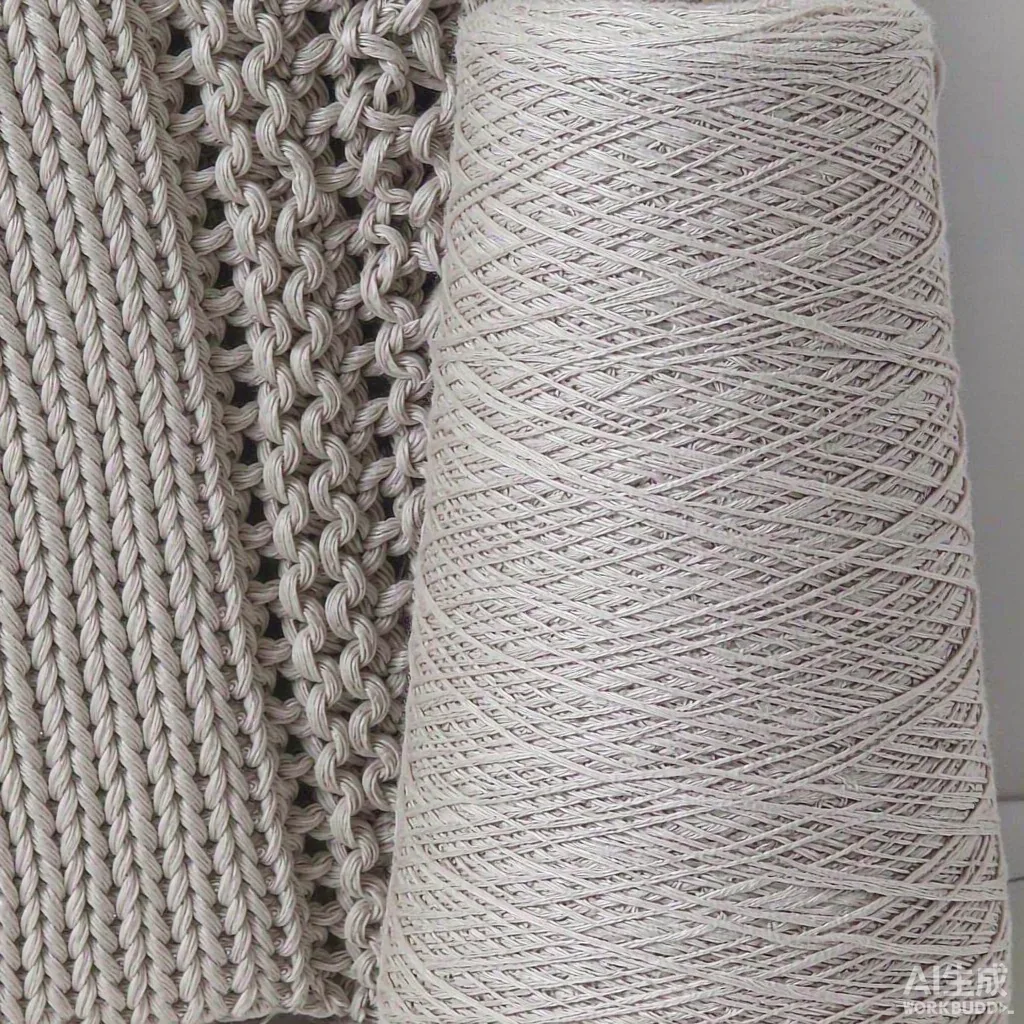
Colour matching runs on knitted lab dips rather than flat fabric or raw yarn. A loop surface reads about half a shade darker than the same dye lot woven flat, so approval against a wrong reference is the most common avoidable dispute in this category. Stock shades knit immediately; custom lots add a dyeing slot ahead of sampling.
Quality control, testing and what happens after a defect
Pre-shipment sampling runs to AQL 2.5 under ISO 2859-1, with a written report issued per shipment. Additional testing is specified against the bag's use rather than bought in bulk: abrasion to ISO 12947, colour fastness to ISO 105 or AATCC 61, tear resistance to ISO 13937.
Certification and compliance documents
Documents follow the destination market, not a generic list. Each item below is issued where it applies, and buyer-specific certificates are named as such rather than presented as blanket coverage that would not survive an audit.
Europe
REACH declarations against the restricted substance list issued with shipments into EU warehouses.
California
Proposition 65 declarations prepared where goods are sold in that state.
Children's products
CPSIA documentation where a knit bag is designed and marketed for the children's segment.
Recycled claims
Global Recycled Standard transaction certificates supporting recycled content statements.
Substance testing
OEKO-TEX documentation covering restricted substances in yarn and trims.
Social compliance
amfori BSCI and Sedex SMETA audit coverage on the production base, available to buyers on request.
Shipping, freight and packing
FOB Xiamen is standard; CIF and DDP are quoted where a landed figure is needed. Your nominated forwarder handles collection or ours moves the goods under CIF and DDP terms. Carton photographs and the packing list are issued before the container is sealed, and the full set of papers follows within 2 days of booking confirmation.
Design ownership and exclusivity
Silhouettes, knit files, artwork and logo files developed for you are held for your programme alone. A mutual non-disclosure agreement is signed before files are exchanged, and a shape commissioned by you is never offered to another buyer or added to stock ranges without written permission.
Ask whatever is not answered here
Most specific questions need one exchange rather than a search. Send the construction question to the programme desk together with any drawing, photo or measurement you already have, and it reaches the knit technician rather than bouncing through a general inbox. Answers arrive within 1 business day.
Send the question with your drawing
Send the question with any drawing or measurement you already have. Both email and WhatsApp channels for the programme desk sit on the contact page, and technical questions reach the knit technician for an answer within 1 business day.
Frequently Asked Questions
What is the MOQ for custom knit bags?
MOQ is 100 pcs per style or colourway, applied per colourway rather than per order. A three-colour launch is therefore planned as three runs of 100 pcs. The threshold reflects machine setup economics, since each colourway needs its own yarn load and feed calibration rather than a simple change of thread.
Can I order less than 100 pcs for a market test?
Yes, for sampling and pilot work, but unit pricing reflects setup spread across fewer pieces. Where a genuine market test is planned, ask for pilot pricing and then confirm volumes; most buyers find that stepping up to the 100 pcs threshold lowers unit cost enough to make the larger run the better test.
How long does a sample take to arrive?
The knitted sample leaves in 7 working days from an approved tech pack, with a measured spec sheet attached. Courier transit depends on your region, typically 3 to 5 days by express. Using your own courier account is welcome and removes any handling charge on the shipment.
Is the sampling fee refunded?
The sampling fee is credited in full against the confirmed bulk order placed within 90 days of invoice. It is charged first because physical sampling consumes machine time and yarn whether or not the programme proceeds, and crediting it back keeps development effectively free for orders that do proceed.
How many sample rounds will my bag need?
One round for a known shape in a new colourway, two for a new silhouette. Round one resolves structure and dimensions, which typically move 2 to 4 percent. Round two locks stitch density, shrinkage behaviour under load and any reinforcement change before the reference sample is sealed.
What is the bulk production lead time?
Bulk production takes 30 days from sealed sample approval and cleared deposit. The clock does not start at enquiry or at blueprint stage. Custom-dyed colourways add their dyeing slot before knitting begins, so a bespoke shade extends total elapsed time even though production time stays at 30 days.
How much capacity is available each month?
Roughly 200,000 pcs per month runs across 7 production lines at the SGS-validated partner production facility. Seasonal demand clusters in the same months each year, so sharing a forecast early reserves a window; announcing it after the tech pack usually means waiting for the next free slot.
What payment terms apply to a first order?
Standard terms are T/T with a 30 percent deposit releasing the bulk slot and the balance against a copy of the bill of lading. Letters of credit at sight are accepted for larger seasonal shipments. The sampling fee is invoiced separately before physical work begins and credited back after confirmation.
Which inspection level is used before shipment?
Pre-shipment sampling uses AQL 2.5 under ISO 2859-1, with a written report and carton photographs issued before sealing. Buyers needing a tighter level can specify it in the tech pack; the cost is additional inspection time, quoted openly rather than absorbed silently into the unit price.
What happens if defects reach my warehouse?
Raise the claim with photographs within 30 days of receipt so the evidence is intact. Each claim becomes a written non-conformance record listing defect type, count and location, which then drives whether the lot is reworked, re-run or credited against your next programme.
Which yarns can a knit bag be made from?
Recycled polyester is the default for programme work because it is consistent, dyeable and widely certified. Nylon is used where abrasion resistance matters, mainly at the base and handle joins, and elastane blends add recovery so a loaded bag returns to shape rather than staying stretched.
How do I pick the right gauge?
Match gauge to how the bag should behave when empty. E7 and E9 build firm sculptural bodies around 420 to 620 g/m2. E12 balances surface and weight at roughly 340 to 460 g/m2. E14 gives a soft drape near 260 to 380 g/m2, which suits foldable shoppers.
Can you match a Pantone colour?
Yes. Send the Pantone reference or a physical swatch and knitted lab dips are returned for approval before bulk dyeing. Because loop surfaces read about half a shade darker than flat fabric, approval is always judged on knitted material rather than raw yarn or a printed chip.
Which certifications come with a shipment?
Standard shipment papers are the commercial invoice, packing list, certificate of origin and AQL 2.5 inspection report. Depending on destination, REACH declarations for Europe, Proposition 65 declarations for California, CPSIA documents for children's lines, Global Recycled Standard certificates for recycled content and OEKO-TEX documentation are issued as applicable.
Are recycled content claims documented?
Yes. Recycled content is claimed under the Global Recycled Standard and supported by transaction certificates so the statement survives retailer scrutiny and customs review. Chain of custody is documented from yarn intake through to finished goods, and OEKO-TEX documentation covers restricted substance testing alongside it.
What shipping terms do you offer?
FOB Xiamen is standard, with CIF and DDP quoted when a landed figure is required for your own costing sheet. Either your nominated forwarder collects at the port or our desk arranges the movement for door-to-door terms. Documents follow within 2 days of booking confirmation.
Who owns the design once it is developed?
You do. Silhouettes, knit files, artwork and logo files created for your programme stay with you, protected by a mutual non-disclosure agreement. Nothing commissioned by you is added to stock ranges or shown to another buyer without written permission, including after a programme goes quiet.
Can I reuse my knit file for a second season?
Yes. Once the file exists it stays available, and reopening a proven shape usually needs no structure sampling round at all. Colourway changes, size scaling and hardware updates can all be applied to the existing programme file, priced and scheduled faster than the original development.
Can I visit the production floor before ordering?
Visits are welcome by appointment, including audits arranged by your own inspection company. Give travel dates at least a week ahead so the knit technician can be present and a machine can be scheduled to run your construction, which makes the visit useful rather than merely reassuring.
How fast will someone answer my first email?
Replies to new enquiries land within 1 business day, and technical questions reach the knit technician rather than a general inbox. Follow-up questions during costing are answered the same day. If a reply is late, replying to the same thread marks it urgent across the whole desk.
People Also Ask
What does MOQ 100 pcs per colourway mean in practice?
Every colourway counts as its own production run, so each one meets the 100 pcs threshold separately. Planning three colours means three runs, each with its own yarn load and machine setup, rather than one 300 pcs order.
Does a finer gauge make a weaker bag?
Not by itself. Strength comes from yarn choice, stitch density and reinforcement zones as much as loop size, so a well-built E14 bag can outlast a slack E7 one when the load path has been designed into the knit.
Why is my sample a slightly different size than requested?
Knitted dimensions move 2 to 4 percent between rounds because loops relax after finishing. That tolerance is stated upfront, and the sealed reference sample becomes the standard that bulk is measured against.
Can branding be knitted into the bag body?
Yes. Logos and lettering knit directly into the structure carry no unit cost once the file exists. Woven labels, heat-transfer prints, hangtags and care labels can be combined with it as needed.
Is shipping damage covered after the goods leave port?
Marine insurance is arranged by whoever holds the risk under the agreed incoterm. On FOB that sits with the buyer from loading, so our team packs to agreed carton specifications and documents loading with photographs for the record.
Sources and further reading
Every figure on this page is either our own programme data or attributed below. Open the originals before you write them into a specification.
- ISO 2859-1: Sampling procedures for inspection by attributesInternational Organization for Standardization The sampling standard behind every AQL 2.5 pre-shipment report issued on this site.
- Incoterms rulesInternational Chamber of Commerce Defines the FOB, CIF and DDP obligations referenced in every quoted shipment term.
- Global Recycled StandardTextile Exchange The chain-of-custody standard behind recycled content claims and their transaction certificates.
- Understanding REACHEuropean Chemicals Agency The EU regime that restricted substance declarations are prepared against for European shipments.