KEEP PERFECT KNIT runs 3D knitted bag programmes for bag brands, retail sourcing teams and promotional buyers who want a bag body knitted to shape rather than cut and sewn from panels. A whole-bag knit removes most side seams, cuts lining work and lets you change the stitch structure, the yarn and the colourway on the same machine without a new cutting pattern. The commercial window is MOQ 100 pcs per style or colourway, sampling in 7 working days, bulk production in 30 days, inspection to AQL 2.5 (ISO 2859-1) and shipment FOB Xiamen. Programmes are coordinated by QUANZHOU JUNYUAN BAGS, which has coordinated bag programmes since 2014 with an SGS-validated partner production facility running 7 production lines.
Reading a knitted bag tech pack
A knit tech pack is not a sewing spec and reading it the same way causes most first-round surprises. Instead of a pattern and a seam list, it carries four things: the silhouette drawing with finished dimensions, the yarn specification with denier and composition, the gauge and stitch structure per zone, and the finishing list that covers washing, steaming, lining and hardware. Everything else - strap length, pocket depth, closure type - hangs off those four.
Finished dimensions deserve particular attention because knitted fabric relaxes. A bag knitted at E7 with a 600D recycled polyester will settle differently from the same drawing knitted at E12 with a 300D yarn, and the difference shows up most in height rather than width. Specify finished dimensions and tolerances, not panel dimensions, and state whether the measurement is taken flat, relaxed or loaded. Where a rigid insert or a baseboard is used, the tolerance applies to the sewn assembly.
| Spec block | What it fixes | Typical tolerance | Silhouette drawing | Finished outer geometry and capacity | +/- 5 mm per dimension | Yarn specification | Composition, denier, filament count, colour reference | Lab dip within delta E 1.0 | Machine and structure | Gauge, stitch type per zone, reinforcement areas | Fixed at programming | Finishing and hardware | Washing, steaming, lining, zips, labels, packing | Per approved sample |
|---|
What changes the price, and what does not
Six variables move a knitted bag quotation: yarn cost per kilogram, the number of colours in the body, the gauge and therefore the knitting time per panel, the hardware list, the order quantity against machine set-up, and the packing specification. Two variables move it far less than buyers expect. Silhouette changes inside one gauge are a programming change, not a tooling charge, and repeat orders against an existing programme skip development entirely.
The practical consequence is that the second and third colourway of an existing style cost noticeably less per piece than the first, and that adding a fourth colour to a jacquard costs more than changing the base yarn. Ask for the quotation split along those lines - yarn, knitting time, hardware, packing - rather than as a single unit figure, because that is the only version that lets you see which lever to pull when the target price is close but not there.
Before you send the brief
- Finished dimensions with tolerances, not pattern dimensions.
- Target quantity per colourway and whether reorders are expected.
- Required ship date and port, or a target landed cost per unit.
- Destination market, so the right compliance documents are costed.
- Any hardware or colour references you already have.
What a 3D knitted bag actually is
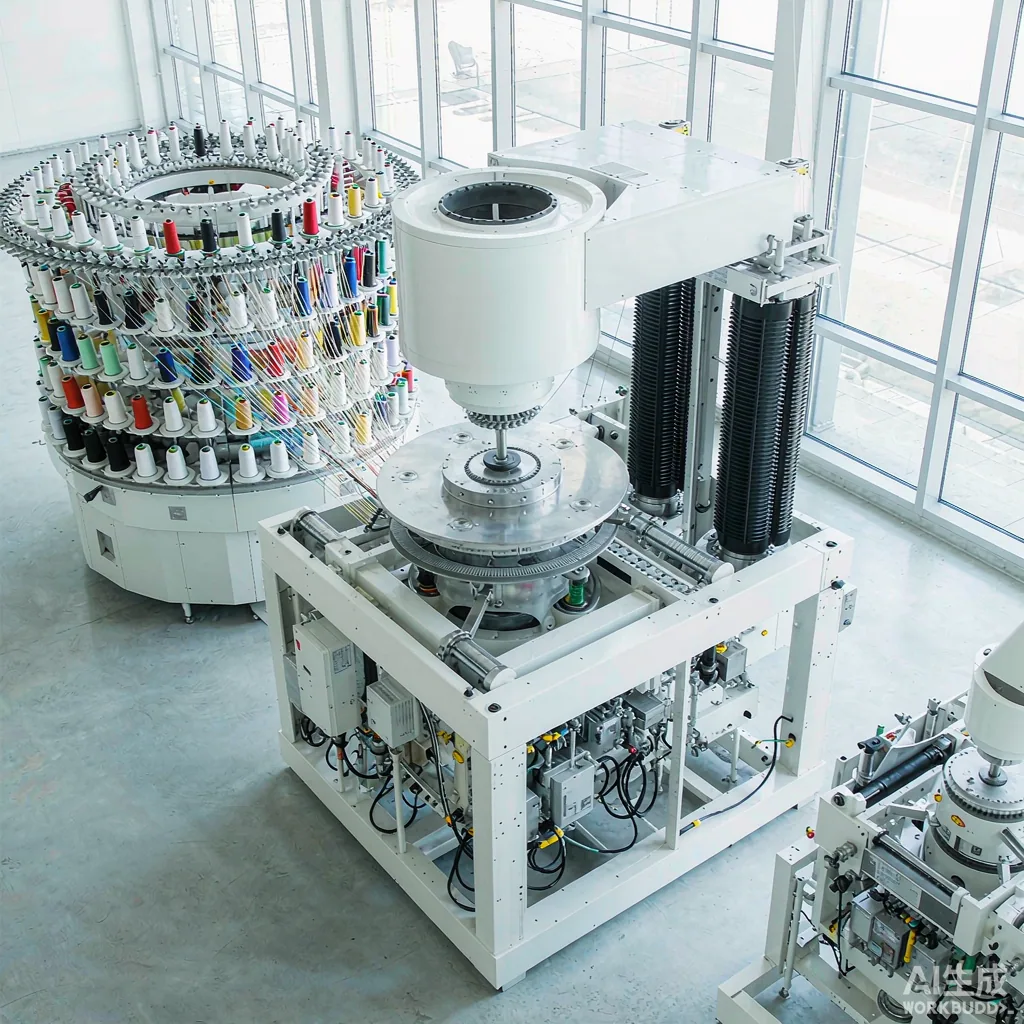
A conventional bag is cut from flat material and stitched. A 3D knitted bag is knitted: the machine builds the body as a shaped textile unit, with the panel geometry, the opening, the handle roots and the stiffened zones programmed into the stitch structure before a single loop is formed. The result is a bag body with almost no cut edge, no seam allowance and no seam tape. Because the structure is programmed rather than cut, a silhouette change is a file change, not a new pattern and a new die.
Three things follow from that. First, waste drops: whole-garment knitting consumes yarn close to the finished weight instead of cutting shapes out of a rectangle. Second, weight drops: a bag that does not need seam allowance, binding tape and a separate lining shell is lighter at the same capacity. Third, lead time compresses: going from an approved design to a knitted sample is a machine setup, not a cutting and sewing line changeover.
Where knitted construction beats cut-and-sew
Knitted construction is not better at everything, and a buyer deserves a straight answer about where it is and is not the right call. It wins on shape freedom, low tooling cost, low material waste and fast design iteration. It is weaker on very high load-bearing points unless those zones are reinforced in the knit, and it needs a deliberate plan for abrasion at the base and the handle joins.
| ['Decision factor', '3D knitted bag', 'Cut-and-sew bag'] | ['Tooling to change shape', 'Programme file only', 'New pattern and dies'] | ['Material waste', 'Near-net shape, minimal offcut', 'Cutting waste from flat stock'] | ['Seams on the body', 'Almost none', 'Side, base and binding seams'] | ['Typical weight at equal capacity', 'Lower', 'Higher'] | ['Load-bearing reinforcement', 'Must be knitted in', 'Can be taped or bar-tacked'] | ['Colourway change', 'Yarn swap on the same machine', 'New fabric purchase'] | ['Best fit', 'Shape-driven, low-MOQ, fast iteration', 'Heavy-load, rigid-structure bags'] |
|---|
The programme window, stated plainly
Buyers ask the same five questions first, so the answers sit here rather than in a sales email. MOQ is 100 pcs per style or colourway. Sampling takes 7 working days from an approved tech pack. Bulk production is 30 days from sample approval. Inspection runs to AQL 2.5 under ISO 2859-1. Shipment is FOB Xiamen, with CIF and DDP available when a buyer needs a landed figure.
- MOQ 100 pcs per style or colourway, not per order.
- Sampling in 7 working days from a complete tech pack.
- Bulk production in 30 days from sample approval.
- Inspection to AQL 2.5 (ISO 2859-1), with a written report per shipment.
- FOB Xiamen as standard; CIF and DDP on request.
- 7 production lines, about 200,000 pcs per month of capacity across the partner facility.
Yarn decides most of the bag
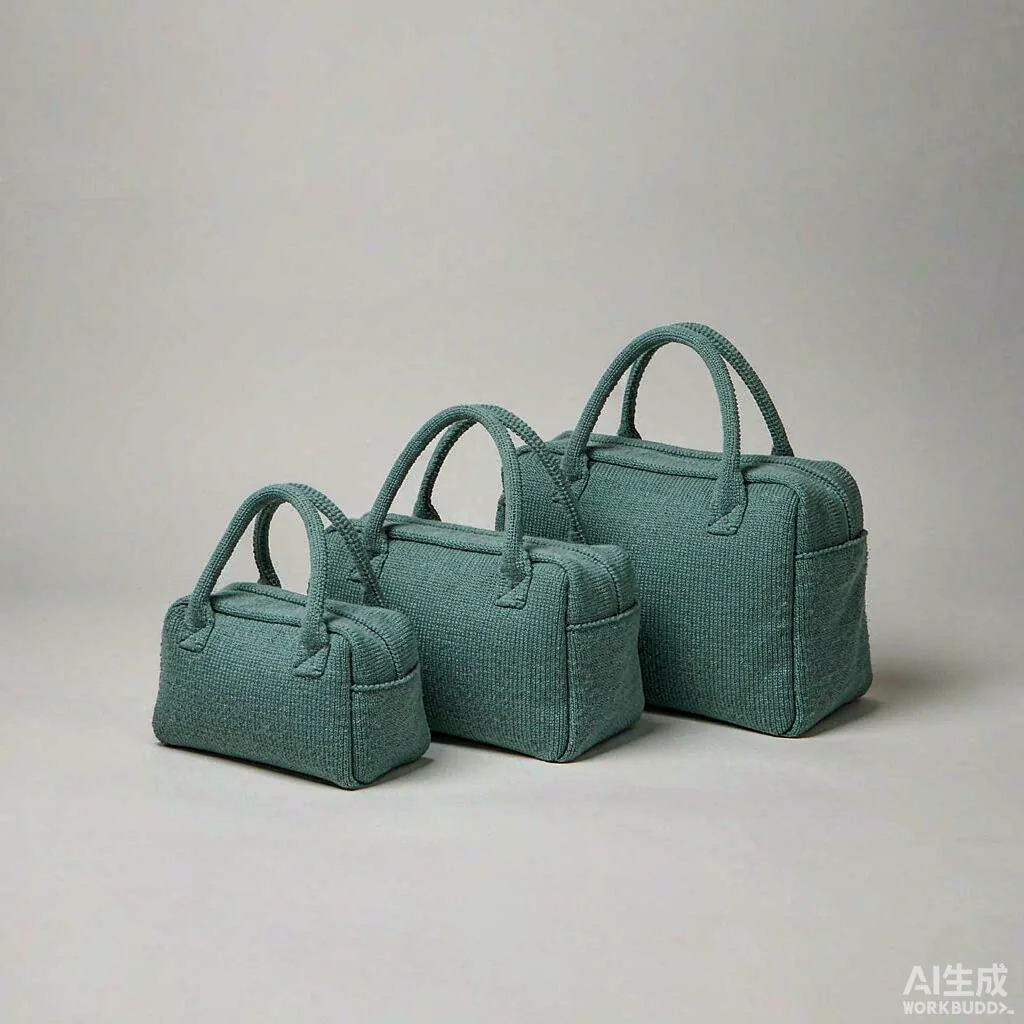
On a knitted bag the yarn is the structure, the surface and the hand at the same time, so yarn selection carries more weight than on a woven bag. Recycled polyester (rPET) is the default for programme work because it is consistent, dyeable, widely certified and priced predictably. Nylon raises abrasion resistance at the base and the handle joins. Blends with elastane add recovery so a loaded bag returns to shape. Recycled content is documented against the Global Recycled Standard, and OEKO-TEX documentation covers restricted substances.
What we need from you to quote
A quote that survives contact with production needs five inputs. Give us the silhouette and target dimensions, the target quantity per colourway, the yarn or hand you want, the closure and hardware, and your required delivery date. A sketch, a reference photo or a sample of an existing bag is enough to start; a full tech pack is better and shortens the sampling window.
- Send the silhouette, dimensions and reference images.
- Confirm quantity per colourway against the 100 pcs MOQ.
- Pick the yarn family and the hand you want.
- Specify closure, hardware, lining and branding.
- Name the delivery date so we can reserve a production window.
Compliance and documentation
Programme documentation follows the market you ship into, not a generic checklist. REACH and Proposition 65 declarations cover chemical restrictions for the EU and California. CPSIA covers children's products where a bag is aimed at that segment. The Global Recycled Standard documents recycled content claims, and OEKO-TEX documentation covers restricted substance testing. Social compliance runs through BSCI and Sedex on the partner facility. Every claim on this site is tied to a certificate we can produce, and where a certificate is buyer-specific we say so rather than implying blanket coverage.
Send a tech pack, get a number
Tell us the silhouette, quantity, yarn and date. You get indicative pricing, a sampling window and a production slot within one business day.
Frequently Asked Questions
What is the MOQ for a custom 3D knitted bag?
MOQ is 100 pcs per style or colourway. That is the figure we quote against and the figure we plan production around, and it is deliberately lower than the 500 pcs window used for cut-and-sew programmes because a knitted shape does not need a cutting pattern.
How long does sampling take?
Sampling takes 7 working days from an approved tech pack. The clock starts when the silhouette, dimensions, yarn and hardware are all settled, because a knitted sample is a machine setup rather than a line changeover.
How long does bulk production take?
Bulk production is 30 days from sample approval. That figure assumes yarn is available in the colourway you picked; a custom-dyed colour adds the dyeing window on top.
What inspection standard do you work to?
Inspection runs to AQL 2.5 under ISO 2859-1, with a written report per shipment. Buyers who need a tighter level can specify it in the tech pack and we will quote the extra inspection time.
What incoterms do you ship on?
FOB Xiamen is standard. CIF and DDP are available when a buyer needs a landed cost figure instead of an ex-factory one.
Can you match a bag I already have?
Yes. Send the physical sample or dimensioned reference photos and we will knit a match. Matching a knitted bag is usually faster and closer than matching a cut-and-sew one, because the structure is programmed rather than reverse-engineered from seams.
Which yarns can you knit with?
Recycled polyester is the default. Nylon is available for higher abrasion zones, and blends with elastane add recovery. Yarn choice is made against the bag's load and abrasion profile, not just the hand.
Are knitted bags strong enough for daily use?
Yes, provided the load path is designed into the knit. Handle roots, the base and the opening are reinforced in the stitch structure, and those zones are what we test first on any new silhouette.
Can I change the colourway without changing the shape?
Yes. A colourway change on a knitted bag is a yarn swap on the same machine, so it does not trigger a new pattern or a new minimum on the shape itself.
What documentation comes with a shipment?
An AQL 2.5 inspection report, a packing list and commercial invoice, and the compliance documentation your market requires: REACH, Proposition 65, CPSIA, GRS or OEKO-TEX as applicable.
Do you handle branding?
Yes. Woven labels, printed or knitted-in logos, hangtags and retail packaging can all be specified. Branding that is knitted into the structure costs nothing per unit once the programme file exists.
What is the capacity?
The partner facility runs 7 production lines with about 200,000 pcs per month of capacity. Large seasonal programmes are scheduled against that capacity, so booking a production window early matters more than the order size alone.
People Also Ask
How does a 3D knitted bag differ from a cut-and-sew bag?
A 3D knitted bag leaves the machine as a shaped panel, so the handles, the opening and the stiffened zones are part of the stitch structure. A cut-and-sew bag is assembled from separate pieces, and those seams are the first place a loaded bag opens up. The knitted route also removes most cutting waste.
What MOQ applies to a first knitted bag order?
MOQ is 100 pcs per style or colourway. That figure covers machine programming, yarn reservation and the minimum sensible production run, so it applies to the first order and to every reorder placed against the same programme.
How fast can a knitted bag sample be produced?
Sampling runs to 7 working days from an agreed tech pack and yarn confirmation. Bulk production then takes 30 days. Both figures assume one round of standard colours; unusual yarns or custom dyelots extend the sampling window.
Can a knitted bag carry a woven logo or a jacquard mark?
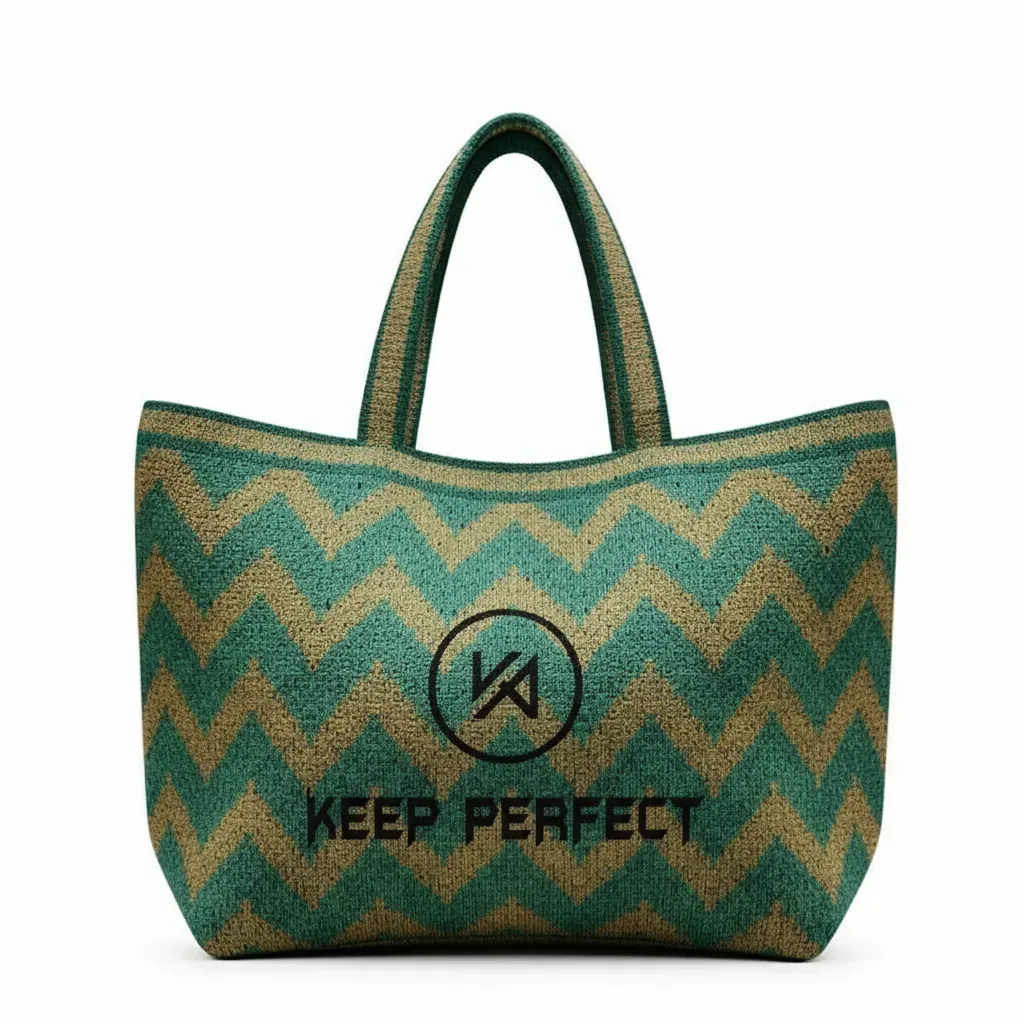
Yes. Small marks can be knitted directly into the panel as a jacquard or an intarsia area, or added afterwards as a label. Jacquard keeps the piece single-material, which helps recycling claims, but it does limit the colour count per row.
Which documents ship with a knitted bag order?
Shipments are inspected to AQL 2.5 (ISO 2859-1) and leave FOB Xiamen with an inspection report, a packing list, a commercial invoice and the test reports held against the order. REACH, Prop 65 and CPSIA declarations are prepared per destination market.
Sources and further reading
Every figure on this page is either our own programme data or attributed below. Open the originals before you write them into a specification.
- ISO 2859-1: sampling procedures for inspection by attributesISO The standard behind the AQL 2.5 inspection level quoted on every programme.
- Textile Exchange — Global Recycled StandardTextile Exchange The chain-of-custody standard used to document recycled content claims.
- OEKO-TEX STANDARD 100OEKO-TEX Restricted substance testing referenced across the compliance documentation.
- ECHA — REACH regulationECHA The EU chemical restriction regime that bag shipments into the EU are declared against.