3D Knitted Bag Manufacturer: How to Spec, Sample and Ship a Knit Bag Programme
Which 3D knitted bag manufacturer can quote, sample and ship a knit bag programme inside one retail season? The one that fixes structure, yarn and gauge before it fixes price. This page sets out that order and the window it runs in: MOQ 100 pcs per style or colourway, sampling in 7 working days, bulk production in 30 days, AQL 2.5 to ISO 2859-1, FOB Xiamen, carried on 7 production lines running about 200,000 pcs per month.
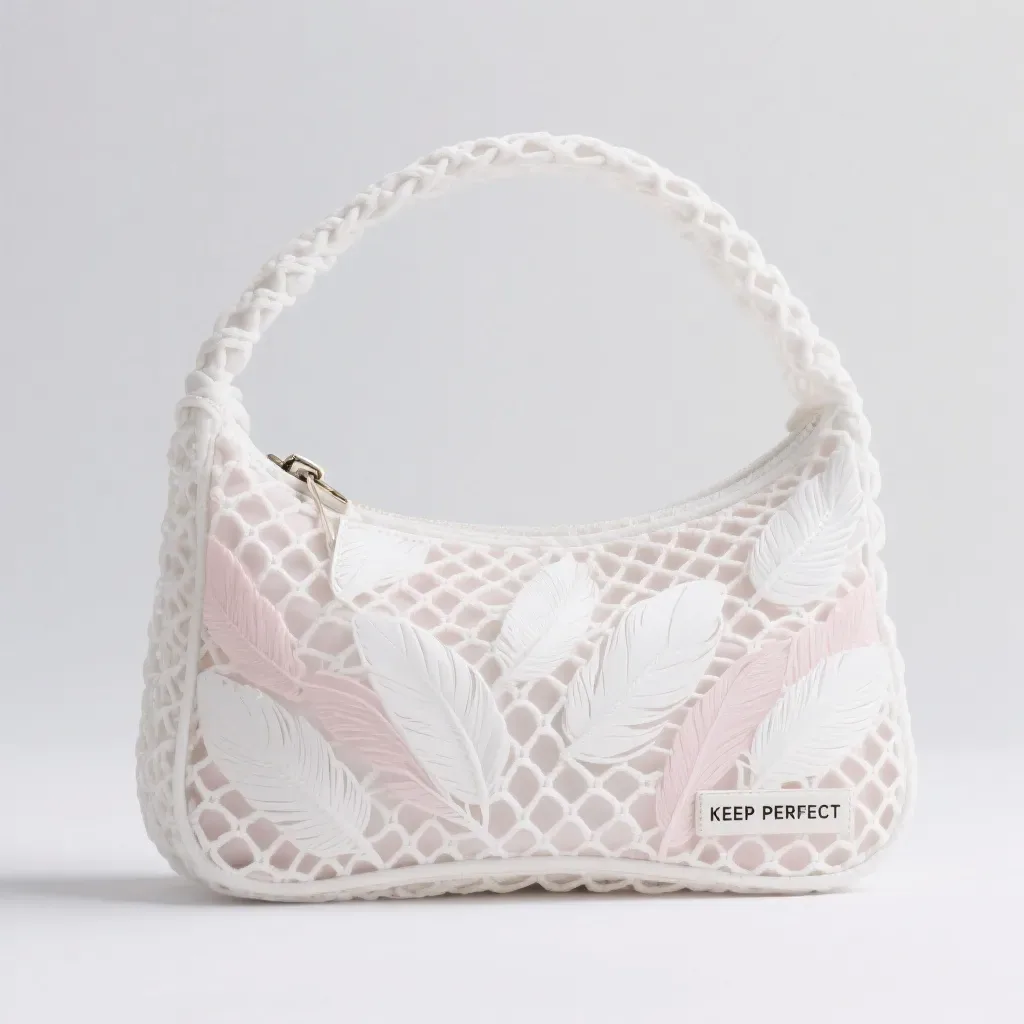
Take the Five Gates in Order Before You Ask for a Price
The order that produces comparable quotes from a 3D knitted bag manufacturer is structure first, then yarn and gauge, then the sampling window, then the bulk window, then commercial terms; buyers who invert that order routinely receive three quotes sitting 20% or more apart for what looks like the same bag.
The reason is arithmetic rather than negotiation. A quote is the product of yarn price, machine time and finishing steps, and two of those three are fixed the moment the gauge and the stitch structure are chosen. A buyer who asks for a price before fixing the gauge is asking three vendors to price three different bags, and the resulting spread tells them nothing about value.
- Gate 1 — Is a knitted structure the right answer for this brief at all?
- Gate 2 — Which knit architecture: whole-garment, cut-and-sew knit panel, or hybrid?
- Gate 3 — Which yarn count and gauge, and what finished GSM does that pair produce?
- Gate 4 — Can the sampling window land in 7 working days with the trim set you want?
- Gate 5 — What does the 30-day bulk window contain, and where are the risks inside it?
Gate One: Does This Programme Actually Need a Knitted Structure?
A knitted structure pays for itself when the value of the bag sits in its silhouette, its one-piece construction or an engineered surface; it does not pay for itself when the bag is a plain rectangle whose only feature is a print area.
That is the whole test, and it is worth applying honestly. Knitting competes on form, not on area. Where a brief calls for an integral handle, a shaped base, a ventilation zone or a jacquard graphic that lives inside the fabric rather than on top of it, the knit route removes operations elsewhere: no panel cutting, no seam tape, fewer finishing steps. Where a brief is a boxy tote carrying one screen-printed mark, the same visual result is available from a woven panel route with a wider choice of base cloth and a lower unit cost.
Knit wins on form
Integral handles, shaped bases and engineered ventilation zones are knitted into the piece in one cycle instead of being assembled from panels.
Knit wins on surface
Jacquard colour and stitch-level texture sit inside the fabric, so there is no print film to crack and no registration drift across a run.
Knit loses on flat area
A plain rectangular body with one applied mark gains nothing from loop structure, and the woven route offers more cloth choice at a lower unit cost.
Knit loses on rigid form
If the bag must stand empty and hold a sharp edge, the knit route needs a bonded interlining or a moulded frame, which adds a component and a cost line.
Gate Two: Which Knit Architecture Suits the Bag?
Three architectures cover nearly every commercial brief: whole-garment knitting that produces a shaped body in one cycle, cut-and-sew knitted panels, and a hybrid that knits the body and adds a structured base or frame.
Whole-garment knitting is the route behind the seamless knit bag category. The machine knits the body, the base transition and the handle aperture inside a single programme, so the finished piece has no side seam and no handle attachment seam. That removes three operations from the line and removes the two places where a sewn tote normally fails: the side seam under load, and the handle root. The trade-off is machine time, because a shaped body occupies the bed longer than a flat panel, and a tighter ceiling on body width, because the needle bed sets the limit rather than the cutting table.
| Architecture | What the machine does | Typical gauge | Best for | Constraint |
|---|---|---|---|---|
| Whole-garment | Knits body, base transition and handle aperture in one cycle | E7 to E12 | Totes, bottle carriers, shaped day bags | Bed width caps body width; longer cycle per piece |
| Cut-and-sew knit panel | Knits flat panels, then cuts and sews them | E12 to E16 | Backpacks, larger bodies, fully lined styles | Re-introduces seams and cutting waste |
| Hybrid | Knitted body plus bonded base or moulded frame | E7 to E14 | Structured totes, cooler and lunch shapes | Two extra finishing steps and one extra component |
| Engineered zone knit | Varies stitch density inside a single piece | E10 to E14 | Sports and utility bags mixing stiff and open zones | Programme development takes an extra sampling round |
Gate Three: Yarn Count and Gauge — the Two Numbers That Set Cost
Gauge sets how many needles sit per inch on the bed and therefore how fine the loop can be, yarn count sets how thick each loop is, and together they decide finished GSM, hand feel, machine time and the price of the body.
In practice a bag programme runs in three bands. A coarse E7 body in 600D rPET gives roughly 520 g/m² and a firm, structured hand. An E12 body in 300D gives roughly 320 g/m² and a balanced drape. An E14 body in 150D gives about 240 g/m² and reads as a fabric rather than a structure. Machine time moves with stitch density: the same silhouette may take 6 minutes per piece on the bed at E7 in 600D and 14 minutes at E14 in 150D, because there are more than twice as many courses to knit. That difference is the difference between two price bands, and it is why a quote without a GSM attached is not a quote.
- Gauge E7 with 600D rPET
- about 520 g/m², structured hand, shortest knitting cycle
- Gauge E12 with 300D rPET
- about 320 g/m², balanced drape and body, the default band
- Gauge E14 with 150D rPET
- about 240 g/m², fabric-like surface, longest cycle
- Stitch density at E12
- 12 to 16 wales per inch, 16 to 20 courses per inch
- Reference finished weight
- 280 g for a 34 x 38 cm tote knitted at E12 in 300D
- Dimensional change
- within 3% in length and width after heat setting and wash
Gate Four: Can the Sampling Window Land in 7 Working Days?
Sampling in 7 working days is achievable when the yarn is in stock, the gauge is already tooled and the trim set needs no new mould; it slips by a week or more when any one of those three conditions is missing.
The clock starts the day the tech pack is signed off, not the day the enquiry arrives. Days one and two go to programming the stitch structure and knitting a first body. Day three is fitting, because a knitted bag is judged on how it sits both empty and loaded. Day four covers structural correction. Days five and six cover the trim set, lining and label placement. Day seven is measurement, photography and packing the sample parcel. Anything requiring a new zip tape colour, a new metal puller or a new moulded base adds lead time before the clock even starts.
| Working day | Activity | Output | What delays it |
|---|---|---|---|
| Day 1 to 2 | Programme the stitch structure, knit the first body | First knitted body in the nominated yarn and gauge | Custom yarn count not held in stock |
| Day 3 | Fit the body empty and loaded to the target weight | Fit notes and a revised silhouette if needed | No target load weight given in the brief |
| Day 4 | Structural correction and re-knit | Second body at corrected dimensions | Handle aperture or base radius changed late |
| Day 5 to 6 | Apply trim set, lining, labels and hardware | Finished sample with full trim set | New puller, zip tape or mould required |
| Day 7 | Measure, photograph, pack the sample parcel | Shipped sample plus a measurement sheet | Compliance documents requested after the fact |
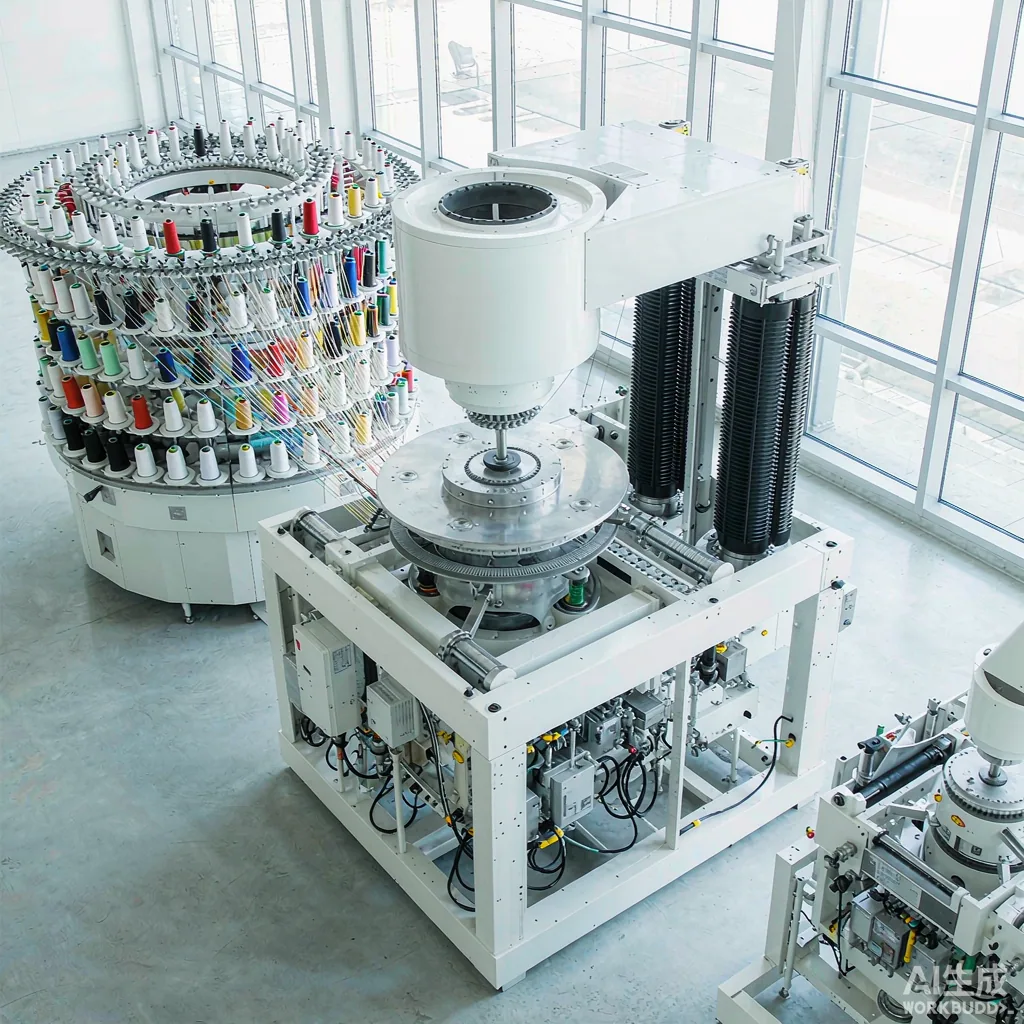
Gate Five: What the 30-Day Bulk Window Actually Contains
Bulk production in 30 days covers yarn booking, knitting, finishing, trim and lining assembly, inline inspection and packing, plus the pre-shipment AQL 2.5 inspection; it does not cover freight transit, which is booked separately against the agreed incoterm.
Roughly a third of that window is waiting time, and that is normal rather than a symptom. Yarn in the specified count and colour is booked in the first days. Bodies are knitted across the middle of the window on the lines assigned to the programme. The final third is finishing, trim assembly, inline inspection and packing. Where a programme needs dope-dyed yarn in a custom shade, or a Global Recycled Standard transaction certificate against a named recycled lot, the yarn step alone can occupy the first 10 days, which is why colour decisions belong at gate three and not at gate five.
- Days 1 to 10 — yarn booking, shade confirmation and, where required, recycled-content documentation
- Days 8 to 20 — knitting the bodies across the assigned lines, with inline checks on dimensions and stitch density
- Days 18 to 26 — finishing, heat setting, trim and lining assembly, hardware attachment
- Days 24 to 29 — inline inspection, rework of any out-of-tolerance pieces, packing into export cartons
- Day 30 — pre-shipment inspection to AQL 2.5 under an ISO 2859-1 sampling plan, then release to the nominated forwarder
The Commercial Window: MOQ, Cost Bands and Incoterms
The commercial window for a knit bag programme here is MOQ 100 pcs per style or colourway, sampling in 7 working days, bulk production in 30 days, AQL 2.5 to ISO 2859-1 and FOB Xiamen, with CIF and DDP available where the buyer prefers a landed figure.
MOQ is set per style and per colourway rather than per order, so a four-colour run of one silhouette books as four lines of 100 pcs and not as one line of 400 pcs. That matters for jacquard work in particular, because each colourway is a separate yarn set-up on the bed. Cost bands move with the gate three decision: an E12 body in 300D rPET for a 34 x 38 cm tote lands in a different band from an E7 body in 600D, and the two should never be compared without the GSM and the cycle time written alongside. See knit bag materials and yarns for the full comparison.
- MOQ
- 100 pcs per style or colourway
- Sampling
- 7 working days
- Bulk production
- 30 days
- Inspection
- AQL 2.5 under ISO 2859-1
- Incoterm
- FOB Xiamen, with CIF and DDP available
- Capacity
- 7 production lines, about 200,000 pcs per month
- Reference unit cost
- USD 4.80 for a standard E12 tote at specification
- Compliance set
- BSCI, Sedex, REACH, Prop 65, CPSIA, GRS, OEKO-TEX
Quality Evidence to Request Before You Release a Deposit
Ask for four documents before any deposit moves: a yarn specification sheet with count and lot reference, a colour-fastness report to AATCC 8 and AATCC 61, an abrasion result to ISO 12947-2, and a tensile result to ISO 13934-1.
The numbers to expect on a bag programme differ from apparel. A 300D rPET body at E12 will normally return 20,000 to 30,000 Martindale rubs before breakdown, a maximum force of 450 N to 620 N on a 50 mm strip, and a dry crocking grade of 4 or better. A result materially below those figures is a yarn problem rather than a knitting problem, and the useful follow-up question is which dope-dyed or piece-dyed lot the result came from. Lot discipline is what separates a repeatable programme from a one good shipment.
Test set for a knit bag programme
- Abrasion — ISO 12947-2, Martindale method, 20,000 rubs minimum for a daily-use tote
- Tensile — ISO 13934-1 strip method, report maximum force in newtons for both directions
- Tear — ISO 13937, report in newtons
- Colour fastness to rubbing — AATCC 8, dry and wet grade against the grey scale
- Colour fastness to laundering — AATCC 61, grade after the agreed cycle
- Dimensional change — percentage in length and width after the agreed wash cycle
- Pre-shipment inspection — AQL 2.5 sampling plan under ISO 2859-1
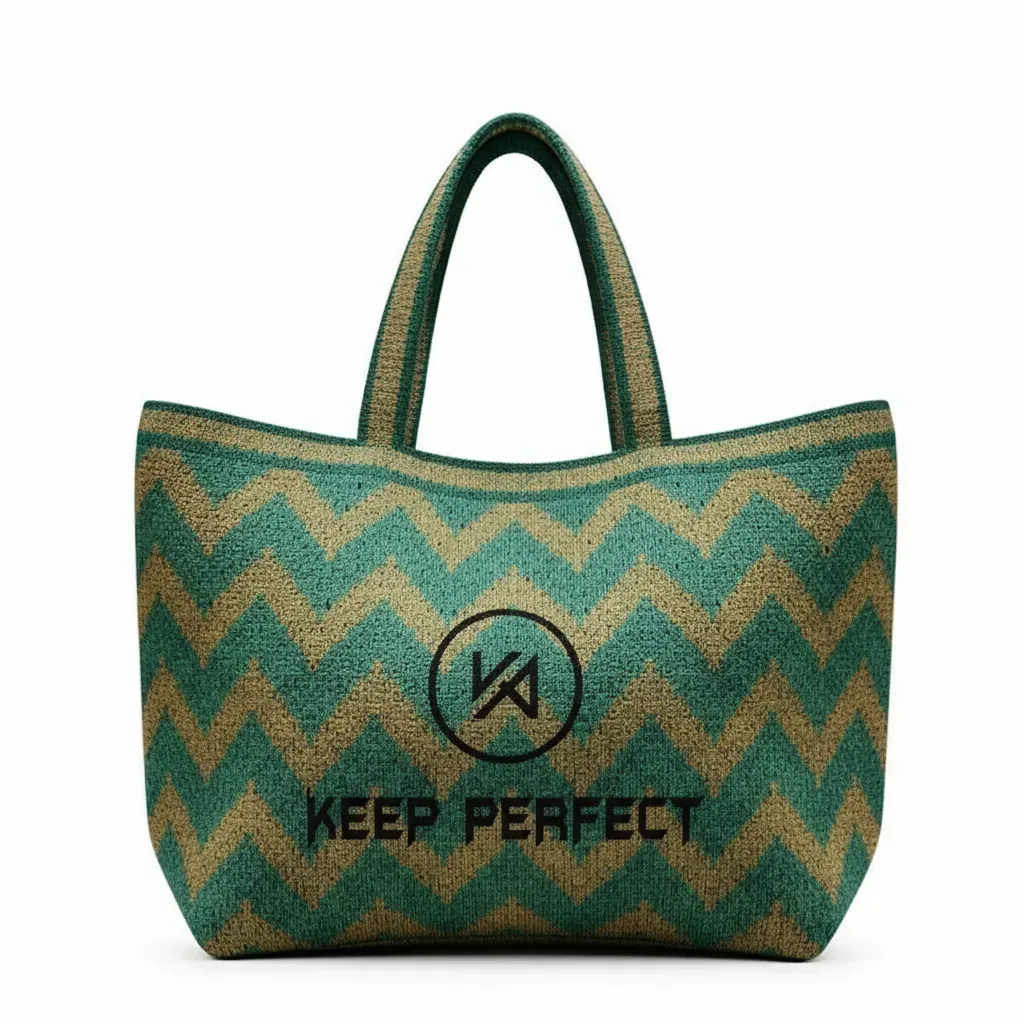
How to Write an RFQ Three Vendors Can Answer on the Same Basis
An RFQ that produces comparable quotes states the architecture, the gauge, the yarn count, the finished GSM, the dimensions, the trim set, the test set and the quantity per colourway — eight lines, none of them optional.
- Architecture — name the route: whole-garment, cut-and-sew knit panel or hybrid.
- Gauge and yarn — give the machine gauge and the yarn count in denier, plus fibre type and recycled content.
- Finished GSM — state the target and the tolerance, because this is the figure that ties price to weight.
- Dimensions — give length, width, depth and handle drop, plus the target load weight the bag must carry.
- Trim set — list zip type and length, lining, hardware finish, label placement and any mould requirement.
- Test set — name the standards and the pass levels you will accept the shipment against.
- Quantity per colourway — because MOQ applies per colourway, not per order.
- Delivery week and incoterm — the week the goods must be ready, and whether FOB Xiamen, CIF or DDP applies.
Where Buyers Lose Time, and How to Avoid It
The three delays that cost the most on a knitted bag programme are an unsigned tech pack, a custom trim that needs a new mould, and a colourway added after the yarn has been booked.
All three are avoidable with sequencing. Sign the tech pack before the sampling clock starts, confirm the trim set against stock items before committing to a 7-working-day sample, and close the colourway list at the same time as the gauge decision. Buyers who work in that order get a quote they can compare, a sample they can approve, and a bulk window they can plan a launch around. See seamless knit bags for the construction detail behind the whole-garment route, and knit bag QC for how the AQL 2.5 plan is applied in practice.
Start a knit bag programme
Send the tech pack, the target quantity per colourway and the delivery week. Our knit team will come back with an architecture recommendation, a gauge and yarn count, and a costed quote against MOQ 100 pcs per style, 7 working days of sampling and 30 days of bulk production. Request a quote on the contact page.
Frequently Asked Questions
What is the MOQ for a 3D knitted bag programme?
MOQ is 100 pcs per style and per colourway, not per order. A four-colour run of one silhouette therefore books as four lines of 100 pcs, because each colourway needs its own yarn set-up on the needle bed. Mixed-colourway orders are fine as long as every line clears 100 pcs on its own.
How long does sampling take for a knitted bag?
Sampling runs to 7 working days from the day the tech pack is signed off, not from the day the enquiry arrives. The window covers programming the stitch structure, knitting a first body, fitting it empty and loaded, correcting the structure, applying the trim set, and measuring and packing the sample parcel for dispatch.
How long is bulk production on a knit bag order?
Bulk production is 30 days. That window covers yarn booking, knitting across the assigned lines, finishing and heat setting, trim and lining assembly, inline inspection, packing and the pre-shipment AQL 2.5 inspection. Freight transit is booked separately against the agreed incoterm and is not inside the 30 days.
Which gauge should I specify for a knitted tote bag?
E12 in 300D rPET is the default band for a tote, giving about 320 g/m² and a balanced drape. Step down to E7 in 600D for roughly 520 g/m² and a structured hand, or up to E14 in 150D for about 240 g/m² and a fabric-like surface. Machine time rises as gauge rises.
What does AQL 2.5 mean for a bag shipment?
AQL 2.5 is the acceptance quality limit used to pick the sample size and the accept or reject threshold for a pre-shipment inspection under an ISO 2859-1 sampling plan. It sets how many pieces are pulled at random from the lot and how many defects are tolerated before the whole lot is failed for rework.
Which incoterm applies to knit bag orders?
FOB Xiamen is the standard term. CIF and DDP are available where a buyer prefers a landed figure or wants freight and duty handled on their behalf. The incoterm changes who books and pays for the main carriage, not the 30-day bulk window itself, which runs to the point the goods are ready.
Can I mix colourways inside one 100-piece minimum order?
No, the 100-pcs minimum applies per colourway. A jacquard or multi-colour programme needs each shade booked as its own line, because each one is a separate yarn set-up on the machine. Buyers wanting maximum shade coverage from a small total often run two or three colourways at 100 pcs each rather than one at 300 pcs.
What test reports should I request before placing a bulk order?
Request a yarn specification sheet with count and lot reference, colour fastness to AATCC 8 and AATCC 61, abrasion to ISO 12947-2, and tensile strength to ISO 13934-1. For a daily-use tote expect 20,000 to 30,000 Martindale rubs, 450 N to 620 N maximum force on a 50 mm strip, and a dry crocking grade of 4 or better.
Is whole-garment knitting or cut-and-sew better for a backpack?
Cut-and-sew knitted panels suit a backpack better. Whole-garment knitting is limited by needle-bed width and excels at totes, bottle carriers and shaped day bags, while a backpack needs larger panels, a lined interior and often a structured back panel, all of which the cut-and-sew route handles more easily.
How do I compare quotes from three knitted bag vendors?
Compare them only once architecture, gauge, yarn count and finished GSM are identical. Without those four figures a quote difference usually reflects a different bag rather than a different price. Ask each vendor to restate the GSM, the cycle time per piece and the yarn count on the quote itself before comparing totals.
What causes a knitted bag sample to miss the 7-day window?
Three things: a yarn count not held in stock, a trim item needing a new mould, and a tech pack that is not signed off. All three sit outside the knitting step. Confirming yarn stock and trim availability before the clock starts is the single most effective way to protect the sampling window.
Can a knitted bag carry a structured shape?
Yes, through the hybrid route. A knitted body is combined with a bonded interlining, a moulded base or a frame, which lets the bag stand empty and hold a sharp edge. This adds one component and two finishing steps, so it moves the unit cost above a pure whole-garment body.
What certifications apply to knitted bags for the EU and US?
The relevant set is REACH Annex XVII for restricted substances, California Prop 65 for the US market, CPSIA where the item is a children's product, OEKO-TEX STANDARD 100 for the finished textile, and the Global Recycled Standard where recycled content is claimed. BSCI and Sedex cover social compliance audits.
How is recycled content documented on a knit bag order?
Recycled content is documented through a Global Recycled Standard transaction certificate tied to the specific yarn lot used on the order. Ask for the certificate at yarn booking rather than at shipment, because issuing it against a named lot takes time and can extend the front of the bulk window.
What is the reference unit cost for a knitted tote?
USD 4.80 is the reference figure for a standard E12 tote at specification. The actual band moves with gauge, yarn count, finished GSM, trim set and quantity per colourway, so treat the figure as an anchor for a defined spec rather than a general price for the category.
How many pieces can be produced per month?
Capacity is about 200,000 pcs per month across 7 production lines. Allocation is confirmed when the bulk order is placed, and programmes with dope-dyed or certified recycled yarn need the yarn booked early so the knitting slots can be reserved against real material. Allocation is confirmed when the bulk order is placed rather than at quotation stage.
People Also Ask
What is a 3D knitted bag?
A bag whose body is knitted to shape on a flat or whole-garment knitting machine rather than cut from cloth, so the silhouette, the base and often the handle aperture are formed by the stitch structure itself rather than by seams.
What is whole-garment knitting?
A knitting method that produces a complete three-dimensional piece in one cycle on the machine. For bags it means the body, the base transition and the handle opening come off the bed finished, with no side seam and no handle attachment seam to fail under load.
What does machine gauge mean in knitting?
Gauge is the number of needles per inch on the needle bed. Lower gauges such as E7 knit a coarse, thick loop suitable for structured bodies; higher gauges such as E14 knit a finer loop that reads as a fabric. Gauge and yarn count together set GSM.
Why choose a knitted bag over a woven bag?
Choose knit when the value is in the shape or the surface: integral handles, engineered zones and jacquard colour are built into the fabric. Choose woven when the value is in flat print area and a wide base-cloth choice, where the loop structure adds nothing.
What is GSM in knitted bag fabric?
GSM is grams per square metre, the weight of the finished knitted fabric. It is the figure that ties price to substance: an E7 body in 600D yarn gives about 520 g/m², while an E14 body in 150D gives about 240 g/m² for the same silhouette and dimensions.
Sources and further reading
Every figure on this page is either our own programme data or attributed below. Open the originals before you write them into a specification.
- ISO 2859-1:2026 — Sampling procedures for inspection by attributes, Part 1: AQL-indexed sampling schemesISO The standard behind the AQL 2.5 pre-shipment inspection plan used on knit bag shipments; it defines sample sizes and accept or reject thresholds.
- ISO 12947-2:2016 — Textiles, determination of abrasion resistance by the Martindale method, Part 2: specimen breakdownISO The abrasion method referenced for the 20,000 to 30,000 rub expectation on a daily-use knitted tote body.
- ISO 13934-1:2013 — Textiles, tensile properties of fabrics, Part 1: maximum force using the strip methodISO Source of the 50 mm strip method used to report maximum force in newtons for a knitted bag body.
- AATCC standard test methods and proceduresAATCC Lists AATCC TM8 for colour fastness to crocking and AATCC TM61 for colour fastness to laundering, both requested in the document set.
- OEKO-TEX STANDARD 100OEKO-TEX Finished-textile testing for harmful substances; one of the compliance documents requested alongside REACH and Prop 65.
Putting the Five Gates Into One Page
The five gates are not a formality; they are the difference between a knit bag programme that quotes cleanly and one that is re-quoted three times. Fix the structure, then the gauge and yarn, then the trim set, then the window, then the terms, and every subsequent conversation becomes a comparison rather than a negotiation.
If you already have a tech pack, the fastest route is to send it with the target quantity per colourway and the delivery week. If you have only a sketch, the useful first step is a gauge and yarn recommendation against the silhouette, which is exactly what the sampling window of 7 working days is designed to settle.