Seamless Knit Bags: Where the Cost Sits, and Where Seamless Wins or Loses
How much does a seamless knit bag actually cost to make, and what moves that figure? On a 34 x 38 cm tote the split is roughly 46% yarn, 31% machine time, 15% finishing and trim, and 8% inspection and packing. Four variables drive every line of that split: machine gauge, yarn count, reinforcement design and tolerance. This page breaks the cost apart first, then explains each variable, then states plainly where a seamless knit body beats a sewn one and where it does not.
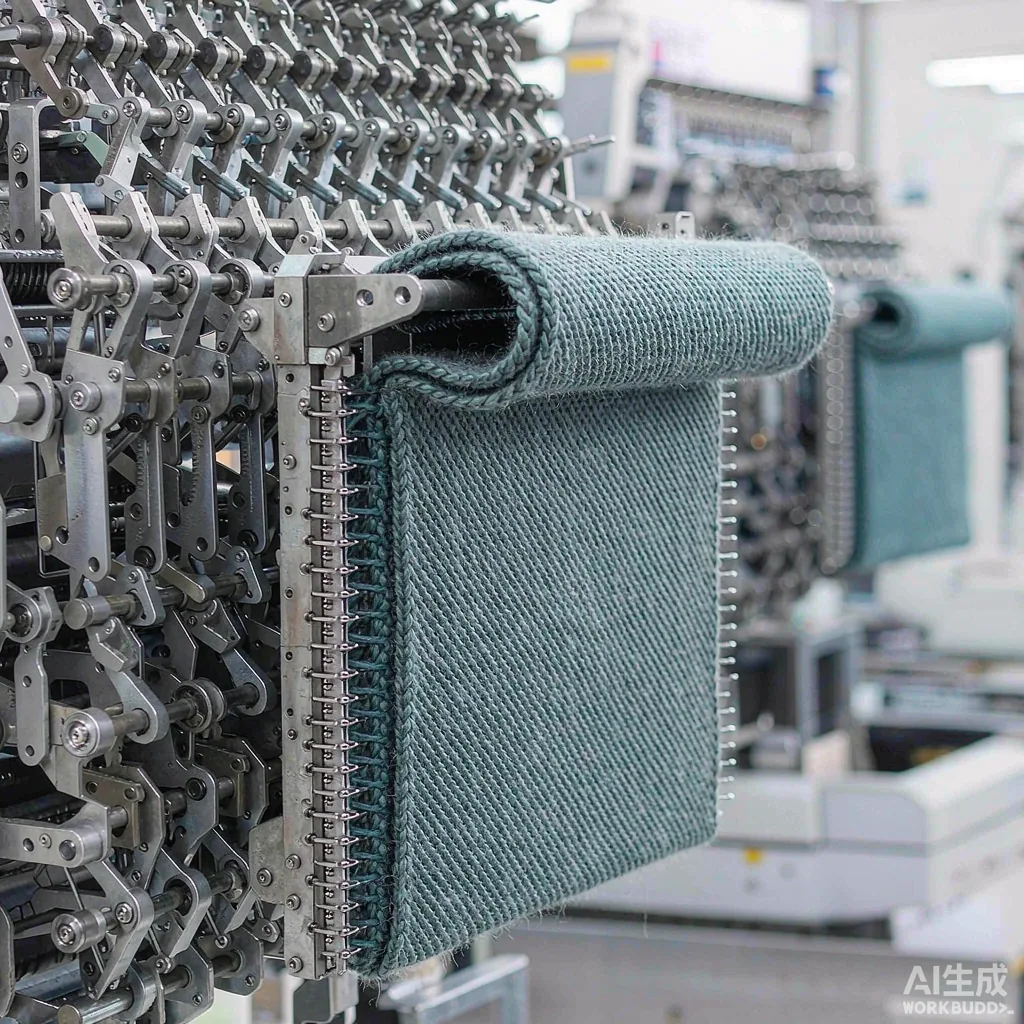
The Cost of a Seamless Knit Bag, Line by Line
On a 34 x 38 cm tote at E12 in 300D rPET the cost split is approximately 46% yarn, 31% machine time, 15% finishing and trim, and 8% inspection and packing — and the largest single lever is not labour but the gauge decision, which moves machine time more than anything else in the programme.
That ordering surprises buyers who expect labour to dominate. Knitting is capital-intensive rather than labour-intensive: the bed does the shaping, and the variable that governs cost per piece is how long the bed is occupied. A coarse body at E7 in 600D may clear in 6 minutes per piece, while the same silhouette at E14 in 150D can take 14 minutes because it carries more than twice the number of courses. Doubling cycle time does not double the unit cost, but it does move the piece into another band.
| Cost line | Share of unit cost | What moves it | How to control it |
|---|---|---|---|
| Yarn | about 46% | Fibre type, denier, dope-dyed versus piece-dyed, recycled content | Fix the count and shade at specification stage, not after booking |
| Machine time | about 31% | Gauge, stitch density, cycle time per piece | Choose the coarsest gauge the brief tolerates |
| Finishing and trim | about 15% | Heat setting, lining, zip, hardware, moulded components | Confirm trim against stock items before sampling starts |
| Inspection and packing | about 8% | AQL level, carton count, labelling and documentation | Agree the AQL 2.5 plan and the packing spec in the RFQ |
Variable One: Machine Gauge and Cycle Time
Gauge is the number of needles per inch on the bed, and on a bag programme it runs E7 to E14; every step up in gauge adds courses, adds cycle time and adds cost, which is why the coarsest gauge the brief will tolerate is almost always the correct commercial choice.
The practical reading is simple. E7 in 600D produces about 520 g/m², a firm structured hand and the shortest knitting cycle. E12 in 300D produces about 320 g/m², sits in the middle of both cost and hand, and is the default band for a tote. E14 in 150D produces about 240 g/m², reads as a fabric rather than a structure, and carries the longest cycle. If a brief can be satisfied at E12, specifying E14 buys a finer surface and a longer cycle without buying any function the buyer asked for.
- E7 in 600D rPET
- about 520 g/m², cycle near 6 minutes per piece
- E12 in 300D rPET
- about 320 g/m², cycle near 9 minutes per piece
- E14 in 150D rPET
- about 240 g/m², cycle near 14 minutes per piece
- Stitch density at E12
- 12 to 16 wales per inch, 16 to 20 courses per inch
- Bed width limit
- sets the maximum body width for a whole-garment piece
- Reference unit cost
- USD 4.80 for a standard E12 tote at specification
Variable Two: Yarn Count and Finished GSM
Yarn count in denier and finished GSM are the two figures that must appear on every quote, because a price without a GSM attached is not comparable: 600D at E7 and 150D at E14 can produce the same silhouette at weights 280 g/m² apart.
Recycled polyester is the default for a bag programme and is documented through a Global Recycled Standard transaction certificate tied to the specific yarn lot. Nylon 6 and nylon 66 are used where abrasion resistance is the governing requirement, and blends are used where a buyer wants the hand of one fibre and the strength of the other. Dope dyeing, where pigment is added to the polymer before extrusion, gives better colour fastness and avoids a wet dye step; piece dyeing gives a wider shade range at a longer lead time. Both are worth stating explicitly in the tech pack, because the choice shows up in the cost line and in the front of the production window.
Variable Three: Reinforcement Zones and Handle Roots
A seamless knit body reinforces itself by varying stitch density inside the piece, so the load path around the handle root is built on the bed rather than stitched on afterwards — and this is the single largest engineering advantage seamless construction has over a sewn panel bag.
In practice the programmer raises loop density in a band around each handle aperture and across the base transition, then holds a lighter, more open structure across the panels where no load passes. On a tote the reinforcement band typically sits 25 to 40 mm wide around the aperture. The alternative, a sewn reinforcement patch, adds a component, a stitch line and a second failure mode. A knitted bag also fails differently: where a sewn tote splits at the handle root, a knitted one tends to deform before it tears, which is a more useful behaviour for a bag carrying weight.
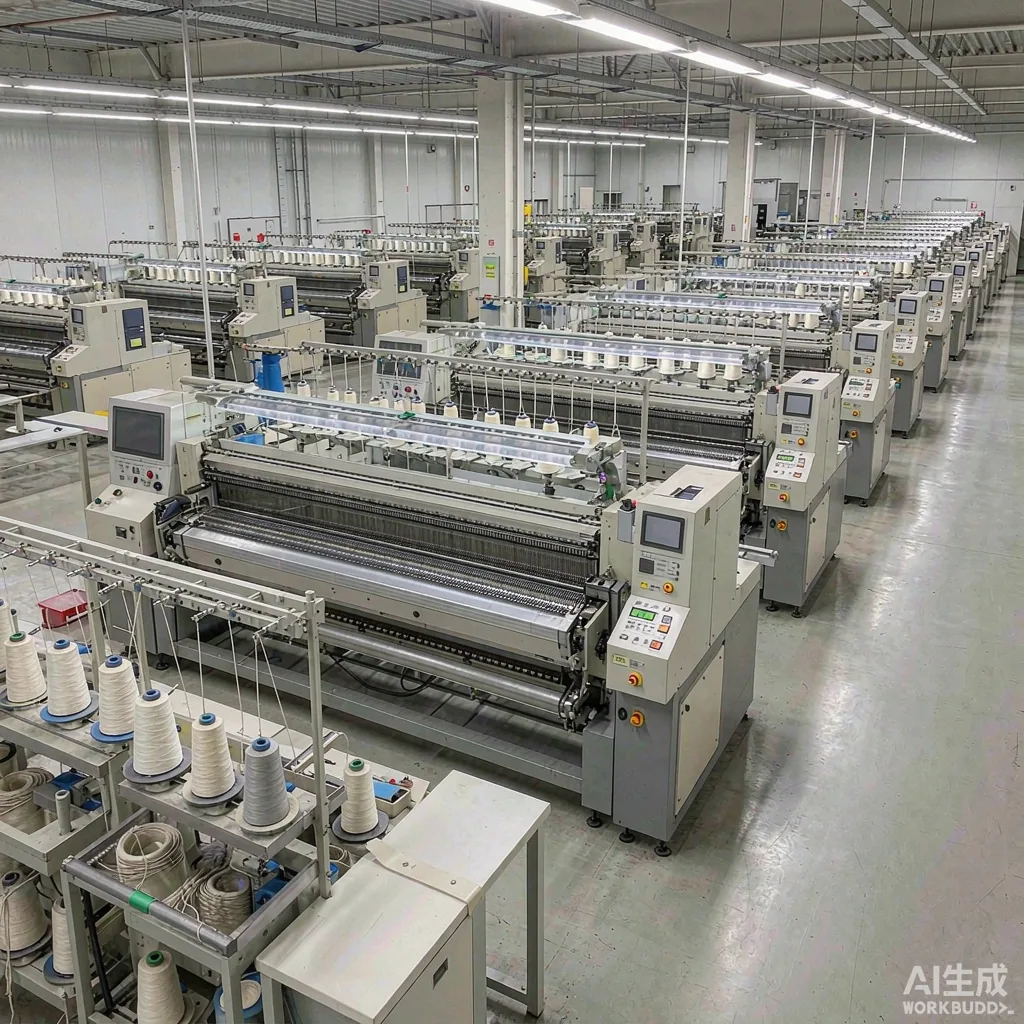
Variable Four: Tolerance — What Seamless Holds and What It Does Not
A seamless knitted body holds plus or minus 3 mm on a 380 mm dimension and plus or minus 2% on finished GSM; it does not hold the tight edge definition of a cut panel, and a buyer who specifies 1 mm on a knit is specifying a tolerance the process cannot repeat.
Tolerance on a knit is governed by relaxation rather than by cutting. A body comes off the bed under tension and relaxes over the following hours, so the measurement that matters is the one taken after heat setting and conditioning, not the one taken at the machine. Dimensional change after a wash cycle should be within 3% in both length and width. Buyers who understand this write the tolerance into the tech pack as a post-finishing figure, and buyers who do not end up rejecting goods that are inside every reasonable tolerance.
| Dimension or property | Held tolerance | Measured when | Note |
|---|---|---|---|
| Body length and width | plus or minus 3 mm on 380 mm | After heat setting and conditioning | Measured flat, unloaded |
| Finished GSM | plus or minus 2% | On conditioned fabric | Ties weight tolerance to price |
| Handle drop | plus or minus 3 mm | After conditioning | Critical for shoulder-carry styles |
| Dimensional change after wash | within 3% length and width | After the agreed cycle | Agree the cycle in the RFQ |
| Colour shade | to the approved standard under D65 | Against the signed-off swatch | Dope-dyed shades hold more tightly |
Where Seamless Wins: Four Bag Types
Seamless construction wins on totes, bottle carriers, shaped day bags and any style where the load path passes through a handle root, because those are exactly the shapes where a sewn assembly has the most seams in the places that carry the most force.
Totes
The body, the base transition and the handle aperture come off the bed finished, removing the side seam and the handle attachment seam in one step.
Bottle carriers
A cylindrical seamless body holds a bottle without a liner, and the stitch structure can be opened into a ventilation zone where the hand grips.
Shaped day bags
Curved silhouettes that would need darts or gussets in a cut panel are knitted directly, with no cutting waste and no dart seams.
Light utility bags
Engineered zones let one piece carry a stiff base and an open panel, which removes the need for a second fabric in the same bag.
Where Seamless Loses: Be Honest About the Limits
Seamless loses on very large bodies, on bags that must stand rigidly empty, and on any programme needing a wide flat print area, because needle-bed width caps the body, loop structure has no inherent stiffness, and print sits no better on a knit than on a woven cloth.
The bed width limit is a hard constraint rather than a preference: above a certain body width the piece simply has to be knitted as panels and joined, at which point the seamless argument disappears and the honest recommendation is a cut-and-sew knit route. Rigidity is the second limit. A bag that must hold a sharp edge empty needs a bonded interlining or a moulded frame, which is the hybrid route: still a knit body, but with an added component and two added finishing steps. Volume printing is the third. If the commercial value of the bag is a large flat graphic, print on a woven panel remains the more sensible buy.
Integral Handles and Openings: How They Are Built
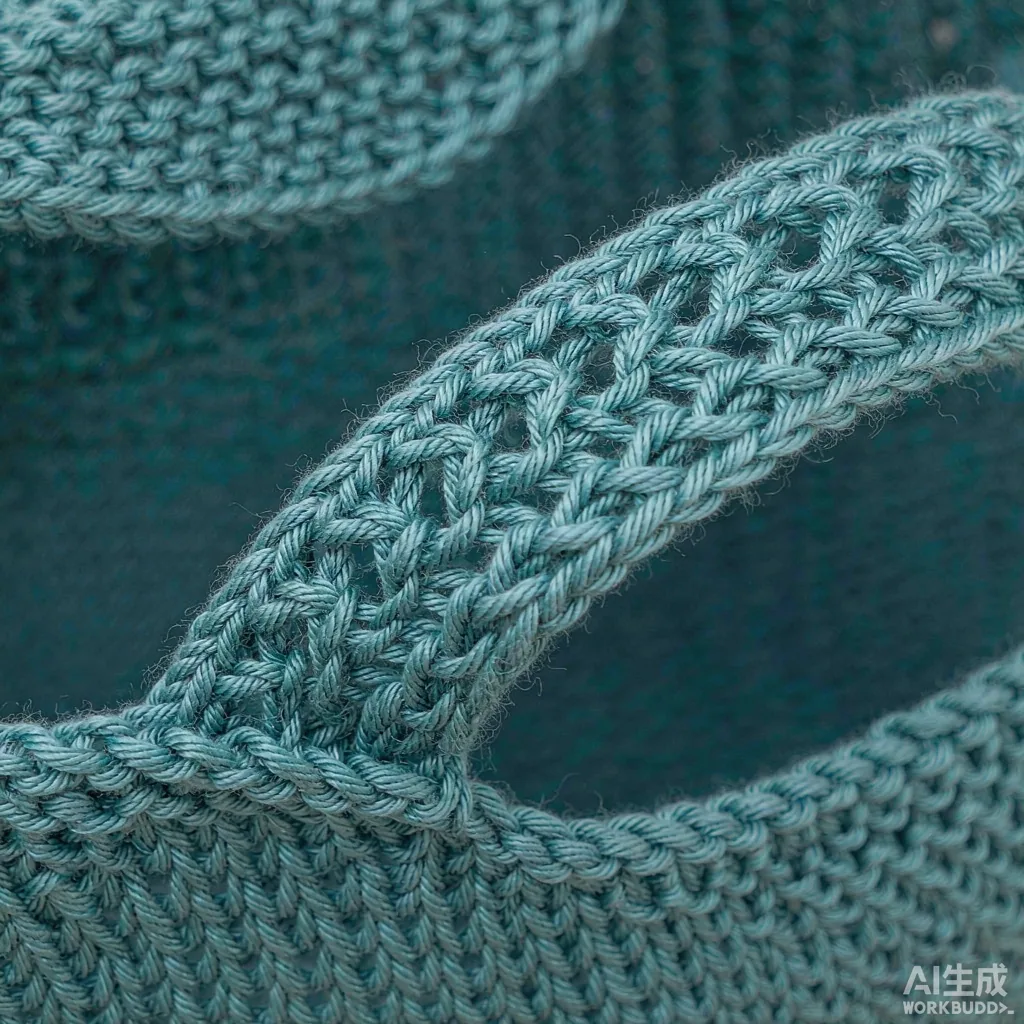
An integral handle is produced by knitting a closed aperture into the body and reinforcing the surrounding band in the same cycle, which removes the handle attachment seam entirely and moves the failure point from a stitch line into the fabric itself.
Openings are handled the same way. A zip aperture, a drawcord channel or a magnetic closure placket can be formed during knitting rather than cut afterwards, because the programmer controls exactly where the structure opens and closes. Where a buyer wants a lining, the lining is cut and sewn but the outer body remains seamless, which preserves the structural advantage while allowing an interior pocket spec. A lining also lets the bag carry interior pockets and a cleaner finish without any change at all to the knitted structure of the outer body. The one operation that always follows knitting is heat setting, which stabilises the loop structure and locks the dimensions the tolerance table refers to.
Testing a Seamless Body: The Numbers That Matter
A seamless knit body for daily use should return 20,000 to 30,000 Martindale rubs before breakdown, 450 N to 620 N maximum force on a 50 mm strip, and a dry crocking grade of 4 or better — and the shipment should be released against an AQL 2.5 plan under ISO 2859-1.
Test set for a seamless knit bag
- Abrasion — ISO 12947-2 Martindale, 20,000 rubs minimum for a daily-use tote
- Tensile — ISO 13934-1 strip method, report maximum force in newtons
- Tear — ISO 13937, reported in newtons
- Colour fastness to rubbing — AATCC 8, dry and wet
- Colour fastness to laundering — AATCC 61, grade after the agreed cycle
- Dimensional change — within 3% after the agreed wash cycle
- Pre-shipment inspection — AQL 2.5 under an ISO 2859-1 sampling plan
Timeline Arithmetic: 7 Working Days and 30 Days in Practice
Sampling runs to 7 working days from a signed tech pack and bulk production to 30 days, and the two windows share one dependency: yarn in the specified count and shade must be booked before either clock is worth starting.
The sampling window divides into programming and first knit on days one and two, fitting on day three, structural correction on day four, trim and lining on days five and six, and measurement, photography and packing on day seven. The bulk window divides into yarn booking across the first 10 days, knitting across days 8 to 20, finishing and trim assembly across days 18 to 26, and inline inspection, packing and the pre-shipment AQL 2.5 inspection across days 24 to 30. Capacity behind both windows is 7 production lines running about 200,000 pcs per month, with MOQ 100 pcs per style or colourway and FOB Xiamen as the standard term.
Price a seamless knit programme
Send the silhouette, the target GSM and the quantity per colourway. Our knit team will return a gauge recommendation, a cycle time per piece and a costed quote against MOQ 100 pcs per style, 7 working days of sampling and 30 days of bulk production. Start on the contact page.
Frequently Asked Questions
What is a seamless knit bag?
A bag whose body is knitted to shape in one cycle so it has no side seam and no handle attachment seam. The silhouette, the base transition and the handle aperture are all formed by the stitch structure on the needle bed rather than by cutting and joining panels afterwards.
How is a seamless knit bag different from a cut-and-sew knit bag?
A seamless body comes off the bed finished, while a cut-and-sew knit bag is knitted as flat panels and then cut and joined. Seamless removes the cutting step and the side seam; cut-and-sew allows bodies wider than the needle bed and makes lining and interior pockets easier.
What gauge is best for a seamless knit tote?
E12 in 300D rPET is the default, giving about 320 g/m² and a balanced drape. E7 in 600D gives roughly 520 g/m² with a structured hand and the shortest cycle, while E14 in 150D gives about 240 g/m² with a finer surface and the longest cycle.
What tolerance can a seamless knit body hold?
Expect plus or minus 3 mm on a 380 mm body dimension and plus or minus 2% on finished GSM, measured after heat setting and conditioning rather than at the machine. Dimensional change after washing should stay within 3% in both length and width. Write the tolerance as a post-finishing figure rather than a machine-side measurement, because the body relaxes afterwards.
How is the handle on a seamless knit bag reinforced?
The loop density is raised in a band around the handle aperture during knitting, typically 25 to 40 mm wide, so the load path is built into the fabric. That removes the handle attachment seam, which is the most common failure point on a sewn tote.
Does a seamless knit bag need a lining?
Not structurally, but many programmes add one for interior pockets or a cleaner finish. The lining is cut and sewn while the outer body stays seamless, so adding a lining does not remove the advantage of the one-piece construction on the load path. A lining also allows interior pockets and a cleaner finish without changing the knitted structure of the outer body.
How much weight can a seamless knit tote carry?
Specify the target load in the brief and the structure is programmed to it. A 300D rPET body at E12 will normally return 450 N to 620 N maximum force on a 50 mm strip, which comfortably covers a daily-carry load when the handle band is reinforced correctly.
What abrasion result should I expect from a seamless knit body?
A daily-use tote in 300D rPET should return 20,000 to 30,000 rubs before breakdown when tested to ISO 12947-2 on the Martindale method. Below that range the cause is usually the yarn count or the dye route rather than the knitting itself. Ask which yarn lot the result came from, because the answer tells you where the correction belongs.
Can a seamless knit bag be made very large?
Only up to the needle-bed width. Above that the body has to be knitted as panels and joined, which removes the seamless advantage entirely. For backpacks and large holdalls the cut-and-sew knit route is normally the more sensible recommendation, because the bed constraint is a physical limit and not a preference that can be argued around.
Can a seamless knit bag stand up empty?
Not by itself, because loop structure has no inherent stiffness. A bag that must hold a sharp edge empty needs a bonded interlining or a moulded base, which is the hybrid route, still a knitted body but with one added component and two added finishing steps.
What is the MOQ for seamless knit bags?
MOQ is 100 pcs per style and per colourway rather than per order. Each colourway is a separate yarn set-up on the bed, so a three-colour programme books as three lines of 100 pcs. Capacity behind it is 7 production lines at about 200,000 pcs per month.
How long does it take to sample a seamless knit bag?
Sampling runs to 7 working days from a signed tech pack. Programming and the first knit take two days, fitting takes one, structural correction one, trim and lining two, and measurement, photography and packing one. Custom yarn or a new trim mould adds lead time before the clock starts.
Is dope dyeing or piece dyeing better for a seamless knit bag?
Dope dyeing gives stronger colour fastness and avoids a wet dye step, which shortens the front of the production window and holds shade more tightly between lots. Piece dyeing offers a wider shade range at a longer lead time and more shade variation between lots.
How is recycled content documented on a seamless knit bag?
Through a Global Recycled Standard transaction certificate tied to the yarn lot used on the order. Request it at yarn booking rather than at shipment, because issuing it against a named lot takes time and can extend the front of the 30-day bulk window. Ask for the lot reference alongside it so it matches the shipment.
What incoterm applies to seamless knit bag shipments?
FOB Xiamen is the standard term, with CIF and DDP available where a buyer prefers a landed figure. The incoterm determines who books and pays for main carriage; it does not change the 30-day bulk window, which runs to the point the goods are ready.
What is the reference unit cost for a seamless knit tote?
USD 4.80 is the reference figure for a standard E12 tote at specification. The band moves with gauge, yarn count, finished GSM, trim set and quantity per colourway, so treat it as an anchor for a defined specification rather than a general price. Ask for GSM and cycle time per piece to be restated on the quote so the comparison is like for like.
People Also Ask
What does seamless mean in knitting?
It means the piece is knitted to its finished shape in one cycle, so no seam is needed to close it. On a bag that covers the body, the base transition and the handle aperture, all formed by the stitch structure on the bed.
Are seamless knit bags stronger than sewn bags?
At the handle root, usually yes, because the load path is knitted as a denser band instead of a stitch line. Across a large flat panel the difference is small, so the advantage is about where the force goes rather than about overall strength.
What is whole-garment knitting?
The machine method behind seamless knit bags: a flat knitting machine produces a complete three-dimensional piece in one programme, shaping the body, the base and the openings without any subsequent cutting or joining.
Why does gauge change the price of a knit bag?
Higher gauge means more needles per inch and therefore more courses to knit the same silhouette, so the bed is occupied longer. Cycle time goes from about 6 minutes at E7 to about 14 minutes at E14 for the same shape.
Can seamless knit bags be printed on?
Yes, but print is not the strength of the route. A knit surface carries jacquard colour and stitch-level texture better than an applied film, and a large flat graphic is usually better served by a woven panel.
Sources and further reading
Every figure on this page is either our own programme data or attributed below. Open the originals before you write them into a specification.
- ISO 12947-2:2016 — Textiles, determination of abrasion resistance by the Martindale method, Part 2: specimen breakdownISO The Martindale method referenced for the 20,000 to 30,000 rub expectation on a seamless knit tote body.
- ISO 13934-1:2013 — Textiles, tensile properties of fabrics, Part 1: maximum force using the strip methodISO Source of the 50 mm strip method behind the 450 N to 620 N maximum force range quoted for a 300D body.
- ISO 2859-1:2026 — Sampling procedures for inspection by attributes, Part 1: AQL-indexed sampling schemesISO Defines the sample size and accept or reject thresholds behind the AQL 2.5 pre-shipment inspection.
- Recycled Claim Standard and Global Recycled StandardTextile Exchange The chain-of-custody standard behind the recycled-content transaction certificates issued against a named yarn lot.
- OEKO-TEX STANDARD 100OEKO-TEX Finished-textile testing for harmful substances, requested alongside REACH and Prop 65 on bag programmes.
Reading a Seamless Quote Correctly
A seamless knit quote is only comparable once it states gauge, yarn count, finished GSM and cycle time. Those four figures tell you what the bag is; the total tells you what it costs. A quote that omits them is not wrong, it is simply incomplete, and filling the gap is the fastest way to a fair comparison.
For the construction detail behind each gauge band, see knit bag materials and yarns. For the programme windows and how MOQ, sampling and bulk are sequenced, see custom knit bags.