Knit Bag Materials and Yarns: How to Specify Yarn on a Tech Pack
A buyer sent a tech pack that read: 300D recycled polyester, E12, 320 GSM, nine colourways at 100 pcs each. The quote came back 22% above the target cost, and the material was not the reason. Nine colourways meant nine yarn set-ups on the bed, and MOQ applies per colourway, so the programme booked as nine lines rather than one. The rules below are what that buyer changed, and they are the same rules any brand can apply when writing the yarn line of a knit bag tech pack.
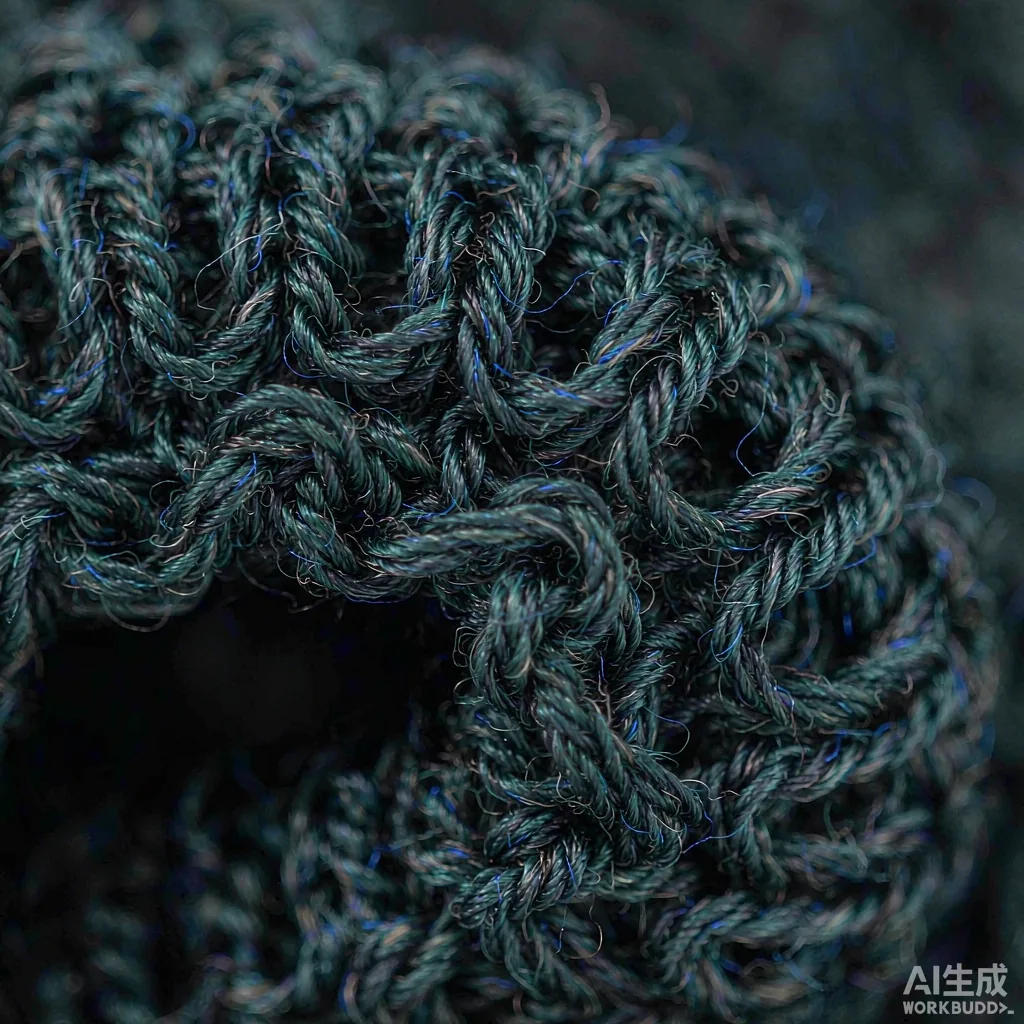
The Case: Nine Colourways, One Silhouette, One Expensive Quote
The bag in question was a 34 x 38 cm tote, 300D recycled polyester at E12, 320 GSM, nine colourways at 100 pcs each, and the quote came back 22% above the target cost because the material decision had quietly become a set-up cost decision.
Nothing was wrong with the yarn. Recycled polyester at 300D is the default choice for a tote and was correctly specified. What the buyer had not accounted for is that MOQ applies per style and per colourway, not per order, so nine shades booked as nine lines of 100 pcs and each one carried its own yarn set-up on the needle bed. The fix was not to change the fibre. It was to cut the range to four colourways, hold the same yarn count and gauge, and put the saving back into a bonded base rather than into shades that would have sold unevenly anyway.
Six rules came out of that review, and they apply to almost every knit bag material decision: specify fibre by function, treat denier and gauge as one decision, use GSM as the price anchor, prefer dope dyeing where shade consistency matters, separate abrasion from pilling, and treat certification as a document trail rather than a logo. The rest of this page takes each in turn.
Rule One: Specify Fibre by Function, Not by Habit
Choose recycled polyester for programmes where cost, recycled content and colour range matter most, nylon where abrasion resistance is the governing requirement, and a blend only when one fibre genuinely cannot deliver both hand feel and strength.
Recycled polyester, usually written rPET, is the default for knit bags. It takes dope dyeing well, it holds a wide shade range, it carries a Global Recycled Standard chain of custody, and it is priced for volume programmes. Its limitation is abrasion: a 300D rPET body will normally return 20,000 to 30,000 Martindale rubs, which is comfortable for a daily-use tote and marginal for a bag dragged across rough surfaces. Nylon 6 and nylon 66 are stronger in that respect and recover better from abrasion, at a higher yarn price and a narrower shade range. A polyester and nylon blend is the compromise, and it is worth quoting both ways before committing, because the delta is usually smaller than buyers expect once the gauge is held constant.
| Fibre | Where it fits | Abrasion behaviour | Trade-off |
|---|---|---|---|
| Recycled polyester (rPET) | Totes, day bags, promotional programmes | 20,000 to 30,000 Martindale rubs at 300D | Wide shade range and lower yarn price, moderate abrasion |
| Nylon 6 | Utility bags, bags dragged on rough surfaces | Higher rub count at the same denier | Stronger, narrower shade range, higher yarn price |
| Nylon 66 | Programmes needing heat resistance and recovery | Strong recovery after abrasion | Highest yarn price of the three |
| Polyester and nylon blend | Programmes wanting hand feel plus strength | Between the two parents | Blend ratios must be stated on the tech pack |
| Wool or acrylic accent yarn | Jacquard graphic accents and surface interest | Pilling is the governing risk | Check pilling grade before approving |
Rule Two: Denier and Gauge Are One Decision, Not Two
Denier describes how thick the yarn is and gauge describes how many needles sit per inch, and specifying one without the other is the most common technical error on a knit bag tech pack, because the same denier produces a completely different fabric at a different gauge.
Three pairings cover almost every commercial brief. 600D at E7 gives roughly 520 g/m², a firm structured hand and a knitting cycle near 6 minutes per piece. 300D at E12 gives about 320 g/m², a balanced drape and a cycle near 9 minutes. 150D at E14 gives about 240 g/m², a fabric-like surface and a cycle near 14 minutes. The pairing matters because the needle bed can only form a loop as fine as the gauge allows: asking for 600D at E14 is asking the machine to force a thick yarn through a fine needle set, which produces a stiff, boardy fabric and a raised risk of needle damage.
- 600D rPET at E7
- about 520 g/m², structured hand, cycle near 6 minutes per piece
- 300D rPET at E12
- about 320 g/m², balanced drape, cycle near 9 minutes per piece
- 150D rPET at E14
- about 240 g/m², fabric-like surface, cycle near 14 minutes per piece
- Stitch density at E12
- 12 to 16 wales per inch, 16 to 20 courses per inch
- Reference finished weight
- 280 g for a 34 x 38 cm tote in 300D at E12
- Pairing rule
- Coarser yarn needs a lower gauge; do not force 600D through E14
Rule Three: GSM Is the Number That Ties Price to Substance
Finished GSM is the only figure that lets two quotes be compared honestly, because it converts a yarn and gauge choice into the thing the buyer is actually purchasing: weight of fabric in the finished bag.
A price without a GSM attached is not a price, it is a placeholder. Two vendors quoting the same silhouette can be 280 g/m² apart on fabric weight and both be correct, because neither has been told what the bag should weigh. Write the target and the tolerance into the tech pack — 320 g/m² at plus or minus 2% is a normal specification for a tote — and require the figure to be restated on the quote. The same logic applies to the finished piece: a tote in 300D at E12 should come in near 280 g, and a sample that arrives at 240 g or 320 g is a different bag from the one that was priced.
Rule Four: Dope Dyeing Beats Piece Dyeing on Consistency
Dope dyeing adds pigment to the polymer before extrusion, so the colour sits inside the filament; piece dyeing colours the finished fabric, so the colour sits on and between the loops — and that difference shows up in fastness results, in shade consistency between lots and in the front of the production window.
For a programme running repeated seasons, dope dyeing is usually the better choice. Colour fastness to laundering under AATCC 61 and to rubbing under AATCC 8 is stronger, shade drift between lots is smaller, and the wet dye step is removed, which shortens the front of the 30-day bulk window. Piece dyeing remains the right answer where the shade range matters more than the repeat, or where a buyer is still testing colours and does not want to commit to a dope-dyed lot. Both should be named explicitly on the tech pack, because the dye route is part of the specification and not a production detail.
| Property | Dope dyed | Piece dyed |
|---|---|---|
| Where the colour sits | Inside the filament | On and between the loops |
| Colour fastness to laundering (AATCC 61) | Grade 4 to 5 typical | Grade 3 to 4 typical |
| Colour fastness to rubbing (AATCC 8) | Grade 4 to 5 dry | Grade 4 dry, lower wet |
| Shade consistency between lots | Tight, lot-controlled | Wider variation, needs a signed reference |
| Effect on the bulk window | Removes a wet step, shortens the front | Adds a dye step before finishing |
| Best for | Repeat seasons and tight shade control | Testing colours and wide shade ranges |
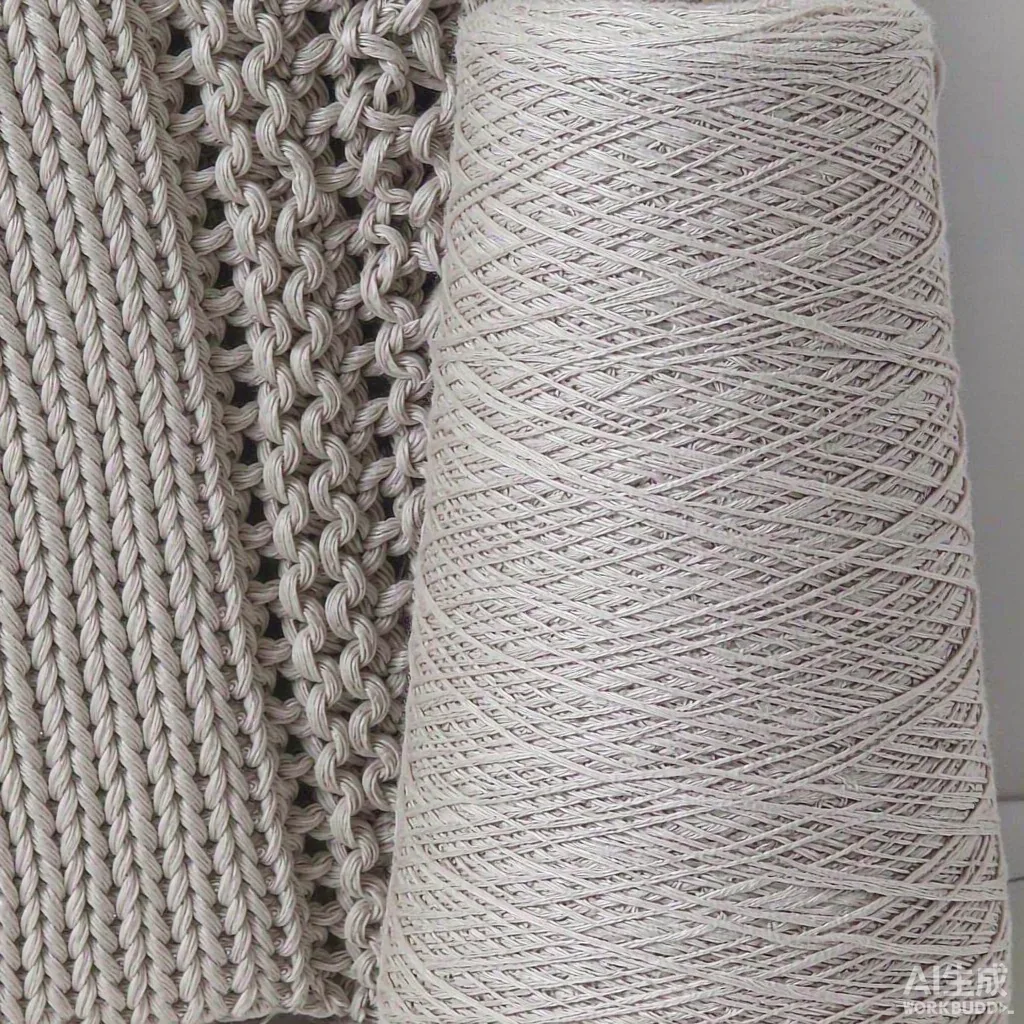
Rule Five: Abrasion and Pilling Are Different Failures
Abrasion is the fabric wearing through, measured in rubs to ISO 12947-2; pilling is the surface forming small fibre balls, measured as a grade after a set number of revolutions — and a yarn can pass one and fail the other, so both belong on the test set. Ask for both results on the same yarn lot, because a body can look worn while its structure is still perfectly sound in service.
A bag fails on abrasion when the body thins and breaks, typically at the base or at a corner that drags. It fails on pilling when the surface looks worn while the structure is still sound, which is a cosmetic rejection rather than a functional one and is just as likely to generate a return. Fine-gauge bodies in finer yarns pill more readily than coarse ones, because shorter fibre ends sit closer to the surface. The practical test set for a knit bag therefore runs abrasion to ISO 12947-2 with a 20,000-rub minimum for daily use, pilling to ISO 12945-2 at 7,200 revolutions with a grade of 4 or better expected, tensile to ISO 13934-1 reporting maximum force in newtons, and tear to ISO 13937.
Material test set for a knit bag
- Abrasion — ISO 12947-2 Martindale, 20,000 rubs minimum for daily use
- Pilling — ISO 12945-2 modified Martindale, 7,200 revolutions, grade 4 or better
- Tensile — ISO 13934-1 strip method, 450 N to 620 N typical on a 300D body
- Tear — ISO 13937, reported in newtons
- Colour fastness to rubbing — AATCC 8, dry and wet grade
- Colour fastness to laundering — AATCC 61, grade after the agreed cycle
- Dimensional change — within 3% in length and width after the agreed wash cycle
Rule Six: Certification Is a Document Trail, Not a Logo
Recycled content claims on a knit bag rest on a Global Recycled Standard transaction certificate tied to the specific yarn lot, and chemical compliance rests on REACH, Prop 65, CPSIA and OEKO-TEX documentation — all of which have to be requested at yarn booking, not at shipment.
Global Recycled Standard
Chain-of-custody certification for recycled content. The transaction certificate is issued against a named yarn lot, which is why it must be requested when the yarn is booked.
OEKO-TEX STANDARD 100
Finished-textile testing for harmful substances, applied to the completed knitted body rather than to the yarn alone.
REACH Annex XVII
The European restriction list for substances in articles. Relevant to every component of the bag, including hardware and trim, not only the knitted body.
California Prop 65
The warning and substance list that applies to goods sold into California, checked against the finished article and its trim set.
CPSIA
Applies where the bag is a children's product, adding lead and phthalate limits plus tracking-label requirements to the document set.
BSCI and Sedex
Social compliance audit frameworks covering working conditions at the production base, requested by most European retail buyers.
How to Write the Yarn Line on a Tech Pack
A yarn line that can be quoted without a follow-up question names the fibre, the denier, the gauge, the target GSM with tolerance, the dye route, the recycled content and the certification required — seven items on one line.
- Fibre — name it exactly: recycled polyester, nylon 6, nylon 66, or a stated blend ratio.
- Denier — give the count in denier, not a description such as medium weight.
- Gauge — state the machine gauge the yarn is to be knitted at, because denier alone is not a specification.
- Target GSM — give the figure and the tolerance, normally plus or minus 2%.
- Dye route — dope dyed or piece dyed, named explicitly rather than left to the vendor.
- Recycled content — state the percentage required and the certificate expected against it.
- Certification set — list REACH, Prop 65, CPSIA, OEKO-TEX and GRS as applicable to the destination market.
What the Material Choice Does to the Timeline
Stock yarn in a standard count keeps sampling inside 7 working days; a custom count, a dope-dyed custom shade or a certified recycled lot pushes the yarn step to the front of the 30-day bulk window and can occupy its first 10 days.
This is the operational consequence of every rule above. Sampling runs to 7 working days from a signed tech pack, and bulk production to 30 days, but both clocks assume the yarn is available. Where a programme needs dope-dyed yarn in a custom shade, or a Global Recycled Standard transaction certificate against a named lot, the yarn has to be booked and documented before knitting can start, and that booking is what the first third of the bulk window is for. Capacity behind the programme is 7 production lines running about 200,000 pcs per month, with MOQ 100 pcs per style or colourway, AQL 2.5 to ISO 2859-1 and FOB Xiamen as standard.
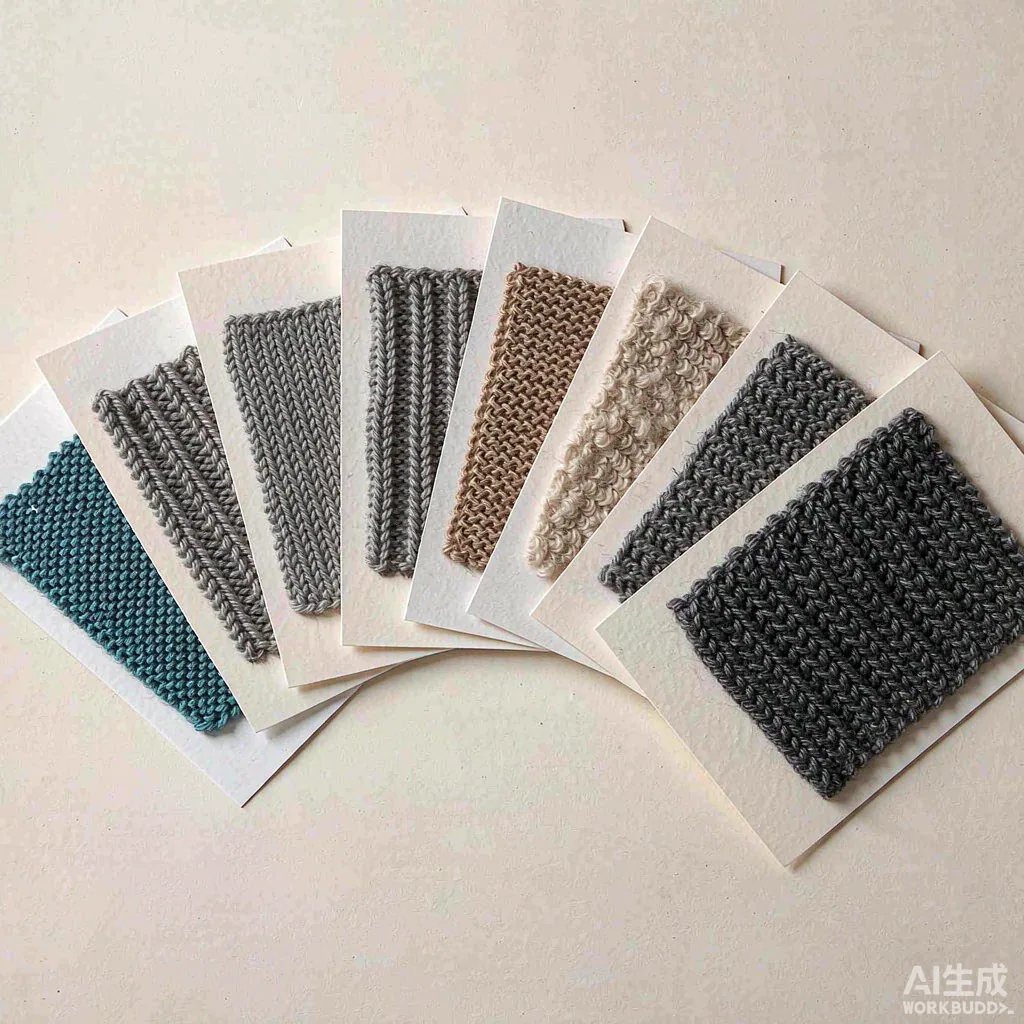
Specify the yarn for your programme
Send the silhouette, the target GSM and the destination market. Our knit team will return a fibre and denier recommendation, a gauge pairing and the certificate set your market needs. Send the specification on the contact page.
Frequently Asked Questions
Which yarn is best for a knit bag?
Recycled polyester at 300D knitted at E12 is the default for a tote, giving about 320 g/m² and a balanced drape. Move to 600D at E7 for a structured body near 520 g/m², or to nylon 6 where abrasion resistance is the governing requirement for the programme.
What does denier mean for a knit bag yarn?
Denier is the linear mass of the yarn filament, so higher denier means a thicker yarn. On a knit bag it must always be specified together with machine gauge, because 300D at E12 and 300D at E7 produce entirely different fabrics in weight, hand and cycle time.
What GSM should I specify for a knitted tote?
About 320 g/m² is normal for a daily-use tote in 300D at E12, with a tolerance of plus or minus 2%. Structured bodies run nearer 520 g/m² at E7 in 600D, and lightweight fabric-like bodies nearer 240 g/m² at E14 in 150D.
Is recycled polyester strong enough for a bag?
Yes for daily use. A 300D rPET body normally returns 20,000 to 30,000 Martindale rubs and 450 N to 620 N maximum force on a 50 mm strip, which covers a tote carrying everyday load. For bags dragged over rough surfaces, nylon 6 is the stronger choice.
What is the difference between abrasion and pilling?
Abrasion is the fabric wearing through, measured in rubs to ISO 12947-2. Pilling is the surface forming small fibre balls, graded after 7,200 revolutions to ISO 12945-2. A yarn can pass one and fail the other, so both belong on the test set. Ask for both results against the same yarn lot, because a body can look worn while its structure is still sound.
Should I choose dope dyed or piece dyed yarn?
Choose dope dyed for repeat seasons and tight shade control, because colour sits inside the filament and fastness and lot consistency are better. Choose piece dyed when the shade range matters more than the repeat, or while colours are still being tested. Whichever route is chosen, the approved shade reference should be signed and retained for the following season.
How is recycled content documented on a knit bag?
Through a Global Recycled Standard transaction certificate issued against the specific yarn lot used on the order. Request it at yarn booking rather than at shipment, because issuing it against a named lot takes time and sits at the front of the bulk window. Ask for the certificate number and the yarn lot reference together, so the document can be matched to the shipment.
Which certifications does a knit bag need for Europe?
REACH Annex XVII for restricted substances and OEKO-TEX STANDARD 100 for the finished textile are the baseline. Most European retail buyers also ask for a BSCI or Sedex social compliance audit, and for GRS where recycled content is claimed on the product. Request the documents at yarn booking rather than at shipment, because testing the finished body takes time.
Which certifications does a knit bag need for the United States?
California Prop 65 applies to goods sold into California, and CPSIA applies where the bag is a children's product, adding lead and phthalate limits plus tracking labels. OEKO-TEX STANDARD 100 is frequently requested by US retailers as well, even where it is not legally required.
Can I use a blend of polyester and nylon?
Yes, and it is worth quoting alongside single-fibre options because the cost delta is often smaller than expected once gauge is held constant. State the blend ratio explicitly on the tech pack, because a blend without a stated ratio cannot be quoted or tested repeatably.
What is the MOQ for a knit bag material choice?
MOQ is 100 pcs per style and per colourway. Because each shade is a separate yarn set-up on the bed, a nine-colourway programme books as nine lines, which is why wide shade ranges on small quantities raise the unit cost sharply. Programmes wanting broad shade coverage from a small total usually run three or four colourways at 100 pcs each.
How does yarn choice affect the sampling window?
Stock yarn in a standard count keeps sampling inside 7 working days. A custom count or a dope-dyed custom shade adds lead time before the sampling clock starts, because the yarn has to be booked and, for certified material, documented before knitting can begin. Confirming yarn availability before the clock starts is the most effective way to protect the 7-working-day window.
What colour fastness grade should I expect?
Expect grade 4 to 5 for rubbing under AATCC 8 and grade 4 to 5 for laundering under AATCC 61 on dope-dyed yarn. Piece-dyed yarn typically returns grade 3 to 4 for laundering, which is why the dye route belongs on the tech pack rather than being left open.
How much does a knitted tote weigh?
A 34 x 38 cm tote knitted at E12 in 300D recycled polyester comes in near 280 g. The figure moves with the denier and gauge pairing, so treat finished piece weight as a specification line rather than a consequence of the dimensions alone. State the target on the tech pack so the sample can be checked against it on arrival.
Can wool or acrylic be used in a knit bag?
Yes, usually as an accent yarn for jacquard graphics or surface interest rather than as the structural yarn. Pilling is the governing risk with these fibres, so check the pilling grade to ISO 12945-2 before approving the material for a production run. They are rarely used as the structural yarn, because loop strength at the handle root is lower.
What is the reference unit cost for a 300D knit tote?
USD 4.80 is the reference figure for a standard E12 tote at specification. The band moves with fibre, denier, finished GSM, dye route, trim set and quantity per colourway, so treat it as an anchor for a defined spec rather than a category price.
People Also Ask
What materials are used for knit bags?
Mostly recycled polyester in 150D to 600D, with nylon 6 and nylon 66 where abrasion resistance governs, and polyester-nylon blends where hand feel and strength are both required. Accent yarns such as wool or acrylic appear in jacquard work.
What is GSM in knitted fabric?
GSM is grams per square metre, the weight of the finished knitted fabric. It is the figure that ties a yarn and gauge choice to price, because the same silhouette can be produced at 240 g/m² or 520 g/m² depending on the pairing chosen.
What is dope dyed yarn?
Yarn whose pigment is added to the polymer before extrusion, so colour sits inside the filament rather than on the surface. It gives stronger fastness, tighter shade control between lots and removes a wet dye step from the production window.
Is recycled polyester as strong as virgin polyester?
For bag programmes, effectively yes. A 300D rPET body returns 20,000 to 30,000 Martindale rubs and 450 N to 620 N maximum force, which covers daily-use loads. Nylon remains stronger where abrasion is the governing requirement.
Why does my knit bag quote change when I add a colourway?
Because MOQ applies per colourway and each shade is a separate yarn set-up on the needle bed. Adding a colourway adds a set-up rather than a few metres of yarn, which is why a nine-shade range costs far more than a four-shade one.
Sources and further reading
Every figure on this page is either our own programme data or attributed below. Open the originals before you write them into a specification.
- Recycled Claim Standard and Global Recycled StandardTextile Exchange The chain-of-custody system behind recycled-content claims and the transaction certificates issued against a named yarn lot.
- ISO 12947-2:2016 — Textiles, determination of abrasion resistance by the Martindale method, Part 2: specimen breakdownISO The abrasion method behind the 20,000 to 30,000 rub expectation on a 300D knitted body.
- ISO 13934-1:2013 — Textiles, tensile properties of fabrics, Part 1: maximum force using the strip methodISO The strip method used to report the 450 N to 620 N maximum force range quoted for a 300D body.
- OEKO-TEX STANDARD 100OEKO-TEX Finished-textile testing for harmful substances, applied to the completed knitted body rather than to the yarn alone.
- California Proposition 65OEHHA The California substance list and warning requirement that applies to knit bags sold into that market, including hardware and trim.
The Material Decision in One Line
Fibre, denier, gauge, GSM, dye route, recycled content and certificate set: seven items, one line, and a quote that can be compared without a follow-up question. Most of the cost surprises on a knit bag programme trace back to one of those seven being left blank.
For the construction consequences of each pairing, see seamless knit bags. For how the material choice is tested and released, see knit bag QC.