Knitted Mini Bag Sizing: How Volume, Strap Drop and Knit Tolerance Interact
Sizing a knitted mini bag is a six-step decision, and the order matters: what must physically fit, then gauge and yarn, then strap drop, then closure scale, then tolerance, then structure. The working spec is a 1.5 L body at E14 in 300D recycled polyester at 190 g/m2, with a 520 mm crossbody drop and a tolerance of +/- 2 mm. Minimum 100 pcs per style and colourway, sampling 7 working days, FOB Xiamen.
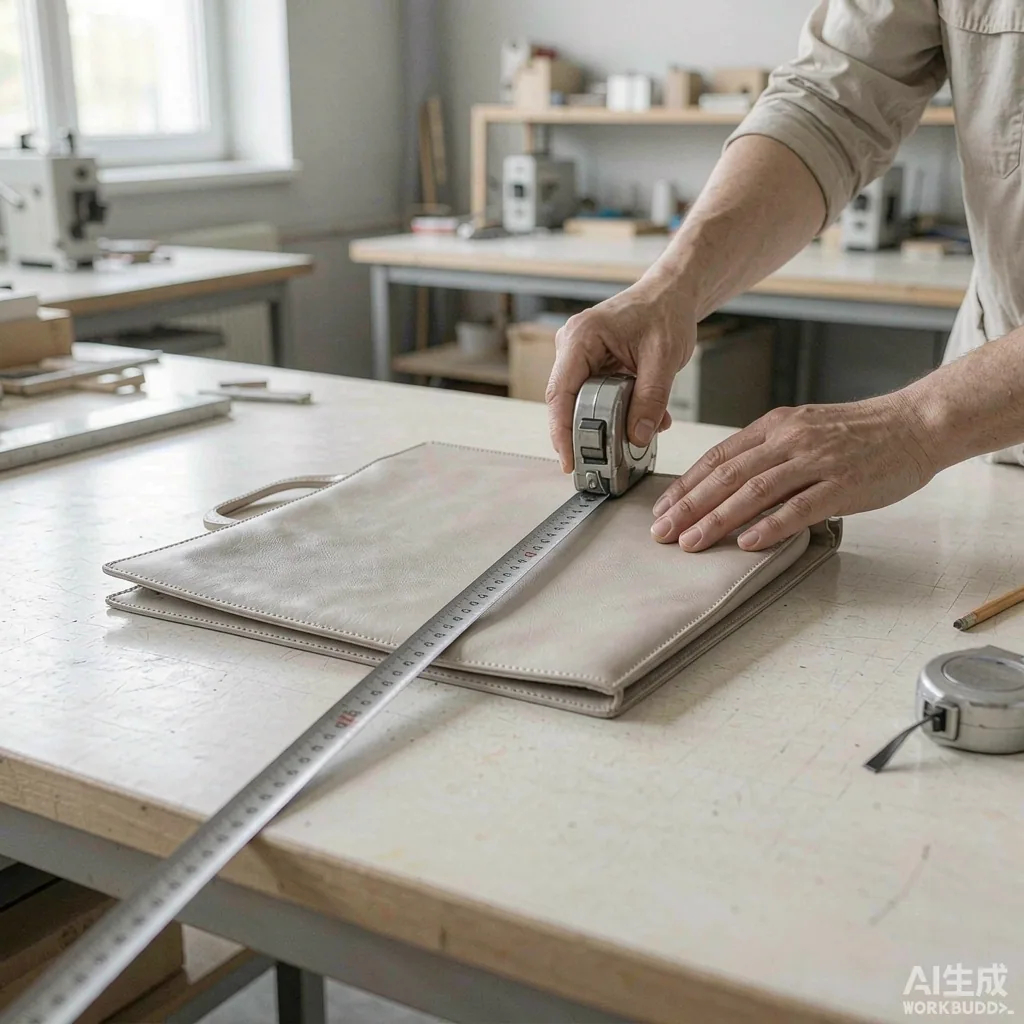
Run the Decision Tree in This Order
Mini bags are the easiest knit style to underspecify, because the brief usually arrives as a photograph rather than a dimension. Running the decisions in a fixed order prevents that. Volume comes first because it fixes the loop count and therefore the cycle time; everything else is a refinement that cannot be settled until the volume band is agreed.
- What must physically fit inside: phone, card holder, keys, lipstick.
- Gauge and yarn: E14 at 300D for definition at small size.
- Strap drop and width: 520 mm crossbody drop at 12 mm for a chain-style strap.
- Closure scale: a magnetic snap rated at about 15 N pull, or a micro coil zipper.
- Tolerance and shrinkage: +/- 2 mm and 1.4 percent, both graded into the pattern.
- Structure: a light bonded interlining, or an unlined body with a bound mouth.
Skipping a step is what causes the classic mini bag failure: a bag that looks right in a photograph and cannot actually hold a phone. Fixing that after sampling means re-programming the machine and re-cutting the pattern, which is the costliest kind of delay on a small style where the cycle time is under four minutes.
Decision 1: What Must Physically Fit Inside?
The first question is dimensional, not volumetric. A modern phone is roughly 150 to 160 mm tall, so the internal clear height of a mini bag has to exceed that with margin for the mouth binding. Designers who work from litres alone regularly produce a 1.5 L bag that is wide enough and too short, which is why the fit list should be written before the volume band.
| Volume band | Internal clear size (mm) | Fits | Closure | Cycle time |
|---|---|---|---|---|
| 0.8 L | 140 x 90 x 45 | Cards, keys, lipstick only | Magnetic snap | 2.9 min |
| 1.5 L | 175 x 110 x 55 | Phone plus cards plus keys | Magnetic snap or micro zip | 3.8 min |
| 2.8 L | 210 x 140 x 70 | Phone, card holder, sunglasses | #3 coil zipper | 5.1 min |
| 4.0 L | 240 x 170 x 85 | Phone, card holder, small notebook | #3 coil zipper | 6.4 min |
Internal clear size is not the same as external size, and the gap between them is where mini bag briefs go wrong. A bound mouth, a lining and a magnetic snap each consume interior space, so the external dimension has to be built outward from the required internal clear space rather than inward from a chosen outer size.
Decision 2: Gauge and Yarn at Mini Size
Mini bags knit at E14 rather than the E7 or E12 used on larger styles, because at this scale the loop is seen close up and a coarse loop reads as a sample rather than a product. E14 in 300D recycled polyester at 190 g/m2 gives a fine surface that holds a small logo and a clean edge at the mouth, which is what the category needs.
- Working volume
- 1.5 L at 175 x 110 x 55 mm internal clear space
- Gauge and yarn
- E14, 300D recycled polyester, 190 g/m2
- Loop structure
- Single jersey with a tuck-stitch texture option
- Strap
- 12 mm knitted tube, 520 mm crossbody drop, detachable
- Closure
- Magnetic snap rated about 15 N pull, or a #3 micro coil zipper
- Dimensional tolerance
- +/- 2 mm on width, height and depth
- Wash shrinkage
- 1.4 percent, graded into the pattern before knitting
- Cycle time
- 3.8 minutes per 1.5 L body
- Interior
- One knitted slip pocket at 150D, plus an optional card slot
- Mouth finish
- Bound edge with 10 courses at a tighter setting to stop gaping
- Decoration limit
- Knitted-in marks read cleanly up to about 35 mm wide at E14
Dropping to 150D yarn is possible and gives a lighter, softer body, but at E14 a finer yarn starts to show every irregularity and the mini bag loses the crispness that justifies the finer gauge in the first place. Moving up to 600D is the opposite error: the body becomes too stiff to drape at this size and the bag reads as a pouch rather than a mini bag.
Decision 3: Strap Drop and Strap Width
Strap drop on a mini bag is longer than most first briefs assume. A 520 mm crossbody drop puts the body at the waist for most adults, which is the position the category is worn in; a 280 mm shoulder drop puts it under the arm and looks wrong at this scale. The strap itself is a 12 mm knitted tube, detachable, so the same body can be sold as a flat pouch.
Width is where mini bags are frequently over-built. A 12 mm tube is proportionate and comfortable, because a 1.5 L bag rarely carries more than 1 kg. Specifying a 32 mm strap, copied from a shoulder bag spec sheet, makes the bag look like a large bag shrunk down rather than a mini bag designed at its own scale.
Decision 4: Closure and Hardware Scale
Hardware has to be scaled to the bag, not copied from a larger style. A magnetic snap rated at about 15 N pull holds a mini bag closed under normal carry and opens with one hand; a stronger snap is harder to open and puts stress into a small panel. A #3 micro coil zipper is the alternative where the brief wants a fully closed top.
Magnetic snap
Rated about 15 N pull, hidden behind the knitted face. Opens one-handed and needs a reinforced panel behind it.
Micro coil zipper
A #3 coil with a small puller. Fully closes the top and keeps contents secure, at the cost of a visible hardware line.
Turn-lock
A small metal turn-lock on the flap. Reads as premium hardware but adds weight to a light body and a fixture cost.
Knitted tab and loop
No hardware at all. Lightest and fully washable, but it does not secure contents if the bag is inverted.
Whichever is chosen, the panel behind the closure needs reinforcement. A snap pulls on a small area of knit, and without a denser patch knitted behind it the fabric distorts within weeks. Twelve courses at a tighter setting plus a small bonded patch is the standard answer, and it adds about 20 seconds of cycle time.
Decision 5: Tolerance, Shrinkage and Why +/- 2 mm
Tolerance tightens as the bag gets smaller. A 2.8 L tote carries a tolerance of about 4 mm without anyone noticing; on a 1.5 L mini bag the same absolute variation is a visible proportion of the whole bag, so the figure is +/- 2 mm. That tighter number has to be on the tech pack, because a machine programme written to a looser tolerance will not hit it.
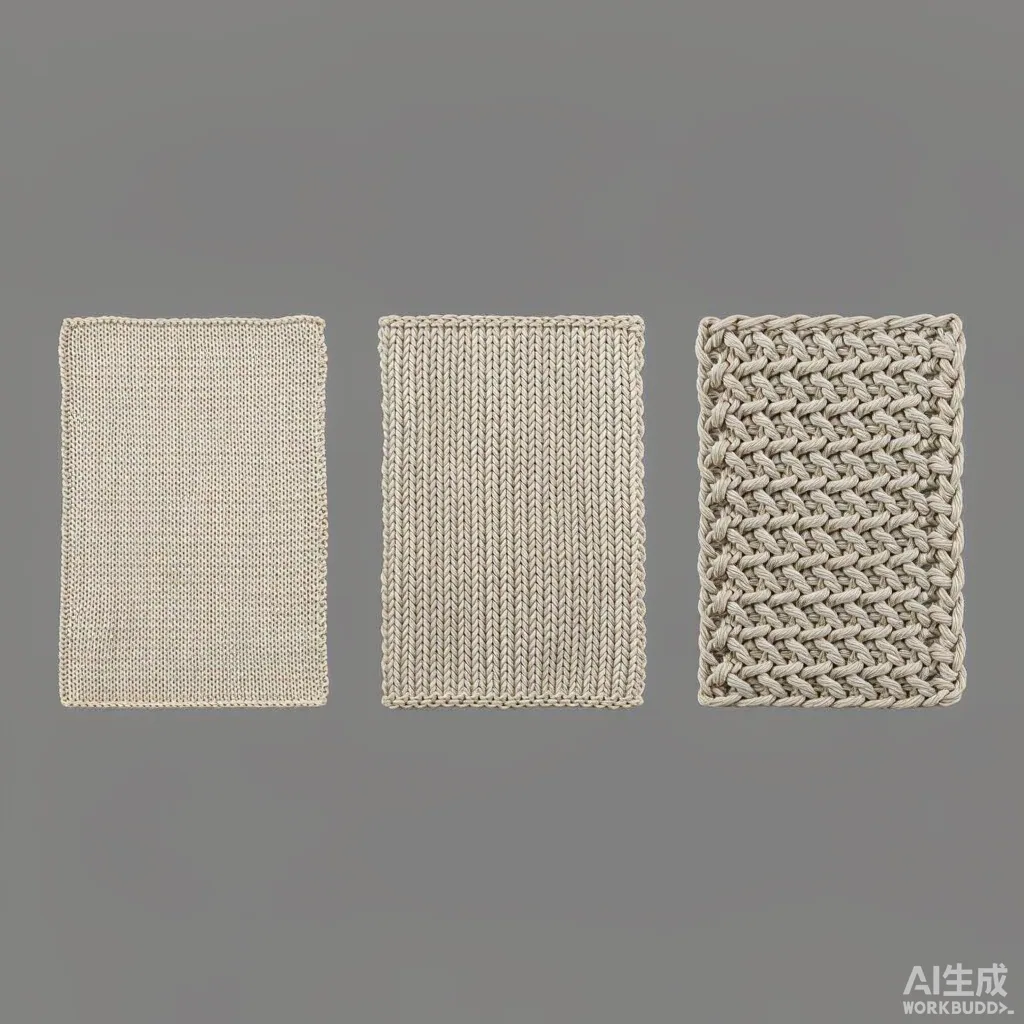
Shrinkage interacts with tolerance directly. At 1.4 percent on a 175 mm internal height, the shrinkage allowance is about 2.5 mm, which is larger than the tolerance itself. That is why the pattern is graded up rather than the tolerance relaxed: a bag that shrinks inside tolerance still has to clear the phone it was designed around.
Decision 6: Structure, Lining and Shape Retention
A mini bag has to hold a shape without becoming rigid. The working answer is a light bonded interlining applied to the body panels, plus a bound mouth with 10 courses at a tighter setting. That is enough for the bag to stand on a shelf and to keep its profile when it is half full, without the stiffness that makes a small knit bag feel like a moulded shell.
A 150D slip pocket inside is worth specifying, because without it small items disappear into the main compartment of a bag this size. Card slots can be knitted directly into the lining panel rather than applied as a separate insert, which keeps the seam count low and the interior clean.
The mouth is the other structural decision. A bound mouth with 10 courses at a tighter setting keeps the opening from gaping and gives the closure something rigid to pull against, while an unbound knitted mouth is softer and more relaxed but loses its line after repeated opening. Most retail mini bags take the bound option because the bag is displayed open on a shelf.
Decoration at Mini Size: What Actually Reads
A logo on a mini bag is seen from about 400 mm rather than from across a room, so the decoration rule here is different from a tote. A knitted-in jacquard mark under 35 mm wide reads cleanly at E14; above that the loop structure softens the edges and the mark starts to look blurred. Intarsia gives a sharper boundary but needs a larger area than most mini bodies have.
The practical answer for most programmes is a small knitted tab at the mouth or a branded metal puller on the closure, both of which carry a mark without consuming surface area. Where a brief insists on a full-front mark, the body size usually needs to move up to 2.8 L to give the artwork enough room to hold its shape.
Colour choice interacts with decoration more at mini size too. A two-colour jacquard on a 1.5 L body can make the bag read busy, while a single-colour body with a contrast mouth binding gives the same brand signal with less visual noise. Because the 100 pcs minimum applies per colourway, a two-colour mark does not raise the minimum.
Programme Timing and What a Mini Bag Costs to Develop
Sampling runs 7 working days from an approved tech pack and bulk production runs 30 days from sample approval, on a minimum of 100 pcs per style and colourway. A mini bag is the shortest cycle in a knit range at 3.8 minutes for a 1.5 L body, which is one reason it is often added as a companion style to a larger programme rather than ordered alone.
Final inspection follows AQL 2.5 under ISO 2859-1 with mini-specific items: closure alignment, mouth binding evenness, strap length consistency against the 520 mm drop, and interior clear space checked against a physical fit gauge rather than a tape measure. That last check is what actually catches the phone-does-not-fit failure.
Packaging deserves a line in the spec as well. A 1.5 L mini bag is usually shipped in a polybag with a stuffing insert so it arrives with its shape intact, and a dust bag is often added for retail presentation. Both are specified per unit rather than per carton, and both are quoted separately from the knitting programme.
Where the Mini Bag Sits in a Knit Capsule
The mini bag is the companion sale of a knit capsule, and it shares the 300D yarn and colour reference with the pouch and the shoulder bag. A brand running a small knitted pouch bag already has the yarn approval needed for a mini, and the same reference carries into a knitted shoulder bag at a larger scale.
That shared reference is what makes a capsule at 100 pcs per style realistic rather than a large commitment, and it is why the mini bag is usually developed alongside a pouch rather than after it. See the knitted bag collection for how these silhouettes group by size and the custom knit bags pillar for how a multi-style programme is specified and scheduled.
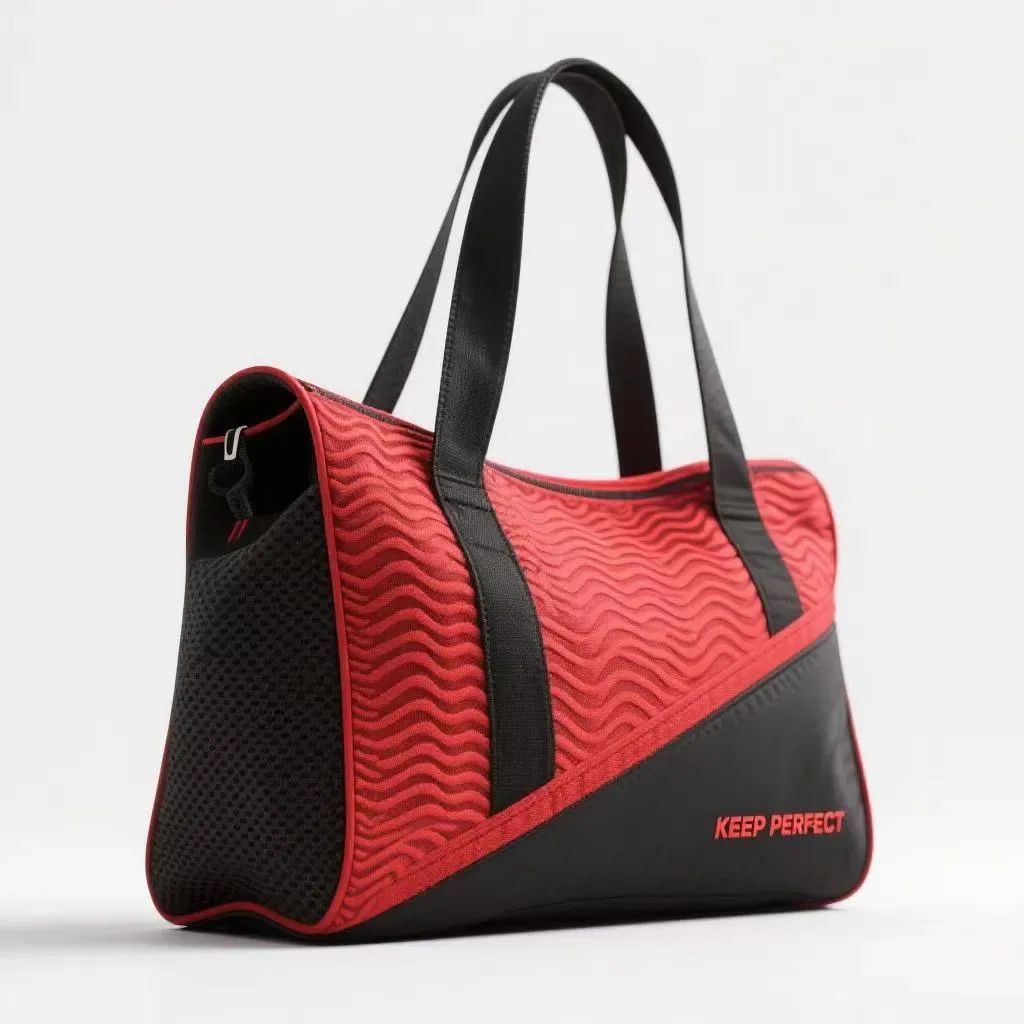
Size a mini bag that actually fits a phone
Send what must fit inside, the drop and the closure preference. The team returns a sized spec, a 7-working-day sampling plan and an FOB Xiamen quote. Start a mini bag programme.
Frequently Asked Questions
What size is a knitted mini bag?
The working band is 0.8 L to 2.8 L, with 1.5 L the most ordered. At 1.5 L the internal clear space is about 175 x 110 x 55 mm, which fits a phone, cards and keys. Size from what must fit rather than from a litre figure.
What internal clear space does a mini bag need for a phone?
Roughly 165 mm of clear internal height to take a 160 mm phone with margin for the mouth binding. Designers who work from litres alone often produce a bag that is wide enough and too short, which only shows up in sampling. The outer size is then built outward from that clear space rather than inward from a chosen look.
Why knit a mini bag at E14 rather than E12?
Because at this scale the loop is seen close up. E14 in 300D gives a fine surface that holds a small logo and a clean mouth edge. E12 reads as coarse at mini size and E7 is out of scale entirely. E12 reads coarse at mini size and E7 is out of scale altogether at this volume.
What strap drop suits a mini bag?
520 mm for a crossbody position, which puts the body at the waist. A 280 mm shoulder drop puts it under the arm and looks wrong at this scale. The strap is a 12 mm tube and usually detachable so the bag doubles as a flat pouch.
How strong should a mini bag closure be?
A magnetic snap rated at about 15 N pull is enough for a bag carrying under 1 kg and still opens one-handed. A stronger snap is harder to open and pulls harder against a small knitted panel. A stronger snap is harder to open and pulls harder against a small knitted panel.
Why is the tolerance tighter on a mini bag?
Because the same absolute variation is a larger proportion of a small bag. A 4 mm tolerance that is invisible on a tote is clearly visible on a 1.5 L mini, so the figure tightens to +/- 2 mm. A machine programme written to a looser tolerance will simply not hit the tighter figure.
How much does shrinkage matter at mini size?
More than on larger styles. At 1.4 percent on a 175 mm internal height the allowance is about 2.5 mm, which is larger than the tolerance itself, so the pattern is graded up rather than the tolerance relaxed. The pattern is graded up rather than the tolerance relaxed, so the bag still clears a phone.
Should a mini bag be lined?
A light bonded interlining plus a 150D slip pocket is the usual answer. It holds the shape without the stiffness that makes a small knit bag feel moulded, and the pocket stops small items disappearing into one compartment. Interlining alone gives shape without eating the interior space a lining would consume.
Can card slots be knitted in?
Yes. Card slots knit directly into the lining panel rather than being applied as a separate insert, which keeps the seam count low and the interior clean. It adds a little cycle time and no secondary operation. It adds a little cycle time and no secondary operation, which suits a 100-piece run.
How long does a mini bag take to knit?
About 3.8 minutes for a 1.5 L body at E14, which is the shortest cycle in a knit range. That is why a mini bag is often added to a larger programme rather than ordered on its own. That is why a mini bag is usually added to a larger programme rather than ordered alone.
What is checked at final inspection on a mini bag?
Closure alignment, mouth binding evenness, strap length against the 520 mm drop, and interior clear space against a physical fit gauge. Inspection runs to AQL 2.5 under ISO 2859-1. Interior clear space is checked with a physical fit gauge rather than with a tape measure.
Can a mini bag share a yarn lot with other styles?
Yes. The 300D recycled polyester used at E14 on a mini bag is the same yarn used on pouches, so one colour approval covers several small styles in a capsule ordered at 100 pcs per style. One colour approval then covers the pouch and mini styles in the same capsule.
People Also Ask
Why do mini bags fail the phone test?
Because the brief is written in litres rather than in internal clear space. A bound mouth, a lining and a snap each consume interior space, so the outer size must be built outward from what has to fit.
Is a lining necessary on a 0.8 L mini bag?
Usually not. At 0.8 L the body holds its shape without help and a lining eats clear space the bag cannot spare. Interlining alone is the better trade at that size.
What makes a mini bag look designed rather than scaled down?
Proportionate hardware and strap. A 12 mm strap and a 15 N snap suit a 1.5 L body, while a 32 mm strap copied from a shoulder bag makes the bag look like a large style shrunk down.
Can a mini bag be sold without a strap?
Yes, and many are. A detachable 12 mm tube lets one body be listed as both a crossbody and a flat pouch, which doubles the merchandising options without a second tooling or programme file.
How should interior clear space be verified in bulk?
With a physical fit gauge at final inspection rather than a tape measure. A gauge either passes through the mouth or it does not, which removes interpretation from a check that matters most at mini size.
Sources and further reading
Every figure on this page is either our own programme data or attributed below. Open the originals before you write them into a specification.
- ISO 2859-1 Sampling procedures for inspection by attributesISO The AQL 2.5 scheme used for final inspection of knitted mini bag orders.
- ASTM D2061 Strength Tests for ZippersASTM International Referenced when a mini bag uses a #3 micro coil zipper instead of a magnetic snap.
- OEKO-TEX STANDARD 100OEKO-TEX Limit-value testing for the 300D body yarn and the bonded interlining used at mini size.
- Global Recycled Standard (GRS)Textile Exchange Chain-of-custody documentation for the recycled content in the 300D mini bag yarn.