Knitted Drawstring Bag Closures: Cord, Eyelet and Abrasion at the Mouth
A knitted drawstring bag closure fails at the channel, not at the cord. In this case a 12 L bag was returned because the 5 mm cord pulled through the mouth after three weeks of gym use. The fix was a 14-course channel knitted at E12 instead of E7, eight reinforced knitted eyelets at 8 mm and a cord rated to about 180 N pull. Sampling ran 7 working days, bulk 30 days, minimum 100 pcs, FOB Xiamen.
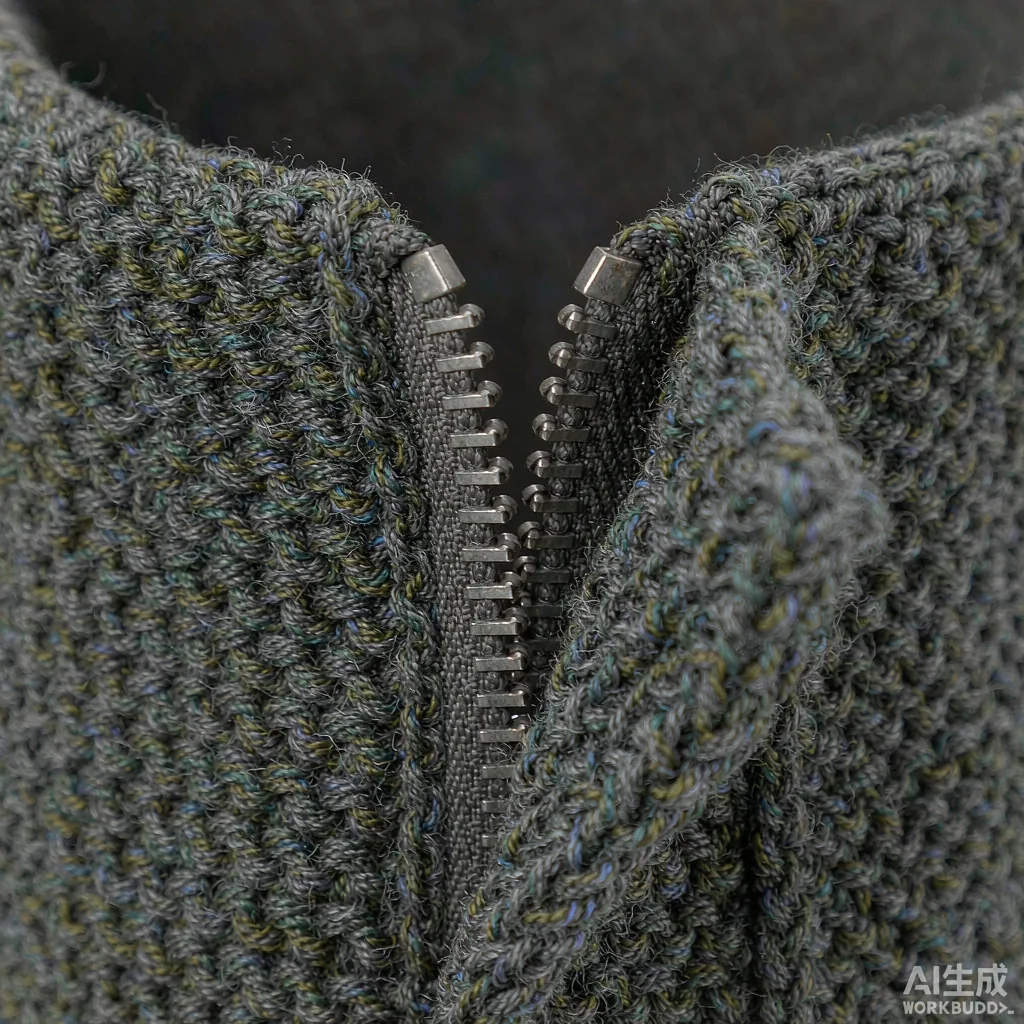
The Return That Started It: Cords Pulling Through the Mouth
The complaint was specific and repeatable. A promotional buyer had ordered a 12 L knitted drawstring bag for a gym chain, and within three weeks of issue the cords were pulling through the mouth on roughly one bag in twelve. The bag body was undamaged and the yarn tested fine; the closure had simply been specified as an afterthought because it was the last line on the tech pack.
The diagnosis was structural rather than material. The channel had been knitted at the same E7 gauge as the body, which left a loose housing with large loops, and the cord ran through it with nothing reinforcing the exit points. Under repeated pulling the loops opened and the cord worked through the structure. The cord itself tested fine.
That distinction is worth stating plainly, because it is the opposite of what most briefs assume. Buyers ask for a stronger cord; the problem is almost always the housing. A stronger cord in a loose channel makes the failure happen faster, not slower, because it concentrates more force into the same weak loops.
Anatomy of a Knitted Drawstring Closure
A drawstring closure on a knitted bag has four parts: the channel, the eyelets, the cord and the lock. Each one can be specified independently, and each has a default that works. Treating them as one line item is what produces the failure above, because the channel is the part that actually carries the load.
| Part | Failure mode | Specification that fixes it | Cost impact |
|---|---|---|---|
| Channel | Loops open, cord works through | 14 courses at E12, not at body gauge | + 55 seconds cycle |
| Eyelets | Exit point tears under pull | Eight knitted openings at 8 mm, denser border | + 20 seconds cycle |
| Cord | Cuts into the channel | 5 mm braided polyester, 480 mm pull | Material line, flat |
| Lock | Slips under load | Spring toggle sized to 5 mm cord | Hardware line, flat |
The cost column is the reason the fix is worth doing at spec stage. The two knitting changes add about 75 seconds of cycle time in total, which is a small addition to a 9.6-minute body. The cord and lock lines do not change at all, which means the closure can be upgraded without changing the hardware spend at all.
The Channel: 14 Courses at E12 and Why E7 Fails
The channel is the whole structural answer. Knitting 14 courses at E12 into a body that otherwise runs at E7 gives a housing with roughly 70 percent more loops per inch, and those smaller loops resist being opened by a cord under tension. The change is made on the machine as part of the same programme, so there is no secondary operation and no seam.
- Capacity
- 12 L at 340 x 260 x 150 mm
- Body gauge and yarn
- E7, 600D recycled polyester, 300 g/m2
- Channel
- 14 courses at E12, knitted in the same programme
- Eyelets
- Eight knitted openings at 8 mm with a denser border
- Cord
- 5 mm braided polyester, 480 mm effective pull
- Lock
- Spring toggle sized to a 5 mm cord
- Pull rating
- About 180 N on the cord-to-channel assembly
- Abrasion at the mouth
- About 12,000 rubs under ASTM D4966
- Cycle time
- 9.6 minutes per 12 L body
- Wash shrinkage
- 2.1 percent, graded into the pattern before knitting
- Dimensional tolerance
- +/- 4 mm measured flat, 24 hours after knitting, before washing
- Decoration zone
- Marks hold best in the lower third of the body, below the channel band
Fourteen courses is not an arbitrary number. Below about 10 the channel does not have enough depth to hold the cord under a diagonal pull, which is how a bag is actually lifted; above about 18 the band starts to read as a separate trim rather than part of the body, and the mouth loses the soft line that makes a knitted drawstring bag look like knit.
Eyelets: Knitted Openings Against Metal Grommets
Metal grommets are the default in cut-and-sew bags and the wrong answer on knit. A grommet punches through the loop structure and leaves a hard edge that abrades the cord from inside, and it needs a reinforcement patch behind it to stop the knit tearing. A knitted eyelet, by contrast, is an opening formed in the structure with a denser border, with no hardware and no raw edge.
Knitted eyelet
An opening formed in the structure at 8 mm with a denser border. No hardware, no raw edge, and it does not abrade the cord.
Metal grommet
Familiar and crisp, but it needs a reinforcement patch and its inner edge wears the cord. Adds a setting operation.
Bound slit
A bound vertical slit instead of a round hole. Distributes pull over a longer edge but is harder to keep closed.
Tunnel exit
The cord exits between two channel courses with no visible opening. Cleanest look, lowest abrasion, hardest to re-thread.
Eight eyelets around a 12 L mouth is the working count, spaced evenly so the pull distributes around the whole opening rather than concentrating at two points. Fewer than six makes the bag gather unevenly when it is closed; more than ten adds cycle time and starts to make the mouth look perforated.
Cord Specification: 5 mm, 480 mm and the Pull Test
A 5 mm braided polyester cord with a 480 mm effective pull length suits a 12 L bag, and it is the diameter that matches an E12 channel without cutting into it. Below 4 mm the cord concentrates force into too few loops even in a good channel; above 6 mm the channel has to be knitted deeper and the mouth looks heavy when the bag is open.
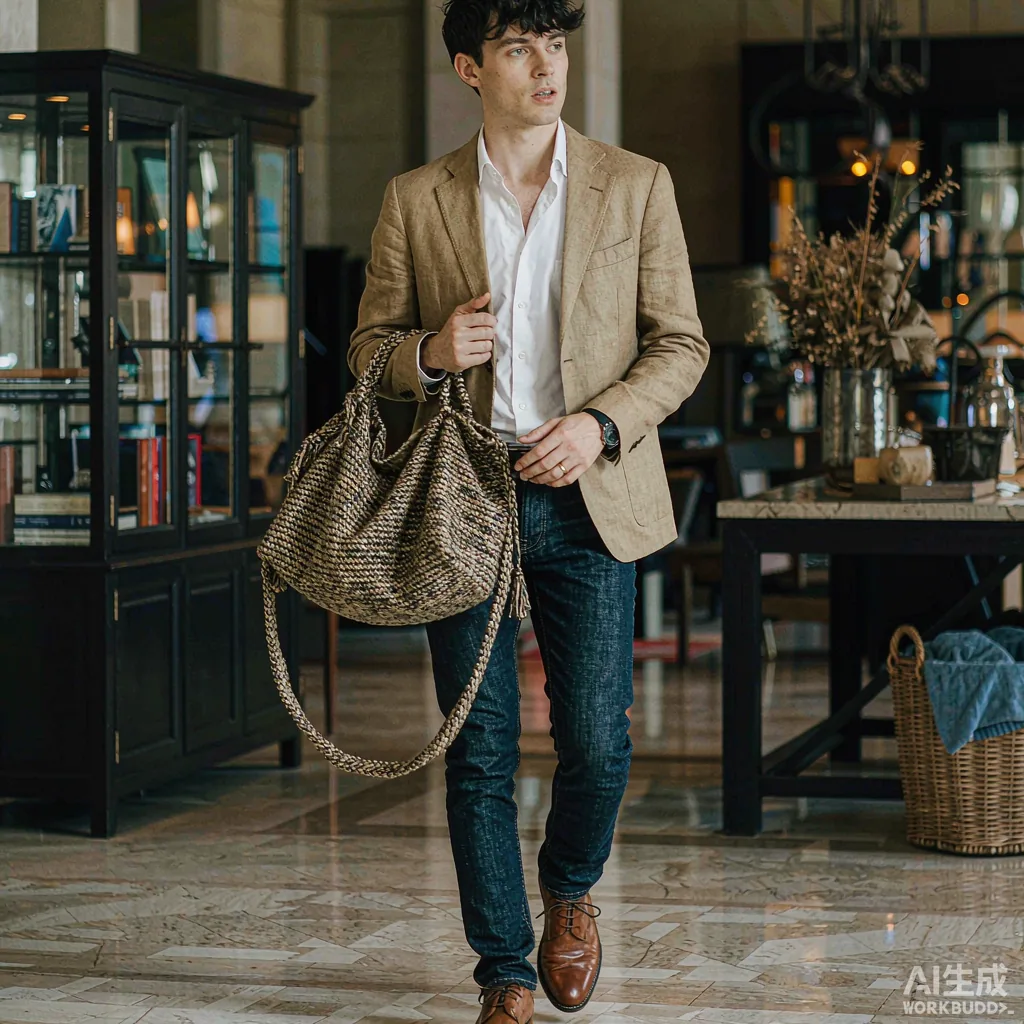
The pull test is the number that closes the loop on the original complaint. The cord-to-channel assembly is rated at about 180 N, which is roughly three times the force a loaded 12 L bag puts into the closure when it is lifted by its cords. ASTM D2061 is the reference for rating the hardware, and the cord itself is tested to the same figure.
Wear at the Mouth: Where Abrasion Actually Happens
The mouth of a drawstring bag takes two kinds of wear at once: the cord sliding against the channel every time the bag is opened and closed, and the gathered fabric rubbing against itself when the bag is carried. The first is addressed by the finer channel gauge, the second by knitting the mouth area at 600D with a denser stitch. Together they reach about 12,000 rubs under ASTM D4966.
Abrasion at the mouth is the failure that shows up latest and costs the most, because it appears after weeks of use rather than in sampling. Specifying both the channel gauge and the mouth density is what moves a drawstring bag from a bag that survives a season to one that survives a year of daily use.
Backpack Conversion and Load on the Cords
Many drawstring bags are worn as backpacks, with the cords running over the shoulders, and that changes the load case completely. Instead of a vertical pull at the mouth, each cord takes a diagonal load of half the bag weight at the shoulder and at the exit point. At 6 kg carried, that is about 3 kg per cord plus the friction of the cord against clothing.
The answer is a wider cord at the shoulder or a flat tape section knitted into the cord run, which spreads the load over the shoulder instead of concentrating it. Where a programme is explicitly sold as a backpack, the cords are specified as 8 mm flat tapes rather than 5 mm round cord, and the eyelets are widened to suit.
Decoration on a Drawstring Bag: Where the Mark Goes
A drawstring bag front is a soft, gathered surface, which is a difficult place to put artwork. A knitted-in jacquard mark holds its shape best in the lower third of the body, below the channel, because the upper section creases every time the bag is closed. Marks placed above that line break up visually within days of use.
The channel band itself is often used as a decoration opportunity instead. Knitting the 14 courses in a contrast yarn gives a clean horizontal brand line that does not distort when the bag is gathered, and it costs nothing beyond the yarn change. A branded toggle is the other option, and it puts the mark at the point the hand goes to.
Screen or heat transfer marks are possible but they sit poorly on a gathered surface and crack where the fabric folds. Where a brief requires a photographic image, the answer is usually a knitted label panel sewn flat into the lower body rather than a print applied across the gather line.
Compliance on Cords and Hardware
Drawstring bags sold into the EU and the US attract rules that other bag styles escape. Cords on clothing are regulated for strangulation risk, and while a bag cord is usually out of scope, a bag marketed for children brings CPSIA and CPSC guidance into play on lead content and phthalates in the cord coating and the toggle.
OEKO-TEX STANDARD 100 covers the cord and the knitted body for restricted substances, and California Proposition 65 matters for a metal toggle sold into California. Because the toggle is the only metal part on many drawstring bags, it is also the part most likely to trigger a screening test, which is worth knowing before a shipment is held.
How the Fix Was Sampled and Approved
The revised closure was sampled in 7 working days from an updated tech pack and approved on a three-body protocol: one washed to confirm the 2.1 percent shrinkage figure, one cycled through 200 open-and-close pulls to confirm the channel holds, and one kept sealed as the reference for final inspection.
The 200-pull cycle is the test that matters for this closure and it costs almost nothing to run. It takes about 25 minutes on a simple jig and it reproduces the exact failure that generated the original field return. Any drawstring programme that skips it is approving on appearance rather than on performance.
Bulk then ran 30 days from sample approval on a minimum of 100 pcs per style and colourway, with final inspection to AQL 2.5 under ISO 2859-1. Shipment is FOB Xiamen, with CIF and DDP quoted where a landed figure is needed.
Where a Drawstring Bag Fits in a Knit Capsule
The drawstring bag is the utility style of a knit capsule and it shares the 600D yarn and colour reference with the rest of the range. The channel detail carries into a knitted bucket bag, the cord logic into a knitted gym bag and the load thinking into a knitted weekender bag.
Sharing that reference is what makes a four-style order at 100 pcs per style realistic for a first knit programme. See the knitted bag collection for the silhouette grouping and the knit bag quality control pillar for how closure testing is documented at final inspection.

Fix a drawstring closure before it ships
Send capacity, cord preference and how the bag will be carried. The team returns a closure spec with a pull rating, a 7-working-day sampling plan and an FOB Xiamen quote. Start a drawstring programme.
Frequently Asked Questions
Why does a drawstring cord pull through a knitted bag?
Because the channel was knitted at the body gauge instead of a finer one. A loose E7 housing has large loops that open under repeated pulling. Knitting 14 courses at E12 gives roughly 70 percent more loops per inch and the cord stops working through.
Does a stronger cord fix a pulling drawstring?
No, it usually makes it worse. More force in the same loose channel opens the loops faster. The housing is the part that carries the load, so the channel gauge is the specification to change rather than the cord. The housing carries the load, so the channel gauge is the specification to change.
How many courses should a drawstring channel have?
Fourteen at E12 is the working figure. Below about 10 the channel is too shallow to hold the cord under a diagonal pull, and above 18 the band reads as a separate trim and the mouth loses its soft knitted line. The change is made on the machine, so there is no secondary operation and no seam.
Should a knitted drawstring bag use metal grommets?
No. A grommet punches through the loop structure, leaves a hard inner edge that abrades the cord, and needs a reinforcement patch. A knitted eyelet is an opening formed in the structure with a denser border and no hardware. A knitted eyelet needs no reinforcement patch and its border spreads the pull instead.
How many eyelets does a 12 L drawstring bag need?
Eight, spaced evenly so the pull distributes around the whole mouth. Fewer than six makes the bag gather unevenly when closed, and more than ten adds cycle time and starts to make the mouth look perforated. Even spacing distributes the pull around the whole mouth rather than at two points.
What cord diameter suits a knitted drawstring bag?
5 mm braided polyester with a 480 mm pull suits a 12 L bag and matches an E12 channel without cutting into it. Below 4 mm concentrates force into too few loops, and above 6 mm forces a deeper channel and a heavy-looking mouth. Above 6 mm the channel must be knitted deeper and the mouth looks heavy when open.
How strong is a knitted drawstring closure?
The cord-to-channel assembly is rated at about 180 N, roughly three times the force a loaded 12 L bag puts into the closure when lifted by its cords. ASTM D2061 is the reference used for rating the hardware. The cord itself is tested to the same figure on a finished body, not in isolation.
What changes when a drawstring bag is worn as a backpack?
The load becomes diagonal rather than vertical, at about half the bag weight per cord plus friction against clothing. At 6 kg carried that is roughly 3 kg per cord, so an 8 mm flat tape replaces the 5 mm round cord. An 8 mm flat tape replaces the round cord and the eyelets are widened to suit.
How is abrasion at the mouth specified?
Two ways at once: a finer channel gauge so the cord does not cut in, and a denser mouth knit so the gathered fabric does not rub through itself. Together they reach about 12,000 rubs under ASTM D4966. Both are needed because sliding wear and self-rubbing are two different failure modes.
What compliance applies to a drawstring bag?
OEKO-TEX STANDARD 100 for the cord and body, California Proposition 65 for a metal toggle, and CPSIA and CPSC guidance where the bag is marketed for children. The toggle is often the only metal part and the part most likely to be screened. The toggle is usually the only metal part and the one most likely to be screened.
How is a drawstring closure tested in sampling?
With a 200-cycle open-and-close pull test on the channel, which takes about 25 minutes on a simple jig and reproduces the exact failure that generates field returns. It is worthwhile insurance against approving on appearance alone. It takes about 25 minutes on a simple jig and needs no outside laboratory.
What are the ordering terms for a drawstring bag?
Minimum is 100 pcs per style and colourway, sampling takes 7 working days from an approved tech pack, and bulk runs 30 days from sample approval. Inspection follows AQL 2.5 under ISO 2859-1 and shipment is FOB Xiamen. Bulk then runs 30 days from sample approval, shipped FOB Xiamen.
People Also Ask
Is a knitted eyelet as strong as a metal grommet?
For a drawstring pull, yes. The knitted opening distributes load around a denser border instead of concentrating it at a punched edge, and it removes the hard inner edge that abrades the cord.
Why does abrasion at the mouth appear so late?
Because it needs repeated cord travel before it shows. A bag can pass a visual approval and still fail after weeks of daily opening, which is why the mouth density is specified alongside the channel gauge.
Can a drawstring bag carry 6 kg safely?
Yes when worn over one shoulder, but as a backpack each cord takes about half the load diagonally. An 8 mm flat tape section at the shoulder spreads that load and is the standard answer.
How much does upgrading the closure cost?
About 75 seconds of cycle time for the channel and eyelet changes on a 9.6-minute body. The cord and lock lines do not change, so the hardware spend is unaffected.
Should the closure be tested on the finished bag?
Yes. A pull test on the cord alone tells you nothing about the housing. The assembly rating of about 180 N is measured on the cord running through the knitted channel on a finished body.
Sources and further reading
Every figure on this page is either our own programme data or attributed below. Open the originals before you write them into a specification.
- ASTM D2061 Strength Tests for ZippersASTM International Referenced when rating the toggle and cord hardware fitted to a knitted drawstring closure.
- ASTM D4966 Abrasion Resistance of Textile Fabrics (Martindale)ASTM International Method behind the roughly 12,000-rub abrasion figure at the drawstring mouth.
- OEKO-TEX STANDARD 100OEKO-TEX Limit-value testing for the braided cord and the knitted body of a drawstring bag.
- Proposition 65California OEHHA Relevant to the metal spring toggle, usually the only metal part on a knitted drawstring bag.