Knitted Bucket Bag Structure: How the Base, the Drawcord and the Load Path Are Engineered
A knitted bucket bag stands or falls on its base. The buyer in this case wanted a 6.6 L bucket that held its shape empty on a shelf, at 180 mm base diameter and 260 mm height, knitted at E7 in 600D recycled polyester with an E12 drawcord channel. The fix was a double-knit base panel at 4.5 mm thickness plus a 1.5 mm recycled board insert. Sampling ran 7 working days, bulk 30 days, inspection to AQL 2.5 under ISO 2859-1.
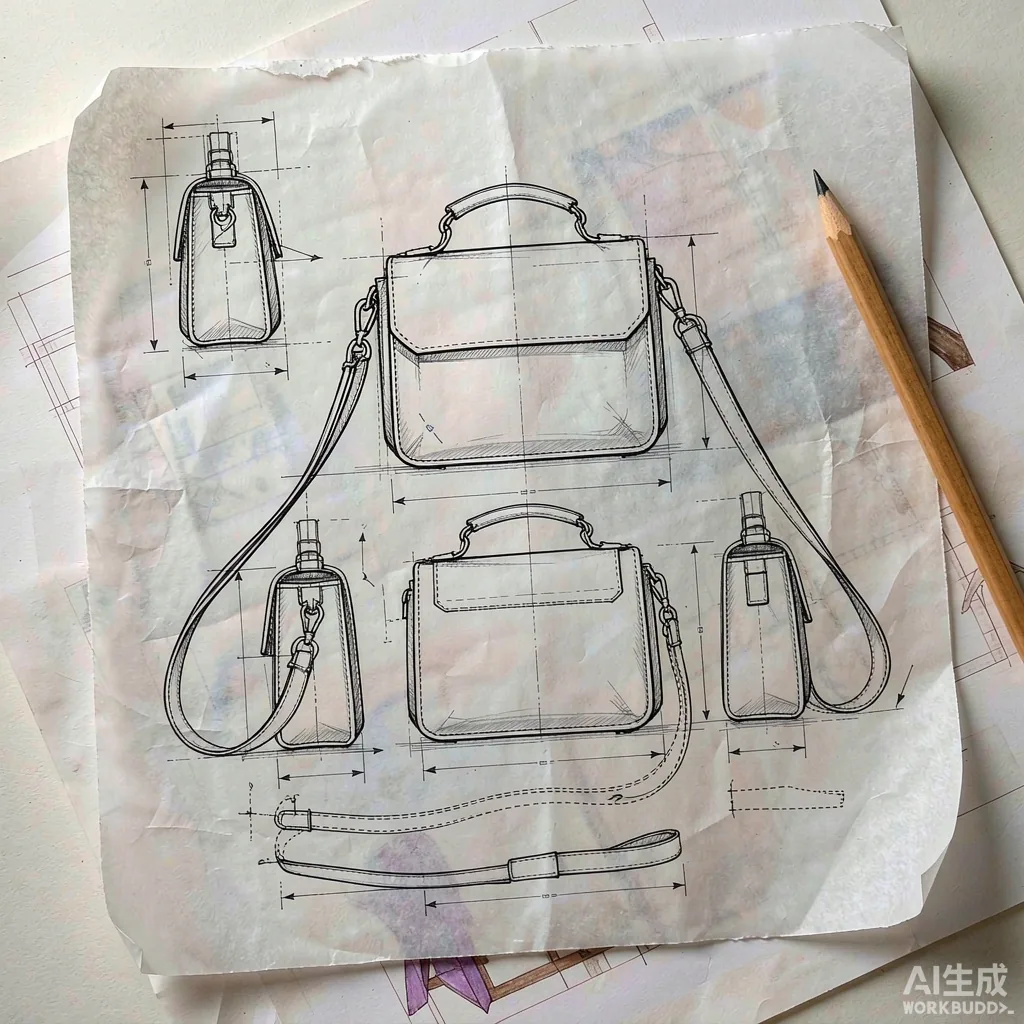
The Brief: A 6.6 L Bucket That Stands Up Empty
The brief that opened this programme was simple to state and awkward to engineer: a knitted bucket bag that stands upright on a retail shelf with nothing in it. The buyer had already rejected two samples from another source because the body slumped into a soft cone within a day of being unpacked. Standing empty is the first thing a shopper notices and the last thing a spec sheet usually addresses.
The agreed target was 180 mm base diameter, 260 mm height and 6.6 litres, knitted at E7 in 600D recycled polyester. Those three numbers were fixed before any yarn was ordered, because base diameter drives the loop count at the start of the knitting sequence and therefore the whole cycle. Everything downstream, from drawcord length to carton size, follows from them.
Why the Base Carries the Whole Structure
On a bucket bag the base takes the entire load and the side walls take almost none of it. That is the opposite of a tote, where the handles and the handle junction carry the stress. Designing a knitted bucket therefore means treating the base as a separate structural component rather than as the bottom of the body, which is why a double-knit base panel at 4.5 mm thickness was specified instead of a single-layer continuation of the side wall.
The base panel also sets the wear life. A bucket is put down on pavement, on car boots and on shop floors far more often than a shoulder bag, so the base yarn was moved from 600D to 900D recycled polyester while the walls stayed at 600D. That split is possible in one knitted piece on a seamless machine, with no seam between the two densities and therefore no weak line to fail first.
Reading the Load Path From Rim to Base
Three load cases decide whether a knitted bucket survives a season: the rim pull when the drawcord is yanked shut, the vertical drop when a loaded bag is set down hard, and the sideways splay when the contents shift. Each one concentrates stress somewhere different, and each one needs its own structural answer rather than a general thickening of the whole body.
| Load case | Where stress lands | Structural answer | Test reference |
|---|---|---|---|
| Rim pull on drawcord | Drawcord channel courses | E12 channel with 4 mm braided cord, 320 mm effective pull | ASTM D2061 for hardware |
| Vertical drop at 8 kg | Base panel and insert | Double-knit base at 4.5 mm plus 1.5 mm recycled board | ASTM D5034 grab test |
| Sideways splay | Wall-to-base transition | Graduated stitch density over 14 courses | ISO 13934-1 tensile |
| Surface scuff | Outer face of the base | 900D yarn, about 25,000 Martindale rubs | ASTM D4966 |
That table is the document the buyer signs off before programming starts. Writing the test reference into the spec matters, because a claim of about 25,000 Martindale rubs means nothing unless the abrasion method is named. ASTM D4966 is the Martindale method used here and ISO 12947-2 is its European equivalent, and both report the number of rubs to specimen breakdown rather than a pass or fail grade.
Gauge Split: E7 Body With an E12 Drawcord Channel
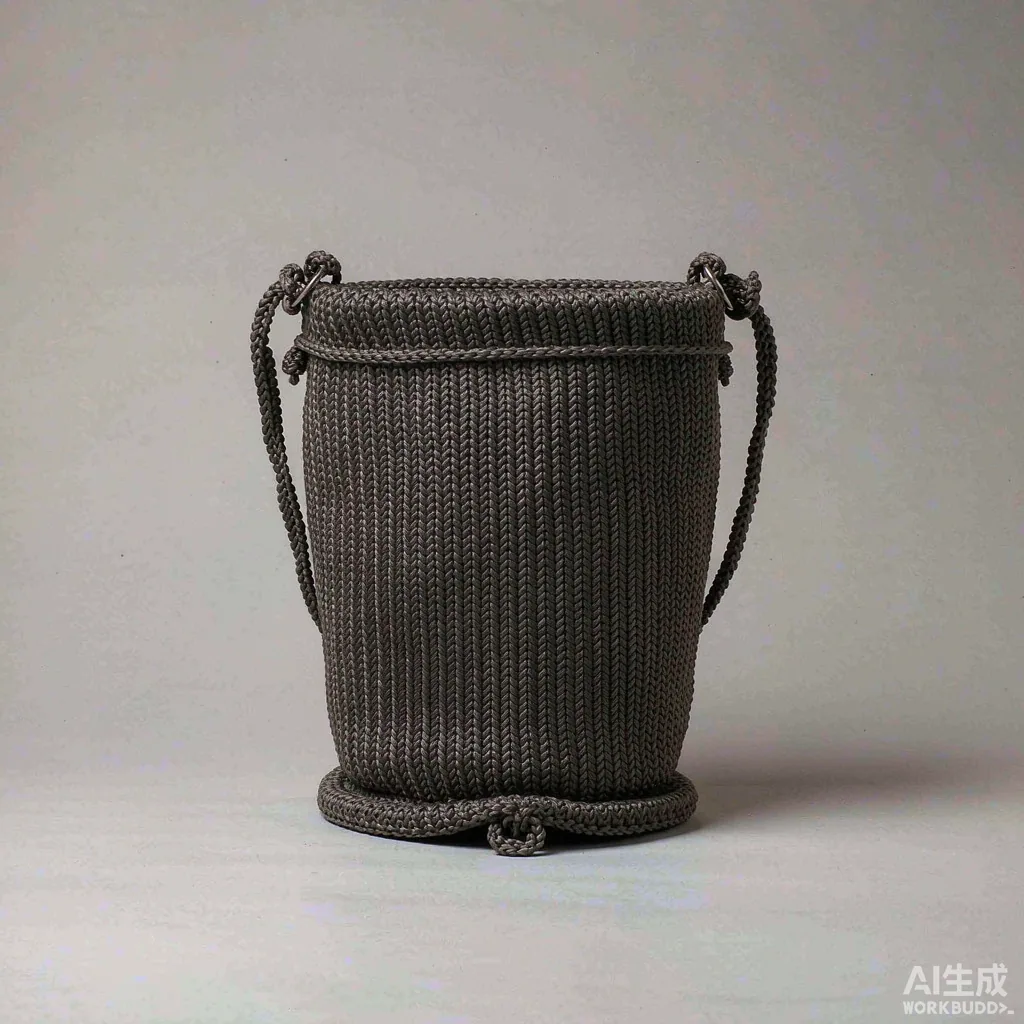
Running two gauges in one knitted body is the detail that makes a seamless bucket worth specifying. The wall knits at E7, which gives a coarse, soft loop with good recovery and a cycle time around 8.4 minutes. The drawcord channel at the rim knits at E12, which is fine enough to hold a channel that does not gape when the bag is open and tight enough that the cord does not chew through the loop structure over repeated pulls.
- Capacity
- 6.6 L at 180 mm base diameter and 260 mm height
- Body gauge and yarn
- E7, 600D recycled polyester, 340 g/m2
- Base gauge and yarn
- Double-knit at E7, 900D recycled polyester, 4.5 mm thickness
- Rim channel
- E12, 18 courses, houses a 4 mm braided polyester cord
- Stitch transition
- Graduated density over 14 courses at the wall-to-base junction
- Cycle time
- 8.4 min per body on a seamless flat knitting machine
- Wash shrinkage
- 2.2 percent under ISO 6330 4N, pattern graded up to compensate
- Dimensional tolerance
- +/- 4 mm on base diameter, +/- 5 mm on height
The transition between the two gauges is where samples usually fail. A hard switch from E7 to E12 leaves a visible step and a weak line; the fix is graduating the stitch density over roughly 14 courses so the loop size changes gradually. That graduation costs about 40 seconds of cycle time and removes the step entirely, which is a trade most buyers take once they see the two versions side by side.
The Drawcord: 4 mm Cord, 320 mm Pull, Spring Toggle
A drawcord on a knitted bucket does three jobs at once: it closes the bag, it shapes the rim, and it takes the whole rim load when the bag is lifted by its cords. A 4 mm braided polyester cord with a 320 mm effective pull length was specified, finished with a spring toggle rather than a fixed knot so the closure can be released without unthreading. The cord runs through the E12 channel and exits through two knitted eyelets reinforced with a tighter stitch setting.
Cord diameter is a surprisingly common failure point. Below 4 mm the cord cuts into the knitted channel over repeated pulls; above 5 mm the channel has to be knitted wider, which makes the rim look heavy and slack when the bag is open. Where a buyer wants the rim to read as a leather or webbing detail instead, the channel can be knitted to accept a flat tape, but that changes the hand of the whole silhouette.
Base Reinforcement Options Compared
Double-knit base panel
A second layer knitted directly onto the base at 900D, giving 4.5 mm thickness with no seam. Adds about 90 seconds of cycle time and no secondary operation.
Recycled board insert
A 1.5 mm recycled polyethylene board dropped into a knitted pocket at the base. Holds a crisp flat bottom and is removable for washing.
Tubular base ring
A knitted tube around the base circumference that acts like a frame. Keeps the round profile true but adds bulk at the silhouette edge.
Unreinforced single layer
Lightest and fastest to knit, but it slumps. Only viable for a bucket that is displayed hanging rather than standing.
The board insert and the double-knit panel are not alternatives so much as a pair. The double-knit panel gives thickness and abrasion life, the board gives flatness, and together they let a 6.6 L bucket stand empty without the base bowing outward over time. For a programme that needs the bag to ship flat, the board is supplied loose in the carton and inserted at the destination, which saves cube in transit.
Shrinkage, Relaxation and Why the Pattern Is Graded Up
Knit relaxes in two stages, and a bucket shows both. The first is relaxation off the machine, which happens within 24 hours; the second is wash shrinkage, measured at 2.2 percent under an ISO 6330 4N cycle for this yarn and gauge. The pattern is graded up to hit the finished 260 mm height after shrinkage rather than the tolerance being widened, because the buyer's shelf fixture was cut to 260 mm and a bag that grows past it does not fit.
The same reasoning applies to the base. A base knitted to exactly 180 mm reads closer to 176 mm after relaxation, so it is graded to 184 mm and finishes at the target. These are the numbers that belong on the tech pack rather than in an email, because a sample approved without them will not match bulk produced three weeks later from a different yarn lot.
Inspection Points That Catch Bucket Failures Early
Final inspection runs to AQL 2.5 under ISO 2859-1, but the defect list for a bucket differs from a pouch or a tote. The items worth writing in are base flatness, rim channel integrity after ten open-close cycles, cord pull smoothness, base-to-wall transition appearance and shade consistency between the 600D wall and the 900D base, which take dye differently and can read as two colours in one body.
That last point catches more buckets than any other. Two yarn counts from the same dye lot do not always shade-match because the filaments take up dye at different rates, so the approval sample should be knitted in both counts together and signed off as a pair. Where a buyer wants a two-tone bucket deliberately, the same effect is specified as an intarsia block instead and approved as an intentional contrast.
Sampling also deserves a fixed protocol rather than an ad hoc one. The working routine is to knit three bodies from the same programme, wash one, load-test one and keep one as the sealed reference. The washed body confirms the shrinkage figure, the loaded body confirms the base does not bow under 8 kg, and the sealed reference is what the bulk shipment is compared against at final inspection.
Carton Cube: What a 6.6 L Bucket Costs to Ship
Freight is the number that most often surprises a buyer on a first bucket programme. A rigid bucket occupies its full 6.6 litres whether or not it is filled, so a carton of 20 units measures roughly 620 x 420 x 420 mm and books as volumetric weight rather than actual weight. Knitting the body soft and shipping the board insert loose cuts that carton by about 38 percent, because the bodies nest and only the flat boards stack.
The practical rule is to decide at spec stage whether the bag ships standing or flat. A standing presentation suits a retail-ready carton where the bag is shelved straight from the box; a flat pack suits an e-commerce flow where the insert is fitted at the warehouse. Both are available on the same pattern, but the carton dimensions and the per-unit freight figure have to be quoted against the chosen option, not averaged across the two.
From One Bucket to a Knit Capsule
A bucket is rarely a standalone style. Once the 600D yarn, the E7 gauge and the colour reference are approved, the same inputs carry into a knitted shoulder bag, a knitted gym bag and a small knitted pouch bag with no new yarn development. That shared input is what makes a four-style capsule at 100 pcs per style and colourway commercially realistic.
Capacity is not the constraint on that kind of programme. Seven production lines running at about 200,000 pcs per month absorb a capsule easily, and knit bag programmes have been coordinated since 2014. See the knitted bag collection for the full silhouette grouping and the seamless knit bags pillar for how two-gauge bodies are programmed.
Spec a knitted bucket that stands up
Send base diameter, height and yarn preference. The team returns a load-path spec, a 7-working-day sampling plan and an FOB Xiamen quote. Start a bucket programme.
Frequently Asked Questions
Why does a knitted bucket bag slump when it is empty?
Because the side walls carry almost no load and the base is only as stiff as its knit density. A single-layer base at 600D folds into a cone within a day. Specifying a double-knit base panel at 900D plus a 1.5 mm recycled board insert gives the base enough thickness and flatness to stand empty.
What base diameter works for a 6.6 L bucket?
180 mm base with 260 mm height gives about 6.6 litres and a stable footprint. A wider base makes the silhouette read as a tote rather than a bucket, and a narrower one pushes the height up until the bag looks like a tube. Those two numbers should be fixed before programming.
Can one knitted bucket use two different yarn counts?
Yes, and it is usually the right call. The wall runs 600D for softness and the base runs 900D for abrasion life, knitted in one piece on a seamless machine so there is no seam between the two densities and therefore no weak line to fail first.
What gauge should a knitted bucket bag use?
E7 for the body is the practical default, giving a coarse soft loop with good recovery and a cycle time near 8.4 minutes. The rim channel switches to E12 so the cord has a tight housing. Graduating stitch density over about 14 courses hides the change.
How thick should the base panel be?
4.5 mm is the working figure for a 6.6 L bucket, achieved by knitting a second 900D layer directly onto the base. Thinner than about 3.5 mm and the bag still bows under load; thicker than 6 mm and the base reads heavy and the bag will not pack flat.
What drawcord diameter suits a knitted rim channel?
4 mm braided polyester is the standard. Below 4 mm the cord cuts into the knitted channel after repeated pulls, and above 5 mm the channel must be knitted wider, which leaves the rim looking slack when the bag is open. A flat tape can replace the round cord where the rim needs to read as a trim rather than knit.
How is abrasion resistance specified for a bucket?
By naming the method and the number of rubs to breakdown, not by a grade. The base here is rated at about 25,000 rubs under ASTM D4966, the Martindale method. ISO 12947-2 is the European equivalent and reports the same kind of endpoint figure.
Do two yarn counts shade-match in one body?
Not reliably. 600D and 900D filaments take dye at different rates, so a base can read as a different colour from the wall. The approval sample should always be knitted in both counts together and signed off as a matched pair before bulk starts. The approval sample is therefore knitted with both counts in one body and signed off as a pair.
What is the wash shrinkage of a knitted bucket?
About 2.2 percent under an ISO 6330 4N cycle for 600D polyester at E7. The pattern is graded up so the finished bag hits 260 mm after washing rather than before it, because retail fixtures are usually cut to a fixed height. The sealed reference body is what the bulk shipment is compared against once that allowance is applied.
Can the base board ship separately?
Yes. The 1.5 mm recycled board sits in a knitted pocket and can be supplied loose in the carton, letting the bucket ship flat and save transit cube. It is inserted at the destination warehouse or at the retail back of house. Fitting the board at destination also stops the base creasing during a long transit.
What should a bucket defect list include?
Base flatness, rim channel integrity after ten open-close cycles, cord pull smoothness, the appearance of the wall-to-base transition, and shade consistency between the two yarn counts. Those five catch most bucket failures that a generic bag checklist would miss. Base flatness on a level surface is the quickest of the five to check and the one most often missed.
How long does a bucket programme take from spec to shipment?
Sampling takes 7 working days from an approved tech pack and bulk runs 30 days from sample approval. Shipment is FOB Xiamen as standard, with CIF and DDP quoted where a buyer wants a landed figure instead. A custom-dyed shade rather than a stock colour adds a dye-lot step that is quoted on its own.
People Also Ask
Is a knitted bucket bag harder to engineer than a tote?
Yes, because the base carries the whole load while the handles carry almost none of it. A tote spreads stress between two handle junctions, so its failure modes are more forgiving and easier to spot in sampling.
Why knit the rim channel at a finer gauge than the body?
A finer E12 channel grips the cord without gaping when the bag is open and resists being chewed through by repeated pulls. Knitting the channel at the body gauge of E7 leaves a loose housing that wears quickly.
What makes a bucket stand up without a frame?
Thickness and flatness together. A double-knit 900D panel gives the base 4.5 mm of body, and a recycled board insert stops it bowing. Neither alone is enough for a 6.6 L size.
Can a knitted bucket hold 8 kg safely?
Yes when the base and the wall-to-base transition are specified for it. An 8 kg vertical drop is checked with an ASTM D5034 grab test on the base panel and a graduated stitch transition over 14 courses at the junction.
Does a bucket capsule reuse one yarn lot?
It can. Once 600D recycled polyester and the colour reference are approved on the bucket, the same lot carries into shoulder bags, gym bags and pouches, which is what makes a 100-piece-per-style capsule realistic.
Sources and further reading
Every figure on this page is either our own programme data or attributed below. Open the originals before you write them into a specification.
- ASTM D4966 Standard Test Method for Abrasion Resistance of Textile Fabrics (Martindale)ASTM International The abrasion method behind the roughly 25,000-rub rating used for the bucket base panel.
- ASTM D5034 Standard Test Method for Breaking Strength and Elongation of Textile Fabrics (Grab Test)ASTM International Used to check the base panel and wall-to-base junction against an 8 kg vertical drop.
- ISO 12947-2 Abrasion resistance of fabrics by the Martindale methodISO The European equivalent of ASTM D4966, reporting rubs to specimen breakdown.
- Global Recycled Standard (GRS)Textile Exchange Chain-of-custody standard covering the 600D and 900D recycled polyester used in the body and base.