Knitted Shoulder Bag Strap Design: Width, Drop and Load Transfer Explained
Strap design decides whether a knitted shoulder bag is comfortable or returned. Nine checks cover it: width, drop, tube thickness, junction reinforcement, elongation, adjuster hardware, abrasion at the shoulder, shrinkage and inspection. The working specification here is a 32 mm strap knitted as a 3.2 mm tube at E7 in 600D recycled polyester, 280 mm drop, rated to about 420 N at the junction under ISO 13934-1, on a 100 pcs minimum with 7-working-day sampling.
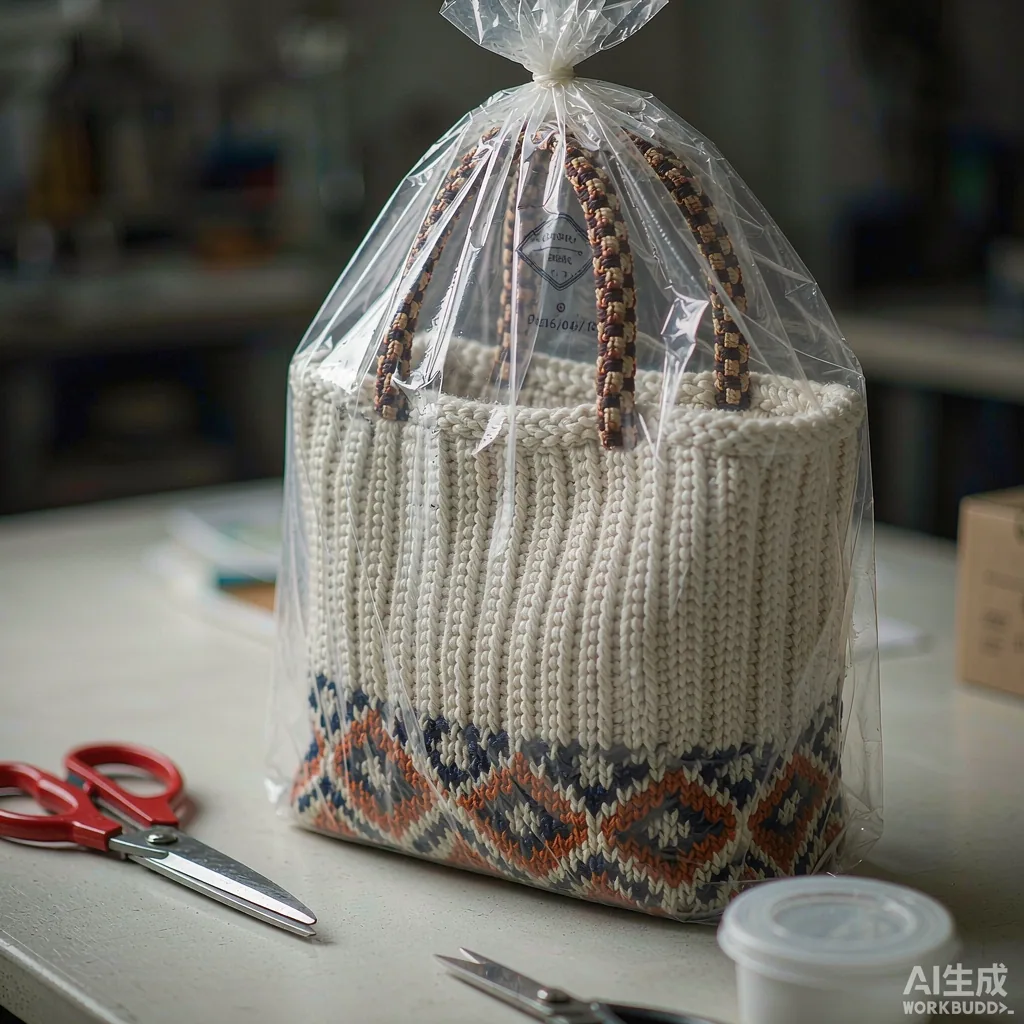
The Strap Checklist: What to Fix Before Programming Starts
A knitted shoulder bag fails at the strap far more often than at the body, and almost every failure traces back to a decision that was never written down. The checklist below is the one used before a programme reaches the machine, and each item on it has a default value so a buyer can accept the default rather than debate it. Fixing these nine items early is what keeps a first sample from turning into four rounds.
- Strap width: default 32 mm, move to 45 mm if the loaded bag exceeds 3 kg.
- Strap drop: default 280 mm from the top of the body to the strap crown.
- Strap construction: knitted tube, 3.2 mm thick, not a flat folded band.
- Junction reinforcement: 12 courses at a tighter stitch setting at each end.
- Elongation limit: no more than 2.4 percent at 5 kg, measured over 30 minutes.
- Adjuster hardware: a slider sized to the knitted tape, not to a woven tape.
- Abrasion target: about 15,000 rubs at the shoulder contact zone.
- Shrinkage allowance: 2.0 percent, with the strap length graded up to compensate.
- Inspection: AQL 2.5 under ISO 2859-1 with strap-specific defect items.
Strap Width: 32 mm, 45 mm and What the Shoulder Feels
Strap width is the single most effective comfort lever on a shoulder bag, because it sets the contact pressure for a given load. A 32 mm strap is the default for bags carried under 3 kg; widening to 45 mm spreads the same load over roughly 40 percent more contact area, which is the difference between a bag that can be worn all day and one that is taken off after twenty minutes.
| Strap width | Needle count at E7 | Typical loaded weight | Contact pressure feel | Cycle impact |
|---|---|---|---|---|
| 25 mm | 18 needles | Up to 1.5 kg | Marked on a bare shoulder after 30 min | Baseline |
| 32 mm | 24 needles | 1.5 to 3.0 kg | Comfortable for most of a working day | + 45 seconds |
| 45 mm | 33 needles | 3.0 to 5.0 kg | Comfortable with a coat between strap and shoulder | + 80 seconds |
| 60 mm | 44 needles | Above 5.0 kg | Reads as a webbing strap rather than a knit detail | + 130 seconds |
Widths above 45 mm stop looking like knit and start looking like webbing, which loses the reason a brand specifies a knitted strap in the first place. Where a programme genuinely needs to carry above 5 kg, the better answer is not a wider strap but a padded insert inside a 45 mm tube, which keeps the visual width modest while lifting the comfort figure.
Drop and Carry Position: 280 mm Against 320 mm
Drop is measured from the top edge of the body to the crown of the strap, and it decides where the bag sits on the torso. A 280 mm drop puts the bag at the hip for most adults, which suits a shoulder bag carried over one shoulder and read as a day bag. Pushing to 320 mm moves it to mid-thigh and starts to read as a crossbody, which is a different silhouette and usually a different listing on a retail site.
The mistake to avoid is quoting drop without stating the body height it is measured from. Two bags with a 280 mm drop but different body heights sit in different places on the same person. Writing both numbers on the tech pack, drop plus body height, removes the ambiguity and stops a fit complaint that is really a spec complaint.
Knitting the Strap as a Tube Rather Than a Flat Band
A knitted strap should be a tube, not a flat band folded and sewn. Knitting a tube at 24 needles on an E7 machine produces a closed section with no seam, no raw edge and no stitch line to fail, and it recovers its round profile after compression. A flat band folded over needs a seam down its length, and that seam is the first thing to abrade against clothing at the shoulder.
- Strap width
- 32 mm at 24 needles on E7; 45 mm at 33 needles
- Tube thickness
- 3.2 mm, knitted as a closed circular section
- Yarn
- 600D recycled polyester, 380 g/m2 in the strap zone
- Drop
- 280 mm shoulder carry; 320 mm for a crossbody position
- Elongation
- 2.4 percent at 5 kg over 30 minutes, measured on the tube
- Junction strength
- About 420 N, tested to ISO 13934-1 on the strap-to-body join
- Abrasion target
- About 15,000 rubs at the shoulder contact zone, ASTM D4966
- Shrinkage allowance
- 2.0 percent, strap length graded up at the pattern stage
- Body cycle time
- About 11.6 minutes including the knitted strap
Tube thickness is the variable buyers forget to specify. A 3.2 mm tube has enough body to resist rolling on the shoulder; a 2.0 mm tube feels thin and twists under load, which is a common complaint that no amount of width adjustment fixes. Going thicker than about 4.5 mm makes the strap stiff at the junction and creates a kink where it enters the body.
The Junction: Where Straps Actually Fail
Every load in a shoulder bag funnels through two small areas where the strap meets the body, and those areas are where samples fail. The standard answer is 12 courses knitted at a tighter stitch setting at each junction, which spreads the load over more loops and raises the tested strength to about 420 N under ISO 13934-1. Without that reinforcement the same strap and body test closer to 260 N.
Tighter stitch courses
Twelve courses at a reduced stitch length at each strap end. The lowest-cost reinforcement and the one that keeps the whole bag seamless.
Wider junction footprint
Fan the strap out over more needles where it enters the body. Adds visual bulk but spreads load over a larger area.
Second yarn feed
Introduce a 900D feed at the junction only. Strongest option, at the cost of a visible density change at the join.
Inserted tape core
A woven tape knitted inside the tube and anchored into the body. Used above 5 kg; adds a secondary operation.
Choosing between these is a load decision, not a preference. Below 3 kg the tighter courses alone are enough. Between 3 kg and 5 kg the wider footprint is worth adding. Above 5 kg the tape core becomes necessary, and at that point a buyer should reconsider whether a knitted strap is the right component at all rather than reinforce it past its natural limit.
Load Transfer and Elongation Under 5 kg
Elongation is the number that determines whether a bag feels stable or sloppy over a day of wear. A knitted strap tube at 600D stretches 2.4 percent under a 5 kg load held for 30 minutes, which reads as slight but acceptable. Above about 4 percent the bag visibly drops as the day goes on, and that is the point at which wearers start adjusting the strap repeatedly, which is the behaviour that precedes a return.
Load transfer to the body matters equally. Because the strap is knitted in one piece with the body, the load path runs continuously from the strap crown through the junction and into the side wall, with no stitched interruption. That continuous path is the structural argument for a seamless knit strap over an applied one, and it is why the junction reinforcement can be modest rather than heavy.
Adjuster Hardware That Works With Knitted Tape
A slider or cam buckle sized for woven webbing usually does not fit a knitted tube properly. Knit is softer and thicker than woven tape of the same nominal width, so a 32 mm slider rated for webbing will either bind or slip on a 32 mm knitted tube. The fix is to specify hardware by the measured thickness of the tube, 3.2 mm here, rather than by the nominal strap width.
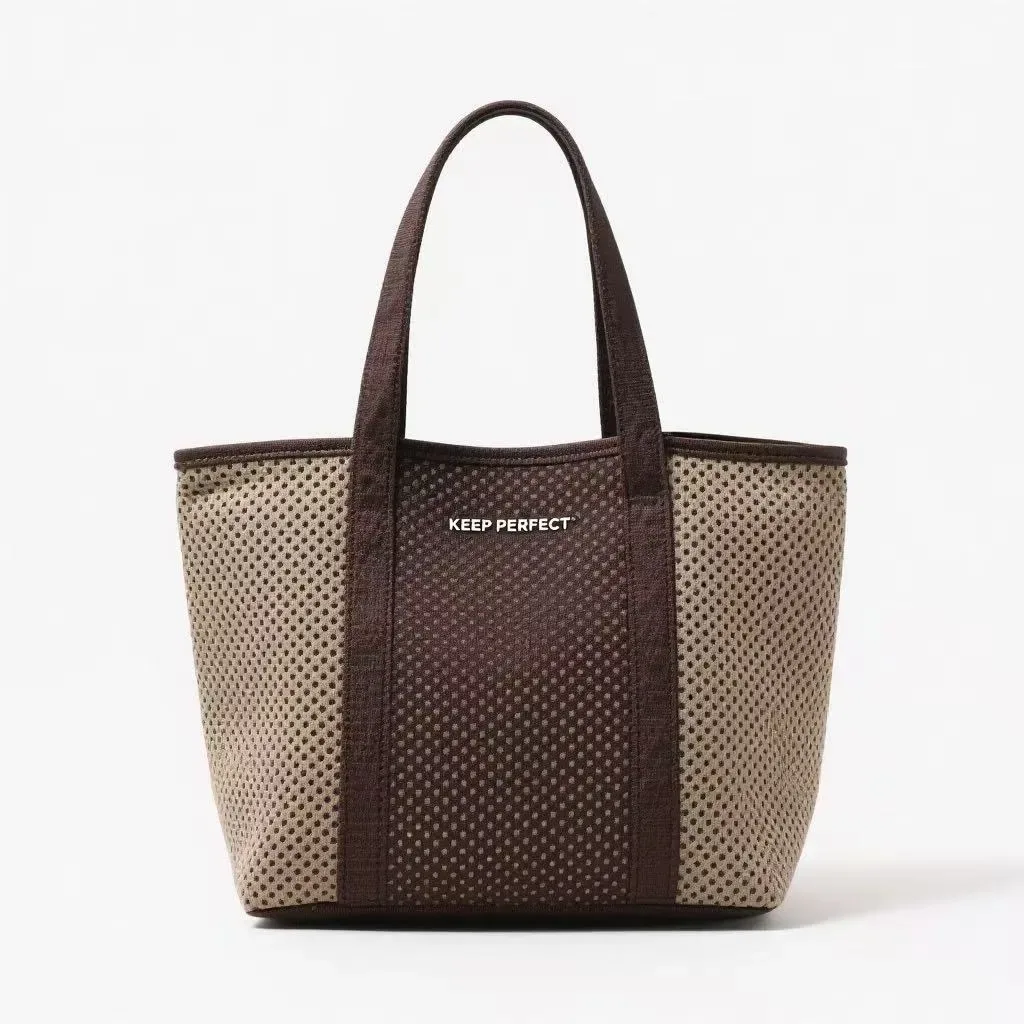
Hardware also sets the wear point. A metal slider against a knitted tube abrades the knit where it sits, so the contact area is knitted with a denser stitch and, where the programme allows, the slider is specified with a rounded rather than a square inner edge. ASTM D2061 is the reference used when the hardware itself needs a rated strength rather than a visual approval.
Wear Points: Abrasion at the Shoulder and Under the Arm
Two zones on a shoulder bag take focused abrasion: the strap where it crosses the shoulder and the body where it rubs under the arm. The strap zone is rated at about 15,000 rubs under ASTM D4966, and the body zone is knitted at a higher density over roughly 30 courses for the same reason. Neither figure appears in a typical bag spec, and both are where warranty claims originate.
Colour fastness belongs in the same conversation. AATCC 8 covers crocking, or colour transfer by rubbing, and a dark strap against a light garment is exactly the case that fails. Specifying a grade against AATCC 8 along with the abrasion figure covers both halves of the wear problem: the knit not breaking down and the colour not moving onto clothing.
Sampling the Strap: A Three-Body Protocol
Strap sampling works best with three bodies from one programme: one washed to confirm the 2.0 percent shrinkage allowance, one load-tested to confirm the 420 N junction figure and one kept sealed as the reference for final inspection. That protocol costs three knitting cycles, roughly 35 minutes of machine time, and removes most of the ambiguity from bulk approval.
Timing follows the standard programme: 7 working days from an approved tech pack to a sample in hand, then 30 days for bulk from sample approval. The minimum is 100 pcs per style and colourway, which means a two-drop shoulder bag in three colourways is three commitments of 100 pcs. Shipment is FOB Xiamen, with CIF and DDP quoted where a landed figure is needed.
Where the Shoulder Bag Sits in a Knit Capsule
The shoulder bag is usually the volume driver of a knit capsule, and its strap specification carries into adjacent styles. The same 32 mm tube and 280 mm drop logic informs a knitted messenger bag, while the load thinking behind the junction informs a knitted gym bag. A knitted beach bag takes the same strap tube in a wider 45 mm width for heavier loads.
Because all of these share one 600D yarn lot and one colour reference, a capsule of four styles at 100 pcs each is a realistic first order rather than a large commitment. See the knitted bag collection for the silhouette grouping and the knit bag quality control pillar for how strap testing is documented at final inspection.
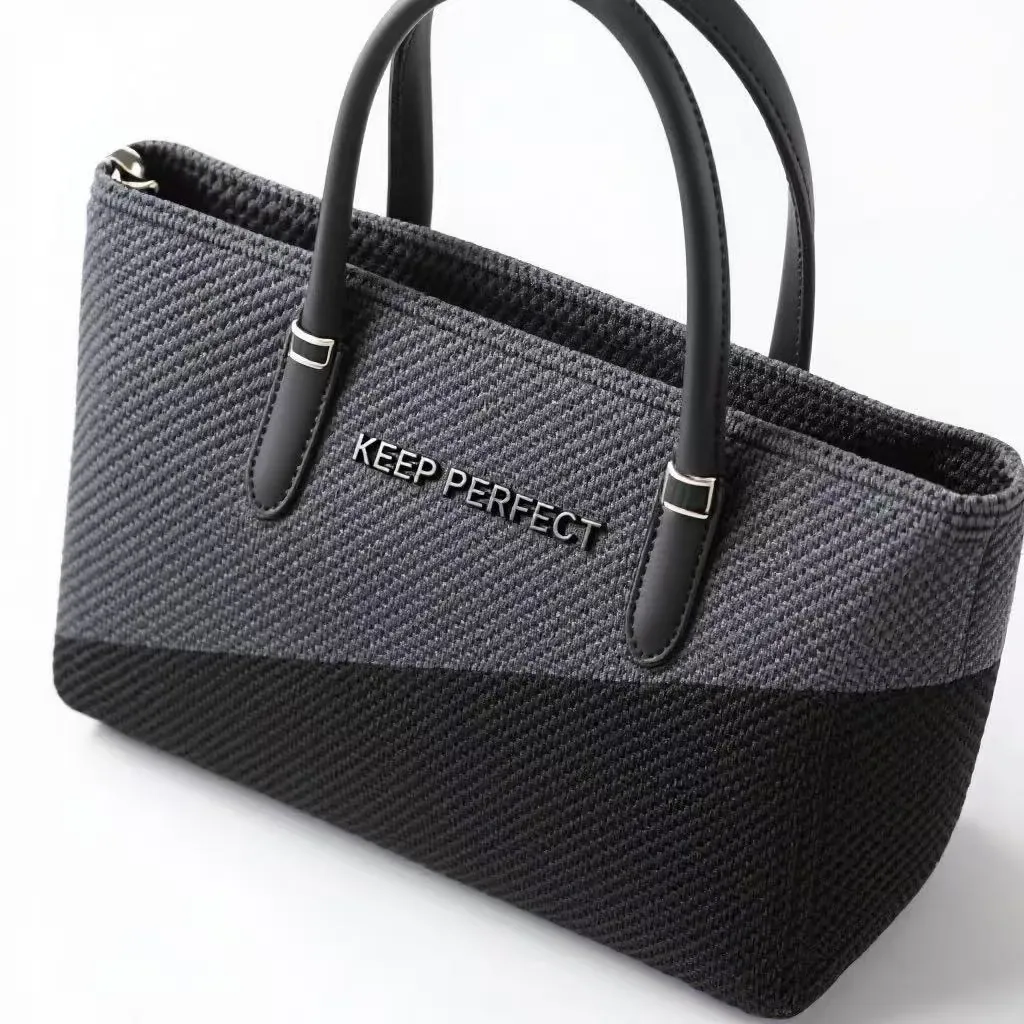
Dial in a knitted strap that carries
Send the loaded weight, drop and strap width. The team returns a strap spec with a junction rating, a 7-working-day sampling plan and an FOB Xiamen quote. Start a shoulder bag programme.
Frequently Asked Questions
What strap width should a knitted shoulder bag use?
32 mm is the default for bags carried under 3 kg, knitted at 24 needles on E7. Move to 45 mm above 3 kg, which spreads load over about 40 percent more contact area. Above 45 mm the strap stops reading as knit and starts reading as webbing.
Why knit the strap as a tube instead of a flat band?
A tube has no seam and no raw edge, so it recovers its round profile after compression and has no stitch line to abrade against clothing. A flat band folded and sewn puts a seam right where the shoulder rubs, and that seam fails first.
What is a strap drop and how is it measured?
Drop is the distance from the top edge of the body to the crown of the strap. A 280 mm drop puts the bag at the hip; 320 mm moves it to mid-thigh and reads as a crossbody. Always quote drop together with body height.
How strong is a knitted strap junction?
With 12 tighter courses at each strap end the join tests at about 420 N under ISO 13934-1. Without that reinforcement the same strap and body test closer to 260 N, which is why the 12-course detail belongs on the tech pack rather than being left to the machine.
How much does a knitted strap stretch under load?
A 600D tube stretches 2.4 percent under 5 kg held for 30 minutes. Above about 4 percent the bag visibly drops through the day and wearers keep readjusting, which is the behaviour that usually precedes a return. Above that figure the bag visibly drops through the day and wearers keep readjusting the strap.
Does standard webbing hardware fit a knitted strap?
Usually not. Knit is softer and thicker than woven tape of the same nominal width, so a 32 mm webbing slider binds or slips on a 32 mm knitted tube. Specify hardware by measured tube thickness, 3.2 mm here, rather than by nominal width.
What abrasion rating should a shoulder strap carry?
About 15,000 rubs at the shoulder contact zone under ASTM D4966 is a working target. The underarm zone of the body also takes focused abrasion and is knitted at a higher density over roughly 30 courses for the same reason. The underarm zone of the body takes the same kind of wear and is knitted at a higher density.
Can a knitted strap carry a heavy load above 5 kg?
Yes, but not with the default specification. Above 5 kg a woven tape core is knitted inside the tube and anchored into the body. At that point it is worth asking whether a knitted strap is the right component at all. At that point it is worth asking whether a knitted strap is the right component at all.
How is colour transfer from a dark strap checked?
Against AATCC 8, the crocking test for colour transfer by rubbing. A dark strap against a light garment is the case that fails, so the grade should be written into the spec alongside the abrasion figure rather than added after a complaint. Both figures belong on the spec, because abrasion and colour transfer are separate failures.
What shrinkage allowance applies to a knitted strap?
2.0 percent, with the strap length graded up at pattern stage so the finished drop hits 280 mm after washing. Sampling confirms the figure by washing one of three bodies and measuring the strap against the unwashed reference. Sampling confirms it by washing one of three bodies and measuring against the unwashed reference.
How long does a shoulder bag programme take?
Sampling takes 7 working days from an approved tech pack and bulk runs 30 days from sample approval. The minimum is 100 pcs per style and colourway, so a two-drop bag in three colourways is three separate 100-piece commitments. A two-drop bag in three colourways is therefore three separate 100-piece commitments.
What is the cycle time for a knitted shoulder bag body?
About 11.6 minutes including the knitted strap, at E7 in 600D recycled polyester. Widening the strap from 32 mm to 45 mm adds roughly 80 seconds, and a padded insert adds a secondary operation on top of that. A padded insert adds a secondary operation on top of that machine time.
People Also Ask
Is a wider knitted strap always more comfortable?
Up to about 45 mm, yes, because contact pressure falls as width rises. Beyond that the strap stops looking like knit and the added machine time, around 130 seconds at 60 mm, is not matched by a comfort gain most wearers notice.
Why does a knitted strap twist on the shoulder?
Usually because the tube is too thin. A 2.0 mm tube rolls under load regardless of width, while a 3.2 mm tube holds its section. Thicker than about 4.5 mm causes a kink where the strap enters the body.
What is the strongest knitted strap reinforcement?
A woven tape core knitted inside the tube and anchored into the body, used above 5 kg. Below that, 12 tighter courses at the junction are sufficient and keep the whole bag seamless with no secondary operation.
Should drop be measured before or after washing?
After. The pattern is graded up by 2.0 percent so the washed strap reaches the specified 280 mm drop. A drop measured hot off the machine reads short and will not match the bulk shipment.
Can one strap specification serve several bag styles?
Yes. The same 32 mm tube and 600D yarn carry across shoulder, messenger and beach silhouettes, with only the width and drop changed. Sharing one yarn lot keeps shade consistent across the capsule.
Sources and further reading
Every figure on this page is either our own programme data or attributed below. Open the originals before you write them into a specification.
- ASTM D4966 Abrasion Resistance of Textile Fabrics (Martindale)ASTM International Method behind the roughly 15,000-rub target for the knitted strap shoulder zone.
- ASTM D5035 Breaking Strength and Elongation of Textile Fabrics (Strip Method)ASTM International Used alongside ISO 13934-1 when a buyer wants the strap tube rated in newtons.
- ASTM D2061 Strength Tests for ZippersASTM International Referenced when adjuster hardware on a knitted strap needs a rated strength.
- Proposition 65California OEHHA Relevant to metal sliders and coated hardware fitted to knitted straps sold in California.