Knitted Bag Promotional Campaigns: Cost-Per-Use, Lead Time and Volume Band Planning for Brand Teams
A knitted bag promotional campaign costs less per use than almost any other branded item a marketing team can buy, and the figure is easy to check. At USD 4.80 FOB for a standard E12 tote, a bag carried 180 times lands near USD 0.027 per use, against roughly USD 0.31 for a printed paper carrier that gets two trips. Four variables move that result: branding area, yarn count, colourway spread and freight mode. This article breaks the arithmetic into the four numbers a brand team needs before committing spend.
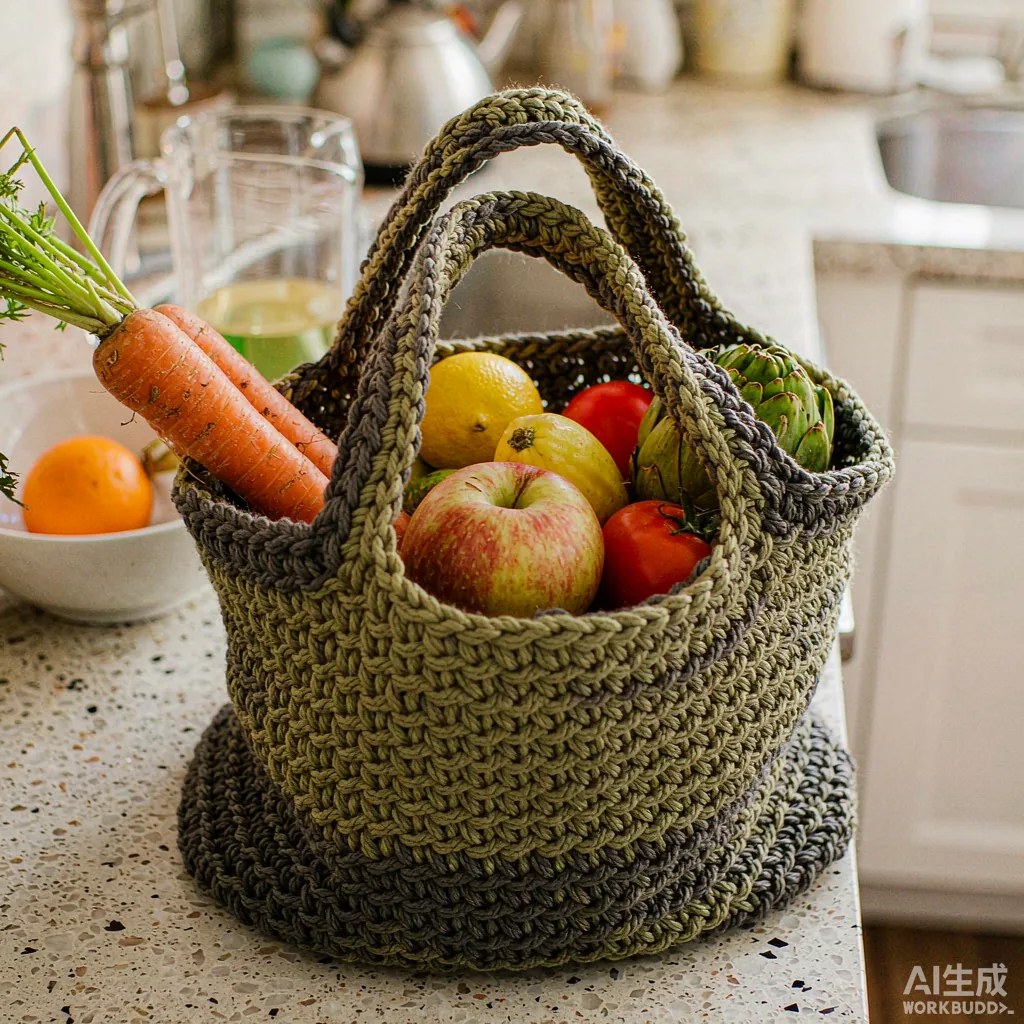
What One Promotional Knitted Bag Costs Per Use
A promotional knitted bag quoted at USD 4.80 FOB Xiamen and carried 180 times costs about USD 0.027 per use, which is roughly one eleventh of a printed paper carrier at USD 0.31 per use and one fortieth of a branded umbrella at about USD 1.10 per use.
Cost per use is the only metric that survives a marketing review, because impressions are not the same thing as value. A bag that sits in a cupboard generated one impression and zero uses; a bag used weekly for a year generated several hundred. The formula is simply the landed unit cost divided by the number of carries, and the argument inside most brand teams is never about the numerator — it is about the denominator, which nobody measures. Publish the denominator you are assuming and the comparison becomes decidable.
The 180-carry denominator used here is deliberately conservative. It assumes a bag used for grocery and commute trips roughly three times a week across a year, with the tail of the distribution dropping out through loss, staining and replacement. A heavier 600D body with a reinforced base will plausibly run past 300 carries; a lightweight 150D foldable shopper will not, and quoting 180 for both would be dishonest. The honest approach is to set the denominator by construction rather than by optimism.
The Four Numbers That Set a Promotional Unit Cost
Four numbers decide the quoted unit price on a promotional knit bag: yarn count and fibre, finished GSM, the number of colourways, and the branding method — and GSM alone moves the price by about 18% across a 260 to 380 g/m² window.
Yarn count is the first because it drives both material consumption and cycle time. A 300D polyester body at E12 knits faster than a 600D body at the same gauge, and the heavier yarn costs more per kilogram as well. Fibre choice then sets the floor: commodity polyester sits at the bottom, recycled rPET with a transaction certificate adds a measurable premium, and a nylon or a core-spun blend adds more. Finished GSM is the number brand teams most often leave out of the brief, and its absence is why two quotes for visually identical bags can differ by a fifth. Colourway count and branding method are the last two, and both are step costs rather than smooth ones.
- Yarn count and fibre: 300D commodity polyester through 600D rPET with a GRS transaction certificate, moving material cost by roughly 22% across the range.
- Finished GSM: 260 g/m² for a foldable shopper, 320 g/m² for a standard tote, 380 g/m² for a structured campaign piece, an 18% swing end to end.
- Colourway count: each colourway is a separate yarn set-up on the bed, which is why MOQ is stated per style and per colourway rather than per order.
- Branding method: knitted-in jacquard carries no unit add-on beyond programming, while an applied patch or a heat-transfer mark adds a placement operation per piece.
- Freight mode: sea freight at about 21 days against air at about 5 days, a difference that can exceed the unit cost itself on a tight campaign date.
Backwards Planning: The Date Arithmetic Before Launch
A knitted bag promotional campaign needs roughly 12 weeks from signed brief to goods on the promotional floor: 7 working days of sampling, 30 days of bulk production, 10 to 21 days of freight, and a two-week buffer that most programmes spend without meaning to.
Planning forwards is what breaks campaigns. A team that signs a brief eight weeks before the launch date and then asks whether the bags can arrive has already lost, because the fixed blocks — sampling and bulk — do not compress, and the only compressible block is freight, which is also the most expensive one to compress. Planning backwards from the in-store date assigns each block a slot and makes the trade visible while it is still inexpensive: if the freight block has to shrink from 21 days to 5, that decision is made in week one rather than week ten, and the cost of it is known before it is incurred.
- Brief, tech pack and quotation
- Week 1, quotation returned against a stated GSM and quantity
- Sampling and approval
- Weeks 1 to 2, 7 working days on the production bed
- Yarn and trim booking
- Weeks 2 to 4, the longest-lead item on a custom shade
- Bulk knitting and finishing
- Weeks 4 to 8, 30 days from the approved handover
- Inspection and release
- Week 8 to 9, AQL 2.5 under an ISO 2859-1 sampling plan
- Freight and customs
- Weeks 9 to 12, 21 days by sea or about 5 days by air
- Distribution to stores
- Week 12, plus a two-week buffer most programmes consume
The buffer is not slack and should not be treated as such. It absorbs the two failures that actually occur on promotional programmes: a compliance test that has to be repeated after a shade change, and a retail distribution centre that moves its delivery window. A programme planned with zero buffer does not finish early; it finishes by air, which is the most expensive way to absorb a two-week planning error.
Volume Bands and Where the Unit Price Steps
Unit price on a promotional knit programme steps at three volume bands rather than sliding continuously — 100 to 499 pcs, 500 to 2,999 pcs and 3,000 pcs and above — with roughly 9% between the first and second band and a further 6% between the second and third.
The step shape matters more than the percentages. Because the steps are discrete, a campaign planned at 480 pieces is priced as a small programme, and moving it to 520 pieces is not a 9% saving on 40 extra bags — it is a 9% saving on all 520. Brand teams that understand this routinely resize a campaign upward to clear a band, and the arithmetic usually favours doing so, provided the extra stock can actually be distributed. The caveat is obsolescence: a promotional bag with a campaign date printed on it has no second life, and 40 surplus undated bags are worth more than 520 dated ones that miss the window.
| Volume band | Typical campaign use | Unit cost index | Sampling and set-up treatment |
|---|---|---|---|
| 100 to 499 pcs | Store opening, VIP gifting, influencer seeding | 100, the reference band | Set-up charged in full; MOQ 100 pcs per colourway applies |
| 500 to 2,999 pcs | Regional campaign, gift-with-purchase threshold | About 91 | Set-up amortised across the run |
| 3,000 pcs and above | National campaign, multi-market rollout | About 85 | Set-up amortised; yarn booked as a single lot |
| Colourway split | Any band | Adds about 11% at four colourways | Each colourway is a separate yarn set-up |
| Custom dope-dyed shade | Any band | Adds about 7% and 10 days | Requires a minimum dye lot, usually 300 kg |
Branding Area: How Much Logo a Knitted Surface Carries
A knitted surface carries a legible logo from about 40 cm² upward, but the stitch structure sets a floor on detail: minimum stroke width is roughly 3 mm at E12 and 5 mm at E7, and below those widths fine detail fills in during setting and the first wash.
This is the single most common source of disappointment on a promotional knit programme, and it is entirely predictable. Brand guidelines written for print assume that any vector artwork reproduces at any size, which is true of ink and false of a loop structure. A wordmark with 1.5 mm hairlines will knit, will look correct on the bed, and will close up after setting. The remedy is a reduced mark: either a simplified lockup approved by the brand team for knit specifically, or a knitted-in jacquard that uses a colour change rather than fine detail to carry the identity.
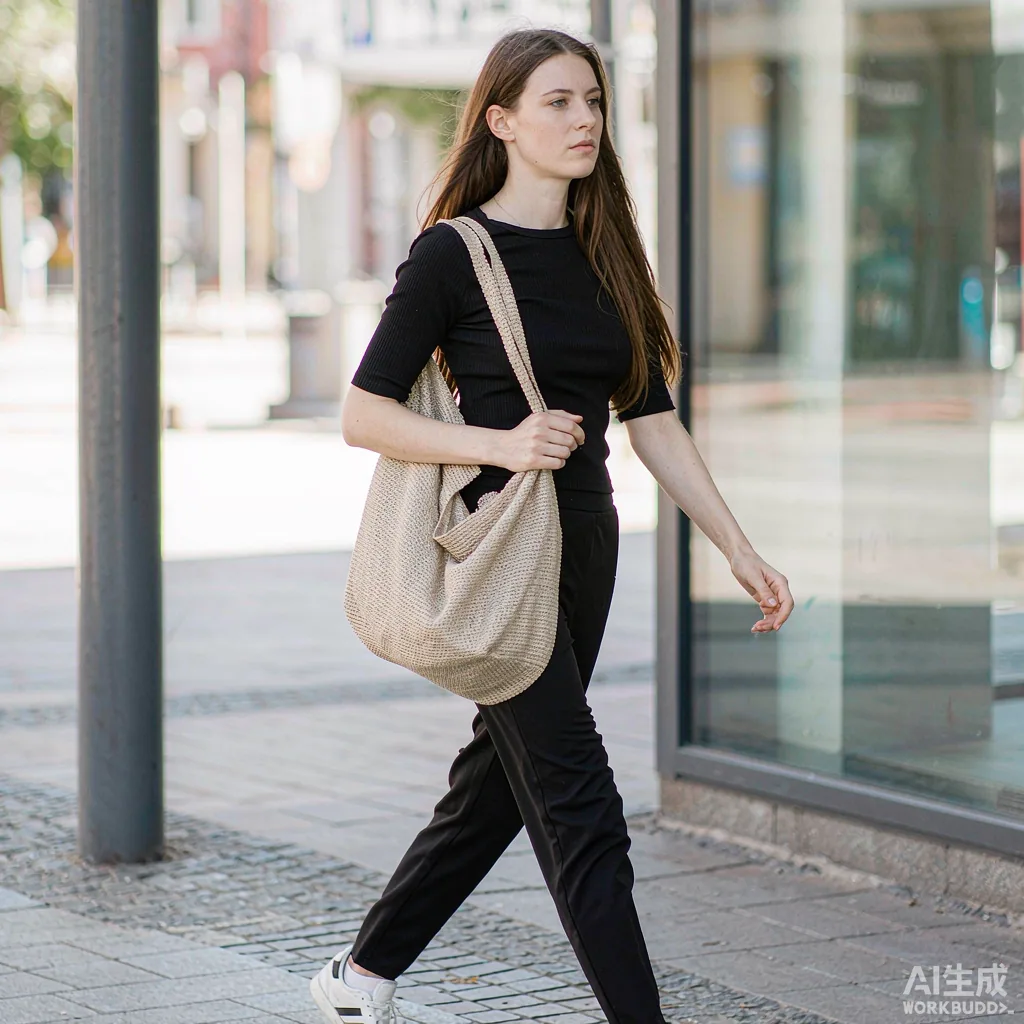
Colourway Strategy When the Campaign Volume Is Fixed
On a fixed campaign volume of 2,000 pieces, four colourways at 500 each cost about 11% more than a single colourway at 2,000, because every colourway is a separate yarn set-up on the bed and MOQ applies per colourway.
The decision is therefore a merchandising one dressed as a costing one. Four colourways buy shelf presence and a wider appeal across a retail estate; one colourway buys a lower unit cost and a simpler inspection. The compromise most promotional programmes land on is two or three colourways sharing one body programme and one trim set, which keeps the set-up count low while still giving a merchandiser something to work with. Where four or more are genuinely required, the cost is better absorbed by raising the total volume than by cutting the per-colourway quantity below 100 pcs.
Colourway rules that keep a promotional programme cost-neutral
- Keep every colourway at or above 100 pcs; below that the set-up dominates the unit cost.
- Share one knitting programme across colourways so only the yarn changes, not the structure.
- Hold the trim set constant across colourways; a second zip tape colour is a second trim booking.
- Book a custom shade at a minimum dye lot of about 300 kg, or take a stock shade instead.
- Approve colour under a standardised light box, since a retail floor light will differ from a studio light.
- Ask for the colour difference in Delta E against the brand reference, with 1.0 as the usual acceptance figure.
The Costs That Sit Outside the Unit Price
Four cost lines sit outside the quoted unit price on a promotional programme — freight, duty, compliance testing and retail packaging — and together they typically add 18% to 32% to the landed figure depending on mode and market.
Freight is the largest and the most volatile. Sea freight at about 21 days is the default for a planned campaign; air at about 5 days is the fallback for a compressed one, and on a lightweight but bulky knitted bag the freight differential per piece can exceed the FOB unit cost itself, because air charges on volumetric weight. Duty follows the HS classification and the destination market, and knitted bags do not classify identically across markets, so the figure should be confirmed by the importer rather than assumed. Compliance testing is a fixed cost per programme rather than per piece, which is why it penalises small campaigns disproportionately: one REACH or Prop 65 screen costs the same whether it covers 100 pieces or 3,000.
What a Promotional Knit Bag Has to Survive
A promotional knitted bag should be specified against three measurable thresholds — about 20,000 Martindale rubs to ISO 12947-2, roughly 600 N of strip tensile strength to ISO 13934-1, and a colour fastness to rubbing of grade 4 or better to AATCC 8 — because a campaign bag that fails in week three damages the brand more than no bag at all.
Promotional use is harsher than retail use in one specific way: the recipient has no purchase commitment and no reason to treat the item carefully. A bag someone bought is carried with some care; a bag someone was handed is loaded until it fails. That argues for specifying the base and the handle junction above the level the price point seems to require, since those are the two failure modes that generate returns. It also argues against the lightest GSM that the cost target permits, because the saving on fabric is small and the cost of a field failure is not.
Foldable shopper, 260 g/m²
150D polyester at E14, packs to about 90 mm by 120 mm, survives roughly 120 carries. Lowest cost per unit, highest cost per use on long campaigns.
Standard tote, 320 g/m²
300D polyester or rPET at E12, 18 to 22 litre body, survives about 180 carries. The reference specification behind USD 4.80 FOB.
Structured campaign piece, 380 g/m²
600D rPET at E7 with a reinforced base band, survives about 300 carries. Highest unit cost, lowest cost per use over a year.
Drawstring gift bag, 300 g/m²
300D at E12 with an integral knitted channel, no hardware, survives about 150 carries. Fastest to trim and lowest in packing cost.
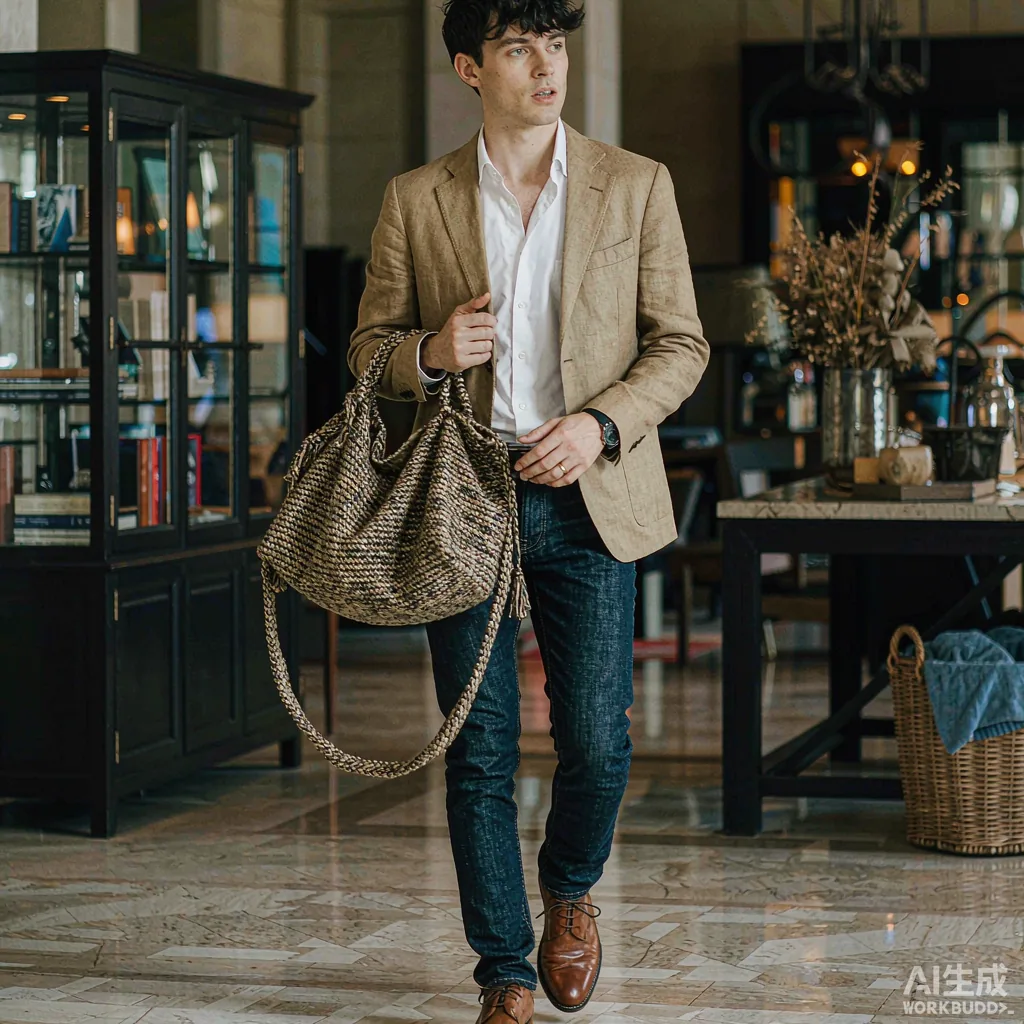
Three Promotional Formats Compared on Cost Per Use
Across the three formats most promotional programmes choose between — a foldable shopper, a standard tote and a structured gift piece — the ranking on unit cost and the ranking on cost per use are opposites, and the structured piece wins on cost per use by a margin of about 40%.
That inversion is the whole argument for specifying upward. The foldable shopper wins on unit cost and on packability, and it is the correct choice when the objective is reach: a handout at an event, a conference bag, a mass seeding. The standard tote is the correct choice when the objective is a general campaign with no single dominant use case. The structured gift piece is the correct choice when the objective is retention — a gift-with-purchase threshold, a loyalty reward, a member benefit — because those recipients carry the bag for months and the cost per use falls accordingly.
The Campaign Programme Sequence From Brief to Floor
A knitted bag promotional campaign runs seven stages in a fixed order — brief, quotation, sampling, yarn and trim booking, bulk knitting, inspection and release, then freight — and only the yarn booking can be pulled forward without risk.
Pulling yarn booking forward is the one legitimate compression, and it requires the shade and count to be fixed before day one of sampling. On a promotional programme that is usually achievable, because the brand palette is already defined and the campaign artwork is usually approved before the bag brief is written. Where it is not achievable, the programme simply runs the full 12 weeks and the launch date is set accordingly. Capacity behind the sequence is 7 production lines running about 200,000 pcs per month, which is ample for a national campaign and is the reason promotional volumes are rarely capacity-constrained; the constraint is almost always the shade booking or the artwork approval.
Cost a promotional knit bag programme
Send the campaign volume, the colourway split, the launch date and the branding artwork. Our knit team will return a landed cost per use, a backwards schedule from your in-store date, and a quotation against MOQ 100 pcs per colourway, 7 working days of sampling and 30 days of bulk. Start on the contact page.
Frequently Asked Questions
What does a promotional knitted bag cost per use?
About USD 0.027 per use at a landed cost built on USD 4.80 FOB and a denominator of 180 carries. The equivalent figure for a printed paper carrier is roughly USD 0.31 per use, so a knitted bag is around one eleventh of the cost per use of the disposable alternative.
Why is cost per use better than cost per impression for a campaign bag?
Because impressions are not value. A bag left in a cupboard generated one impression and no uses, while a bag carried three times a week generated several hundred. Divide landed unit cost by assumed carries and the comparison between two formats becomes decidable.
What is the 180-carry denominator based on?
It assumes roughly three carries a week across a year, with a tail dropping out through loss, staining and replacement. A 600D body with a reinforced base will plausibly exceed 300 carries; a lightweight 150D foldable shopper will not reach 180.
Which four numbers decide the quoted unit price?
Yarn count and fibre, finished GSM, the number of colourways, and the branding method. GSM alone moves the price by about 18% across a 260 to 380 g/m² window, which is why a brief without a stated GSM produces quotes that are not comparable.
How long does a promotional knit bag campaign take from brief to floor?
About 12 weeks: 7 working days of sampling, 30 days of bulk production, 10 to 21 days of freight depending on mode, plus a two-week buffer that most programmes spend without planning to. Working backwards from the in-store date is what keeps it on schedule.
Can a promotional campaign be compressed below 12 weeks?
Only by compressing freight, which is the most expensive block to compress. Sampling at 7 working days and bulk at 30 days are fixed. Pulling yarn booking forward helps only if the shade and count are fixed before day one of sampling.
How does volume affect the promotional unit price?
Price steps at three bands rather than sliding: 100 to 499 pcs, 500 to 2,999 pcs, and 3,000 pcs and above. The steps are about 9% and a further 6%, so resizing a 480-piece campaign to 520 pieces saves 9% across the whole run.
Why does MOQ apply per colourway rather than per order?
Because each colourway is a separate yarn set-up on the knitting bed. MOQ is 100 pcs per style and per colourway, so a two-colourway campaign commits 200 pieces, and a four-colourway campaign commits 400 pieces at minimum.
How much extra does a four-colourway campaign cost?
About 11% more than the same volume in a single colourway, because of the additional yarn set-ups. Sharing one knitting programme and one trim set across the colourways keeps the premium to the yarn alone rather than compounding it with trim bookings.
What is the minimum logo size a knitted surface can carry?
A legible mark starts at about 40 cm², with a minimum stroke width of roughly 3 mm at E12 and 5 mm at E7. Below those widths, fine detail fills in during heat setting and the first wash, which is why brand guidelines written for print need a knit-specific lockup.
Should the campaign mark be knitted in or applied?
Knitted-in jacquard carries no unit add-on beyond the programming and cannot peel or crack. An applied patch or transfer adds a placement operation per piece but reproduces finer detail. For a campaign with a long carry life, knitted-in is usually the better value.
What costs sit outside the quoted unit price?
Freight, duty, compliance testing and retail packaging, together adding about 18% to 32% to the landed figure. Compliance testing is a fixed cost per programme, so it penalises small campaigns disproportionately: one screen covers 100 pieces or 3,000 for the same fee.
What performance thresholds should a promotional bag be specified against?
About 20,000 Martindale rubs to ISO 12947-2, roughly 600 N of strip tensile strength to ISO 13934-1, and a colour fastness to rubbing of grade 4 or better to AATCC 8. A promotional recipient has no purchase commitment and loads the bag until it fails.
Why is air freight a poor way to recover a late campaign?
Because air charges on volumetric weight and a knitted bag is light but bulky, so the freight differential per piece can exceed the FOB unit cost itself. A two-week planning error absorbed by air usually costs more than planning the buffer in the first place.
People Also Ask
Is a knitted bag worth it for a promotional campaign?
Yes, if the denominator is carries rather than units. At USD 4.80 FOB and 180 carries the cost per use is about USD 0.027, against roughly USD 0.31 for a printed paper carrier used twice. The gap widens with every additional trip.
How far ahead should I order promotional knitted bags?
Twelve weeks from signed brief to goods on the floor. That is 7 working days of sampling, 30 days of bulk, 10 to 21 days of freight and a two-week buffer. Anything shorter forces air freight, which on a bulky knit is expensive.
Does splitting a campaign into colourways raise the price?
Yes, about 11% for four colourways against one, because each colourway is a separate yarn set-up. Keep every colourway at or above 100 pcs and share one knitting programme and one trim set to hold the premium down.
What GSM should a promotional knitted bag use?
260 g/m² for a foldable shopper, 320 g/m² for a standard tote and 380 g/m² for a structured gift piece. Going lighter saves little and shortens the carry life, which raises the cost per use rather than lowering it.
Can brand artwork be knitted exactly as drawn?
Not always. Minimum stroke width is about 3 mm at E12 and 5 mm at E7, because finer hairlines fill in during setting and washing. Most brands approve a simplified knit lockup rather than losing the detail after the first wash.
Sources and further reading
Every figure on this page is either our own programme data or attributed below. Open the originals before you write them into a specification.
- ISO 12947-2:2016 — Textiles, determination of abrasion resistance, Part 2: specimen breakdownISO The abrasion method behind the 20,000-rub threshold used for promotional bag bodies.
- ISO 13934-1:2013 — Textiles, tensile properties of fabrics, Part 1: maximum force using the strip methodISO Referenced for the 600 N strip tensile figure specified on promotional bodies and handle junctions.
- ISO 2859-1:2026 — Sampling procedures for inspection by attributes, Part 1: AQL-indexed sampling schemesISO Defines the AQL 2.5 release that sits between bulk production and freight on a campaign schedule.
- OEKO-TEX STANDARD 100OEKO-TEX Finished-textile testing for harmful substances, one of the fixed compliance costs on a promotional programme.
- Substances restricted under REACH (Annex XVII)ECHA The restriction list behind the per-programme compliance screen that applies equally to 100 or 3,000 pieces.
- Incoterms rulesInternational Chamber of Commerce Defines the FOB, CIF and DDP terms used when a promotional landed cost is calculated.
Specify the Denominator, Not Just the Unit Price
A promotional knit programme is won or lost on a number most briefs never state. The unit price is visible, comparable and easy to negotiate; the carry count is invisible, assumed and never audited. Writing the assumed carry count into the brief and the specification into the tech pack turns cost per use from a marketing claim into a purchasable figure.
For the styles that suit each campaign objective, see knitted bag collection. For the structure of the volume commitment behind the quotation, see custom knit bags, and for the category decisions that precede a brief, see knitted tote bag buying guide.