Knitted Tote Bag Buying Guide: Body Dimensions, Handle Roots and What to Specify
A knitted tote bag programme succeeds or fails at the handle root, not in the body fabric. A working retail specification is a body around 38 x 36 x 10 cm with a 25 cm handle drop, knitted at E12 from 300D yarn to about 420 g/m², with a denser base panel and a handle attachment tested to 8 kg for 30 minutes. Body fabric typically clears 450 N tensile and 25,000 Martindale cycles; the returns come from where the handle meets the panel.
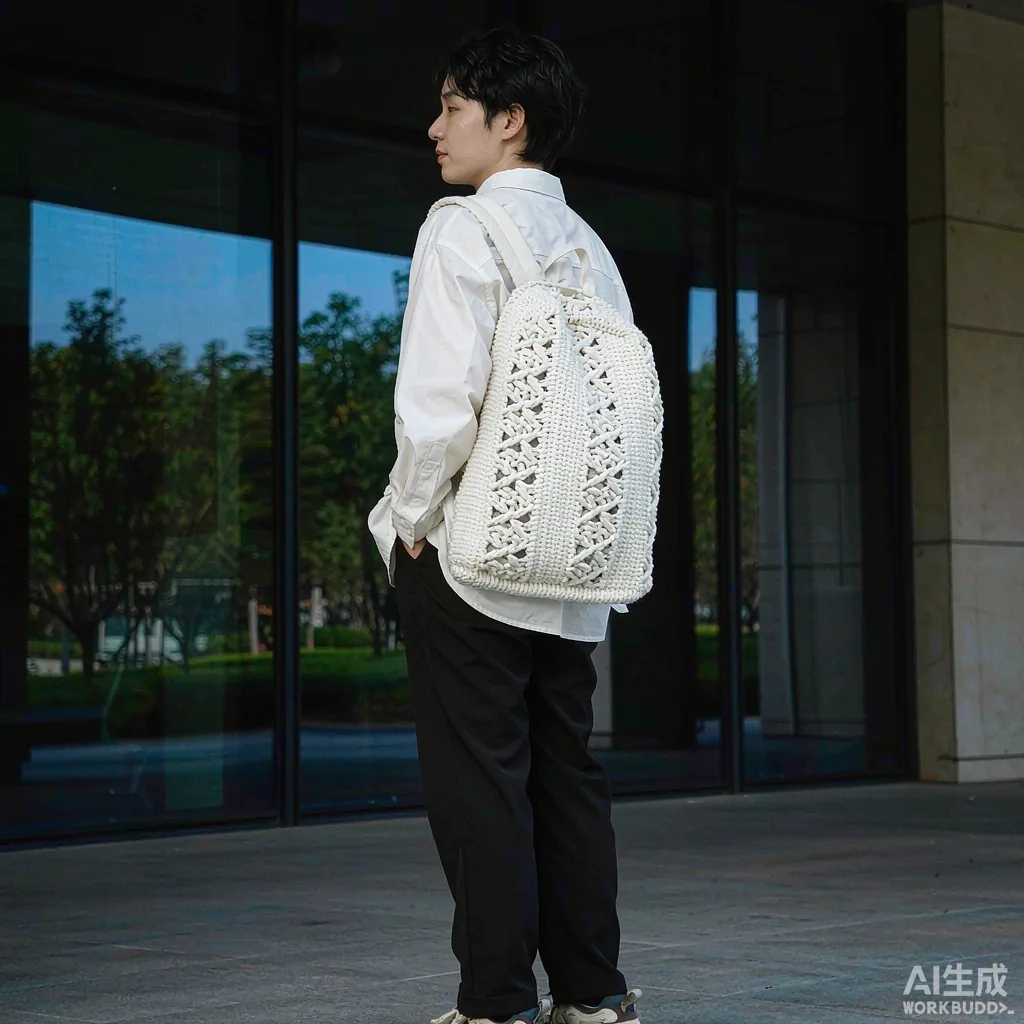
A Tote Programme That Failed at the Handle, Not the Fabric
A buyer ordered a knitted tote for a spring promotion, approved a beautiful sample and shipped 3,000 units. Within six weeks the returns started, and almost every returned bag had the same fault: the handle had torn away from the body at one side, cleanly, along the stitch line. The fabric was intact. The seam had not unravelled. The panel itself had torn, progressively, from the point where the handle load concentrated into a few stitches.
The specification had been written around the fabric, because that is what a buyer can see and feel. It named the yarn, the gauge, the colour and the weight, and it set an abrasion floor. It never described how the handle was attached, how wide the webbing was, how far the attachment extended down the panel, or what load the assembled handle had to survive. Nobody had tested the assembled bag; everybody had tested the fabric. The fabric passed and the bags failed.
This guide is ordered to avoid that outcome. It starts with body dimensions, then goes straight to the handle root, because that is where the engineering is, and only then covers fabric, closures and cost. If a buyer takes one thing away, it should be that a knitted tote specification is an assembly specification with a fabric clause inside it, not a fabric specification with a handle mentioned at the end.
The one-line lesson
- Test the assembled tote, not the panel.
- A handle root tested to 8 kg for 30 minutes prevents the failure that fabric testing never catches.
Choosing Body Dimensions for a Knitted Tote
The standard retail tote sits around 38 cm wide, 36 cm high and 10 cm deep, which holds a laptop sleeve, a water bottle and a light jacket without looking oversized. Depth is the dimension buyers under-specify: a flat tote with no gusset collapses when empty and bulges badly when full, while a 10 cm gusset lets the bag stand on a shelf and keeps the contents from pressing against the front panel. Knitted construction makes a gusset easy, because the panel can be shaped in the knitting cycle rather than sewn in afterwards.
Handle drop is the dimension that decides whether the bag is carried in the hand or over the shoulder, and it deserves a decision rather than a default. A 25 cm drop works for hand and forearm carry but not over a winter coat; a 30 cm drop clears a shoulder but looks slouchy on a small tote. For a general retail bag, 25 cm is the safer number. Where the tote is meant to replace a shopping bag, raise it, and check the drop against the loaded height rather than the empty one, because a loaded tote sags and the effective drop shortens.
- Body width
- about 38 cm
- Body height
- about 36 cm
- Depth or gusset
- about 10 cm, shaped in the knitting cycle
- Handle drop
- 25 cm for hand and forearm, 30 cm for shoulder
- Webbing width
- 25 mm for light loads, 38 mm above 8 kg
- Target load
- 8 kg for a daily retail tote
- Empty weight target
- kept low enough to fold flat for transit
The Handle Root Is the Whole Engineering Problem
On a knitted tote, the handle root is where load concentrates into a small area of panel, and it is the single most common structural failure. Three variables control it: how far the attachment extends down the panel, how wide the webbing is, and how the load is distributed at the top edge. Extending the attachment is the most effective of the three, because it spreads the same load over more stitches, and it costs almost nothing in material.
A workable rule is that the handle attachment should extend at least 8 cm down the panel and should be reinforced with a denser knitted zone rather than with an extra layer sewn on top. A denser zone knitted as part of the panel distributes load through the loop structure instead of relying on the seam, and it avoids the stiffness and the bulk of a patch. Where the design allows, continuing the webbing down the panel as a continuous band is stronger still, because the load path becomes the webbing rather than the fabric.
The test that matters is a static load test on the assembled bag, and it should be written into the spec. Hold 8 kg for 30 minutes with the bag suspended by its handles and then inspect the roots for stitch damage and panel distortion. That is a simple test, it takes half an hour, and it catches the progressive tear-out that a tensile test on a fabric strip cannot see. It belongs in the sampling round, not in the returns data.
Base Structure and Where Totes Actually Wear
The second failure zone is the base, and it wears in a specific pattern: the corners and the centre of the bottom edge, where the bag is set down. A knitted tote handles this better than a cut-and-sew one, because the base can be knitted as a denser zone in the same cycle, with no seam along the bottom to split. Specifying a base panel at around 560 g/m² against a body at 420 g/m² costs a small amount of yarn and removes the most common wear complaint.
The base also decides whether the bag stands up. A tote with a shaped, denser base holds its form when set down; one with a soft base slumps and looks tired on a shelf within a week of retail handling. Where standing shape matters more than packability, add a removable base board or a bonded interlining in the base zone. Where the bag has to fold flat for transit, keep the base soft and accept the slump, because the two requirements cannot both be maximised.
Fabric Weight and Gauge for Tote Bodies
For a daily tote carrying 6 to 8 kg, 420 g/m² knitted at E12 from a 300D yarn is the working specification. It clears around 450 N tensile under ISO 13934-1 and about 25,000 Martindale cycles under ISO 12947-2, which is enough for retail use, and it is heavy enough that the bag hangs properly rather than crumpling. Lighter totes at 320 to 380 g/m² work for promotional use where the load is 3 to 5 kg and the bag is not expected to last a season.
Gauge choice follows the yarn and the surface wanted. E12 with 300D is the general answer; E7 with 450D or 600D gives a more structured, heavier tote with a visibly coarser loop, which suits an autumn or outdoor programme; E14 with 150D gives a fine surface suited to a lining or a lightweight foldable tote. Asking for a fine surface and a heavy yarn in the same bag does not work, because a heavy yarn will not form a clean loop at fine gauge.
| Tote type | Fabric mass | Gauge | Typical load | Notes |
|---|---|---|---|---|
| Foldable shopper | 280 to 340 g/m² | E12 to E14 | 3 kg | packs flat, minimal structure |
| Promotional tote | 320 to 380 g/m² | E12 | 3 to 5 kg | light, one-season use |
| Daily retail tote | 400 to 460 g/m² | E12 | 6 to 8 kg | the working standard specification |
| Structured tote | 480 to 560 g/m² | E7 to E12 | 8 to 10 kg | holds shape, coarser loop |
| Base zone | 560 to 640 g/m² | E7 | abrasion only | denser zone knitted in the same cycle |
Openings, Closures and Interior Layout
Most retail totes are open-topped, and on a knitted tote that is worth reconsidering. A knitted panel can be shaped so the top edge rolls or folds to form a reinforced lip, which gives the opening enough body to stay open without an added stiffener. Adding a magnetic snap or a light zip increases the operation count and therefore the cost and the defect surface, so the question is whether the contents justify it. For a bag carried in an urban environment, a closure is usually worth it.
Interior layout is where knitted construction saves the most operations. A pocket can be knitted into the panel as a shaped layer rather than cut and sewn, which removes an operation and removes the seam that would otherwise fail. A slip pocket along one wall is the most useful and the most economical. Where a bag needs a zip pocket, the zip is still a sewn component, so the saving is smaller, but the pocket bag itself can still be knitted rather than cut.
Rolled top edge
Knitted so the opening holds its shape without a stiffener. Adds no operations and keeps the top edge from curling inwards.
Knitted slip pocket
Formed as a shaped layer in the knitting cycle, removing a cut-and-sew operation and the seam that would otherwise fail first.
Magnetic snap
One operation, modest hardware cost, and the closure most retail buyers accept on an open tote. Check the pull strength on the panel.
Base board
A removable board gives standing shape at low cost. It conflicts with folding flat, so decide which matters before specifying it.
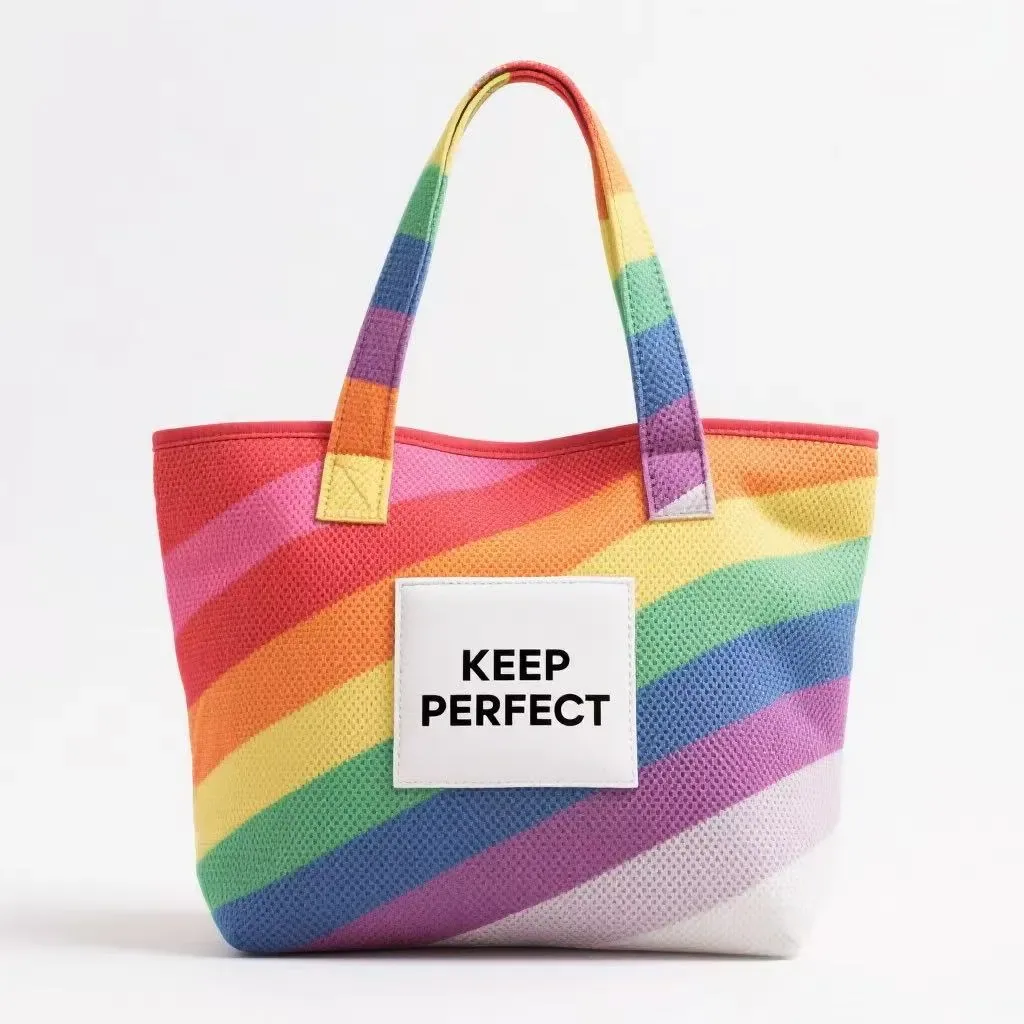
Knitted Tote Versus Cut-and-Sew Tote
The comparison that matters is not appearance but where the money and the failures sit. A cut-and-sew tote spends its cost in cutting and sewing labour, and it has seams on every edge; a knitted tote spends its cost in yarn and machine time, and it has seams only where components are attached. Fewer seams means fewer failure points, and in a tote the failure points are the base seam, the side seams and the handle attachment, all of which a knitted construction can reduce.
The second difference is zoning. A cut-and-sew tote has one fabric weight throughout unless panels are deliberately combined, which adds operations. A knitted tote can vary density across the panel in a single cycle, so the base and handle roots can be denser while the body stays light. That is a genuine engineering advantage and it is the strongest technical argument for knitting a tote rather than cutting one, provided the design uses it.
What a Tote Specification Should Say
A complete tote specification has four sections: dimensions, fabric, assembly and acceptance. The dimensions section carries body size, gusset depth and handle drop. The fabric section carries yarn, gauge, fabric mass and the mechanical floors. The assembly section carries how the handle is attached, how far the attachment extends, the webbing width and the closure type. The acceptance section carries the load test, the inspection level and the packing.
- Dimensions: 38 x 36 x 10 cm body, 25 cm handle drop, stated with a tolerance of about ±5 mm.
- Fabric: 300D yarn at E12, 420 g/m² within ±5%, denser base zone at about 560 g/m².
- Mechanical floors: 450 N tensile ISO 13934-1, 25,000 cycles ISO 12947-2, 35 N tear ISO 13937-2.
- Handle: 25 mm webbing, attachment extending at least 8 cm down the panel in a denser zone.
- Acceptance: static load 8 kg for 30 minutes with no stitch damage or distortion.
- Inspection and terms: AQL 2.5 under ISO 2859-1, FOB Xiamen, CIF and DDP available.
Cost and Quantity Planning for a Tote Programme
Yarn dominates tote cost, and the arithmetic is grams per bag: a 420 g/m² tote with a surface area around 0.55 square metres uses roughly 230 g of fabric, near 255 g of yarn once waste is included. That makes fabric mass the first lever and yarn route the second. A reference landed figure for a mid-weight knitted tote at 100 pcs per style and colourway sits near USD 4.80 on FOB Xiamen, and the two things that move it most are fabric mass and colourway count.
Colourway count is the quiet multiplier, because each colourway is a separate dye lot with its own minimum and its own lab dip. Consolidating five shades to four often saves more than trimming the fabric specification. Volume behaves differently again: doubling quantity roughly halves the fixed cost per piece, while the yarn line barely moves. Where a buyer has a choice between consolidating colourways and increasing volume, consolidation usually wins.
Sampling and Inspection Sequence for Totes
Sampling takes 7 working days from a locked specification and bulk takes 30 days from approved sample, and the sequence inside that window matters. Approve the dimensions and the handle first, because those are the two things that cause structural failure and both are simple to change at sample stage. Approve the fabric next, then the colour last, because colour approvals are the ones most often reversed afterwards and a reversed colour approval after bulk has started costs the full yarn lot.
At inspection, the handle root deserves its own check rather than being covered by a general appearance review. Inspection runs to AQL 2.5 under ISO 2859-1, which sets the sample size and the acceptance number, and the defect classes should be written before the inspector arrives. Include stitch damage at the root, panel distortion at the root, and any visible density variation across the front panel, because those are the three defects that produce returns and all three are easy to miss when inspection is looking only at colour and dimensions.
Tote specification in one line
- 38 x 36 x 10 cm at 420 g/m² and E12, 25 cm handle drop, webbing carried 8 cm down the panel, base zone at 560 g/m², tested to 8 kg for 30 minutes.
Specify a knitted tote programme
Send the body dimensions, target load and colourway count. We will confirm fabric mass and gauge, quote FOB Xiamen at 100 pcs per style and colourway, and book the 7 working day sampling window. Start on the contact page.
Frequently Asked Questions
What size should a knitted tote bag be?
A standard retail tote sits around 38 cm wide, 36 cm high and 10 cm deep, which holds a laptop sleeve and a light jacket without looking oversized. The gusset depth matters more than it appears: a flat tote collapses when empty and bulges when full, while a 10 cm gusset lets it stand on a shelf.
What handle drop suits a knitted tote?
A 25 cm drop suits hand and forearm carry and is the safer choice for a general retail bag. A 30 cm drop clears a shoulder but looks slouchy on a small tote. Check the drop against the loaded height rather than the empty one, because a loaded tote sags and the effective drop shortens.
Why do knitted tote handles fail?
Because load concentrates into a small area of panel at the root and tears progressively from the stitch line. The fabric usually remains intact and the seam does not unravel. The controls are a wider attachment, at least 8 cm of extension down the panel, and a denser knitted zone rather than a patch sewn on top.
How far should a tote handle extend down the panel?
At least 8 cm, reinforced with a denser knitted zone rather than an extra layer sewn over the panel. Extending the attachment spreads the same load across more stitches and costs almost nothing in material. Carrying the webbing down as a continuous band is stronger still, because the load path becomes the webbing.
What load should a knitted tote be tested to?
Hold 8 kg for 30 minutes with the bag suspended by its handles, then inspect the roots for stitch damage and panel distortion. It is a half-hour test that catches the progressive tear-out a tensile test on a fabric strip cannot see, and it belongs in the sampling round rather than in the returns data.
What fabric weight suits a daily knitted tote?
About 420 g/m² knitted at E12 from a 300D yarn, which clears roughly 450 N tensile under ISO 13934-1 and about 25,000 Martindale cycles under ISO 12947-2. Promotional totes carrying 3 to 5 kg work at 320 to 380 g/m², while structured totes run 480 to 560 g/m².
Should a knitted tote have a reinforced base?
Yes, for most uses. A base zone at around 560 g/m² against a 420 g/m² body costs a small amount of yarn and removes the most common wear complaint, because totes wear at the corners and the centre of the bottom edge where they are set down.
Can a knitted tote stand up on its own?
It can, with a shaped and denser base, or with a removable base board. That conflicts with folding flat for transit, so the requirement has to be chosen deliberately. A soft base slumps on a shelf within a week of retail handling, while a stiffened one holds its form.
Is a knitted tote better than a cut-and-sew tote?
It has fewer seams, because the panel is shaped in the knitting cycle, and fewer seams means fewer failure points at the base, the sides and the handle attachment. It can also vary density across the panel, so the base and handle roots are denser while the body stays light, which a cut-and-sew construction cannot do without more operations.
Can pockets be knitted into a tote?
Yes. A slip pocket can be formed as a shaped layer in the knitting cycle, which removes a cut-and-sew operation and removes the seam that would otherwise fail first. A zip pocket still needs a sewn zip, but the pocket bag itself can be knitted rather than cut.
How much yarn does a knitted tote use?
Roughly 255 g including about 10% waste, for a 420 g/m² tote with a surface area around 0.55 square metres. Fabric mass is therefore the first cost lever and yarn route the second, since every 10% of added mass adds close to 10% to the yarn line.
What does a knitted tote cost at low volume?
A reference landed figure for a mid-weight knitted tote sits near USD 4.80 at 100 pcs per style and colourway on FOB Xiamen, with CIF and DDP available. The two things that move it most are fabric mass and colourway count, because each colourway is a separate dye lot with its own minimum.
How many colourways should a tote programme run?
As few as the merchandising plan allows. Each colourway is a separate dye lot with its own lab dip and approval cycle, so consolidating five shades to four often saves more than trimming the fabric specification. Where a choice exists between consolidating shades and raising volume, consolidation usually wins.
What should be checked at tote inspection?
Three defect classes beyond colour and dimensions: stitch damage at the handle root, panel distortion at the root, and visible density variation across the front panel. Inspection runs to AQL 2.5 under ISO 2859-1, and these classes should be written down before the inspector arrives.
What order should a tote sample be approved in?
Dimensions and handle first, because those cause structural failure and are inexpensive to change at sample stage. Fabric next, then colour last, because colour approvals are the ones most often reversed afterwards and a reversal after bulk has started costs the full yarn lot.
How long does a knitted tote programme take?
Sampling takes 7 working days from a locked specification and bulk takes 30 days from approved sample. Both assume the yarn is on hand, so yarn availability and colour approval are the two things that actually move the calendar, rather than the knitting itself.
People Also Ask
What is the standard size for a knitted tote bag?
Around 38 cm wide, 36 cm high and 10 cm deep with a 25 cm handle drop. The gusset is what lets the bag stand on a shelf and stops contents pressing against the front panel.
How do you stop tote handles tearing off?
Carry the attachment at least 8 cm down the panel in a denser knitted zone, use 25 mm webbing or wider, and test the assembled bag at 8 kg for 30 minutes. Fabric testing alone never catches this failure.
What GSM is right for a knitted tote?
About 420 g/m² at E12 from 300D yarn for a daily bag carrying 6 to 8 kg. Promotional totes run 320 to 380 g/m², and a base zone should be knitted at around 560 g/m².
Are knitted totes stronger than sewn totes?
They have fewer seams, since the panel is shaped in the knitting cycle, so the base, side and handle failure points are reduced. Zoned density lets the base be denser while the body stays light.
How long does a knitted tote programme take?
Seven working days for sampling from a locked specification and 30 days for bulk from approved sample. Yarn availability and colour approval move the calendar more than knitting does.
Sources and further reading
Every figure on this page is either our own programme data or attributed below. Open the originals before you write them into a specification.
- ISO 2859-1:1999 Sampling procedures for inspection by attributesISO Sampling plan behind the AQL 2.5 inspection used at final inspection on tote programmes.
- ASTM textile test standardsASTM International Includes ASTM D5034 for tensile and ASTM D4966 for abrasion, used alongside the ISO methods named here.
- OEKO-TEX STANDARD 100OEKO-TEX Finished-article certificate to request for the assembled tote, not only for the fabric.
- Shima Seiki knitting machineryShima Seiki Machine capability behind shaped gussets, knitted pockets and zoned density in a single cycle.
- Textile Exchange standardsTextile Exchange Recycled content framework relevant when a tote programme specifies recycled yarn.