Knitted Bag Retail Price Bands: Building a Three-Tier Ladder From Landed Cost to Sell-Through
A accessories buyer with nine knitted bag styles and three price points has a ladder problem, not a sourcing problem: the styles all cost about the same to make, so the price differences have to be built into the specification rather than discovered at the shelf. Working from USD 4.80 FOB and a landed cost near USD 6.40, three bands at USD 19.99, USD 34.99 and USD 59.99 are reachable — but only if GSM, gauge and trim are decided before the tech pack is written. This article works the ladder from the shelf price backwards.
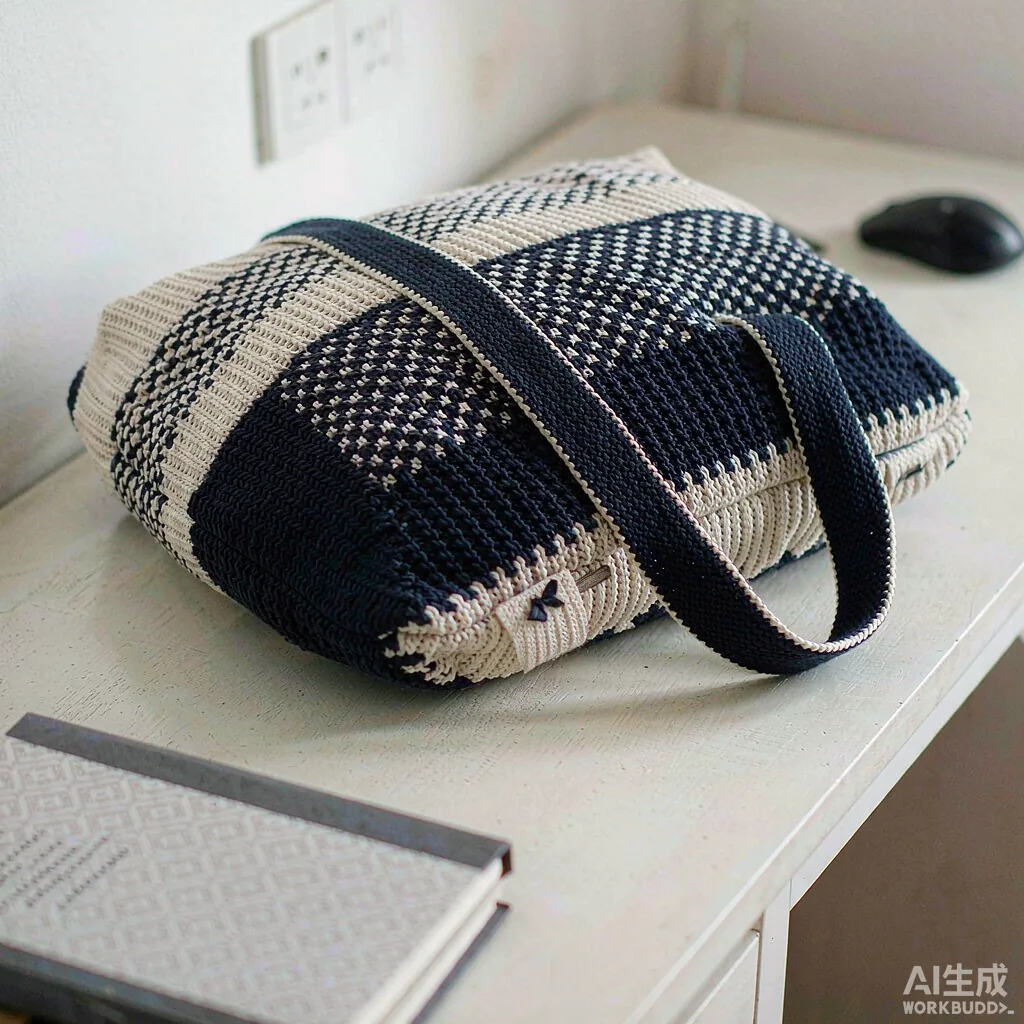
The Buyer Who Had Three Price Points and Nine Styles
The problem arrived as a range plan, not a brief: nine knitted bag styles, three intended price points, and a costing sheet where all nine sat within 40 cents of each other — which meant the price ladder had to be designed into the specification before a single sample was knitted.
A mid-market accessories buyer had committed to a knit capsule for a spring floor set. The plan called for an entry tote at USD 19.99, a core shoulder style at USD 34.99 and a statement piece at USD 59.99. Nine silhouettes were sketched across those three points. When the first quotations came back, every one of them clustered between USD 4.60 and USD 5.00 FOB Xiamen, because nine sketches with no stated GSM, no stated gauge and no stated trim all resolve to the same default specification.
The buyer's instinct was to accept the nine quotations and set the prices by feel. That instinct is where most knit capsules fail. Three retail price points cannot be carried by identical products at a 4.1x multiple without the top band looking indefensible at the shelf, and once a shopper compares the USD 59.99 piece with the USD 19.99 piece and cannot find the difference, the whole ladder collapses downward. The fix was to rebuild the specification so that the cost differences were real, visible and defensible.
Why Retail Price Bands Have to Be Set Before the Tech Pack
Retail price bands are a specification input rather than an output, because every variable that separates one band from another — GSM, gauge, yarn count, trim and finishing — is fixed in the tech pack and cannot be changed after the yarn is booked.
The sequence in most buying offices runs the other way: sample first, then cost, then price. That sequence works for cut-and-sew, where a style can be re-costed by swapping a lining or a hardware finish late in the process. It does not work for knitting, where the yarn booking is the commitment and the yarn booking happens in the first third of the programme. A knitted bag that is intended to retail at USD 59.99 has to be specified as a USD 59.99 bag on day one: a heavier yarn, a coarser gauge or a denser structure, a lining, and a hardware set that reads as considered. None of those can be added at the costing stage without rebooking yarn.
Landed Cost: What Sits Between FOB and the Shelf
A knitted bag quoted at USD 4.80 FOB Xiamen lands at roughly USD 6.40 before any retail margin is applied, once freight, duty, inland handling and the fixed compliance cost per programme are added.
That 33% uplift is the figure buyers most often underestimate, and the reason is that three of its four components do not appear on a supplier quotation. Freight is quoted separately and moves with the market. Duty follows the HS classification in the destination market, and knitted bags do not classify identically across markets; the importer should confirm it rather than assume it. Inland handling and distribution-centre processing are internal costs that rarely reach the costing sheet at all. The fourth component, compliance testing, is a fixed cost per programme, which is why a small capsule carries a proportionally heavier burden than a large one.
- FOB Xiamen unit cost
- USD 4.80, the reference specification at E12 in 300D
- Sea freight allocation
- About USD 0.55 per piece on a full container
- Duty, market dependent
- About USD 0.48 per piece at a typical knitted bag rate
- Inland handling and DC processing
- About USD 0.34 per piece
- Compliance testing, amortised
- About USD 0.23 per piece across a nine-style capsule
- Landed cost
- About USD 6.40 before retail margin
- Retail price at a 4.1x multiple
- About USD 26.24 unsold, or USD 19.99 for the entry band
The Multiple Is Not Constant Across the Ladder
Retail multiples on a knitted bag ladder are not flat: the entry band typically carries about 3.1x landed cost, the mid band about 4.1x and the top band about 5.4x, which is what makes a three-tier capsule profitable even though the top band costs only about 60% more to produce.
An increasing multiple up the ladder is normal in accessories and worth stating plainly, because a buyer who assumes a single house multiple will systematically underprice the top of the range. The justification is not greed; it is sell-through velocity. The entry band turns faster and carries more markdown risk per unit of margin, so it is priced tighter. The top band turns slower, is ordered in smaller quantities and has to carry the cost of that slowness. The mid band is where the arithmetic has to balance, because it is where the volume actually sits.
Entry Band: What USD 19.99 Buys in a Knitted Bag
An entry band knitted bag at USD 19.99 retail is a 300D polyester or rPET body at E12, about 260 g/m², unlined, with a knitted-in handle and minimal hardware — and it costs roughly USD 6.05 landed against a 3.3x multiple.
The discipline at this band is to remove operations rather than to remove quality. An unlined body is not a poorer body if the structure is sound; a knitted-in handle is not a weaker handle if the loop density at the junction is right. What the entry band cannot absorb is an operation that adds cost without adding visible value: a lining nobody sees, a branded zip pull that reads as generic, a second colourway that doubles the set-up. The shopper at this price point is comparing against other bags at this price point, not against the bag two fixtures away.
- Body: 300D polyester or rPET at E12, about 260 g/m², unlined, seamless knitted body with no side seam.
- Handles: knitted integrally with the body, loop density raised across the junction rather than reinforced with a tape.
- Trim: a single open top or a lightweight drawstring channel, no metal hardware beyond a cord toggle.
- Branding: knitted-in jacquard mark, which carries no placement operation and cannot peel or crack.
- Compliance: REACH and Prop 65 screens held at programme level rather than repeated per style.

Mid Band: Where the Volume Actually Sits
The mid band at USD 34.99 retail is a 300D to 450D body at E12, about 320 g/m², with a lining, a closure and a considered hardware set — landing near USD 8.50 against a 4.1x multiple, and carrying about 55% of the capsule's unit volume.
This is the band that decides whether the capsule works, and it is the band that most often gets the least design attention because it feels like the safe middle. It is not safe. The mid band is where a shopper does the most careful comparison, because they have decided to spend and are deciding how much. It is also the band where the construction difference from the entry style has to be legible: a lining that can be seen, a closure that operates smoothly, a hardware finish that looks deliberate. Those three things are what separate a USD 34.99 bag from a USD 19.99 bag in the shopper's hand, and they are all specification decisions.
Top Band: What Justifies a Higher Ticket
A top band knitted bag at USD 59.99 retail needs a 600D rPET or a core-spun blend at E7, about 380 g/m², a structured base, a full lining, metal hardware and a distinct stitch architecture — landing near USD 11.20 against a 5.4x multiple.
The jump to E7 is the most consequential decision here. A coarser gauge produces a visibly different surface: larger loops, a more sculptural hand, a structure that reads as designed rather than as produced. It is also slower to knit, which is part of why the cost is higher and part of why the price is defensible. A top band bag knitted at the same gauge as the entry bag, in a heavier yarn, will cost more and look nearly identical — and that is precisely the failure the buyer in this case was heading toward.
Entry, USD 19.99
300D at E12, 260 g/m², unlined, integral handle, knitted-in mark. Landed about USD 6.05, multiple about 3.3x, fastest turn.
Mid, USD 34.99
300D to 450D at E12, 320 g/m², lined, with a closure and a considered hardware set. Landed about USD 8.50, multiple about 4.1x.
Top, USD 59.99
600D rPET or core-spun at E7, 380 g/m², structured base, full lining, metal hardware. Landed about USD 11.20, multiple about 5.4x.
Halo, above USD 79
A single piece per season at E7 with a shaped, whole-garment knitted body and custom hardware. Ordered in tens, not hundreds.
Markdown Discipline and the Sell-Through Number
A knitted bag capsule planned at a 22% markdown rate and a 68% full-price sell-through requires the entry band to be ordered at roughly 1.6 times the mid band's unit volume, because the entry band absorbs most of the markdown exposure.
Markdown is not a failure of pricing; it is a cost of having a ladder. A three-tier capsule will always shed more units at the bottom than at the top, and planning for that is what separates a capsule that returns margin from one that returns stock. The number to watch is full-price sell-through by band rather than in aggregate, because an aggregate figure of 68% can hide a top band that sold 90% and an entry band that sold 55%. The remedy for a weak entry band is usually to cut the buy rather than to cut the price, since a knitted bag at USD 19.99 reduced to USD 14.99 does not suddenly outsell the same bag at USD 19.99 by enough to justify the margin given away.
| Band | Landed cost | Retail price | Multiple | Planned full-price sell-through |
|---|---|---|---|---|
| Entry | About USD 6.05 | USD 19.99 | About 3.3x | 58%, the thinnest margin and the fastest turn |
| Mid | About USD 8.50 | USD 34.99 | About 4.1x | 72%, the band the capsule is planned around |
| Top | About USD 11.20 | USD 59.99 | About 5.4x | 76%, slower turn but the widest margin per unit |
| Aggregate capsule | Blended about USD 7.90 | Blended about USD 32.10 | Blended about 4.1x | 68% planned, with markdown held at 22% |
| Custom dope-dyed shade | Adds about USD 0.55 | Usually absorbed | Raises the multiple by about 0.3x | Improves sell-through where the shade is exclusive |
How GSM and Trim Move a Style Between Bands
Three specification levers move a knitted bag between retail bands — GSM, gauge and trim count — and the least costly of them to pull is GSM, which moves unit cost about 6% per 40 g/m² step without changing the bed or the programme.
GSM is the least costly lever because it is a parameter rather than a retooling: the same programme runs with a different stitch density or a different yarn count, and the bed does not change. Gauge is the next least costly and the most visually consequential, because moving from E12 to E7 changes the surface the shopper sees. Trim count is the most expensive per unit of perceived value, because each added trim is a discrete placement operation with its own jig and its own check. A buyer trying to lift a style from the mid band to the top band should pull gauge before pulling trim, and a buyer trying to hold a style at the entry band should cut trim before cutting GSM.
What has to be fixed in the tech pack before a price band is quoted
- Gauge band: E7, E12 or E14, stated as a number rather than as a description of the hand.
- Yarn count and fibre: 300D, 450D or 600D, polyester, rPET or a core-spun blend.
- Finished GSM: a number with a tolerance, typically plus or minus 5% on a knitted body.
- Trim count and specification: zip gauge and length, hardware finish, lining, label position.
- Compliance target: REACH, Prop 65, CPSIA, GRS or OEKO-TEX STANDARD 100.
- Quantity per band: MOQ is 100 pcs per style and per colourway, not per capsule.
Building the Ladder: Three Bands, One Programme
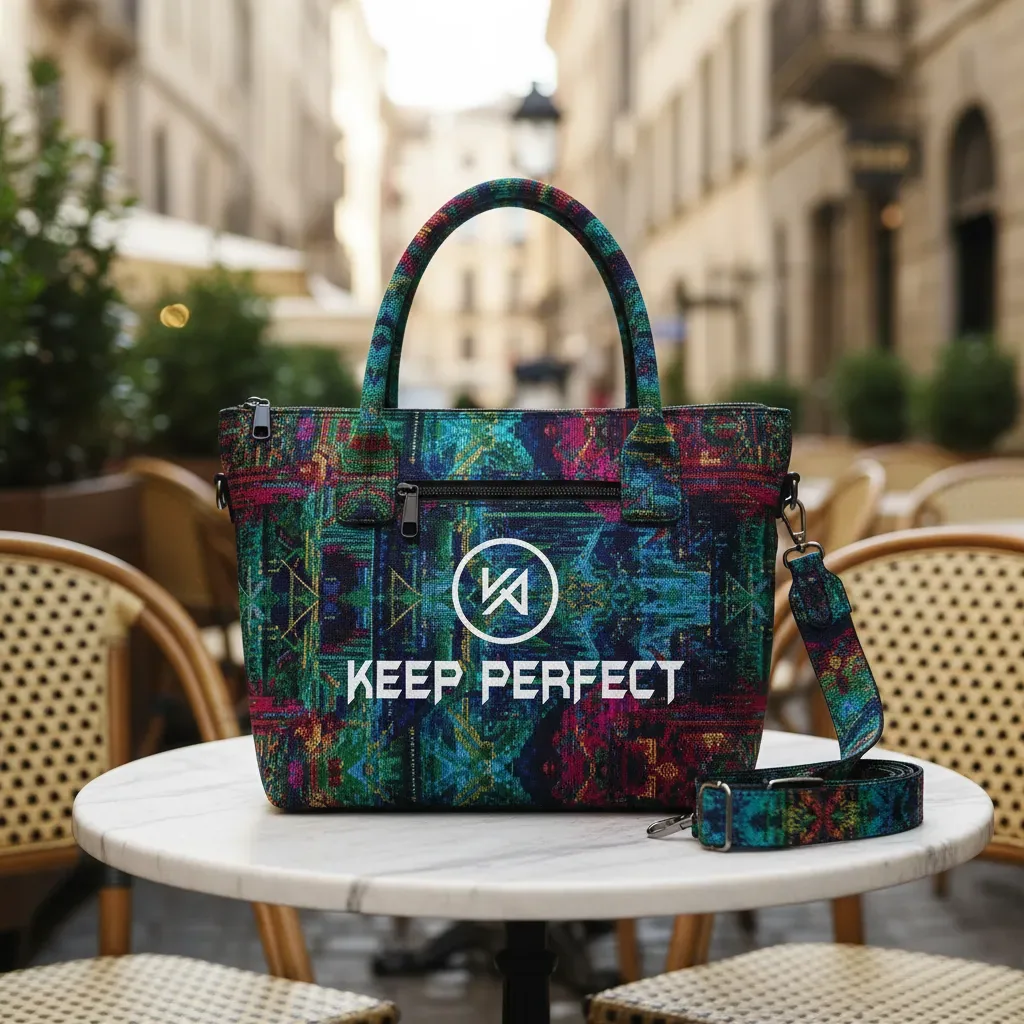
A three-band knit capsule runs as one programme with three specifications rather than as three programmes, which is what makes MOQ 100 pcs per style and per colourway workable across nine styles and what keeps the yarn bookings consolidated.
Consolidation is the practical reason a capsule of this shape is viable at all. Nine styles at MOQ 100 pcs each is 900 pieces, which is a modest programme, but nine styles sharing two yarn counts and three colourways is a single yarn booking rather than nine, and the set-up economy follows. Sampling runs 7 working days from a brief that states the band for each style, and bulk runs 30 days from the approved handover, released against AQL 2.5 under an ISO 2859-1 sampling plan. FOB Xiamen is the standard term with CIF and DDP available. Behind the capsule sit 7 production lines running about 200,000 pcs per month, which is why a nine-style capsule is a scheduling question rather than a capacity one.
Build a price ladder for your knit capsule
Send the intended retail price points, the quantity per style and the target market. Our knit team will work the ladder backwards from the shelf price, name the specification that reaches each band, and quote against MOQ 100 pcs per style, 7 working days of sampling and 30 days of bulk. Start on the contact page.
Frequently Asked Questions
What retail price bands work for knitted bags?
A three-tier ladder at USD 19.99, USD 34.99 and USD 59.99 is the most common shape. Entry lands near USD 6.05 at about 3.3x, mid near USD 8.50 at about 4.1x, and top near USD 11.20 at about 5.4x, with the mid band carrying roughly 55% of unit volume.
Why do retail multiples increase up the ladder?
Because sell-through velocity falls as price rises. The entry band turns fast and carries more markdown risk per unit of margin, so it is priced tighter. The top band turns slowly, is ordered in smaller quantities and has to carry the cost of that slowness.
What is the landed cost of a knitted bag quoted at USD 4.80 FOB?
About USD 6.40 before retail margin, once sea freight at roughly USD 0.55, duty at about USD 0.48, inland handling at about USD 0.34 and amortised compliance testing at about USD 0.23 are added. That is a 33% uplift over the FOB figure.
Should price bands be set before or after sampling?
Before. Every variable that separates one band from another is fixed in the tech pack, and the yarn booking happens in the first third of the programme. A bag intended to retail at USD 59.99 has to be specified as one on day one.
What specification belongs in the entry band?
A 300D polyester or rPET body at E12, about 260 g/m², unlined, with an integral knitted handle and minimal hardware. The discipline is to remove operations rather than quality: no lining, no metal hardware, a knitted-in mark instead of an applied one.
What separates a mid band bag from an entry band bag?
A lining that can be seen, a closure that operates smoothly and a hardware finish that looks deliberate. Those three are specification decisions, and they are what a shopper at USD 34.99 is comparing against a USD 19.99 bag held in the other hand.
Why is gauge more important than yarn weight at the top band?
Because a top band bag knitted at the same gauge as the entry bag, in a heavier yarn, costs more and looks nearly identical. Moving to E7 produces larger loops and a more sculptural hand, which is what makes the higher ticket defensible at the fixture.
Which specification lever is least costly for moving a style between bands?
GSM, at roughly 6% of unit cost per 40 g/m² step, because it is a parameter change rather than a retooling. Gauge is next and is the most visually consequential. Trim count is the most expensive per unit of perceived value.
How should markdown be planned on a knit capsule?
At a 22% markdown rate with about 68% full-price sell-through, tracked by band rather than in aggregate. An aggregate 68% can hide a top band selling 90% and an entry band selling 55%, which are very different problems.
What should a buyer do when an entry band underperforms?
Cut the buy rather than cut the price. A knitted bag reduced from USD 19.99 to USD 14.99 rarely outsells the same bag at full price by enough to justify the margin given away, because the demand was volume-limited rather than price-limited.
Does a custom dope-dyed shade change the price band?
It adds about USD 0.55 landed and raises the multiple by roughly 0.3x, but it often improves full-price sell-through where the shade is exclusive to the retailer. It requires a minimum dye lot of about 300 kg and adds about 10 days.
How does MOQ work across a multi-style capsule?
MOQ is 100 pcs per style and per colourway, so nine styles at one colourway each is 900 pieces minimum. Sharing two yarn counts and three colourways across the nine styles consolidates the booking into one rather than nine.
How long does a three-band capsule take to produce?
Seven working days of sampling from a brief that states the band for each style, then 30 days of bulk production from the approved handover, released against AQL 2.5 under an ISO 2859-1 sampling plan. FOB Xiamen, with CIF and DDP available.
Why do nine sketched styles often come back at the same cost?
Because nine sketches with no stated GSM, gauge or trim all resolve to the same default specification. The fix is to write the band into each style's tech pack so the cost differences are real, visible and defensible at the shelf.
People Also Ask
What is a good retail markup on a knitted bag?
About 3.3x landed cost at the entry band, 4.1x at the mid band and 5.4x at the top. A single house multiple across a three-tier ladder will systematically underprice the top of the range.
How much does a knitted bag cost to land in a retail market?
Roughly USD 6.40 from a USD 4.80 FOB quotation, a 33% uplift. Freight, duty, inland handling and amortised compliance testing account for the difference, and none of the four appear on a supplier quotation.
Should I set retail prices before writing the tech pack?
Yes. Gauge, GSM, yarn count and trim are what separate one price band from another, and the yarn booking is committed in the first third of the programme. Changing bands later means rebooking yarn.
What gauge should a premium knitted bag use?
E7. A coarser gauge gives larger loops and a sculptural hand that reads as designed rather than produced. Knitting premium at the same gauge as the entry style, in a heavier yarn, costs more and looks nearly identical.
How do I move a style up a price band?
Pull gauge before pulling trim. GSM is the least costly lever at about 6% per 40 g/m², gauge is the most visible, and trim is the most expensive per unit of perceived value because each trim is a separate placement operation.
Sources and further reading
Every figure on this page is either our own programme data or attributed below. Open the originals before you write them into a specification.
- ISO 2859-1:2026 — Sampling procedures for inspection by attributes, Part 1: AQL-indexed sampling schemesISO Defines the AQL 2.5 release that precedes freight and lands-cost calculation on a capsule programme.
- ISO 13934-1:2013 — Textiles, tensile properties of fabrics, Part 1: maximum force using the strip methodISO Referenced when a band is justified by a strength figure as well as by a construction difference.
- ISO 12947-2:2016 — Textiles, determination of abrasion resistance, Part 2: specimen breakdownISO The abrasion method behind the rub thresholds that differ between the entry and top bands.
- About Proposition 65California OEHHA The listing behind the per-programme Prop 65 screen amortised across a nine-style capsule.
- Recycled Claim Standard and Global Recycled StandardTextile Exchange Chain-of-custody standard behind the rPET transaction certificate used in the entry and top band specifications.
- Incoterms rulesInternational Chamber of Commerce Defines FOB, CIF and DDP, the terms behind the landed cost calculation for each price band.
A Ladder Is a Specification, Not a Price List
The buyer in this case rebuilt nine quotations into three specifications, and the capsule landed on the floor at three defensible prices rather than nine similar ones. Nothing about the sourcing changed; what changed was the order of decisions. Price band first, then gauge, then GSM, then trim, and only then the sample request.
For the style decisions that sit underneath a band, see knitted bag collection. For the specification fields that carry a band through the tech pack, see knitted bag tech pack template, and for the volume rules behind a multi-style buy, see knitted bag MOQ explained.