Knitted Bag Tech Pack Template: The Fourteen Fields That Decide Whether a Quotation Is Comparable
A tech pack written for a woven bag and sent to a knit programme generates questions, not quotations. Fourteen fields settle it: silhouette, dimensions, gauge, GSM with a tolerance, yarn count and fibre, colour reference, stitch structure, reinforcement zones, trim list, hardware, labelling, compliance target, packing and revision. Four of those do not exist on a woven tech pack at all. This article works through the fourteen using a pack that came back with nine questions, and shows which fields were missing.
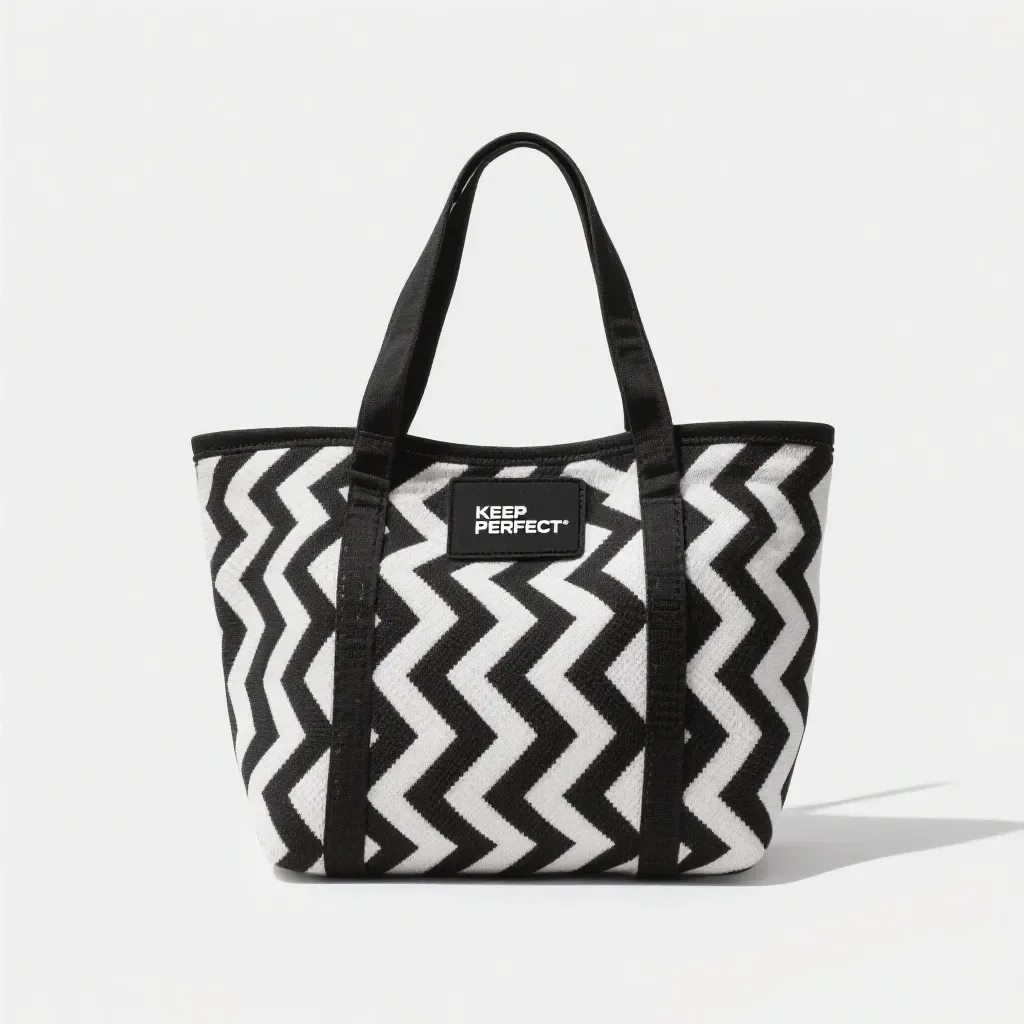
The Tech Pack That Came Back With Nine Questions
The pack looked complete — six pages, a rendered silhouette, a dimension sheet, a trim list — and it came back with nine questions, because every one of the nine concerned a number that a woven tech pack does not ask for and a knit programme cannot proceed without.
The buyer had sent a specification that would have been perfectly adequate for a cut-and-sew tote. It had a scale drawing, a dimension table with eleven points, a colour reference, a fibre composition, an artwork placement and a packing instruction. What it did not have was a gauge, a stitch structure, a GSM target, or any note about how the handle junction was to be reinforced. Those four are not optional on a knitted bag; they are the specification. Without them the programme has to assume values, and the assumptions are what produce a sample that is not what the buyer pictured.
The nine questions were not pedantry. Each one, unanswered, forced a default: gauge defaulted to E12, structure defaulted to a plain jersey, GSM defaulted to whatever the yarn count produced, and the handle junction defaulted to no reinforcement. Four defaults, four places where the sample could and did differ from the drawing. The buyer experienced this as a sampling failure; it was a specification failure that sampling merely revealed.
Why a Knit Tech Pack Needs Four Fields a Woven One Does Not
Four fields exist on a knitted bag tech pack and on no woven one — gauge, stitch structure, reinforcement zones and setting parameters — because a woven fabric is specified by buying it and a knitted one is specified by making it.
That is the whole distinction. A woven bag is made from a fabric that already exists, so the specification describes a material that can be ordered and tested. A knitted bag body is created by the programme that runs on the bed, so the specification has to describe the process, not just the outcome. Gauge is the needle density the body is knitted at; stitch structure is the loop architecture; reinforcement zones are regions knitted at a different density; and setting parameters are the heat and time that stabilise the finished body. None of the four can be inherited from a fabric supplier, because there is no fabric supplier.
- Gauge: E7, E12 or E14, stated as a number, since it sets loop density, GSM, hand and surface together.
- Stitch structure: jersey, rib, interlock or a jacquard architecture, because it sets stability and stretch.
- Reinforcement zones: base band, handle junction and aperture, each with a stated width in millimetres.
- Setting parameters: temperature, time and the conditioning period before the finished body is measured.
- Plus ten conventional fields: silhouette, dimensions, GSM, yarn, colour, trim, hardware, labelling, compliance, packing.
Fields One to Four: Silhouette, Dimensions, Gauge, GSM
The first four fields are the ones a programme cannot begin without: a silhouette in scale, dimensions with a tolerance, a gauge as a number, and a GSM target with plus or minus 5%.
Silhouette and dimensions are conventional but are worth one specific note: on a knitted bag the drawing should state which dimensions are measured relaxed and conditioned and which are measured under load, because a knit body changes between the two by more than a woven one does. Gauge and GSM are the two that are knit-specific and the two most often missing. A gauge given as a description of the hand — fine, soft, substantial — is not a specification and will be read as E12. A GSM given as a range wider than 5% cannot be quoted against, because GSM drives both material consumption and cycle time.
The relationship between the two is worth stating in the pack. Gauge sets the loop scale, and at a given gauge GSM is controlled by yarn count and stitch density. A target of 320 g/m² at E12 in 300D is a coherent specification; a target of 320 g/m² at E14 in 150D is also coherent; a target of 320 g/m² at E14 in 600D is not, because the loops will not close. Writing all three numbers together makes coherence checkable at the feasibility stage rather than at the first knit.
Fields Five to Eight: Yarn, Colour, Structure, Reinforcement
Fields five to eight specify the material and the architecture: yarn count and fibre with a lot reference, colour with a Delta E tolerance, stitch structure by name, and reinforcement zones with a stated width.
Colour deserves more precision than most packs give it. A Pantone reference alone is not a specification on a knitted body, because the same reference reads differently in a dope-dyed yarn and in a piece-dyed one, and differently again at E7 and E14. The field should carry the reference, the dyeing route, and a Delta E acceptance figure against a physical standard, with 1.0 being the usual working tolerance and 0.8 where the shade is critical. Reinforcement zones should be drawn on the silhouette rather than described, with a width in millimetres: a 60 mm base band, a 60 mm handle junction, a 25 mm aperture band.
- Gauge
- E7, E12 or E14, stated as a number and not as a description
- Finished GSM
- A target figure with plus or minus 5% tolerance
- Yarn count and fibre
- 150D, 300D, 450D or 600D; polyester, rPET, nylon or a blend
- Colour reference
- Pantone or a physical standard, with the dyeing route named
- Colour tolerance
- Delta E 1.0 working, 0.8 on a critical shade
- Reinforcement zones
- Base 60 mm, handle junction 60 mm, aperture 25 mm
- Conditioning before measurement
- 24 hours at 20 °C and 65% relative humidity
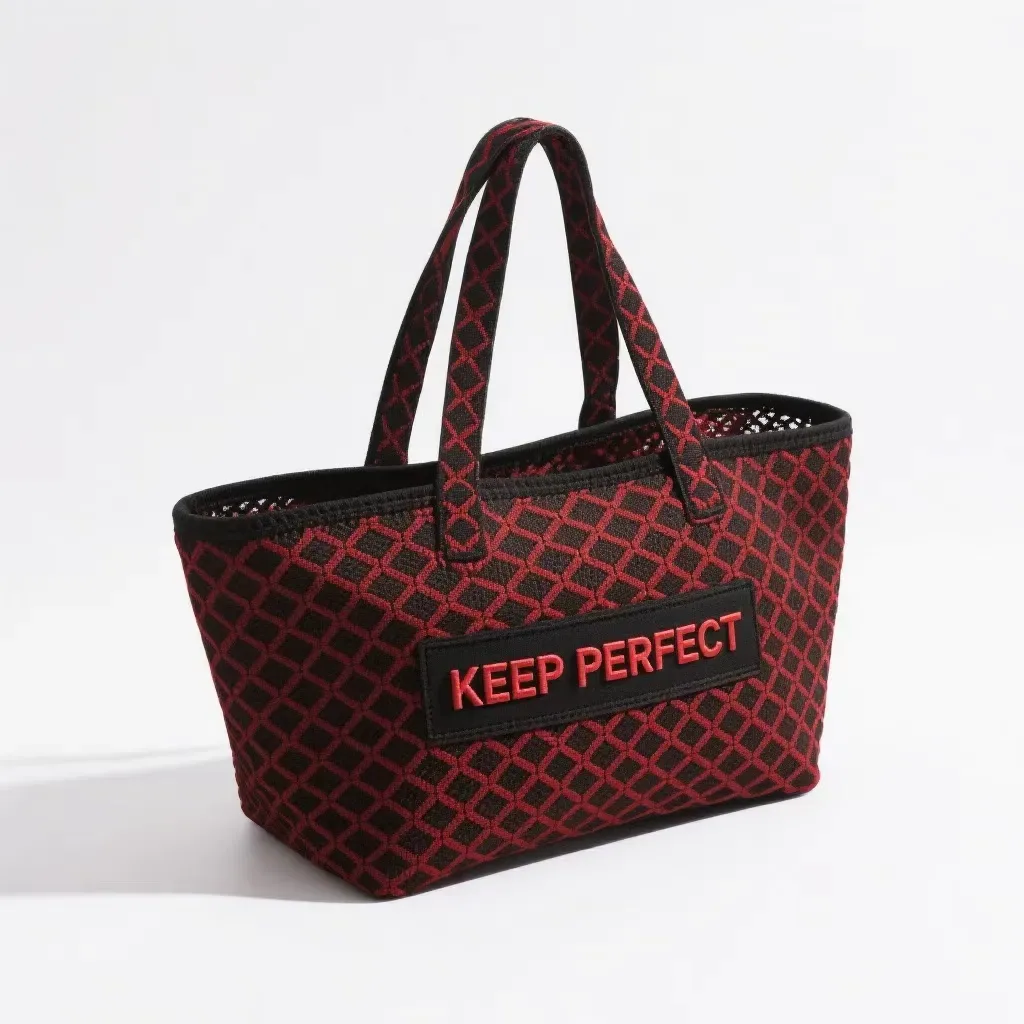
Fields Nine to Eleven: Trim, Hardware, Labelling
The trim block should be a numbered list with a specification per line — zip gauge and length, webbing width, hardware finish, lining weight, label type and placement — because a trim named but not specified will be substituted with whatever the market holds.
This is where a pack most often becomes unenforceable. A line reading zip, black is not auditable: any gauge, any tape, any slider will satisfy it, and the buyer will notice the difference at the pre-shipment check rather than at the sample. A line reading #5 coil, 45 cm, tape dyed to body shade, brushed slider, set into a knitted channel is auditable, and it is also the line that lets a programme be re-ordered identically a season later. The same applies to hardware finish, which should name one tone across the piece, and to labelling, which should state the placement and the attachment method rather than only the artwork.
Fields Twelve to Fourteen: Compliance, Packing, Revision
The last three fields are the ones most often left blank and the ones that decide whether the shipment clears: the compliance target by market, the packing specification, and a revision block with a number and a date.
Compliance should name the markets and the standards rather than a generic requirement: REACH Annex XVII for the EU, California Prop 65 for the US, CPSIA where the product is for children, GRS where a recycled claim is made, and OEKO-TEX STANDARD 100 where the retailer requires it. Packing should state pieces per carton, carton dimensions, and whether pieces are flat-packed or stuffed, because a bag packed flat creases differently from one packed with tissue. The revision block is unglamorous and is the field that prevents the most expensive error in the whole document: two versions of the pack in circulation at once, one of them outdated.
Tolerances: The Numbers Most Tech Packs Leave Out
A knitted bag needs six tolerances stated, and the absence of any one of them turns a subjective disagreement into a dispute: GSM at plus or minus 5%, linear dimensions at plus or minus 5 mm, handle drop at plus or minus 3 mm, colour at Delta E 1.0, shade consistency within a lot at Delta E 0.5, and GSM variation across a single body at plus or minus 3%.
The last one is the one almost nobody writes and the one that causes the most arguments. A knitted body is not perfectly uniform: GSM varies across the panel depending on where the yarn feeders were running and how the body was set. Stating a within-body tolerance converts that physical reality into an agreed specification. Without it, a buyer measuring a light spot and a programme measuring the panel average will each be correct and will each believe the other is wrong.
| Field | What to write | What happens if it is blank |
|---|---|---|
| Gauge | E7, E12 or E14 as a number | Defaults to E12, and the surface may not match the drawing |
| Finished GSM | A figure with plus or minus 5% | Defaults to whatever the yarn count produces; quotes are not comparable |
| Stitch structure | Jersey, rib, interlock or jacquard by name | Defaults to plain jersey, which may not give the wanted stability |
| Reinforcement zones | Drawn, with widths in millimetres | No reinforcement; the handle junction becomes the failure point |
| Colour tolerance | Delta E 1.0, or 0.8 on a critical shade | Disagreement at approval, since one shade reads differently by route |
| Within-body GSM variation | Plus or minus 3% across a single panel | A light spot reads as a fault and becomes an argument |
| Compliance target | Named markets and standards | The screen is chosen by default and may not clear the destination |
| Revision block | A number and a date on every page | Two versions in circulation and an outdated one gets built |
Drawing Standards for a Knitted Body
A knitted bag drawing should carry four things a woven drawing does not: the gauge band in a corner note, the reinforcement zones shaded, the direction of knitting marked, and a statement of which dimensions are measured conditioned rather than under load.
The knitting direction matters because a knitted body is anisotropic: it stretches more along the course than along the wale, and the orientation of that axis relative to the handle determines how the bag behaves under load. A drawing that does not state it leaves the programmer to choose, and the choice affects both the drape and the reinforcement placement. The conditioning statement matters for the reason given earlier: a body measured straight off the bed and the same body measured after 24 hours at 20 °C and 65% relative humidity are not the same size, and a dimension sheet that does not say which one it means is unenforceable.
The fourteen fields, in the order a programme reads them
- 1. Silhouette, drawn to scale, with the knitting direction marked.
- 2. Dimensions, each with a tolerance, stating conditioned or under load.
- 3. Gauge, as a number: E7, E12 or E14.
- 4. Finished GSM, with plus or minus 5%.
- 5. Yarn count and fibre, with a lot reference where known.
- 6. Colour reference, dyeing route and a Delta E tolerance.
- 7. Stitch structure by name, plus any jacquard architecture.
- 8. Reinforcement zones, drawn, with widths in millimetres.
- 9. Trim list, numbered, with a specification on every line.
- 10. Hardware, with one finish named across the piece.
- 11. Labelling, with placement and attachment method.
- 12. Compliance target by market and standard.
- 13. Packing: pieces per carton, method, carton dimensions.
- 14. Revision block: a number and a date on every page.
What a Complete Tech Pack Does to the Quotation
A complete pack changes the quotation in three measurable ways: it arrives faster, it is comparable against other quotations, and it is more likely to hold — a fourteen-field pack typically comes back within two working days and within about 3% of the eventual confirmed price.
Speed comes from the absence of a question round. Each unanswered field is a round trip, and three rounds is a week. Comparability comes from all quotations being costed on the same basis rather than on different defaults. Holding comes from the price being built on stated numbers rather than on assumptions that a later clarification overturns — the most common cause of a price change between quotation and confirmation. All three are worth having, and all three are available for the cost of six numbers that most packs leave out.
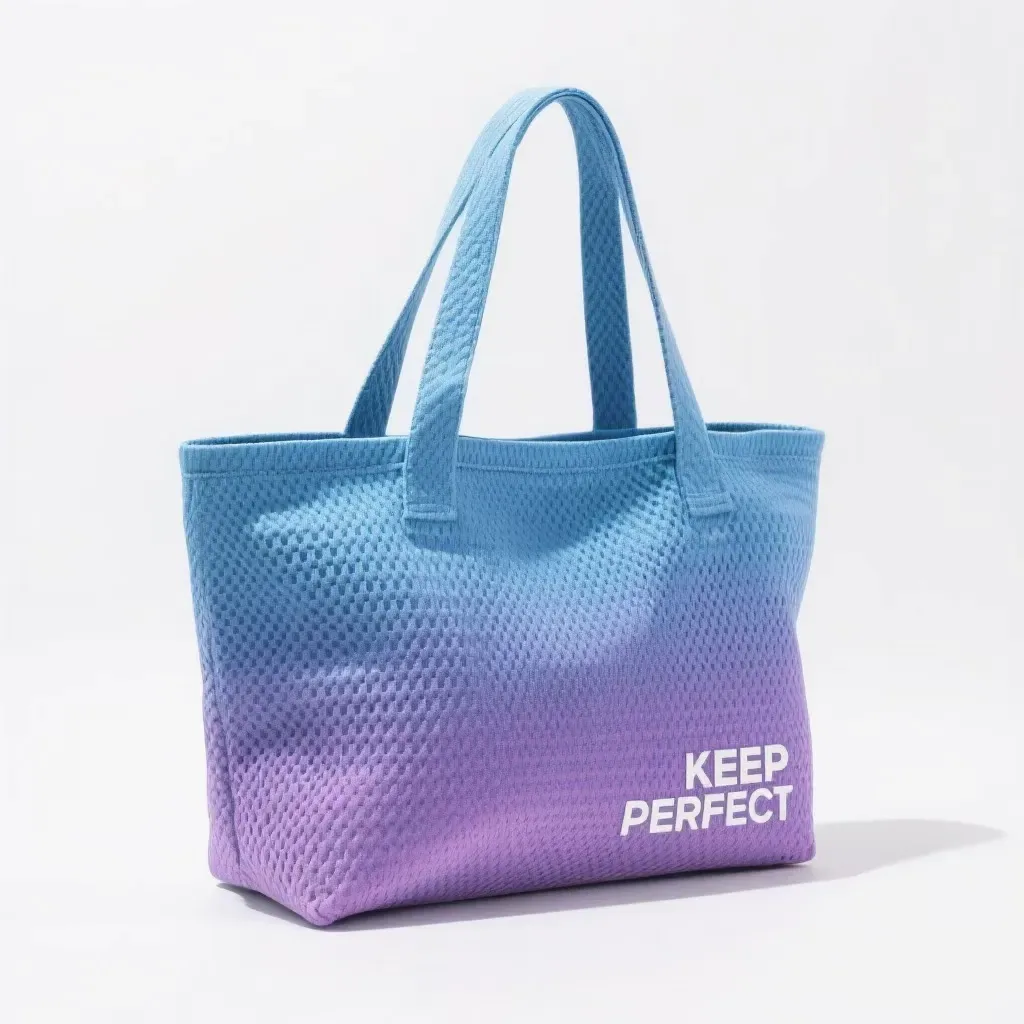
Version Control and the Revision Block
A revision block needs three items — a version number, a date and a list of changed fields — and the discipline that matters is that every page carries it, because a single unmarked page is enough for an outdated specification to be built.
Version control fails in a specific and predictable way. The pack is revised; the revised file is sent; the buyer's team forwards an older page with a new one attached because the older page had a clearer drawing. The programme builds the older page, and the discrepancy is discovered at the pre-shipment inspection, where it is expensive. A version number and a date on every page makes the mixture visible immediately. This is unglamorous advice and it prevents the most costly single error in the document.
What Happened to the Pack With Nine Questions
The nine questions were answered in a day, the pack was reissued as version two with all fourteen fields, and the second sample matched the drawing — which is the whole argument for writing the fields in the first place.
Nothing about the bag changed between version one and version two. The same silhouette, the same dimensions, the same colour, the same trim list. What changed was that four knit-specific fields acquired numbers and six tolerances were written down. The first sample had been built on four defaults; the second was built on a specification. That difference is what a tech pack is for, and it cost about a day to achieve against a week of sampling that had already been spent.
Minimum viable pack
Silhouette, dimensions, gauge, GSM, yarn count, colour reference, quantity. Enough for a feasibility note, not for a fixed quotation.
Quotable pack
The fourteen fields with tolerances. Returns a comparable price within about two working days and holds to within about 3%.
Production pack
Fourteen fields plus setting parameters, a trim list with attachments, and a signed sample record. This is what bulk runs against.
Re-order pack
A production pack with the yarn lot reference and the approved sample record attached, so a repeat season matches the first exactly.
Turning the Pack Into a Programme
A fourteen-field tech pack is the input to a feasibility note in about two working days, and from there to 7 working days of sampling and 30 days of bulk production, released against AQL 2.5 under an ISO 2859-1 sampling plan.
MOQ is 100 pcs per style and per colourway, FOB Xiamen is the standard term with CIF and DDP available, and the reference unit cost for a standard E12 tote specified at 320 g/m² in 300D with a #5 zip and a 90 g/m² lining is USD 4.80. Behind the programme sit 7 production lines running about 200,000 pcs per month, which is why a complete pack is worth more than a fast one: a pack that removes a question round is worth more than a pack that arrives a day sooner and generates three.
Get your knit tech pack reviewed
Send the pack you have, complete or not. Our knit team will return the missing fields with recommended values, then quote against MOQ 100 pcs per style and colourway with sampling at 7 working days and bulk at 30 days. Start on the contact page.
Frequently Asked Questions
How many fields does a knitted bag tech pack need?
Fourteen: silhouette, dimensions, gauge, GSM, yarn, colour, stitch structure, reinforcement zones, trim, hardware, labelling, compliance, packing and revision. Four of those exist on no woven tech pack at all.
Which tech pack fields are knit-specific?
Gauge, stitch structure, reinforcement zones and setting parameters. A woven bag is made from a fabric that already exists, so its pack describes a material; a knitted body is created by the programme, so its pack describes a process.
Why does a knit tech pack need a gauge?
Because gauge sets loop density, which sets GSM, hand and surface together. A gauge described as fine or substantial is not a specification and will be read as E12, which may not be what the drawing shows.
What GSM tolerance should a knitted bag carry?
Plus or minus 5% on the finished body, plus a within-body variation of plus or minus 3% across a single panel. The second is the one usually omitted and the one that causes most approval disagreements.
Why is a Pantone reference alone not enough for a knitted bag?
Because the same reference reads differently in a dope-dyed yarn and a piece-dyed one, and differently again at E7 and E14. The field should carry the reference, the dyeing route and a Delta E acceptance figure.
What Delta E tolerance should be specified?
1.0 is the working figure against a physical standard, and 0.8 on a critical shade. Shade consistency within a single lot should be tighter still, at about Delta E 0.5, since variation within a shipment is more visible than variation from the standard.
How should reinforcement zones be specified?
Drawn on the silhouette with widths in millimetres rather than described in words: typically a 60 mm base band, 60 mm at each handle junction and 25 mm at the aperture. A drawing is auditable at the pre-production check.
Why should the knitting direction be marked on the drawing?
Because a knitted body is anisotropic and stretches more along the course than along the wale. The orientation of that axis relative to the handle affects drape under load and where reinforcement has to sit.
What should the trim list contain?
A numbered list with a specification on every line: zip gauge and length, tape colour, slider finish, webbing width, hardware tone, lining weight, label type and placement. A line reading zip, black is not auditable.
Which compliance targets belong on the pack?
Named markets and standards: REACH Annex XVII for the EU, California Prop 65 for the US, CPSIA for children's products, GRS where a recycled claim is made, and OEKO-TEX STANDARD 100 where the retailer requires it.
Why does the packing field matter on a tech pack?
Because a bag packed flat creases differently from one packed with tissue, and pieces per carton drives the freight figure. Stating the method and the carton dimensions makes both predictable rather than discovered on arrival.
What should a revision block contain?
A version number, a date and a list of changed fields, on every page. The failure mode is a forwarded older page attached to a new one, which gets built and is only discovered at the pre-shipment inspection.
How much does a complete tech pack change the quotation?
It arrives within about two working days rather than after a question round, it is comparable against other quotations, and it holds to within about 3% of the confirmed price rather than moving when a default is clarified.
Can a programme start from a partial tech pack?
Yes, from about seven fields — silhouette, dimensions, gauge, GSM, yarn count, colour and quantity — which is enough for a feasibility note. A fixed quotation needs all fourteen, and bulk needs a production pack with setting parameters.
People Also Ask
What should a knitted bag tech pack include?
Fourteen fields, four of them knit-specific: gauge, stitch structure, reinforcement zones and setting parameters. Plus silhouette, dimensions, GSM, yarn, colour, trim, hardware, labelling, compliance, packing and a revision block.
Why did my knit sample not match my drawing?
Usually because four fields were blank and defaulted: gauge to E12, structure to plain jersey, GSM to whatever the yarn produced, and the handle junction to no reinforcement. That is a specification problem sampling revealed.
What tolerance should I put on knitted bag dimensions?
Plus or minus 5 mm on linear dimensions and plus or minus 3 mm on handle drop, with GSM at plus or minus 5%. State also whether each dimension is measured conditioned or under load, since a knit body differs between the two.
Do I need to specify stitch structure on a bag?
Yes. Structure sets stability and stretch, and leaving it blank defaults to plain jersey, which may not give the dimensional stability the silhouette needs. Jersey, rib, interlock and jacquard behave very differently.
How do I stop an outdated tech pack version being built?
Put a version number, a date and a changed-field list on every page. The common failure is an older page with a clearer drawing being forwarded alongside a new one, and the older page being the one built.
Sources and further reading
Every figure on this page is either our own programme data or attributed below. Open the originals before you write them into a specification.
- ISO 3801:1977 — Textiles, determination of mass per unit length and mass per unit areaISO The method behind the finished GSM figure and its tolerance as recorded on a knitted bag tech pack.
- ISO 139:2005 — Textiles, standard atmospheres for conditioning and testingISO Defines the conditioning behind the statement of whether a dimension is measured conditioned or under load.
- ISO 2859-1:2026 — Sampling procedures for inspection by attributes, Part 1: AQL-indexed sampling schemesISO Defines the AQL 2.5 release applied when the finished body is checked against the pack.
- OEKO-TEX STANDARD 100OEKO-TEX One of the compliance targets named in field twelve of the pack.
- Substances restricted under REACH (Annex XVII)ECHA The restriction list behind the EU compliance target recorded on the pack.
- WHOLEGARMENT knitting machinesShima Seiki The machine class behind the gauge and shaping parameters recorded in the knit-specific fields.
Fourteen Fields Replace Four Defaults
The pack with nine questions was not a bad pack; it was a woven pack sent to a knit programme. Fourteen fields, of which four exist only because a knitted body is made rather than bought, is what turns a drawing into a specification that a programme can build twice and get the same result both times.
For the brief that precedes the pack, see how to brief a knitted bag programme. For the gates the pack passes through, see custom knitted bag development process, and for the programme windows behind the quotation, see custom knit bags.