Knitted Bag Brief to Quote Turnaround: Five Branches and Four Speed Tiers
How long should a knitted bag quotation take, and what makes it slow? Forty-eight hours is the standard turnaround for a complete brief on a new programme, 24 hours for a repeat against an archived revision, and three to five working days when the yarn has to be priced by an outside mill. This article gives the five-branch decision tree that decides which tier applies, the five numbers a brief must carry to be priced at all, and the three unknowns that most often stop a quote before it starts.
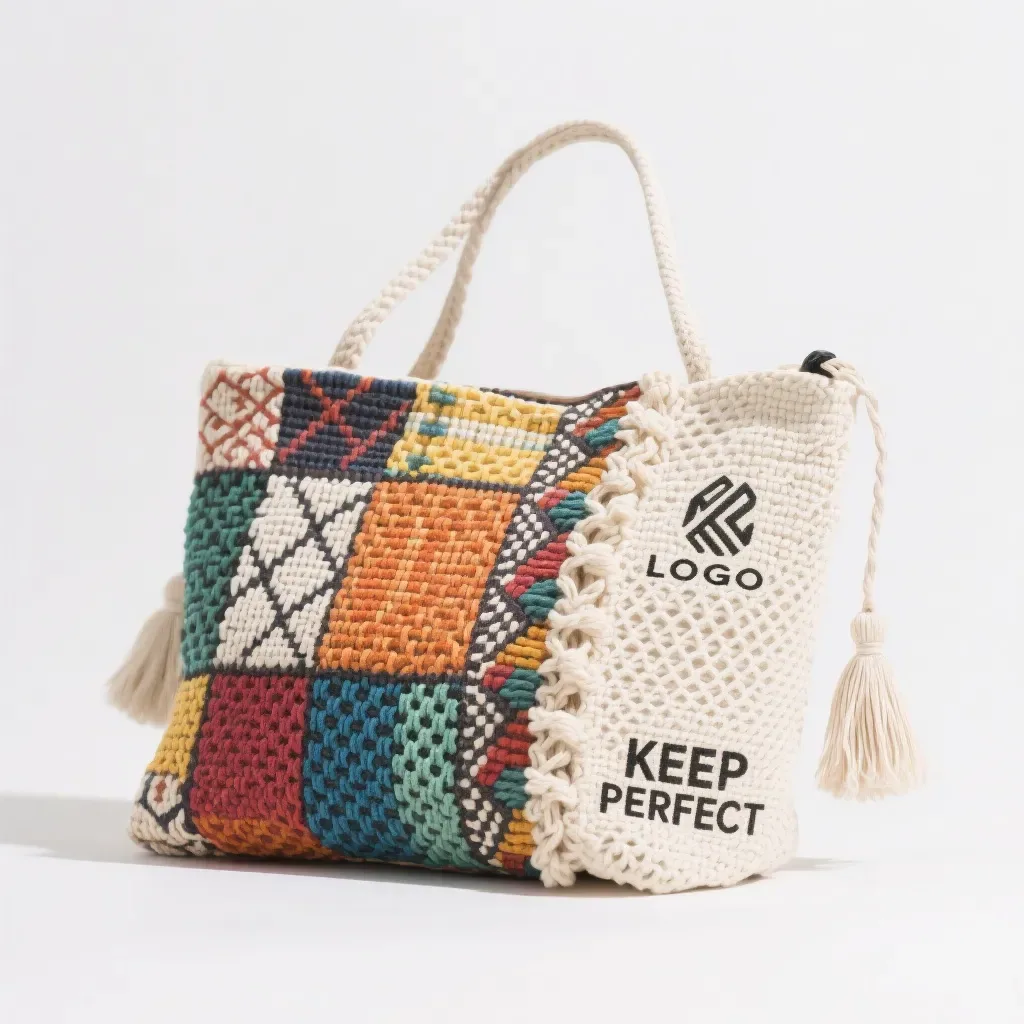
The Decision Tree: Five Branches That Set the Speed
Quote speed on a knitted bag is set by five branches in order: is the brief complete, is the yarn stock or custom, is the programme new or archived, does pricing need a physical sample, and does the buyer want a bed slot reserved — and the slowest branch decides the whole answer.
- Is the brief complete? Five numbers — gauge, yarn count, finished GSM, dimensions, handle drop — plus quantity. A missing number is not a delay, it is a stop.
- Is the yarn a stock count and shade, or a custom or dope-dyed one? Stock is priced from a book; custom has to be quoted by the mill.
- Is the programme new, or does an archived revision already exist? An archived revision carries its own cost history and prices in hours.
- Does the price need a physical sample, or can it be derived from the archive? A structural unknown needs a first knit before anyone commits to a number.
- Does the buyer want a bed slot reserved with the quote? That adds a scheduling step, and it is the branch most often forgotten until the quote has already gone out.
The reason to walk the tree in order is that the branches are not equal. A custom yarn adds days; a missing GSM adds whatever it takes the buyer to answer. Buyers tend to focus on the branch they can influence, which is the first one, and that is correct: completeness is the branch that decides more quote delays than all the others combined.
It is also worth being explicit about what a quote is. It is a priced statement of a specification against a quantity and a term, valid for a stated period. It is not an estimate, and it is not a commitment to hold capacity. Distinguishing those three at the outset prevents the conversation that otherwise happens three weeks later, when a buyer treats a quote as a booked slot and a production team treats it as an expired number.
Four Turnaround Tiers
Four tiers cover knit quotations: 24 hours for a repeat against an archived revision, 48 hours for a new programme on a complete brief, three to five working days when yarn has to be priced externally, and seven or more when structural feasibility has to be established first.
| Tier | Turnaround | When it applies | What the buyer can do to hold it |
|---|---|---|---|
| 1. Repeat | 24 hours | An archived programme revision, stock yarn, quantity known | Quote the revision number rather than the style name |
| 2. Standard new | 48 hours | A complete brief on a new programme, stock yarn | Supply all five numbers and the quantity per colourway |
| 3. Yarn-dependent | 3 to 5 working days | A custom count, a dope-dyed shade, or a certified recycled lot | Approve a stock-shade equivalent as a fallback price |
| 4. Feasibility-led | 7 working days or more | A structural unknown: an integral handle, a shaped transition, a new gauge | Accept a range first and a firm figure after the first knit |
Tier 3 is the one that surprises people, and it surprises them because the delay is invisible. A buyer sends a complete brief, receives an acknowledgement, and hears nothing for four days, during which the yarn is being quoted by a mill that has its own queue. Nothing is wrong; the critical path has simply moved outside the building. The mitigation is easy and worth asking for: a stock-shade equivalent priced alongside the custom one, so a decision can be made immediately rather than after the mill replies.
Tier 4 is different in kind. A structural unknown cannot be priced honestly until somebody knows whether the structure works, and the only way to find out is to knit it. A buyer in tier 4 should ask for a range rather than a number, and should expect the firm figure after the first knit, which is day 2 of a 7-working-day sampling window. Asking for a firm price before the first knit produces a number that will be revised, which is worse than a range that will not.
The Five Numbers, and the Three That Stop a Quote
Five numbers make a knit brief priceable — gauge, yarn count, finished GSM, dimensions and handle drop — and three of them stop a quote outright when missing: GSM, yarn count and quantity.
GSM is the first because price and hand both follow it. A brief with no GSM produces a quote with an assumed GSM, and the assumption is the most common cause of a price that moves on the first revision. Yarn count is the second because it drives weight, abrasion behaviour and cost per kilogram, and on a recycled or certified lot the certificate itself is a cost line. Quantity is the third because MOQ is 100 pcs per style and per colourway and the unit price moves with volume: a quote at 100 pcs and a quote at 2,000 pcs are different products in economic terms.
Gauge and handle drop can be provisionally supplied and are often settled during sampling. That is legitimate and should be marked as provisional in the brief, because a provisional number can be priced and a missing number cannot. The habit worth adopting is to mark every provisional value as provisional, so that the quote can state which of its numbers rest on an assumption and which rest on a decision.
- Gauge
- E7, E12 or E14; provisional is acceptable if marked
- Yarn count
- 600D, 300D or 150D, with fibre and recycled content
- Finished GSM
- A number; a description stops the quote
- Dimensions
- Width, height, depth, to ±3 mm
- Handle drop
- A number in centimetres, to ±2 mm
- Quantity
- Per style and per colourway, at MOQ 100 pcs
- Term and release
- FOB Xiamen; AQL 2.5 under ISO 2859-1
What a Quote Must Contain to Be Comparable
A quote is only comparable to another quote if it states seven things: unit price at a stated quantity, the MOQ basis, the sampling window, the bulk window, the term, the inspection standard and the validity date — and a quote missing the last three is a number rather than a commercial offer.
- Unit price at a stated quantity per colourway, not at an unspecified volume.
- The MOQ basis: 100 pcs per style and per colourway.
- Sampling window: 7 working days, with how many correction rounds are included.
- Bulk window: 30 days from handover, or 22 days on a held revision.
- Term: FOB Xiamen, with CIF and DDP stated as available.
- Inspection standard: AQL 2.5 under an ISO 2859-1 sampling plan.
- Validity: a stated date, commonly 30 days from issue.
The validity date is the quiet one. A yarn price quoted in March is not a yarn price in September, and a quote without a validity date is either a promise nobody intended or an escape clause nobody noticed. Thirty days is the common band and is short enough to be honest and long enough to be useful. Where a programme is being compared across several producers, align the validity dates so the comparison happens on the same day; otherwise one quote is being measured against a different week's material cost.
Why a Quote Takes Five Days Instead of Two
Four causes account for almost every slow knit quote: an outside yarn price, a structural question nobody has answered, an internal approval chain on the buyer side, and a brief that arrived as a conversation rather than as a document.
The third cause is the one buyers control and rarely use. A quote that has to be approved by three people inside the buying organisation before it can be answered takes as long as the slowest of those three, and that interval is invisible to everyone outside it. Naming a single person who can answer technical questions during the quote window removes it. The fourth cause is subtler: a brief that arrives across six emails, with the kilogram weight in one and the handle drop in another, has to be reconstructed before it can be priced, and reconstruction is where numbers get lost.
Outside yarn price
A custom count or a dope-dyed shade has to be quoted by the mill, and the mill has its own queue.
Unanswered structural question
An integral handle or a shaped transition that nobody has confirmed is knit-stable at that gauge.
Buyer-side approval chain
Three people must approve an answer, and the interval is invisible from outside the buying team.
Brief across six emails
Weight in one message, drop in another. Reconstruction is where numbers get lost.
Missing GSM
The quote carries an assumed GSM, and the price moves on the first revision anyway.
Validity already expired
A quote held for two months and then accepted: the yarn price has moved and the number no longer holds.
Revisions: How Many, and How Fast Each One Returns
Expect two rounds of quote revision on a new programme and one on a repeat, with each revision returning in 24 hours if the change is a quantity or a colourway and in 48 hours if it touches the yarn or the structure.
The distinction is the same one that governs change control on the production side. A quantity change is arithmetic: the unit price moves along a known curve and the answer is immediate. A colourway change is nearly arithmetic, adding a set-up at 100 pcs minimum. A yarn change moves the material cost and possibly the lead time, so it has to be re-priced rather than recalculated. A structural change re-opens programming, which is not a revision at all but a new quote. Knowing which of the four a revision request is, at the moment it is made, is what keeps a quote cycle to two rounds.
What the Quote Does Not Cover
A knit quote covers the bag against a stated specification, and four things sit outside it: development cost, packaging, lab testing and freight forwarder charges — which is why a quote total and a landed total are never the same number.
Development is quoted separately, across seven line items that typically total USD 600 to USD 1,300 for an E12 tote. Packaging is separate again, from about USD 0.03 for a polybag to about USD 1.20 for a rigid gift box, before any print set-up. Lab testing is charged per standard per material. Freight depends on the term: under FOB Xiamen the buyer's forwarder handles the onward movement, and under CIF or DDP it is included against a stated destination. None of these is hidden; they are simply outside the unit price, and a buyer comparing two quotes should confirm that both have drawn the boundary in the same place.
- Development: seven line items, quoted separately from the unit price.
- Packaging: route, print method and set-up, quoted separately.
- Lab testing: per standard per material, against the named compliance target.
- Freight: onward movement sits with the buyer under FOB Xiamen.
- Bank charges, duties and destination handling: always outside the quote.
What to Do While the Quote Is Out
The interval between brief and quote is not dead time: four things can be settled in it — artwork feasibility, the compliance target, the packaging route and a provisional bed slot — and each removes a day from the critical path later.
Four things to settle while waiting
- Artwork feasibility: send the vector file and the knitted size, and confirm the compact variant exists
- Compliance target: name the destination market and the standard before yarn is booked at day 10
- Packaging route: polybag, sleeve, mailer, box or pouch, and the print method
- A provisional bed slot: capacity is 7 lines at about 200,000 pcs a month and is booked, not held
Buyers who use the interval well receive a quote and a workable programme at the same time. Buyers who wait receive a quote and then start the four conversations, which is how a 48-hour quote turns into a three-week start. For the kickoff list that carries those four items into a brief, see knitted bag programme kickoff checklist.
Get a quote on your knitted bag programme
Send the five numbers and the quantity per colourway. Our knit team will confirm the tier, return a priced quote within 48 hours on a standard brief, and state the validity date. Start on the contact page.
Frequently Asked Questions
How long does a knitted bag quotation take?
Forty-eight hours is the standard turnaround for a complete brief on a new programme. Twenty-four hours for a repeat against an archived revision, three to five working days when the yarn is custom, and seven or more when structural feasibility has to be established. A quote is a priced statement of a specification, valid for a stated period, not an estimate.
What makes a knit quote slow?
Four causes: an outside yarn price from a mill, a structural question nobody has answered, an approval chain on the buyer side, and a brief spread across several emails rather than one document. The buyer controls two of the four: the approval chain and sending the brief as one document.
What five numbers does a quote need?
Gauge, yarn count, finished GSM, dimensions and handle drop, plus quantity per colourway. Three of them stop a quote outright when missing: GSM, yarn count and quantity. Gauge and handle drop may be provisional; GSM, yarn count and quantity may not be. Marking provisional values lets the quote price assumptions as assumptions.
Why does a missing GSM stop a quote?
Because price and hand both follow it. A brief with no GSM produces a quote with an assumed GSM, and that assumption is the most common reason a price moves on the first revision. Mark every provisional value, so the quote can state which numbers rest on an assumption.
Can provisional numbers be quoted?
Yes, if they are marked provisional. Gauge and handle drop are often settled during sampling. A provisional number can be priced and a missing one cannot, so mark which values are assumptions. The quote can then say which figures are decisions and which are assumptions to be confirmed.
Why does a custom yarn add days?
Because the price has to come from the mill, and the mill has its own queue. Ask for a stock-shade equivalent priced alongside it, so a decision can be made the same day rather than after the mill replies. Naming a single person who can answer technical questions during the window removes that delay.
What should a quote state to be comparable?
Seven things: unit price at a stated quantity, the MOQ basis, the sampling window, the bulk window, the term, the inspection standard and the validity date. Missing the last three makes it a number rather than an offer. Align validity dates across producers, or one quote is measured against a different week's material cost.
How long is a knit quote valid?
Commonly 30 days from issue. Yarn moves, and a quote without a validity date is either a promise nobody intended or an escape clause nobody noticed. Align validity dates when comparing producers. Re-price before accepting a quote whose validity has passed rather than after the run starts.
How many quote revisions should I expect?
Two on a new programme and one on a repeat. A quantity or colourway change returns in 24 hours; a yarn or structure change takes 48 hours, because it has to be re-priced rather than recalculated. A structural change is not a revision at all; it re-opens programming and becomes a new quote.
Is a quote a booking of production capacity?
No. Capacity is 7 production lines at about 200,000 pcs per month and is booked separately. A quote can be issued with a provisional slot reserved, but the two are different commitments. Ask for a provisional slot at the same time, and the two commitments stay separable.
What can I do while the quote is out?
Four things: settle artwork feasibility, name the compliance target, choose the packaging route, and pencil a bed slot. Each removes a day from the critical path afterwards. Buyers who use the interval well receive a quote and a workable programme at the same time. Artwork feasibility and packaging route are the two that take longest to settle later.
Does the quote change the MOQ or the inspection standard?
No. MOQ stays at 100 pcs per style and per colourway, and every run is released against AQL 2.5 under an ISO 2859-1 sampling plan at FOB Xiamen, whichever tier the quote came from. The four tiers change how fast the number arrives, and nothing about how the run is released.
People Also Ask
Can I get a knitted bag quote the same day?
Sometimes, for a repeat against an archived revision with a stock yarn — 24 hours is the usual figure. For a new programme, 48 hours is realistic, and asking for same-day usually produces a range rather than a number.
Why did my quote change after I accepted it?
Usually an assumed value somewhere in the brief, most often GSM, or a validity date that had passed. Ask which numbers rest on an assumption before accepting, and re-price if the validity has expired.
Should I send a tech pack or a photo to get a quote?
A tech pack with the five numbers. A photo can start a conversation on the physical-first sampling route, but it produces a wider range and usually a longer tier. A photo starts the physical-first route, which costs one extra working day to digitise.
Does quantity per colourway affect the quote?
Yes, and more than buyers expect. Each colourway is a separate yarn set-up at 100 pcs minimum, so 300 pcs in one colourway prices differently from 300 pcs split across three.
What is the fastest way to slow a quote down?
Send it as a conversation. A brief spread across several emails has to be reconstructed before it can be priced, and reconstruction is exactly where numbers disappear. One document rather than six emails, and the reconstruction step disappears entirely.
Sources and further reading
Every figure on this page is either our own programme data or attributed below. Open the originals before you write them into a specification.
- ISO 2859-1 — Sampling procedures for inspection by attributes, Part 1: AQL-indexed sampling schemesISO The inspection standard a comparable quote must state, alongside the term and the validity date.
- Incoterms rulesInternational Chamber of Commerce The rule set behind FOB Xiamen and the CIF and DDP alternatives named on a quote.
- Recycled Claim Standard and Global Recycled StandardTextile Exchange Chain-of-custody certification that adds a line to a quote on a certified recycled yarn lot.
- ISO 139:2005 — Textiles, standard atmospheres for conditioning and testingISO The conditioning basis for the GSM figure a quote is priced against.
- OEKO-TEX STANDARD 100OEKO-TEX One of the compliance targets whose testing cost may appear as a line on a quote.
Quote Speed Is Mostly a Property of the Brief
Two of the four tiers are decided before the brief leaves the buyer's building. A complete brief on a stock yarn prices in 48 hours. The same brief missing a GSM and a quantity waits for an answer, and the waiting is longer than the pricing ever was.
Send one document, carry the five numbers, mark what is provisional, and name one person who can answer questions during the window. For the checklist that assembles that document, see knitted bag programme kickoff checklist. For the programme framework, see custom knit bags.