Knitted Bag Programme Kickoff Checklist: Six Questions and Twelve Items Before Day One
What has to be in place before a knitted bag programme starts? Twelve items, and most late programmes are missing the same three: a target GSM as a number, a named decision owner on the buyer side, and a compliance target stated before yarn is booked. This article works through the kickoff as six questions in order — what must be true, which numbers, who decides, what the first week does, what goes wrong, and when a programme is genuinely started — and ends with the twelve-item checklist itself.
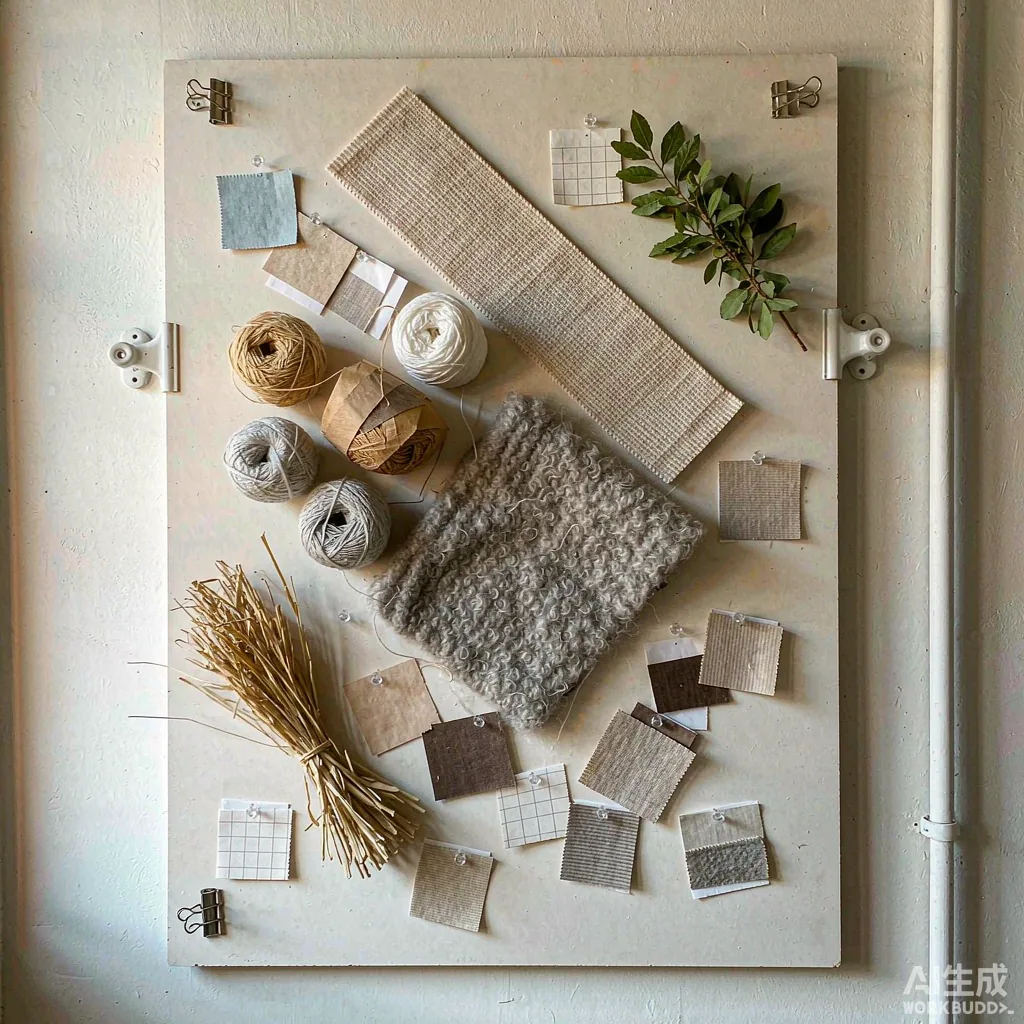
Question One: What Has to Be True Before a Knit Programme Can Start?
A knit programme can start when three things exist: a silhouette with dimensions, a yarn direction with a count, and a compliance target — not when a mood board, a cost target and a launch date exist, though those are what usually arrive first.
The reason is mechanical. A knitting programme is written against numbers: gauge, stitch structure, yarn count, finished GSM, body dimensions, handle drop. A mood board contains none of those and a launch date contradicts none of them, so neither moves the file forward. What does move it is a scale drawing with five dimensions on it, a stated yarn count such as 600D or 300D recycled polyester, and a named compliance target such as REACH, Prop 65, CPSIA, GRS or OEKO-TEX STANDARD 100. Those three convert into programming decisions inside a day.
Buyers sometimes read this as a demand for completeness and delay the kickoff until everything is perfect. That is the wrong reading. A programme can start with provisional values in every field, as long as the fields are there and someone has said which values are provisional. A GSM of 340 g/m² marked as a target is workable; no GSM at all means the programme starts with a guess and pays for it at the fit assessment.
Question Two: Which Numbers Does the Kickoff Brief Need?
Five numbers make a knit brief workable — gauge, yarn count, finished GSM, body dimensions and handle drop — and a sixth, quantity per colourway, turns it into a quotation.
Gauge sets everything downstream. E7 gives about 2.8 needles per centimetre and a chunky, open hand; E12 gives about 4.7 and is the common choice for a branded tote; E14 gives about 5.5 and the finest surface. Yarn count sets weight and abrasion: 600D for a structured tote, 300D for a lighter shopper, 150D for a pouch or a liner. Finished GSM is what price and hand both follow, and it must be a number rather than a description, because 'medium weight' produces three different bodies from three different programmers. Body dimensions and handle drop are the two that most often drive a correction round, so they deserve tolerances at kickoff: plus or minus 3 mm on dimensions and plus or minus 2 mm on handle drop.
- Gauge
- E7 at about 2.8, E12 at about 4.7, E14 at about 5.5 needles per centimetre
- Yarn count
- 600D structured, 300D mid-weight, 150D pouch or lining
- Finished GSM
- A number, typically 280 to 420 g/m² for a tote
- Body dimensions
- Width, height, depth, to ±3 mm
- Handle drop
- A number in centimetres, to ±2 mm
- Quantity
- Per style and per colourway, at MOQ 100 pcs
- Compliance target
- REACH, Prop 65, CPSIA, GRS or OEKO-TEX STANDARD 100
Question Three: Who Has to Be in the Room, and Who Decides?
Three roles have to be named at kickoff — one person who decides the design, one who owns the numbers, and one who signs off compliance — because a knit programme asks for decisions at fixed points and an unnamed owner turns a day-one answer into a week-two silence.
The roles are not job titles and they are often held by one person in a small buying team; what matters is that they are named. The design decision owner answers the fit assessment, which is a day-three event inside a 7-working-day sampling window and cannot be deferred without consuming the window. The numbers owner holds GSM, dimensions and tolerance, and is the person a programmer asks when the drawing is ambiguous. The compliance owner states the target market and the standard, which has to happen before yarn is booked at day 10, because a yarn that fails the target for that market has to be replaced rather than re-tested.
| Decision point | When it falls | Who must answer | Cost of a late answer |
|---|---|---|---|
| Gauge and yarn direction | Day 1 of kickoff | Numbers owner | Programming starts on a guess |
| Artwork feasibility | Day 1 to 2 | Design decision owner | A re-digitise and a day |
| Fit assessment | Day 3 of sampling | Design decision owner | The 7-working-day window slips |
| Structural correction choice | Day 4 of sampling | Design decision owner | One of two included rounds is lost |
| Compliance target | Before day 10 of bulk | Compliance owner | Yarn is booked that fails the market |
| Pre-shipment release | Days 24 to 30 | Compliance owner | Release against AQL 2.5 is delayed |
Question Four: What Happens in the First Seven Days?
The first seven working days are sampling, and they run in a fixed order: programming and first knit, heat setting, fit assessment, structural correction, trim and lining, then measurement and packing — with the buyer needed on three of the six days.
Programming and the first knit take about a day and a half and produce the first physical piece. Heat setting takes half a day and is what makes any measurement meaningful, since an unset body keeps relaxing. The fit assessment is day three and is the buyer's first decision point. Structural correction is day four, and two correction rounds sit inside the window. Trim and lining take two days and are the largest single block, because a zip, a lining, hardware and a label are discrete placements each needing a jig and a check. Measurement, photography and packing take the last day and produce the record that bulk will be compared against.
- Days 1 to 2: programming, first knit, heat setting and conditioning.
- Day 3: fit assessment — the first point at which the buyer says yes or no.
- Day 4: structural correction, round one of two inside the quoted window.
- Days 5 to 6: trim, lining, hardware and label placement.
- Day 7: measurement at twelve points, GSM check, photography and packing.
- After approval: bulk runs 30 days, released against AQL 2.5 under ISO 2859-1.
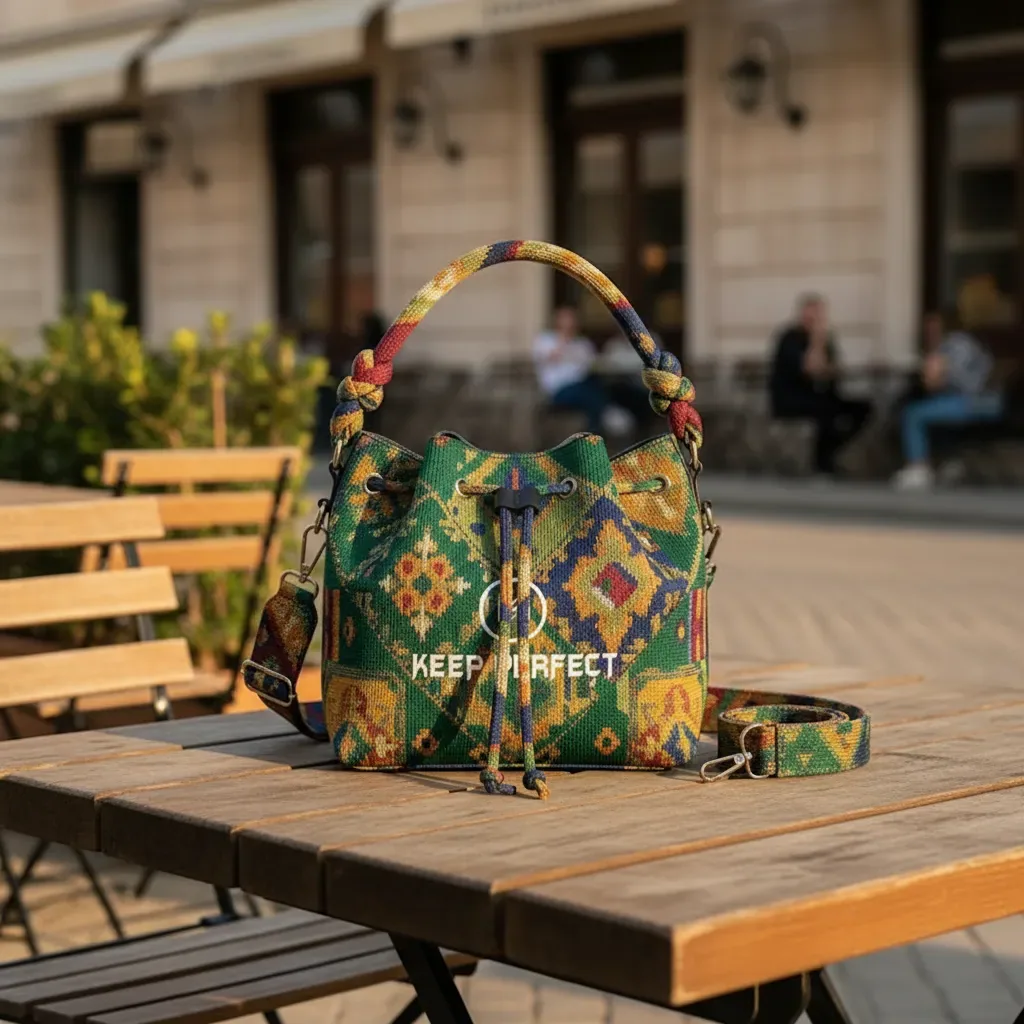
Question Five: What Goes Wrong in Week One, and How Is It Caught?
Five things go wrong in week one of a knit programme: a GSM that was never a number, an artwork that cannot survive the knitted size, a handle drop that was never dimensioned, a compliance target raised after yarn is booked, and a sample approved before conditioning.
All five are catchable at kickoff and all five are expensive by day four. A missing GSM means the first knit is either too heavy or too light and one correction round disappears. An artwork that needs 13 mm of cap height at E12 and has been drawn for 6 mm does not knit legibly and needs a compact variant that nobody requested. A handle drop described rather than measured produces a body that fits the drawing and not the shoulder. A compliance target raised at day 12 means yarn is already booked. A sample approved on the knitting day rather than after 24 hours of conditioning measures correctly on the day and moves overnight.
GSM never stated
Price and hand both follow GSM, so a description produces three different bodies from three different programmers.
Artwork too small
Text needs about 12 courses of cap height, roughly 13 mm at E12. Below that letterforms merge.
Handle drop described
'About a hand's width' produces a body that fits the drawing and not the wearer.
Compliance raised late
Raised after day 10, the target arrives after yarn is booked, and the yarn has to be replaced rather than tested.
Sample approved unconditioned
An unset or under-set body measures correctly on the day and moves overnight or on the first wash.
Capacity assumed free
Capacity is 7 production lines at about 200,000 pcs per month and is booked, not held open.
Question Six: When Is a Programme Genuinely Started?
A programme is genuinely started when the knitting file has been written and a first piece has been knitted from it — before that it is a conversation, and after that it has a calendar, a revision number and a physical reference.
That distinction matters because it is where the 7-working-day sampling promise attaches. A buyer who counts the programme as started when the brief is sent will expect a sample seven days later and receive one nine or ten days later, because the brief-to-first-knit interval is not zero. A buyer who counts from the first knit gets exactly what was promised. The clean way to handle it is to state both dates at kickoff: the date the file is written and the date the first piece is expected, with the sampling window running from the second.
What the First Purchase Order Should Carry
A first purchase order on a knit programme should carry six references beyond quantity and price: the programme revision number, the yarn lot reference, the approved sample date, the tolerance set, the Incoterm and the inspection standard — because a purchase order without those six describes a bag rather than a specification.
The revision number is the one that prevents the most damage. A purchase order that names a style but not a revision will be filled with whatever revision is current on the day, which may be the corrected body or may be the one that was superseded after the trim change. The yarn lot reference does the same job for shade, the approved sample date ties the order to a physical piece, and the tolerance set says in writing what plus or minus 3 mm and plus or minus 5% mean for this order. The Incoterm fixes where risk transfers, FOB Xiamen being the standard with CIF and DDP available, and the inspection standard fixes how the shipment is released.
- Programme revision number, not the style name alone.
- Yarn lot reference, so shade continuity is traceable to a lot rather than to a colour name.
- Approved sample date, tying the order to a physical, measured reference piece.
- Tolerance set: ±3 mm dimensions, ±2 mm handle drop, ±5% GSM, Delta E 1.0 shade.
- Incoterm: FOB Xiamen standard, CIF or DDP on request.
- Inspection standard: AQL 2.5 under an ISO 2859-1 sampling plan.
The Twelve-Item Kickoff Checklist
Twelve items, in the order they are needed: silhouette, gauge, yarn, GSM, dimensions, handle drop, trim list, artwork, colourway split, compliance target, quantity and delivery week — and the last two are the ones most often left to the end of an email.
- Silhouette: a scale drawing with dimensions, or a physical reference on the physical-first route.
- Gauge: E7, E12 or E14, or a stated hand and drape if the buyer is unsure.
- Yarn count and fibre: 600D, 300D or 150D, recycled polyester, nylon or a blend.
- Finished GSM: a number, not a description, with the tolerance agreed at ±5%.
- Body dimensions: width, height and depth, to ±3 mm.
- Handle drop and aperture: dimensioned, to ±2 mm on the drop.
- Trim list: zip gauge and length, hardware finish, lining, label position.
- Artwork: vector file, knitted size, colour count, Pantone TCX references, placement.
- Colourway split: quantity per colourway, remembering MOQ is 100 pcs per style and colourway.
- Compliance target: REACH, Prop 65, CPSIA, GRS or OEKO-TEX STANDARD 100, named before yarn is booked.
- Quantity: total and per delivery, so capacity can be pencilled.
- Delivery week: so a bed slot is reserved rather than hoped for.
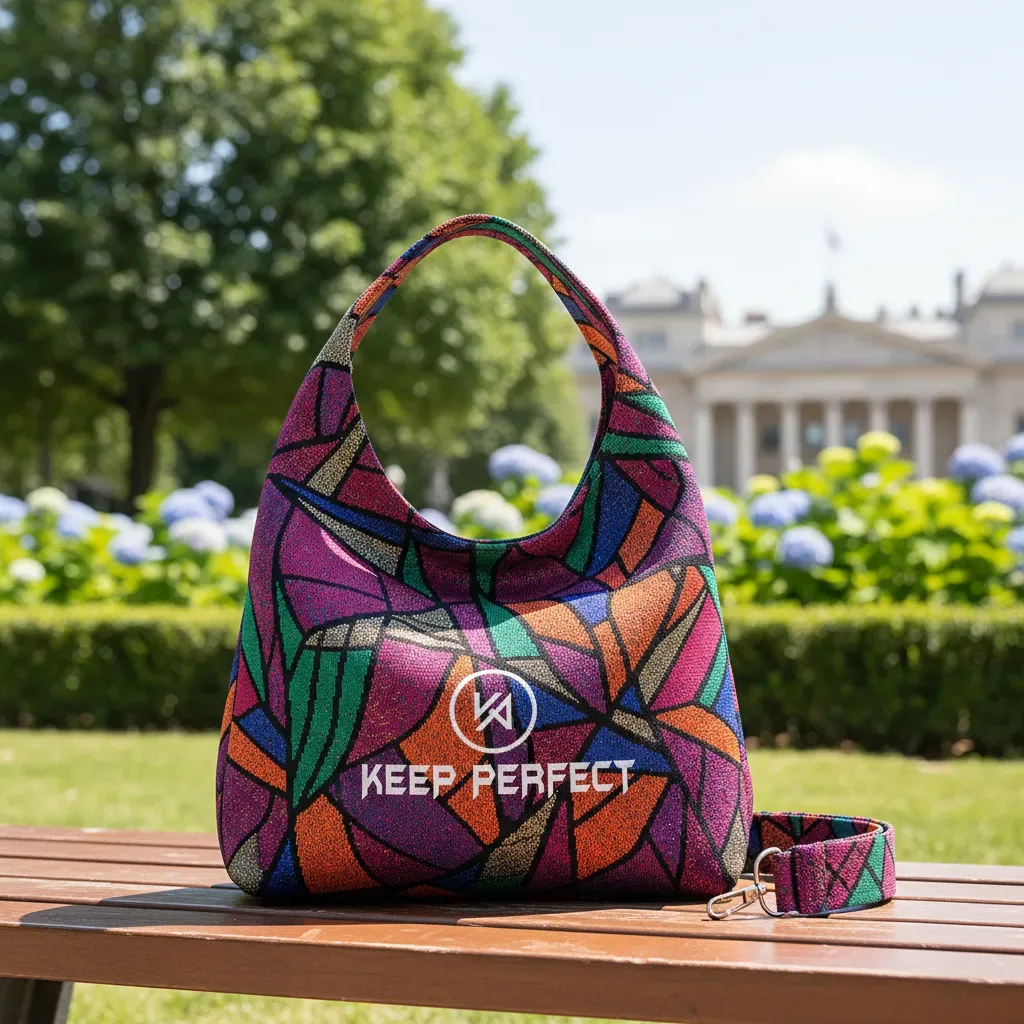
What Kickoff Freezes and What It Deliberately Leaves Open
Kickoff should freeze gauge, yarn direction and compliance target, and deliberately leave GSM, dimensions and artwork open until the first knit — because the first three are expensive to change later and the second three are exactly what the first knit exists to settle.
Kickoff decisions: freeze, leave open
- Freeze: gauge, because changing it rewrites the programme rather than editing it
- Freeze: yarn count and fibre, because it drives GSM, hand and the setting cycle
- Freeze: compliance target, because yarn is booked at day 10 against it
- Leave open: finished GSM, until the first piece has been knitted and weighed
- Leave open: handle drop, until the fit assessment has been seen on the body
- Leave open: artwork placement, until the stitch grid and the body size are confirmed
- Leave open: trim detail, where a stock alternative exists and the sample can settle it
That split is the whole point of a kickoff meeting. Freezing what is expensive to change and leaving open what is inexpensive to change is what keeps a 7-working-day sampling window intact and a 30-day bulk run on its calendar. For the capacity question behind item twelve, see knitted bag capacity booking.
Run a kickoff on your knit bag programme
Send the silhouette, the gauge direction and the quantity per colourway. Our knit team will return the twelve-item list with what is still open, and quote against MOQ 100 pcs per style, 7 working days of sampling and 30 days of bulk. Start on the contact page.
Frequently Asked Questions
What do I need before starting a knitted bag programme?
Three things: a silhouette with dimensions, a yarn direction with a count, and a compliance target. Those three convert into programming decisions inside a day. A mood board, a cost target and a launch date are useful but move nothing on their own. A programme can also start with provisional values, provided each one is marked as provisional.
Which five numbers does a knit bag brief need?
Gauge, yarn count, finished GSM, body dimensions and handle drop, plus quantity per colourway to turn it into a quotation. GSM must be a number rather than a description, because price and hand both follow it. Gauge and handle drop may be provisional; GSM, yarn count and quantity are the three that cannot be.
What gauge should I choose for a knitted bag?
E12 for most branded totes, at about 4.7 needles per centimetre. E7 gives a chunkier, more open hand at about 2.8, and E14 gives the finest surface at about 5.5, at a slower cycle and a higher yarn cost. Choose E12 unless the hand or the artwork resolution genuinely needs finer or coarser.
How many people does a kickoff need on the buyer side?
Three named roles, which one person may hold in a small team: someone who decides the design, someone who owns the numbers, and someone who signs off the compliance target. What matters is that they are named. The three roles answer the fit assessment, the numeric questions and the compliance target respectively.
When does the 7-working-day sampling window start?
From the first knit, not from the brief. State both dates at kickoff: the date the file is written and the date the first piece is expected, with the sampling window running from the second. Counting from the brief instead is why a seven-day window appears to take nine or ten.
What goes wrong most often in week one?
Five things: a GSM that was never a number, an artwork that cannot survive the knitted size, a handle drop that was never dimensioned, a compliance target raised after yarn is booked, and a sample approved before conditioning. All five are catchable at kickoff and all five are expensive to discover at day four.
Why must the compliance target be named before day 10?
Because yarn is booked at day 10 of the 30-day bulk run. A target raised after that does not get a test; it gets a replacement yarn and a rebooking, which is the longest pole in the programme. Naming the market and the standard before booking costs nothing and avoids replacing yarn already committed.
Should GSM be frozen at kickoff?
No. Freeze gauge, yarn count and fibre, and the compliance target. Leave finished GSM open until the first piece has been knitted and weighed, because that is exactly what the first knit exists to settle. GSM, handle drop and placement are precisely what the first knit exists to settle.
What tolerances should be agreed at kickoff?
Plus or minus 3 mm on body dimensions, plus or minus 2 mm on handle drop, and plus or minus 5% on finished GSM. Inside those bands the piece matches the record and no change request is raised. A Delta E of 1.0 on shade under D65 completes the set for programmes running several colourways.
How is capacity handled at kickoff?
Pencil a bed slot against the expected delivery week. Capacity is 7 production lines at about 200,000 pcs per month and is booked rather than held open, so a pencilled slot makes the date predictable. A flexibility band — what can move, by how much and who decides — makes the slot easier to fit.
Do I need artwork at kickoff or can it come later?
Bring the vector file and the intended knitted size if you have them, but placement can wait until the first knit confirms the body. What must not wait is the colour count, because it changes the structure of the file. Colour count matters because it changes the structure of the file rather than only its appearance.
What happens after the sample is approved?
Bulk runs 30 days: yarn booking across the first 10, knitting across days 8 to 20, finishing and trim across days 18 to 26, and inspection, packing and the pre-shipment release across days 24 to 30 at AQL 2.5. The handover sheet carries the revision number, yarn lot, GSM, setting parameters and packing specification.
People Also Ask
Can a knit programme start without a tech pack?
Yes, on the physical-first route, where a reference bag is conditioned and measured before being digitised, at one extra working day. But if the numbers exist and simply have not been written down, writing them down costs the same day and produces a permanent record.
What is the single most useful thing to bring to a kickoff?
A target GSM as a number. Price, hand, drape and abrasion all follow it, and a description such as medium weight produces different bodies from different programmers. Bring the five numbers, the trim list and a named decision owner, and the rest can follow.
Who should own the compliance decision?
One named person on the buyer side, stating the destination market and the standard. Without an owner, the target arrives after yarn is booked, and the yarn then has to be replaced rather than tested.
How many correction rounds should I plan for?
Two sit inside the 7-working-day sampling window. A structural correction, where the programme did not deliver the brief, is inside scope; a specification change consumes a round and may consume a yarn booking.
Should I freeze the launch date at kickoff?
Freeze the delivery week and pencil a bed slot against it. The date itself should follow the sampling calendar rather than lead it, or the programme starts with a constraint that no one can satisfy.
Sources and further reading
Every figure on this page is either our own programme data or attributed below. Open the originals before you write them into a specification.
- ISO 139:2005 — Textiles, standard atmospheres for conditioning and testingISO The conditioning rule behind approving a sample after 24 hours rather than on the knitting day.
- ISO 2859-1 — Sampling procedures for inspection by attributes, Part 1: AQL-indexed sampling schemesISO The AQL 2.5 plan under which the bulk run is released after sampling approval.
- Substances restricted under REACHECHA The restricted-substance list behind the compliance target that must be named before yarn is booked.
- OEKO-TEX STANDARD 100OEKO-TEX Finished-textile testing, one of the compliance targets named at kickoff rather than after booking.
- WHOLEGARMENT knitting business overviewShima Seiki The gauge-defined needle grid behind the E7, E12 and E14 choice made at kickoff.
A Kickoff Is a Decision About What to Freeze
Most kickoff meetings try to settle everything and end up settling nothing, because the items worth freezing and the items worth leaving open are not the same list. Gauge, yarn direction and compliance are expensive to change later; GSM, handle drop and placement are inexpensive to change later and are precisely what sampling exists to decide.
Run the twelve-item list at the start, name the three owners, and the first knit arrives on the day it was promised. For the cost structure behind those decisions, see knitted bag development cost guide. For the programme framework, see custom knit bags.