Knitted Bag Artwork File Requirements: The Nine-Item Checklist Before a Logo Becomes Stitches
What artwork files does a knitted bag programme actually need? Nine deliverables: a vector master, a raster fallback at 300 dpi, named Pantone TCX references, a placement drawing with dimensions, a stitch-grid scale note, a colour-count declaration, a font file or outlined text, a contrast plan and a signed approval. Artwork on a knit surface is limited by stitch count, not by printer resolution, so a logo that prints perfectly can be unknittable at 20 mm. This article lists the nine requirements, explains why each exists, and gives the numeric limits behind them.
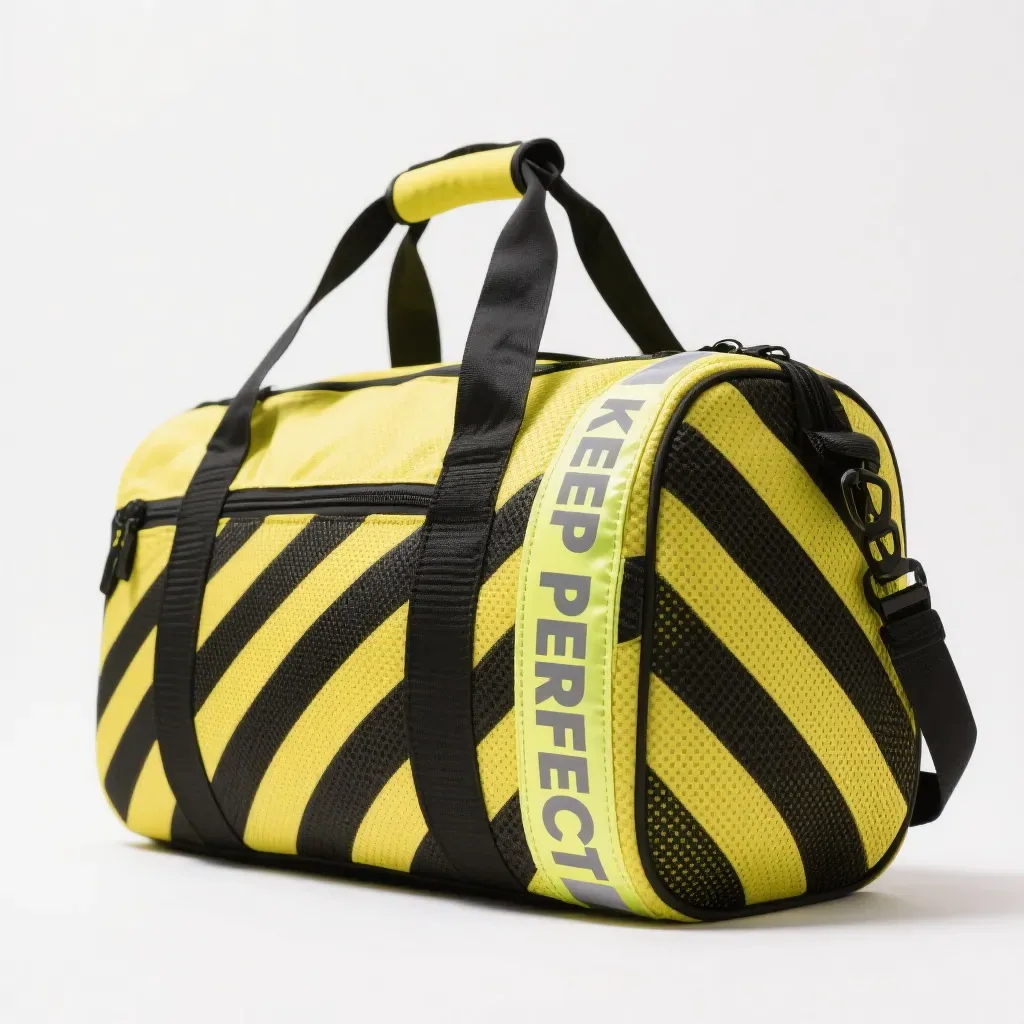
Why Artwork Behaves Differently on a Knitted Surface
Artwork on a knitted bag is built from stitches, so its resolution is the gauge of the bed: at E12 there are roughly 4.7 needles per centimetre, which means a 20 mm logo has about nine columns of stitches to exist in, and no file resolution can add more.
That single constraint explains most artwork disappointment. A buyer supplies a 4000-pixel logo, expects it to reproduce at 18 mm on the bag front, and receives a sample in which the logo is a legible blob. Nothing was lost in translation; there were never enough needles. The same is true vertically: at E12 a course is roughly 1.1 mm, so a wordmark needs about twelve courses of height before letterforms separate. Print and knit are both image-reproduction systems, but print resolution is bought with file size and knit resolution is bought with centimetres.
The practical consequence is that artwork for a knitted bag is designed at the size it will be knitted, not scaled to it. A logo that must survive at 20 mm is drawn as a 20 mm mark: heavier strokes, fewer letters, more space between them, and a simplified form if necessary. Most brand guidelines contain a compact or horizontal variant of the mark for exactly this reason, and requesting it at the brief stage is the highest-value thing a buying team can do for a knit programme.
The Nine-Item Artwork Checklist
Nine deliverables make an artwork package knit-ready: a vector master, a raster fallback, named colour references, a placement drawing, a scale note, a colour-count declaration, outlined text or the font file, a contrast plan, and a signed approval — and each one prevents a specific failure that is expensive to discover in sampling.
- Vector master in AI, SVG or PDF: because the logo is converted to a stitch grid, and a grid is a vector problem, not a pixel problem.
- Raster fallback at 300 dpi or above in PNG or TIFF: used for reference renders and for photographic artwork, where a halftone effect is knitted rather than printed.
- Named Pantone TCX references for every colour: TCX rather than coated-process references, because yarn is dyed to a textile standard, not to a paper one.
- Placement drawing with dimensions: a scale view of the bag front, back and gusset with the artwork positioned to the millimetre and the baseline stated.
- Scale note: the knitted size of the artwork in millimetres, so the stitch conversion is done at the correct size from the start.
- Colour-count declaration: how many yarn colours appear in the artwork, because a jacquard bed carries a limited number of carriers per course.
- Outlined text, or the font file supplied: text converted to paths survives the conversion; a live font that nobody holds does not.
- Contrast plan: a stated light-on-dark or dark-on-light relationship, since stitch-level contrast is lower than print contrast at small sizes.
- Signed approval of the digitised proof: a knitted or simulated proof approved before bulk, so the reference on file matches what runs.
The ninth item is the one most often skipped, and it is the one that protects the other eight. A digitised proof shows the artwork as the bed will knit it, at the correct size and in the correct yarn. Approving it takes an hour; discovering at bulk that the compact mark was never used takes a run.
Vector or Raster: What Each Is Actually Used For
Vector files drive the stitch conversion and raster files drive photographic or tonal artwork — supplying only a raster logo forces a tracing step that loses detail and adds a day to sampling.
A vector path converts to a stitch map directly: each shape becomes a region of needles and each region is assigned a yarn carrier. A raster logo has to be traced first, and tracing a 72-dpi JPEG produces a stitch map with ragged edges that no amount of programme tuning improves. Photographic or gradient artwork is the exception, and it is handled by knitting a halftone — a dot pattern at stitch resolution that reads as tone at a distance and as dots up close. That effect needs a high-resolution source, 300 dpi at the knitted size as a minimum, and it needs to be requested explicitly because it is a design decision rather than a file format.
| Deliverable | Accepted format | Why it is specified this way |
|---|---|---|
| Vector master | AI, SVG or PDF with paths intact | Converts directly to a needle map without a tracing step |
| Raster fallback | PNG or TIFF at 300 dpi minimum, at knitted size | Needed for halftone and photographic effects and for comparison renders |
| Colour reference | Pantone TCX code per colour | Yarn is dyed to a textile standard; coated-process references do not map cleanly |
| Placement drawing | Scale PDF with dimensions and baseline | Fixes position to ±5 mm before the programme is written |
| Text | Outlined paths, or the font file supplied | A live font held by nobody cannot be converted reliably |
| Colour count | A number declared in the brief | The jacquard bed carries a limited number of carriers per course |
| Proof approval | Signed digitised or knitted proof | Gives bulk a reference that matches the artwork as knitted |
Minimum Legible Size, Measured in Stitches
Text on a knitted bag needs about twelve courses of cap height to stay legible, which at E12 is roughly 13 mm and at E7 is roughly 22 mm — so the gauge chosen for the body sets the smallest wordmark the bag can carry.
Two further limits follow. A stroke below two stitches wide, about 3 mm at E12, tends to disappear into the ground because the neighbouring loops close over it. A gap below one stitch between two elements closes entirely, so letterforms with tight counters — the enclosed space in an a, e or o — fill in at small sizes. The remedy in every case is to design at the knitted size: increase stroke weight, open the counters, increase letter spacing, or drop to a compact mark. A wordmark that works at 60 mm on a swing tag will not automatically work at 22 mm on a bag front, and the conversion does not fix it.
- Needles per centimetre at E7
- About 2.8, giving a coarser artwork grid
- Needles per centimetre at E12
- About 4.7, the common choice for branded bodies
- Needles per centimetre at E14
- About 5.5, the finest artwork resolution available
- Minimum cap height for legible text
- About 12 courses, roughly 13 mm at E12 and 22 mm at E7
- Minimum stroke width
- Two stitches, about 3 mm at E12
- Minimum gap between elements
- One stitch, below which counters close
- Halftone source resolution
- 300 dpi at the knitted size, minimum
Colour Count and the Jacquard Carrier Limit
A jacquard knit carries a limited number of yarn carriers per course — plan for four as a working maximum on a bag body — and every additional colour adds carriers, floats on the reverse, and programming time.
Floats are the reason the limit exists. In a jacquard structure the yarn not knitting on the face travels across the reverse of the fabric, and a long float is a snag risk on a bag that will be carried, rubbed and packed. Keeping artwork within four colours per course keeps floats short enough to be acceptable on a body that takes abrasion. Where a design genuinely needs more, intarsia places separate yarn blocks with no floats across the whole panel, at the cost of a slower cycle and a higher programming burden. Both are legitimate; the choice belongs in the brief rather than in the programming stage, because it changes the structure of the file.
Placement, Tolerance and the Stitch Grid
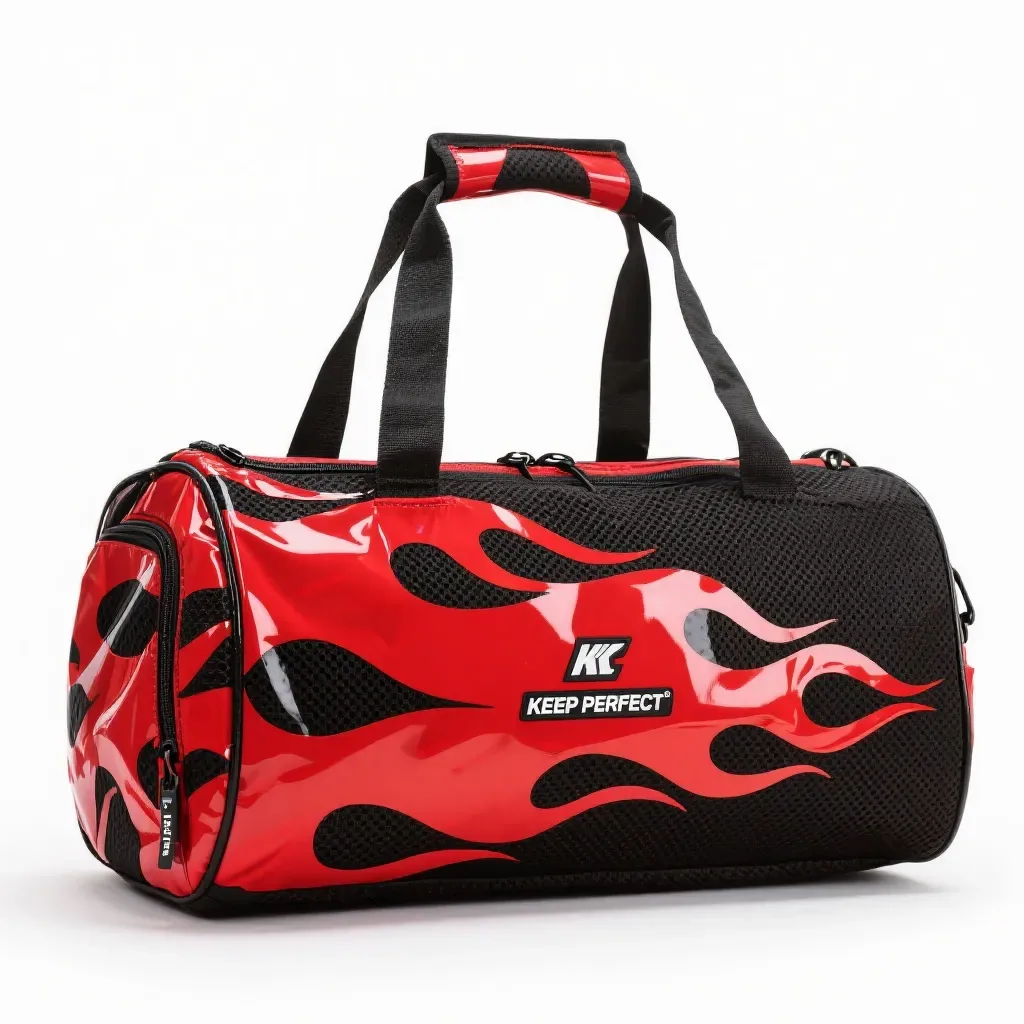
Artwork position on a knitted body is fixed to plus or minus 5 mm, because the artwork is registered to the stitch grid rather than to a printed registration mark, and a needle is the smallest unit of movement available.
Placement is therefore specified as a relationship to a construction point, not as a coordinate on a photograph. 'Centred on the front panel, baseline 42 mm above the base transition' is a specification; 'centred, about a hand's width up' is not. The construction points worth using are the base transition, the handle join, the aperture edge and the side seam. Specifying artwork against those four points means the placement survives a change of body size later, which is a common occurrence in a programme that grows from one size to three.
From File to First Knit: What Digitising Does
Digitising converts the artwork into a stitch map, assigns carriers, sets float lengths and simulates the result, and on a typical bag logo it takes one to two working days — a cost paid once on the first run and not again on a repeat.
The output is worth approving in two forms. A simulation shows the artwork as it will appear in the chosen yarn colours at the chosen gauge, and it is fast enough to iterate three or four times inside the sampling window. A knitted proof is a physical piece and it is authoritative, because it shows the interaction between artwork and ground structure — how a stitch-level colour change reads on a rib, how a logo behaves across a shaping line, how the surface behaves once the body has been heat set and relaxed. Approving the simulation for layout and the knitted proof for appearance is the sequence that works.
- Day 1: vector paths cleaned, artwork scaled to the knitted size, carriers assigned.
- Day 1 to 2: stitch map generated, float lengths checked against the four-colour rule.
- Day 2: simulation rendered and sent for layout approval, with a knitted proof where the programme allows.
- Approval: artwork frozen, and the approved map archived against the programme revision number.
- Repeat runs: the map is reloaded rather than re-digitised, which is why artwork contributes to the 8 to 14% repeat saving.
What Breaks Artwork at Bulk, and How to Prevent It
Four things break artwork between approval and bulk: a yarn lot with a different shade, a gauge change, a relaxation shift after setting, and a placement that was specified against a photograph rather than a construction point.
Lot shade drift
A new yarn lot arrives with its own Delta E against the archived swatch, and a logo in a contrast colour drifts with it.
Gauge change
Moving from E12 to E14 changes the artwork grid, so the stitch map must be regenerated rather than reused.
Relaxation after setting
The body moves after heat setting and conditioning, and artwork specified to a tight tolerance moves with it.
Photographic placement
Placement copied from an image rather than dimensioned from the base transition or the handle join drifts between sizes.
Undeclared extra colour
A fifth colour added at approval adds carriers and lengthens floats beyond what the structure was checked for.
Unapproved compact mark
The full mark is knitted at a size it cannot survive, and the compact variant in the brand guidelines was never requested.
Sending an Artwork Package That Survives First Contact
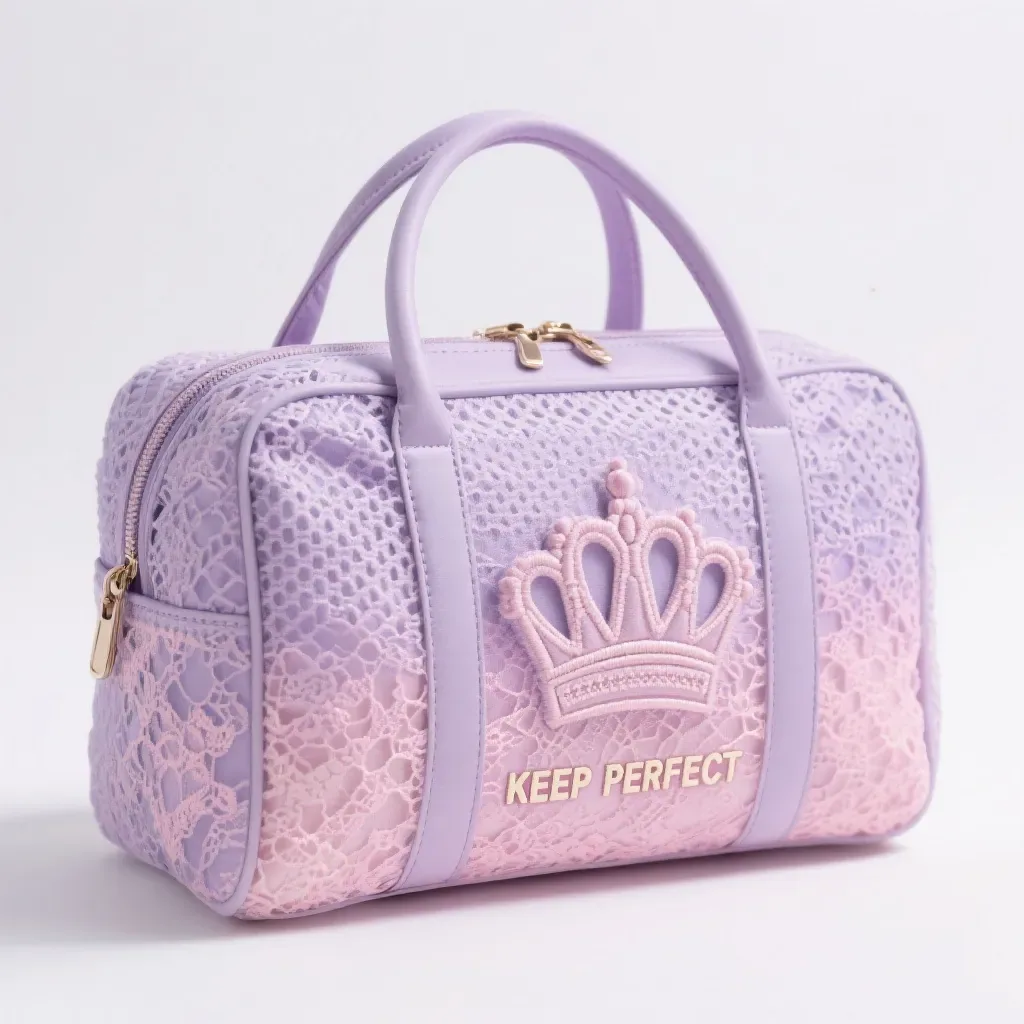
The artwork package that reaches the bed intact is the one that answers gauge, size, colours and placement in numbers before anyone opens a design file — four answers that cost an hour and remove a sampling round.
Artwork brief: the numbers to state
- Gauge of the body the artwork sits on: E7, E12 or E14
- Knitted size of the artwork in millimetres, width and height
- Number of yarn colours in the artwork, declared as a number
- Pantone TCX reference for each colour
- Placement dimensioned from the base transition, handle join, aperture edge or side seam
- Stroke weight and letter spacing confirmed for the knitted size
- Whether a halftone or photographic effect is intended, and at what source resolution
- Which variant of the mark is approved if the full mark cannot survive the size
With those eight numbers, digitising is a one-to-two-day operation inside the 7-working-day sampling window rather than a negotiation that extends it. MOQ stays at 100 pcs per style and per colourway and bulk runs to 30 days, released against AQL 2.5 under an ISO 2859-1 sampling plan at FOB Xiamen. For the packaging artwork that often accompanies a brand programme, see custom knitted bag packaging design.
Send your artwork for a knit feasibility check
Send the vector file, the knitted size and the gauge. Our knit team will state whether the artwork survives at that size, how many carriers it needs, and what the digitised proof will take. Start on the contact page.
Frequently Asked Questions
What artwork files does a knitted bag programme need?
Nine items: a vector master, a raster fallback at 300 dpi, Pantone TCX references, a dimensioned placement drawing, a scale note, a colour-count declaration, outlined text or the font, a contrast plan, and a signed proof approval. Two of the nine — the scale note and the signed proof approval — are the ones most often left out of a package.
Why does a high-resolution logo still knit badly?
Because knit resolution is set by the gauge, not by file resolution. At E12 there are about 4.7 needles per centimetre, so a 20 mm logo has roughly nine stitch columns to exist in and no file size can add more. The fix is to design at the knitted size rather than to scale a larger drawing down to it.
What is the smallest legible text size on a knitted bag?
About twelve courses of cap height. At E12 that is roughly 13 mm, and at E7 roughly 22 mm. Below that, letterforms merge and counters fill in, because one stitch is the smallest gap that survives. Stroke weight needs two stitches, about 3 mm at E12, or the mark disappears into the ground structure.
Should I send a vector or a raster file?
Both, but the vector is the one that matters. The vector converts directly to a needle map; the raster is used for reference renders and for photographic or halftone effects, where 300 dpi at knitted size is the minimum. A raster-only package forces a tracing step, which loses edge detail and adds a day to the sampling window.
Why Pantone TCX rather than a coated-process reference?
Because yarn is dyed to a textile standard. A coated-process reference describes ink on paper and does not map cleanly to a dyed yarn, which is where most first-round shade disappointment on branded knit programmes comes from. Naming TCX for every colour in the artwork keeps the first shade round from becoming a correction round.
How many colours can a knitted bag logo have?
Four per course is the working maximum on a bag body. Each extra colour adds a carrier and lengthens the floats on the reverse, and a long float is a snag risk on a bag that gets carried, rubbed and packed. Where a design genuinely needs more, intarsia places separate yarn blocks with no long floats, at a slower cycle.
What is a float and why does it matter?
A float is the length of yarn travelling across the reverse of the fabric when that yarn is not knitting on the face. Short floats are normal; long floats snag. Keeping to four colours per course keeps them short. On a bag body that gets carried, rubbed and packed, a snagged float is a visible defect rather than a minor one.
How accurate is artwork placement on a knitted body?
Plus or minus 5 mm. Artwork is registered to the stitch grid rather than to a printed registration mark, so a needle is the smallest unit of movement available, and placement must be dimensioned from a construction point. Dimensioning from the base transition or the handle join keeps placement consistent when the body size changes.
How long does artwork digitising take?
One to two working days for a typical bag logo: paths cleaned and scaled on day one, stitch map generated and floats checked, then a simulation sent for layout approval on day two. On a repeat run the archived map is reloaded rather than re-digitised, so the charge is not paid twice.
Should I approve a simulation or a knitted proof?
Both, in that order. Approve layout from the simulation because it iterates quickly, then approve appearance from a knitted proof, which shows how the artwork reads against the ground structure after setting. Approving both gives bulk a reference that matches the artwork as knitted rather than as drawn.
Can a photograph be knitted into a bag?
Yes, as a halftone — a dot pattern at stitch resolution that reads as tone at a distance. It needs an explicit request, a 300 dpi source at the knitted size, and acceptance that it reads as dots up close. It is a design decision rather than a file format, so it has to be requested explicitly in the brief.
Does artwork cost carry into a repeat run?
No. The digitised map is archived against the programme revision and reloaded on a repeat, which is one of the four one-off cost lines behind the 8 to 14% saving on run two at 100 pcs per colourway. Four one-off lines are retired on run two, and artwork digitising is one of them.
People Also Ask
Can my logo be knitted on a bag front?
Usually yes, if it is designed for the knitted size. Supply the compact or horizontal variant from your guidelines, confirm stroke weight above 3 mm at E12, and expect about 13 mm of minimum cap height for text.
Why did my knitted logo look different from the artwork?
Most often because it was knitted smaller than the artwork was drawn for, or because a new yarn lot shifted the shade. Check Delta E against the archived swatch and confirm the knitted size before digitising.
Do I need to outline the text in my logo file?
Yes, or supply the font file. A live font that nobody holds cannot be converted reliably to a stitch map, and the substitution will not match the brand. Outlining also prevents a silent font substitution that nobody notices until the sample arrives.
How do I place artwork consistently across three bag sizes?
Dimension it from a construction point — the base transition, handle join, aperture edge or side seam — rather than from a photograph. The placement then survives a change of body size.
What is a knitted proof?
A physical piece knitted with the approved artwork map in the production yarn at the production gauge. It is authoritative because it shows artwork against ground structure after heat setting and conditioning. Approve layout from the simulation and appearance from the proof, in that order.
Sources and further reading
Every figure on this page is either our own programme data or attributed below. Open the originals before you write them into a specification.
- WHOLEGARMENT knitting business overviewShima Seiki Background on the gauge-defined needle grid that sets the artwork resolution available on a knitted body.
- ISO 139:2005 — Textiles, standard atmospheres for conditioning and testingISO The conditioning basis for approving artwork placement after the body has relaxed, rather than on the knitting day.
- ISO 2859-1 — Sampling procedures for inspection by attributes, Part 1: AQL-indexed sampling schemesISO The AQL 2.5 plan under which artwork placement is checked on bulk against the approved proof.
- AATCC test methodsAATCC Colour-evaluation and colourfastness methods referenced when an artwork shade is assessed against a TCX target.
- OEKO-TEX STANDARD 100OEKO-TEX Finished-textile testing that covers dyed yarn colours used in branded artwork as well as the ground fabric.
Artwork Is a Gauge Problem Before It Is a Design Problem
Almost every artwork disappointment on a knitted bag traces back to the same assumption: that a logo scales. On a knit surface it does not, because the grid it must land on is fixed by the gauge of the bed and bought with centimetres rather than pixels.
Designing at the knitted size, declaring the colour count in the brief and dimensioning placement from a construction point removes three of the four failure modes before sampling begins. For the programme checklist that carries these decisions into a brief, see knitted bag programme kickoff checklist. For the wider programme, see custom knit bags.