Knitted Bag Reorder and Repeat Runs: What Changes on Run Two, Run Three and Run Ten
Why does a knitted bag reorder cost less than the first run yet still occupy three weeks of calendar? Because the knitting programme, the setting cycle and the approved reference already exist, and what remains is yarn, bed time and inspection. On a repeat run at 100 pcs per style and colourway, unit cost typically falls by 8 to 14% against the first run, and the critical path compresses from 30 days to 22. This article splits the reorder into ten cost lines, names the four variables that can still move price upward, and states the point at which a reorder stops being a reorder.
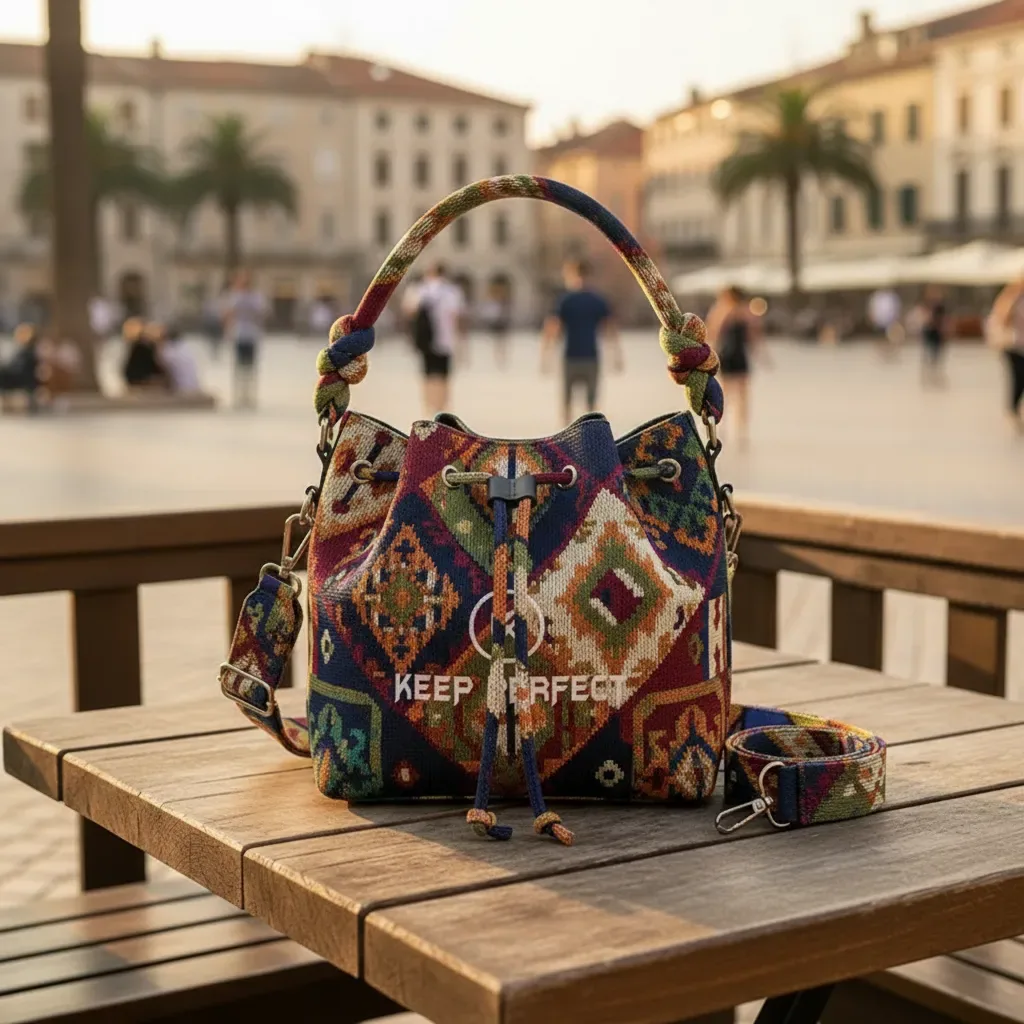
What Makes a Run a Repeat Rather Than a New Development
A run counts as a repeat when four things are unchanged: the knitting programme revision, the yarn count and lot family, the heat-setting parameters, and the approved trim list — change any one of those and the run is a new development wearing a reorder's calendar.
The four-item test is stricter than most buying teams expect. A buyer who reorders in a different shade usually considers it the same bag; on the bed it is a different set-up, because a shade change means a different yarn lot and, on a dope-dyed colour, a different booking. A buyer who reorders at a 12 cm longer body considers it a small tweak; in programming terms it is a new file, a new first piece and a new fit assessment. Neither is wrong, but both should be quoted and scheduled as developments rather than reorders, because the savings below do not apply to them.
The useful habit is to give every repeat brief a revision reference against the original programme. Programme revision 3 of a tote that first ran in March is a repeat; revision 4, which alters the base transition, is a development. Deciding which one applies before the brief is sent is what keeps the 22-day window from silently becoming a 30-day one.
The Ten Cost Lines on a Repeat Run
Ten cost lines make up a knitted bag programme, and only four of them fall away on a repeat run: programming, first-run sampling, setting trials, and artwork digitising — the other six are paid again in full, which is why the saving is 8 to 14% and not 40%.
The six that are paid again are yarn, knitting time, finishing and trim, inspection, packing, and freight. They are the physical cost of the piece and they do not care whether this is run one or run ten. The four that fall away are the one-off intellectual and trial costs of getting a programme to exist: writing the knitting file, knitting and correcting the sample, finding the setting parameters that stabilise the body, and digitising artwork into stitch structure. A first run amortises those four across 100 pcs; a repeat run carries none of them, which is the whole mechanism behind the price movement.
| Cost line | First run | Repeat run | What moves it |
|---|---|---|---|
| Knitting programme authorship | Charged, 1.5 days of programming | Zero, file reloaded from archive | Any change to shape or gauge |
| Sampling and correction rounds | Charged, 7 working days | Zero, unless the brief changes | A specification change, not a structural one |
| Setting trials | Charged, three trials at 150 °C to 170 °C | Zero, parameters archived | A different yarn count or fibre |
| Artwork digitising into stitches | Charged, logo mapped to E12 stitch grid | Zero, artwork file reused | New artwork or a new logo placement |
| Yarn | Charged, plus lot reservation | Charged in full | Lot price, oil prices, rPET premium |
| Knitting bed time | Charged, 9-minute cycle | Charged, 8-minute cycle after line tuning | Gauge, stitch density, body size |
| Finishing and trim | Charged, plus jig set-up | Charged, jig retained | Zip gauge, hardware, lining |
| Inspection | Charged, AQL 2.5 under ISO 2859-1 | Charged at the same plan | Lot size drives sample size, not run number |
| Packing and documentation | Charged | Charged | Carton spec, barcode, labelling |
| Freight and terms | Charged, FOB Xiamen | Charged, FOB Xiamen | CIF or DDP conversion, container fill |
Where the 8 to 14% Actually Comes From
On a standard E12 tote at 100 pcs per colourway referencing USD 4.80, the repeat price typically lands between USD 4.13 and USD 4.42 — a saving of 8 to 14% driven almost entirely by the removal of programming, sampling, setting trials and artwork digitising from the unit cost.
The band width depends on how much of the first run's cost was one-off work. A simple body in a stock yarn has little programming and few trials, so the repeat saving sits near 8%. A shaped body with an integral handle, a reinforced base band and a jacquard logo has a great deal of authorship in it, so the repeat saving sits nearer 14%. Buyers are often disappointed by the low end of the band and should be told which end applies before they reorder, because the answer is a function of how complex the first programme was.
- Reference first-run unit cost
- USD 4.80, E12 tote, 100 pcs per colourway
- Typical repeat unit cost
- USD 4.13 to USD 4.42
- Programming removed
- 1.5 days of authorship, no re-charge
- Sampling removed
- 7 working days, no re-charge if the brief is unchanged
- Setting trials removed
- Three trials, parameters archived to the programme record
- Bed cycle improvement
- 9 minutes on run one, 8 minutes by run three
- Yarn lot reservation
- 15% over-booking held against future repeats
Yarn Lot Continuity and the Delta E 1.0 Rule
A repeat run stays visually identical to the approved reference when the new yarn lot sits inside a Delta E of 1.0 measured under D65 against the archived reference swatch — beyond that, side-by-side pieces read as different colours even though both are technically in specification.
Shade continuity is the most common failure on repeat runs and the least anticipated, because the buyer has approved a colour once and reasonably expects it again. Yarn is a natural-and-synthetic product with lot-to-lot variation; two lots of the same nominal shade in recycled polyester will rarely be identical, and the variation is largest on dope-dyed and yarn-dyed shades where the colour is set before knitting. The defence is an archived reference swatch from the approved lot, a stated Delta E tolerance agreed at the time of approval, and a pre-production shade check on the new lot before it goes to the bed. Many programmes reserve 15% more yarn than the first run needs precisely so that a repeat can draw from the same lot family.
Programme Storage, Revision Numbers and the 45-Minute Re-Setup
A repeat run reloads the archived knitting programme and re-sets the bed in about 45 minutes, against 1.5 days of programming on a first run — but only if the programme was archived with its revision number, gauge, yarn reference and setting parameters attached.
Archiving is where repeat economics are won or lost. A programme file without a revision history is a liability: nobody can say whether the file on the server is the one that ran, or the one that was corrected after the fit assessment, or the one that was corrected again after the trim change. The archive record that makes a reorder economical is five fields: programme revision number, gauge and bed, yarn count and lot reference, setting temperature and dwell, and the date and reason for each revision. With those five fields, re-setup is a 45-minute operation of loading, threading and checking the first piece. Without them it is a fresh investigation, and the reorder inherits the cost it was supposed to avoid.
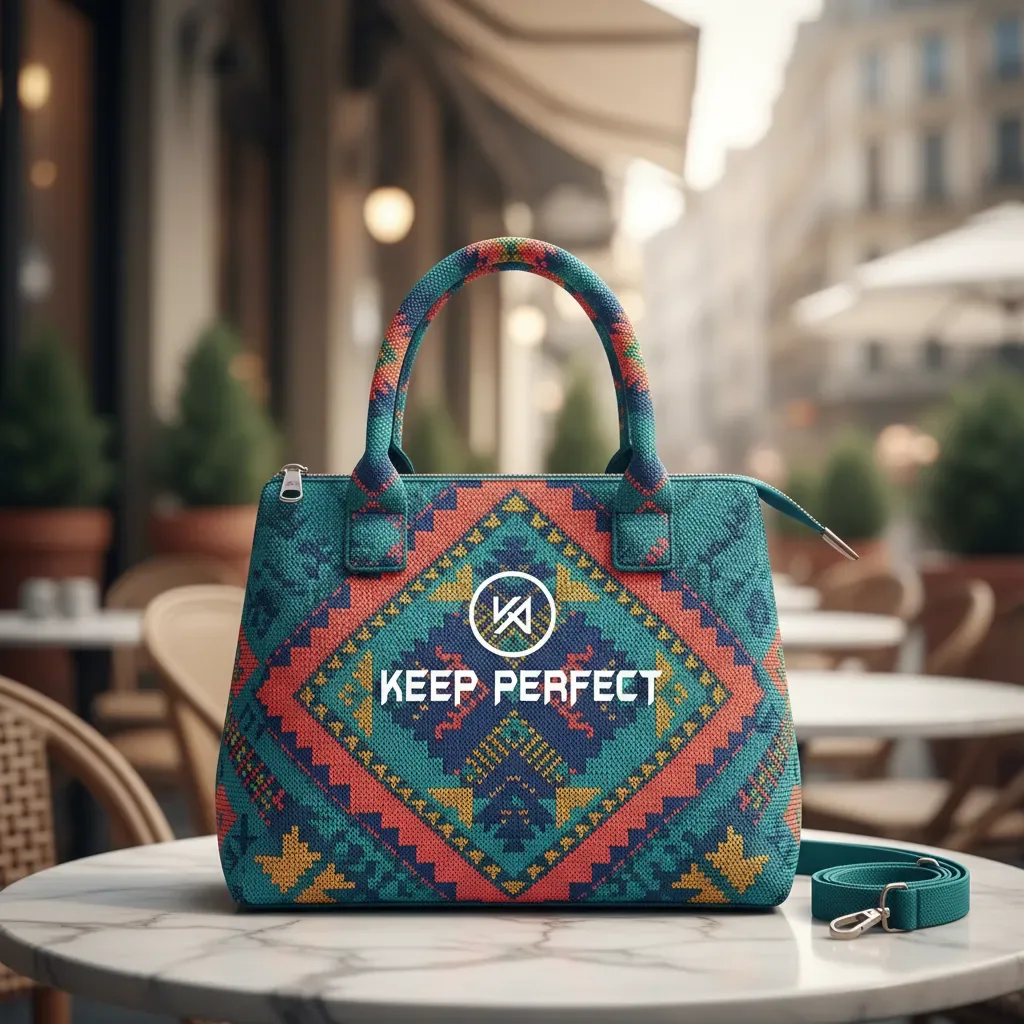
The 22-Day Repeat Window, Day by Day
A repeat run completes in 22 days rather than 30, because programming and sampling — eight days of the first-run critical path — are removed while yarn, knitting, finishing and inspection keep their original durations.
The shape of the window matters as much as its length. Yarn is the longest pole: if the repeat draws from a reserved lot, booking collapses to two days; if it needs a fresh lot in a custom shade, the window is 30 days again no matter what the rest of the plan says. Knitting runs across days 5 to 14 at roughly 8 minutes per piece, finishing and trim across days 13 to 19, and inspection, packing and the pre-shipment release across days 18 to 22. Release is against AQL 2.5 under an ISO 2859-1 sampling plan, and the sample size drawn depends on lot size, not on whether this is run one or run ten.
- Days 1 to 2: yarn drawn from the reserved lot, or booked fresh at 10 days or more if a custom shade is required.
- Day 3: bed re-setup, programme loaded, first piece knitted and measured against the archived record.
- Days 5 to 14: production knitting at about 8 minutes per piece across the run.
- Days 13 to 19: heat setting, trim, lining, hardware and label placement using the retained jigs.
- Days 18 to 22: AQL 2.5 inspection, packing, documentation and the pre-shipment release.
- Day 22: handover at FOB Xiamen, with CIF and DDP available on request.
Minimum Reorder Quantity and Colourway Rules
MOQ stays at 100 pcs per style and per colourway on a repeat run, because each colourway is still a separate yarn set-up on the bed — the reorder saving is a unit-cost effect, not a quantity threshold that disappears on run two.
Two rules follow from that. First, splitting a 200-piece reorder across two colourways costs more than 200 pieces in one, because the set-up is paid twice; where a programme runs several shades, consolidating them into a single repeat and alternating on the next one lowers unit cost more than any negotiation will. Second, a reorder below 100 pcs in a colourway is priced as a 100-pcs run, which surprises buyers who expect a small top-up to be priced at its volume. Where a genuine top-up of 40 or 50 pieces is needed, the sensible route is to run it alongside the next planned repeat rather than as a standalone order.
When a Reorder Stops Being a Reorder
A reorder becomes a development the moment one of four things changes: the body geometry, the gauge, the yarn count or fibre, or the trim specification — and each of those re-opens the four cost lines that a repeat was supposed to have retired.
Geometry change
A longer body, a different handle drop or a reshaped base. Re-opens programming and the fit assessment, and usually one correction round.
Gauge change
Moving from E12 to E7 or E14. The programme does not transfer; the file is rewritten and GSM and hand both shift.
Yarn change
A different count, fibre or recycled content. Re-opens setting trials and the shade check, and may require a new lot booking.
Trim change
A different zip gauge, hardware finish or lining. Lowest-impact of the four, but it re-opens sampling and needs a new jig in some cases.
Colourway change only
Same programme, same yarn count, new shade. Stays a repeat on a stock shade; becomes a development on a dope-dyed custom shade.
True repeat
Same programme revision, same yarn count and lot family, same trim list, same setting parameters.
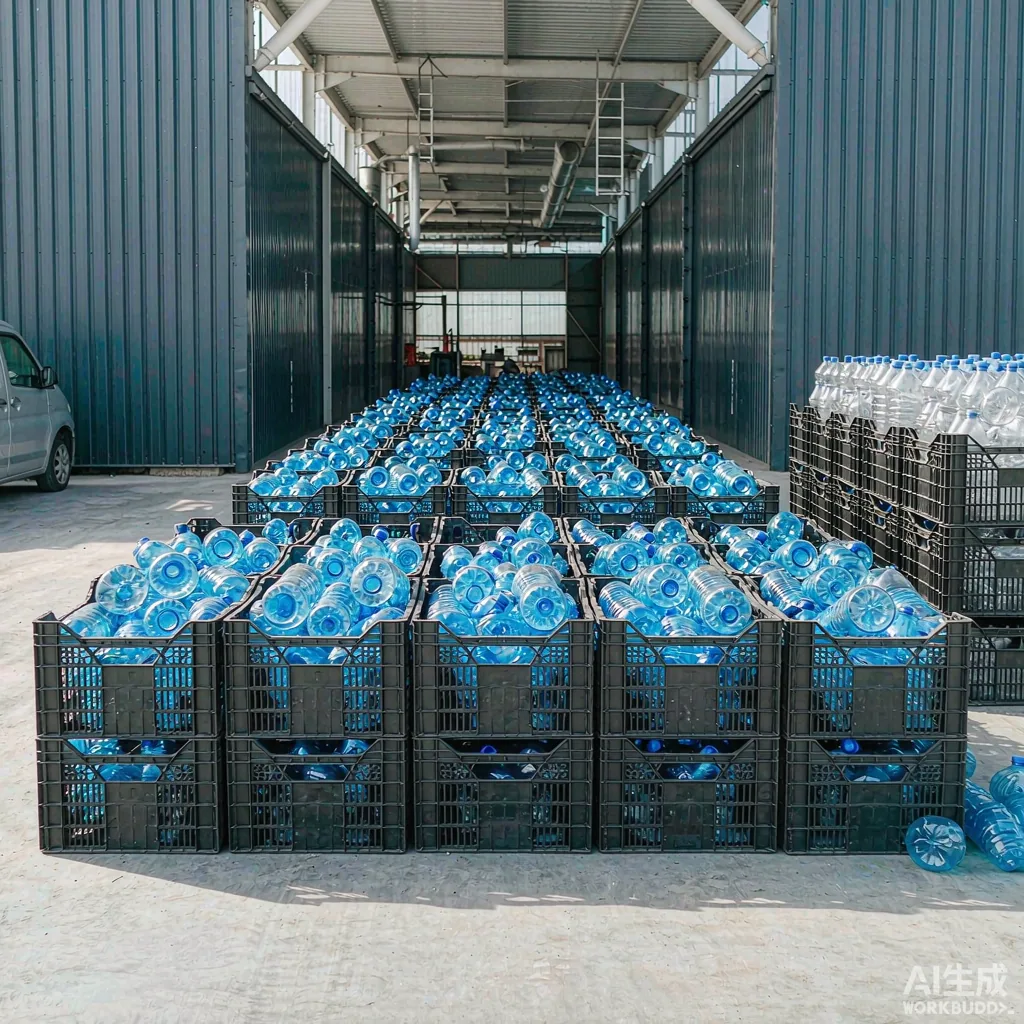
Reorder Windows and Capacity Reservation
A repeat run is fast only if a bed is available when the brief lands, which is why a reorder date is better reserved than requested — capacity behind the programme is 7 production lines at about 200,000 pcs per month, and that capacity is booked, not held open.
What a reorder brief should carry
- Programme revision number of the piece to be repeated, not just the style name
- Quantity per colourway, remembering that each colourway is a separate set-up at 100 pcs minimum
- Shade reference and the agreed Delta E tolerance against the archived swatch
- Whether the yarn should be drawn from the reserved lot or booked fresh
- Confirmation that the trim list is unchanged, including zip gauge and hardware finish
- Required delivery week, so the bed can be reserved before the brief is confirmed
- Any compliance documentation needed again, such as a GRS transaction certificate for the new lot
Programmes that reorder well tend to share one practice: they plan the second run at the same time as the first. Reserving yarn at 15% over-booking, archiving the programme with its five record fields, and pencilling a bed slot for the expected repeat date turn a reorder from a negotiation into a release. For the specification discipline that keeps a repeat from drifting into a development, see knitted bag specification change control.
Price your next knit bag reorder
Send the programme reference or the original style name, the quantity per colourway and the target delivery week. Our knit team will confirm which cost lines fall away, quote against MOQ 100 pcs per style and colourway, and reserve a bed slot for the 22-day window. Start on the contact page.
Frequently Asked Questions
How far does the unit cost fall on a knitted bag reorder?
Typically 8 to 14% on unit cost. Against a reference of USD 4.80 for an E12 tote at 100 pcs per colourway, the repeat lands between USD 4.13 and USD 4.42. The width of the band depends on how much one-off authorship the first programme carried.
Why does a reorder not fall 40% if sampling carries no charge?
Because only four of ten cost lines fall away. Yarn, knitting time, finishing and trim, inspection, packing and freight are physical costs paid again in full. Programming, sampling, setting trials and artwork digitising are the four one-off lines that a repeat does not pay. The physical half of the cost — yarn, bed time, trim, inspection, packing and freight — repeats in full on every run.
How long does a knitted bag reorder take?
Twenty-two days against 30 for a first run. Programming and sampling, eight days of the first-run critical path, are removed. Yarn booking takes two days if a reserved lot is used, and ten days or more if a fresh lot in a custom shade is needed.
Does the MOQ change on a repeat run?
No. MOQ remains 100 pcs per style and per colourway, because each colourway is still a separate yarn set-up on the bed. The reorder saving is a unit-cost effect from retired one-off work, not a change to the minimum quantity threshold. Splitting a repeat across colourways still pays a set-up for each, so consolidation saves more than any negotiated adjustment.
What makes a run a repeat rather than a new development?
Four things unchanged: the knitting programme revision, the yarn count and lot family, the heat-setting parameters, and the approved trim list. Changing any one of them re-opens the four cost lines the repeat was supposed to have retired. Give every repeat brief a revision reference against the original programme, and decide which it is before the brief is sent.
How is shade continuity controlled across yarn lots?
By comparing the new lot against an archived reference swatch, under D65, to an agreed Delta E tolerance of 1.0. Beyond that value two pieces read as different colours side by side even when both are technically inside specification. Reserving 15% more yarn than the first run needs is the practical way to keep a repeat inside the same lot family.
Why do two lots of the same nominal shade differ?
Yarn is a natural-and-synthetic product with lot-to-lot variation, and the variation is largest on dope-dyed and yarn-dyed shades where colour is fixed before knitting. Two lots of the same nominal shade in recycled polyester are rarely identical. The defence is an archived swatch, a stated tolerance agreed at approval, and a pre-production check on each new lot.
How long does bed re-setup take on a repeat run?
About 45 minutes to load the archived programme, thread the bed, knit the first piece and measure it, against 1.5 days of programming on a first run. That assumes the programme was archived with its revision number, gauge, yarn reference and setting parameters. Loading, threading and checking the first piece is all that remains once the archive record is complete.
What should be archived to keep a reorder economical?
Five fields: programme revision number, gauge and bed, yarn count and lot reference, setting temperature and dwell, and the date and reason for each revision. Without them, re-setup becomes an investigation and the reorder inherits the cost it was meant to avoid. Programmes that archive properly convert a reorder from a negotiation into a release.
Can I reorder in a new colourway at the repeat price?
On a stock shade, usually yes, because only the yarn changes and the programme is reused. On a dope-dyed custom shade, no: the colour is set before knitting, a fresh lot must be booked, and the run becomes a development at 30 days. Where the new shade is a stock colour, the authorship saving still applies because the programme itself is reused.
What is the 15% yarn reservation for?
Programmes commonly book 15% more yarn than the first run needs so that a repeat can draw from the same lot family. Drawing from a reserved lot collapses yarn booking to two days and protects shade continuity at the same time. It is booked with the first run and drawn down at the second, so no fresh dye lot has to be started.
Does inspection cost less on a repeat run?
No. Release is against AQL 2.5 under an ISO 2859-1 sampling plan on every run, and the sample size drawn depends on lot size rather than on run number. A tenth run is inspected exactly as strictly as the first. A tenth run draws the same sample size as the first at the same lot size, and the release criteria do not relax.
People Also Ask
Why did my reorder price not drop?
Usually because one of the four repeat conditions changed: a different yarn count, a new shade outside the stock range, a trim change, or a small geometry tweak. Any of those re-opens programming, sampling or setting trials, and the run is quoted as a development.
How far ahead should I book a knit bag reorder?
Reserve the bed when the first run ships. Capacity is 7 production lines at about 200,000 pcs per month and is booked rather than held open, so a pencilled slot converts a 22-day window into a predictable one.
Can I top up 50 pieces between runs?
It will be priced as a 100-pcs run, since each colourway is a separate set-up at the 100 pcs minimum. Running the top-up alongside the next planned repeat is the sensible route when a small quantity is genuinely needed.
Does a repeat run need a new sample approval?
Not when the brief is unchanged. The archived reference and its five record fields stand in for a new approval. A first piece is knitted and measured against that record, which takes part of a day rather than seven.
What does Delta E 1.0 mean for a bag programme?
It is the agreed colour-difference limit between the new lot and the archived reference swatch under D65. Inside 1.0 the difference is not visible side by side; outside it, pieces read as two different colours.
Sources and further reading
Every figure on this page is either our own programme data or attributed below. Open the originals before you write them into a specification.
- ISO 2859-1 — Sampling procedures for inspection by attributes, Part 1: AQL-indexed sampling schemesISO The sampling plan behind the AQL 2.5 release that applies equally to a first run and a tenth repeat run.
- Recycled Claim Standard and Global Recycled StandardTextile Exchange Chain-of-custody rules behind the transaction certificate that has to be reissued for a new yarn lot on a repeat.
- OEKO-TEX STANDARD 100OEKO-TEX Finished-textile testing that a repeat run may need re-confirmed when the yarn lot or the trim set changes.
- ISO 139:2005 — Textiles, standard atmospheres for conditioning and testingISO The conditioning basis for measuring a repeat piece against the archived reference rather than against a photograph.
- WHOLEGARMENT knitting business overviewShima Seiki Background on the archived-programme workflow that lets a repeat reload a file instead of rewriting one.
Plan the Second Run While the First One Is Still on the Bed
The economics of a knitted bag reorder are decided during the first run, not at the moment the reorder is raised. Archiving the programme with its five record fields, reserving yarn at 15% over-booking, agreeing a Delta E tolerance and pencilling a bed slot are four actions that cost almost nothing at the time and convert the next brief from a negotiation into a release.
Where those four actions are skipped, the reorder still happens — it simply takes 30 days, carries the authorship cost again, and carries shade risk that nobody priced. For the artwork files that a repeat reuses rather than re-digitises, see knitted bag artwork file requirements. For the wider programme calendar, see custom knit bags.