Knitted Bag Specification Change Control: Four Gates Between a Request and a Revised Bag
A knitted bag spec change is not a message, it is a decision with a cost, a calendar and an effectivity point attached. In the case that opens this article, a buyer asked for a 4 cm longer handle drop in week two of a 30-day bulk run; the request itself took thirty seconds to write and eleven days to absorb. This article walks that request through the four gates it should have passed through, states what each gate costs in money and days, and gives the seven fields a change request must carry before anyone touches the knitting programme.

The Request That Arrived in Week Two
The buyer had approved a sample: an E12 tote in 600D recycled polyester at 340 g/m², a 24 cm handle drop, a #5 nylon zip and a recycled polyester lining. Nineteen days into a 30-day bulk run, merchandising asked for a 28 cm handle drop so the bag would sit on a shoulder as well as in a hand.
The change is 4 cm of knit structure, and that is exactly why it was underestimated. A handle on a seamless knit body is not an attached part; it is knitted as part of the same loop structure, so its length is written into the programme as a stitch count over a defined number of courses. Changing it means editing the file, knitting a first piece, checking that the load path into the body still works, and re-running the setting trial, because a longer handle changes how the piece hangs and therefore how it sets. None of that is visible in a 4 cm request.
What made the request expensive was not its size but its timing. At day 19 the yarn for the full run was already on cones, the trim was booked and 60% of the bodies were knitted. The choice was between re-programming and re-knitting 60% of the run, or finishing the run to the original specification and applying the change to the next one. The buyer chose the second, and the change cost nothing in money and one run in patience. Had the same request arrived at day 4, it would have cost one working day.
Three rules come out of that case and the rest of this article is an expansion of them. First, the cost of a change is a function of when it lands, not of how large it looks. Second, a change has to be classified before it is priced, because four different classes of change consume four different resources. Third, every change needs an effectivity point — a stated run number from which it applies — or it will be applied twice, once to the wrong run and once to the right one.
What Counts as a Specification Change
A specification change is any alteration to the agreed record of what the bag is: geometry, gauge, yarn, GSM, colour, stitch structure, trim, compliance target or packing — and a preference expressed after approval is a change whether or not anyone calls it one.
The definition matters because buyers distinguish between corrections and changes, and the distinction does not survive contact with a production plan. A correction is where the delivered piece did not match the agreed record: the body came out 6 mm narrow, the reinforcement band sat 8 mm low, the shade was outside the agreed Delta E of 1.0. Those are programme or process errors, they are corrected at no charge, and they do not consume a gate. A change is where the agreed record itself moves. Both produce a new piece; only one should produce a new invoice line.
In practice the two are separated by a single question: does the archived record still describe what the buyer wants? If yes, it is a correction. If no, it is a change, and it goes through the gates below. Asking that question out loud at the moment of the request resolves most disputes before they become commercial.
Four Impact Classes: A, B, C and D
Every knitted bag spec change falls into one of four impact classes — A for cosmetic, B for trim, C for material, D for geometry — and the class determines which of the four one-off cost lines the change re-opens.
Class A changes are cosmetic and sit inside the artwork: a logo position moved 10 mm, a label relocated, a print colour adjusted. They re-open artwork digitising only. Class B changes touch the trim list: a different zip gauge, a new hardware finish, a lining swap. They re-open sampling and sometimes a jig. Class C changes touch the yarn: a different count, fibre, recycled content or shade. They re-open setting trials, the shade check and the yarn booking, which is the longest pole in the programme. Class D changes touch the body itself: dimensions, handle drop, aperture, reinforcement, gauge. They re-open programming, sampling and setting together, and they are the class that the week-two request belonged to.
| Class | What it touches | Cost lines re-opened | Calendar effect if raised in bulk |
|---|---|---|---|
| A, cosmetic | Artwork position, label placement, print shade | Artwork digitising only | 1 to 2 days, often absorbable |
| B, trim | Zip gauge, hardware finish, lining material | Sampling, occasionally a new jig | 3 to 5 days, plus trim lead time |
| C, material | Yarn count, fibre, recycled content, shade | Setting trials, shade check, yarn booking | 10 days or more on a custom shade |
| D, geometry | Dimensions, handle drop, aperture, reinforcement, gauge | Programming, sampling, setting trials | 7 days as a development, or deferred to the next run |
The Four Gates Every Change Passes Through
A change request should pass through four gates in order — capture, classification, impact assessment and effectivity — and no gate may be skipped, because skipping one is how a 4 cm request becomes an eleven-day problem.
Gate one is capture: the request is written down with its seven fields and given a reference. Gate two is classification: the request is assigned a class from A to D, which tells everyone which resources are involved before anyone estimates anything. Gate three is impact assessment: cost, calendar and effectivity are stated in numbers and returned to the buyer, normally inside 24 hours. Gate four is effectivity and archive: the buyer accepts or defers, the change is applied from a stated run, and the programme record is revised with the new revision number and the reason for it.
The gate that gets skipped most often is the third, and it is skipped for a forgivable reason: buyers want a yes or no, and an impact assessment sounds like a delay. It is not. A 24-hour assessment that says a geometry change costs seven working days and re-opens programming is faster than a same-day yes that turns into a two-week conversation. Programmes with good change control do not move more slowly; they simply discover the cost of a change on day one rather than on day nineteen.
- Gate 1, capture
- Seven fields recorded, request given a reference number
- Gate 2, classification
- Assigned to class A, B, C or D
- Gate 3, impact assessment
- Cost, calendar and effectivity returned inside 24 hours
- Gate 4, effectivity and archive
- Applied from a stated run; programme revision number raised
- Dimension tolerance before a change is needed
- ±3 mm on body dimensions, ±2 mm on handle drop
- GSM tolerance before a change is needed
- ±5% of the agreed finished weight
- Shade tolerance before a change is needed
- Delta E 1.0 under D65 against the archived swatch
The Seven Fields a Change Request Must Carry
A change request is actionable when it carries seven fields: what changes, what it changes from, what it changes to, why, who asked, which run it applies from and what happens to stock already made — and a request missing the last three is a query rather than an instruction.
The middle three are the ones that get written. 'Handle drop from 24 cm to 28 cm, for shoulder carry' is a complete statement of what, from, to and why. What is missing is who, which run and what happens to the 60% already knitted. Those three are where the money is. Who asked determines whether the change is a buying decision or a merchandising preference, and whether it needs a second signature. Which run determines whether it is applied to the current bulk or the next one. What happens to existing stock determines whether 60% of a run becomes scrap, becomes a sellable variant, or becomes a separate colourway entry in the buyer's own system.
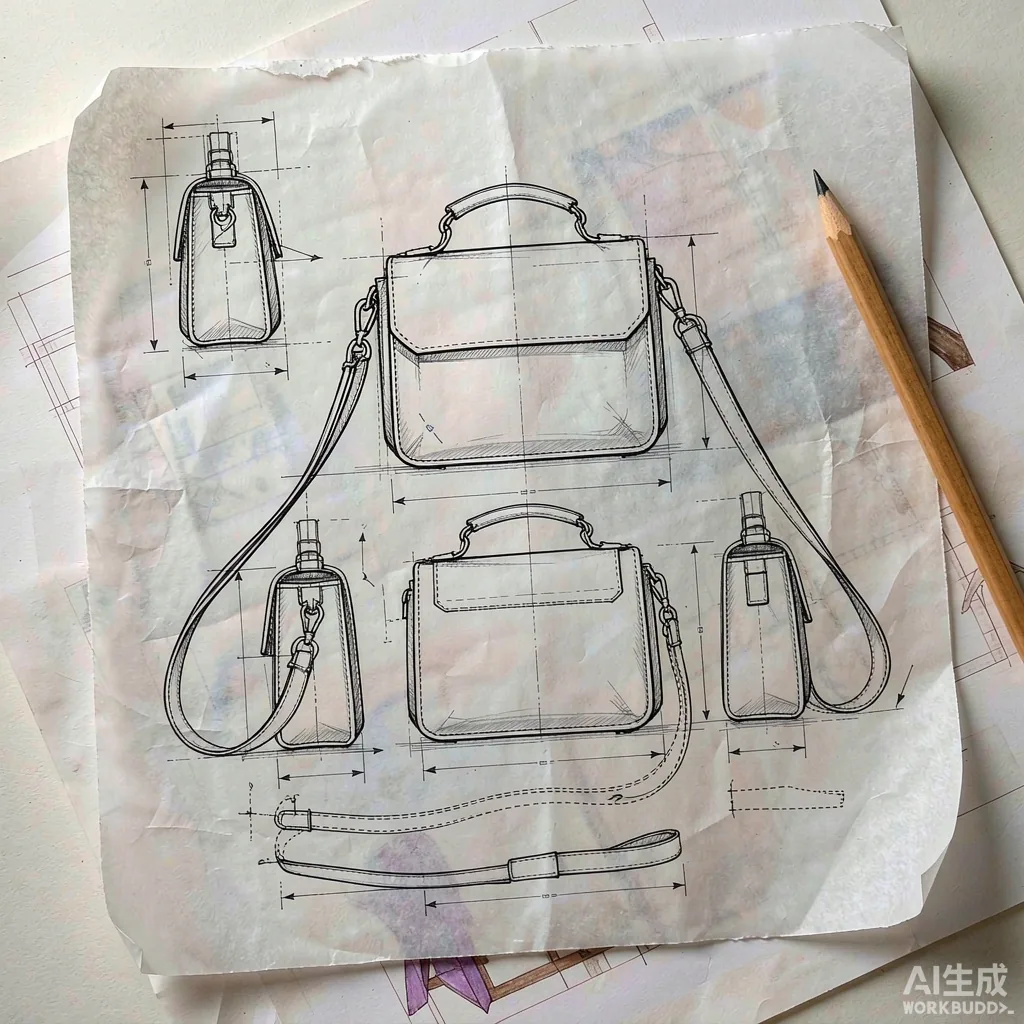
Cost and Calendar: What Each Class Actually Charges
A class A change is usually absorbed; a class B change carries the sampling cost and any trim price difference; a class C change carries the yarn delta plus a fresh booking; and a class D change is quoted as a development at 7 working days of sampling and 30 days of bulk.
The asymmetry surprises buyers who assume a small change carries a small charge. A class C change on a stock shade may cost less than a class B change requiring a new jig, because the yarn delta is only the price difference between two counts while a jig is a fixed cost. A class D change is expensive not because 4 cm of knit structure costs much but because re-opening programming re-opens the fit assessment, and the fit assessment needs the buyer in the room for a day. MOQ stays at 100 pcs per style and per colourway throughout, and a change that creates a new colourway creates a new 100-pcs minimum rather than splitting the existing one.
- Class A: absorbed within the programme, or a small digitising charge if the artwork must be remapped to the stitch grid.
- Class B: sampling plus the trim price difference, and a jig charge where the new trim needs one.
- Class C: the yarn price delta, a fresh lot booking at 10 days or more on a custom shade, and a new setting trial.
- Class D: quoted as a development — 7 working days of sampling, 30 days of bulk, and a new programme revision number.
- Any class raised after day 20 of bulk: priced against what is already knitted, which is usually the dominant cost.
Effectivity: Naming the Run the Change Starts On
Every change needs an effectivity point — a stated run number or delivery batch from which it applies — because without one the same change is applied twice, to the wrong run first and to the right one second.
Effectivity is the least glamorous field in change control and the one that prevents the most damage. A bulk run does not change identity when a change is agreed; the bed keeps knitting whatever programme is loaded. If the new programme is loaded before the agreed effectivity point, the current run silently becomes the changed bag, and the buyer receives 100 pcs of a specification nobody approved for that delivery. If it is loaded late, the next run ships to the old specification and the change appears not to have happened. Naming the run — 'from run 3', 'from the November delivery', 'after the current 600 pcs' — costs nothing and removes an entire category of dispute.
Re-Approval and the Updated Reference
A changed specification needs a new approved reference, because the old one is now wrong in a documented way and bulk will be inspected against whatever reference is on file.
The failure mode here is quiet and expensive. The buyer approves the change in an email, the programme is revised, the run ships, and the pre-shipment inspection is carried out against the original archived piece, which no longer describes the bag. Everything fails, or everything passes for the wrong reason. The discipline is simple: a change raises the revision number, and the revision number is attached to a physical reference piece that is stored, photographed and measured. Bulk is then released against the current revision under AQL 2.5 and an ISO 2859-1 sampling plan, with the five record fields — programme revision, gauge, yarn lot, setting parameters and trim list — updated at the same time.
Raise the revision, keep the old one
Never overwrite. Revision 2 supersedes revision 1 but revision 1 stays retrievable, because a reorder may legitimately ask for it.
Store a physical reference
A photographed and measured piece per revision. Inspection against a photograph is inspection against an opinion.
State the class in the record
A, B, C or D, so the next change assessment can see what has already moved and what tolerance remains available.
Tell the compliance file
A yarn or trim change can move REACH, Prop 65, CPSIA or GRS documentation. Re-test before the revised piece ships.
Re-check the shade
A new yarn lot arrives with its own Delta E against the archived swatch. Check it before the bed is threaded.
Defer rather than re-knit
When a class D change lands late in bulk, finishing the run and applying the change to the next one usually costs less.

Freezing a Specification Before It Starts Costing Money
A specification should be frozen at the point where yarn is booked, which is day 10 of a 30-day bulk run — after that, class C and class D changes stop being edits and start being re-runs.
The change-control pack worth keeping
- One agreed specification record per style, with revision number and date
- A class A to D classification for every request raised
- A 24-hour impact-assessment turnaround commitment, stated in writing
- An effectivity point on every accepted change, named by run or delivery
- A physical, measured reference piece per revision
- Tolerances written before approval: ±3 mm dimensions, ±5% GSM, Delta E 1.0 shade
- A named decision owner on the buyer side, so a request is never anonymous
Programmes that adopt this pack do not stop changing their minds; they stop paying twice for it. The knitting programme behind a seamless body is fast to edit and slow to validate, and the difference between those two facts is the whole of change control. For the repeat-run economics that a poorly controlled change can destroy, see knitted bag reorder and repeat runs.
Set up change control on your knit programme
Send the style, the current specification and the change you are considering. Our knit team will classify it from A to D, return the cost and calendar impact within 24 hours, and name the effectivity point. Start on the contact page.
Frequently Asked Questions
What is a knitted bag specification change?
Any alteration to the agreed record of what the bag is: geometry, gauge, yarn, GSM, colour, stitch structure, trim, compliance target or packing. A preference expressed after sample approval is a change, whether or not anyone uses the word. It is classified from A to D, costed, and given an effectivity point before anyone touches the programme.
What is the difference between a correction and a change?
A correction is where the delivered piece did not match the agreed record, such as a body 6 mm narrow or a shade outside Delta E 1.0. A change is where the agreed record itself moves. Corrections are rectified at no charge; changes go through the four gates.
What are the four impact classes?
Class A covers cosmetic and artwork items, class B the trim list, class C the yarn or other material, and class D the body geometry. Each class re-opens a different set of the four one-off cost lines retired at first approval. Class D is the expensive one, because it re-opens programming, the fit assessment and the setting trial together.
How long does a change impact assessment take?
Twenty-four hours. The assessment states the cost, the calendar effect and the effectivity point in numbers, so the buyer can accept or defer on evidence. A same-day yes that skips the assessment is slower in the end. Assessment is not a delay: it converts a request into a number that can be accepted or deferred on evidence.
What seven fields should a change request carry?
What changes, what it changes from, what it changes to, why, who asked, which run it applies from, and what happens to stock already knitted. A request missing the last three is a query rather than an instruction. Naming the requester, the effectivity run and the treatment of existing stock is where the commercial questions are answered.
Why is a 4 cm handle change so expensive?
Because on a seamless knit body the handle is part of the same loop structure and its length is written into the programme as a stitch count. Changing it re-opens programming, the fit assessment and the setting trial together. In the case above, raising it at day 19 meant choosing between re-knitting 60% of the run and deferring it.
When should a specification be frozen?
At the point yarn is booked, day 10 of a 30-day bulk run. Before that, class C and class D changes are edits. After it, they become re-runs, because yarn and knitted stock already exist against the superseded revision. Freeze gauge, yarn and compliance early, and leave GSM and handle drop open until the first knit settles them.
What is an effectivity point?
The stated run number or delivery batch from which a change applies, such as from run 3 or from the November delivery. Without one the new programme is loaded at the wrong moment and the current run silently becomes the changed bag. It costs nothing to state and removes an entire category of dispute about which specification actually shipped.
Does a change need a new approved reference?
Yes. A change raises the revision number, and the revision number is attached to a physical reference piece that is stored, photographed and measured. Bulk is then released against the current revision under AQL 2.5. The five record fields are updated at the same time, so inspection follows the current revision and not the old one.
What happens to the superseded revision?
It is kept retrievable rather than overwritten. A later reorder may legitimately ask for revision 1, and a programme archive that has been overwritten cannot satisfy that request without re-authoring the file. Keeping both lets a later reorder ask for either, and costs nothing beyond a shelf and a label.
What tolerances apply before a change is necessary?
Plus or minus 3 mm on body dimensions, plus or minus 2 mm on handle drop, plus or minus 5% on finished GSM, and a Delta E of 1.0 on shade under D65. Inside those bands the piece matches the record and no change is raised.
Does a change move the compliance file?
A yarn or trim change can. REACH, Prop 65, CPSIA and GRS documentation attach to specific materials, so a class B or class C change should be re-checked against the compliance target before the revised piece ships. Where a change touches yarn or trim, re-test before the revised piece ships rather than after it lands.
People Also Ask
Can I change a knitted bag order after bulk starts?
Yes, but the cost depends on the day. Before yarn is booked at day 10, a class D change costs about seven working days. After day 20 it usually costs less to finish the run and apply the change to the next one.
Who should own the change decision on the buyer side?
One named person. Anonymous requests arriving from merchandising, design and sourcing separately are the main reason a revision gets applied to the wrong run or approved twice at different values.
Is a shade change a big change?
It is a class C change, which re-opens setting trials, the shade check and the yarn booking. On a stock shade it can be small, at ten days or less; on a dope-dyed custom shade the booking alone can exceed ten days.
What if a change creates a new colourway?
It creates a new 100-pcs minimum rather than splitting the existing one, because each colourway is a separate yarn set-up on the bed. Consolidating shades into one run costs less than running several small colourways.
How do I stop change requests derailing a programme?
Freeze the specification at yarn booking, classify every request from A to D, and require an effectivity point. Those three habits remove most of the cost without slowing the programme down.
Sources and further reading
Every figure on this page is either our own programme data or attributed below. Open the originals before you write them into a specification.
- ISO 2859-1 — Sampling procedures for inspection by attributes, Part 1: AQL-indexed sampling schemesISO The plan under which a revised piece must be released; inspection follows the current revision, not the superseded one.
- ISO 139:2005 — Textiles, standard atmospheres for conditioning and testingISO The conditioning basis for the ±3 mm and ±5% GSM tolerances that decide whether a change is needed at all.
- Substances restricted under REACHECHA The restricted-substance list a class B or class C change has to be re-checked against before a revised piece ships.
- OEKO-TEX STANDARD 100OEKO-TEX Finished-textile testing that may need re-confirmation when a change touches the yarn or the trim set.
- WHOLEGARMENT knitting business overviewShima Seiki Why an integral handle is written into the programme rather than attached, which is what makes a geometry change a class D event.
Change Control Is a Calendar Discipline, Not a Paperwork One
Nothing in the four gates is difficult. Capture, classify, assess, name the effectivity point. What makes change control worth having is that it converts a request from a conversation into a number, and a number can be accepted or deferred on evidence rather than on optimism.
The buyer in the opening case did not need a stricter process; they needed the cost of a 4 cm request on day four instead of day nineteen. For the files that a class A change re-digitises, see knitted bag artwork file requirements. For the programme calendar a change moves, see custom knit bags.