Knitted Bag Gift With Purchase: Nine Decisions in the Order a Campaign Has to Make Them
A knitted bag gift with purchase is specified through nine decisions in a fixed order, and the one that decides the spend is size. A 2.5 litre pouch uses 31 g of yarn and knits in 6.4 minutes, which is the tier most campaigns land on, while a 9 litre day bag costs nearly double the machine time. Minimum 100 pcs per style and colourway, sampling 7 working days, bulk 30 days, FOB Xiamen.
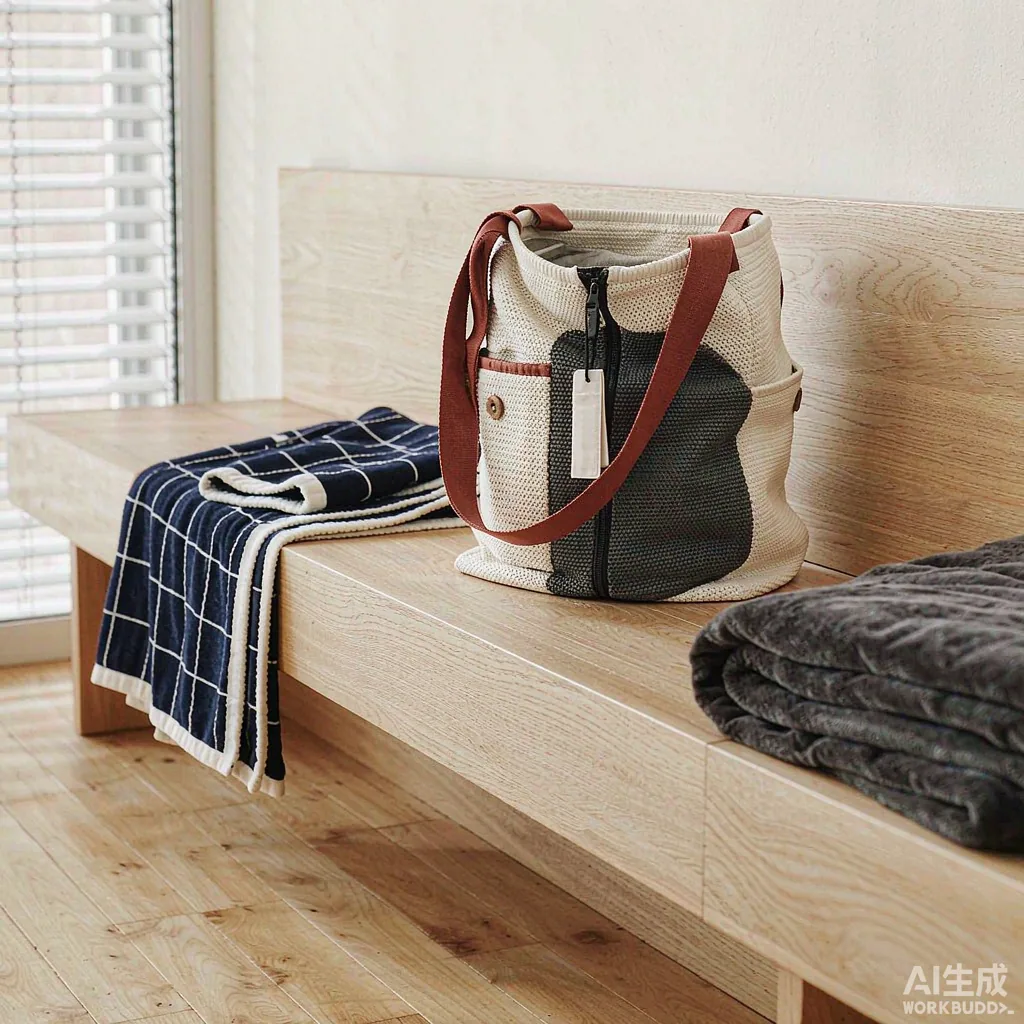
The Nine Decisions in Order
Work through nine decisions in this sequence: role, size, branding, colourway, packing, compliance, quantity, timing and redemption. Gift programmes fail when these are taken out of order, most commonly when the size is chosen from a mood board before the role is settled.
- Role first: is the gift the reason to buy, or the wrapper around a purchase already decided?
- Size second, from the role: 2.5 L for a wrapper, 5 L for a gift that has to be used, 9 L for a hero gift.
- Branding third: jacquard mark, woven label or printed band, each with its own minimum size.
- Colourway fourth: one brand colour for recognition, two where the campaign needs a seasonal split.
- Packing fifth: banded flat, banded with a hangtag, or boxed, which changes the carton count.
- Compliance sixth: REACH, California Prop 65 and CPSIA where the gift may reach a child.
- Quantity seventh: 100 pcs per style and colourway is the floor, and gifts are usually ordered per campaign.
- Timing eighth: 7 working days sampling plus 30 days bulk, booked against the campaign date.
- Redemption ninth: how the gift is handed over and whether it needs a barcode or a size label.
The order matters because decisions two through five all follow from decision one. A wrapper is a 2.5 litre pouch with a small mark and flat packing. A hero gift is a 9 litre bag with a full-width mark, its own colourway and a hangtag. The same campaign brief produces two very different products depending on that first answer.
Is the Gift the Hero or the Wrapper?
This is the decision that sets the spend, and it is usually answered by the marketing calendar rather than by the product team. A wrapper supports a purchase the customer has already decided on and only has to look considered. A hero gift is the reason the customer buys and has to survive being used for a season.
The distinction is visible in what the customer does next. A wrapper is often kept in its packaging until it is needed and then forgotten; a hero gift goes into use the same week and is seen around the city carrying the brand. Programmes that measure redemption rate rarely register the difference, because both gifts are collected at the same rate.
| Decision | Wrapper | Standard gift | Hero gift |
|---|---|---|---|
| Capacity | 2.5 L | 5 L | 9 L |
| Yarn per piece | 31 g | 36 g | 44 g |
| Cycle time | 6.4 min | 8.1 min | 11.8 min |
| Gauge | E12 | E12 | E7 |
| Brand mark | 35 mm jacquard | Woven label | 120 mm jacquard |
| Packing | Bulk in cartons | Banded with tag | Banded with hangtag |
| Per export carton | 110 pcs | 96 pcs | 84 pcs |
| Typical campaign | Tier 1 spend gift | Tier 2 spend gift | Launch or anniversary |
Which Size Works as a Gift?
Two and a half litres for a wrapper, 5 litres where the gift has to be genuinely useful, and 9 litres only where the gift is the campaign. The 2.5 litre pouch uses 31 g of yarn and knits in 6.4 minutes, which is the tier most programmes land on because it is the point where the bag reads as a gift without carrying the cost of a real bag.
The jump to 9 litres is larger than it looks: it nearly doubles cycle time from 6.4 to 11.8 minutes and moves the gauge from E12 to E7, which changes how the brand mark resolves. A hero gift at 9 litres is a genuine product rather than a token, and it should be costed as one.
How Should the Gift Be Branded?
By the smallest option that reads at the distance the gift is seen. A jacquard mark knitted into the body holds at about 35 mm at E12 and about 120 mm at E7, a woven label sewn into a seam works at 20 by 50 mm, and a printed band around the packed bag carries the largest artwork for the least cost.
- Gift tiers
- 2.5 L wrapper, 5 L standard, 9 L hero
- Yarn per piece
- 31 g at 2.5 L, 36 g at 5 L, 44 g at 9 L
- Cycle times
- 6.4 min, 8.1 min and 11.8 min respectively
- Gauge
- E12 at 2.5 and 5 L, E7 at 9 L
- Jacquard mark
- About 35 mm at E12, about 120 mm at E7, minimum 6 stitches
- Woven label
- 20 x 50 mm set into a seam
- Carton counts
- 110 pcs at 2.5 L, 96 at 5 L, 84 at 9 L, folded flat
- Minimum order
- 100 pcs per style and colourway
- Sampling
- 7 working days from an approved tech pack
- Bulk timing
- 30 days from sample approval
- Compliance
- REACH, California Prop 65, CPSIA where applicable
- Shipment
- FOB Xiamen, CIF and DDP available
Jacquard is the durable choice and the one that survives the gift being washed, but it has a minimum: below 6 stitches in any direction the mark does not resolve, which is what sets the 35 mm floor at E12. Below that size, a woven label or a printed band is the correct route rather than a jacquard mark that will not read.
One Colour or Two?
One brand colour for recognition, and two only where the campaign needs a seasonal split. A gift is seen in volume on a counter, and a single colour read 500 times is more effective than two colours read 250 times each. The second colourway also doubles the dye lot and inspection work for no gain in recognition.
Where a second colourway is needed, run it as a separate style rather than as a variation, because the minimum applies per style and colourway. Two colourways of one gift is 200 pieces at the floor, not 100 split across two shades.
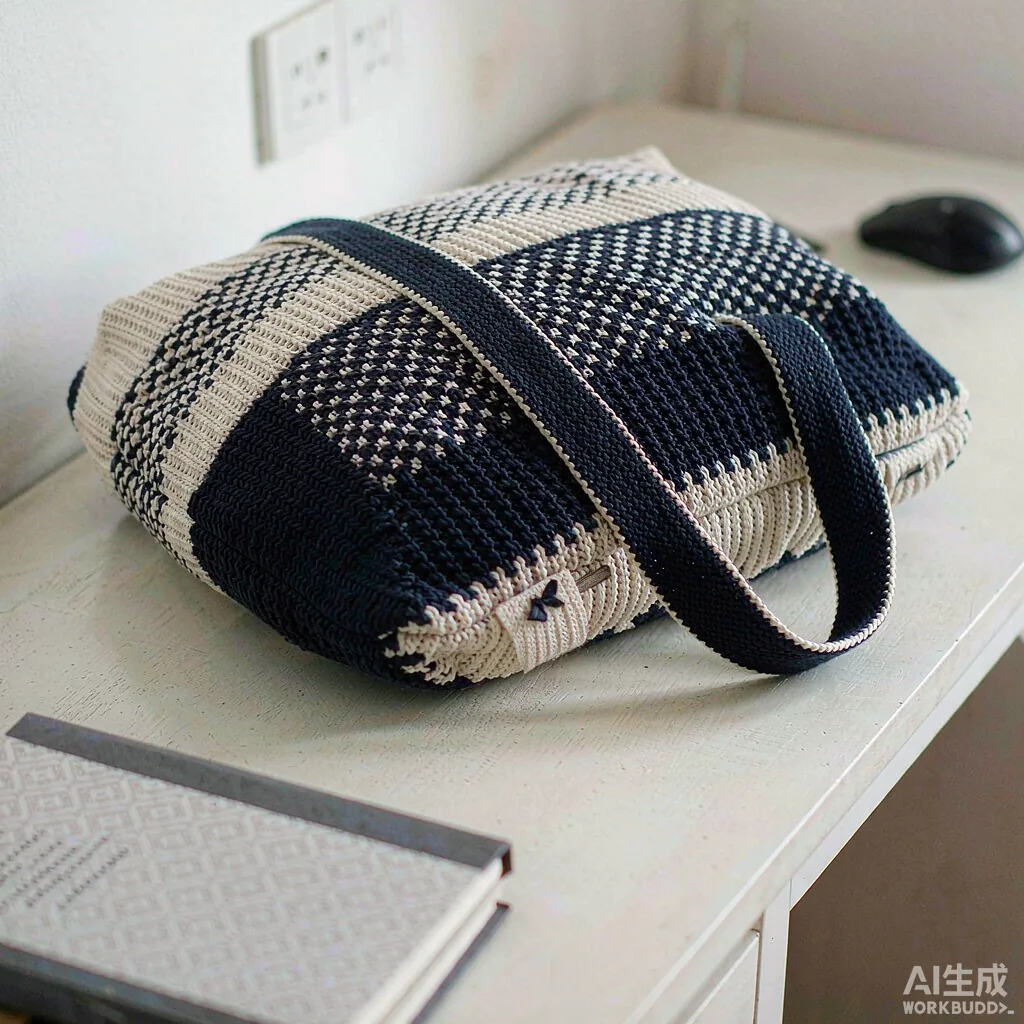
How Should a Gift Be Packed?
Banded flat, with a hangtag where the gift has to carry a story. Banding holds the folded bag, shows the size and keeps the carton count at 110 pieces for a 2.5 litre pouch. Boxing a gift adds cube that the flat fold has just saved and roughly halves the piece count per carton.
The exception is a hero gift, where the box is part of the perceived value. In that case the box should be sized to the folded bag rather than to the bag's nominal dimensions, because a box built for a 9 litre bag standing up wastes roughly 60 percent of its volume on air.
Bulk packing is the third option and it is the right one for a tier 1 wrapper handed over at a till. Gifts shipped loose in cartons and banded at the distribution point save the banding operation entirely, and at 110 pieces per carton for a 2.5 litre pouch they keep freight at the lowest figure available to the programme.
Which Compliance Rules Apply to a Gift Bag?
The same rules that apply to any bag sold in the market, which is the point gift programmes most often miss. REACH restrictions apply to substances in the yarn and any hardware, California Prop 65 requires a warning where a listed substance is present above its threshold, and CPSIA applies where the gift may reasonably reach a child.
A gift is not exempt because it is free. It enters the same market, through the same retail channel, and it is frequently the item a regulator picks up because it is the least documented product in the campaign. Compliance belongs at decision six, before the artwork is committed rather than after.
How Much Lead Time Does a Campaign Need?
Seven working days for sampling plus 30 days for bulk, and that is the floor rather than the plan. A campaign should book about 60 days before the gift has to be on counter, leaving room for the artwork approval, the compliance documentation and the freight to the distribution point.
Tier 1 spend gift
A 2.5 L pouch at 31 g and 6.4 minutes, banded flat, with a 35 mm jacquard mark in one brand colour.
Tier 2 spend gift
A 5 L mini tote at 36 g and 8.1 minutes, banded with a hangtag and a woven label in the seam.
Launch or anniversary
A 9 L hero gift at 44 g and 11.8 minutes at E7, with a 120 mm jacquard mark and its own hangtag.
Loyalty and retention
A 2.5 L pouch in a seasonal colourway, re-ordered each campaign against a retained shade reference.
Where a campaign re-orders the same gift across seasons, the retained shade reference is what keeps them matching. That is the same discipline described in the knitted bag colourway planning guide, and it matters more on a gift than on a sold product because a gift is compared side by side with last year's.
What Does a Gift Programme Cost Per Piece?
Cost follows cycle time and yarn, and on a 2.5 litre pouch those are 6.4 minutes and 31 g. A pouch of that specification sits at a landed cost around USD 4.80 per piece at the 100 pcs minimum, with the figure moving on yarn choice, branding route and packing rather than on the body itself.
The two variables that move it most are the branding route and the packing. A jacquard mark adds knitting programme time but no handling, a woven label adds about 1.2 minutes of handling, and a hangtag adds roughly 0.8 minutes. Packing, not knitting, is where a gift programme's cost usually drifts.
How to Brief a Gift With Purchase Programme
Give the role, the size, the branding route and artwork, the colourway count, the packing, the market for compliance, the quantity per colourway and the campaign date. Eight items, and the campaign date is the one that drives everything else because it sets when sampling has to start.
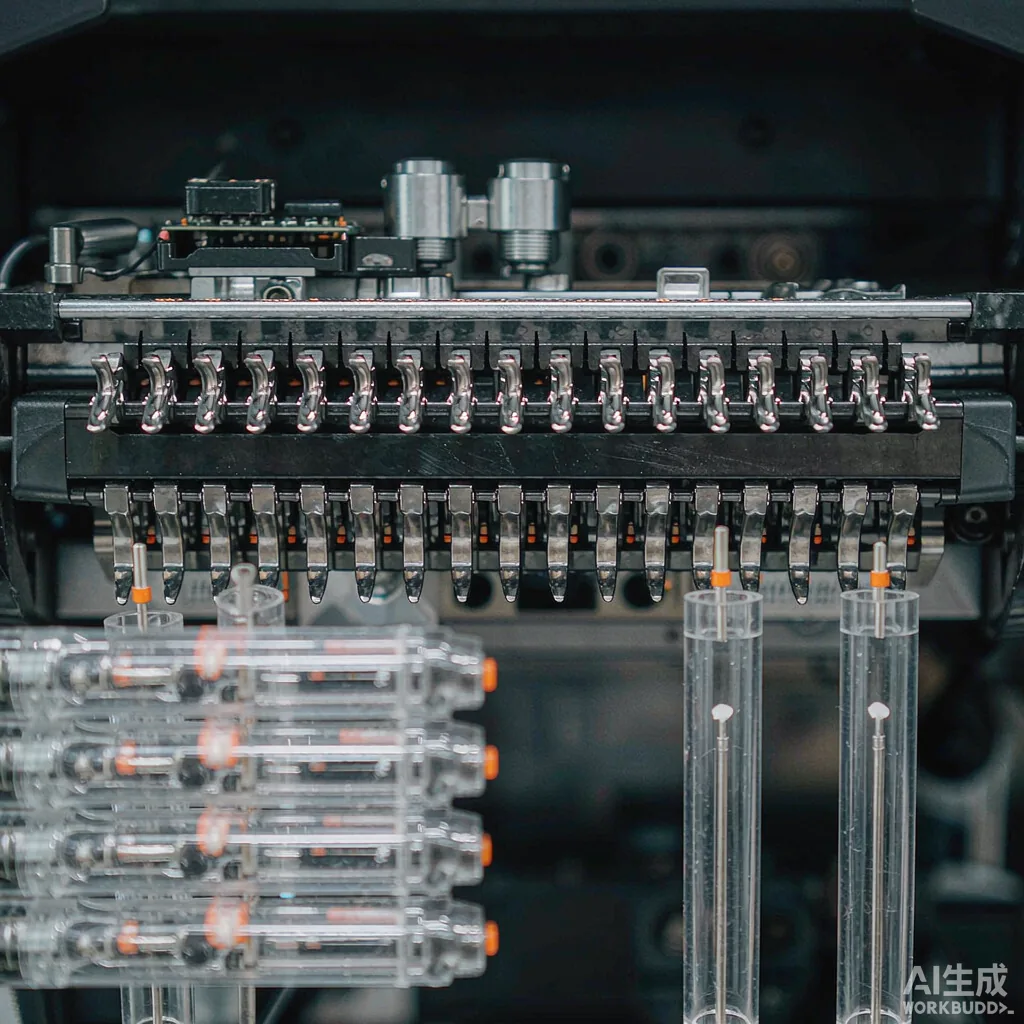
Then state what happens after the campaign. A gift that re-orders needs a retained reference and a held dye lot; a one-off gift does not, and that difference is worth stating at brief because it changes how the yarn is procured. Finished lots are inspected to AQL 2.5 under ISO 2859-1. Full gift and promotional groupings sit on the knitted bag collection pillar, alongside the knitted bag promotional campaigns guide for campaign planning.
Brief a gift programme in nine decisions
Send the role, the size and the campaign date. The team returns a tier recommendation, a branding route and an FOB Xiamen quote on 100 pcs per colourway. Start a gift programme.
Frequently Asked Questions
What size knitted bag works best as a gift with purchase?
Two and a half litres for a wrapper, using 31 g of yarn and 6.4 minutes of cycle time. Five litres where the gift has to be genuinely useful, and nine litres only where the gift is the reason to buy, at 44 g and 11.8 minutes.
How should a knitted gift bag be branded?
By the smallest option that reads at the distance the gift is seen. A jacquard mark holds at about 35 mm at E12 and 120 mm at E7, a woven label works at 20 by 50 mm, and a printed band carries the largest artwork for the least cost.
Why does a jacquard mark have a minimum size?
Because a knitted mark is made of loops rather than ink, and below 6 stitches in any direction it does not resolve. That is what sets the 35 mm floor at E12 and the 120 mm figure at E7, below which a label or a band is the right route.
Should a gift programme use one colourway or two?
One. A gift is seen in volume on a counter and a single colour read 500 times is more effective than two read 250 times each. A second colourway also doubles the dye lot and inspection work for no gain in recognition. A gift is seen in volume, so one colour read 500 times beats two read 250 each.
Does the minimum order apply per colourway on a gift?
Yes. Two colourways of one gift is 200 pieces at the floor, not 100 split across two shades. That is the arithmetic most campaign plans miss when they are built on a single total quantity. Two colourways of one gift is 200 pieces at the floor, not 100 split across shades.
How should a knitted gift bag be packed?
Banded flat, with a hangtag where the gift carries a story. Banding holds the fold and keeps the carton at 110 pieces for a 2.5 litre pouch, while boxing roughly halves the piece count per carton. Banding holds the fold and keeps the carton at 110 pieces for a 2.5 litre pouch.
Is a boxed gift ever the right choice?
Yes, on a hero gift where the box is part of the perceived value. Size the box to the folded bag rather than to the bag standing up, because a box built for a standing 9 litre bag wastes about 60 percent of its volume on air.
Do REACH and Prop 65 apply to a free gift?
Yes. A gift enters the same market through the same retail channel, and it is frequently the least documented product in a campaign. REACH restrictions apply to yarn and hardware, and Prop 65 applies where a listed substance exceeds its threshold. A gift is frequently the least documented product in an entire campaign.
How much lead time does a gift campaign need?
About 60 days before the gift has to be on counter. The floor is 7 working days for sampling plus 30 days for bulk, and the balance covers artwork approval, compliance documentation and freight to the distribution point. The balance covers artwork approval, compliance documentation and freight to distribution.
What does a knitted gift bag cost per piece?
A 2.5 litre pouch at 31 g and 6.4 minutes sits near USD 4.80 landed at the 100 pcs minimum. The figure moves on yarn choice, branding route and packing rather than on the body itself. The figure moves on yarn choice, branding route and packing rather than the body.
What moves the cost of a gift programme most?
Branding route and packing, not knitting. A jacquard mark adds programme time but no handling, a woven label adds about 1.2 minutes of handling and a hangtag about 0.8. Packing is where gift costs usually drift. A woven label adds about 1.2 minutes of handling and a hangtag about 0.8.
Should a gift be re-orderable across campaigns?
Only if the brief says so. A re-ordering gift needs a retained shade reference and a held dye lot, which changes how yarn is procured. Stating it at brief costs nothing and discovering it later costs a second dip round. A re-ordering gift needs a retained reference, which changes how yarn is procured.
Does a gift bag need a barcode or size label?
Where the gift is redeemed through a till, yes. A barcode on the band and a size label on the bag make redemption scannable, and both should be specified before packing is committed rather than added afterwards. Both should be specified before packing is committed rather than added afterwards.
How is a gift lot inspected?
To AQL 2.5 under ISO 2859-1 as its own lot, with the brand mark checked for resolution and placement on a measured sample. On a gift, the mark is usually the defect that matters because it is the reason the piece exists. On a gift the mark is usually the defect that matters, because it is why the piece exists.
What should a gift brief contain?
Eight items: role, size, branding route and artwork, colourway count, packing, market for compliance, quantity per colourway and campaign date. The date drives everything else because it sets when sampling has to start. The campaign date drives everything else because it sets when sampling has to start.
People Also Ask
Why start with the role rather than the size?
Because size, branding, colourway and packing all follow from it. The same brief produces a 2.5 L pouch with a small mark or a 9 L bag with a full-width one, depending entirely on whether the gift is the wrapper or the reason to buy.
Is a 9 litre hero gift worth double the cycle time?
Only on a launch or anniversary campaign where the gift is the reason to buy. At 11.8 minutes and E7 it is a genuine product, and it should be costed as one rather than as a gift.
Why does gauge change on the larger gift sizes?
Because 9 litres needs body and stiffness to hold a shape, which E7 provides and E12 does not. The consequence is that the brand mark resolves differently and the artwork has to be redrawn rather than scaled.
Should the gift be washed before approval?
Yes, for the same reason any knit bag is: a mark that has never been washed has not been tested, and a gift that distorts on first washing reflects on the brand more than on the product.
What is the most common gift programme mistake?
Planning a total quantity rather than a per-colourway quantity. The minimum applies per style and colourway, so a two-colourway gift is twice the floor most plans assume. The minimum applies per style and colourway, so a two-colourway gift is twice the floor.
Sources and further reading
Every figure on this page is either our own programme data or attributed below. Open the originals before you write them into a specification.
- Substances restricted under REACHECHA The restriction list that applies to a free gift exactly as it applies to a sold bag.
- Proposition 65California OEHHA Warning requirements where a listed substance in a gift bag exceeds its threshold.
- ISO 2859-1 Sampling procedures for inspection by attributesISO The AQL 2.5 inspection applied to gift lots, including brand mark resolution and placement.
- OEKO-TEX STANDARD 100OEKO-TEX Limit-value testing applied to the yarn used for gift bags that may reach children.