Knitted Bag Pocket Layouts: A Decision Order for Placing Six Pocket Types on a Knit Body
A knitted bag pocket layout is decided in a fixed order: contents first, then face, then count, then closure, then attachment. Six placements cover the range, from a 140 mm exterior slip to a gusset bottle pocket, and the count that matters is four, because a fifth pocket starts distorting the body it is set into. Minimum 100 pcs per style and colourway, sampling 7 working days, bulk 30 days, FOB Xiamen.
The Pocket Decision Order
Decide pockets in this sequence and stop skipping steps: what goes in, which face takes it, how many the body can carry, whether it closes, and how it attaches. Pocket layouts designed in any other order produce bags with pockets in plausible places that do not hold what the customer actually carries.
The reason the order is fixed is that each decision constrains the next. Contents set the depth, depth sets the face, the face sets how many will fit, and the count sets whether the body needs a reinforcement panel. Choosing a face first because it looks right is how a bag ends up with a phone pocket on the gusset.
What Goes In Comes First
List the four or five objects a customer carries and give each one a dimension. A phone is about 160 by 80 mm, a bottle about 90 mm in diameter and 190 mm tall, a card holder about 110 by 90 mm, and a laptop about 330 by 230 mm. Every pocket in the layout is then sized from that list rather than from a drawing.
| Object | Pocket type | Depth | Width | Placement | Added time |
|---|---|---|---|---|---|
| Phone | Exterior slip | 140 mm | 160 mm | Front or back face | 1.4 min |
| Card holder | Interior slip | 120 mm | 110 mm | Interior lining | 1.4 min |
| Keys or small items | Interior zip | 150 mm | 180 mm | Interior lining | 2.8 min |
| Water bottle | Gusset pocket | 190 mm | 90 mm diameter | Side gusset | 2.2 min |
| Documents or tablet | Flat document sleeve | 330 mm | 240 mm | Back face | 1.9 min |
| Laptop | Padded sleeve | 340 mm | 250 mm | Interior back | 4.6 min |
Depth is the dimension that decides whether a pocket works, and the rule is that the pocket depth should be about 20 mm less than the object height so the object can be grabbed. A 160 mm phone in a 140 mm pocket presents 20 mm of grip; the same phone in a 175 mm pocket disappears and the pocket stops being used.
Which Face Takes Which Pocket?
The front face takes the pocket the customer reaches for most, which is almost always a phone. The back face takes flat items, because a bulky pocket on the back face stops a bag sitting against a body. The gusset takes round items such as bottles, and the interior takes anything valuable or anything that should not show through the knit.
The second rule is about what shows through. A knit body is not opaque at E12 with a light yarn, so a dark object in an interior pocket can read as a shadow on the outside face. Where that matters, the pocket is placed on the gusset or the interior is lined, and lining is the decision the pocket layout forces rather than the reverse.
How Many Pockets Can One Body Carry?
Four is the working limit and five is where distortion starts. Each pocket removes fabric from the body and adds a seam line, and the seam lines are stiff relative to the surrounding knit. At four pockets the body still drapes; at five the panels between pockets start to pucker and the bag loses the flat surface that makes it look clean.
- Pocket count
- Four working limit, five starts visible distortion
- Slip depths
- 140 mm for a phone, 120 mm for a card holder, 150 mm for a zip pocket
- Bottle pocket
- 190 mm deep at 90 mm diameter, set on the side gusset
- Added times
- 1.4 min slip, 1.9 min document sleeve, 2.2 min gusset, 2.8 min zip, 4.6 min padded
- Pull test
- 4 kg sustained on the pocket seam, no loop breakage
- Attachment
- Knitted-in root with a 14 course transition, or sewn with a 16 mm overlap
- Reach allowance
- Pocket depth about 20 mm less than the object height
- Yarn
- 600D recycled polyester at 420 g/m² body weight
- Gauge
- E7 for exterior pockets, E12 acceptable for interior linings
- Minimum order
- 100 pcs per style and colourway
- Sampling
- 7 working days from an approved tech pack
- Shipment
- FOB Xiamen, CIF and DDP available
Where a programme genuinely needs five or six pockets, the answer is a lining rather than more pockets on the body. An interior lining panel carries four pockets without touching the outer knit at all, which keeps the exterior clean and removes the distortion limit entirely. It adds a component and about 3.2 minutes.
Slip or Zip: Which Pocket Closure?
A slip pocket for anything reached more than a few times a day, and a zip pocket for anything valuable or anything that would fall out when the bag is set down. On a knit body the zip pocket also carries a stiffness that helps the pocket keep its shape, which is why interior zip pockets are used even when security is not the point.
The cost difference is real: 1.4 minutes for a slip against 2.8 for a zip, which is double. That is the largest single pocket decision in the programme, and it should be made per pocket rather than as a blanket rule, because a bag with four zip pockets costs 11.2 minutes of pocket time and rarely gets used as intended.
How Deep Does a Pocket Have to Be?
About 20 mm shallower than the object it carries, measured from the pocket mouth to the deepest point of the seam. A phone pocket at 140 mm, a card holder pocket at 120 mm, a bottle pocket at 190 mm and a document sleeve at 330 mm. Those four figures cover almost every pocket a knit bag needs.
Width matters less than depth but is not free. A pocket narrower than the object jams it, and a pocket more than about 25 percent wider lets the object lie flat at the bottom and become hard to find. Sizing width at object width plus 10 mm is the working rule on a slip pocket.
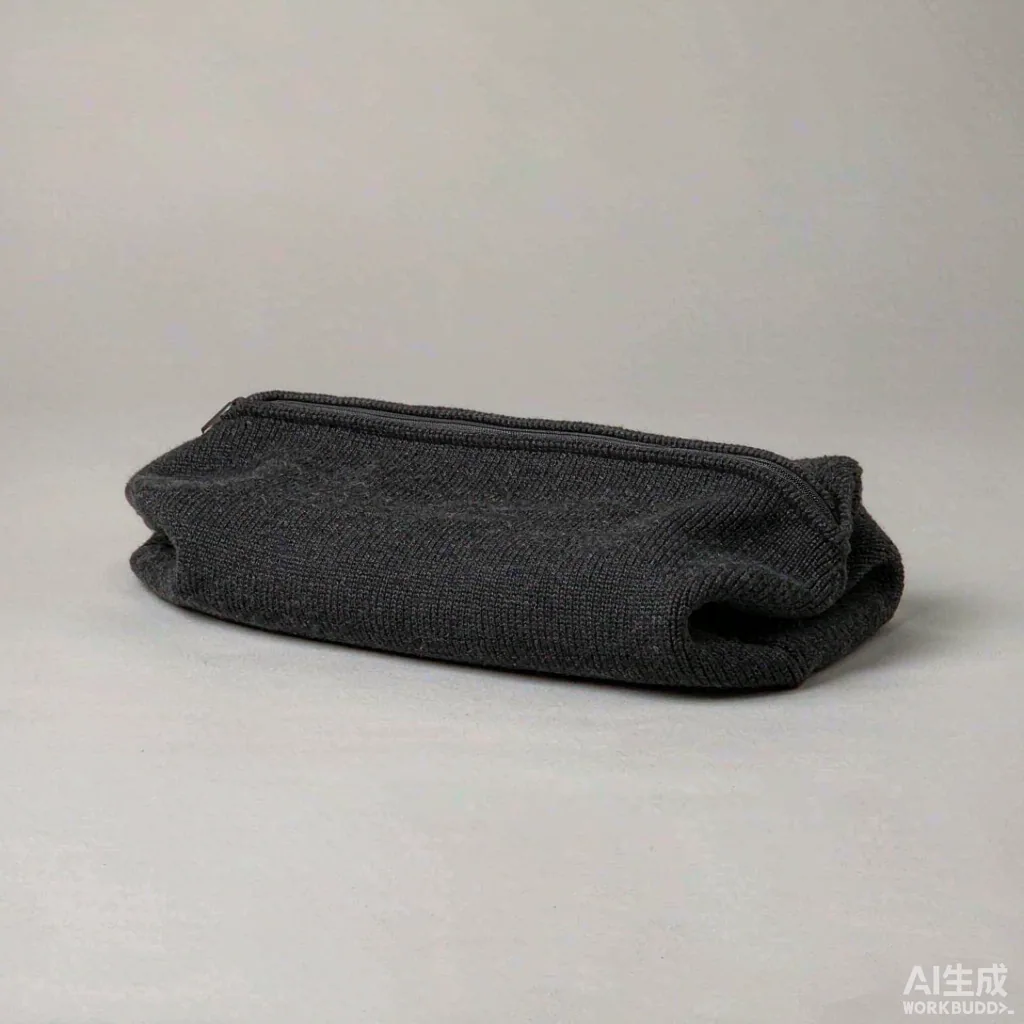
How Is a Knitted Pocket Attached?
Either knitted in with a 14 course transition zone, or sewn on with a 16 mm overlap. Knitted-in pockets need no assembly step and have no seam to fail, but they take fabric from the body and show a transition line. Sewn pockets add a seam and a minute, and they allow the pocket to be a different yarn or colour from the body.
The test is the same either way: a 4 kg sustained pull on the pocket seam with no loop breakage, plus a wash check because pocket seams are where differential shrinkage shows first. A pocket knitted from the body yarn shrinks with the body, while a contrast pocket in a different yarn needs its shrinkage matched to within 1.5 percent.
What Does Each Pocket Add to the Programme?
Between 1.4 and 4.6 minutes, and the total is what matters rather than the individual figures. A four-pocket layout at two slips, one zip and one gusset bottle pocket adds 7.8 minutes to a 14.6 minute tote body, which is a 53 percent increase. That is the point at which pocket layout becomes the dominant cost in the programme.
The comparison worth carrying into a quotation is pocket time against yarn time. On a tote at 62 g of yarn, the yarn is a known and stable figure, while pocket time is the variable that moves by 200 percent between a light and a heavy layout. Programmes that quote a bag price before the pocket layout is fixed are quoting a range, not a number.
Gift and promotional
One slip pocket at 1.4 minutes. Enough to make the bag feel designed and no more, because the piece is filled once.
Everyday shopper
Two slips and one interior zip at 5.6 minutes. Phone, card holder and keys covered without pushing the body past its limit.
Commuter and work
Padded laptop sleeve, document sleeve and one slip at 7.9 minutes. Worth it because the contents are the reason to buy.
Travel and active
Gusset bottle pocket, exterior slip and interior zip at 6.4 minutes, chosen for access rather than for storage volume.
Where a layout needs more pockets than four, a lining carries them more economically than the body does. That is the same trade-off discussed in the knitted bag lining material options guide, and it usually resolves in favour of a lining once the pocket count passes four.
Which Pocket Placements Fail in Use?
Gusset bottle pockets fail first, because a full bottle loads the gusset seam sideways in a direction the body was never knitted to resist. The fix is a 14 course transition zone at the pocket root plus a denser stitch in the lower third of the pocket, which is about 0.6 minutes and removes the failure almost entirely.
The second failure is an exterior slip pocket that stretches and stops holding the phone. It happens when the pocket is knitted at the body stitch density rather than at 16 courses per 10 mm, and it is invisible at sample stage because the sample has never been loaded or washed. Washing a loaded pocket is the check that catches it.
How Does Pocket Layout Interact With the Body Gauge?
Gauge sets how much structure a pocket mouth can hold on its own. At E7 the loop is large enough that a slip pocket mouth keeps its line without any added reinforcement, while at E12 the same pocket needs either a doubled mouth or a narrow tape to stop the mouth rolling after washing.
That difference is why exterior pockets are specified at E7 on most production bags even when the interior lining runs finer. Where a brand wants the fine surface of E12 on the outside, the pocket mouth is the first place the compromise shows, and doubling the mouth costs about 0.7 minutes per pocket.
The second gauge interaction is privacy. A finer gauge in a light colour transmits more shadow from interior contents, so a programme that specifies E12 for the body and stores dark objects inside should expect to add a lining. The pocket layout and the gauge belong in the same decision, not in two separate ones.
How to Write the Pocket Layout Into the Pack
List each pocket by number with its object, type, face, depth, width, closure and attachment method. Seven fields per pocket and no prose. A pack that says two interior pockets leaves five of the seven decisions to be made on the floor, and those decisions will be made differently on every re-order.

Then state the count limit and the test. Four pockets maximum on the body before a lining is required, and a 4 kg sustained pull on every pocket seam after washing. Those two lines prevent most of what goes wrong in a pocket layout. Full groupings sit on the knitted bag collection pillar, alongside the knitted backpack strap engineering guide for the carrying side of the same layout.
Layout pockets from what goes in
Send the object list, the pocket count and the body size. The team returns a placement plan, an added-time figure and an FOB Xiamen quote on 100 pcs. Start a pocket layout review.
Frequently Asked Questions
In what order should a knitted bag pocket layout be decided?
Contents first, then face, then count, then closure, then attachment. Each decision constrains the next: contents set depth, depth sets the face, the face sets how many fit, and the count sets whether a reinforcement is needed. Contents set depth, depth sets the face, and the face sets how many will fit.
How many pockets can a knitted bag body carry?
Four is the working limit and five is where distortion starts. Each pocket removes fabric and adds a stiff seam line, and at five the panels between pockets pucker. Above four, use a lining, which carries pockets without touching the outer knit. Above four, use a lining, which carries pockets without distorting the outer knit.
How deep should a phone pocket be?
About 140 mm, which is roughly 20 mm less than a 160 mm phone. That 20 mm is the grip that lets the phone be pulled out. A pocket deeper than the object makes it disappear and the pocket stops being used. A pocket deeper than the object makes the phone disappear and stops being used.
Which face should each pocket go on?
Front face for the item reached most, usually a phone. Back face for flat items, because a bulky back pocket stops the bag sitting against a body. Gusset for round items such as bottles, and the interior for anything valuable. The gusset takes round items such as bottles and the interior takes anything valuable.
Should a pocket be a slip or a zip?
A slip for anything reached several times a day and a zip for anything valuable or anything that falls out when the bag is set down. A zip costs 2.8 minutes against 1.4 for a slip, so decide per pocket rather than by a blanket rule.
How much does a pocket add to the cost of a bag?
Between 1.4 and 4.6 minutes each. A four-pocket layout of two slips, one zip and one gusset bottle pocket adds 7.8 minutes to a 14.6 minute tote body, which is a 53 percent increase and makes pockets the dominant cost. A four-pocket layout adds 7.8 minutes, which is a 53 percent increase on a tote.
How is a knitted pocket attached to the body?
Either knitted in with a 14 course transition zone or sewn on with a 16 mm overlap. Knitted-in needs no assembly step and has no seam to fail; sewn-on allows a contrast yarn and adds a minute of handling. Sewn-on allows a contrast yarn and adds about a minute of handling per pocket.
How is a pocket tested before bulk?
A 4 kg sustained pull on the pocket seam with no loop breakage, plus a wash check. Pocket seams are where differential shrinkage appears first, so a contrast pocket yarn has to be matched to the body within 1.5 percent. A contrast pocket yarn has to be matched to the body within 1.5 percent shrinkage.
Which pocket placement fails most often?
The gusset bottle pocket, because a full bottle loads the gusset seam sideways in a direction the body was not knitted to resist. A denser stitch through the lower third of the pocket removes the failure for about 0.6 minutes. A denser stitch through the lower third removes the failure for about 0.6 minutes.
Why does an exterior slip pocket stop holding a phone?
Because it was knitted at body stitch density rather than at 16 courses per 10 mm. The pocket stretches under load and after washing, and the sample hid it because it was never loaded or washed before approval. The sample hid it because it was never loaded or washed before approval.
Can a pocket use a different yarn from the bag body?
Yes, if it is sewn on rather than knitted in, and if the shrinkage is matched to the body within 1.5 percent. A contrast pocket is one of the strongest design tools on a knit bag and the risk is entirely shrinkage. A contrast pocket is one of the strongest design tools and the risk is shrinkage.
Does the pocket count change the minimum order quantity?
No. The minimum stays at 100 pcs per style and colourway regardless of pocket count. What changes is unit price and the amount of line time booked, since pockets are the largest variable cost in most programmes. What changes is unit price and the line time booked, since pockets dominate cost.
What should a tech pack say about pockets?
One line per pocket with seven fields: object, type, face, depth, width, closure and attachment. Plus the four-pocket limit and the 4 kg pull test. That is the whole pocket specification and it removes ambiguity at re-order. That is the whole pocket specification and it removes ambiguity at every re-order.
Can objects show through a knitted body?
Yes, at E12 with a light yarn a dark object in an interior pocket can read as a shadow on the outside face. Where that matters, place the pocket on the gusset or specify a lining panel. Where that matters, place the pocket on the gusset or specify a lining panel.
How long does a pocket layout take to sample?
Seven working days from an approved tech pack, including the wash and pull test. Where a layout uses five or more pockets, add lining development inside the same window rather than after it. Where a layout uses five or more pockets, add lining development inside the same window.
People Also Ask
Why not put four zip pockets on one bag?
It costs 11.2 minutes of pocket time on a 14.6 minute body and the bag ends up with more security than anyone uses. Two slips and one zip covers what people actually carry at 5.6 minutes.
Is a lining better than pockets on the body?
Above four pockets, yes. A lining panel carries pockets without distorting the outer knit and removes the distortion limit entirely, at the cost of a component and about 3.2 minutes.
What is the most useful pocket on a knit bag?
An exterior slip for a phone. It is the pocket reached most often, it costs 1.4 minutes, and its absence is the complaint that comes back most consistently from retail customers.
Why does pocket depth matter more than width?
Because depth decides whether the object can be grabbed. Width only needs to be object width plus 10 mm; too much width lets the object lie flat at the bottom and become hard to find.
Should a bottle pocket go on the gusset or the front face?
The gusset. A bottle on the front face swings and pulls the body out of shape, while a gusset pocket contains it at the side where the load path is already vertical.
Sources and further reading
Every figure on this page is either our own programme data or attributed below. Open the originals before you write them into a specification.
- ISO 13934-1 Tensile properties of fabricsISO Tensile reference for the pocket seam and the 14 course knitted-in transition zone.
- ISO 2859-1 Sampling procedures for inspection by attributesISO The AQL 2.5 inspection applied to finished lots after pocket pull testing.
- ISO 12947-2 Martindale abrasion resistanceISO Applied to pocket mouths, which are rubbed every time an object is taken out.
- Recycled Claim Standard and Global Recycled StandardTextile Exchange Documents the recycled content in the body yarn and any contrast pocket yarn.