Knitted Backpack Strap Engineering: Six Numbers Behind a Strap That Carries and Does Not Stretch
A knitted backpack strap is engineered from six numbers, and the one most programmes miss is load per strap rather than total load. A 7 kg commuter load is 3.5 kg per strap, which at E7 needs a 55 mm shoulder width, a 38 mm webbing core and 12 mm of padding to stay under 3 percent elongation. Minimum 100 pcs per style and colourway, sampling 7 working days, bulk 30 days, FOB Xiamen.
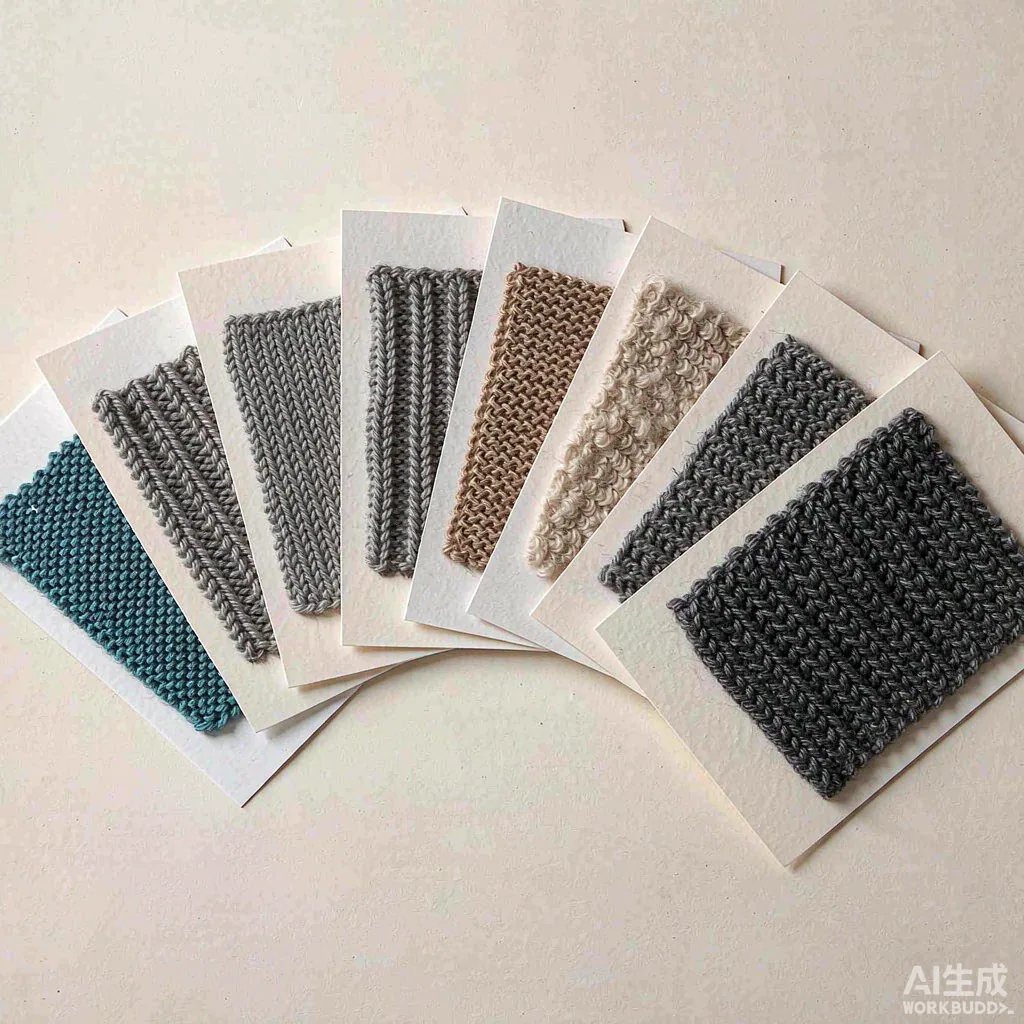
Why Did 6 Percent of One Backpack Order Come Back?
A European commuter brand ordered 2,400 knitted backpacks and saw 6 percent returned within four months, almost all with the same complaint: the straps had stretched and the bag sat too low. The straps had not broken, the stitching was intact and the fabric was undamaged. What had happened was elongation, and it was measurable from the first day.
The specification had stated a strap width of 40 mm and nothing else, with no load figure, no core and no elongation limit. At 3.5 kg per strap with no webbing core, a knitted strap in 600D polyester elongates about 6.5 percent over a month of daily use, which puts the bag roughly 50 mm lower on the back than it was designed to sit.
The corrected specification ran to six numbers: 3.5 kg per strap, 55 mm at the shoulder, a 38 mm webbing core, 12 mm of padding, an S-curve over four shaping moves, and elongation under 3 percent at 2,000 cycles. The re-order returned at under 1 percent. Those six numbers are the subject of the rest of this page.
What Load Does Each Strap Actually Carry?
Half the total load, plus a dynamic allowance. A 7 kg commuter load is 3.5 kg per strap at rest, and walking adds a cyclic component that peaks at roughly 1.4 times the static figure, so the design load is about 4.9 kg per strap. That is the number the strap has to be engineered against, not the 7 kg on the label.
| Number | Reference value | What it governs | Failure if missed |
|---|---|---|---|
| Load per strap | 3.5 kg static, 4.9 kg dynamic | Core width and stitch density | Elongation and sag |
| Shoulder width | 55 mm | Comfort under load | Strap cuts into the shoulder |
| Core width | 38 mm webbing | Elongation control | Strap creeps past 3 percent |
| Padding depth | 12 mm | Pressure distribution | Hot spots on long carries |
| Shaping moves | 4 for the S-curve | How the strap sits on a shoulder | Strap rolls outward |
| Cycle life | 2,000 cycles at design load | Service life before visible wear | Root separation in month four |
How Wide Should a Backpack Strap Be?
Fifty-five millimetres at the shoulder and 40 mm at the root, and the difference between the two is deliberate. The shoulder section carries the load across the trapezius and needs the width for comfort, while the root has to fit the attachment geometry on the bag and needs to be narrower to sit flat against the body panel.
Below 40 mm at the shoulder, a loaded strap starts to cut in after about 20 minutes of wear, and no amount of padding fully solves it because pressure is force divided by area. Width is the primary comfort variable; padding is the secondary one, which is why the two should never be traded against each other in a specification.
What Goes Inside a Knitted Backpack Strap?
A 38 mm polyester webbing core, threaded through a knitted sleeve and bar-tacked at both ends. The sleeve is what the customer sees and feels, and the core is what carries the load. Without a core, a knitted strap in 600D polyester elongates about 6.5 percent in service; with one, elongation settles under 3 percent.
- Design load
- 3.5 kg static per strap, 4.9 kg dynamic with walking
- Shoulder width
- 55 mm, tapering to 40 mm at the root
- Core
- 38 mm polyester webbing, bar-tacked at both ends
- Padding
- 12 mm knitted spacer or moulded insert
- Shaping
- Four moves for the S-curve, two for the taper
- Elongation
- Under 3 percent at design load after 2,000 cycles
- Strap length
- 780 mm as worn, with 120 mm of adjustment
- Root attachment
- 25 mm bar-tack through a reinforcement patch
- Adjuster
- 40 mm ladder lock, set 90 mm above the root
- Yarn
- 600D recycled polyester, 420 g/m² sleeve
- Minimum order
- 100 pcs per style and colourway
- Shipment
- FOB Xiamen, CIF and DDP available
The core does add assembly time. Threading and bar-tacking a core adds about 2.8 minutes per strap against a knitted-only strap, which is 5.6 minutes per backpack. That is a real cost and it is the reason a light daypack can be specified without a core while a commuter bag cannot.
How Is the S-Curve Shaped?
Over four shaping moves on the knitting programme, taking the strap from 40 mm at the root to 55 mm at the shoulder and then back, with the widest point sitting about 260 mm above the root. The curve matters because a straight strap rolls outward off a shoulder and a curved one wraps it.
The widest point at 260 mm is not arbitrary: that is where the strap crosses the top of a shoulder on an average adult frame when the bag is worn correctly. Placing the width there spreads the load across the muscle rather than across the collarbone, which is the difference between a strap that is comfortable for an hour and one that is not.
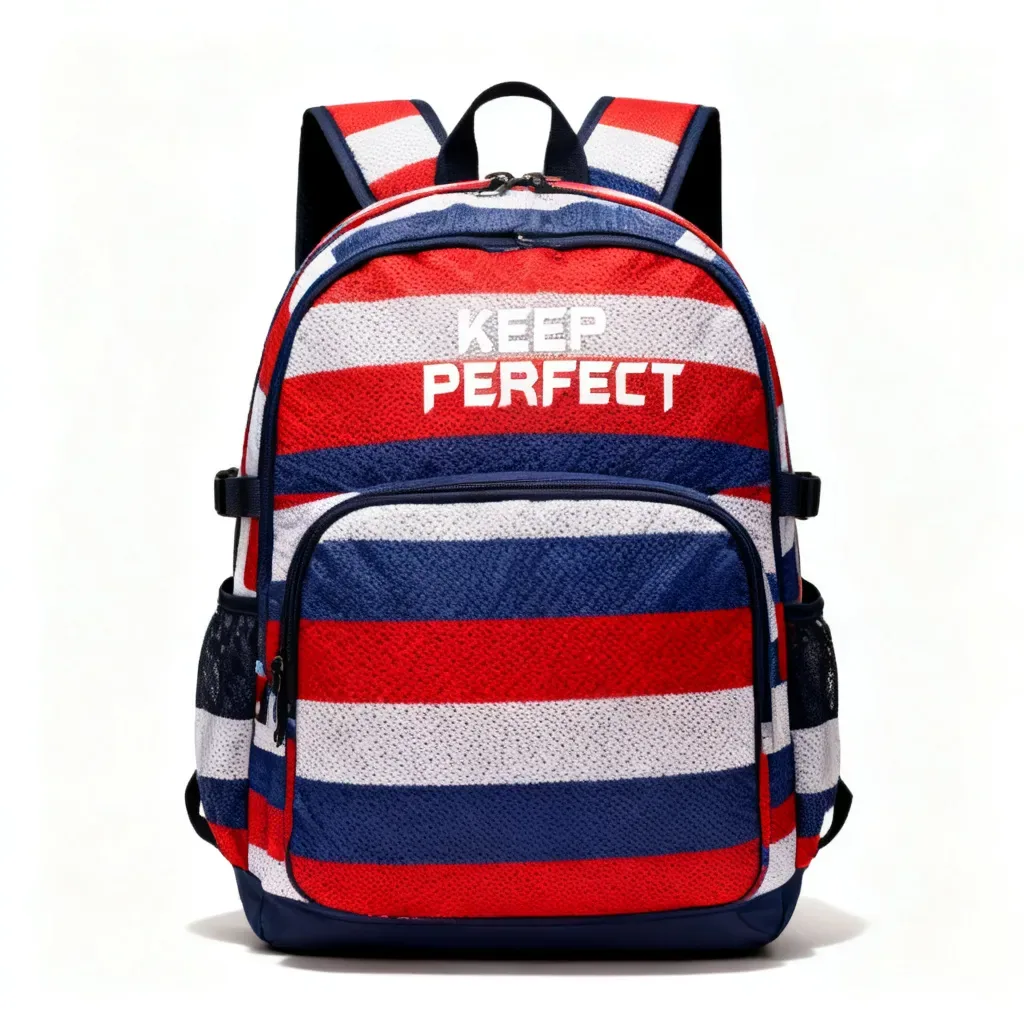
Where Does a Strap Root Fail?
At the bar-tack, and specifically where the 25 mm bar-tack ends and the knitted sleeve begins. The load path changes direction there, the stitch density changes, and that boundary is where separation starts. Extending the reinforcement patch 15 mm beyond the end of the bar-tack moves the boundary into a lower-stress zone.
The second root failure is on the bag side rather than the strap side: the webbing or patch pulling away from the back panel. That is governed by the panel, not the strap, and it is why a backpack body panel is specified at 500 g/m² rather than the 420 g/m² used on a tote. Matching panel weight to strap load is the check.
How Much Adjustment Should a Strap Have?
About 120 mm, delivered by a 40 mm ladder lock set 90 mm above the root. That range covers the difference between a summer and a winter coat, which is roughly 90 mm of shoulder thickness, and leaves margin. Adjustment below 80 mm leaves wearers unable to set the bag correctly over a coat.
Ladder lock width has to match the strap or the adjuster will not hold. A 40 mm ladder lock on a 40 mm strap is correct; the same lock on a 38 mm strap slips under load because the webbing does not fill the frame. That is a one-line specification that prevents a returns category.
How Is a Backpack Strap Tested?
Two straps per style run 2,000 cycles at 4.9 kg, after three wash cycles at 40 degrees, with acceptance at no visible loop breakage, no root separation and elongation under 3 percent. Elongation is measured on the strap length between two marks 300 mm apart, before and after cycling.
Tensile work runs alongside to ISO 13934-1 and ASTM D5034, and abrasion at the shoulder runs to ISO 12947-2 because that is where a strap rubs a coat seam. A strap that passes cycling and wears through at the shoulder in month six has still failed, and Martindale testing is the only way to see it coming.
What Does Padding Do and What Does It Cost?
Padding distributes pressure rather than reducing load, and 12 mm is the depth at which a strap stops producing hot spots on a carry longer than about 40 minutes. Below 8 mm there is measurable benefit but not enough; above 16 mm the strap becomes bulky to pack and starts to feel like luggage rather than a day bag.
Light daypack, under 3 kg
No core, 40 mm width, 8 mm padding. Knitted entirely in pass and suitable for a bag that carries a jacket and a bottle.
Commuter, 5 to 8 kg
38 mm core, 55 mm shoulder, 12 mm padding, four-move S-curve. The configuration that fixed the returns described above.
Travel, 8 to 12 kg
38 mm core, 60 mm shoulder, 16 mm padding, plus a chest strap to pull the load inward and off the trapezius.
Fashion backpack, under 2 kg
40 mm strap with no core and light padding. Structure matters less than how the strap reads on the body.
Padding material is a choice between a knitted spacer structure and a moulded insert. A knitted spacer is produced in the same programme, adds about 1.1 minutes and washes with the bag. A moulded insert adds 2.4 minutes of assembly, gives a firmer feel and has its own shrinkage behaviour to match.
Where a programme runs both a commuter and a fashion backpack from the same body, the padding is usually the only difference and it should be stated as such. Running one body with two strap specifications keeps the knitting programme shared and lets both products sit in the same dye lot, which is the main reason to standardise the body across a range.
How Does a Strap Change the Rest of the Bag?
A backpack strap dictates three things about the body it attaches to, and they have to be specified at the same time. The back panel goes to 500 g/m² rather than the 420 g/m² of a tote, the attachment zone needs room for a 25 mm bar-tack plus a patch, and the mouth has to be positioned so the strap roots sit behind the wearer rather than over the opening.
The third of those is the one that gets missed. Strap roots that sit too close to the mouth make a bag difficult to open when it is being worn, and the distance that works is about 60 mm between the mouth line and the top of the root patch. It is a small figure with a large effect on whether a bag is usable.
The strap also changes how the bag packs. A padded strap adds about 24 mm to the folded thickness of a backpack, which drops the carton count from roughly 40 pieces to about 28. Programmes that quote a backpack without stating strap padding are quoting a bag that has not been fully specified.
How to Specify a Strap in Six Numbers
State design load, shoulder width, core width, padding depth, shaping moves and cycle life, in that order, and leave no field blank. A strap specification that names only a width is a specification that will be interpreted differently on every re-order, which is exactly what happened on the order at the top of this page.
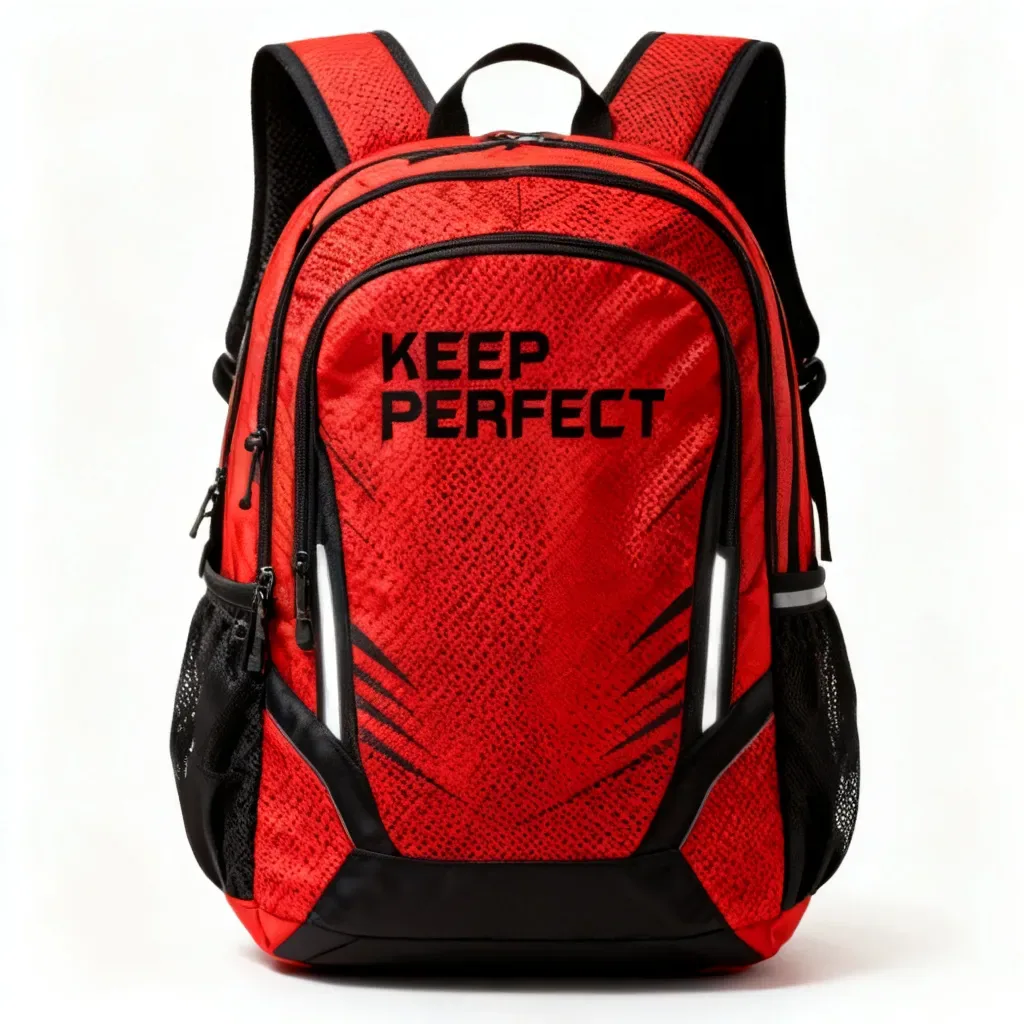
Then confirm the two adjacent decisions that a strap forces: back panel weight at 500 g/m² rather than 420, and mouth and body geometry sized to accept a 25 mm bar-tack patch. Straps do not exist independently of the bag they are attached to. The carrying side of the wider layout is covered in the knitted bag pocket layouts guide, and full groupings sit on the knitted bag collection pillar.
Engineer straps from the load, not the width
Send the carried load, the strap width and the padding depth you have in mind. The team returns a six-number strap spec and an FOB Xiamen quote on 100 pcs. Start a strap review.
Frequently Asked Questions
How much load does each backpack strap carry?
Half the total load plus a dynamic allowance. A 7 kg commuter load is 3.5 kg static per strap, and walking adds a cyclic peak of about 1.4 times, giving a design load near 4.9 kg. That dynamic figure is what the strap is engineered against.
How wide should a knitted backpack strap be?
Fifty-five millimetres at the shoulder and 40 mm at the root. The shoulder width spreads load across the muscle for comfort, and the narrower root fits the attachment geometry and sits flat against the back panel. The narrower root fits the attachment geometry and sits flat against the panel.
Why does a knitted backpack strap stretch?
Because it has no core. A knitted sleeve in 600D polyester elongates about 6.5 percent in daily service, which drops the bag roughly 50 mm. Adding a 38 mm webbing core brings elongation under 3 percent. That drops the bag roughly 50 mm and customers read it as a defect.
What goes inside a knitted backpack strap?
A 38 mm polyester webbing core threaded through the knitted sleeve and bar-tacked at both ends. The sleeve is what the customer sees and feels; the core carries the load and controls elongation. The sleeve is what the customer sees, and the core controls elongation under load.
How is the S-curve on a strap shaped?
Over four shaping moves, widening from 40 mm at the root to 55 mm at the shoulder and back, with the widest point about 260 mm above the root. That is where the strap crosses the top of a shoulder when worn correctly. The widest point sits where the strap crosses the top of a shoulder.
Where does a backpack strap fail?
At the bar-tack boundary, where the 25 mm bar-tack ends and the knitted sleeve begins. Load path and stitch density both change there. Extending the reinforcement patch 15 mm past the stitching moves the boundary out of the stress zone. Extending the patch 15 mm past the stitching moves it out of the stress zone.
How much adjustment should a strap have?
About 120 mm, from a 40 mm ladder lock set 90 mm above the root. That covers roughly 90 mm of difference between a summer and a winter coat. Below 80 mm, wearers cannot set the bag correctly over outerwear. Below 80 mm, wearers cannot set the bag correctly over a winter coat.
How much padding does a backpack strap need?
Twelve millimetres for a commuter load. Below 8 mm the benefit is measurable but insufficient on carries past 40 minutes, and above 16 mm the strap becomes bulky and reads as luggage rather than a day bag. Above 16 mm the strap becomes bulky and reads as luggage rather than a day bag.
How is a backpack strap tested?
Two straps per style run 2,000 cycles at 4.9 kg after three washes at 40 degrees. Acceptance is no loop breakage, no root separation and elongation under 3 percent, measured between two marks 300 mm apart. Elongation is measured between two marks 300 mm apart, before and after cycling.
Does strap padding reduce the load carried?
No. Padding distributes pressure over a wider area but the load is unchanged, which is why width and padding are separate variables. Pressure is force divided by area, so width is the primary comfort control and padding the secondary one. Pressure is force divided by area, so width is the primary comfort control.
Should a light daypack use a webbing core?
Not necessarily. Below about 3 kg carried load a knitted-only strap at 40 mm with 8 mm padding is adequate, and it avoids 5.6 minutes of assembly time per bag. Above 5 kg, a core is not optional. Above 5 kg carried, a core is not optional on a backpack strap.
What back panel weight does a backpack need?
About 500 g/m² rather than the 420 g/m² used on a tote. The panel has to resist the strap pulling away from it, and that failure is governed by the panel rather than by the strap. The panel has to resist the strap pulling away, and that governs the failure.
Does the strap choice change the minimum order?
No. The minimum stays at 100 pcs per style and colourway. An unusual adjuster finish or a custom moulded insert does need confirming at quotation, because component procurement has its own lead time. An unusual adjuster finish or a custom insert does need confirming at quotation.
How long does strap sampling take?
Seven working days from an approved tech pack, with bulk at 30 days. Three bags are built: one cycled on the tester, one washed and measured for elongation, one sealed as the inspection reference. Three bags are built: one cycled, one washed, one sealed as the reference.
Can a moulded insert be used instead of a knitted spacer?
Yes. A knitted spacer adds about 1.1 minutes and washes with the bag; a moulded insert adds 2.4 minutes of assembly, feels firmer and needs its shrinkage matched to the knit to avoid puckering. A moulded insert feels firmer and needs its shrinkage matched to the knit.
People Also Ask
Why did those backpacks come back if nothing was broken?
Because elongation is not a breakage. The straps stretched about 6.5 percent, the bag sat 50 mm lower than designed, and customers read that as a defect even though every seam was intact.
Is a wider strap always better?
Up to about 60 mm, yes. Beyond that the strap becomes difficult to pack and starts to feel like luggage. The working band is 40 mm for a daypack and 55 to 60 mm for commuter and travel loads.
Why must ladder lock width match strap width?
Because the adjuster grips by friction against a filled frame. A 40 mm lock on a 38 mm strap slips under load, and that is a returns category created by a one-line mismatch.
Should the chest strap be part of the specification?
Above 8 kg carried, yes. A chest strap pulls the load inward and off the trapezius, and it is the lowest-cost comfort addition available on a heavy backpack programme. It is a one-line specification that prevents an entire returns category.
What is the most expensive strap mistake?
Specifying width only. A strap with no load figure, no core and no elongation limit will be interpreted differently on every re-order, which is exactly what produced the 6 percent return rate above.
Sources and further reading
Every figure on this page is either our own programme data or attributed below. Open the originals before you write them into a specification.
- ASTM D5034 Breaking Strength and Elongation of Textile Fabrics (Grab Test)ASTM International Used to test the strap body and the 25 mm bar-tack root attachment.
- ISO 12947-2 Martindale abrasion resistanceISO Applied to the shoulder section where a strap rubs against a coat seam.
- ISO 13934-1 Tensile properties of fabricsISO Tensile reference for the back panel that has to resist the strap pulling away.
- ISO 2859-1 Sampling procedures for inspection by attributesISO The AQL 2.5 inspection applied to finished lots after strap cycling.