Knitted Bag Closure Systems: Five Options Compared Across Opening, Security and Fitting Time
A knitted bag closure is chosen on three numbers: how much opening it costs, how many cycles it survives and how many minutes it takes to fit. Five systems cover the range, from an open mouth at zero minutes to a zip insert panel at 6.2 minutes, and the zip costs about 30 mm of usable circumference against an open mouth. Minimum 100 pcs per style and colourway, sampling 7 working days, bulk 30 days, FOB Xiamen.
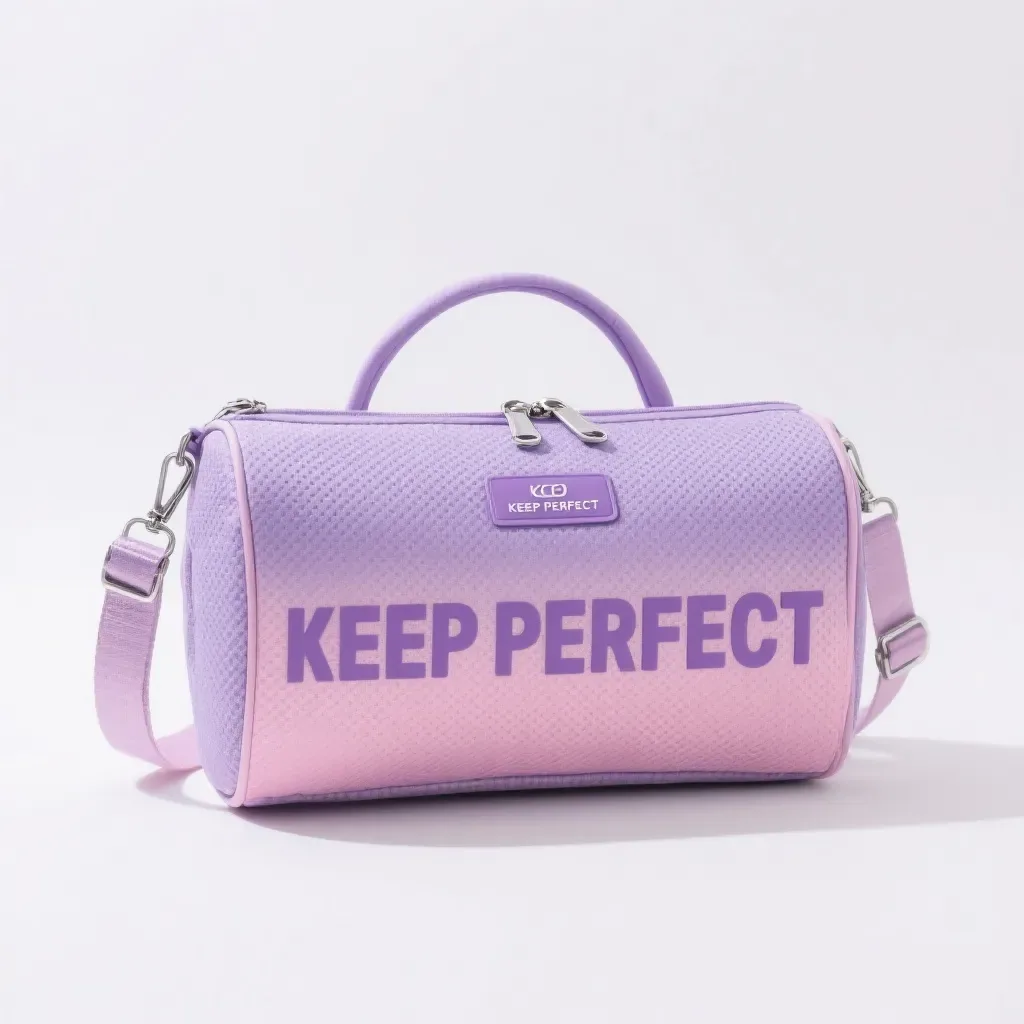
The Five Closure Systems on a Knitted Bag
Five closure systems appear on knitted bags: an open mouth with no closure, a drawstring cord through a knitted channel, a magnetic snap set into a facing, a zip set into a separate panel, and a flap with a press stud or turn-lock. Each is a different compromise between access, security and assembly minutes.
The important structural fact is that none of them is knitted as a closure. Knitting produces the mouth and the channel; the closure hardware is fitted afterwards, and the bag has to be designed to receive it. Choosing a closure late produces a mouth that cannot accept the hardware without a redesign.
Closure Comparison: Eleven Rows That Separate Them
The table below compares the five systems on the eleven criteria that actually differ. Read the opening-loss row and the cycles row together, because those are the two that a customer notices, and read the fitting row separately because it is the one that appears on the invoice.
| Criterion | Open mouth | Drawstring | Magnetic snap | Zip panel | Flap and stud |
|---|---|---|---|---|---|
| Usable opening | 100 percent | 75 percent | 95 percent | 96 percent | 88 percent |
| Opening loss | 0 mm | 195 mm gathered | 0 mm | 30 mm circumference | 90 mm depth |
| Security rating | 1 of 5 | 3 of 5 | 3 of 5 | 5 of 5 | 4 of 5 |
| One-hand access | Yes | No | Yes | No | No |
| Fitting time | 0 min | 1.6 min | 2.1 min | 6.2 min | 4.6 min |
| Cycle life | No hardware | 5,000 cord pulls | 10,000 magnet cycles | 5,000 zip cycles | 3,000 stud cycles |
| Added weight | 0 g | 14 g | 22 g | 48 g | 31 g |
| Wash behaviour | Best | Cord may tangle | Magnet must be capped | Tape may curl | Flap may curl |
| Metal detection | None | None | Yes | Yes if metal | Yes |
| Typical use | Gift, market tote | Gym, beach, promo | Everyday shopper | Travel, commuter | Structured retail |
| Cost index | 1.00 | 1.14 | 1.22 | 1.58 | 1.41 |
The cost index is the row programmes fixate on and the row that decides least. A 1.58 index on a zip is about 58 percent more closure cost on a component that is a small share of bag cost, while the security rating of 5 of 5 is the reason a travel buyer specifies it at all.
Which Closure Costs the Least Opening?
The open mouth costs nothing and the flap costs most, at about 90 mm of usable depth. The drawstring looks like it costs nothing because the mouth is not reduced, but gathering to 75 percent of circumference removes roughly 195 mm of effective opening on a 780 mm mouth, which is more than the zip costs in practice.
That inversion surprises most buyers. A drawstring is chosen for access and actually reduces access more than a zip does, because the zip narrows the mouth by a fixed 30 mm while the cord gathers the whole circumference. Where a bag has to swallow a bulky object, the zip wins on access and the drawstring loses.
How Is Closure Durability Tested?
Cycle testing, at a count matched to the hardware type: 5,000 cycles for a zip and a cord, 10,000 for a magnetic snap and 3,000 for a press stud. A cycle is one full open and close at rated load, run on two units per style, and acceptance is full function with no deformation of the surrounding knit.
- Cycle counts
- 5,000 zip and cord, 10,000 magnet, 3,000 press stud
- Zip specification
- Number 5 coil at 5 mm chain width for bags above 10 L, Number 3 below
- Magnet pull
- 2.2 kg breakaway force on a standard 18 mm snap
- Fitting times
- 0 min open, 1.6 min cord, 2.1 min magnet, 4.6 min flap, 6.2 min zip
- Added weights
- 0 g open, 14 g cord, 22 g magnet, 31 g flap, 48 g zip
- Opening loss
- 0 mm open, 30 mm zip, 90 mm flap, 195 mm gathered on a cord
- Panel allowance
- Zip panel cut 12 mm wider than the tape on each side
- Channel interior
- About 9 mm clear at E7 to run a 5 mm cord
- Minimum order
- 100 pcs per style and colourway
- Sampling
- 7 working days from an approved tech pack
- Bulk timing
- 30 days from sample approval
- Shipment
- FOB Xiamen, CIF and DDP available
The surrounding knit is tested as well as the hardware, because a closure that survives and tears out of its panel has still failed. Panel and mouth areas are pulled to ISO 13934-1 and to ASTM D5034, and the acceptance criterion is set on the knit rather than on the hardware, since the hardware carries its own rating.
Which Closure Suits Which Programme?
Match the closure to what the bag does, not to what it looks like. A market tote that is opened 40 times a day wants an open mouth. A travel piece that goes under an aircraft seat wants a zip. A promotional piece that will be handed out and filled once wants a drawstring, because it is the closure that reads as a bag at a glance.
Gift and promotional
Drawstring at 1.6 minutes and 14 g. It reads as a finished bag, costs little and suits a piece filled once and kept.
Everyday shopper
Magnetic snap at 2.1 minutes and 22 g. One-hand access is the whole point of an everyday bag and the magnet is the only closure that gives it.
Travel and commuter
Zip panel at 6.2 minutes and 48 g. Security rating 5 of 5 and only 30 mm of opening lost, which is the best combination for a device.
Structured retail
Flap and stud at 4.6 minutes and 31 g. Costs 90 mm of depth but gives the clean front face a retail piece needs.
What Does a Closure Do to the Knitting Programme?
Less than most buyers expect, because the closure is fitted after knitting. What the knitting programme has to provide is the receiving structure: a mouth at the right circumference and rib count for a snap facing, or a channel of the right interior height for a cord. Those are course-count decisions made before the hardware is ordered.
The exception is the flap, which is knitted as part of the body and needs its own shaping. A flap adds two shaping moves and about 3.6 minutes of knitting on top of the 4.6 minutes of fitting, which is why the flap sits above the zip in total time despite a lower fitting figure.
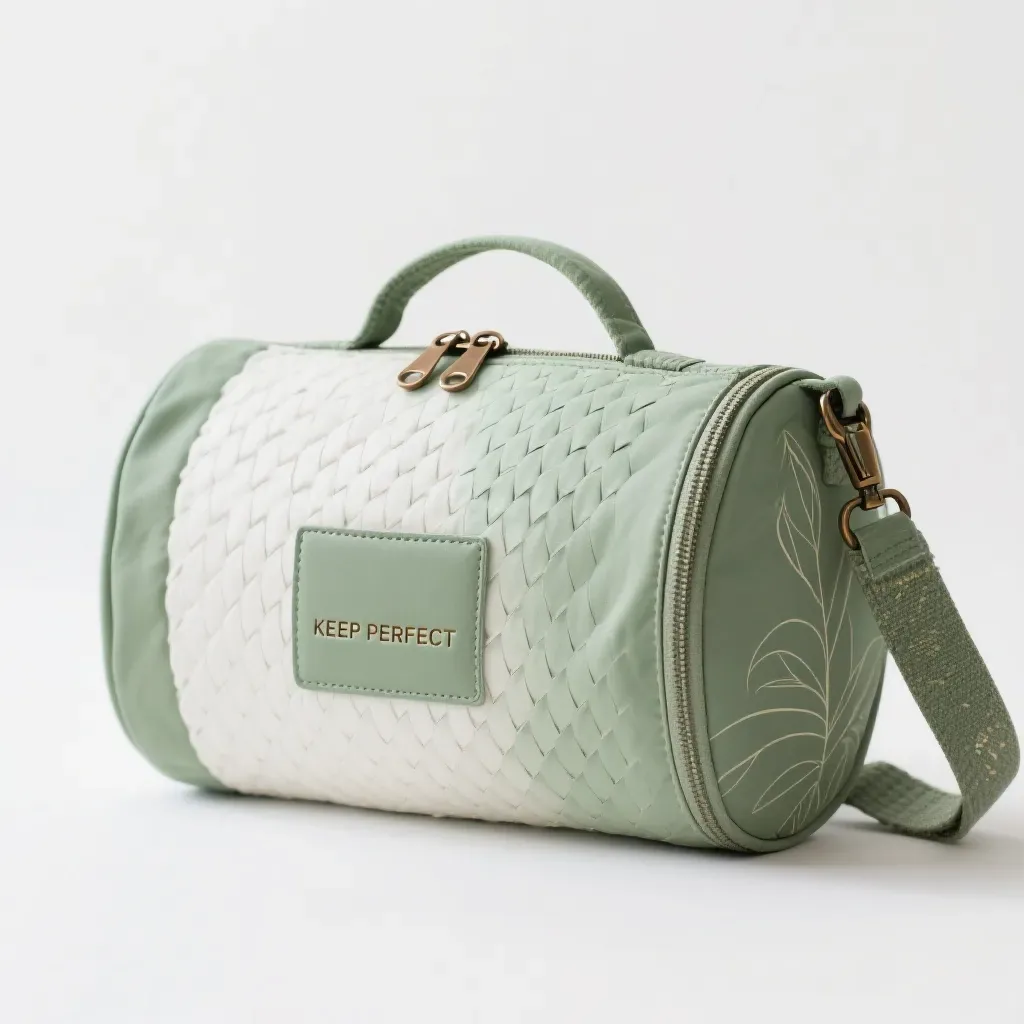
How Are Closures Fitted to a Knitted Body?
Through a facing or a panel, never directly through the knit. A magnetic snap is set through a reinforcement facing that spreads the 2.2 kg breakaway force over an area rather than a point, a zip is sewn into a woven panel, and a press stud is set through a patch. Knit on its own tears around point hardware under repeated load.
The reinforcement is the part that determines field life. A snap set through a 20 mm facing with a backing washer runs the full 10,000 cycles; the same snap through knit alone starts tearing out at around 800 cycles. That difference is entirely in the facing, and it is the single most useful thing to specify on a closure.
Which Closure Fails First in the Field?
The press stud, at 3,000 cycles and usually through tearing out rather than through the stud itself. Then the cord, which frays where it passes through the channel eyelet. Then the zip, which fails at the tape-to-panel seam rather than in the chain. The magnet lasts longest, because it has no wearing surface under normal use.
Washing accelerates all of them. A magnet has to be capped so it does not rust and mark the body, a zip tape can curl if it is a different shrinkage from the knit, and a cord can tangle and knot inside the channel. Specifying hardware shrinkage compatibility is the step that keeps a washed bag working.
Compliance Questions a Closure Raises
Metal hardware brings two obligations: nickel release under the REACH restriction and, where a bag is made for children, the CPSIA lead and phthalate limits. Both apply to the hardware component rather than to the knit, and both are documented at component level rather than at bag level, which is why the hardware has to be specified early.
The second question is metal detection. A magnetic snap and a press stud will trigger a detector, which matters for programmes that pass through retail distribution with security screening or that ship into facilities with metal-free requirements. An open mouth and a drawstring avoid the issue entirely; see the knitted drawstring bag closures detail for the cord specification.
What Does Closure Choice Do to Returns and Warranty?
Closure hardware is the largest single source of warranty claims on a bag programme, and the claim pattern is predictable: presses studs tearing out in month two, cords fraying in month four and zip seams opening in month eight. Each maps directly onto a cycle rating in the table above, which means returns can be forecast before a programme ships.
The corrective action is almost always the same and it costs very little. Moving a press stud onto a 20 mm reinforcement facing with a backing washer takes the cycle life from 3,000 toward the region of a magnet, and the added component cost is measured in cents. Specifying the facing at sample stage rather than after the first return is the whole of the exercise.
It is also worth stating the expected service life on the product itself. A bag sold as an everyday piece is opened roughly 1,400 times a year, so a 3,000-cycle stud is a two-year component and a 10,000-cycle magnet is a seven-year one. That arithmetic belongs in the specification conversation, not in a warranty document after the fact.
How to Write the Closure Into the Tech Pack
Name the system, the hardware size, the cycle rating required, the fitting method including the reinforcement facing, and the finish. Those five items let a sample be built and tested without a conversation. A pack that says zip closure and nothing else leaves four of the five decisions to be made on the floor.
- System: open, drawstring, magnetic, zip panel or flap and stud.
- Hardware size: Number 5 coil above 10 litres, Number 3 below, 18 mm snap, 5 mm cord.
- Cycle rating: 5,000 for zip and cord, 10,000 for magnet, 3,000 for stud.
- Fitting method: reinforcement facing at 20 mm with a backing washer for point hardware.
- Finish and compliance: nickel release under REACH, CPSIA where the bag is made for children.
- Shrinkage compatibility: hardware tape and knit within 1.5 percent of each other.
The mouth structure that receives the closure is specified separately, and the two documents have to agree. A mouth at 16 rib courses will not hold a snap facing properly; it needs 24. That relationship is set out in the seamless knitted bag openings guide, and full closure groupings sit on the knitted bag collection pillar.
Compare closures before the mouth is frozen
Send the bag size, the access requirement and the cycle life you need. The team returns a closure recommendation, a fitting time and an FOB Xiamen quote on 100 pcs. Start a closure review.
Frequently Asked Questions
How many closure systems are used on knitted bags?
Five: an open mouth with no hardware, a drawstring cord through a knitted channel, a magnetic snap, a zip set into a panel, and a flap with a press stud or turn-lock. Each trades access against security and fitting minutes differently. Each trades usable opening against security and fitting minutes in a different way.
Which closure costs the least usable opening?
The flap, at about 90 mm of depth. The drawstring is second, gathering a 780 mm mouth to 75 percent and removing roughly 195 mm of effective opening. The zip costs only 30 mm of circumference, which is less than most buyers assume. A zip costs only 30 mm of circumference, which is less than most buyers assume.
Is a drawstring better than a zip for access?
No, and this is the most common misreading. A zip narrows the mouth by a fixed 30 mm, while a cord gathers the entire circumference. For a bulky object such as a laptop, the zip gives more usable opening than the drawstring. For a bulky object such as a laptop the zip gives more usable opening than the cord.
How many cycles should a bag closure survive?
Five thousand for a zip and a cord, ten thousand for a magnetic snap and three thousand for a press stud. A cycle is one full open and close at rated load, run on two units per style after washing. A cycle is one full open and close at rated load, run on two units per style.
Can a closure be knitted directly into the bag?
No. Knitting produces the mouth and the channel; the hardware is fitted through a facing or a panel afterwards. A magnetic snap set through knit alone starts tearing out near 800 cycles, against 10,000 through a 20 mm facing. A magnetic snap set through knit alone starts tearing out at roughly 800 cycles.
What size zip should a knitted bag use?
A Number 5 coil at 5 mm chain width for bags above 10 litres and a Number 3 below. The zip is set into a woven panel cut 12 mm wider than the tape on each side so the seam has material to bite into.
How much does a closure add to the cost of a bag?
On a cost index with an open mouth at 1.00, a drawstring is 1.14, a magnet 1.22, a flap 1.41 and a zip 1.58. The zip is the most expensive and also the only one rated 5 of 5 on security.
Which closure fails first in the field?
The press stud, at 3,000 cycles and usually by tearing out of the knit rather than by the stud breaking. Then the cord, fraying at the channel eyelet, then the zip at the tape-to-panel seam. The magnet lasts longest. The magnet has no wearing surface under normal use, which is why it lasts longest.
Does washing damage bag closures?
It accelerates every failure mode. A magnet must be capped so it does not rust and mark the body, a zip tape can curl at a different shrinkage rate from the knit, and a cord can knot inside its channel. The zip is the most expensive and the only one rated 5 of 5 on security.
What compliance applies to bag closure hardware?
Nickel release under the REACH restriction, and CPSIA lead and phthalate limits where a bag is made for children. Both are documented at component level, which is why hardware must be specified before sampling rather than after. Both are documented at component level, so hardware has to be specified before sampling.
Will a magnetic closure trigger a metal detector?
Yes, as will a press stud. Programmes passing through security screening or into metal-free facilities should specify an open mouth or a drawstring instead. That is a distribution question rather than a design one. That is a distribution question rather than a design one and is often missed.
Should a flap be counted as a closure or as a body part?
Both, which is why it is expensive. The flap is knitted as part of the body and adds two shaping moves and about 3.6 knitting minutes, on top of 4.6 minutes of fitting at the stud. The flap pays its extra time in knitting instead, adding two shaping moves.
Does the closure change the minimum order quantity?
No. The minimum is 100 pcs per style and colourway regardless of closure. Hardware procurement does set a practical floor on unusual finishes, so an uncommon zip colour is worth confirming at quotation. Hardware procurement does set a practical floor on unusual finishes worth confirming early.
What should a tech pack say about the closure?
System, hardware size, required cycle rating, fitting method including the reinforcement facing, and finish. Those five let a sample be built and tested without a conversation. Zip closure on its own leaves four decisions open. Zip closure on its own leaves four of the five decisions to be made later.
How long does it take to sample a bag with a new closure?
Seven working days from an approved tech pack, provided the hardware is already specified. Sourcing an uncommon finish can add to that window, so hardware should be locked before programming starts. Sourcing an uncommon finish can extend that window, so hardware is locked first. Keeping hardware locked before programming starts protects that window.
People Also Ask
Why does a zip cost more fitting time than a flap?
Because the zip panel has to be cut, aligned to a 30 mm circumference loss and sewn on both sides, while a flap stud is a single setting operation. The flap pays its extra time in knitting instead.
Is an open mouth ever the right closure?
Often. On a market tote opened 40 times a day, no closure is faster and there is no hardware to fail. It is the default for grocery and gift programmes where security is not the point.
What is the strongest closure for a travel bag?
A Number 5 coil zip in a sewn panel. It is the only system rated 5 of 5 on security, it loses just 30 mm of circumference, and at 5,000 cycles it outlasts a press stud by a wide margin.
Why must hardware shrinkage match the knit?
Because a tape that shrinks differently curls the seam and eventually tears it. Keeping hardware tape and knit within 1.5 percent of each other is the check that keeps a washed bag flat.
How is a closure tested on the finished bag?
By cycling the hardware 3,000 to 10,000 times and then pulling the surrounding knit to ISO 13934-1 and ASTM D5034, because a closure that survives and tears out of its panel has still failed.
Sources and further reading
Every figure on this page is either our own programme data or attributed below. Open the originals before you write them into a specification.
- Substances restricted under REACHECHA The nickel release restriction that applies to metal closure hardware on bags.
- ISO 13934-1 Tensile properties of fabricsISO Used to test the panel and mouth knit around fitted closure hardware.
- ASTM D2061 Strength Tests for ZippersASTM International Referenced for the zip chain and tape strength used on travel and commuter bags.
- ISO 2859-1 Sampling procedures for inspection by attributesISO The AQL 2.5 inspection applied to lots after closure cycling.