Knitted Bag Base Construction: Four Methods, Tested for Load, Abrasion and Square
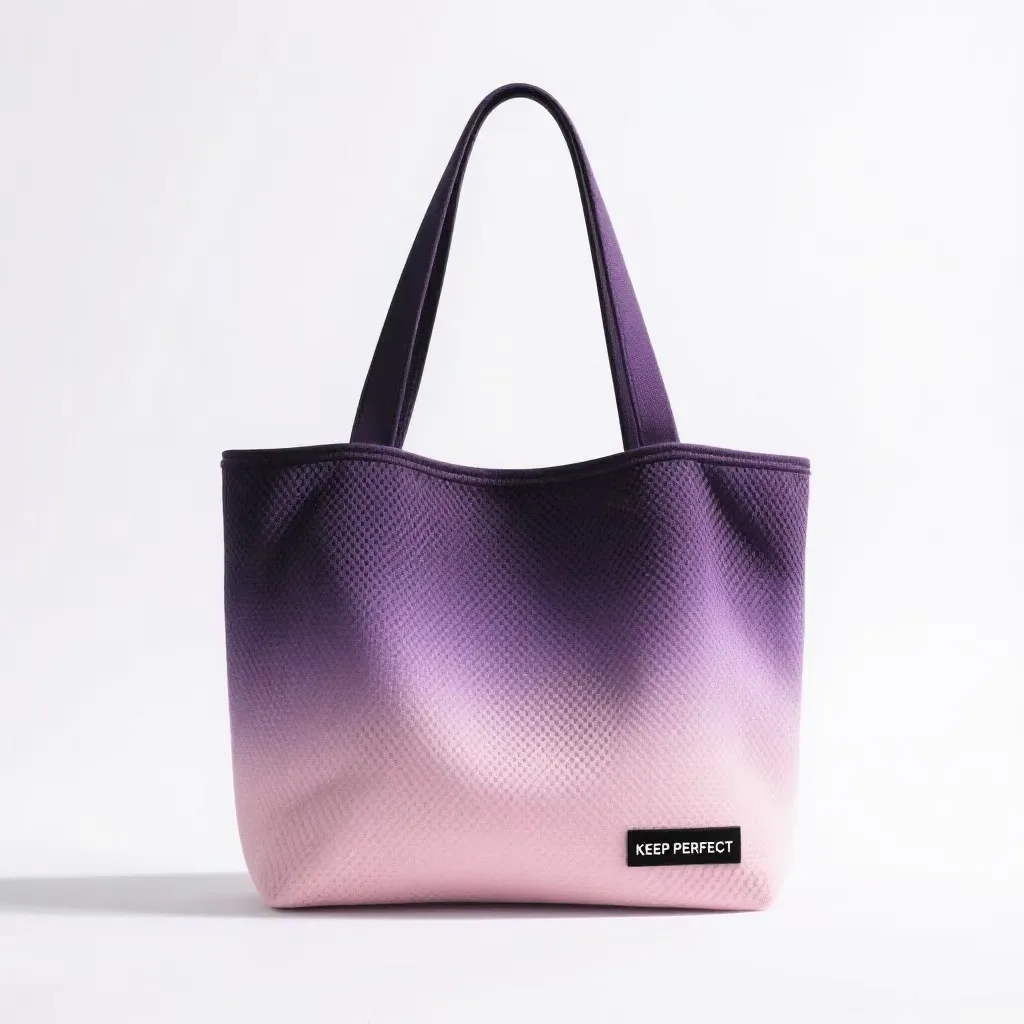
A knitted bag base has to do three things the rest of the body does not: carry load, resist abrasion and stay square. Four construction methods cover the range, from a flat closed base at no extra time to an inserted board at 5.5 minutes, and the one that fails most often is the take-up, which goes out of square by 6 to 10 mm after washing. Minimum 100 pcs per style, sampling 7 working days, FOB Xiamen.
What Does a Base Have to Do That the Rest of the Bag Does Not?
A base carries every gram of load in the bag, rubs against every surface it is set down on, and is the dimension a customer sees when the bag is standing. The body of a knit bag is asked to hold a shape; the base is asked to hold a shape under load, repeatedly, and to do it while being dragged across concrete.
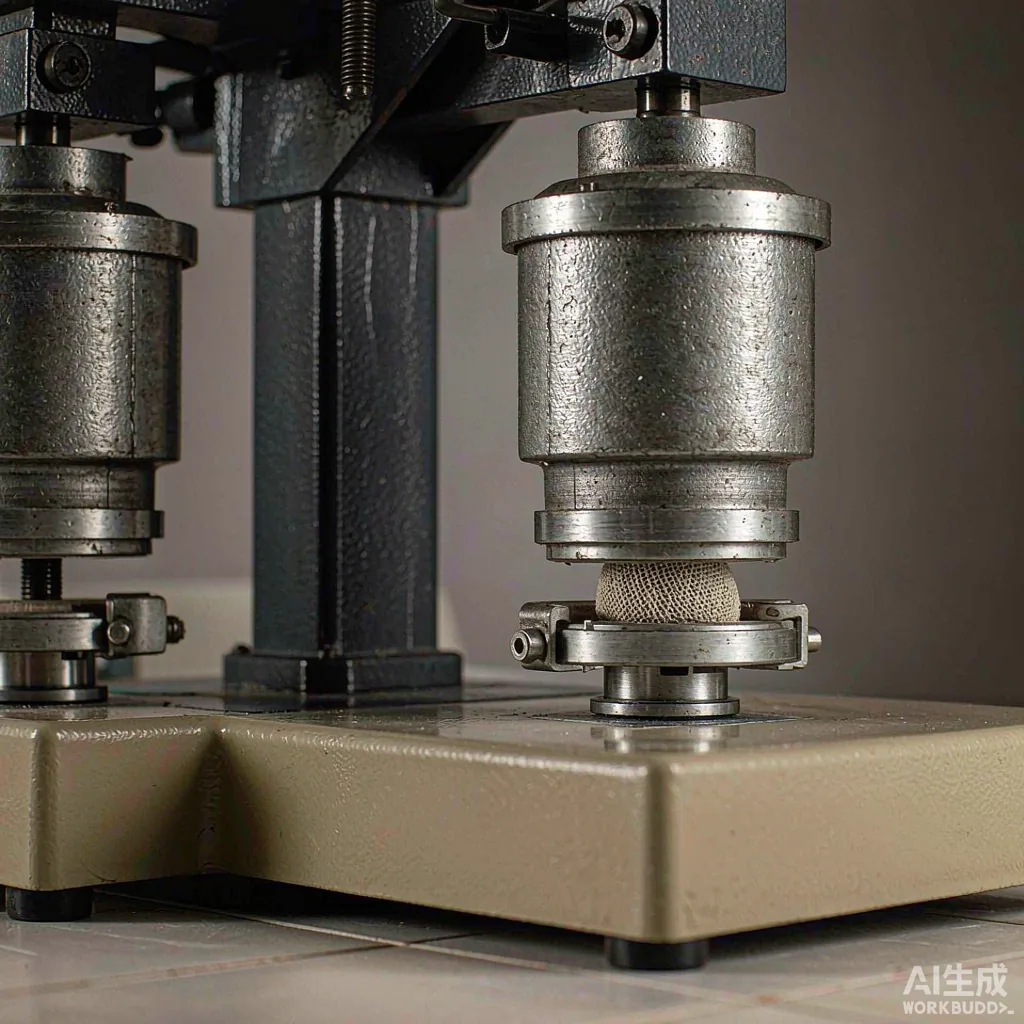
Those three jobs are measured separately in the specification: load to ISO 13934-1 on the base seam, abrasion to ISO 12947-2 with a Martindale head, and squareness as a dimensional check after washing. A base can pass two of the three and still be the reason a bag comes back.
How Many Ways Can a Knitted Base Be Built?
Four, and they are additive rather than exclusive: a flat closed base, a gusseted base, a take-up or shaped base, and a base with an inserted board or panel. Most production bags use two of the four together, typically a gusset plus a board, and the specification is which combination rather than which single method.
| Method | Added time | Base thickness | Load capacity | Squareness risk | Best for |
|---|---|---|---|---|---|
| Flat closed | 0 min | 2.4 mm | 4 kg | Low | Pouches, gift pieces |
| Gusseted | 3.6 min | 2.4 mm | 8 kg | Low | Shoppers, market totes |
| Take-up shaped | 4.8 min | 3.1 mm | 10 kg | High | Buckets, shaped bodies |
| Inserted board | 5.5 min | 4.0 mm | 14 kg | Low | Travel, commuter, retail |
| Board plus feet | 6.4 min | 4.6 mm | 14 kg | Low | Heavy retail totes |
How Much Does a Gusseted Base Add?
Two shaping moves and 3.6 minutes, and it roughly doubles the load a base will carry, from 4 kg to 8 kg. The gusset works by giving the base a depth, so the load sits on a wall rather than on a seam, and it is the single highest-value addition available on a knit bag base.
Gusset depth is the number to specify, and 110 mm is the reference on a 22 litre tote. Below 70 mm the gusset does not add enough wall to change the load path, and above 160 mm the base starts to dominate the silhouette and the bag reads as a box rather than as a tote.
What Is a Take-Up Sequence and When Is It Needed?
A take-up is the sequence that narrows a knitted base by transferring loops inward over a set number of courses, and it is needed whenever the finished base is narrower than the body. On a bucket bag knitted at 300 mm width with a 240 mm base, 24 needles are taken up per side over 12 courses.
It is the most capable base method and the most risky one. A take-up carries 10 kg, more than a gusset, because the transferred loops create a double-thickness band around the base edge. It also carries the highest squareness risk, because the take-up tension is not perfectly symmetric across the needle bed.
- Base methods
- Flat closed, gusseted, take-up shaped, inserted board, board plus feet
- Added times
- 0 min flat, 3.6 min gusset, 4.8 min take-up, 5.5 min board, 6.4 min board and feet
- Load capacity
- 4 kg flat, 8 kg gusset, 10 kg take-up, 14 kg board
- Gusset depth
- 110 mm reference, useful band 70 to 160 mm
- Take-up sequence
- 24 needles per side over 12 courses on a 300 to 240 mm reduction
- Base thickness
- 2.4 mm knitted, 3.1 mm take-up, 4.0 mm with board
- Board specification
- 1.5 mm recycled PET board, cut 4 mm inside the base on all sides
- Abrasion target
- 25,000 Martindale rubs to ISO 12947-2 with no hole
- Squareness
- Within 6 mm after three 40 degree wash cycles
- Drop test
- 300 mm drop with 8 kg, base intact, no seam opening
- Minimum order
- 100 pcs per style and colourway
- Shipment
- FOB Xiamen, with CIF and DDP available
When Does a Base Need an Inserted Board?
When the bag carries more than about 10 kg, or when it has to stand empty on a shelf without slumping. A board is a 1.5 mm recycled PET panel cut 4 mm inside the base on all sides, slipped into a knitted pocket under the base, and it lifts load capacity from 10 kg to 14 kg for 5.5 minutes of work.
The 4 mm inset matters more than it sounds. A board cut flush to the base edge telegraphs its outline through the knit and creates a hard edge that abrades from the inside, while an inset board sits invisibly and lets the knitted edge do the wearing. It is a one-line specification that prevents a visible defect.
How Much Load Should a Base Carry?
Specify from the use case rather than from the maximum available. A market tote carrying groceries reaches about 8 kg, a commuter bag with a laptop and charger about 5 kg, and a travel piece around 12 kg. Specifying 14 kg on a bag that will never see 6 kg adds board cost and stiffness the customer does not want.
The test itself is two-part: a 300 mm drop with the rated load, and a sustained hold at rated load for 30 minutes with the base seam inspected afterwards. The drop catches a seam that fails suddenly; the hold catches a knit that creeps, which is the failure that turns a square base into a sagging one over a season.
How Is Base Abrasion Tested?
With a Martindale head to ISO 12947-2, run to 25,000 rubs with an endpoint of no hole and no visible loop breakage through the base fabric. Twenty-five thousand is the figure that corresponds to roughly a season of a bag being set down on pavement, and it is the number that separates a base that survives from one that wears through at the corners.
Abrasion concentrates at the four corners, not across the flat of the base, which is why corner reinforcement exists as a separate decision. Adding four knitted corner patches, or a second layer over an 80 mm radius at each corner, typically lifts the rub count from 25,000 to beyond 40,000 for about 0.9 minutes of added time.
Why Do Bases Go Out of Square?
Because take-up and gusset tension are not perfectly symmetric, and washing releases whatever asymmetry was knitted in. A take-up base measured before washing can be square to 2 mm and sit 8 mm out of square after three 40 degree cycles, which is why the squareness tolerance is written against the washed body.
The tolerance is 6 mm, measured corner to corner as a difference between the two diagonals. Anything tighter is not achievable on a loop structure that has been washed, and anything looser lets a bag rock on a shelf, which a customer reads as a defect even when they cannot name it.
How Are Corners Reinforced?
By knitting a second layer over an 80 mm radius at each corner, or by adding a denser stitch structure in the corner zone only. The denser-structure approach is usually better on a knit bag because it adds no thickness, keeps the base folding flat, and can be programmed as a local change rather than as an applied patch.
Gift and pouch
Flat closed base at 0 minutes and 4 kg. No shaping, no insert, and squareness is not a risk worth paying for.
Shopper and market tote
Gusseted at 3.6 minutes, 110 mm depth and 8 kg. The highest-value addition on the list and the default for a tote.
Bucket and shaped body
Take-up at 4.8 minutes and 10 kg, with the squareness check written against the washed body at 6 mm.
Travel, commuter and retail
Inserted board at 5.5 minutes and 14 kg, cut 4 mm inside the base, with corner reinforcement above 25,000 rubs.
Where a bag has to fold flat for shipping, the board has to be removable or the bag has to be specified without one. That is a real constraint: a board doubles the folded thickness of a tote from 18 mm to 36 mm and roughly halves the piece count per export carton. The silhouette side of that trade-off is covered in the knitted bag silhouette development guide.
How Does Wash Shrinkage Change a Base?
Shrinkage moves a base in two directions at once, and they do not cancel out. A 600D polyester body shrinks about 3.5 percent lengthwise and about 2.1 percent across the width at 40 degrees, so a rectangular base becomes slightly non-rectangular after washing even when it was knitted perfectly square.
The correction is programmed rather than compensated afterwards. The base is knitted with the lengthwise allowance taken up in the closing courses, so the finished washed base lands on its specified dimensions rather than starting on them and drifting off. That is the difference between a base that measures correctly once and one that measures correctly for the life of the bag.
Three numbers that govern a washed base
- Lengthwise shrinkage of 3.5 percent and widthwise shrinkage of 2.1 percent at 40 degrees; a squareness tolerance of 6 mm measured between diagonals; and a corner reinforcement radius of 80 mm where abrasion above 25,000 rubs is expected.
- Written together, these three replace most of the prose a base specification usually carries.
A board behaves differently under the same wash, because recycled PET board shrinks far less than the knit around it. That is a second reason for the 4 mm inset: it leaves room for the knitted pocket to shrink around a stable board without puckering at the edges, which is the defect that appears when a board is cut flush.
Which Base Should Each Programme Specify?
Work down two questions in order: how much load, and does it have to stand empty. Load below 5 kg and no standing requirement gives a flat or gusseted base. Load above 10 kg, or a retail piece that has to stand, gives a board. Everything in between is a gusset, and the take-up is reserved for shapes whose base is narrower than their body.
The third question is the one programmes forget: how is the bag shipped. A board-inserted base ships cubed and a gusseted base ships flat, and on a one-container order the freight difference between the two frequently exceeds the entire added cost of the board. Specifying the base without stating the shipping method leaves that number to be discovered later.
Where a range shares one base construction across several capacities, the board and the gusset depth should still scale. A 9 litre and a 22 litre bag do not want the same board, and carrying one board size across the range is what makes the small piece feel over-built and the large piece feel under-supported.
Then write the three acceptance numbers into the pack: load capacity, rub count and the 6 mm squareness tolerance after washing. Those three are checkable inside the 7 working day sampling window, and they are the whole of what a base has to prove. Base and gusset seams are additionally pulled to ISO 13934-1, and finished lots are inspected to AQL 2.5 under ISO 2859-1. Full groupings sit on the knitted bag collection pillar, alongside the knitted tote size chart for the capacity side of the same decision.
Specify a base that carries its load
Send the load, the capacity and whether the bag has to stand empty. The team returns a base method, an abrasion target and an FOB Xiamen quote on 100 pcs. Start a base review.
Frequently Asked Questions
How many ways can a knitted bag base be built?
Four: flat closed, gusseted, take-up shaped and with an inserted board. Most production bags combine two, usually a gusset with a board, so the specification is the combination rather than a single method. Most production bags combine two, usually a gusset with a board, rather than one.
How much load does each base method carry?
Four kilograms for a flat closed base, 8 kg for a gusseted base, 10 kg for a take-up shaped base and 14 kg with an inserted board. Specify from the actual use case rather than from the maximum available. Specify from the actual use case rather than from the maximum available figure.
What gusset depth should a tote base use?
One hundred and ten millimetres is the reference on a 22 litre tote. Below 70 mm the gusset does not change the load path enough to matter, and above 160 mm the base dominates the silhouette and the bag reads as a box. Below 70 mm the gusset does not change the load path enough to matter at all.
What is a take-up sequence on a knitted base?
The sequence that narrows a knitted base by transferring loops inward over a set number of courses. A 300 mm body reduced to a 240 mm base takes 24 needles per side over 12 courses, and carries 10 kg. A 300 mm body reduced to a 240 mm base carries 10 kg once the sequence is set.
Why do take-up bases go out of square?
Because take-up tension is not perfectly symmetric across the needle bed, and washing releases whatever asymmetry was knitted in. A base square to 2 mm before washing can sit 8 mm out after three 40 degree cycles. A base square to 2 mm before washing can sit 8 mm out after three cycles.
What squareness tolerance is realistic on a knitted base?
Six millimetres, measured as the difference between the two diagonals after three 40 degree wash cycles. Tighter is not achievable on a washed loop structure, and looser lets a bag rock on a shelf. A 1.5 mm recycled PET board inset 4 mm lifts capacity from 10 kg to 14 kg.
When does a base need an inserted board?
Above about 10 kg of load, or when the bag has to stand empty without slumping. A 1.5 mm recycled PET board inset 4 mm inside the base lifts capacity from 10 kg to 14 kg for 5.5 minutes of work. A board suits travel, commuter and retail bags that have to stand empty.
Why is the board cut 4 mm inside the base?
Because a flush-cut board telegraphs its outline through the knit and creates a hard internal edge that abrades the base from the inside. An inset board is invisible and lets the knitted edge do the wearing. An inset board is invisible and lets the knitted edge do the wearing instead.
How is base abrasion tested?
With a Martindale head to ISO 12947-2, run to 25,000 rubs with an endpoint of no hole and no visible loop breakage. That figure corresponds to roughly a season of a bag being set down on pavement. That figure corresponds to roughly a season of a bag being set down on pavement.
Where does a base wear through first?
At the four corners, not across the flat. Reinforcing over an 80 mm radius at each corner, or knitting a denser structure in the corner zone, lifts the count from 25,000 to beyond 40,000 rubs for 0.9 minutes. Corner reinforcement over an 80 mm radius lifts the count beyond 40,000 rubs.
How is base load capacity tested?
Two ways: a 300 mm drop at rated load, and a sustained hold at rated load for 30 minutes followed by a seam inspection. The drop catches sudden seam failure and the hold catches a knit that creeps. The drop catches sudden seam failure and the hold catches a knit that creeps.
Does an inserted board stop a bag folding flat?
Yes. A board doubles the folded thickness of a tote from 18 mm to 36 mm and roughly halves the piece count per export carton. Where flat shipping matters, specify a removable board or none. A board doubles the folded thickness of a tote from 18 mm to 36 mm.
How much time does each base method add?
Zero minutes for a flat closed base, 3.6 for a gusset, 4.8 for a take-up, 5.5 for an inserted board and 6.4 for a board with corner feet. Those are added to the body cycle time, not replacements for it. Those figures are added to the body cycle time rather than replacing any of it.
Does the base change the minimum order quantity?
No. The minimum stays at 100 pcs per style and colourway whatever the base method. An inserted board does add a component to procure, so unusual board finishes are worth confirming at quotation. An inserted board does add a component to procure, so unusual finishes need confirming.
How long does base sampling take?
Seven working days from an approved tech pack, with the wash and squareness check inside that window. Three bodies are knitted: one washed and measured, one drop and hold tested, one sealed as the reference. Three bodies are knitted, one washed, one load tested and one sealed as the reference.
People Also Ask
Which base method fails most often?
The take-up. It carries the most load of the knitted-only methods and goes out of square by 6 to 10 mm after washing, which is why its squareness tolerance is written against the washed body rather than the dry one.
Is a gusset worth its 3.6 minutes?
Yes, more than any other base addition. It doubles load capacity from 4 kg to 8 kg by giving the load a wall to sit on rather than a seam, and it carries almost no squareness risk.
Can a board be added after the bag is knitted?
Yes, and that is how it is done. The board slips into a knitted pocket under the base, so the knitting programme only has to provide the pocket, which is why boards can be specified late relative to a take-up.
Why test squareness after washing rather than before?
Because washing releases the asymmetry knitted into the take-up. A dry measurement flatters the base and predicts nothing about what the customer receives, which is the same reason mouth circumference is measured washed.
Should corner reinforcement be a patch or a stitch change?
Usually a stitch change. A denser structure in the corner zone adds no thickness and keeps the base folding flat, while an applied patch adds bulk at exactly the point where the bag has to flex.
Sources and further reading
Every figure on this page is either our own programme data or attributed below. Open the originals before you write them into a specification.
- ISO 12947-2 Martindale abrasion resistanceISO The 25,000-rub abrasion target applied to knitted bag bases and corner zones.
- ISO 13934-1 Tensile properties of fabricsISO Used for the base and gusset seam strength check under rated load.
- ISO 2859-1 Sampling procedures for inspection by attributesISO The AQL 2.5 inspection applied to finished lots after base load and abrasion testing.
- Recycled Claim Standard and Global Recycled StandardTextile Exchange Documents the recycled content in the PET board and the 600D body yarn.