Knitted Bag Category Growth Drivers: Five Real Mechanisms Behind the Expansion, and How Each Can Be Tested in One Season
Knitted bag growth drivers are better understood as five mechanisms than as a market forecast, because each one can be tested in a single season and each fails in a known way: fewer seams and fewer failure points, a piece floor low enough to test launches, monomaterial bodies that can be recycled, shaped knitting that removes an assembly step, and colour renewal costing yarn rather than a new file. Against fixed numbers — MOQ 100 pcs per style and colourway, 7 working days of sampling, 30 days of bulk and FOB Xiamen — the five rank differently depending on what the buyer already knows.
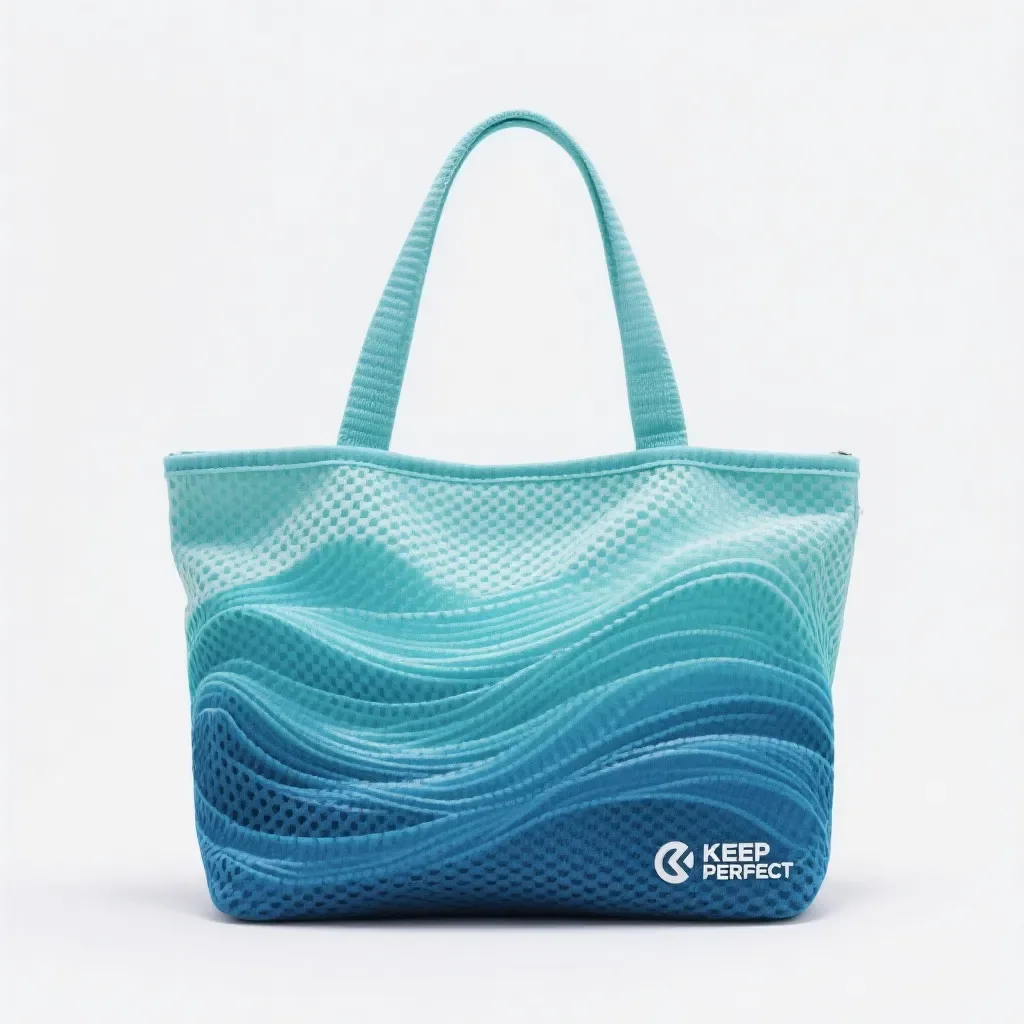
Test the Five Mechanisms in This Order
The decision order is: test whether the seam-count mechanism applies to your construction first, then whether the piece floor changes your launch economics, then whether a monomaterial body is achievable, then whether shaped knitting removes a real step, and only last whether colour renewal is worth planning for.
The order matters because it is the order of reversibility. Seam count and material composition are decided in the specification and are expensive to reverse once the file is written; colour strategy is decided per season and can be changed at any point. Starting with the last one is how programmes end up with a clever colour plan attached to a construction that offers no advantage. Each mechanism below therefore opens with the condition under which it applies, because none of them applies universally — every one depends on the construction, the volume and the destination market. What follows is deliberately written without reference to category growth figures, since none of these mechanisms requires one to be evaluated.
One: seam count
Applies where the bag carries load. Reversible only before the knitting file is written.
Two: piece floor
Applies to any launch that must be tested. Changes what is committed, not what is built.
Three: monomaterial body
Applies wherever a recycled claim must be evidenced. Constrains yarn, thread and trim together.
Four: shaped knitting
Applies where an assembly step can genuinely be removed. Worth most on handles and openings.
Five: colour renewal
Applies to every repeating programme. Decided per season and freely reversible.
Mechanism One: Fewer Seams, Fewer Failure Points
The first growth mechanism is simply that a shaped knit body removes seam lines, and seam lines are where bags fail — a cut-and-sew tote of about 38 cm by 42 cm typically carries eight to twelve of them, while a shaped knit body carries two or three.
The mechanism is worth stating precisely, because it is often overstated. Removing seam lines does not make the fabric stronger; it removes the interfaces at which stitch holes, needle damage and thread abrasion concentrate. The handle root is where this shows most clearly, since it carries load concentration as well as seam geometry, and it is why integral handles change behaviour more than any panel specification does. A realistic target set for such a construction is a strap tensile of 450 N or better under ISO 13934-1 and 30,000 rubs on the base panel under ISO 12947-2, both of which are reachable on a mid-weight knit body. Failure still happens — it simply moves from the joint to the fabric, which is a place where specification rather than assembly skill decides the outcome. For the construction options, see integral knitting of handles and openings.
Mechanism Two: A Piece Floor Low Enough to Test
A piece floor of 100 pcs per style and per colourway turns a knit launch into something that can be tested rather than committed, and for most brands this is the mechanism that has the largest commercial effect — because it changes the size of the decision rather than the construction.
Three styles in two colourways commit 600 pieces, which is a quantity many businesses can risk learning from. The comparison should be made against what the same test would have required a few seasons ago, when a higher minimum meant the test itself was the size of a season. What follows from this is not only lower risk but faster iteration: because the files already exist after the first drop, a reorder or a re-colour can be placed without a new development round, so learnings from week four can actually be acted on within the same season. The mechanism has a boundary worth naming — it depends on the production partner genuinely running small batches rather than nominally accepting them, so the question to ask is what the smallest confirmed booking was in the previous month.
Mechanism Three: Monomaterial Bodies That Can Be Recycled
A single-polymer knit body — polyester face yarn with polyester sewing thread and a compatible closure — can be recycled in principle, while a mixed-fibre body cannot be separated economically, and this distinction is what makes a recyclability claim honest rather than decorative.
The mechanism operates at the level of the whole bill of materials rather than at the level of the fabric. A body knitted from recycled polyester still sends a mixed stream if the thread is polyamide, the lining is cotton, and the base stiffener is a bonded foam of uncertain composition. Conversely, a modest body with a compatible monomaterial thread and a simple closure is genuinely more recyclable than a sophisticated one whose components cannot be separated. This is worth deciding during specification rather than at the marketing stage, because every later addition — a printed label, a metal eyelet set, a coated panel — pulls the construction back toward a mixed stream. End-of-life handling is covered in knitted bag end of life options, and the recycled-content evidence under the Global Recycled Standard is set out by Textile Exchange.
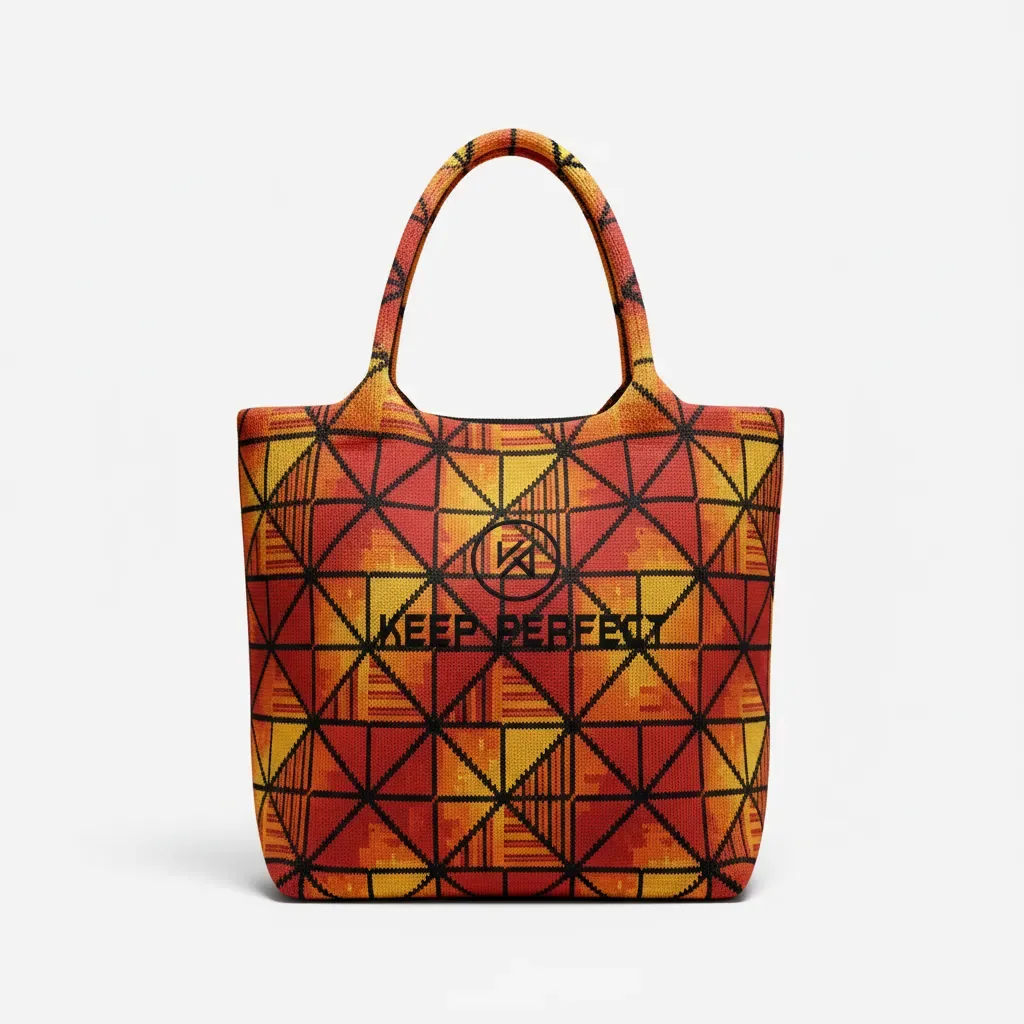
Mechanism Four: Shaped Knitting Removes Assembly Steps
Whole-garment-style knitting produces a three-dimensional body directly from the machine, so steps that would otherwise be cut, aligned and sewn are eliminated — and the saving is in handling and failure modes rather than in the price of an operation.
Machine families capable of this have been available for years from builders such as Stoll and Shima Seiki, and their capability is relevant here for one specific reason: a shaped body needs fewer post-knitting operations, so fewer things can go wrong after the knitting stage and less handling labour sits between the machine and inspection. The honest counterweight is in machine minutes. A body knitted at E10 takes roughly 25 minutes, while the same body at E14 takes roughly 41 minutes, because the finer gauge lays about 7.7 courses per centimetre against about 5.5 at E10. So the fourth mechanism buys assembly savings and pays for them at the knitting stage whenever a fine surface is specified. Whether that trade is good depends entirely on what was being paid for assembly before. Shaping decisions are covered in how to programme a knitted bag shape.
Mechanism Five: Colour Renewal Without a New File
Renewal happens in colour rather than in shape on knit, because re-colouring costs yarn procurement — typically three to five working days before sampling begins — while re-shaping costs a full knitting file, a sample round and often a hardware decision.
The consequence for a programme is that novelty costs less than it does in cut-and-sew. A returning range can carry its three best shapes and replace two of three shades, and the season reads as new because the face of the range has changed even though the engineering has not. There is a limit worth respecting: colour only reads as novelty where the shopper has not already bought the shape, and a shape sold out in its first season generally benefits from being re-made in the same shade rather than a new one. Because the fifth mechanism is reversible each season, it should be planned last and revisited often — unlike the first three, there is no penalty for changing the answer twice. Colour planning detail sits in knitted bag colourway planning.
What Each Mechanism Is Worth at Common Volumes
Valued across the volumes most programmes actually run, the mechanisms separate: the piece floor dominates at low volume, monomaterial design and seam count dominate at medium volume, and shaped knitting only dominates once assembly is a real cost.
| Mechanism | Where it pays most | Where it pays nothing |
|---|---|---|
| Fewer seams | Loaded carriers: totes, market bags, backpacks | Fashion shapes carrying nothing heavier than a phone |
| 100 pcs floor | A first category test of 600 pieces | Programmes already committed above several thousand pieces |
| Monomaterial body | Ranges making a recycled or recyclable claim | Ranges whose trims and linings were already committed mixed |
| Shaped knitting | Handles, openings and bases currently assembled by hand | Simple flat panels that were never expensive to assemble |
| Colour renewal | Returning seasons with proven shapes | A first season whose shapes have not yet been validated |
The Gate: When a Mechanism Does Not Apply
The gate each mechanism has to pass is simple and worth writing into the brief: it has to change either failure behaviour, committed pieces, evidence quality or elapsed time — and if it changes none of those, it is not a driver for this programme.
Applied honestly, the gate filters out most of what gets presented as category momentum. Seam count does not matter for a decorative shape carrying nothing heavy; the piece floor does not matter for a buyer already committed to thousands; monomaterial design does not help a range whose linings were signed off a season ago; shaped knitting wastes its fine-gauge premium on a panel nobody assembles today; colour renewal is meaningless before the shapes have been sold once. Programmes that pass only one or two of the five mechanisms are entirely normal, and there is nothing wrong with that — the error is adopting all five and paying for every one of them. Since the specification decisions among them are hard to reverse, the gate should be run before the knitting file is written rather than reviewed afterwards.
- Piece floor
- 100 pcs per style and per colourway; three styles in two shades is 600 pieces
- Seam lines removed
- About eight to twelve on a sewn tote, about two to three on a shaped knit body
- Machine minutes
- A 38 by 42 cm body takes roughly 25 minutes at E10 and about 41 minutes at E14
- Course density
- About 5.5 courses per centimetre at E10, about 7.7 at E14
- Construction targets
- Strap tensile 450 N under ISO 13934-1; base panel 30,000 rubs under ISO 12947-2
- Re-colour lead
- About three to five working days of yarn procurement ahead of the 7 working days of sampling
Running One Mechanism as a One-Season Test
The cleanest test takes one mechanism, one style and one season — 100 pcs of a single construction compared against the incumbent — and the comparison is only valid if the two are measured the same way.
Designing the test is mostly a matter of removing other variables. Run the knit style and the incumbent through identical use rather than through identical catalogues, which usually means putting both into the field with people who carry things. Fix one measurable outcome before starting, such as a return or complaint count per 100 units, an abrasion result under ISO 12947-2, or elapsed days from brief to delivery, and write it down. Keep everything else constant: same colourway count, same distribution, same fixtures. Then, crucially, keep the files — because with the file retained the second season can be ordered without a development round, which is also the point at which the second mechanism becomes visible. Capacity for such a test against seven production lines running about 200,000 pcs per month is never the constraint; booking the slot early is.
Reading a Decline Through the Same Five
The same five mechanisms explain contraction as well as expansion, which is the check that separates a mechanism from a trend story: if the mechanism cannot explain why a category retreats, it probably was not driving it.
Read downward, each one has a failure case. Seam count stops mattering if the load moves elsewhere, as happened when a certain amount of everyday carrying simply disappeared from daily routines. A piece floor stops mattering when the test size and the committed size converge. Monomaterial design actively costs money if the local recycling stream does not accept the polymer in question. Shaped knitting loses its advantage whenever the alternative assembly step becomes automated. Colour renewal stops being read as novelty when shapes have been seen too many times. Each of those is a real condition rather than a hypothetical one, which is exactly why writing them down before the season is useful: they are the same conditions the programme will be judged against afterwards.
Scoring the Five Against Your Own Category
A scoring pass takes about twenty minutes and needs nothing beyond the spec and the sales plan: mark each mechanism as applies, partly applies or does not apply, then count how many specifications you would actually change as a result.
Two or more 'applies' results usually justify a test, particularly where acceptance is measured rather than asserted. A single one still justifies a test if it is priced — bead commercial effect before process effect, since the piece floor changes what is risked while seam count changes what may fail. Zero means the honest answer is to wait rather than adopt, and there is genuine value in concluding that. What the scoring should never do is produce five yes answers, because that result almost always means the gate was not applied. Where the outcome is a test, the knitted bag category map helps place the trial style, and 3D knit production capacity planning covers how the slot is booked.
Score one mechanism against your own range
Send the construction you run today and the outcome you want to move. The knit team will return a scored assessment of the five mechanisms, a test construction at 100 pcs, and a calendar at 7 working days of sampling, 30 days of bulk and release to AQL 2.5. Start on the contact page.
Frequently Asked Questions
What are the real growth drivers behind knitted bags?
Five mechanisms rather than a trend: fewer seam lines, a piece floor low enough to test, monomaterial bodies that can be recycled, shaped knitting that removes assembly steps, and renewal in colour rather than shape. Each can be tested in one season.
In what order should the mechanisms be tested?
In order of reversibility. Specification decisions first — seam count and material composition — then the piece floor, then shaped knitting, and finally colour strategy, which can be changed at any point without penalty.
How many seam lines does a knitted body remove?
A sewn tote of about 38 cm by 42 cm typically carries eight to twelve seam lines, while a shaped knit body of the same size carries two or three. What falls is not fabric strength but the number of interfaces where failure concentrates.
Why does the piece floor matter commercially?
Because it changes the size of the decision. Three styles in two colourways commit 600 pieces at MOQ 100 pcs per style and colourway, which many businesses can risk learning from, and the files then exist for a reorder.
What makes a knit body genuinely recyclable?
One polymer throughout — face yarn, sewing thread and closure compatible with one another. A recycled body with polyamide thread, cotton lining and bonded stiffener still sends a mixed stream that cannot be separated economically.
Does shaped knitting save time overall?
It removes assembly steps and the failures associated with them, and pays for them at the knitting stage whenever a fine gauge is specified. Whether the trade is good depends entirely on what the assembly step cost before.
How does gauge affect the machine time used?
Materially. A 38 by 42 cm body takes roughly 25 minutes at E10 against about 41 minutes at E14, because the finer gauge lays about 7.7 courses per centimetre against about 5.5 at E10.
Why does renewal cost least in colour?
Because re-colouring costs yarn procurement, typically three to five working days before sampling begins, while re-shaping costs a knitting file, a sample round and often a hardware decision in the same production slot.
What targets suit a load-bearing knit construction?
A strap tensile of 450 N or better under ISO 13934-1 and 30,000 rubs on the base panel under ISO 12947-2, both reachable on a mid-weight body. Failure then moves from the joint into the fabric, where specification governs.
When does a mechanism not apply?
When it changes nothing that can be measured. Seam count is irrelevant to a decorative shape, the piece floor is irrelevant above several thousand pieces committed, and colour renewal means nothing before a shape has sold once.
How should a one-season test be designed?
One mechanism, one style, 100 pcs against the incumbent, with one written outcome fixed beforehand and every other variable held constant. Keep the file afterwards, so the second season needs no development round.
Can these mechanisms also explain a decline?
Yes, and that is the useful check. A seam-count advantage evaporates if the load disappears; a monomaterial design costs money if the local stream will not accept the polymer; shaped knitting loses its edge once assembly is automated.
People Also Ask
What is driving growth in knitted bags?
Five testable mechanisms rather than a headline: fewer seam lines, a 100 pcs piece floor, monomaterial recyclability, shaped knitting removing assembly, and renewal through colour instead of shape.
Why do fewer seams matter on a bag?
Seam lines are where stitch holes, needle damage and thread abrasion concentrate. Removing them does not strengthen the fabric, but it moves failure from a joint into the fabric, where specification rather than assembly skill governs.
Is a knitted bag recyclable?
Only if it is one polymer throughout. Face yarn, sewing thread and closure all have to be compatible; a single incompatible lining turns the whole article into a mixed stream that nobody can separate economically.
How small can a category test be?
Three styles in two colourways commit 600 pieces at MOQ 100 pcs per style and colourway. Keeping the files afterwards means the second season can be ordered without another development round.
When is a knit construction not worth switching to?
When none of the five mechanisms changes a measurable outcome. If a shape carries no load, the commitment is already large, and no claim needs evidencing, there is no driver to pay for.
Sources and further reading
Every figure on this page is either our own programme data or attributed below. Open the originals before you write them into a specification.
- ISO 2859-1 — Sampling procedures for inspection by attributes, Part 1ISO The attributes scheme behind the AQL 2.5 release used to compare a test construction against the incumbent.
- Flat knitting machines and knitting technologyH. Stoll AG & Co. KG One of the machine families whose shaped-knitting capability underpins mechanism four.
- Standards — including the Global Recycled StandardTextile Exchange The recycled-content scheme whose transaction certificates evidence a monomaterial claim lot by lot.
- Regulation (EU) 2024/1781 — Ecodesign for Sustainable ProductsEUR-Lex The durability and product-data expectations that give monomaterial design and seam-reduction their commercial weight in the EU.
- Incoterms rulesInternational Chamber of Commerce Defines FOB Xiamen, the term against which a one-season test's freight leg is counted.
Drivers Are Mechanisms You Can Test
A mechanism is more useful than a forecast precisely because it can be falsified. Each of the five above predicts something observable — fewer failure points, a smaller commitment, an evidenced claim, fewer assembly steps, a lower-cost renewal — and each fails under conditions that can be named in advance. Programmes built on that basis survive contact with real numbers: 100 pcs per style and colourway, 7 working days of sampling, 30 days of bulk, AQL 2.5 and FOB Xiamen.
For how these mechanisms read from the buyer's side, see brand bag sourcing trends and retail bag assortment trends. The construction detail behind mechanism one sits in integral knitting of handles and openings, and the wider category picture under knit bag market trends.