Knitted Bag End of Life: What Actually Happens to a Knitted Bag After the Customer Stops Using It
What happens to a knitted bag at the end of its life is decided at the design stage, not at disposal. A mono-material polyester bag with polyester thread, a polyester label and wash-off adhesive can enter mechanical recycling and yield 85 to 92 percent flake from collected mass. Add a PVC coating, a metal zip, a foam base and a mixed-fibre lining and the same bag goes to energy recovery or landfill, because no sorter will separate four material families from a 300 g article. The design decision is worth more than any disposal scheme.
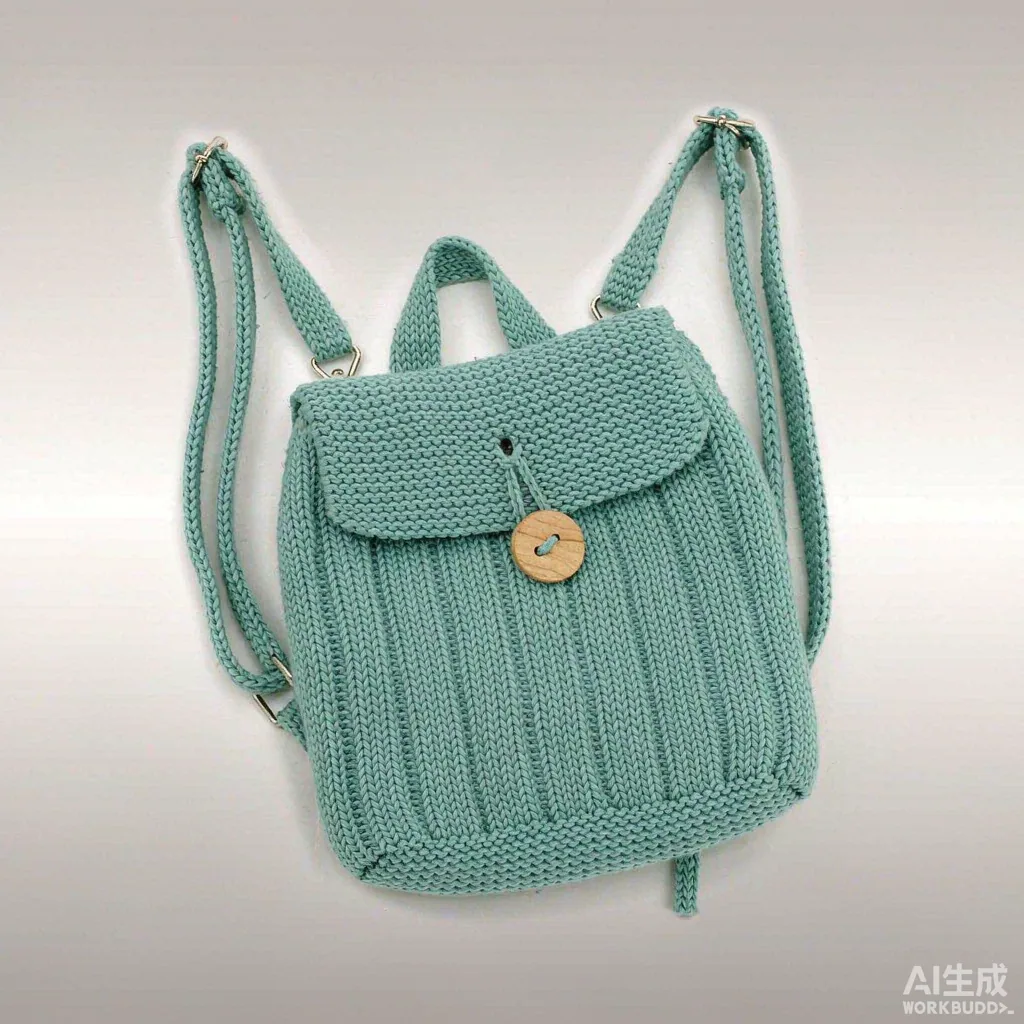
What Happens to a Bag After the Customer Stops Using It
In practice a discarded bag takes one of four routes: reuse through resale or donation, mechanical recycling into flake or fibre, energy recovery through incineration, or landfill. Which one it takes is decided by two things, whether anyone collects it and whether a recycler can process it, and the second is entirely a function of how the bag was specified. Collection is a market problem; processability is a design problem.
The numbers on a typical programme make the point. A 300 g tote across 12,000 pieces is 3.6 tonnes of material. If it is mono-material and collected, mechanical recycling returns roughly 3.1 to 3.3 tonnes of usable flake. If it is a four-material construction, that same 3.6 tonnes is about 3.6 tonnes of residue, because the mixed input has no buyer and the sorting cost exceeds the value of what comes out.
Reuse is the route that gets overlooked because it is not a waste route at all. A durable knitted bag that survives several years of use defers the disposal decision entirely, and on a per-use basis that is worth more than any recycling yield. The parameters that drive it are abrasion resistance and handle attachment strength, both of which are specification lines rather than marketing claims.
- Bag mass
- about 300 g for a mid-weight knitted tote
- Programme mass
- 3.6 tonnes across 12,000 pieces
- Mono-material recycling return
- about 3.1 to 3.3 tonnes of flake
- Four-material outcome
- about 3.6 tonnes of residue
- Mechanical yield, bale to flake
- 85 to 92 percent of collected mass
- Material families in a mono-material bag
- one
- Design decision that decides the route
- thread, label and coating polymer
The Four Routes Ranked by What They Preserve
| Route | What it preserves | What it requires | Honest limitation |
|---|---|---|---|
| Reuse | The whole article and all embedded energy | Durability: abrasion resistance, handle strength | Deferred, not solved; the bag still ends somewhere |
| Mechanical recycling | The polymer, as flake or fibre | Mono-material input, separable trims, wash-off adhesive | Yield is 85 to 92 percent and output is often downcycled |
| Energy recovery | Calorific value only | Nothing of the material is designed for | Destroys the polymer; counted as disposal in most frameworks |
| Landfill | Nothing | Nothing | Increasingly restricted and taxed across the EU |
Mono-Material Is the Whole Game
A knitted bag is closer to mono-material than almost any other bag construction, and that is its strongest end of life argument. The body, the handles, the pocket layers and the base zone are all formed from the same yarn in the same cycle, with no seam tape, no interlining adhesive and no different polymer holding the shape. A cut-and-sew bag of the same appearance typically has three or four polymers before a single trim is added.
The remaining obstacles are small and specific, and all of them are specification lines. Sewing thread is usually polyester and is compatible, but a cotton-core thread is not. Care labels are often polyester satin with a resin coating, and the coating is the problem rather than the base. Adhesives used to attach labels are usually the least considered item in the whole bag and the one that most often disqualifies it.
Base boards are the biggest single obstacle and the most frequently added late. A removable board is better than a bonded one, because it can be taken out by the user or the recycler, but a bonded interlining or a laminated foam base cannot be separated at any realistic cost. Where a bag has to stand up on a shelf, specify a removable board and say so in the product information.
What Disassembly Actually Costs
Disassembly is the fallback where a bag is not mono-material, and the economics are unforgiving. Removing a zip, a metal clasp and a base board from a bag takes several minutes of manual work, and at any commercial labour rate that cost exceeds the value of the polymer recovered from a 300 g article. In practice this means disassembly happens only where regulation requires it or where the recovered component has independent value.
The design implication is that trims should be removable quickly or not present. A snap-fastened base board that comes out in seconds is a different proposition from one bonded in permanently. A zip sewn in with polyester thread can be cut out in one operation; a zip welded into a coating cannot. The target to write down is disassembly time in minutes for the non-polymer content, because it is measurable and it drives the economics.
There is a second cost that never appears in a waste plan: the cost of a claim that cannot be supported. A bag marketed as recyclable that no local scheme accepts is a claim substantiation problem rather than a waste problem, and it is the exposure described in the greenwashing risk in bag marketing. Designing for the route that actually exists locally is both lower in cost and safer.
Mechanical Recycling: Yield and Downcycling
Mechanical recycling of polyester takes collected material, sorts it by polymer and colour, washes it, grinds it into flake and then either re-extrudes it into pellet for new yarn or uses it directly. Yield from bale to usable flake typically runs 85 to 92 percent by mass, with the loss going to labels, dirt, moisture and non-polymer content. Each thermal cycle shortens the polymer chains slightly, which is why output is frequently downcycled.
Downcycling is the honest part of the story and should be stated rather than avoided. Flake from a bag programme is more likely to become fibrefill, strapping or a lower-grade filament than to become another bag, because the molecular weight and the colour consistency required for fine yarn are demanding. That is still material recovery and it is still better than energy recovery, but it is not closed-loop recycling.
Colour is the variable a buyer controls that most affects the output value. Undyed or dope-dyed material in a single shade sorts and reprocesses cleanly; a mixed-colour bale has to be dark-limited or re-dyed, which costs energy and reduces what the flake is worth. This is the same argument that appears in the carbon footprint of a knitted bag from the emissions side.
Take-Back Schemes: Honest Return Rates
Brand take-back schemes are the mechanism most often proposed and the one whose numbers are most often overstated. Return rates for voluntary textile take-back are modest, and a scheme that recovers a small single-digit percentage of what was sold is a normal result rather than a failure. A buyer planning a scheme should plan for that and should not build a recyclability claim on the assumption that most bags will come back.
Two design decisions improve the rate materially. The first is making the return easy: a prepaid label or a store drop-off point beats a postal address in the care label. The second is making the bag worth returning, which means durable enough to still have value and clearly marked so the customer knows it is wanted back. Both cost little and both move the percentage more than any communication campaign.
The arithmetic to hold on to is that take-back multiplies with recycling yield, not with the number of bags sold. A scheme returning 10 percent of a 12,000 piece programme recovers 360 kg of bags, and at 88 percent yield that is about 317 kg of flake. Presented honestly that is a real result; presented as a closed-loop guarantee it is not, and it is the kind of claim that attracts challenge.
Landfill and Energy Recovery: What the Fee Buys
Where a bag is not recyclable and not collected, it is landfilled or incinerated, and the difference between them is narrower than either side usually presents. Landfill preserves nothing and is increasingly taxed and restricted across the EU. Energy recovery recovers the calorific value of the polymer, which for polyester is real but modest, and destroys the material so that nothing is available for a second cycle.
The comparison that matters is between energy recovery and mechanical recycling, and mechanical recycling wins by a wide margin on material terms. Putting the polymer back into use avoids the extraction and polymerisation steps, which is why recycled polyester carries a fibre factor of roughly 2.0 to 3.0 kg CO2e per kg against 4.5 to 6.0 for virgin. Burning the bag returns a fraction of that and forecloses the rest.
For a buyer the practical point is that the fee is not the decision criterion. A landfill or incineration gate fee is a small number per tonne next to the value of the material lost, and where a producer responsibility scheme applies, the fee is increasingly modulated by recyclability. Design for the recyclable route and the fee follows; design for disposal and the fee rises.
The Regulatory Direction in the EU
Three EU instruments shape where this is heading, and a bag buyer selling into Europe should know all three by name. The Waste Framework Directive requires separate collection of textiles, which changes what is available to recycle. The Ecodesign for Sustainable Products Regulation sets a framework for product requirements including recyclability and a digital product passport. Producer responsibility schemes for textiles put the cost of end of life onto the brand placing the article on the market.
The common thread is that the requirement moves upstream. Rather than asking a waste operator to deal with a bag, the rules increasingly ask the brand to have designed it so that dealing with it is possible, and to carry evidence of that. For a knitted bag programme this is favourable, because a mono-material knitted construction is one of the easier articles to evidence, provided the specification and the trims list exist on paper.
The operational consequence is documentation. A digital product passport and a producer responsibility declaration both need a material breakdown by mass, a trims list and a stated end of life route. Those are three artefacts a bag programme can produce from its specification with a few hours of work, and they are far harder to assemble retrospectively from purchase records two seasons later.
Designing a Bag for the Route It Will Actually Take
One polymer in the body
Keep yarn, thread and labels polyester. A cotton-core thread or a coated satin label disqualifies an otherwise recyclable bag.
Removable base board
A snap-fit board comes out in seconds. A bonded interlining or laminated foam base cannot be separated at any realistic cost.
Count the trims
Each trim is another material family. A bag with one polymer and two trims is a different proposition from one with four families.
Design for local infrastructure
A recyclable-in-theory bag that no local scheme accepts is a claim risk, not a waste solution. Check the market of sale.
Build durability first
Reuse defers disposal entirely and beats any recycling yield on a per-use basis. Abrasion resistance and handle strength are the levers.
Write the material breakdown
A mass breakdown by component is what a passport declaration and a producer responsibility filing both need. Assemble it from the specification.

Writing End of Life Into the Specification
End of life belongs in the specification as a material breakdown by mass plus a stated route, and it takes about six lines. List each component with its polymer and its mass in grams, name the thread and label materials, state whether the base board is removable, and name the intended end of life route in the market of sale. That is the artefact a customer questionnaire, a passport declaration and a claim substantiation file all ask for.
The clause that prevents most problems is a change-control one requiring notification before any trim material changes. End of life performance is decided by exactly the small components that get substituted mid-programme, and a bag that was mono-material at sampling can quietly become a three-polymer article by bulk if nobody is watching. Notification costs nothing; discovering it later costs the claim.
The end of life clause in one line
- List every component with its polymer and mass.
- keep the body to one polymer with removable trims.
- name the intended route.
- and require notification before any trim material changes.
Specify a knitted bag for its end of life route
Send the bag type, target market and trim list. We will confirm a mono-material build, produce the material breakdown by mass and quote FOB Xiamen at 100 pcs per style and colourway with 7 working days sampling and 30 days bulk. Start on the contact page.
Frequently Asked Questions
What happens to a knitted bag at the end of its life?
One of four things: reuse, mechanical recycling into flake or fibre, energy recovery, or landfill. Which one applies is decided by whether anyone collects it and whether a recycler can process it, and the second is entirely determined by how the bag was specified.
Are knitted bags recyclable?
More readily than most bags, because the body, handles, pockets and base zone are formed from one yarn in one cycle with no interlining adhesive or seam tape. The remaining obstacles are the thread, the care label, the label adhesive and any bonded base board, all of which are specification lines.
What is the recycling yield for a polyester bag?
Roughly 85 to 92 percent by mass from bale to usable flake, with the loss going to labels, dirt, moisture and non-polymer content. The flake is frequently downcycled into fibrefill or strapping rather than becoming another bag.
What stops a knitted bag being recycled?
Usually the small components: a cotton-core sewing thread, a resin-coated care label, a label adhesive that does not wash off, and a bonded or laminated base board. Each is individually trivial and each is enough to disqualify the article.
Is a removable base board better than a bonded one?
Yes. A snap-fit board can be removed in seconds by the user or the recycler, while a bonded interlining or a laminated foam base cannot be separated at any realistic cost. Where a bag must stand up, specify removable and say so in the product information.
How much do take-back schemes actually recover?
A modest percentage, and a small single-digit return is a normal result rather than a failure. Ten percent of a 12,000 piece programme is 360 kg of bags, which at 88 percent yield gives about 317 kg of flake. Plan for that, not for a closed loop.
Is energy recovery better than landfill for bags?
Marginally. Energy recovery returns the calorific value of the polymer and landfill returns nothing, but both destroy the material so nothing is available for a second cycle. Mechanical recycling wins by a wide margin because it avoids extraction and polymerisation.
Why does recycled polyester have a lower fibre factor?
Because the polymer has already passed through its most energy-intensive step. Recycled polyester sits near 2.0 to 3.0 kg CO2e per kg against 4.5 to 6.0 for virgin, which is exactly the value destroyed when a recyclable bag is incinerated.
What EU rules affect bag end of life?
Three: the Waste Framework Directive requiring separate textile collection, the Ecodesign for Sustainable Products Regulation setting product requirements including recyclability and a digital product passport, and textile producer responsibility schemes placing the cost on the brand.
What documentation does end of life compliance need?
A material breakdown by mass, a trims list and a stated route in the market of sale. Those three artefacts can be produced from the specification in a few hours, and are much harder to assemble retrospectively from purchase records.
Does durability matter more than recyclability?
On a per-use basis, yes. A bag that survives several years of use defers the disposal decision entirely, and the levers are abrasion resistance and handle attachment strength. Durability and recyclability are complementary rather than competing.
How should a claim about recyclability be worded?
Tie it to infrastructure that exists in the market of sale rather than to a theoretical property. A bag described as recyclable where no local scheme accepts it is a claim substantiation exposure rather than a waste solution.
What should the end of life clause in a specification say?
List each component with its polymer and mass in grams, name the thread and label materials, state whether the base board is removable, and name the intended route. Add a change-control clause covering any trim material substitution.
Why does colour affect recycling value?
Undyed or dope-dyed material in one shade sorts and reprocesses cleanly, while a mixed-colour bale has to be dark-limited or re-dyed. That costs energy and reduces what the flake is worth, which is the same argument as on the emissions side.
People Also Ask
Are knitted bags recyclable at end of life?
More readily than most bag types, because the body is one yarn with no adhesive or interlining. The disqualifiers are small: cotton-core thread, coated labels, adhesive and bonded base boards.
What is the yield when recycling a polyester bag?
About 85 to 92 percent by mass from bale to usable flake. Losses go to labels, dirt and non-polymer content, and the output is often downcycled into fibrefill or strapping.
Should a bag have a removable base board?
Yes, where standing shape is needed. A snap-fit board comes out in seconds; a bonded interlining cannot be separated at any realistic cost and disqualifies an otherwise recyclable article.
How much do take-back schemes recover?
A modest share. Ten percent of a 12,000 piece programme is 360 kg of bags, which yields roughly 317 kg of flake. Plan for that rather than presenting a closed-loop guarantee.
What EU rules affect what happens to bags?
The Waste Framework Directive on separate textile collection, the Ecodesign for Sustainable Products Regulation on product requirements and passports, and textile producer responsibility schemes that put end of life cost on the brand.
Sources and further reading
Every figure on this page is either our own programme data or attributed below. Open the originals before you write them into a specification.
- Waste Framework DirectiveEuropean Commission The separate collection obligation and waste hierarchy that determine which end of life route is actually available in the EU.
- Regulation (EU) 2024/1781, Ecodesign for Sustainable Products RegulationEuropean Union Sets the framework for product requirements including recyclability and the digital product passport.
- Directive (EU) 2018/851 amending the Waste Framework DirectiveEuropean Union The legal basis for separate textile collection and for producer responsibility schemes in the member states.
- Textile Exchange standardsTextile Exchange Recycled content framework relevant to mechanically recycled output from bag programmes.
- OEKO-TEX STANDARD 100OEKO-TEX Relevant when changing thread, label or adhesive materials to reach a mono-material build.