Knitted Bag Carbon Footprint: Where the Emissions Actually Sit in a Knit Programme
Where does the carbon in a knitted bag actually sit? Mostly in the yarn, not in the knitting. A 420 g/m² knitted tote consumes about 255 g of yarn including waste, and at a fibre factor of 4.5 to 6.0 kg CO2e per kg for virgin PET that is 1.15 to 1.53 kg CO2e before dyeing, finishing or freight. Shaped knitting holds cutting waste near 2 to 4 percent against 12 to 18 percent for cut-and-sew, and freight mode can move the total by more than every upstream step combined.
Where Carbon Sits in a Knitted Bag
In a knitted bag programme roughly 70 to 80 percent of cradle-to-gate carbon sits in the yarn and its dyeing, while knitting, assembly and packing together account for well under a quarter of the total. That distribution is the most useful thing a buyer can know, because it says where a specification change will and will not help: trimming the knitting cycle barely moves the number, while changing yarn mass or yarn route moves it a great deal.
The practical consequence is that footprint work on a knit bag is yarn work. A 10 percent reduction in fabric mass removes close to 10 percent of the yarn line and therefore close to 10 percent of the largest single block of emissions. Switching from virgin PET to recycled PET moves that block by roughly half. Neither requires a change to the bag design, and both are specification decisions rather than engineering projects, which is why they are achievable inside a normal sampling window.
The second useful point is that the advantage of knitting over cutting is a yield story, not a machine story. Shaped knitting forms the panel close to the finished outline, so offcuts are small and largely recyclable at the point of production. A cut-and-sew bag starts from a rectangular marker and discards the difference, and that difference is between 12 and 18 percent of the fabric bought. The energy used per minute on a knitting machine is essentially irrelevant next to the material that never becomes a bag.
- Yarn, 255 g at 4.5 to 6.0 kg CO2e per kg
- 1.15 to 1.53 kg CO2e
- Dyeing and finishing
- 0.30 to 0.60 kg CO2e
- Knitting
- 0.05 to 0.12 kg CO2e
- Assembly, trims and packing
- 0.05 to 0.10 kg CO2e
- Sea freight, Xiamen to Rotterdam
- 0.03 to 0.06 kg CO2e
- Air freight, the same lane
- 3.40 to 4.20 kg CO2e
Yarn Mass Is the First Variable
Fabric mass is the first variable because yarn is bought by weight and the footprint follows the weight. A knitted tote at 420 g/m² with a surface area near 0.55 square metres uses about 231 g of fabric, and about 255 g of yarn once knitting waste is included. Drop the specification to 380 g/m² and the yarn line falls by roughly 25 g per bag, which is close to a 10 percent cut in the dominant emission block and a comparable cut in yarn cost.
The trap is buying mass the design does not need. Buyers often raise fabric mass to solve a handle-tear or a base-wear problem, when the better answer in both carbon and cost is a denser zone at the point of load. A body at 380 g/m² with a 560 g/m² base zone and a reinforced handle root will usually outperform a uniform 460 g/m² body, and it uses less yarn doing it. Zoning is the strongest carbon lever available on a knit bag, because it puts material only where load actually travels, and it costs nothing in cycle time.
Gauge interacts with mass in ways worth stating in the specification. At E12 a 300D yarn reaches 420 g/m² with a tight, stable loop; at E7 the same mass needs a heavier yarn and produces a coarser surface that reads differently at retail. Neither route is lower carbon in itself, so the choice should be made on surface and structure first, and the yarn should then be bought once, correctly, rather than re-sourced after a failed sample round.
Virgin PET Versus rPET: What the Numbers Show
The fibre factor is what separates the two routes. Published life-cycle ranges put virgin PET filament near 4.5 to 6.0 kg CO2e per kg of fibre, while mechanically recycled PET sits near 2.0 to 3.0 kg CO2e per kg, because the polymer has already passed through its most energy-intensive step. Applied to 255 g of yarn, that is the difference between roughly 1.15 to 1.53 kg CO2e and roughly 0.51 to 0.77 kg CO2e per bag, before any other step is counted.
That saving is real but it is not free, and a buyer should know what is being traded. Recycled polyester can carry slightly lower tenacity and a narrower colour window, which matters at the handle root and on a brand-critical shade. It also needs documentation to survive a claim, and that documentation is a separate workstream from the yarn itself, with its own lead time. See rPET traceability for bag programmes for what to collect and when.
A third route deserves a mention because it is often overlooked: dope-dyed yarn. Colour added at polymer stage removes a wet dyeing step from the bag's footprint, saving roughly 0.2 to 0.35 kg CO2e per bag and a substantial volume of water, at the cost of a higher minimum and a fixed shade card. For a programme running one or two colours at volume it is usually the strongest single lever available, and it does not change the bag's appearance or construction at all.
| Yarn route | Fibre factor kg CO2e per kg | Per bag, 255 g yarn | Watch-outs |
|---|---|---|---|
| Virgin PET | 4.5 to 6.0 | 1.15 to 1.53 | baseline; widest colour window |
| Recycled PET | 2.0 to 3.0 | 0.51 to 0.77 | needs transaction certificate per shipment |
| Dope-dyed PET | 4.6 to 6.2, dyeing removed | 0.95 to 1.30 | fixed shade card, higher minimum |
| Recycled plus dope-dyed | 2.1 to 3.1, dyeing removed | 0.30 to 0.55 | narrowest colour window of the four |
Cutting Waste: The Structural Advantage of Shaped Knitting
Yield is where a knitted construction wins on carbon without any change in material. Shaped knitting produces the panel close to the finished outline, so knitting waste is typically 2 to 4 percent of yarn input and that waste is clean, single-polymer and recyclable at source. A cut-and-sew bag discards 12 to 18 percent of the fabric it buys as offcuts, and mixed-fibre offcuts are far harder to recycle back into usable material.
The arithmetic on a tote is straightforward. At 255 g of yarn input, 3 percent waste is about 8 g; a comparable cut-and-sew bag at 16 percent waste discards closer to 44 g, and it has to buy more fabric to deliver the same finished panel. Over a 10,000 piece programme that is roughly 360 kg of material difference before recycling is even considered, which is a bigger number than most finishing changes produce.
The honest caveat is that knitting waste is not zero, and the number depends on how well the pattern nests on the needle bed. Poor nesting on a complex shape can push waste toward 6 percent, which still beats cutting but removes some of the margin. Ask for the yarn input per bag rather than the fabric mass, because the input figure is the one that carries both the waste and the footprint, and it is the figure a calculation can actually use.
Dyeing, Finishing and the Energy Behind Colour
Dyeing and finishing typically add 0.30 to 0.60 kg CO2e per knitted bag, and almost all of it is thermal energy: heating the bath, holding temperature, and drying the load afterwards. A piece-dyed polyester bag at 255 g of fabric sits near the middle of that range; a bag made from dope-dyed yarn avoids most of it, because the colour was added while the polymer was already molten and no second heat cycle is needed.
Colourway count is the multiplier nobody plans for. Each shade is a separate bath with its own heat-up, its own rinse and its own lab dips, so a five-colourway programme carries roughly five times the dyeing energy of a one-colourway programme at the same total volume. Consolidating four shades to three is a carbon decision as much as a cost decision, and it is one of the few changes that improves both at once.
Finishing is smaller but not negligible. Anti-pilling, water-repellent and antibacterial finishes each add a wet step and a curing step, and curing is the expensive part in energy terms. Where a finish is required for performance, specify it on the zone that needs it rather than across the whole bag, and specify a durable finish rather than one that will wash off and need reapplication. A finish that fails in use is a footprint cost with no benefit attached.
Freight Mode Can Outweigh Everything Upstream
Freight is the variable that most often invalidates a footprint comparison, because it is a logistics choice rather than a design property. A 0.3 kg folded knitted tote shipped by sea from Xiamen to Rotterdam carries roughly 0.03 to 0.06 kg CO2e, which is a rounding error against a 1.6 to 2.4 kg CO2e upstream total. The same bag flown to meet a launch date carries roughly 3.4 to 4.2 kg CO2e, which more than doubles the whole footprint.
The decision is usually made late and outside the sourcing team, which is why it escapes the footprint conversation entirely. A 30 day bulk window plus sea transit is enough for most seasonal programmes if the calendar is set early; the air-freight decision is almost always the consequence of a colour approval that slipped, not of a genuinely short lead time. Fixing the approval calendar is therefore a carbon measure with no material cost.
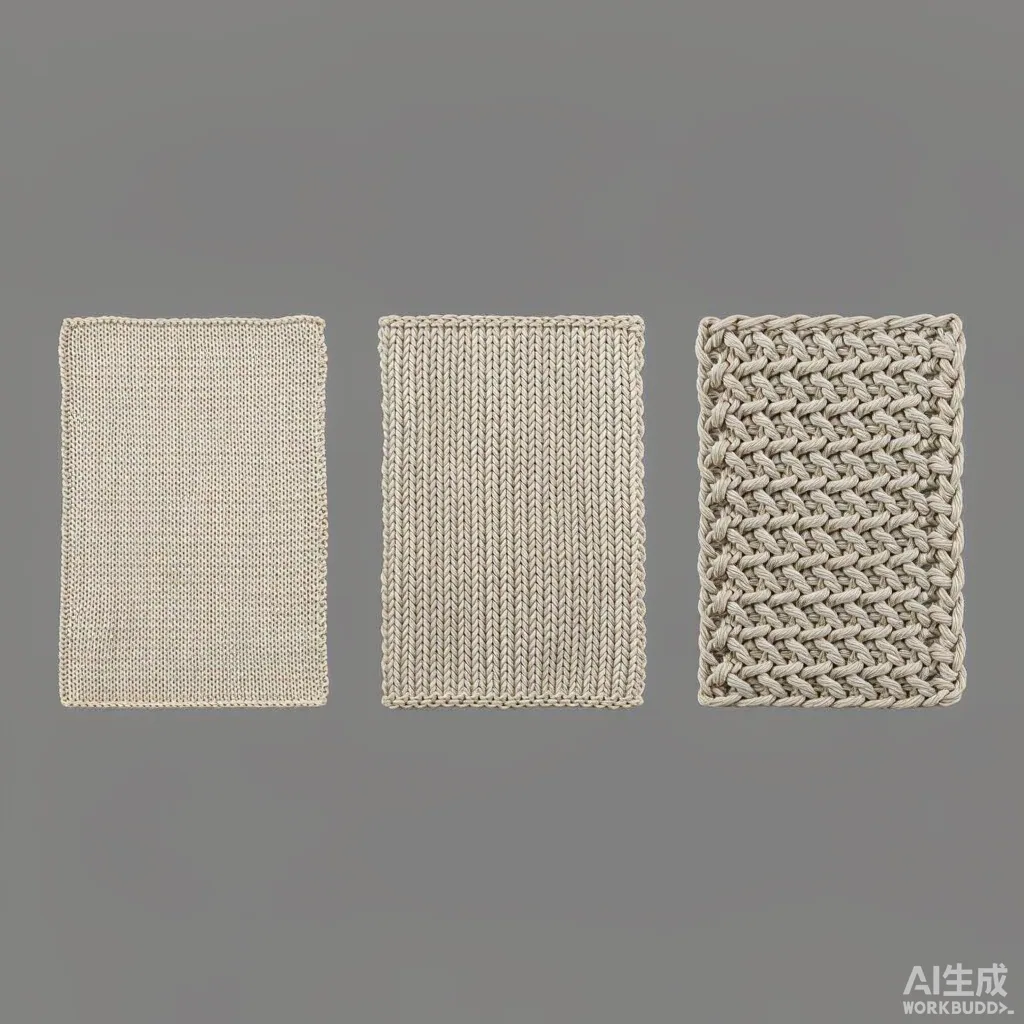
A Worked Footprint for One Tote
Put together, a mid-weight knitted tote at 420 g/m² from virgin PET, piece-dyed and shipped by sea from Xiamen lands between roughly 1.6 and 2.4 kg CO2e. The same bag in recycled PET lands near 1.0 to 1.6 kg CO2e. The same bag in recycled PET with dope-dyed yarn lands near 0.8 to 1.3 kg CO2e. The same bag flown instead of shipped lands above 5 kg CO2e on every one of those routes.
Those bands are wide and they should be presented as bands. A single-point figure such as 1.84 kg CO2e implies a precision no bag programme has, because fibre factors vary by source, energy grids vary by region, and dyehouse efficiency varies by machine and by load size. What a buyer can hold a partner to is the method, the boundary and the input data, not the second decimal place. Ask for the arithmetic and check it, rather than asking for a certificate with a number on it.
What a Buyer Can Actually Change
Zone the density
Put mass at the base and the handle root instead of raising the whole body. Usually outperforms a uniform heavier fabric and uses less yarn.
Change the yarn route
Recycled PET roughly halves the yarn block. Dope-dyed yarn removes most of the dyeing block. Both are specification lines, not redesigns.
Consolidate colourways
Every shade is another bath and another set of lab dips. Four shades to three cuts dyeing energy by about a quarter with no design change.
Ship by sea
The largest single swing available, and usually decided by the approval calendar rather than by the lead time. Set the calendar early.
Ask for yarn input
Fabric mass hides the waste. Yarn input per bag carries both, and it is the only figure a footprint calculation can use honestly.
Fix the boundary
State whether the number is cradle-to-gate or cradle-to-grave before comparing two quotes. They differ by more than any yarn choice.
How to Ask for a Number Without Getting Fiction
The failure mode in bag footprint work is not bad data, it is undisclosed method. Two quotes can differ by 40 percent and both be arithmetically correct, because one is cradle-to-gate and the other includes use and end of life, or one counts knitting waste as recycled and the other as landfill. Asking for five specific things puts the two numbers on the same basis and takes about one email.
- The boundary: cradle-to-gate, cradle-to-grave, or gate-to-gate. Write it into the request, not the footnote.
- The yarn input per bag in grams, including knitting waste, rather than the finished fabric mass.
- The fibre factor used per kilogram, with the source named and the year stated.
- The dyeing assumption: piece-dyed, dope-dyed, or yarn-dyed, and the number of colourways counted.
- The freight assumption: mode, lane and whether the packaging mass is included in the shipped weight.
- The recycling credit treatment, if any, for production waste and for end of life.
Writing Footprint into a Knit Bag Specification
A footprint clause belongs in the fabric section of the specification, next to yarn, gauge and fabric mass, because those are the three lines it depends on. It should name the yarn route, the fabric mass with its tolerance, the dyeing method and the boundary of any figure quoted. It should not name a single-point carbon number as an acceptance criterion, because no inspection method can measure it at goods-in and a clause that cannot be checked is a clause that will be ignored.
The footprint clause in one line
- Name the yarn route, the fabric mass with tolerance, the dyeing method and the boundary.
- Hold the programme to the inputs, not to a single-point carbon figure.
Build a lower-footprint knit bag specification
Send the bag type, target fabric mass and colourway count. We will model the yarn input, compare virgin, recycled and dope-dyed routes, and quote FOB Xiamen at 100 pcs per style and colourway with 7 working days sampling and 30 days bulk. Start on the contact page.
Frequently Asked Questions
What is the carbon footprint of a knitted bag?
A mid-weight knitted tote at 420 g/m² from virgin PET, piece-dyed and shipped by sea lands between roughly 1.6 and 2.4 kg CO2e. In recycled PET the same bag lands near 1.0 to 1.6 kg CO2e. Those are bands, not single figures, because fibre factors vary by source region and energy grid.
Where do most emissions come from in a knitted bag?
From the yarn. Roughly 70 to 80 percent of cradle-to-gate carbon sits in fibre production and dyeing, while knitting, assembly and packing together account for under a quarter. That means trimming machine time barely moves the number, while changing yarn mass or yarn route moves it substantially.
How much yarn does a knitted tote use?
About 255 g including roughly 10 percent knitting waste, for a 420 g/m² body over around 0.55 square metres of surface. The finished fabric is about 231 g. Yarn input is the figure to ask for, because fabric mass alone hides the waste and therefore the footprint.
Is recycled polyester lower carbon for bags?
Yes, materially. Mechanically recycled PET sits near 2.0 to 3.0 kg CO2e per kg against 4.5 to 6.0 for virgin PET, so on 255 g of yarn the block falls from about 1.15 to 1.53 kg CO2e down to about 0.51 to 0.77 kg CO2e. Expect slightly narrower colour windows and a documentation workstream.
Does knitting produce less waste than cutting?
Shaped knitting typically wastes 2 to 4 percent of yarn input against 12 to 18 percent for cut-and-sew, because the panel is formed close to the finished outline. Knitting waste is also single-polymer and recyclable at source, whereas mixed-fibre offcuts are much harder to recover.
How much carbon does dyeing add to a bag?
Typically 0.30 to 0.60 kg CO2e per bag, and almost all of it is thermal energy for heating, holding and drying. Dope-dyed yarn removes most of that step because colour is added at polymer stage. Each additional colourway adds another bath, rinse and set of lab dips.
Does air freight change a bag's footprint?
Dramatically. A 0.3 kg tote carried by sea from Xiamen to Rotterdam carries roughly 0.03 to 0.06 kg CO2e, while the same bag flown carries roughly 3.4 to 4.2 kg CO2e. That single logistics choice can exceed every upstream step combined, and it is usually caused by a slipped colour approval.
Can dope-dyed yarn reduce a knitted bag footprint?
Yes, by roughly 0.2 to 0.35 kg CO2e per bag, because a wet dyeing and drying cycle is removed. The trade-offs are a fixed shade card and a higher minimum per colour. For a programme running one or two colours at volume it is usually the strongest single lever available.
How should a buyer ask for a footprint figure?
Ask for six things: the boundary, the yarn input in grams including waste, the fibre factor per kilogram with its source, the dyeing method and colourway count, the freight assumption, and how recycling credits are treated. That puts two quotes on the same basis and takes about one email.
Does reducing fabric mass always reduce carbon?
It reduces yarn and therefore carbon, but only if performance does not suffer and the programme is not re-sampled. Zoning is usually better: a 380 g/m² body with a 560 g/m² base zone and a reinforced handle root beats a uniform 460 g/m² body while using less yarn.
How many colourways should a low-carbon programme run?
As few as merchandising allows. Each shade is a separate bath with its own rinse and lab dips, so five colourways carry roughly five times the dyeing energy of one at the same total volume. Consolidating four shades to three is a carbon and cost decision at once.
What boundary should a bag footprint use?
Cradle-to-gate is the practical boundary for a sourcing decision, because it covers yarn, dyeing, knitting and assembly up to the point the goods leave. Cradle-to-grave adds use and end of life, which the buyer controls more than the programme does. Always state which one is being quoted.
People Also Ask
What is the carbon footprint of a knitted tote bag?
Roughly 1.6 to 2.4 kg CO2e for a 420 g/m² virgin PET tote shipped by sea, and about 1.0 to 1.6 kg CO2e in recycled PET. Air freight pushes the same bag above 5 kg CO2e.
Does knitted construction use less material than cut-and-sew?
Yes. Shaped knitting wastes around 2 to 4 percent of yarn input against 12 to 18 percent for cut-and-sew, because the panel is knitted close to the finished outline rather than cut from a rectangle.
How much does recycled yarn cut a bag's carbon?
Around half of the yarn block. On 255 g of yarn the fibre contribution falls from roughly 1.15 to 1.53 kg CO2e down to about 0.51 to 0.77 kg CO2e, before any change to dyeing or freight.
Why does air freight dominate bag emissions?
Because air carries roughly 60 to 70 times the carbon per kilogram of sea freight. A 0.3 kg tote goes from about 0.05 kg CO2e by sea to roughly 3.8 kg CO2e by air, which exceeds all upstream steps combined.
Should a footprint number go into a bag specification?
Name the inputs, not a single-point figure. Specify yarn route, fabric mass with tolerance and dyeing method, and state the boundary of any quoted number. A carbon figure cannot be inspected at goods-in.
Sources and further reading
Every figure on this page is either our own programme data or attributed below. Open the originals before you write them into a specification.
- Product Life Cycle Accounting and Reporting StandardGHG Protocol The boundary and allocation rules behind cradle-to-gate versus cradle-to-grave figures quoted for bag programmes.
- AR6 Working Group III: Mitigation of Climate ChangeIPCC Reference source for the emissions intensity of freight modes and industrial energy used in the bands quoted here.
- Textile Exchange standardsTextile Exchange Framework behind recycled-content yarn routes and the transaction documentation that supports a recycled claim.
- OEKO-TEX STANDARD 100OEKO-TEX Finished-article certificate to request alongside any yarn-route change, so the change does not introduce a chemical issue.
- ISO 2859-1 Sampling procedures for inspection by attributesISO The AQL 2.5 sampling plan used at final inspection, which is where packing and freight assumptions start to matter.