Zero Waste Knitting Explained: Yield Calculations, Shaping Strategies and the Waste That Knitting Does Not Eliminate
What does zero waste actually mean in a knitting programme? Not literally zero — knitting still produces cone remnants, run-in ends and defectives, typically 3 to 6 per cent of yarn. It means the near-elimination of the cutting waste a cut-and-sew line generates, which is where 12 to 18 per cent of the material goes. The gap between the two is structural, and it is the part a specification can actually influence.
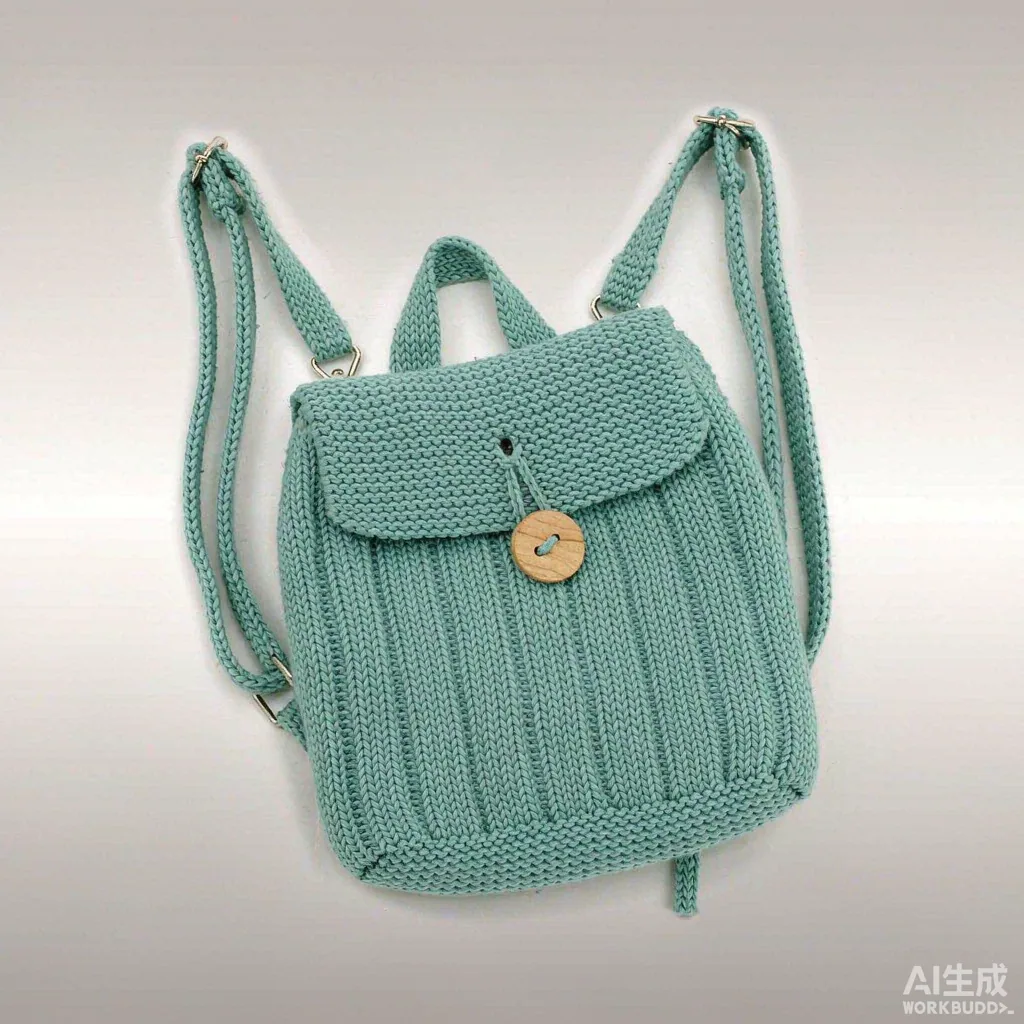
What Does Zero Waste Mean in a Knitting Programme?
In a knitting programme, zero waste means the article is produced close to net shape so there is no cutting offcut, with residual waste limited to cone remnants, run-in ends and defectives — usually 3 to 6 per cent of yarn consumed.
The term is used loosely, and that creates the disputes. A claim of zero waste cannot mean that a facility produces no discarded material of any kind, because the yarn supply chain always leaves remnants on cones and the machine always needs a run-in length before the structure stabilises. What it can mean is that the design stage stops generating geometric waste.
That distinction is worth holding onto because it determines what can be measured. If zero waste means no cutting offcut, then the measurable quantity is yield: the share of yarn consumed that ends up in the finished article. If it means something vaguer, there is nothing to put in a specification and nothing to verify at goods-in.
The distinction also explains why the claim survives scrutiny in some programmes and not others. Where a buyer has written a yield target into the technical pack and records yield per run, the number can be produced on request. Where the claim rests on an intention, it cannot, and the gap only becomes visible when someone asks for evidence.
The practical definition used for knit bag programmes is a yield figure calculated per production run, reported alongside the waste streams it excludes. That makes the claim auditable and stops it from collapsing into marketing language.
How Much Waste Does Conventional Bag Cutting Produce?
Cut-and-sew bag production typically loses 12 to 18 per cent of fabric to marker offcut, with well-nested simple shapes reaching the lower end and complex or patterned shapes the upper end.
The loss is geometric rather than operational. Panels are cut from rectangular fabric, and whatever falls outside the nested shapes is discarded. Better nesting software and simpler pattern shapes reduce it, but they cannot remove it, because the waste is created by the difference between a rectangle and a bag panel.
That is worth stating precisely, because it sets a floor. No amount of process improvement removes the gap between the shape of the fabric supply and the shape of the panel. Knitting removes it structurally by making the fabric in the shape of the panel instead of cutting the panel out of the fabric.
The second source is defect management. A flaw in the fabric means a panel is either cut around or rejected, and both outcomes generate waste. A knitted structure has the same exposure, but the loss is smaller because the affected unit is one article rather than a length of fabric containing several panels.
Pattern matching adds a third. Where a design requires a stripe, a logo or a motif to align across panels, the amount of usable fabric falls further, because the marker has to place shapes relative to the pattern rather than purely for material efficiency.
Where Does Knitting Waste Actually Come From?
Three streams account for nearly all knitting waste: cone remnants of roughly 40 to 80 grams per cone, run-in yarn consumed before the structure stabilises, and defectives from the run.
| Waste stream | Typical magnitude | Controllable? | Main lever |
|---|---|---|---|
| Cone remnants | 40 - 80 g per cone | Partly | Larger cones, run planning across sizes |
| Run-in yarn | Fixed length per start-up | Partly | Fewer start-ups, longer continuous runs |
| Defectives | Low single-digit per cent | Yes | Loop-length control, yarn lot consistency |
| Finishing and packing | Small | Yes | Specification discipline at the trim stage |
Cone remnants are the largest of the three and the least intuitive. A machine stops when the yarn runs out, and the last length on the cone cannot be knitted reliably because tension changes near the core. Planning runs so that cones finish together, rather than mid-run, removes most of this.
Run-in yarn is fixed per start-up and therefore scales inversely with run length. This is the mechanical reason a low minimum order quantity is workable in knitting: the setup loss per article is small and predictable, so a 100-piece run does not carry a disproportionate material penalty.
Defectives are the controllable stream, and the levers are loop-length control and yarn-lot consistency. Recycled filament varies more between lots than virgin, which is why loop length is re-checked at the start of every lot rather than once at the start of the programme.
How Do You Calculate Yield for a Knitted Bag?
Yield equals the yarn mass in finished, saleable articles divided by the total yarn mass consumed in the run, expressed as a percentage — and it should be recorded per run rather than estimated per style.
A worked example shows the mechanics. A run consumes 430 kg of 300D/96f recycled polyester and produces 1,000 saleable bags at an average of 400 g of yarn each, or 400 kg. Yield is 400 divided by 430, or about 93 per cent. The 30 kg difference is cone remnants, run-in ends and defectives.
- Yarn consumed in run
- 430 kg
- Saleable output
- 1,000 bags
- Yarn per finished bag
- 400 g
- Yarn in finished goods
- 400 kg
- Calculated yield
- About 93%
- Cone remnant allowance
- 40 - 80 g per cone
- Knitting gauge
- E12
- Loop length
- 6.35 mm ± 0.1 mm
- Courses per cm
- 5.2
- Wales per cm
- 4.6
- Defective rate
- Low single-digit per cent
- Comparable cutting waste
- 12 - 18% of fabric
- MOQ
- 100 pcs per style / colourway
- Sampling / bulk
- 7 working days / 30 days
The comparison that matters is against the 12 to 18 per cent a cut-and-sew line loses. A 93 per cent yield means roughly 7 per cent loss, which is better than the good end of most cut-and-sew operations and far better than the typical one. Over a programme of several thousand pieces the material difference is substantial.
Recording yield per run also creates a diagnostic. A sudden drop points to a specific cause — a yarn lot with higher friction changing loop length, a tension problem on one machine, or a defect spike. Programmes that log yield per run find problems in days; those that only look at it annually find them in the next season's costs.
Which Shaping Strategies Reduce Waste Most?
Three strategies do most of the work, in order of effect: knitting the article to net shape, integrating handles and openings into the body, and grading sizes in the programme rather than in the cut.
Net-shape knitting
Panels come off the machine at final outline, so there is no marker and no offcut. This is the source of most of the saving.
Integrated components
Handles, openings and reinforcement knitted in rather than attached, removing parts and their offcut.
Programme-level grading
Sizes graded in the knit file rather than cut from graduated patterns, which removes size-change waste.
Integrated components deserve elaboration because the saving is larger than it appears. A conventional handle strap is cut from webbing, generating end waste, then attached with thread and often a reinforcement patch, generating more. Knitting the handle band into the body removes all three, and it keeps the polymer family uniform, which feeds directly into end-of-life recovery.
Programme-level grading is the least discussed of the three and often the easiest to adopt. Where a collection runs three sizes, cutting all three from the same marker generates offcut at each size transition. Grading in the knit file removes the transition waste entirely.
What Does Zero Waste Not Cover?
Zero waste addresses production waste only; it says nothing about the waste of unsold inventory, the waste created by short service life, or the chemical burden of the finishing route.
The unsold-inventory point is the most commercially relevant. A programme that produces efficiently and then writes off a third of the run has not reduced waste in any meaningful sense — it has moved it from the cutting table to the warehouse. This is another argument for a low minimum order quantity: shorter runs can be matched more closely to actual demand.
The service-life point is second. A bag that fails after twenty trips has to be replaced, and the replacement carries the full production burden again. Durability testing — abrasion to ISO 12947, tensile to ISO 13934-1, colour fastness to AATCC 61 — is what makes a low-waste claim meaningful rather than merely technical.
The chemical point is third and is covered by a different document family entirely. Production efficiency does not make an article compliant; that question is answered by testing against the restrictions that apply in the destination market. See REACH compliance for bag imports.
How Should Waste Reduction Be Measured and Reported?
Report yield per production run as a percentage, with the excluded waste streams named, and keep the record at article level so it can be compared across seasons.
- Record yarn consumed and yarn in saleable output for every run.
- Name the excluded streams — cone remnants, run-in ends, defectives, finishing trim.
- Keep the record at article level rather than order level, so it stays current.
- Compare against a stated baseline, ideally the previous season's figure.
- Investigate any drop beyond a couple of percentage points rather than averaging it away.
The baseline discipline matters most. A yield figure quoted without a comparison point tells a reader nothing, and yield figures quoted without a scope statement can be made to look better by quietly excluding a stream. Naming both is what separates a report from a claim.
For programmes that intend to publish a number, the same principle applies as with any environmental claim: state the conditions. A yield figure achieved on a simple shape does not transfer to a complex one, and saying so protects the claim rather than weakening it.
Zero Waste Versus Circular Design
Zero waste is about production efficiency; circular design is about material recovery — a programme can be excellent at one and poor at the other, and both are needed.
A knitted bag built from two polymer families with a bonded coating and fixed metal hardware can still be produced with very little waste. It wins on yield and loses on recovery. Conversely, a monomaterial bag with no adhesive and removable trim recovers well but says nothing about how efficiently it was made.
The two do reinforce each other in one important way: reducing the number of components improves both. Fewer parts means less assembly waste, fewer declarations, fewer contamination risks and a cleaner melt stream, which is why part consolidation is the highest-leverage decision on both axes.
For a buyer the practical step is to write both requirements into the technical pack — a yield target and a composition target — rather than treating circularity as a single attribute. See circular design for knitted bags for the composition side.
Getting Started Without Redesigning Everything
Start with the specification rather than the product range: fix a GSM target, name the polymer family, list every component, and require declarations — then apply that pack to new styles as they are developed.
The sequencing matters because retrofitting is expensive. Changing the polymer family of an established style means re-sourcing yarn, re-testing and re-approving artwork. Applying the requirement to the next style costs only the development time, which is why most programmes converge on the right specification over two or three seasons rather than in one.
The lowest-effort, highest-return first step is the component audit. It takes half a day, it needs no testing, and it usually surfaces one or two substitutions that improve both circularity and compliance. Most programmes find a nylon lining or a coated trim that can be changed without any performance penalty.
The schedule is unchanged by any of it. Sampling takes 7 working days and bulk production 30 days, and with 7 production lines running at about 200,000 pcs per month, a programme can schedule repeat orders against a certified specification rather than re-earning capacity each time. The circularity work belongs in the technical pack, not in the calendar.

Send the bag specification, yarn route and target market and we will return a yield assessment with a sampling slot. Request a zero waste review
Frequently Asked Questions
What does zero waste mean in a knitting programme?
It means the article is produced close to net shape so no cutting offcut is generated. Residual waste is limited to cone remnants, run-in yarn and defectives, typically 3 to 6 per cent of yarn consumed. Literally zero discarded material is not achievable in any textile process. The distinction matters because it determines what can actually be measured and then reported.
How much waste does conventional bag cutting produce?
Typically 12 to 18 per cent of fabric. The loss is geometric: panels are cut from rectangular fabric and the material outside the nested shapes is discarded. Better nesting helps, but the waste comes from the difference between a rectangle and a bag panel. Yield is the honest metric, calculated per production run rather than estimated once per style.
What are the main waste streams in knitting?
Three: cone remnants of roughly 40 to 80 grams per cone, run-in yarn consumed before the structure stabilises, and defectives from the run. Cone remnants are usually the largest and are reduced by planning runs so cones finish together. A drop of a couple of percentage points is worth investigating rather than averaging away.
How is yield calculated for a knitted bag?
Divide the yarn mass in saleable finished articles by the total yarn mass consumed in the run and express it as a percentage. A run consuming 430 kg and producing 1,000 bags of 400 g each reaches about 93 per cent. Shorter runs matched to demand matter more than marginal gains in process efficiency would.
Which shaping strategies reduce waste most?
Net-shape knitting first, then integrating handles and openings into the body, then grading sizes in the knit file rather than cutting graduated patterns. All three also reduce component count, which improves compliance and end-of-life recovery. Keeping the record at article level makes it comparable across seasons and across colourways.
Does zero waste cover unsold inventory?
No. It measures production waste only. A programme that produces efficiently and then writes off a third of the run has moved the waste from the cutting table to the warehouse, which is why shorter runs matched to demand matter. Remnants and run-in ends are unavoidable in any yarn-fed process, so plan the run around them.
Does zero waste mean the bag is recyclable?
No. Zero waste is about production efficiency; recyclability is about material recovery. They are separate attributes and both should be written into the technical pack rather than treated as one circularity score. Production efficiency does not make an article recyclable, and these are separate claims to make. Logging the yield per run is what turns a number into a diagnostic rather than a statistic.
How should waste reduction be reported?
Report yield per run as a percentage, name the excluded waste streams, and keep the record at article level so it can be compared across seasons. Always quote a baseline, ideally the previous season's figure. Logging the yield per run is what turns a number into a diagnostic rather than a statistic.
Why does a low MOQ help reduce waste?
Because shorter runs can be matched more closely to actual demand, which reduces the inventory written off at end of season. It is also mechanically efficient in knitting, since setup loss per article is small and predictable. The distinction matters because it determines what can actually be measured and then reported.
What is the lowest-effort first step toward zero waste?
The component audit. It takes about half a day, needs no laboratory testing, and usually finds one or two substitutions — often a nylon lining or a coated trim — that improve circularity without any performance penalty. Yield is the honest metric, calculated per production run rather than estimated once per style.
Should circularity requirements be retrofitted to existing styles?
Rarely. Changing the polymer family of an established style means re-sourcing yarn, re-testing and re-approving artwork. Applying the requirement to new styles as they are developed converges on the right specification over two or three seasons. A drop of a couple of percentage points is worth investigating rather than averaging away.
Does a recycled yarn make a programme zero waste?
No. Recycled content describes the input; zero waste describes what happens to material during production. A programme can use certified recycled yarn and still generate cutting waste, and vice versa. Shorter runs matched to demand matter more than marginal gains in process efficiency would. Keeping the record at article level makes it comparable across seasons and across colourways.
How much yarn does a knitted bag consume?
A typical shopper using 300D/96f recycled polyester at E12 finishes around 400 g, from roughly 430 g of yarn consumed, which is about 93 per cent yield. The gap is remnants, run-in ends and defectives. Keeping the record at article level makes it comparable across seasons and across colourways.
Does part consolidation improve yield and recyclability together?
Yes, and that is why it is the highest-leverage decision on both axes. Fewer parts means less assembly waste, fewer declarations, fewer contamination risks and a cleaner melt stream. Remnants and run-in ends are unavoidable in any yarn-fed process, so plan the run around them. Production efficiency does not make an article recyclable, and these are separate claims to make.
How does capacity planning fit into a zero waste programme?
A certified specification can be scheduled repeatedly against available capacity rather than re-earning a slot each cycle. That stability is what makes an annual testing and review cycle practical rather than aspirational. Production efficiency does not make an article recyclable, and these are separate claims to make. Logging the yield per run is what turns a number into a diagnostic rather than a statistic.
People Also Ask
Is zero waste knitting really zero waste?
Not literally. It means no cutting offcut, since panels are knitted close to net shape. Residual streams — cone remnants, run-in ends and defectives — typically account for 3 to 6 per cent of yarn. A drop of a couple of percentage points is worth investigating rather than averaging away.
How much waste does knitting save versus cutting?
A knitted programme typically wastes 3 to 6 per cent of yarn against 12 to 18 per cent fabric loss in cut-and-sew. The saving is structural, coming from the absence of a marker. Shorter runs matched to demand matter more than marginal gains in process efficiency would.
What is yarn yield in knitting?
The share of yarn consumed that ends up in saleable articles, calculated as yarn in finished goods divided by total yarn consumed. Around 93 per cent is typical for a knitted shopper. Keeping the record at article level makes it comparable across seasons and across colourways.
Does using recycled yarn reduce production waste?
Not directly. Recycled content describes the input; production waste depends on construction. The two are separate attributes and both belong in the specification. Remnants and run-in ends are unavoidable in any yarn-fed process, so plan the run around them.
What is the easiest way to start a zero waste programme?
Run a component audit. It takes half a day, needs no testing, and typically surfaces one or two substitutions that improve both circularity and compliance. Production efficiency does not make an article recyclable, and these are separate claims to make.
Sources and further reading
Every figure on this page is either our own programme data or attributed below. Open the originals before you write them into a specification.
- EU Strategy for Sustainable and Circular TextilesEuropean Commission Authoritative source for EU policy on textile waste prevention, durability and circular design.
- Waste Framework DirectiveEuropean Commission Reference for the waste hierarchy and separate collection obligations that frame production waste reporting.
- European Environment AgencyEuropean Environment Agency Source for published data on textile waste volumes and material recovery rates in Europe.
- StandardsTextile Exchange Background on recycled content certification, which is a separate attribute from production waste.
- Ecodesign for Sustainable Products Regulation (ESPR)European Commission Framework whose product-specific rules increasingly reference durability and material efficiency.