Circular Design for Knitted Bags: Six Rules Drawn From a Take-Back Programme of 300 Returned Bags
A take-back programme that receives 300 returned bags learns one thing immediately: the bags that can be reprocessed are not the ones knitted from recycled yarn, but the ones built from a single polymer with trim that comes away without tools. Circularity is decided at the design stage, and it is mostly decided by what is left out. That is why the six rules below are written about elimination rather than substitution.
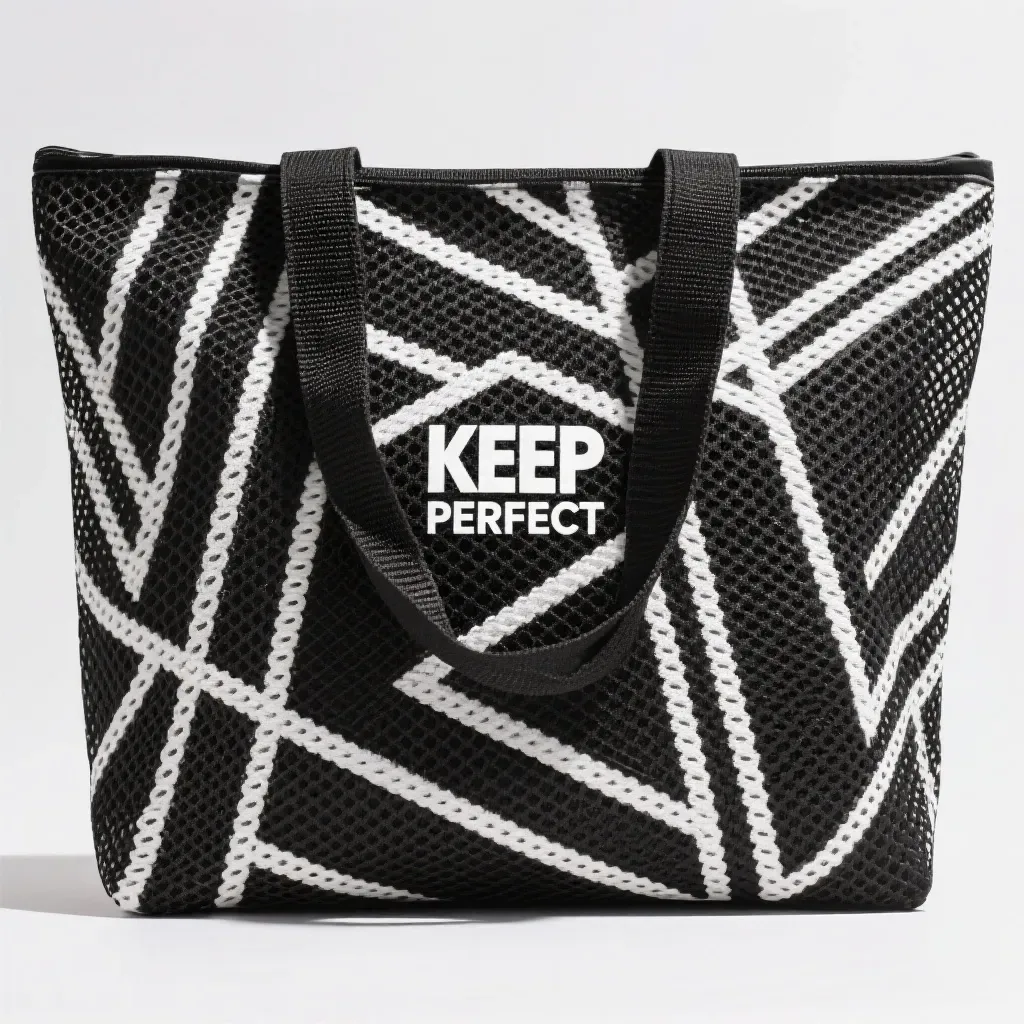
A Take-Back Programme That Received 300 Unsorted Bags
Of 300 returned knitted bags sorted by hand, roughly 190 could be reprocessed directly, 70 needed trim removal first and about 40 were unusable — and the dividing line was almost entirely the number of polymer families in each bag.
The programme had been set up with a simple promise: send the bag back at end of life and it would be recycled. What nobody had specified was what would happen on the sorting table. The returns arrived in a single container covering four seasons, three yarn routes and two handle constructions, all mixed together.
The sorting exercise took two days and produced the six rules below. The first observation was that recycled content at the input end did not predict recyclability at the output end. Several bags knitted from recycled polyester carried PVC-coated bases and metal clasps, which made them harder to reprocess than virgin-polyester bags built from one material.
The second observation was that time to disassemble mattered more than whether disassembly was theoretically possible. A bag whose trim could be removed in under a minute was processed; one that needed cutting tools and patience was set aside. That is why the rules below are written around elimination and tool-free removal rather than around recyclability in the abstract.
Design Rule One: One Polymer, One Bag
Keep every component in one polymer family — shell, lining, webbing, thread and any reinforcement — because mechanical recycling cannot separate polymers that are locked together in a single article.
This is the rule that decides the outcome. A bag knitted from recycled polyester with a recycled polyester lining, polyester webbing and polyester thread is a single material stream. Add a nylon lining and it becomes a mixed stream that either requires separation or downgrades the output.
Seamless knitting makes this easier than it sounds. Because handles, openings and reinforcement zones can be knitted into the body rather than attached, the component count falls and the polymer family stays uniform. That is the structural advantage of whole-garment knitting applied to a circularity target rather than a cost target.
The discipline to apply is a component audit before sampling: list every part, name its polymer, and mark any part that breaks the family. The parts that break it are the design decisions worth revisiting.
Design Rule Two: Make the Handle Part of the Body
Knit the handle into the body rather than attaching it, which removes a component, removes its chemical declaration from the compliance file, and keeps the polymer family intact.
The compliance saving is larger than it appears. An attached handle brings its own yarn, its own dyeing route, its own lubricant and finish declaration, and often a different polymer from the shell. Knitting it in eliminates all of them at once, which is why integrated handles show up repeatedly in circular design guidance.
There is a load consideration. An integrated handle has to be engineered for the rated load with the same margin as an attached one, and the usual way to achieve that is to knit a denser structure in the handle zone rather than to add material afterwards. In practice an E12 body with a tightened stitch in the handle band carries an 8 kg rated load comfortably.
Where a programme needs a longer shoulder strap, the same logic applies in a modified form: knit the strap as a continuous band rather than a webbing assembly, and the material stream stays single-polymer.
Design Rule Three: Labels, Threads and Trim
Specify labels, threads and small trim in the same polymer as the shell, or make them removable without tools, because these are the components that most often break an otherwise monomaterial design.
Sewing thread is the usual offender. Standard polyester thread is compatible with a polyester shell, but a nylon thread on a polyester body introduces a second polymer at every seam. Where the thread cannot be changed, it is worth recording its share of mass so the effect can be quantified rather than guessed.
Labels are second. A woven polyester label on a polyester bag is fine; a coated or laminated label is not, because the coating introduces a foreign polymer and often a plasticiser. Printed marks applied directly to the lining are generally the cleaner solution, provided the ink system is declared.
Metal trim is the third and the hardest. Where a clasp or eyelet is required, the practical approach is to make it removable with a simple tool, so the metal leaves the polymer stream before reprocessing. Where it cannot be removed, the article will need a route that tolerates metal contamination.
Sewing thread
Specify in the same polymer as the shell. A nylon thread on a polyester body introduces a second polymer at every seam.
Labels
Woven in the shell polymer, or printed directly onto the lining. Coated and laminated labels introduce a foreign polymer and often a plasticiser.
Metal trim
Design it to come away with a simple tool so the metal leaves the stream before reprocessing.
Adhesives
Avoid where possible. Adhesive stays in the melt stream and cannot be filtered out of the output.
- Case study sample
- 300 returned knitted bags across 4 seasons
- Directly reprocessable
- About 190 bags
- Needed trim removal
- About 70 bags
- Unusable
- About 40 bags
- Elastane ceiling
- 5% by weight
- PET density
- About 1.38 g/cm³, sinks in water
- PA6 density
- About 1.14 g/cm³, sinks in water
- PE and PP density
- Below 1.0 g/cm³, float in water
- Disassembly target
- Under 60 seconds without powered tools
- Shell yarn / gauge
- 300D/96f recycled polyester, E12
- Shell GSM
- 450 g/m²
- Rated load
- 8 kg
- MOQ
- 100 pcs per style / colourway
- Sampling / bulk
- 7 working days / 30 days
Design Rule Four: Disassembly Without Tools
Design the bag so that any non-compatible component can be removed in under a minute without powered tools, because a sorting facility will not spend longer than that on one article.
The sixty-second figure comes from the practical reality of a sorting line rather than from a standard. An article that needs cutting, prising or specialist tools gets set aside, and set-aside articles are usually landfilled or incinerated regardless of the theoretical recyclability of their main material.
Two design moves achieve it. The first is elimination — removing the component altogether by knitting its function into the body. The second is mechanical rather than chemical attachment: stitching with a compatible thread, or a press-stud or cord closure that pulls apart by hand, rather than an adhesive bond.
Adhesives deserve a specific note. They are the single most effective way to make a monomaterial article unrecyclable, because they remain in the melt stream and cannot be filtered out. Where a bond is unavoidable, a heat-releasable or water-soluble system is the better specification.
Design Rule Five: Colour Strategy for Recycled Feedstock
Plan shades around the colour of the recycled feedstock rather than against it, because dark and heathered shades accept recycled polymer cleanly while bright saturated shades fight it.
The mechanism is the grey cast in mechanically recycled polymer. In a charcoal or heathered grey it is invisible; in a saturated cobalt or a bright coral it eats into the chroma and pushes the shade off-brand. Chemically recycled feedstock removes the problem but carries a higher price and far less capacity.
The commercial version of this rule is about commitment. Dope dyeing gives better light fastness and dramatically lower water use, but it asks for roughly 300 kg per colour. That is an easy decision for a core shade that repeats and a poor one for a fashion shade that may not return.
Where a programme must run bright shades on recycled feedstock, the practical answer is normally a wider colour tolerance band rather than more colourant — agreeing Delta E 1.2 instead of the Delta E 1.0 typical of virgin programmes removes most disputes at goods-in without changing what a customer sees.

Design Rule Six: Mark the Polymer for Sorters
Mark the bag with its polymer identification so that a sorting facility can route it correctly, because an unmarked monomaterial article is still sorted by guesswork.
Near-infrared sorting identifies polymer type by reflectance, which works well on large flat surfaces and less well on small or textured articles. A moulded or printed polymer identification mark gives the sorter a second route that does not depend on the reading. Where the mark is moulded or printed in the same polymer, it does not contaminate the stream.
Placement matters. A mark on the outer face of a bag is read during sorting; a mark inside a lining is not. For a knitted bag the practical location is the lower corner of the outer panel, or a printed mark in the handle band where it remains visible when the bag is folded.
Marking is also where circular design becomes auditable. A claim that a bag is recyclable is far easier to defend when the article carries the identification that lets a sorter act on it, and far easier to challenge when it does not.
What Circular Design Does to the Cost Sheet
Circular design tends to reduce component and compliance cost while adding modestly to development time — the net effect on unit cost is usually neutral to slightly positive at volumes above a few thousand pieces.
The savings are concrete. Fewer components means fewer declarations to collect, fewer certificates to reconcile and fewer failure modes at testing. Eliminating an adhesive bond removes both the adhesive cost and a recurring chemical compliance question. Removing metal trim removes a nickel-release test from the panel.
The costs are mostly front-loaded. Integrating a handle into the body takes more programming time than attaching a webbing strap, and the first sample may need a loop-length adjustment before the handle sits right. That is development cost rather than unit cost, and it is amortised across the programme.
The one recurring cost to watch is the dye lot commitment. Where a circular specification pushes a programme towards dope dyeing for water reasons, the 300 kg per colour minimum becomes a working-capital item on every shade, and that is a real cost on a wide colour range even where the unit cost falls.
How Circular Design Meets ESPR Requirements
The Ecodesign for Sustainable Products Regulation, adopted as Regulation (EU) 2024/1781, sets a framework of product-specific requirements on durability, recycled content, reparability and information — and circular design decisions made now determine how easily a bag meets them.
The information strand matters first. The regulation provides for a digital product passport carrying data about a product's composition and environmental performance. A programme that already holds a complete component list with weights and polymer identities has most of that data; one that does not will have to reconstruct it under time pressure.
The durability strand is second. Requirements on service life and reparability reward the design moves described above — fewer components, tool-free removal, integrated structure — because those are what make an article last and be repaired. The same decisions that improve recyclability also improve the durability case.
| ESPR strand | What it asks for | Circularity decision that prepares for it | Cost of delaying |
|---|---|---|---|
| Information | Composition and performance data in a digital passport | Component list with weights and polymer identities | Reconstructing bills of materials under deadline |
| Durability | Verified service life for the article | Abrasion, tensile and colour fastness testing per specification | Redesigning a style that cannot meet the threshold |
| Recycled content | Minimum certified recycled input | Certified yarn lot under a recognised standard | Re-sourcing yarn and re-testing the article |
| Reparability | Components removable without specialist tools | Eliminating adhesive bonds and captive metal trim | Re-tooling an assembly that cannot be taken apart |
The recycled content strand interacts with the certification work described in GRS certification for knitted bags. Where a programme already holds certified lots with matched transaction certificates, meeting a recycled content requirement is largely a reporting exercise. Where it does not, it is a sourcing and testing programme.
The practical advice for a buyer is to treat circularity as a specification discipline rather than a claim. Eliminate the second polymer family, remove the adhesive, knit the handle in, mark the article, and the claim follows from the design. Reverse the order and the claim has to be defended separately.
A useful way to test a specification before sampling is the sorting-table question: if this bag arrived unsorted at a facility today, what would the operator do with it? If the answer depends on removing a clasp, cutting a bonded panel or separating a laminate, the design is not yet circular regardless of what the yarn certificate says.
That test also settles arguments about recycled content. A bag knitted from 100 per cent recycled polyester with a mixed-polymer assembly will be set aside, while a virgin-polyester bag built from one polymer with removable trim will be reprocessed. Circular outcomes follow from construction decisions, and construction decisions are made at the design stage.
Send the bag specification, component list and target market and we will return a circularity review with a sampling slot. Request a circular design review
Frequently Asked Questions
What makes a knitted bag circular?
It stays in use for longer and its material can re-enter a stream at end of life. In practice that means one polymer family, no adhesive bonds, tool-free removal of any non-compatible component, and a visible polymer identification mark that lets a sorting facility route the article correctly.
Does using recycled yarn make a knitted bag circular?
No. Recycled content describes the input; circularity describes the outcome. A bag knitted from recycled polyester with a PVC-coated base and a metal clasp is harder to reprocess than a virgin-polyester bag built from one material with removable trim. Where a part cannot be eliminated, designing it to come away cleanly is the next best specification.
Why is one polymer family the first design rule?
Because mechanical recycling cannot separate polymers locked together in a single article. Keeping shell, lining, webbing and thread in one family keeps the melt stream uniform, which is the difference between an article that gets processed and one that gets set aside. The test is what a sorting operator could do in seconds, not what a laboratory could do in hours.
How does knitting the handle into the body help?
It removes a component, its own yarn, its dyeing route and its chemical declaration in one move. It keeps the polymer family uniform, supports end-of-life recovery, and usually cuts assembly steps and the trim waste that goes with them. Most of these decisions cost nothing at specification stage and a great deal to reverse afterwards.
What is the problem with labels and sewing thread?
Both are small in mass and universal in coverage. A nylon thread on a polyester body introduces a second polymer at every seam, while a coated or laminated label adds a foreign polymer and often a plasticiser as well. Retail compliance teams increasingly ask for the evidence behind each element of a claim.
How should a programme handle water-repellent coatings?
Treat the coating as a material decision rather than a finish. Polyurethane, acrylic and PVC coatings are foreign polymers in a polyester melt, so either specify a lower add-on of a more compatible chemistry or make the coated panel removable. The European framework pulls in the same direction by rewarding durability and material efficiency.
What does tool-free disassembly mean in practice?
Any non-compatible component can be removed in under a minute without powered tools. Sorting lines allocate seconds per article, so a part needing cutting or prising is set aside, and set-aside material rarely reaches a recycler at all. Programmes holding complete component records meet information requests with reporting rather than rework.
Why does colour strategy matter for circularity?
Mechanically recycled polymer carries a grey cast that dark and heathered shades absorb cleanly but saturated brights do not. A wider tolerance band usually solves the problem better than adding colourant or running a correction cycle. The distinction between what is reduced and what is recovered is where most claims go wrong.
How should the polymer be marked on the bag?
With a visible identification mark on the outer face, moulded or printed in the same polymer so it does not contaminate the stream. Near-infrared reading is unreliable on small or textured articles, so the mark is the practical backup. The saving compounds across a range, because every style that removes a component also removes its declaration.
Does circular design increase unit cost?
Usually not above a few thousand pieces. Component and compliance cost falls while development time rises modestly. The recurring premium, where there is one, sits in specialised grades rather than in the design approach itself. Where a part cannot be eliminated, designing it to come away cleanly is the next best specification.
What is the commitment required for dope dyeing?
Around 300 kg per colour at the spinner. That suits a core shade repeated across seasons and not a fashion shade that may not return, because unused committed yarn can cancel the water saving entirely. The test is what a sorting operator could do in seconds, not what a laboratory could do in hours.
How does circular design prepare a programme for ESPR?
It aligns the article with product-specific requirements on durability, recycled content, reparability and information. Design decisions that reduce part count and keep one polymer family map directly onto all four strands of the framework. Most of these decisions cost nothing at specification stage and a great deal to reverse afterwards.
What is a digital product passport?
A structured data record about a product's composition and environmental performance, provided for under the ESPR framework. A programme already holding a component list with weights and polymer identities has most of the content required. Retail compliance teams increasingly ask for the evidence behind each element of a claim.
How should circularity be evidenced to a retail buyer?
With a component list carrying weights and polymer identities, a test report naming methods and limits, and a change log. Those three documents answer most review questions without commissioning a further round of testing. The European framework pulls in the same direction by rewarding durability and material efficiency.
Where should a programme start with circular design?
With the component audit. It takes about half a day, needs no testing, and usually surfaces one or two substitutions — often a nylon lining or a coated trim — that improve circularity without a performance penalty. Programmes holding complete component records meet information requests with reporting rather than rework.
People Also Ask
What is circular design for bags?
Designing so an article lasts longer and its material can re-enter a stream at end of life. In practice that means one polymer family, no adhesive bonds, tool-free removal of any non-compatible part, and a visible polymer mark for sorting lines.
Does recycled yarn make a knitted bag circular?
Not by itself. Recycled content describes the input, while circularity describes what happens at end of life. A monomaterial virgin-polyester bag with removable trim often outperforms a mixed-polymer recycled one. Most of these decisions cost nothing at specification stage and a great deal to reverse afterwards.
Why is monomaterial easier with seamless knitting?
Knitting handles, openings and reinforcement into the body removes components, and a continuous structure can be shredded without unpicking. Both effects lift real recovery yield. Retail compliance teams increasingly ask for the evidence behind each element of a claim.
Do adhesives affect how circular a bag is?
Eliminate components by knitting their function into the body, and use mechanical rather than chemical attachment. Stitching with a compatible thread or a pull-apart closure beats an adhesive bond. The European framework pulls in the same direction by rewarding durability and material efficiency.
How does circular design relate to the EU ESPR?
A structured data record covering composition and environmental performance, provided for under the EU ESPR framework. A complete component list with weights supplies most of it. Programmes holding complete component records meet information requests with reporting rather than rework.
Sources and further reading
Every figure on this page is either our own programme data or attributed below. Open the originals before you write them into a specification.
- Regulation (EU) 2024/1781 — Ecodesign for Sustainable Products RegulationPublications Office of the European Union (EUR-Lex) Authoritative source for the ESPR framework, its product-specific requirements and the digital product passport provisions.
- Ecodesign for Sustainable Products RegulationEuropean Commission Used for the practical scope of the regulation and its application to textiles and accessories.
- EU Strategy for Sustainable and Circular TextilesEuropean Commission Sets out the policy direction on durability, recyclability and recycled content that informs the ESPR product rules.
- Waste Framework DirectiveEuropean Commission Reference for end-of-life obligations and the separate notification duty for articles containing substances of concern.
- StandardsTextile Exchange Background on the recycled content certification chain that supports circular claims.