Knitted Bag Lifecycle Assessment: Functional Units, Stage-by-Stage Impacts and the Numbers That Change a Specification
A 400-gram knitted bag carries roughly 2.5 to 4.5 kg of CO2-equivalent from yarn to end of life — but that range means nothing until the functional unit is fixed, because a bag rated for two years of daily use and one rated for twenty trips are not comparable products. Fix the functional unit first and the comparison becomes legitimate.
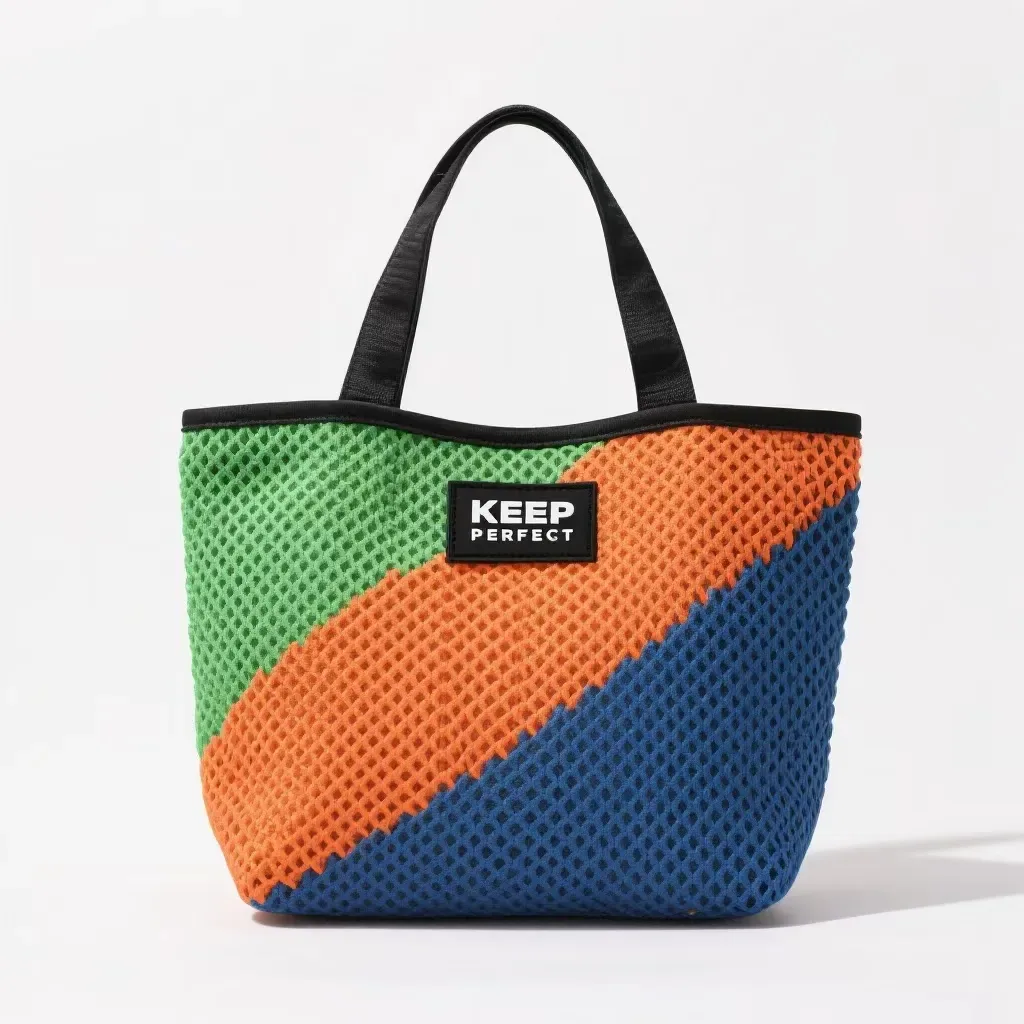
The Carbon Number Behind a 400-Gram Knit Bag
A 400 g knitted polyester bag typically carries about 2.1 kg CO2-equivalent cradle to gate and between 2.5 and 4.5 kg CO2-equivalent across the full life cycle, with most of the spread coming from dyeing method and freight mode rather than from knitting.
The number is driven by the polymer first. Virgin polyester fibre sits near 5.5 to 6.5 kg CO2-equivalent per kilogram, so 400 g of it accounts for roughly 2.2 to 2.6 kg before anything else is added. Switching the same specification to mechanically recycled polyester brings the fibre figure down to about 2.5 to 3.5 kg CO2-equivalent per kilogram, which removes something close to half the material burden in a single change.
Nylon behaves differently and is worth flagging because structured bags often use it. Virgin PA6 sits nearer 9 to 11 kg CO2-equivalent per kilogram, roughly double polyester, while recycled PA6 lands around 5 to 6. A programme that specifies recycled nylon for load-bearing panels rather than virgin nylon will typically move the number further than any change to the knitting programme.
The useful framing for a design conversation is that the yarn route dominates, the wet-processing route comes second, and knitting is a small share of the total. That ordering tells a buyer where specification effort pays off, and it is the opposite of the intuition most people bring to a seamless knitting programme.
Choosing a Functional Unit Before You Compare Anything
A functional unit is the quantified performance a bag must deliver, and without one a comparison between bags is meaningless — the right form is carry load, frequency and service life, not one bag.
The standard approach under ISO 14040 and ISO 14044 is to express the unit as a service. For a shopping or tote bag that means something like carrying 8 kg of goods three times a week for two years, or about 312 carrying cycles. Once the unit is a service rather than an object, the comparison becomes legitimate: a heavier bag that lasts four times as long will show a lower impact per functional unit than a lighter one that fails.
This is why the widespread single-figure comparisons between bag types are unreliable. A figure quoting the impact of one cotton bag against one non-woven bag says nothing about how many times each is used, and usage frequency is the variable that dominates the result. Published comparisons generally agree that reuse count is the decisive factor and that the ranking flips depending on the assumption used.
For a knit bag programme the practical step is to state the functional unit in the specification: intended load, expected trips per week and target service life. That single sentence converts an unarguable marketing claim into a testable engineering requirement, and it is what lets a lifecycle assessment measure something real.
- Method
- ISO 14040:2006 and ISO 14044:2006
- Functional unit
- Carry 8 kg of goods, 3 trips per week, for 2 years
- Trips in functional unit
- About 312 carrying cycles
- Declared unit mass
- 400 g knitted bag
- Cradle-to-gate GWP
- 2.1 kg CO2e per bag
- Full life cycle GWP
- 2.5 to 4.5 kg CO2e per bag
- Virgin PET fibre GWP
- About 5.5 to 6.5 kg CO2e per kg
- Recycled PET fibre GWP
- About 2.5 to 3.5 kg CO2e per kg
- Virgin PA6 GWP
- About 9 to 11 kg CO2e per kg
- Recycled PA6 GWP
- About 5 to 6 kg CO2e per kg
- Sea freight intensity
- About 0.01 to 0.02 kg CO2e per tonne-km
- Air freight intensity
- About 0.5 to 1.0 kg CO2e per tonne-km
- Mass cut-off rule
- 1% of product mass
- Impact cut-off rule
- 5% of total impact
Where the Emissions Sit Across the Five Stages
Five stages carry the total — yarn, wet processing, knitting and assembly, distribution and end of life — and yarn and wet processing together typically account for 55 to 80 per cent of the burden.
| Life cycle stage | Typical share of GWP | Main driver | Levers available to a buyer |
|---|---|---|---|
| Yarn production | 35 - 50% | Polymer route, virgin versus recycled feedstock | Specify recycled content; fix GSM |
| Dyeing and finishing | 20 - 30% | Liquor ratio, temperature, process time | Dope dyeing; lower temperature cycles |
| Knitting and assembly | 8 - 15% | Machine time and finishing passes | Integrate handles; reduce part count |
| Distribution | 5 - 20% | Freight mode and distance | Consolidate; avoid air freight |
| End of life | 2 - 8% | Landfill, incineration or material recovery | Monomaterial design; polymer marking |
The knitting share is the surprise. A seamless program body takes roughly 11 to 12 minutes of machine time at E12, and the electricity that consumes is a small fraction of the total. What knitting does contribute is indirect and larger: it removes the cutting waste that a cut-and-sew line generates, and it makes monomaterial construction practical, which lifts end-of-life recovery.
Distribution is the most variable stage, and the one a buyer controls most directly. Moving a shipment from air to sea typically reduces freight emissions by an order of magnitude, and consolidating smaller shipments into fewer full containers removes the empty-space penalty. Both are logistics decisions rather than design decisions, which is why they are often missed in a lifecycle assessment scoped only around materials.
Cut-Off Rules and What Gets Left Out
Cut-off rules define which small inputs may be excluded from the inventory, and the common thresholds are 1 per cent of product mass and 5 per cent of total impact — but excluding the wrong item can quietly distort the result.
The rules exist because an inventory that captures every gram of dye auxiliary or every metre of packing tape is impractical. The risk is that the excluded items are not the harmless ones. A component that is 0.5 per cent of mass can be a large share of chemical burden, which is why most practitioners apply the mass and impact cut-offs together rather than relying on mass alone.
For a knitted bag the items most often excluded are sewing thread, labels, packing materials and machine lubricants. Of these, sewing thread and labels are worth keeping in when the assessment is being used to support a comparative claim, because they are the components most likely to differ between two otherwise similar designs.
The reporting discipline that matters is disclosure. An assessment that states its cut-off rules lets a reader judge the scope; one that does not makes the figure impossible to evaluate. Where a programme intends to publish a number, stating the cut-offs alongside it is the difference between a defensible figure and a marketing one.
Water, Eutrophication and the Other Categories
Carbon is the headline figure but rarely the whole picture: water depletion, eutrophication and abiotic resource depletion respond to different design decisions and can move in the opposite direction.
Water is the clearest example of a trade-off. Dope dyeing — adding pigment at the spinner rather than dyeing the finished fabric — removes most of the water used in colouration, which is typically the largest single water load in a bag programme. But it asks for a commitment of around 300 kg per colour, which suits a core shade repeated across seasons and not a fashion shade that may not return.
Eutrophication tracks the effluent rather than the water volume. It is driven by what leaves the dyehouse — residual dye, auxiliaries and salts — so the lever is effluent treatment and process chemistry rather than liquor ratio alone. A programme that reduces water per kilogram but concentrates the effluent has not necessarily improved the result.
The practical recommendation for a buyer is to read at least three categories rather than one. A change that improves carbon and worsens water depletion is not obviously an improvement, and a single-figure comparison hides that. Most published assessments report several categories for exactly this reason.
Knitted Versus Cut-and-Sew: The Comparison Numbers
Against a cut-and-sew equivalent, a seamless knitted bag programme typically shows lower material burden through yarn waste of 3 to 6 per cent against 12 to 18 per cent, plus better end-of-life recovery when the structure stays monomaterial.
The waste difference is structural rather than incremental. A cut-and-sew line nests shapes on a marker and discards what falls outside; a knitted panel comes off the machine close to net shape, so there is no marker and no offcut. The residual yarn waste is cone remnants, run-in ends and defectives, all of which are small and predictable.
The recovery difference is more consequential over time. Cut-and-sew offcut is mixed and frequently laminated, which makes it difficult to reprocess. Knitted offcut is clean single-polymer material. That recoverability is worth recording in the assessment even where it does not change the headline figure, because it is the input that determines how the article behaves at end of life.
Both differences are amplified by volume. On a programme of several thousand pieces, removing ten per cent of material waste and lifting recovery is worth more than any optimisation of the knitting cycle. See circular design for knitted bags for how that translates into specification decisions.
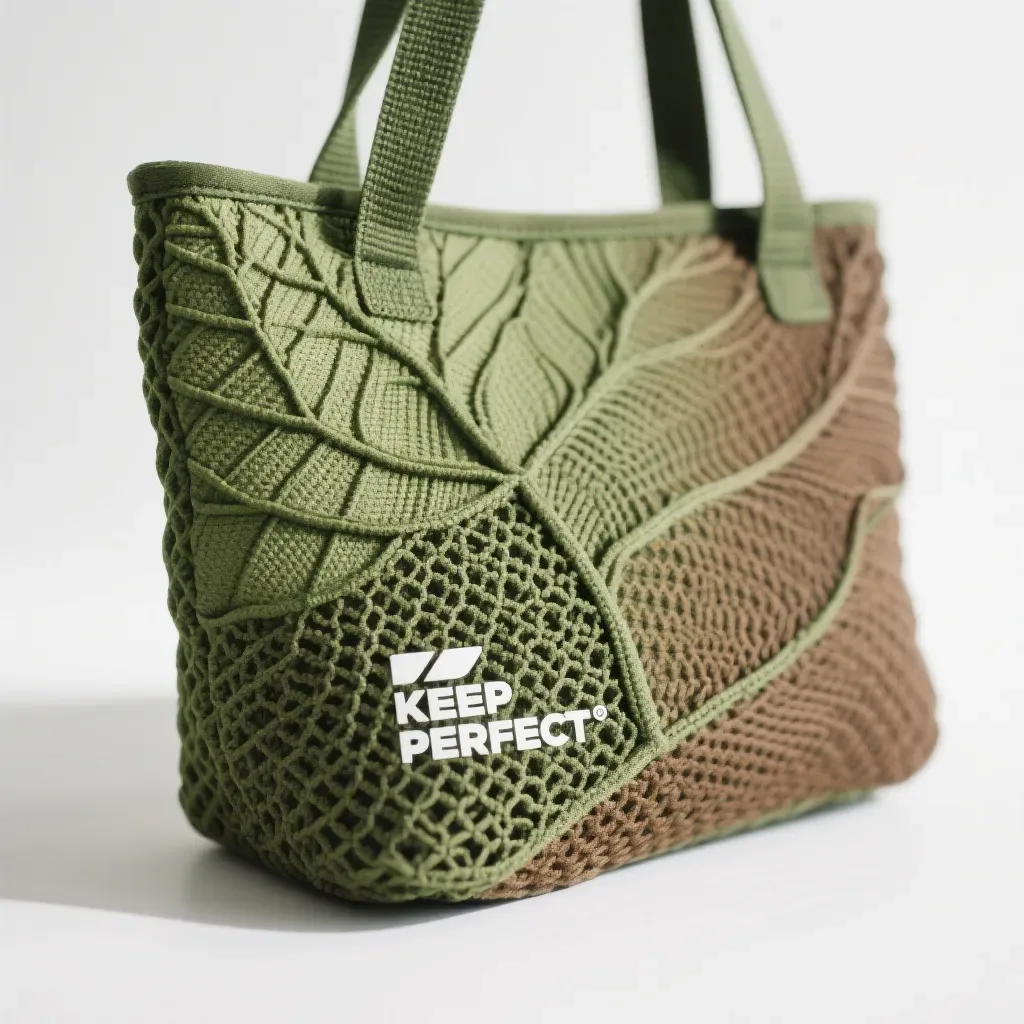
Reading an LCA Report Without Being Misled
Four things decide whether a lifecycle assessment is usable: the stated functional unit, the system boundary, the data quality and whether a critical review was carried out.
Functional unit
Expressed as a service with load, frequency and life. A figure without a functional unit cannot be compared with anything.
System boundary
States which stages are included. Cradle to gate and cradle to grave will differ substantially for the same bag.
Data quality
Primary data from the actual process beats generic database values, and the report should say which was used.
Critical review
An independent review is required when results are used for comparative public claims, and it materially raises confidence.
The comparative-claim point is the one that catches programmes out. A published claim that one bag has a lower impact than another engages stricter requirements than an internal figure, including critical review. Programmes that intend to publish should scope the assessment for that purpose from the start rather than retrofitting it.
Allocation is the second technical trap. Where a process produces more than one useful output — as recycling streams often do — the burdens have to be divided, and the chosen method changes the result. A report that states its allocation rule is readable; one that does not is not.
Using LCA Output to Set a Design Target
The practical use of an assessment is to rank design levers by effect size, and in knitted bag programmes the ordering is consistent: polymer route first, dyeing method second, part consolidation third.
Polymer route is the largest single lever. Moving from virgin polyester to mechanically recycled polyester typically removes around half the fibre burden, and the tenacity cost is about 0.4 cN/dtex, which is manageable by specification. Moving from virgin to recycled nylon is a larger absolute saving still.
Dyeing method is second where volumes justify it. The water saving is the headline, but the consistency of shade between lots improves too, which reduces re-dyeing — and re-dyeing is one of the most expensive failures in a bag programme because it consumes both the calendar and the material.
Part consolidation is third and the most reliably available. Knitting handles, openings and reinforcement zones into the body rather than attaching them removes components, removes their declarations from the compliance file and usually improves recyclability. It is the lever that improves the carbon figure and the compliance file at the same time.
What an LCA Cannot Tell You
A lifecycle assessment measures environmental impact along defined categories; it does not measure chemical safety, social performance, durability in the field, or commercial fitness — each of those needs its own evidence.
Chemical safety is the most important separation. An assessment may show that a recycled route carries a lower carbon burden, but it says nothing about whether the finished article meets the restrictions that apply in the destination market. That question is answered by testing against the relevant framework, and the two documents should sit side by side in the file rather than substituting for one another.
Durability is the second gap. A service-life assumption is an input to the assessment, not an output from it. Where that assumption is optimistic, the result flatters the design. Verifying the assumption with physical testing — abrasion to ISO 12947, tensile to ISO 13934-1, colour fastness to AATCC 61 — is what turns the assumption into evidence. See knit bag QC and testing.
Social performance is the third, and it is covered by a different audit family entirely: amfori BSCI and Sedex SMETA address labour conditions at the production site. An assessment that shows a lower carbon footprint says nothing about working conditions, and the two should never be conflated in a claim.
Send the bag specification, yarn route and target market and we will return the functional unit, stage breakdown and a sampling slot. Request a lifecycle assessment review
Frequently Asked Questions
What is a functional unit in a bag lifecycle assessment?
It is the quantified performance the bag must deliver, expressed as a service rather than an object. A usable form states the carry load, the frequency of use and the service life, for example carrying 8 kg three times a week for two years, which is about 312 carrying cycles.
How much carbon does a knitted bag carry?
A 400 g knitted polyester bag typically carries around 2.1 kg CO2-equivalent cradle to gate and between 2.5 and 4.5 kg CO2-equivalent across the full life cycle. Most of the spread comes from dyeing method and freight mode rather than from the knitting itself.
Why is reuse count the decisive variable?
Because the production burden is fixed while the service delivered scales with use. A heavier bag that lasts four times as long shows a lower impact per functional unit than a lighter one that fails early, which is why single-figure comparisons between bag types are unreliable.
How does recycled polyester compare with virgin on carbon?
Virgin polyester fibre sits near 5.5 to 6.5 kg CO2-equivalent per kilogram, while mechanically recycled polyester lands around 2.5 to 3.5. That is roughly a halving of the fibre burden for a tenacity cost of about 0.4 cN/dtex. That gap is narrow enough to absorb by specification, provided the tenacity minimum is stated explicitly in the technical pack rather than left to interpretation.
Is nylon worse than polyester for bag emissions?
Generally yes. Virgin PA6 sits nearer 9 to 11 kg CO2-equivalent per kilogram against about 5.5 to 6.5 for virgin polyester. Recycled PA6 brings that down to roughly 5 to 6, which is why recycled nylon is usually the better call for load-bearing panels.
What are cut-off rules and why do they matter?
They define which small inputs may be excluded from the inventory, commonly 1 per cent of product mass and 5 per cent of total impact. Excluding the wrong item can distort the result, and a report that states its cut-offs lets a reader judge the scope.
Which life cycle stage dominates for a knitted bag?
Yarn production, typically 35 to 50 per cent of global warming potential, with dyeing and finishing second at 20 to 30 per cent. Knitting and assembly are usually 8 to 15 per cent, which is much smaller than most people expect. The practical reading is that specification effort pays off at the material stage rather than in the knitting programme itself.
How much does freight mode change the total?
Distribution ranges from about 5 to 20 per cent depending on mode. Sea freight runs around 0.01 to 0.02 kg CO2-equivalent per tonne-kilometre against roughly 0.5 to 1.0 for air, so moving a shipment from air to sea typically reduces freight emissions by an order of magnitude.
Does an LCA cover chemical compliance?
No. It measures environmental impact along defined categories and says nothing about whether the finished article meets the restrictions that apply in the destination market. Chemical safety is evidenced by testing against the relevant framework, kept alongside the assessment. The two documents sit side by side in the file, because neither substitutes for the other when a reviewer asks for evidence.
Does an LCA cover social compliance?
No. Labour conditions are addressed by a separate audit family, principally amfori BSCI and Sedex SMETA. A lower carbon footprint says nothing about working conditions, and the two should never be combined into a single claim. Conflating environmental performance with labour conditions is the most common error in circularity claims, and it is straightforward for a reviewer to spot.
When is an independent critical review required?
Where results are used for a comparative claim made to the public. Scoping the assessment for that purpose from the outset is far easier than retrofitting a review once the figure has been published. Scoping the assessment for publication from the outset is far easier than retrofitting a review once the figure has already appeared in retail copy.
What is allocation and why does it change results?
It is the method used to divide burdens where one process yields more than one useful output, as recycling streams often do. The chosen method materially changes the result, so a report should state its allocation rule explicitly. A report that states its allocation rule is readable; one that does not cannot be meaningfully compared with another study.
What is the biggest design lever for a knitted bag?
The polymer route. Moving from virgin to mechanically recycled polyester typically removes around half the fibre burden at a tenacity cost that specification can absorb. Dyeing method and part consolidation come second and third. The ordering is consistent enough to be useful, and it points away from where most optimisation effort normally goes.
Does dope dyeing always improve the footprint?
The water saving is large, but it requires a commitment of around 300 kg per colour. That suits a core shade repeated across seasons; for a fashion shade that may not return, the unused committed yarn can cancel the benefit. The break-even depends on whether the shade repeats across seasons, which is a commercial question rather than a technical one.
How should a buyer use an LCA in a specification?
To rank levers by effect size rather than to publish a single figure. The consistent ordering in knitted bag programmes is polymer route first, dyeing method second, part consolidation third, and that ordering is more useful than any headline number. A ranking of levers by effect size is more useful to a design team than a headline figure nobody else can reproduce.
People Also Ask
What is a functional unit in an LCA?
The quantified performance a product must deliver, stated as a service. For bags that means carry load, use frequency and service life, such as 8 kg three times a week for two years or about 312 cycles.
How much CO2 does a knitted bag produce?
A 400 g knitted polyester bag carries roughly 2.5 to 4.5 kg CO2-equivalent across its life, with around 2.1 kg of that before it leaves the gate. Dyeing method and freight mode drive most of the variation.
Is recycled polyester lower carbon than virgin?
Yes. Virgin polyester fibre sits near 5.5 to 6.5 kg CO2-equivalent per kilogram against about 2.5 to 3.5 for mechanically recycled, roughly halving the fibre burden for a tenacity cost near 0.4 cN/dtex.
Can an LCA replace chemical testing?
No. An assessment measures environmental impact categories, not whether an article meets market restrictions. Chemical compliance needs its own testing, kept next to the assessment in the same compliance file.
What does an LCA not cover?
Chemical safety, social performance and field durability. Each needs separate evidence: laboratory testing for chemicals, amfori BSCI or Sedex SMETA for labour, and physical testing for service life. Stating those limits in the report is what keeps the figure honest.
Sources and further reading
Every figure on this page is either our own programme data or attributed below. Open the originals before you write them into a specification.
- ISO 14040:2006 — Environmental management, life cycle assessment, principles and frameworkInternational Organization for Standardization Authoritative source for the functional unit and system boundary requirements applied in a knitted bag assessment.
- ISO 14044:2006 — Life cycle assessment, requirements and guidelinesInternational Organization for Standardization Used for data quality, allocation and critical review requirements, including when review is needed for comparative claims.
- Knowledge CenterTextile Exchange Referenced for guidance on preferred fibre and materials reporting used in textile lifecycle work.
- European Environment AgencyEuropean Environment Agency Source for published data on textile consumption, waste and environmental pressures in Europe.
- Ecodesign for Sustainable Products Regulation (ESPR)European Commission Framework that increasingly shapes which lifecycle data buyers must hold for products sold into the EU.