CPSIA Compliance for Children's Knitted Bags: The Decision Order from Product Classification to Certificate and Tracking Label
Is a small knitted backpack a children's product under CPSIA, or a general-use bag? The classification decides everything downstream: once an article is designed or intended primarily for children 12 or younger, the lead limits, phthalate limits, third-party testing duty, certificate and tracking-label requirement all attach at the same time. Settling it before the technical pack is frozen is markedly less costly than settling it at inspection.
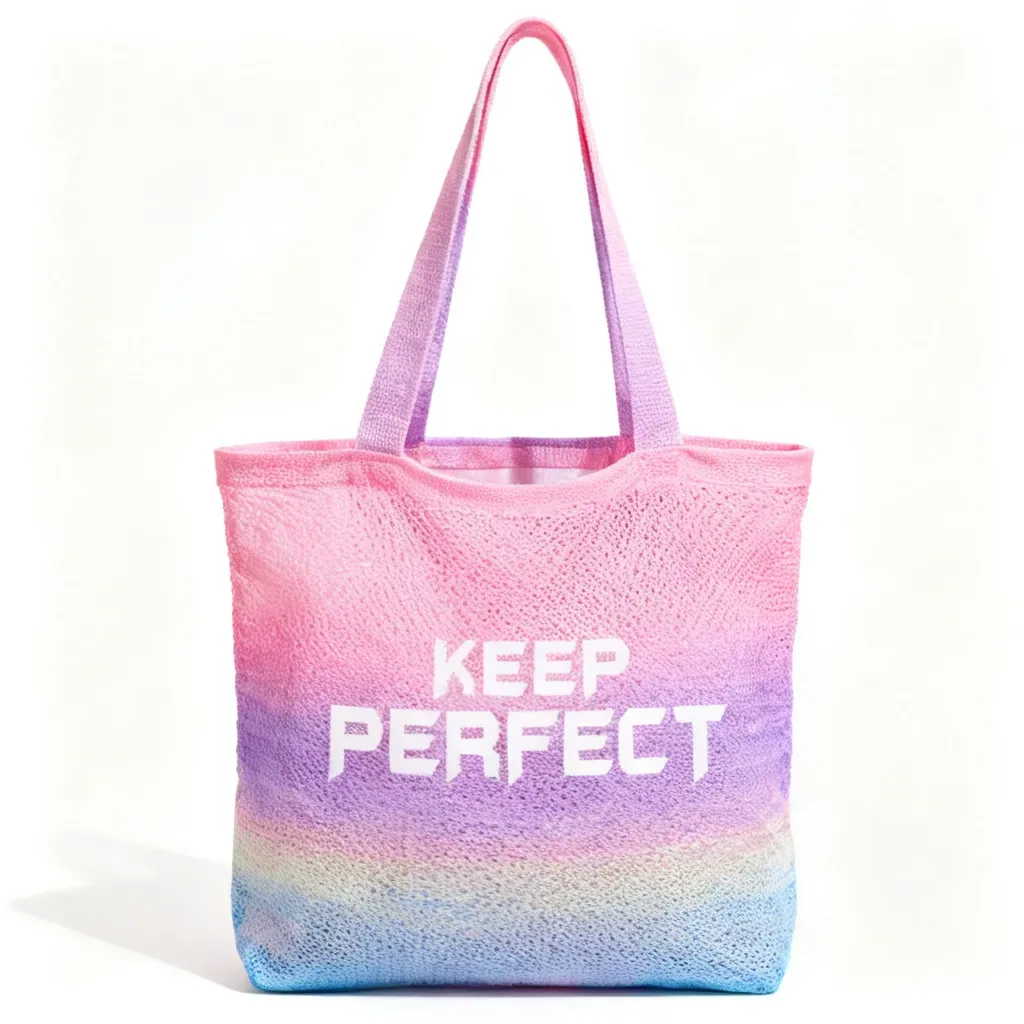
First Question: Is Your Bag a Children's Product?
A bag is a children's product under CPSIA when it is designed or intended primarily for children 12 years of age or younger — a test applied to the product's intended use, not to who happens to buy it.
The distinction is decided on four factors that regulators have published: whether the article is represented as intended for a child, whether it is commonly recognised as intended for a child, the age to which it is marketed, and whether it is packaged or labelled for a child. A 300 mm backpack printed with cartoon characters is a children's product. The same backpack in charcoal with a plain logo, sold in an office-supply channel, generally is not.
Size alone is not determinative, which is the mistake programmes make most often. A small tote is not automatically a children's product, and a large one is not automatically exempt. What decides it is the intended-use evidence: artwork, packaging copy, marketing channel, size grading and any age labelling on the product itself.
The consequences of the classification differ sharply. A general-use bag carries the ordinary obligations that apply to any consumer product. A children's product carries lead limits, phthalate limits, mandatory third-party testing by an accepted laboratory, a signed certificate and a permanent tracking label. Getting the classification right first avoids doing work that is unnecessary or, worse, skipping work that is.
Branch A: Lead Limits in Substrate and Coating
Two lead limits apply: 100 ppm total lead in the substrate of a children's product, and 90 ppm lead in any paint or surface coating, with separate test methods for metal, non-metal and coating.
The coating limit is the older rule and the easier one to overlook because it applies to any surface coating on a children's product regardless of the substrate beneath it. A printed logo band, a pigment-printed panel and a sprayed finish all count as coatings. The substrate limit applies to the material underneath, including the knitted shell, lining, webbing and any foam or interlining.
The practical risk in a knitted programme is concentrated in the pigment system rather than the yarn. A 300D/96f recycled polyester yarn spun from bottle flake carries negligible lead. The pigment printed onto the finished body, the coating on the base panel and any metal trim are the sources. Testing the shell alone misses all three.
- Framework
- Consumer Product Safety Improvement Act of 2008
- Children's product test
- Designed or intended primarily for children 12 or under
- Lead in substrate
- 100 ppm total lead
- Lead in paint or coating
- 90 ppm
- Specified phthalates
- 0.1% by weight in children's toys and child care articles
- Testing laboratory
- CPSC-accepted third-party laboratory
- Lead in metal method
- CPSC-CH-E1001-08.3
- Lead in non-metal method
- CPSC-CH-E1002-08.3
- Lead in coating method
- CPSC-CH-E1003-09.1
- Phthalates method
- CPSC-CH-C1001-09.4
- Shell yarn / gauge
- 300D/96f recycled polyester, E12
- Shell GSM
- 440 g/m²
- MOQ
- 100 pcs per style / colourway
- Sampling / bulk
- 7 working days / 30 days
Branch B: Phthalates and Which Esters Apply
Three specified phthalate esters are prohibited above 0.1 per cent by weight in children's toys and child care articles, with three further esters subject to an interim prohibition for articles that can be mouthed.
The distinction between toys and child care articles matters for bags. A backpack used to carry school things is generally not a child care article, so the phthalate limits do not attach to it through that route — but a bag marketed as a nursery or nappy bag may qualify, because child care articles are defined by their function of facilitating sleep, feeding, sucking or teething.
Where the limit does apply, the source is almost always soft plastic: a PVC-coated base panel, a print plastisol, a synthetic leather trim or a flexible window panel. The remedy is substitution rather than testing — specifying a phthalate-free plasticiser system removes the question entirely and avoids repeating the test every season.
That is worth stating plainly because it is the highest-leverage decision in the whole file. A programme that specifies a phthalate-free coating once never has to argue about phthalates again. A programme that tests annually for phthalates in a PVC coating has chosen to re-litigate the same question every year.
Branch C: Third-Party Testing and the Certificate
A children's product must be tested by a CPSC-accepted third-party laboratory and supported by a signed certificate identifying the product, the rules applied, the importer, the test dates and the testing laboratory.
| Requirement | What it covers | Evidence produced | Common gap |
|---|---|---|---|
| Third-party testing | Testing by a CPSC-accepted laboratory | Laboratory test report naming method and limit | Testing done by a non-accepted laboratory |
| Children's Product Certificate | Product, rules, importer, dates, laboratory | Signed certificate accompanying the shipment | Certificate naming a different production site |
| Tracking label | Permanent mark on product and packaging | Mark showing lot, location and date information | Mark printed only on the outer carton |
| Record retention | Test records held for the required period | Retained reports and declarations | Records held by a party no longer in the chain |
The certificate is the document most often produced late. It has to accompany the shipment rather than follow it, and the fields have to reconcile with what was actually produced — including the production site. A certificate naming a different site than the one that made the goods is a discrepancy an inspector will find in minutes.
Testing should therefore be scheduled to close before the bulk slot opens. On a 7-working-day sampling and 30-day bulk calendar, a standard panel returning in five to eight working days fits comfortably if it starts at sample approval, and it does not fit at all if it starts at inspection. For programmes that also sell into the European Union, the same panel can be read against REACH thresholds — see REACH compliance for bag imports.
Branch D: Tracking Labels and Permanent Marks
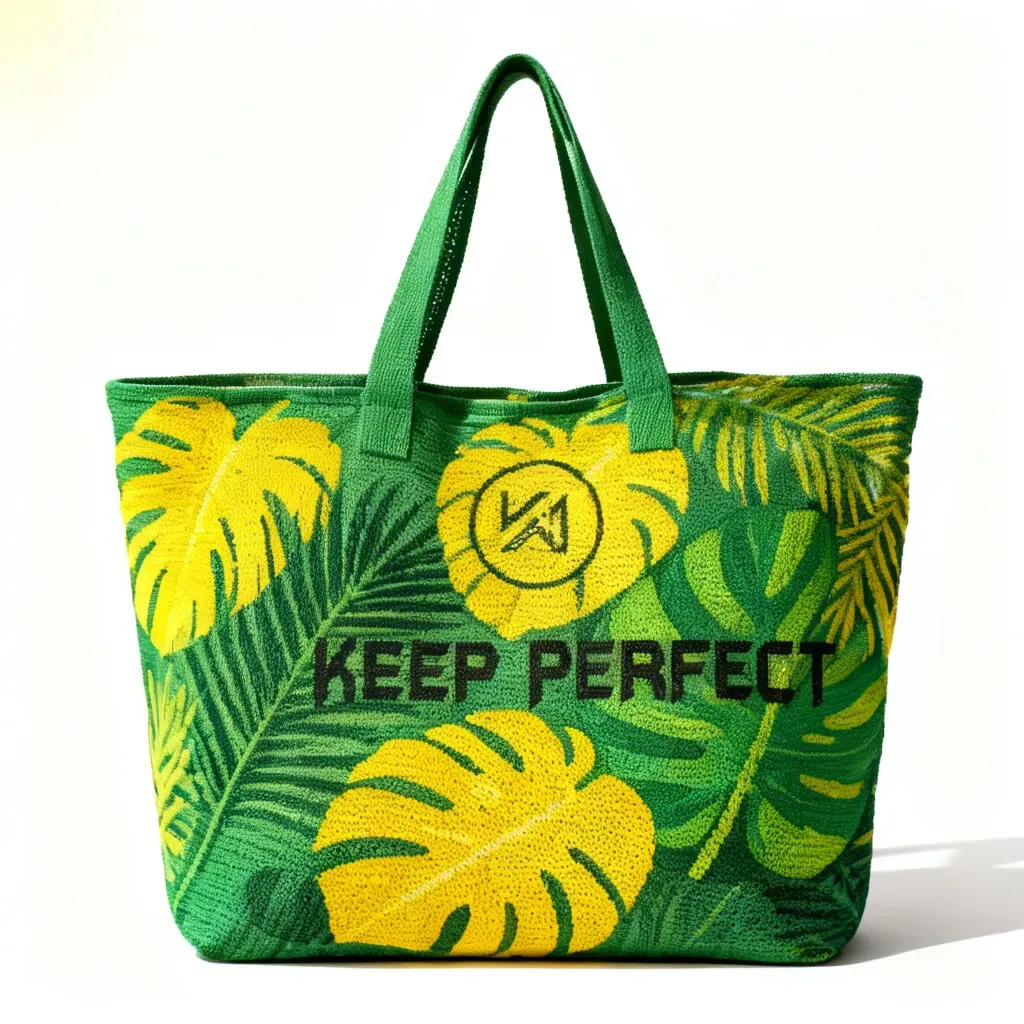
A children's product needs a permanent distinguishing mark on the product itself and on its packaging, carrying enough information to identify the production location, the lot and the date of manufacture.
In a knitted bag programme the mark is usually a woven or printed label sewn into an inner seam, and the practical difficulty is legibility after washing. A label that fades or cracks after three domestic washes stops being a compliant mark, so the label substrate and print method should be specified and tested alongside the fabric rather than chosen for appearance.
Placement matters as well. The mark has to be on the product, not only the packaging, which rules out approaches that rely on a hangtag alone. Where a style has no suitable seam for a woven label, a printed mark applied directly to the lining is the usual alternative, and it should be verified for durability in the same wash test.
The information content should be settled before artwork approval, because adding a tracking mark late means re-approving the label and, in many programmes, re-testing the assembly. It is a small decision that is expensive to revisit.
Branch E: Small Parts, Straps and Drawstrings
Mechanical hazards on children's bags concentrate in detachable trim, long cords at the neck or hood area, and any component small enough to fit the small-parts test fixture.
Detachable trim is the most common finding. A decorative badge, a charm on a zip pull or a press-stud fastener that can be removed with a modest force becomes a potential small part, and the fix is usually an attachment method change rather than a design change — stitched rather than pressed, or a larger component that cannot pass the fixture.
Cords are the second. A drawstring closing on a small backpack is generally acceptable; a cord positioned where it loops near the neck is not, because the hazard is entrapment rather than ingestion. Programmes that use drawstrings should specify the cord path and length in the technical pack so the closure cannot be assembled in a hazardous configuration.
Both hazards are assessed differently from the chemical duties, and are covered by the toy-safety standard where the article is also a toy. A knitted bag that is purely a carry article is assessed as a children's product, not a toy, and the distinction should be settled at classification stage because it changes which standard applies.
Building the Testing Panel by Material
Build the panel component by component — shell, lining, webbing, coating, print, foam, metal trim — and scope each parameter to the components that can actually carry it.
Knitted shell and lining
Total lead content and, where applicable, residual finishes. The shell is usually clean; the risk sits in what is applied to it.
Prints and coatings
Lead and cadmium in the pigment system, plus phthalates in any PVC-based print plastisol or coating.
Metal trim
Total lead content and, for skin contact, nickel release. Alloys are the variable that matters, not the plating.
Webbing and thread
Lead in dyed webbing plus a declaration covering lubricants and finishes used in manufacture.
Method discipline is the part that keeps the panel comparable over time. A result is only meaningful if the method is named, and a supplier who reports a compliant figure measured differently has not answered the question. Specify CPSC-CH-E1002-08.3 for non-metal substrates, CPSC-CH-E1003-09.1 for coatings and CPSC-CH-C1001-09.4 for phthalates, and record the method on the report.
Colourways follow a rule: certify the pigment system, then test new shades at colour-fastness level. A shade that introduces a new pigment family is a new submission, because the pigment is the source of the lead and cadmium risk.
Cost and Calendar for a Compliant Programme
A full CPSIA panel on a small knitted bag typically returns in five to eight working days, and the reliable way to keep it off the critical path is to start it at sample approval rather than at inspection.
The cost has two parts. There is the laboratory fee for the panel, which scales with the number of components and parameters rather than with order size, and there is the internal cost of assembling declarations. Neither is large relative to a programme of several thousand pieces, but both are avoidable if the specification is stabilised before certification rather than after.
Capacity interacts usefully here. With 7 production lines running and about 200,000 pcs per month of output, a certified specification can be scheduled repeatedly without re-earning a slot, which is what makes an annual testing cycle practical. Programmes that change yarn or trim every season lose that advantage and pay for testing more often.
The calendar mechanics are unchanged from a non-children's programme: 7 working days for sampling, 30 days for bulk. What has to be inserted is the testing window, and inserting it before the bulk slot rather than after inspection is the entire scheduling decision. For the wider quality picture, see knit bag QC and testing.
What Happens When a Lot Fails
A failed lot is contained by four steps: quarantine the goods, identify the failing component, correct at component level rather than by re-inspection, and retest the corrected article before releasing.
- Quarantine — hold the lot and any goods already assembled from the same component batch.
- Identify — trace the failing parameter to a specific component using the bill of materials.
- Correct — substitute the component or change the process, since re-inspecting will not remove the substance.
- Retest — test the corrected article, not the original, before the lot is released.
- Record — log the failure, the root cause and the correction in the change log.
The correction step is where programmes go wrong. Sorting or re-inspecting a lot with a chemical failure does not change the chemistry, and it consumes the calendar that a component substitution would have used. Substituting the webbing, coating or ink is almost always both faster and more reliable.
The record step is what prevents recurrence. A log entry naming the component, the parameter, the supplier and the correction turns a one-off failure into a control. Over two or three seasons that log is usually the single most valuable document in the file, because it shows where the exposure actually sits rather than where the specification assumed it did.

Send the bag specification, target age group and sales channels and we will return the classification, testing panel and a sampling slot. Request a CPSIA compliance review
Frequently Asked Questions
What counts as a children's product under CPSIA?
An article designed or intended primarily for children 12 years of age or younger. Regulators weigh four factors: whether the article is represented as intended for a child, whether it is commonly recognised as such, the age to which it is marketed, and whether it is packaged or labelled for a child. Size alone is not determinative.
What are the CPSIA lead limits for a children's bag?
Two limits apply. Total lead in the substrate is capped at 100 ppm, and lead in any paint or surface coating is capped at 90 ppm. The coating limit covers printed bands and sprayed finishes regardless of the material beneath, which is why prints need their own declaration.
Which phthalates are restricted and in which products?
Three specified esters are prohibited above 0.1 per cent by weight in children's toys and child care articles, with three further esters under an interim prohibition for articles that can be mouthed. A school backpack is generally neither; a nursery or nappy bag may qualify by function.
Where do phthalates come from in a knitted bag?
Soft plastics. A PVC-coated base panel, a print plastisol, a synthetic leather trim or a flexible window panel are the sources. The yarn is not. Specifying a phthalate-free plasticiser system removes the question permanently rather than testing for it every season. The most reliable control is substitution at the specification stage, because a plasticiser cannot be removed from a finished article.
Is third-party testing mandatory for children's bags?
Yes, where the article is a children's product. Testing must be carried out by a CPSC-accepted third-party laboratory and supported by a signed certificate identifying the product, the rules applied, the importer, the test dates and the testing laboratory. The certificate has to accompany the shipment rather than follow it, and it must name the site that actually produced the goods.
What should the certificate cover?
The product, the specific rules it was tested against, the importer or domestic producer, the dates and location of testing, and the laboratory that performed it. The certificate should accompany the shipment rather than follow it, and it must name the site that actually produced the goods. A failing lot is corrected at component level, never by re-inspecting the same goods.
What is a tracking label and where does it go?
A permanent distinguishing mark on the product and on its packaging, carrying information that identifies the production location, the lot and the date of manufacture. A mark printed only on the outer carton does not satisfy the requirement, because the product itself must carry it. The certificate must name the site that actually produced the goods, not a former one.
Are mechanical hazards assessed the same way as chemical limits?
No. Mechanical hazards such as detachable trim and cords are assessed separately, and the toy safety standard applies where the article is also a toy. A bag that is purely a carry article is assessed as a children's product, so the classification decision determines which standard applies. Testing is performed by an accepted third-party laboratory rather than in house.
How long does CPSIA testing take?
A standard panel covering total lead and the specified phthalates typically returns in five to eight working days. Starting it at sample approval keeps it inside the 30-day bulk slot; starting it at inspection adds the same number of days directly to goods-in dwell. Where a programme also sells into the European Union, the same panel can be read against REACH thresholds rather than commissioned twice.
What is the most common certificate error?
Naming a production site different from the one that made the goods. It is a discrepancy found quickly at inspection, and it usually appears when a programme has been re-sourced without the certificate being reissued or the change being logged. Checking the site name against the packing list at goods-in is a one-minute control that catches it while the goods are in hand.
Does a children's bag also need Prop 65 compliance?
Often yes, and they are separate duties. Prop 65 requires a warning before exposure to a listed chemical, while CPSIA imposes testing, certification and tracking obligations. One laboratory panel can be read against both, but discharging one does not discharge the other. Confirming which framework applies before sampling avoids duplicating tests or leaving a gap that surfaces at a border.
How should many colourways be handled?
Certify the pigment system once, then test new shades at colour-fastness level. A shade introducing a new pigment family is a new submission, because the pigment is where lead and cadmium findings originate. Keeping a shade change log alongside the certificate makes the scope straightforward to recheck each season.
What happens if a lot fails testing?
Quarantine the lot, trace the failing parameter to a specific component, correct at component level by substitution or process change, and retest the corrected article before release. Sorting or re-inspecting will not remove a chemical substance. Recording the root cause turns a one-off failure into a control that prevents it recurring in later cycles.
Do knitted shell fabrics usually pass lead testing?
Usually. A 300D/96f recycled polyester yarn spun from bottle flake carries negligible lead. The exposure sits in the pigment system printed onto the body, the coating on the base panel and any metal trim, none of which exist at yarn stage. Testing the shell alone therefore produces a clean result that does not describe the article as shipped.
When should testing be scheduled in the calendar?
To close before the bulk slot opens. With 7 working days for sampling and 30 days for bulk, a five to eight working day panel fits comfortably if it starts at sample approval and not at all if it starts at inspection. Inserting the testing window before production rather than after inspection is the entire scheduling decision.
People Also Ask
Is a small backpack a children's product under CPSIA?
It is if designed or intended primarily for children 12 or younger. Regulators consider how it is represented, whether it is commonly recognised as a child's item, the marketing age and the packaging, rather than size alone.
What is the CPSIA lead limit for children's products?
Total lead in the substrate is capped at 100 ppm, and lead in paint or surface coating at 90 ppm. Prints and sprayed finishes count as coatings, so they need their own declaration. Component substitutions reopen the assessment, so they should be logged as they happen.
Do children's bags need third-party testing?
Yes, where the article is a children's product. Testing must be carried out by a CPSC-accepted third-party laboratory and supported by a signed certificate naming the product, the rules applied, the importer, the test dates and the testing laboratory.
What is a CPSIA tracking label?
A permanent distinguishing mark on the product and its packaging identifying the production location, lot and date of manufacture. A mark on the outer carton alone does not satisfy it. A failing lot is corrected at component level, never by re-inspecting the same goods.
What should I do if a bag lot fails testing?
Quarantine the lot, trace the failing parameter to a specific component, correct at component level by substitution or process change, and retest the corrected article before release. Sorting or re-inspecting will not remove a chemical substance from the goods.
Sources and further reading
Every figure on this page is either our own programme data or attributed below. Open the originals before you write them into a specification.
- Consumer Product Safety Improvement Act (CPSIA)U.S. Consumer Product Safety Commission Authoritative source for the children's product definition, the lead limits, the phthalate provisions and the certificate duty.
- Children's Products Business GuidanceU.S. Consumer Product Safety Commission Used for the four-factor test applied when deciding whether an article is intended primarily for children.
- About Proposition 65California OEHHA Referenced to distinguish the warning requirement from the CPSIA testing and certification regime.
- Substances restricted under REACHEuropean Chemicals Agency (ECHA) Used to show where a single laboratory panel can be read against more than one framework.