Sustainable Knitted Bag Claims Guide: How to Write One That Survives a Retailer Questionnaire
What makes a sustainable knitted bag claim defensible? A number, a basis and an artefact. Made with 60 percent recycled polyester by yarn mass, supported by a transaction certificate, survives review. Eco-friendly bag does not, and under the EU rules on empowering consumers for the green transition, generic environmental claims are restricted unless substantiated with recognised evidence. A knitted bag supports four honest claims: recycled content, durability, recyclability and lower yarn waste, and each one needs its own document.
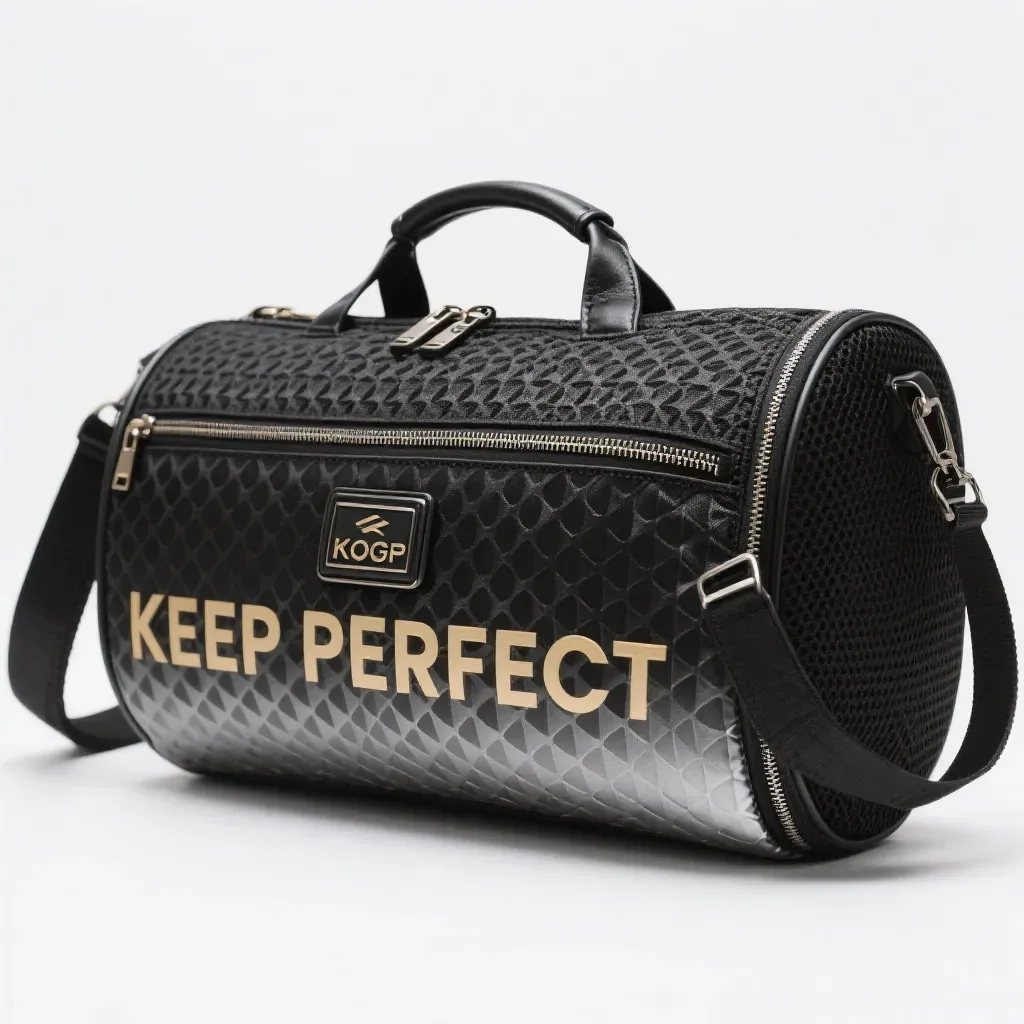
The Hangtag That Came Back From Compliance
A buyer put a knitted tote into a European retail group with a hangtag reading eco-friendly bag, made with recycled materials. Bags passed inspection at AQL 2.5 under ISO 2859-1. Six weeks later the retailer's compliance team asked three questions: what percentage recycled, measured on what, and evidenced by which document. The buyer had the recycled certificate, but it named a yarn lot rather than the bag, and it stated 52 percent where the hangtag implied a full recycled bag.
The claim itself was not dishonest; it was unspecific, and unspecific is where the exposure sits. The buyer had bought recycled yarn, used it, and made a bag largely from it. What they could not do was point to one document stating one number measured on one basis. Rewriting the hangtag to made with 60 percent recycled polyester by yarn mass, with a transaction certificate per shipment, took two emails and cleared the review.
The lesson worth carrying is that the fix was editorial rather than technical. No material changed, no test was run and nothing was re-sourced. The programme already generated the evidence it needed; nobody had written it down in the form a reviewer asks for. Most sustainable claim failures on bag programmes are of this kind: the substance is there and the statement is not.
What the case shows
- Most claim failures are editorial, not technical.
- The evidence already exists; it was never written as one number, on one basis, backed by one named document.
What Makes a Claim Specific Enough
A claim is specific enough when a reviewer can answer three questions without asking anyone: how much, of what, and measured how. Made with recycled materials answers none of them. Made with 60 percent recycled polyester by yarn mass answers all three. The test is mechanical rather than judgemental, and it is the same test that the self-declared environmental claim standard, ISO 14021, sets out for claims a business makes about its own product.
The second requirement is that the claim covers what it appears to cover. Made with recycled content implies the article; if only the yarn is recycled, say so on the yarn. A knitted bag makes this easy to state honestly, because the yarn is the overwhelming majority of the article by mass, at roughly 255 g of yarn against about 25 g of thread, label and hardware on a mid-weight tote.
The third is relevance, and it is the one most often missed. A claim should be about an aspect that actually matters for the product, not about a marginal attribute presented as significant. A bag claiming to be water saving because a small patch of lining used dope-dyed yarn is technically true and materially misleading, and it is the pattern reviewers are trained to find.
- Requirement
- A number, a basis and a named document
- Weak form
- made with recycled materials
- Defensible form
- made with 60 percent recycled polyester by yarn mass
- Yarn mass on a mid-weight tote
- about 255 g
- Non-yarn mass, thread, label, hardware
- about 25 g
- Basis options
- yarn mass, or finished article mass
- Artefact
- transaction certificate per shipment
- Programme data
- 100 pcs per style and colourway, 7 working days sampling, 30 days bulk
The Four Claims a Knitted Bag Can Honestly Make
A knitted bag supports four claims with evidence behind each, and it is worth noting that none of them requires a new test. Recycled content is evidenced by the certificate chain. Durability is evidenced by the abrasion and handle load results already run for the specification. Recyclability is evidenced by a material breakdown by mass. Lower production waste is evidenced by yarn input against finished panel mass.
Recycled content is the claim most buyers want and the one with the best documentation behind it, provided the percentage and basis are fixed before bulk. The evidence is the transaction certificate per shipment plus a scope certificate per site, which is the same chain described in rPET traceability for bag programmes. Where that chain is missing, the claim should not be made.
Durability is the claim most buyers underuse. A bag tested to 25,000 Martindale cycles under ISO 12947-2 and a handle root held at 8 kg for 30 minutes has a defensible longevity statement, and longevity is the sustainability attribute a customer experiences directly. It also avoids the exposure that comes with generic environmental language, because it is a measured property rather than a characterisation.
| Claim | Defensible wording | Evidence required | Weak alternative to avoid |
|---|---|---|---|
| Recycled content | made with 60 percent recycled polyester by yarn mass | transaction certificate per shipment, scope certificates per site | made with recycled materials |
| Durability | tested to 25,000 Martindale cycles, handle held at 8 kg for 30 minutes | ISO 12947-2 abrasion report, assembled handle load test | long lasting, built to last |
| Recyclability | mono-material polyester body, removable board, recyclable where polyester is collected | material breakdown by mass, trims list, market check | recyclable, with no infrastructure qualification |
| Lower production waste | knitted to shape, about 3 percent yarn waste against 12 to 18 percent for cut-and-sew | yarn input per bag against finished panel mass | zero waste, without a measured figure |
Recycled Content: The Number and Its Basis
The number and the basis have to be stated together, because the same bag gives different answers. A yarn that is 100 percent recycled polyester makes an article that is around 91 percent recycled by mass, once about 25 g of thread, label and hardware are counted against 255 g of yarn. Both numbers are correct, they differ by roughly nine points, and stating one without the basis is the single most common reason a claim is queried.
Choose the basis once, at specification, and use it everywhere: hangtag, care label, product page and customer questionnaire. Programmes that state yarn percentage on the hangtag and article percentage in a retailer form generate a discrepancy review even when both figures are right. Consistency costs nothing and is the most effective control in the whole claim process.
There is also a threshold question on logos. The recycled content standards set a minimum content for certification and a higher threshold before a mark may be used on a product, so a claim at 20 percent and one at 50 percent are not treated the same way. Confirm which threshold applies to the artwork before it is printed, because reprinting a hangtag run costs more than the artwork review would have.
Durability as a Sustainability Claim
Durability deserves more use than it gets, because it is the claim a customer can verify and the one with the least regulatory exposure. It rests on measured results already in the specification: abrasion resistance under ISO 12947-2, tensile strength under ISO 13934-1, tear strength under ISO 13937-2, and a static load test on the assembled handle. None of these is a sustainability test, and all of them support a longevity statement.
The wording should give the number and the method, because a number without a method is not verifiable. Tested to 25,000 Martindale cycles is checkable; highly durable is not. Where a buyer wants a use-based claim, tie it to the test: a bag clearing 25,000 cycles and an 8 kg handle load is suited to daily carry over several seasons, and that sentence points at two named results rather than at an assertion.
One caution: durability claims have to be true of the whole product, not of its strongest part. A bag with an excellent body fabric and a handle root that tears at 6 kg is not a durable bag, whatever the abrasion figure says. This is the same failure described in the tote buying guide, where the fabric passed and the assembled bag failed, and it applies to the claim as much as to the product.
Carbon and Water Claims: Where They Go Wrong
Carbon and water claims fail in a particular way, because they are comparative rather than absolute. A bag cannot be low carbon in itself; it can be lower carbon than a stated alternative. Any such claim needs the comparator, the boundary and the method alongside the number, and without those three it is unsubstantiated regardless of how accurate the underlying figure is.
There is a further restriction now in force in the EU: claims that a product has a neutral, reduced or positive impact on the environment because of emissions offsetting are restricted. A bag programme cannot buy offsets and describe the bag as carbon neutral. This catches a lot of existing artwork, and it is worth reviewing any hangtag or product page that uses the word neutral before the next print run.
Where a footprint figure is genuinely wanted, the honest form is a band with its boundary stated, as set out in the carbon footprint of a knitted bag. A range of 1.6 to 2.4 kg CO2e cradle-to-gate is defensible because it admits its own uncertainty. A single figure of 1.84 kg CO2e implies a precision no bag programme has and invites exactly the question it cannot answer.
Recyclability Claims Need Infrastructure, Not Properties
A bag is not recyclable in the abstract; it is recyclable where a scheme exists that accepts it. A mono-material polyester bag is recyclable in a market with polyester textile collection and not recyclable in one without, so the claim has to be qualified by market or withdrawn. This is the claim most often made on a property and most often challenged on infrastructure.
The evidence is a material breakdown by mass plus a check of the market of sale, which are the two artefacts discussed in knitted bag end of life options. A bag described as recyclable with a bonded foam base and a coated satin label is not mono-material whatever the body is made of, and the breakdown is what exposes that.
The safe wording names the condition: mono-material polyester body with a removable board, recyclable where polyester textiles are collected. It is longer than recyclable and it is defensible, while the short form is the one that generates a compliance query. Where a buyer needs a short line for artwork, point to the product page rather than shortening the claim past the point where it is true.
A Substantiation File, Item by Item
- The claim as printed, in every place it appears: hangtag, care label, product page, retailer form and any packaging.
- The number and the basis, stated identically in all of those places.
- The artefact: transaction certificate, test report, material breakdown, or yarn input record.
- The method where a test is involved, named by standard number rather than by description.
- The date of the artefact and the rule for refreshing it, usually annually or on material change.
- The market qualification where a claim depends on local infrastructure, such as recyclability.
- The owner: one named person responsible for keeping the file current across seasons.
- A review note signed before print, confirming the artwork matches the file exactly.
Wording Patterns That Survive Review
Number plus basis
Sixty percent recycled polyester by yarn mass. Never a bare percentage, because yarn and article bases differ by about nine points.
Number plus method
Tested to 25,000 Martindale cycles under ISO 12947-2. A number without a method cannot be verified by anyone.
Comparative with comparator
About 3 percent yarn waste against 12 to 18 percent for cut-and-sew. State what it is being compared with.
Condition on infrastructure
Recyclable where polyester textiles are collected. Qualify by market rather than asserting a property.
Band with boundary
1.6 to 2.4 kg CO2e cradle-to-gate. A range that admits uncertainty is more defensible than a precise-looking figure.
Avoid the offset route
Neutral claims based on offsetting are restricted in the EU. Review any artwork using the word neutral before reprinting.

Reviewing a Claim Before It Prints
The best point to fix a claim is before the artwork is printed, and the review takes about twenty minutes. Read the printed line and ask whether it states a number, a basis and a method. Check that the number matches the artefact exactly, including rounding. Check that the same basis is used everywhere the claim appears. Then check that the claim is relevant to the product rather than to a marginal attribute.
The one question that catches most problems is what a reviewer would ask. If the answer is a document that does not yet exist, the claim is not ready. If the answer is a document that exists but names a different basis or a different percentage, the claim is also not ready, and that second case is the more common one because it looks finished.
The claim review in one line
- Every printed claim needs a number, a basis, a method and a named artefact that matches it exactly, checked before print and refreshed on material change.
Build a claim file for a knitted bag programme
Send the bag type, the claim you want to make and the market of sale. We will state the number and basis, attach the supporting documents and quote FOB Xiamen at 100 pcs per style and colourway with 7 working days sampling and 30 days bulk. Start on the contact page.
Frequently Asked Questions
What makes a sustainable bag claim defensible?
A number, a basis and a named artefact. Made with 60 percent recycled polyester by yarn mass, backed by a transaction certificate, answers what a reviewer asks. Made with recycled materials answers none of the three questions and is the pattern reviewers are trained to find.
What claims can a knitted bag honestly make?
Four: recycled content, evidenced by the certificate chain; durability, evidenced by abrasion and handle load results; recyclability, evidenced by a material breakdown; and lower production waste, evidenced by yarn input against finished panel mass.
Should recycled content be stated on yarn or article?
Either, but state which and use it everywhere. A yarn that is 100 percent recycled gives an article around 91 percent by mass once about 25 g of thread, label and hardware is counted against 255 g of yarn. Mixing bases triggers a discrepancy review.
Is durability a sustainability claim?
Yes, and it is underused. It rests on results already in the specification: abrasion under ISO 12947-2, tensile under ISO 13934-1, tear under ISO 13937-2 and a static handle load test. It has less regulatory exposure than environmental characterisations.
How should a durability claim be worded?
With the number and the method. Tested to 25,000 Martindale cycles under ISO 12947-2 is verifiable; highly durable is not. Make sure the claim is true of the whole product, not only of the fabric.
Can a bag be described as carbon neutral?
Not on the basis of offsetting. EU rules restrict claims of neutral, reduced or positive environmental impact where they rest on emissions offsetting. Any existing artwork using the word neutral should be reviewed before the next print run.
Can a bag be described as low carbon on its own?
No, because carbon claims are comparative. State the comparator, the boundary and the method with the number. A band such as 1.6 to 2.4 kg CO2e cradle-to-gate is defensible; a single precise-looking figure invites a question it cannot answer.
Is a knitted bag recyclable?
Where polyester textiles are collected, yes, if it is mono-material. The claim has to be qualified by market, because recyclability depends on infrastructure rather than on a property. A bonded foam base or coated label breaks the mono-material build.
What evidence does a recycled content claim need?
A transaction certificate per shipment plus a scope certificate per site in the chain, stating the same percentage and the same batch numbers. Where that chain is missing or the percentage differs from the artwork, the claim should not be made.
What goes into a claim substantiation file?
The printed claim everywhere it appears, the number and basis stated identically, the artefact, the method by standard number, the date and refresh rule, any market qualification, a named owner, and a review note signed before print.
When should a claim be reviewed?
Before the artwork prints, and again on any material change. The review takes about twenty minutes and asks whether the printed line states a number, a basis and a method that matches the artefact exactly, including rounding.
What is the most common sustainable claim failure?
An unspecific statement backed by real substance. The buyer bought the recycled yarn and used it, but no single document stated one number on one basis. Most claim failures on bag programmes are editorial rather than technical.
Does a recycled claim need to cover the whole bag?
The claim must cover what it appears to cover. If only the yarn is recycled, say so on the yarn. On a knitted bag that is easy to state honestly, because yarn is the overwhelming majority of the article by mass.
Is a marginal attribute claim acceptable?
Only if it is relevant. A bag described as water saving because a small patch of lining used dope-dyed yarn is technically true and materially misleading. Relevance is a requirement, not a courtesy.
People Also Ask
How do you write a defensible sustainable bag claim?
State a number, a basis and a method, and point to one artefact. Sixty percent recycled polyester by yarn mass with a transaction certificate survives review; made with recycled materials does not.
Can a bag be called carbon neutral?
Not through offsetting. EU rules restrict neutral, reduced or positive impact claims that rest on emissions offsetting. Review any hangtag or product page using the word neutral before reprinting.
Is durability an environmental claim for bags?
Yes. Abrasion cycles under ISO 12947-2 and a static handle load already exist in the specification, and a number with its method is harder to challenge than a generic environmental characterisation.
Should recycled percentage be on yarn or article?
Either, if stated consistently. A 100 percent recycled yarn gives about 91 percent on the article once thread, label and hardware are counted. Mixing bases triggers a discrepancy review.
Can a knitted bag be called recyclable?
Only with a market qualification. Mono-material polyester is recyclable where polyester textiles are collected, and not where they are not. A bonded base or coated label breaks the build.
Sources and further reading
Every figure on this page is either our own programme data or attributed below. Open the originals before you write them into a specification.
- Directive (EU) 2024/825 on empowering consumers for the green transitionEuropean Union Restricts generic environmental claims and claims of neutral impact based on offsetting, both discussed here.
- Textile Exchange standardsTextile Exchange The recycled content thresholds and certificate chain behind the percentage and basis a claim may state.
- ISO 2859-1 Sampling procedures for inspection by attributesISO The AQL 2.5 plan used at inspection, which is separate from claim substantiation but often requested together.
- OEKO-TEX STANDARD 100OEKO-TEX Relevant when a claim change involves a material change, since the article still has to meet chemical requirements.
- European CommissionEuropean Commission Publisher of the consumer and circular economy policy framework behind the claim restrictions described here.