Integral Knitting of Handles and Openings: Three Routes Compared for Load, Cost and Tolerance
Should a bag handle be knitted integral to the body, sewn on, or built around an insert? The three routes differ on load, operations and tolerance: an integral band 6 mm wide integrated over 42 courses reaches about 320 N in pull-out testing, a 25 mm polyester webbing insert reaches around 450 N at the cost of an extra operation, and a sewn strap fails first at the stitch line. This article compares all three and gives the scenario matrix.
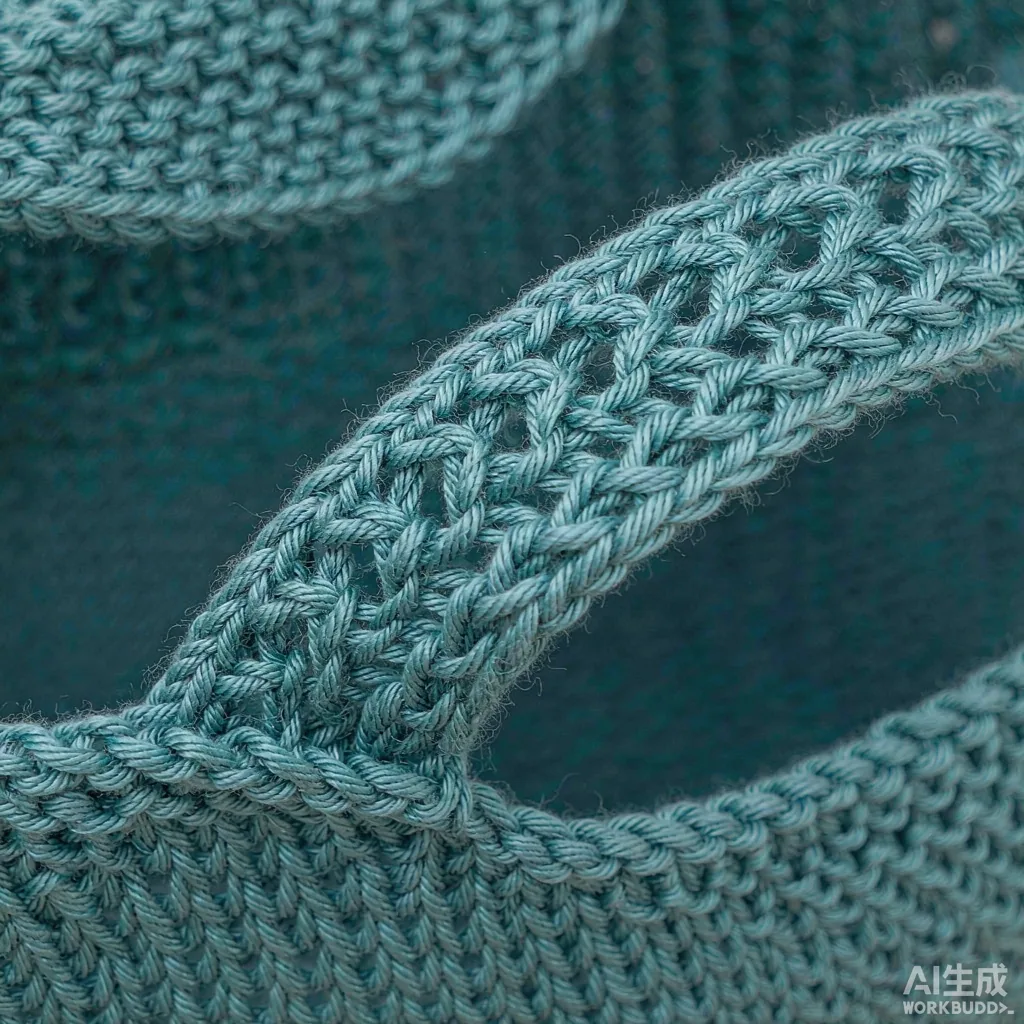
Stitched-On, Knitted-In or Insert: Three Routes
The route decision is also a calendar decision. An integral band lengthens the knitting cycle by about 30 seconds; an insert or a sewn strap adds an operation that has to be booked, scheduled and inspected. Over a season of four drops, that difference is measured in weeks rather than minutes.
Three routes build a bag handle: knitted integral to the body, sewn on afterwards, or carried on a webbing insert; the difference between them is where load concentrates, not how they look. An integral handle spreads load along a band, a sewn strap concentrates it at a stitch line, and an insert carries it in a component.
For most carried-load programmes the integral route is the right starting point, because it removes an operation and the tolerance it would add. Where carried load exceeds about 8 kg, or where the design will be set down loaded all day, an insert earns its extra cost by taking the load out of the knit entirely.
The sewn strap remains useful where the design needs a long drop, a removable strap or a material change between body and handle. It costs an operation and it concentrates load, but it buys flexibility that neither of the other two routes offers.
| Criterion | Integral knit band | Webbing insert | Sewn strap |
|---|---|---|---|
| Assembly operations | none | one setting operation | one or two attachment operations |
| Load path | spread along 42 courses | carried by the webbing | concentrated at the stitch line |
| Typical pull-out result | about 320 N (ISO 13934-1) | about 450 N | governed by seam strength |
| First failure point | panel field | webbing to body join | stitch line at the root |
| Effect on cycle time | adds the band courses | no knitting effect | no knitting effect |
| Tolerance contribution | set by the file | set by the insert | set by the attachment |
| Best carried load | up to about 8 kg | above about 8 kg | up to about 5 kg |
| Suits | structured totes and shoppers | heavy carry and work bags | removable or long-drop straps |
Handle Reinforcement Without a Webbing Insert
Where a handle root is knitted with too few integration courses, the failure is gradual and easy to miss in inspection. The root simply lengthens over weeks of use until the bag sits lower than it should. Roughly 40 courses of integration is a workable starting point, adjusted one parameter at a time.
Where the drop is long, an integral band can feel too stretchy. The usual correction is to widen the band and to carry more reinforcement courses rather than to tighten the whole knit, which would change the handle of the entire panel.
An integral handle is reinforced by geometry rather than by an added component: a band roughly 6 mm wide knitted across about 42 courses, with the junction carried well past the top of the panel so load enters gradually. That distribution, not yarn strength, is what produces the pull-out result.
Two parameters govern the outcome. Band width sets how many wales share the load, and the number of courses over which the band is integrated sets how gradually it transfers. Designers usually start at 6 mm and about 40 courses, then adjust one parameter at a time against test results.
The limit is not the knit but the geometry around it. Where the band meets the body at a tight angle, loops distort regardless of band width, so a generous radius at the root matters more than another millimetre of band.
Openings: Ribbed, Bound or Cut and Closed
Binding also introduces a second material with different stretch behaviour. Where the tape and the knit recover at different rates, the mouth can ripple after laundering even though each component met its own specification.
Opening choice also affects packing. A ribbed border folds flat with less creasing than a bound edge, which matters for retail presentation. Where the bag ships folded rather than stuffed, the ribbed route usually photographs better on the shelf and recovers faster after unpacking.
Opening choice also affects packing. A ribbed border folds flat with less creasing than a bound edge, which matters for retail presentation. Where the bag ships folded rather than stuffed, the ribbed route usually photographs better on the shelf.
Three treatments finish a bag opening: a ribbed border knitted across the top 18 to 24 courses, a bound edge with roughly 12 mm tape, or a cut edge closed during assembly. The ribbed border recovers best and costs cycle time; the bound edge adds a component and an operation; the cut edge is fastest and least durable.
Ribbed border
Knitted over 18 to 24 courses, recovering about 96% after a 5% stretch. Holds the mouth open and hides the cut edge.
Bound edge
About 12 mm tape applied after knitting. Firm and flat, with one extra component and one extra operation to control.
Cut and closed
Fastest route with no added material. Least durable at the mouth, and the most likely place to fray in service.
Reinforced window
A denser knitted zone where hardware will sit, so a zip foot or rivet has something solid to grip.
Structural Versus Applied Closures
Hardware specification deserves the same rigour as the knit. A zip, magnet or rivet carries its own finish standard and its own coating limits, and where the retail channel applies chemical restrictions those apply to the trim as much as to the body.
Where a programme is likely to iterate, an applied closure can be the better commercial choice. It allows the hardware to change between drops without touching the knit file, which keeps the sampling calendar short while the range settles.
A structural closure is one whose receiving feature is knitted into the body — a drawcord channel, a reinforced window or a ribbed mouth — while an applied closure is fitted afterwards to a finished panel. Structural closures survive better because the load path is continuous; applied closures are easier to change later.
Specify the closure route together with the reinforcement, not separately. A zip is only as good as the knit around it, and a drawcord channel that was not designed into the course sequence will stretch open under the first real load.
Load Testing an Integral Handle Root
Test the handle root as a gripped strip to ISO 13934-1 rather than as a whole bag, because a whole-bag test distributes load unpredictably across the panel. A band 6 mm wide integrated over 42 courses reaches about 320 N in this test, and a 25 mm webbing insert around 450 N.
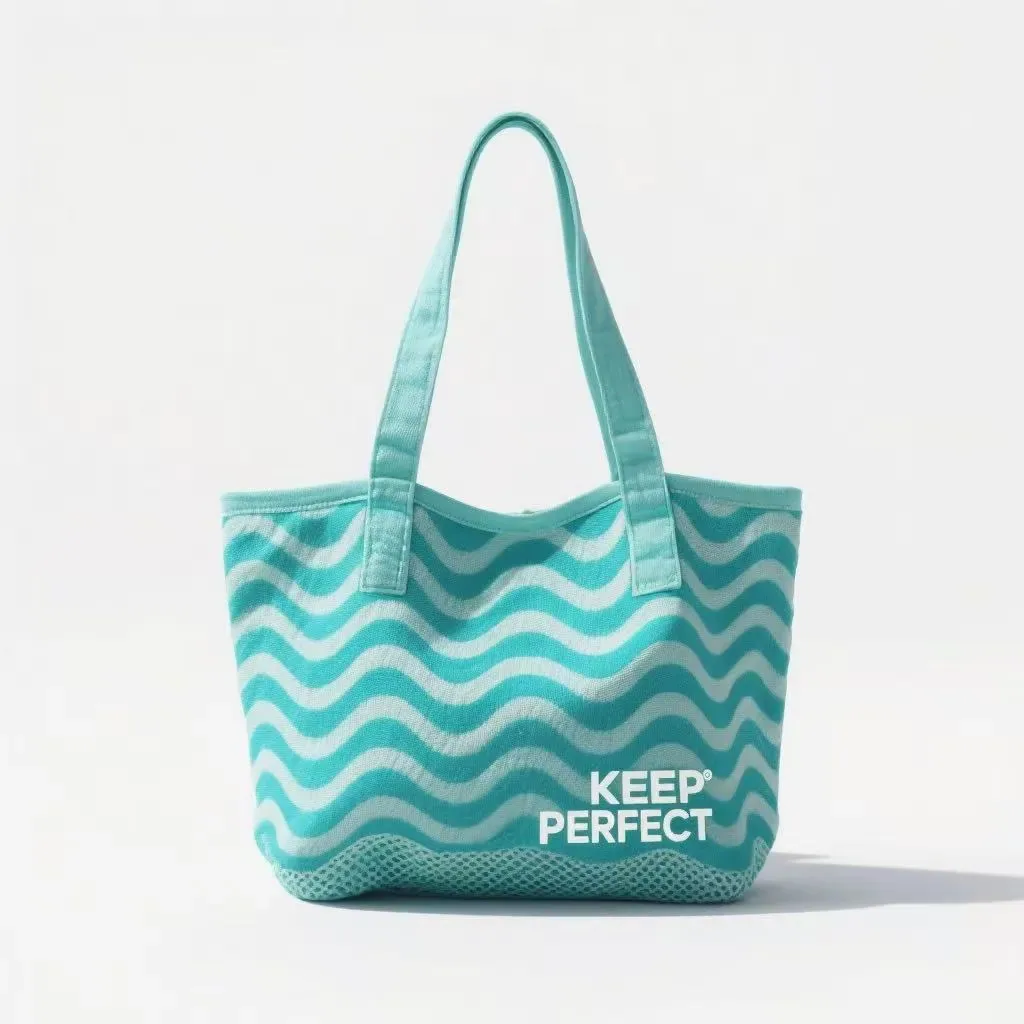
Add a cyclic check rather than relying on a single pull. Carrying 8 kg and setting the bag down 20 times from about 200 mm reproduces the field condition far better than one slow pull, because progressive lengthening at the root shows up only under repetition.
Specify your handle route with a specialist
Send the silhouette, dimensions and carried load. You receive a handle construction recommendation with reinforcement detail, test targets and a sampling window inside one business day. Open the contact page.
Failure Modes and Where They Begin
Each failure mode has a different prevention point. Root lengthening is prevented at the file stage, seam separation at the attachment specification, base abrasion at the structure map, and border distortion at the opening treatment. Inspecting harder catches none of them earlier.
Four failure modes cover most returns: root lengthening under repeated load, seam separation where a strap meets the body, abrasion breakdown at the base-to-body line, and border distortion at an opening that was never reinforced. Each has a different fix, and each is more economical to design out than to inspect for.
Where knit bags fail first
- Root lengthening: progressive yarn draw into the joint, caught by cyclic load testing.
- Seam separation: the stitch line at a strap attachment, caught by strip tensile testing.
- Base abrasion: the line where a loaded bag is set down, caught by ISO 12947-2.
- Border distortion: an un-reinforced opening, caught by a recovery check after laundering.
- Loop instability behind all four, caught by measuring loop length against target.
Cost, Cycle Time and Volume Consequences
Volume changes the answer more than any other variable. At 100 pcs per colourway the routes sit close enough that lead time decides the award. Across four seasonal drops and three colourways, the operation count decides, and the integral route usually wins.
The integral route removes an operation but adds courses, the insert route adds an operation and a component, and the sewn route adds an operation and a seam. On the reference tote the integral band adds roughly 42 courses, which is about 30 seconds of carriage time, against an operation that costs considerably more at any realistic volume.
At 100 pcs per colourway the difference is small enough to ignore. At four drops a year across three colourways, the operation cost compounds and the integral route usually wins — provided the carried load stays inside what the knit can distribute.
Choosing the Route: A Scenario Matrix
Match the route to the carried load and the drop: integral for up to about 8 kg with a short drop, insert above that or for all-day heavy carry, sewn where the strap is long, removable or a different material. Two routes can coexist on one bag, and often do.
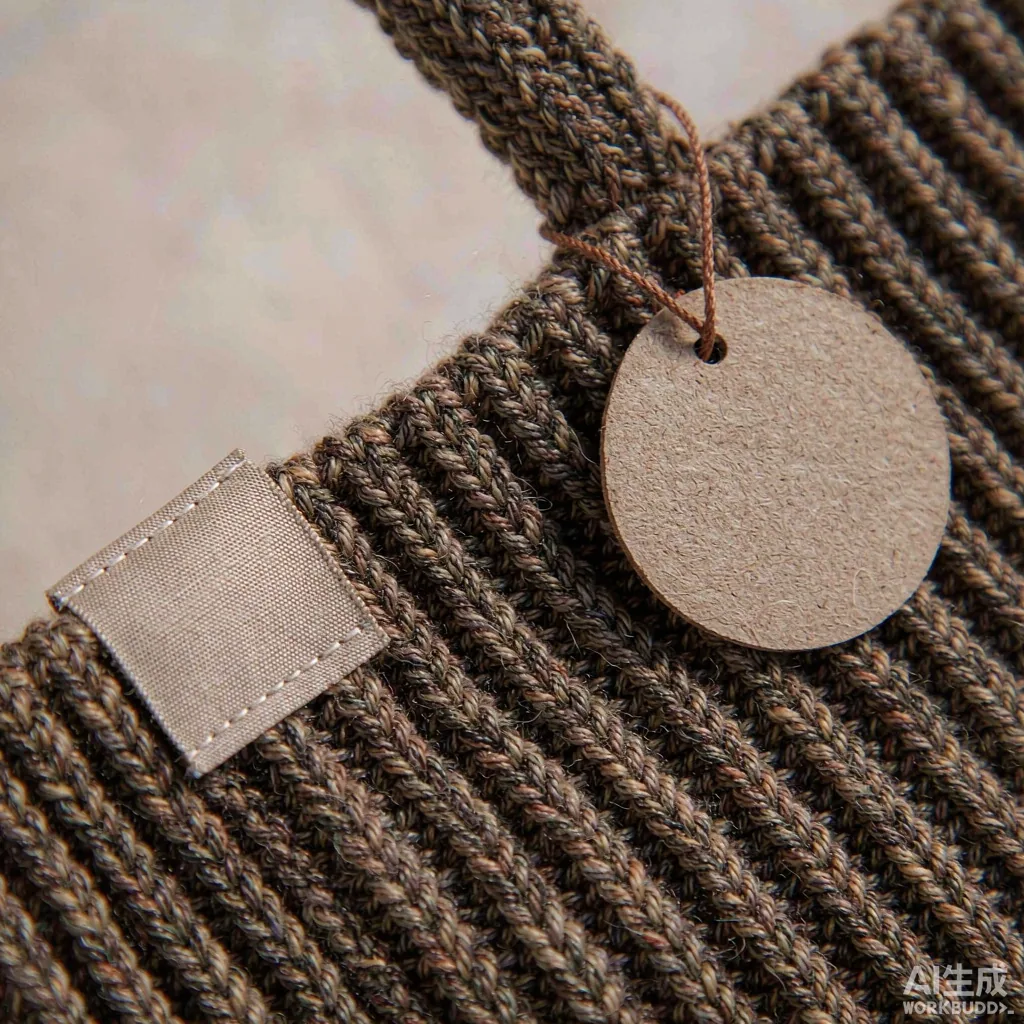
Where the brief sits between two routes, prototype both at the minimum quantity. Two structures tested on the same yarn lot settle in one round what an argument over drawings rarely settles at all.
What to Write on the Purchase Order
A purchase order that names the route, the reinforcement detail and the acceptance limit removes the three items most often argued about afterwards. Everything else on the order is commercial; those three lines determine whether the bag performs in service.
A purchase order for a knitted bag should state the carried load in kilograms, the handle construction route, the reinforcement detail, the abrasion target with its test number, the dimensional tolerance in millimetres, the inspection level and the packing specification. Six lines, and almost every dispute disappears.
- Handle routes
- integral knit band, webbing insert, sewn strap
- Integral band detail
- about 6 mm wide, integrated over about 42 courses
- Insert reference
- 25 mm polyester webbing
- Pull-out targets
- about 320 N integral, about 450 N insert (ISO 13934-1)
- Abrasion target
- about 25,000 rubs at 12 kPa (ISO 12947-2)
- Dimensional tolerance
- within 3 mm on a 360 mm dimension after relaxation
- MOQ
- 100 pcs per style / colourway
- Sampling, bulk, shipping
- 7 working days, 30 days, FOB Xiamen
Frequently Asked Questions
Can bag handles really be knitted as one piece with the body?
Yes. The handle is built as a reinforced band knitted over dozens of courses while the panel continues, so the junction spans a long distance rather than a single line. Load therefore enters the panel gradually. The technique removes an attachment operation and the tolerance that operation would have contributed.
How strong is an integral knitted handle root?
A band around 6 mm wide integrated over roughly 42 courses reaches about 320 N in a gripped strip test to ISO 13934-1. A 25 mm polyester webbing insert reaches around 450 N. The insert is stronger because the webbing carries the load directly, at the cost of an extra component and operation.
Which handle route costs less?
The integral route, whenever the carried load sits inside what the knit can distribute. It adds about 42 courses, roughly 30 seconds of carriage time, against an attachment operation that costs more at any realistic volume. Above about 8 kg, or for all-day heavy carry, the insert earns its extra cost.
Should I test whole bags or cut strips?
Cut strips. A whole-bag pull distributes load unpredictably across the panel, so results are hard to reproduce and harder still to compare between suppliers. A gripped strip to ISO 13934-1 isolates the joint, which is where the bag will actually fail, and gives a number that can be written into an acceptance criterion.
What is the best finish for a bag opening?
A ribbed border knitted over 18 to 24 courses, because it recovers about 96% after a 5% stretch and hides the cut edge of a jersey body. A bound edge with about 12 mm tape is firmer and flatter. A cut edge closed in assembly is fastest and the least durable.
Can a zip be set into a knitted bag body?
Yes, but specify the reinforced window alongside the hardware. A zip is only as good as the knit around it, so the programme needs a denser zone where the foot sits. Structural features such as drawcord channels and reinforced windows keep the load path continuous and survive service better than applied fittings.
What carried load should I state on the specification?
State the figure in kilograms, because it sets the reinforcement design and the acceptance limits. Below about 5 kg most structures cope; between 5 kg and 8 kg an integral band is the usual answer; above 8 kg the load should be carried by an insert rather than by the knit.
How does cyclic testing differ from a single pull?
A single pull measures peak force; a cyclic test reproduces service. Carrying 8 kg and setting the bag down 20 times from about 200 mm exposes progressive lengthening at the root, which is the failure mode that reaches the returns desk. Use both: the strip test for acceptance, the cycle for design.
What tolerance applies to a knitted bag opening?
Within 3 mm on a 360 mm dimension after relaxation, tighter at finer gauge because more loops share the same distance. Always measure after controlled relaxation, since a dimension taken straight off the machine is not the dimension the customer receives.
Can two handle routes be used on one bag?
Yes, and heavy programmes often do. A short grab handle knitted integral to the body plus a longer removable strap covers both everyday carry and a longer drop, at the cost of one extra attachment operation and one more trim item to specify.
What is the minimum order for a handle trial?
100 pcs per style or colourway, which is low enough to trial two handle routes side by side. Sampling takes 7 working days per round and bulk runs 30 days, so both routes can be built, tested and compared inside one selling season.
Which standards govern handle and opening testing?
Tensile strength to ISO 13934-1 for the root, abrasion to ISO 12947-2 for the base line, tearing resistance to ISO 13937, and colour fastness to rubbing under AATCC 8 and laundering under AATCC 61. Where the retail channel requires it, OEKO-TEX STANDARD 100 covers testing for harmful substances.
People Also Ask
What is integral knitting?
Knitting a component — a handle, a border, a channel — as part of the body sequence rather than attaching it afterwards. It removes the join, the operation and the tolerance that join would have added.
Are integral handles strong enough for retail?
Yes within their band. A 6 mm band integrated over about 42 courses reaches roughly 320 N, which suits carried loads up to about 8 kg. Above that, an insert is the safer specification.
Can I add a zip to a seamless knit bag?
Yes, provided a reinforced window is knitted where the foot sits. Specifying hardware without that zone is the usual cause of a closure that pulls away from the body in service.
How do I test a bag handle properly?
Cut a gripped strip across the root and pull to ISO 13934-1, then add a cyclic check — 8 kg carried and set down 20 times from about 200 mm — to catch progressive lengthening.
Does a bound edge last longer than a ribbed border?
Not usually. A ribbed border recovering about 96% after a 5% stretch handles daily flexing better than tape applied after knitting, and it avoids one extra component and operation.
Sources and further reading
Every figure on this page is either our own programme data or attributed below. Open the originals before you write them into a specification.
- ISO 13934-1 — Tensile properties of fabrics, maximum force by the strip methodISO Method behind the 320 N and 450 N handle root pull-out targets.
- ISO 12947-2 — Abrasion resistance of fabrics by the Martindale methodISO Referenced for the base-to-body abrasion target of about 25,000 rubs.
- ISO 2859-1 — Sampling procedures for inspection by attributesISO Defines the AQL 2.5 plan applied before a knitted bag shipment is released.
- OEKO-TEX STANDARD 100OEKO-TEX Finished-textile testing where the retail channel asks for a harmful-substances declaration.
Matching Handle Route to Retail Channel
Handle route should follow the channel rather than the drawing. A promotional shopper carried twice does not need an insert; a work bag carried all day does. Stating the carried load and the expected service life on the specification makes the route obvious, and it stops the same argument recurring at every quotation review.
The commercial terms underneath are constant: MOQ 100 pcs per style or colourway, sampling in 7 working days, bulk production in 30 days, inspection to AQL 2.5 under ISO 2859-1, and shipping FOB Xiamen with CIF or DDP available on request. Programme coordination has run on those terms since 2014, carried on 7 production lines producing about 200,000 pcs per month through an SGS-validated partner production facility.