Loop Formation and Fabric Stability: The Six Measurements That Decide Whether a Knit Bag Holds Its Shape
What makes a knitted bag body stable? Stability is created at the moment the loop is formed, not during finishing: loop length, course density, wale density and take-down tension together decide how much the finished body shrinks, skews and recovers. On a 34 x 38 cm tote at E12 the working targets are a 4.2 mm loop, 42 courses and 47 wales per 10 cm, under 3% shrinkage and under 2% skew. This article gives the six measurements to check and the test methods that predict returns.
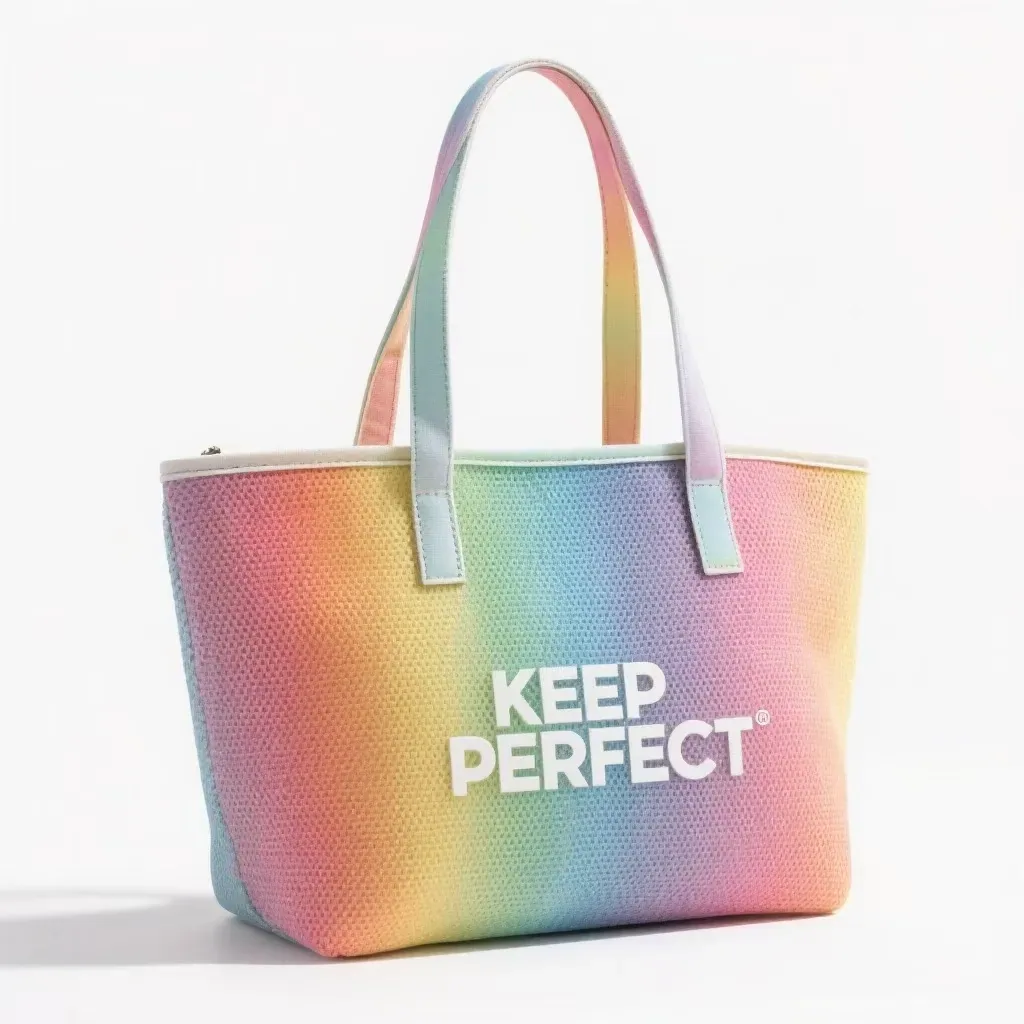
Stability Starts at the Loop, Not at the Finish
Take-down tension is the most common cause of a stable sample followed by a drifting bulk. It sets how tightly courses stack, and because it acts across the full width, a small change shows as width drift long before it shows as a visible fault. Recording the value at approval is what makes the difference diagnosable later.
Stability is created when the loop is formed, because loop geometry decides how much internal stress the fabric holds and therefore how much it will move when that stress is released. Finishing removes or locks stress; it does not create stability. A body knitted with the wrong loop length cannot be corrected later by steaming.
That distinction changes what a buyer should check. Instead of approving a sample by eye and hoping the bulk matches, the useful artefact is a set of six measurements recorded at approval: loop length, courses per 10 cm, wales per 10 cm, finished GSM, skew and recovery. Those six numbers are what the bulk can be held to.
The measurements are quick. Loop length is taken from a measured length of unroved yarn divided by the number of loops in it; course and wale counts come from a pick glass; GSM from a cut square; skew from a marked square after relaxation; recovery from a simple extension test. None of it needs a laboratory, and all of it prevents arguments.
The Loop Geometry Checklist: Six Measurements
Six measurements describe loop geometry well enough to reproduce a body: loop length, courses per 10 cm, wales per 10 cm, GSM, skew and elastic recovery; recording all six at sample approval is the most economical control a programme can adopt. Three of them are structural, two are dimensional and one is mechanical, and together they cover the ways a knit body changes.
Record these six at approval
- Loop length in millimetres, taken from unroved yarn divided by loop count.
- Courses per 10 cm, counted under a pick glass on a relaxed piece.
- Wales per 10 cm, counted the same way on the same piece.
- Finished GSM, from a cut square weighed after finishing and relaxation.
- Skew as a percentage, from a marked square measured after relaxation.
- Elastic recovery as a percentage after a fixed extension held for one minute.
Keep the record with the file version, the yarn lot and the tension values. When the bulk measures differently, those four artefacts together explain almost every case, and the explanation usually takes minutes rather than a week of correspondence.
How Loop Length Governs Shrinkage
Loop length governs shrinkage because a loop knitted short holds more internal stress, and that stress releases the first time the fabric meets heat and water; at E12 a body knitted at 4.2 mm and finished by steam boarding typically stays inside 3%, while the same yarn knitted long can move further in the other direction. Shrinkage is therefore a specification target, not a finishing outcome.
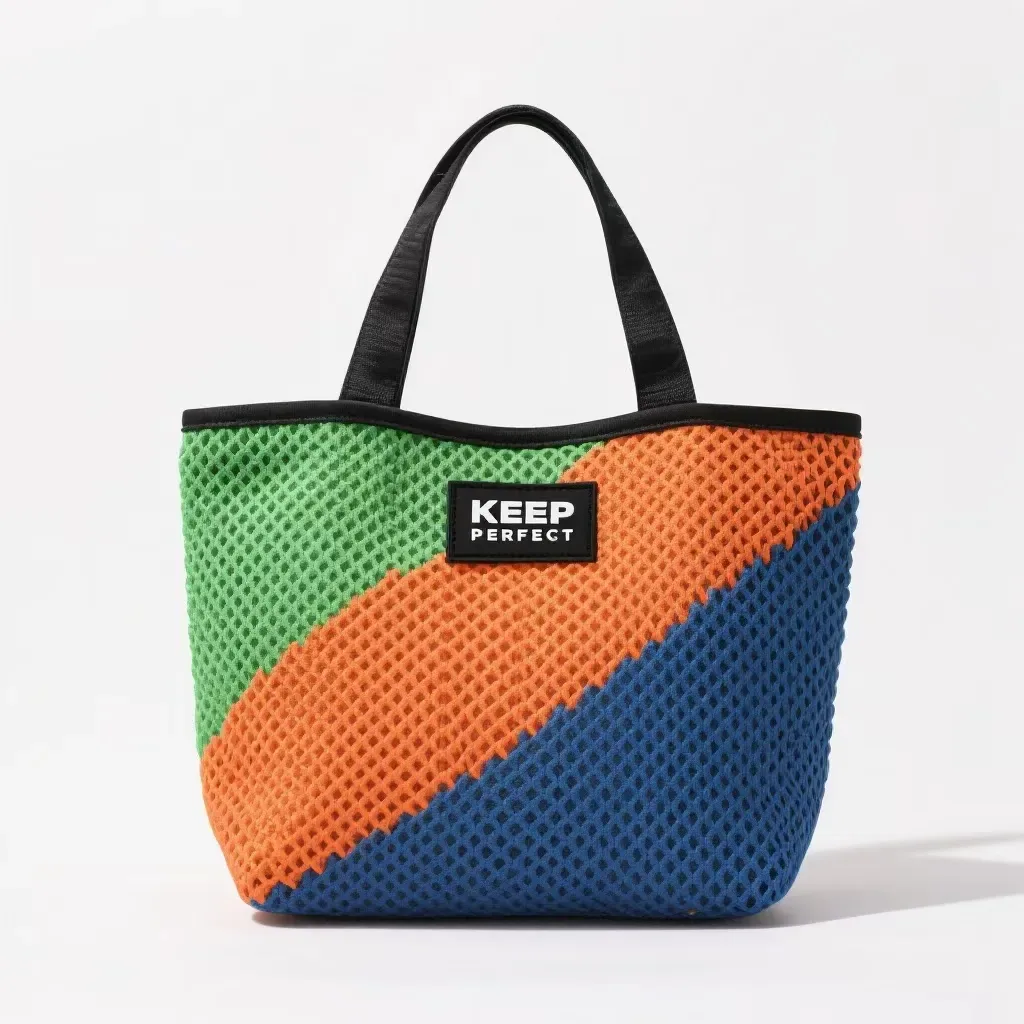
The practical control is to hold loop length within about 0.15 mm of target across the programme and to test the finished body rather than the greige knit. A laboratory report on laundering behaviour is only meaningful when it describes the same loop length the production file was written to.
Course and Wales Density: Symmetry and Skew
Spirality deserves a separate line on the sheet. A body can measure correctly on both axes and still rotate a few degrees after laundering, because loops untwist under the influence of yarn torque. Keeping spirality within about 3 degrees is a realistic retail target, and it is controlled at the yarn and loop stage rather than by pressing.
Course and wale density together determine whether a body sits square, and asymmetry between them is what produces skew: at E12, 42 courses and 47 wales per 10 cm gives a stable body, while a mismatch of more than about 10% starts to show as diagonal distortion after laundering. Keeping skew under 2% is a reasonable retail target.
Skew is frequently misdiagnosed as a cutting problem. On a knitted body there is no cutting error to correct, so the fix belongs at the loop: check take-down tension across the full width, confirm the yarn lot, and re-measure loop length before changing anything in the file.
Where Elastic Recovery Comes From
Recovery and stiffness are not opposites. A structure can be stiff and still recover poorly, because recovery depends on loop mobility rather than on fabric rigidity. Where a design needs both a firm hand and good recovery, the answer is usually a reinforced band in the load path rather than an overall tightening of the knit.
Elastic recovery comes from the loop's ability to change shape and return, which is governed by loop length, yarn modulus and the structure: a body knitted at E12 in two ends of 300D recycled polyester typically recovers about 94% after a 10% extension held for one minute, and structures with tuck or float stitches recover less because the held loops restrict movement.
Recovery matters most at openings and handle roots, where the structure flexes every time the bag is used. Specify it where it counts rather than across the whole panel, and test it on the finished body after relaxation.
Set stability targets with a knit specialist
Send the silhouette, dimensions and carried load. You receive loop geometry targets, test methods and a sampling window for your programme inside one business day. Open the contact page.
Testing Stability: The Methods That Predict Returns
Four methods predict most stability complaints: dimensional change after laundering, abrasion resistance to ISO 12947-2, tensile strength to ISO 13934-1 and elastic recovery after fixed extension. Used together on the bulk lot they catch almost every fault that reaches a retail return desk, and they do so before the container is sealed.
| Property | Method | Target on a 420 g/m² E12 body |
|---|---|---|
| Dimensional change | Launder, relax, measure | within 3% on measured dimensions |
| Skew | Marked square after relaxation | within 2% |
| Spirality | Marked square after relaxation | within 3 degrees |
| Abrasion resistance | ISO 12947-2 at 12 kPa | 25,000 rubs before breakdown |
| Maximum force | ISO 13934-1, strip method | above 450 N in the field direction |
| Tearing resistance | ISO 13937-2, single tear | above 25 N at the panel edge |
| Elastic recovery | 10% extension held one minute | about 94% |
Whatever the test, the lot has to match. Testing a sample knitted from a different yarn lot than the bulk is the most common false positive in knit programmes, because lot variation moves abrasion and shrinkage results more than most specification changes.
Finishing: Steaming, Heat Setting and Relaxation
Finishing routes also differ in repeatability. Steam boarding and heat setting both hold a narrow spread across a lot, while wash-and-relax gives a wider one because it removes more internal stress at once. Where tolerance is the binding constraint, choose a setting route and write the band accordingly.
Finishing decides the final dimensions: steam boarding relaxes loop stress evenly, heat setting locks a polyester body at temperature, and a wash-and-relax route gives the softest handle with the widest dimensional spread. Each route changes how much the finished body moves, so the tolerance band has to be written after the route is chosen.
Steam boarding
Even relaxation across the panel and good repeatability. Moderate change in hand, and the usual choice for structured totes.
Heat setting
Locks a synthetic body at temperature. Best tolerance control on polyester, with the firmest resulting hand.
Wash and relax
Softest handle and the widest spread. Needs the loosest tolerance band, and suits packable shoppers.
No finishing
Fastest route, but internal stress survives into service and shows as shrinkage after the first wash.
The measurements need a home as much as a method. Keeping the loop length, course and wale counts and the tension values on the dimension sheet rather than in email means the next sampling round starts from recorded numbers, and any dispute about what was approved is settled by looking at one page instead of reconstructing a conversation from three months earlier.
Where a programme runs across multiple colourways, the same six numbers should be recorded for each shade. Yarn lots rarely behave identically between colours, and a loop length that holds at target in one shade frequently drifts in another, which is why per-shade records prevent a whole range from being judged on the behaviour of one sample.
Defects That Come From Unstable Loops
Loop instability also shows up as a handle root that lengthens under repeated load. The mechanism is progressive: each cycle draws a little more yarn into the joint until the geometry changes enough to feel. Testing at a fixed extension with a one-minute hold catches this before a shipment, and the acceptance limit belongs on the purchase order.
Four defects trace directly to loop instability: width drift between sampling rounds, skew after laundering, excessive shrinkage on first wash, and a handle root that grows under repeated load. Each one is more economical to prevent at the file and yarn stage than to argue about after a shipment has landed.
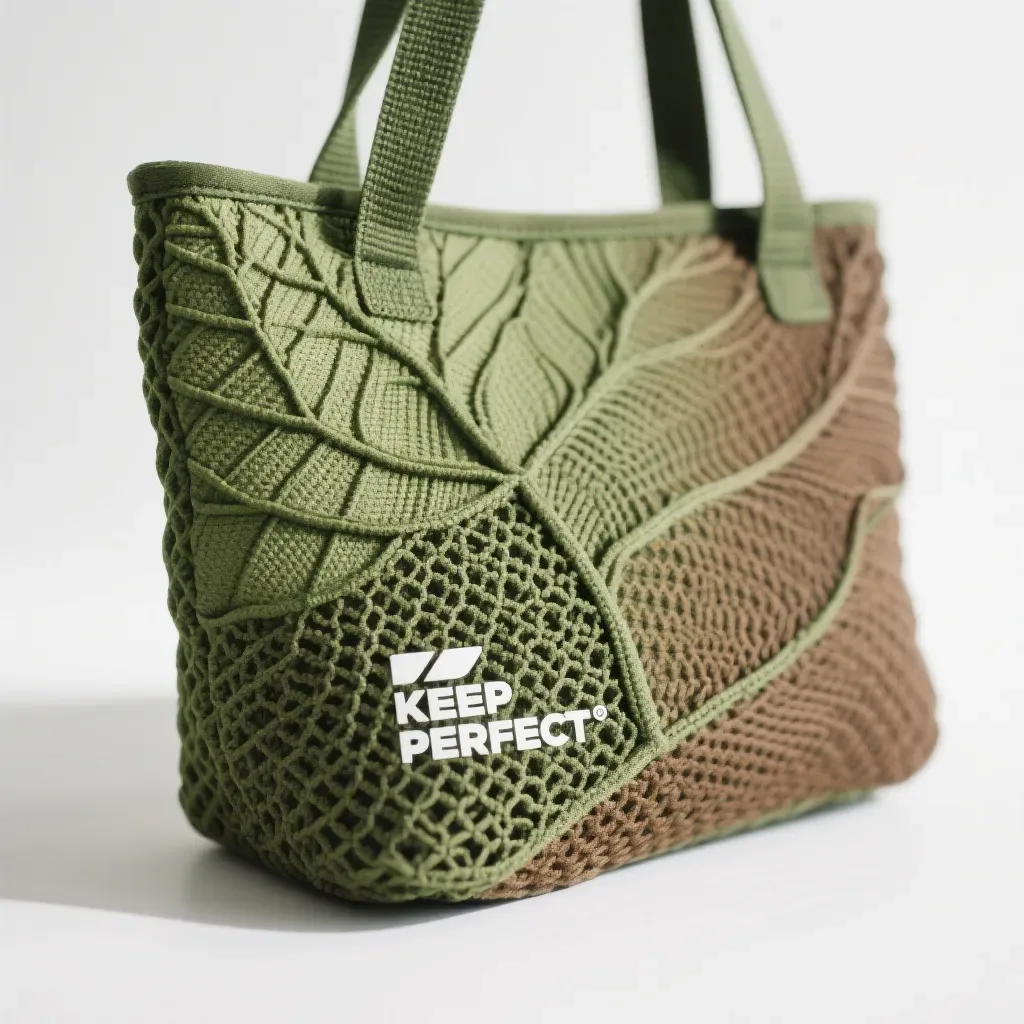
The useful habit is to treat any dimensional complaint as a loop question first. Measure loop length on the retained sealer, compare it with the approved sample, and only then decide whether the fault sits in the file, the yarn lot or the machine settings.
Specification Checklist for Stability
Recording the six numbers per colourway also simplifies the inspection conversation. When a lot measures correctly against loop length, density, GSM, skew and recovery, an AQL 2.5 appearance inspection is checking what it should check: appearance.
Recording the six numbers per colourway also simplifies the inspection conversation. When a lot measures correctly against loop length, density, GSM, skew and recovery, an AQL 2.5 appearance inspection is checking what it should check: appearance. When those numbers are absent, appearance inspection is quietly being asked to do a mechanical job it cannot do.
A stability specification has four lines: the loop length target with its tolerance, the course and wale density, the finishing route, and the test methods with their targets. Written together they let a partner quote the same bag and a laboratory judge the result without reference to a conversation held months earlier.
- Loop length target
- 4.2 mm at E12, held within 0.15 mm
- Course density
- 42 courses per 10 cm
- Wale density
- 47 wales per 10 cm
- Finished GSM
- about 420 g/m², within 5%
- Skew target
- within 2% after relaxation
- Recovery target
- about 94% after a 10% extension
- MOQ
- 100 pcs per style / colourway
- Sampling, bulk, shipping
- 7 working days, 30 days, FOB Xiamen
Frequently Asked Questions
What makes a knitted bag body stable?
Loop geometry made under controlled tension. Loop length, course density and wale density together decide how much internal stress the fabric carries and therefore how much it moves when that stress is released. Finishing locks or releases stress but cannot create stability that was not built when the loop was formed.
What loop length should I specify for a knit bag?
Around 4.2 mm at E12, held within about 0.15 mm across the programme. Loop length sets density, weight and shrinkage together, so it is the single most useful parameter to fix between sampling rounds. Always confirm it on the machine that will run the bulk rather than only on the sample machine.
How much shrinkage should a knitted bag allow?
Within 3% on the measured dimensions after laundering and relaxation is a reasonable retail target. A wash-and-relax finish typically moves more than a heat-set route, so the tolerance band has to be written after the finishing route is chosen, not before it.
Why does my knitted bag skew after washing?
Skew comes from asymmetry between course and wale density, and it is a loop-geometry symptom rather than a cutting fault. Check take-down tension across the full width, confirm the yarn lot against the approved sample, then re-measure loop length before changing the file.
What is elastic recovery and why does it matter?
It is the percentage of an applied extension that the fabric gives back. A body at E12 in two ends of 300D recycled polyester recovers about 94% after a 10% extension held for one minute. It matters most at openings and handle roots where the structure flexes on every use.
Which tests predict knit bag returns?
Dimensional change after laundering, abrasion resistance to ISO 12947-2, tensile strength to ISO 13934-1 and elastic recovery after fixed extension. Run all four on the bulk lot rather than on the sample, because yarn lot variation between sampling and bulk causes most of the surprise.
Does finishing change the dimensions of a knit bag?
Yes, materially. A wash-and-relax route can move a dimension by 3% to 4% while a heat-set synthetic body stays under 2%. Choose the finishing route at specification stage and write the tolerance band around it, otherwise the band will describe a body the programme cannot hold.
How is loop length actually measured?
Unrove a known length of yarn from the fabric, count the loops it contained, and divide length by loop count. Repeat across the width rather than at the centre only, because a single worn needle or a mis-set feeder will show as a local variation that a centre reading misses.
What tolerance is realistic on a seamless bag body?
About 3 mm on a 360 mm dimension after relaxation, finer at E14 because more loops share the same distance. Whatever the gauge, always measure after controlled relaxation, because a dimension taken straight off the machine is not the dimension the customer will receive.
Can the same file knit the same bag on two machines?
Only approximately. Cam setting, needle condition and feeder calibration differ between machines, and all three change loop length, which is what the specification is written to. Confirm loop length and tension on the production machine as part of handover and keep the retained sealer for comparison.
What is the sampling and production window?
Sampling takes 7 working days per round and bulk production runs 30 days from the approved file. The minimum is 100 pcs per style or colourway, which is low enough to trial two structures or two gauges side by side inside one selling season.
Which standards apply to testing a knit bag body?
Abrasion to ISO 12947-2, tensile strength to ISO 13934-1, tearing resistance to ISO 13937, and colour fastness to rubbing under AATCC 8 and to laundering under AATCC 61. Where the retail channel requires it, OEKO-TEX STANDARD 100 covers testing for harmful substances on the finished article.
People Also Ask
What is loop length in knitting?
The length of yarn contained in one stitch, measured by unroving a known yarn length and dividing by the number of loops. It governs density, weight, shrinkage and yarn consumption, which is why it is fixed in the specification.
Why do knitted bags shrink more than woven?
Loops knitted short carry internal stress that releases on first exposure to heat and water. Woven structures are already closer to a relaxed state, so they move less in service.
How do I stop a knit bag twisting after washing?
Treat it as loop asymmetry: check take-down tension across the full width, confirm the yarn lot, and re-measure loop length. Changing the file before measuring those three usually wastes a round.
Does heat setting stop shrinkage?
It substantially reduces it on synthetic bodies, locking the loops near their set dimensions. It does not correct a loop knitted well away from target, so the loop length target still governs.
What GSM should a knit tote be?
About 420 g/m² at E12 in two ends of 300D recycled polyester, which gives a structured body near 143 g. Lighter packable shoppers run closer to 300 g/m².
Sources and further reading
Every figure on this page is either our own programme data or attributed below. Open the originals before you write them into a specification.
- ISO 12947-2 — Abrasion resistance of fabrics by the Martindale methodISO Method behind the 25,000-rub target quoted for a 420 g/m² E12 body.
- ISO 13934-1 — Tensile properties of fabrics, maximum force by the strip methodISO Referenced for the 450 N field strength figure and joint acceptance limits.
- AATCC standard test methods and proceduresAATCC Source for AATCC 8 rubbing and AATCC 61 laundering colour fastness tests.
- Textile Exchange standards and certification programmesTextile Exchange Covers recycled-content and chain-of-custody standards used for knitted bag yarn.
Holding a Knit Programme to Its Numbers
Stability work pays for itself in rounds saved. A programme that records loop geometry at approval and measures the bulk lot against it will usually approve in two rounds rather than four, and the four-week difference is almost always worth more than any per-unit saving available in the same negotiation.
The commercial frame underneath that work is fixed: MOQ 100 pcs per style or colourway, sampling in 7 working days, bulk production in 30 days, inspection to AQL 2.5 under ISO 2859-1, and shipping FOB Xiamen with CIF or DDP available on request. Programme coordination has run on those terms since 2014, carried on 7 production lines producing about 200,000 pcs per month through an SGS-validated partner production facility.