3D Knitting Machine Types Compared: Which Machine Class Belongs on Your Bag Programme
Which 3D knitting machine type should build your bag programme? Three families exist — V-bed flat, circular and warp — and only one of them routinely produces a shaped bag body. V-bed flat machines dominate because they can change which needles knit from course to course, which is what shaping is. This article compares the three classes on width, gauge, cycle time, unit cost and consistency, with figures from a 34 x 38 cm tote.
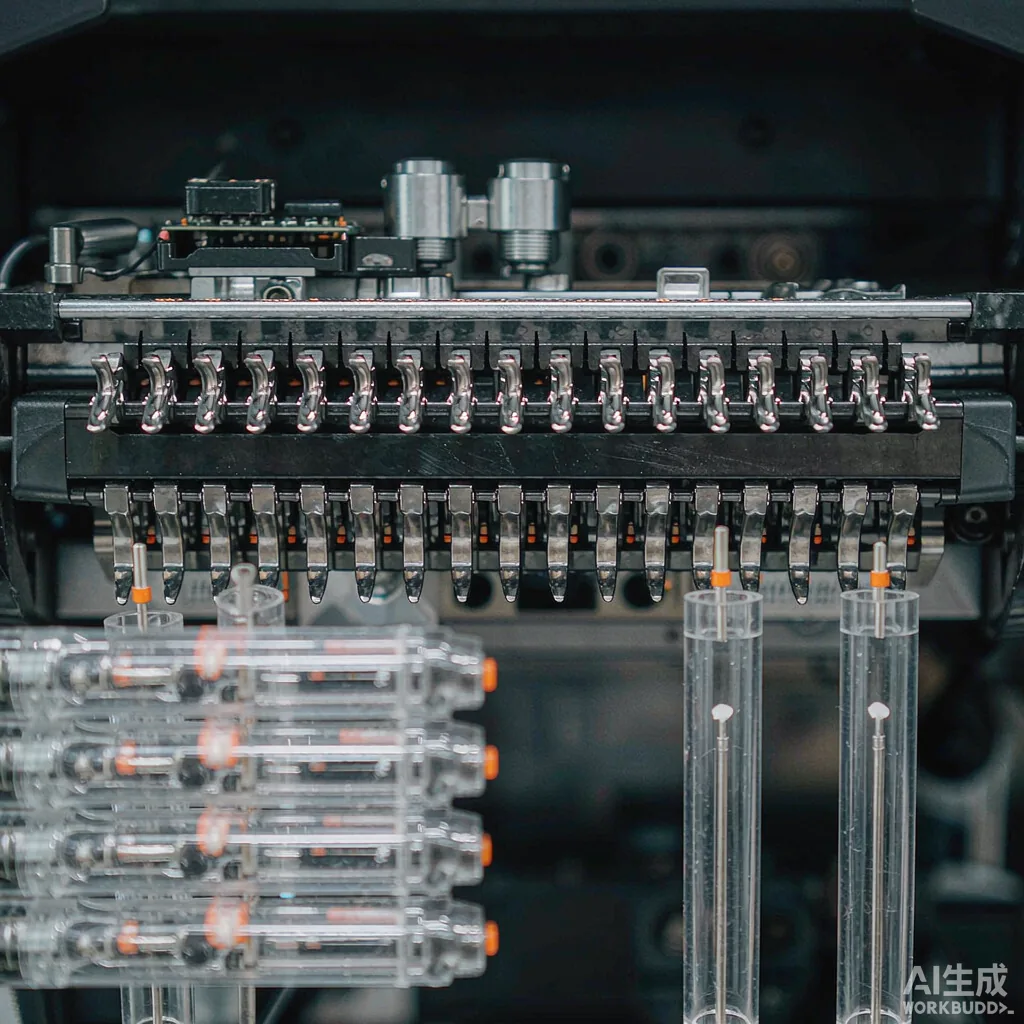
Three Machine Families Build Almost Every Commercial Knit Bag
Three machine families appear in commercial knit bag work: the V-bed flat machine, the circular machine and the warp knitting machine, and they differ in one decisive respect — whether individual needles can be selected, tucked or held from course to course. Only the V-bed flat machine offers full individual needle selection, which is why it produces shaped articles while the other two produce fabric. That distinction, rather than speed or price, is what determines which class a bag programme belongs on.
That single capability generates everything else a bag programme needs: narrowing and widening without cutting, integral handle bands, opening borders, and zonal structure changes inside one continuous piece. Circular and warp machines produce excellent cloth at high speed, but the shaping has to happen afterwards, with a cutting table and a sewing line.
Buyers rarely need to know the machine model. What matters is the class, the gauge band it can run, the working width available and how long a piece occupies the bed — those four facts determine what can be made and what it costs.
Spec Sheet in Buyer Language: What Each Line Means
A machine specification contains four lines that matter commercially: working width, gauge band, number of knitting systems and feeder count; everything else is engineering detail. Working width sets the widest panel, gauge sets loop size, systems set how many courses knit per carriage traverse, and feeders set how many yarns can be placed without a striping box.
| Specification line | What it controls | Typical value on bag work |
|---|---|---|
| Working width | Widest single panel | 127 cm to 183 cm |
| Gauge band | Loop size and surface definition | E7, E12 or E14 |
| Needle pitch | Geometric consequence of gauge | 3.63 mm, 2.12 mm or 1.81 mm |
| Knitting systems | Courses per carriage traverse | two to four systems |
| Feeder count | Yarns placeable in one course | up to 16 feeders |
| Loop transfer time | Cost of each shaping step | about 0.6 s per transfer |
| Cycle time | Unit cost driver | 6 to 13 minutes per tote |
| Take-down control | Course density and width repeatability | stepper-motor driven |
Working width is the line most often overlooked. A 183 cm bed at E14 carries 1,008 needles per bed, which comfortably takes a large weekender; a 127 cm bed at E12 carries 600 needles, which suits a standard tote. Asking for a panel wider than the bed forces a joined construction, and that changes the tolerance model.
V-Bed Flat Machines: The Default for Shaped Bag Bodies
The V-bed flat machine is the default for shaped bag bodies because two opposing beds plus individual needle selection allow narrowing, widening, short-row rotation and integral bands in one sequence, all without cutting. Shaped knitting on this class is the technology that lets a bag leave the machine finished rather than as cloth.
Narrowing and widening
Change the number of needles in work between courses. This single capability is what turns knitting from a fabric process into a shaping process.
Integral handle bands
Knit a reinforced band over dozens of courses while the panel continues, so load spreads instead of concentrating at a join.
Zonal structure change
Switch from jersey to rib, tuck or pointelle within one course, giving one piece several different behaviours.
Short-row rotation
Knit part of a row while other needles hold, rotating a section of the piece without a seam or a cut.
Circular Machines and Why They Rarely Build a Bag Body
Circular machines knit a continuous tube at high speed and are excellent for body fabric and hosiery, but they do not individually shape within that tube, so a bag built on them is cut and sewn rather than knitted complete. Where a brief is very high volume and the shape is a simple tube, they still compete on material cost per metre.
The decision is economic rather than technical. A circular route can produce cloth for less per square metre, but every bag then carries cutting waste and several assembly operations. At stable volume with a fixed drawing, that trade favours circular. At a range that refreshes quarterly, it does not — which is why most knit bag programmes sit on V-bed flat machines. Where a brief genuinely sits between the two, the honest answer is to price a hybrid: a shaped body on a flat machine with a component knitted on a faster class and assembled.
Circular and warp routes also differ in how they handle a change of yarn. A flat machine running a file changes shade by swapping cones, and the file does not change at all. A circular route may need a different machine set-up or a different knitting structure to reach the same weight in the new yarn, which is a second set-up rather than a cone change.
Warp Knitting and Where It Fits
Warp knitting builds fabric from many yarns running lengthwise rather than one yarn across, giving a stable, run-resistant cloth used for linings, mesh and reinforcement layers. It does not shape an article, so in a bag programme it appears as a component rather than as the body. Its value is stability and dimensional predictability.
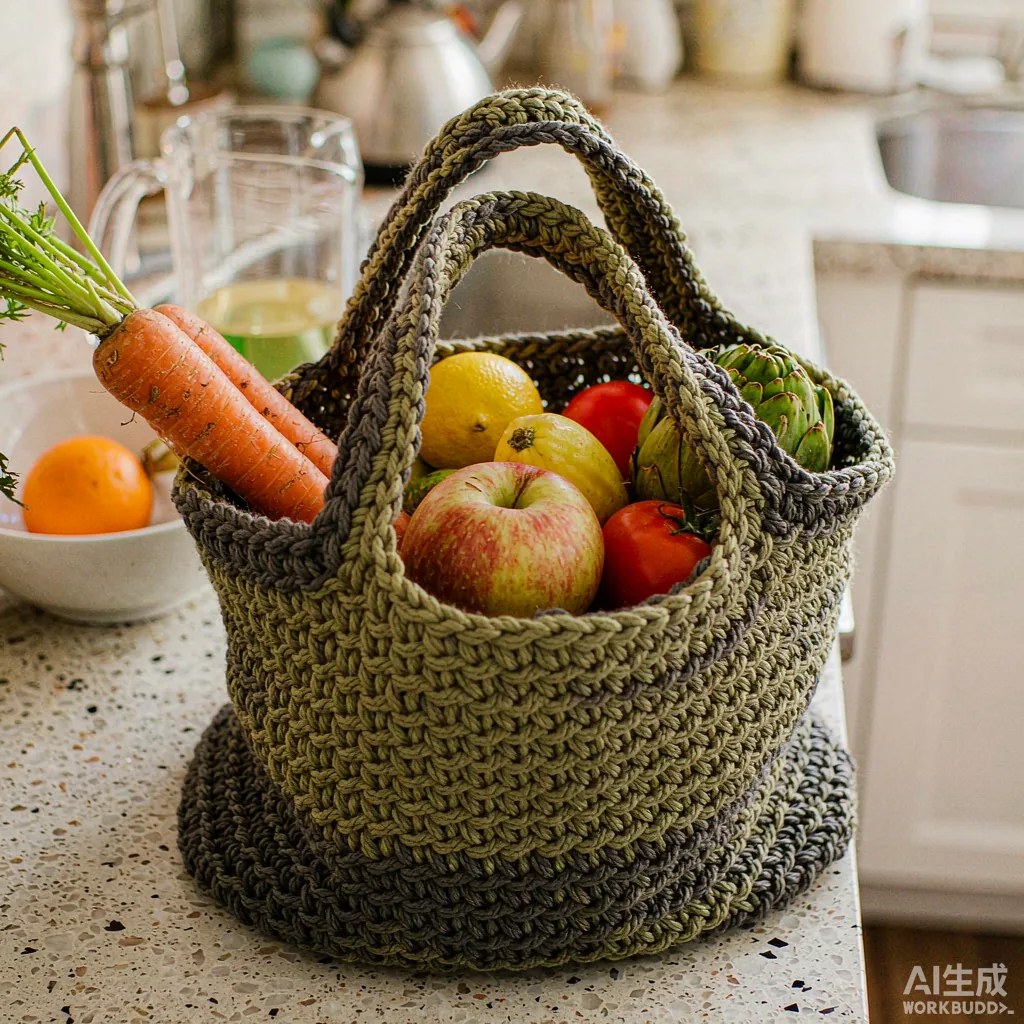
For a buyer the practical question is narrow. Where the design needs a lining that will not ladder, a structured mesh pocket or a stable reinforcement layer, warp knit is the right family. Where the design needs a body, it is not — and the programme should be written to a V-bed file from the start.
What Machine Class Does to Unit Cost
Machine class changes unit cost mainly through cycle time rather than through hourly rate: the same 34 x 38 cm tote takes about 6 minutes at E7, 9 at E12 and 13 at E14, and because knitting is capital-intensive, that difference dominates the cost card. Labour is a smaller line than most buyers assume.
Two secondary effects matter almost as much. Assembly operations removed from the sequence remove both their cost and the tolerance stack they create, and colour changes that are a yarn swap rather than a new marker remove a set-up charge per refresh. Both effects compound across a range rather than appearing once, which is why the comparison has to be made at programme level. A unit price difference of a few cents on a single drop tells a buyer almost nothing; the same difference applied across four seasonal refreshes and three colourways decides the margin for the year.
Match your programme to the right machine class
Send the silhouette, dimensions and target volume. You receive a machine class recommendation with predicted cycle time, gauge band and a sampling window inside one business day. Open the contact page.
Throughput: Cycle Time Against Gauge on Three Examples
Three examples show the pattern clearly. A promotional shopper at E7 in 600D runs about 6 minutes and suits a one-season drop. A retail tote at E12 in two ends of 300D takes about 9 minutes and is the commercial default. A structured weekender at E14 in three ends of 300D takes about 13 minutes and justifies its cycle time only where the surface detail is the selling point.
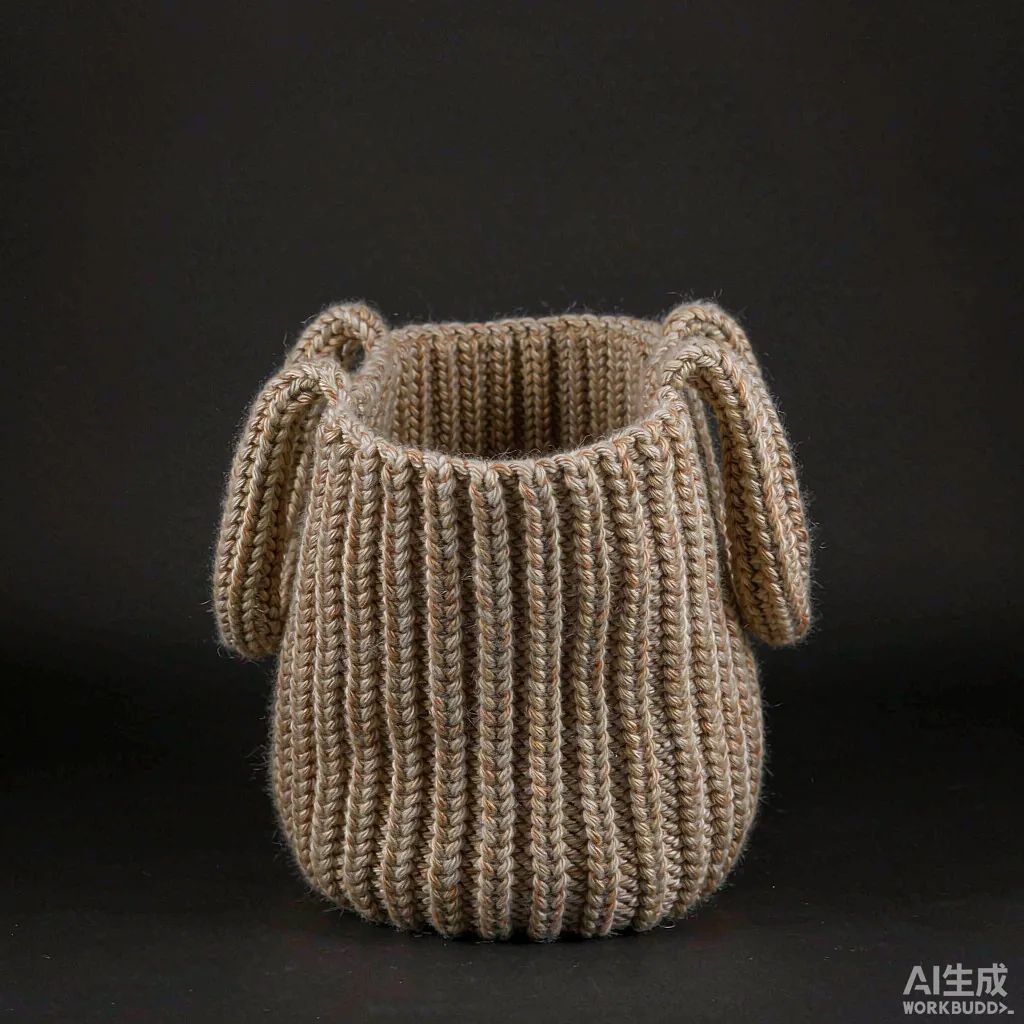
Translate those figures before choosing. On a machine running an eight-hour day, a 6-minute cycle yields roughly 80 pieces and a 13-minute cycle about 36, before allowances. Multiply by the lines allocated to the programme and the volume conversation becomes arithmetic rather than optimism, and a buyer can see immediately whether a requested delivery date sits inside the available window or outside it.
Maintenance, Calibration and Consistency Between Machines
Consistency between machines is the operational risk most programmes discover late. Cam setting, needle condition and feeder calibration all change loop length, and loop length is what the specification is actually written to. A file that measures correctly on the sample machine can measure differently on the line that runs the bulk, which is why confirming loop length on the production machine is part of handover rather than a favour asked at the last minute.
Keeping two machines knitting the same bag
- Confirm loop length on the machine that will run bulk, not only on the sample machine.
- Re-read tension after every yarn lot change, even where nominal count is unchanged.
- Log cam and take-down settings against the style number and file version.
- Inspect needle condition on a schedule, since a worn hook changes loop formation.
- Keep the retained sealer from sampling for direct comparison at final inspection.
The practical defence is the retained sealer. Keeping the approved sample from round two and comparing it against the bulk lot under the same light catches both drift and lot variation before a container is loaded.
Matching Machine Class to Your Volume
Match machine class to the shape and the refresh rhythm rather than to the volume alone: a shaped body belongs on a V-bed flat machine, a simple high-volume tube can stay on a circular or warp route, and a range that refreshes more than twice a year almost always belongs on a V-bed file because colour changes then cost nothing structurally.
- Machine families
- V-bed flat, circular, warp
- Working width in use
- 127 cm and 183 cm
- Needles per bed
- 600 at E12 over 127 cm; 1,008 at E14 over 183 cm
- Gauge bands
- E7, E12, E14
- Cycle time reference
- about 6, 9 and 13 minutes on one tote shape
- Lines and capacity
- 7 production lines, about 200,000 pcs per month
- MOQ
- 100 pcs per style / colourway
- Sampling, bulk and shipping
- 7 working days, 30 days, FOB Xiamen
Frequently Asked Questions
Which machine type is used for 3D knitted bags?
The V-bed flat machine is used for almost all shaped knit bag bodies. Two opposing needle beds plus individual needle selection allow narrowing, widening, short-row rotation and integral handle bands within one continuous sequence. Circular machines and warp knitting machines produce excellent cloth at high speed, but they do not shape an article, so bags made on them are cut and assembled.
What does machine gauge mean on a knitting machine?
Gauge is needles per inch on the bed, which fixes the needle pitch: 3.63 mm at E7, 2.12 mm at E12 and 1.81 mm at E14. Pitch sets the largest loop the needle can draw, and loop size then governs density, weight, surface definition and cycle time. It is the first specification decision because all other numbers depend on it.
How long does one bag take to knit?
On a 34 x 38 cm tote shape, about 6 minutes at E7, 9 minutes at E12 and 13 minutes at E14. The difference is course count: a finer gauge needs more courses to cover the same height. Shaping sequences and structure changes also run at reduced carriage speed, which is why they belong in the cost model.
Can circular machines make a complete bag?
They can make the tube that becomes a bag, but not the shaped article, because they cannot change which needles knit to create a taper or an integral handle. The output has to be cut and sewn. Where a design is a simple tube at very stable volume, that route still competes on material cost per square metre.
Where does warp knitting belong in a bag programme?
Warp knitting belongs in the components rather than the body. Its stable, run-resistant structure suits linings, mesh pockets and reinforcement layers, and its dimensional predictability helps where a tight tolerance matters. It does not shape an article, so the body should still be written to a V-bed file.
Does the machine class change the unit cost?
Yes, mainly through cycle time. Knitting is capital-intensive rather than labour-intensive, so how long a piece occupies the bed governs the cost card more than the hourly rate. The class also determines how many assembly operations follow, and each removed operation removes both its cost and the tolerance it would have added.
How should I check consistency between two machines?
Confirm loop length on the machine that will run the bulk rather than only on the sample machine, re-read tension after every yarn lot change, log cam and take-down settings against the style number and file version, and compare the bulk lot against the retained sealer from round two under the same light.
What is the working width and why does it matter?
Working width sets the widest single panel a machine can knit without a join. A 127 cm bed at E12 carries 600 needles per bed and suits a standard tote; a 183 cm bed at E14 carries 1,008 and takes a large weekender. Panels wider than the bed force a joined construction and a different tolerance model.
How much volume can a knit bag programme absorb?
Programmes run on 7 production lines producing about 200,000 pcs per month through an SGS-validated partner production facility, with coordination handled since 2014. The binding constraint for most buyers is not capacity but the sampling calendar: 7 working days per round and 30 days for bulk.
What is the minimum order for a new knit bag style?
The minimum is 100 pcs per style or colourway. That threshold is low enough to run a trial drop across two structures or two gauges side by side. Sampling takes 7 working days per round and bulk runs 30 days, so a trial can be completed inside one selling season.
Which tests should be specified for a machine-knit bag?
Abrasion to ISO 12947-2, tensile strength to ISO 13934-1, tearing resistance to ISO 13937, colour fastness to rubbing under AATCC 8 and to laundering under AATCC 61, plus dimensional change after controlled relaxation. Run them on the bulk lot that shipped, because lot variation moves results more than most specification changes do.
How is inspection carried out before a shipment is released?
Final inspection runs to AQL 2.5 under ISO 2859-1, which sets the sample size and the accept and reject numbers against lot size for each defect class. Add a mechanical acceptance limit, such as minimum handle pull-out force, because appearance criteria alone will pass a bag whose only real defect is a weak joint.
People Also Ask
What machines make 3D knitted shoes?
Mostly V-bed flat machines running fine gauges, typically E14 to E18, with individual needle selection for zonal structure. The same family builds knit bags, at coarser gauges of E7 to E14, because a bag needs to hold a larger silhouette.
Do circular knitting machines make bags?
They make the tube that a sewn bag is cut from. They cannot taper a panel or knit an integral handle, so any bag built on circular cloth is an assembled product with cutting waste and several operations.
What is the difference between flat and circular knitting?
Flat knitting works back and forth across two opposing beds, allowing individual needle selection and therefore shaping. Circular knitting works continuously around one cylinder, prioritising speed and fabric consistency over shaping capability.
How many knitting systems should a bag machine have?
Two to four is typical. More systems knit more courses per carriage traverse and shorten the cycle, but add cost and maintenance. For most bag programmes the cycle difference between two and four systems matters less than gauge choice.
Does machine age affect knit bag quality?
Indirectly. Needle condition, cam wear and feeder calibration affect loop length, and loop length governs dimensions and shrinkage. A well-maintained older machine knits consistently; a poorly calibrated new one does not.
Sources and further reading
Every figure on this page is either our own programme data or attributed below. Open the originals before you write them into a specification.
- Flat knitting machinery and gauge rangesShima Seiki Equipment reference for V-bed flat machine specifications used in bag programmes.
- ISO 12947-2 — Abrasion resistance of fabrics by the Martindale methodISO Method referenced when comparing output from different machine classes.
- ISO 13934-1 — Tensile properties of fabrics, maximum force by the strip methodISO Used to confirm that a machine class reproduces the acceptance limits across lots.
- Global Recycled StandardTextile Exchange Chain of custody for recycled polyester yarn fed on these machine classes.
Choosing a Class Before You Brief Anyone
Machine class is the earliest decision in a knit bag programme, and the lowest-cost one to revisit if it is taken before a drawing exists. Decide whether the design needs a shaped body or simply cloth, confirm the widest panel against available working widths, and only then ask for a gauge and yarn recommendation. Programmes that sequence it this way sample twice rather than four times.
The commercial terms sit underneath whatever class is chosen: MOQ 100 pcs per style or colourway, sampling in 7 working days, bulk production in 30 days, inspection to AQL 2.5 under ISO 2859-1 and shipping FOB Xiamen with CIF or DDP available on request. Programme coordination has run on those terms since 2014, carried on 7 production lines producing about 200,000 pcs per month through an SGS-validated partner production facility.