Seamless Knit Bag Body Tolerance Control: Five Steps From Drawing to Acceptance Criterion
How tight a tolerance can a seamless knitted bag body hold? Around 3 mm on a 360 mm dimension once the piece has relaxed, provided the specification says what to measure, when to measure it and against which yarn lot. Tolerance is a specification problem before it is a machine problem: most dimensional disputes come from an unstated acceptance criterion rather than from a badly knitted body. This article sets out the five steps that turn a drawing into a number.
Tolerance Is a Specification Problem First
The most common gap is the moment of measurement. A specification that says 360 mm without saying after 24 hours of relaxation is two specifications, and the two parties will each apply the one that suits them.
Writing the bands down also changes behaviour on the floor. A dimension without a band is interpreted; a dimension with a band is followed, and the difference shows up in how consistently a lot measures at final inspection.
Tolerance fails at the specification stage before it fails on the machine. Most dimensional disputes are not about a body knitted badly; they are about a dimension nobody agreed to measure, at a moment nobody agreed to measure it, against a yarn lot nobody recorded.
The fix is procedural rather than technical. Name the three dimensions that matter, set a band for each, state the relaxation condition, record the yarn lot, and define how the measurement is taken. Five lines on one page eliminate most of the argument.
This matters more on knit than on sewn construction, because a knitted body has no cutting error to blame. Where a sewn bag is out of tolerance the cause is usually traceable to a specific operation; where a knit is out of tolerance, the cause is usually an assumption that was never written down.
Step One: Decide Which Dimensions Actually Matter
Inspection effort follows the band. Holding three dimensions costs a few minutes per carton; holding twelve turns inspection into a bottleneck and produces rejection data nobody can act on commercially.
The naming matters more than the number. A dimension everyone agrees to measure produces fewer disputes than one specified to a tighter band that two parties read differently, so the first step is agreement on what is being measured rather than on how precise the band is.
Choose three dimensions per style — typically body height, body width and handle drop — and hold tolerance only on those. Specifying tolerance on every dimension on a drawing multiplies inspection effort and creates defects that were never commercial problems in the first place.
The three chosen should be the ones a retail customer would notice and the ones assembly depends on. Width and height govern whether the bag presents square on a shelf; handle drop governs how it carries; base width governs whether hardware fits. Everything else is tolerance the programme is paying for and nobody is using.
Record the nominal figure and the band together, in millimetres and as a percentage. A 360 mm dimension with a 3 mm band is the same statement as plus or minus 0.8%, and having both written down prevents the rounding argument that otherwise consumes an afternoon.
Step Two: Set the Band by Size and Structure
Bands should be reviewed after two production rounds rather than held fixed for the life of a style. Once real lot data exists, a band that was guessed conservatively can usually be tightened to reflect what the programme actually holds.
Write the band in both units. Three millimetres on 360 millimetres is 0.8%, and stating both removes the rounding argument that otherwise consumes an afternoon during inspection review.
Set the band from the size of the dimension and the stability of the structure: about 3 mm on a 360 mm dimension works for a rib or interlock body, roughly 4 mm is realistic for an open jersey field, and handle drop usually holds to 2 mm. Tighter bands are achievable but they cost sampling rounds to prove.
| Dimension | Nominal | Realistic band | Notes |
|---|---|---|---|
| Body height | 380 mm | 3 mm | Rib or interlock border stabilises the measurement |
| Body width | 340 mm | 3 mm | Widens to 4 mm on an open jersey field |
| Handle drop | 240 mm | 2 mm | Integral bands recover well; sewn straps vary more |
| Gusset width | 70 mm | 2 mm | Measure on the fold after relaxation |
| Base length | 340 mm | 3 mm | Depends on whether the base is knitted or inserted |
| Opening circumference | 680 mm | 4 mm | Ribbed borders recover; cut edges do not |
Note that the band has to be written around the finishing route. A wash-and-relax finish will move a dimension further than a heat-set route, so the same nominal figure cannot carry the same band under both.
Step Three: Control Relaxation Before Measuring
Where a programme ships from a warm and humid port, conditioning matters even more. Pieces packed without full relaxation continue to move in the carton, so the measurement taken at origin and the one taken at destination can disagree.
Relaxation also changes appearance, not only dimension. Loop stress releasing overnight can shift surface relief enough to alter how printed branding reads, which is another reason to relax before photographing an approval sample.
Condition the piece before it is measured: lay it flat for 24 hours at about 20 degrees Celsius and 65% relative humidity, or condition for 4 hours where the calendar does not allow a full day. Measuring before relaxation produces a number that changes before the customer sees the bag.
Measurement discipline
- Relax flat for 24 hours at 20 degrees Celsius and 65% relative humidity.
- Where time is short, condition for 4 hours and record that it was shorter.
- Measure three points across each dimension and take the mean.
- Use a steel rule or gauge, not a tape that can bend around loop relief.
- Record every value with the style number, file version and yarn lot.
Step Four: Control Yarn Lot Variation
Book the yarn early. Where the lot is confirmed before the file is finalised, tension values can be set against that specific lot rather than against a nominal count, which removes one variable from the whole programme.
Certificate and lot belong together. Keeping the recycled-content transaction certificate with the yarn lot record avoids the familiar situation where a claim has to be evidenced months later with no paperwork to support it.
Book the yarn for sampling and bulk from the same lot wherever the volume allows, because a change of lot moves loop length and therefore both dimensions and shrinkage. Where a second lot is unavoidable, re-read tension and re-measure loop length before the bulk runs.
A difference of about 2% in delivered loop length is enough to move a 360 mm dimension by several millimetres, which is precisely the size of most tolerance disputes. Recording lot numbers at booking rather than at packing is what makes the difference diagnosable.
Where recycled content is claimed, the lot also carries the transaction certificate. Keeping the certificate with the lot record avoids the familiar situation where a claim has to be evidenced months later with no paperwork to support it.
Set tolerance bands before you brief anyone
Send the silhouette, dimensions and carried load. You receive a dimension sheet with bands, relaxation conditions, test methods and a sampling window inside one business day. Open the contact page.
Step Five: Measure on a Gauge, Not by Eye
Record the readings rather than the verdict. A page of measured values for three dimensions across several cartons is worth more than a single pass or fail, because it shows drift before it becomes rejection.
Measure on a flat surface with a steel rule or a gauge, taking three readings per dimension, because a tape that follows loop relief overstates width by a measurable margin. Eye judgement is adequate for colour and hand, and unreliable for dimension.
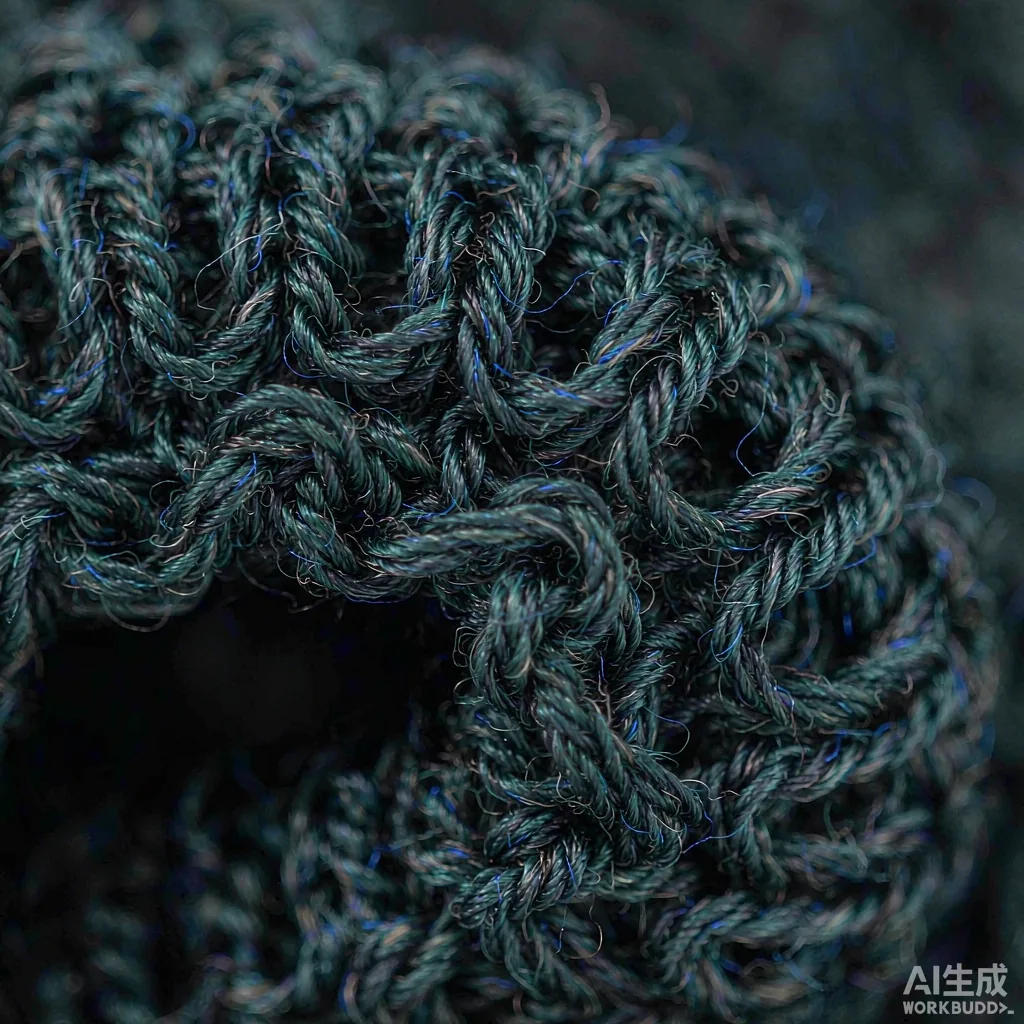
Write the instrument into the specification. Two parties measuring the same bag with different tools will disagree consistently, and neither will be able to explain why.
Machine Variables That Move Dimensions
Treat the machine setting as part of the record rather than the operator memory. Logging cam, take-down and feeder values against the file version is the difference between a five-minute diagnosis and a five-day enquiry.
Because all four variables act through loop length, the diagnostic order is fixed: measure loop length first, then tension, then needle condition, then cam setting. Working in that order finds the cause in minutes rather than days.
Four machine variables move finished dimensions: take-down tension, cam setting, yarn tension at the feeder and needle condition. All four act through loop length, which is why loop length is the parameter the specification should be written to rather than any machine dial.
Take-down tension
Sets how tightly courses stack. The first thing to check when width drifts between rounds.
Cam setting
Controls stitch cam depth and therefore loop length. Differs between machines of different age.
Feeder tension
Running tension per feeder, ideally within 0.4 cN, otherwise visible banding appears.
Needle condition
A worn hook forms a different loop. Replace rather than compensate with tension.
The AQL Interface: Dimensions Into Accept Numbers
Inspection to AQL 2.5 under ISO 2859-1 sets sample size and accept and reject numbers against lot size, and it works well for appearance defects. Dimensions need a separate line, because a sample plan that tolerates ten appearance faults says nothing about a body measuring 4 mm over.
The workable arrangement is to inspect appearance to AQL 2.5 and to hold the three named dimensions to their bands on a fixed number of pieces per carton. That gives the inspector something measurable and the buyer something to enforce.
Writing Tolerance Into the Purchase Order
The order should also say who measures and where. A reading taken at origin before relaxation and one taken at destination after it are different numbers describing the same bag, and only a named method prevents that argument.
A purchase order that names dimensions, bands, relaxation, lot and inspection level settles disputes before they begin. The commercial lines are easy to agree; the measurement lines are the ones that decide whether the bag performs.
A purchase order should carry the three named dimensions with their bands, the relaxation condition, the yarn lot, the inspection level and the packing specification. Six lines. Most dimensional disputes never survive a document that complete.
- Dimensions under tolerance
- body height, body width, handle drop
- Band on 360 mm
- 3 mm, or about 1.5% of nominal
- Band on handle drop
- 2 mm
- Relaxation condition
- 24 hours flat at 20 degrees Celsius and 65% relative humidity
- Instrument
- steel rule or gauge, three readings per dimension
- Inspection level
- AQL 2.5 (ISO 2859-1) for appearance
- MOQ
- 100 pcs per style / colourway
- Sampling, bulk, shipping
- 7 working days, 30 days, FOB Xiamen
Frequently Asked Questions
How tight a tolerance can a seamless knitted bag hold?
Around 3 mm on a 360 mm dimension after controlled relaxation for a rib or interlock body. Open jersey fields are realistic at about 4 mm, and handle drop typically holds to 2 mm. Tighter bands are achievable, but proving them costs sampling rounds, so the band should be set from what the design actually needs rather than from a default.
Which dimensions should carry a tolerance?
Three per style: body height, body width and handle drop. These are the dimensions a retail customer notices and the ones assembly depends on. Specifying tolerance across every dimension on a drawing adds inspection effort and manufactures defects that were never commercial problems.
Why does the same file measure differently on two machines?
Because cam setting, take-down tension, feeder condition and needle condition differ between machines, and all four act through loop length. Loop length is what the specification is written to, so confirming it on the production machine is part of handover rather than an extra favour.
How long should a knit bag relax before measurement?
About 24 hours laid flat at roughly 20 degrees Celsius and 65% relative humidity. Where the calendar does not allow a full day, condition for 4 hours and record that it was shorter, because the number will otherwise change before the customer sees the bag.
How should a knitted bag be measured?
On a flat surface with a steel rule or gauge, taking three readings per dimension and using the mean. A tape that follows loop relief overstates width. Naming the instrument in the specification prevents two parties from disagreeing without being able to explain why.
What does AQL 2.5 mean for a knit bag shipment?
It is an acceptance quality limit applied under ISO 2859-1, which sets the sample size and the accept and reject numbers for a given lot size and inspection level. It governs how many pieces are examined and how many appearance faults are tolerated, not what counts as a dimensional pass.
Should dimensions be inspected under AQL 2.5?
Appearance yes, dimensions separately. A plan that tolerates a set number of appearance faults says nothing about a body measuring 4 mm over. Inspect appearance to AQL 2.5 and hold the three named dimensions to their bands on a fixed number of pieces per carton.
How much can a yarn lot change the dimensions?
About 2% in delivered loop length is enough to move a 360 mm dimension by several millimetres, which is the size of most tolerance disputes. Book sampling and bulk from one lot where volume allows, and re-read tension where a second lot is unavoidable.
What relaxation condition should be specified?
Lay the piece flat for 24 hours at about 20 degrees Celsius and 65% relative humidity, or condition for 4 hours where time is short. Whatever is chosen has to be written down, because the tolerance band is only meaningful relative to the condition it was measured under.
What is a realistic tolerance on handle drop?
Around 2 mm. Integral bands recover well because the reinforcement runs over many courses, while sewn straps vary more because load concentrates at the attachment. Specify the drop and its band together, and test after relaxation rather than off the machine.
How is tolerance written into a purchase order?
State the three named dimensions with their bands in millimetres and as a percentage, the relaxation condition, the yarn lot, the inspection level and the packing specification. Six lines on one page, and most dimensional disputes cannot get started.
What is the sampling window for a tolerance trial?
Sampling takes 7 working days per round and bulk production runs 30 days. The minimum is 100 pcs per style or colourway, which is low enough to trial two structures or two gauge settings side by side inside one selling season.
People Also Ask
What tolerance is normal for knitted bags?
About 3 mm on a 360 mm dimension after controlled relaxation, which is roughly 1.5% of nominal. Open structures and cut edges sit wider; ribbed and interlock zones hold tighter.
Why do knit bags change size after washing?
Loops knitted short carry internal stress that releases on contact with heat and water. Hold loop length within about 0.15 mm of target and test the finished body rather than the greige knit.
Should I measure knit bags before or after relaxation?
Always after. A dimension taken straight off the machine is not the dimension the customer receives, and the difference is usually the entire size of the tolerance band being argued about.
How many pieces should be measured per lot?
Fix a number per carton and apply the three named dimensions each time, rather than varying the sample according to how the lot looks. Consistency is what makes the record useful later.
Can two suppliers hold the same tolerance?
Only if the specification names the same dimensions, relaxation condition and test methods. Without those lines, two quotations that look comparable are measuring different things.
Sources and further reading
Every figure on this page is either our own programme data or attributed below. Open the originals before you write them into a specification.
- ISO 2859-1 — Sampling procedures for inspection by attributesISO Defines the AQL-indexed sample sizes and accept and reject numbers used at final inspection.
- ISO 13934-1 — Tensile properties of fabrics, maximum force by the strip methodISO Referenced for mechanical acceptance limits alongside dimensional bands.
- ISO 12947-2 — Abrasion resistance of fabrics by the Martindale methodISO Used to confirm the body survives repeated set-down under load.
- AATCC colour fastness test methodsAATCC Source for AATCC 8 rubbing and AATCC 61 laundering colour fastness testing.
Turning Tolerance Into an Enforceable Number
A tolerance band is only as good as the document that carries it. Naming three dimensions, their bands, the relaxation condition, the yarn lot and the inspection level gives everyone a number they can enforce, and it converts a subjective approval into an acceptance criterion that survives a change of buyer.
The commercial terms underneath stay fixed: MOQ 100 pcs per style or colourway, sampling in 7 working days, bulk production in 30 days, inspection to AQL 2.5 under ISO 2859-1, and shipping FOB Xiamen with CIF or DDP available on request. Programme coordination has run on those terms since 2014 across 7 production lines producing about 200,000 pcs per month.
- Knit bag quality control and acceptance limits
- Seamless knit bags: cost, gauge and tolerance
- Custom knit bag programmes
Programmes that document tolerance this way spend less on inspection and far less on correspondence. The band is a commercial instrument as much as a technical one, because it decides in advance what will be accepted and what will not.