Knitted Bag Shaping Techniques: How a Flat Bed Builds a Three-Dimensional Body
How does a flat knitting bed produce a three-dimensional bag? By changing which needles are in work from course to course. Narrowing removes needles to taper a panel, widening adds them to flare it, and short rows knit part of a row while the rest hold, rotating a section without cutting. Rates matter: one needle per side every three courses runs cleanly, while two per side per course begins to distort the loop. This article answers the nine questions that come up most.
How Does a Flat Bed Produce a Three-Dimensional Shape?
Shaping is also where most re-sampling originates. A taper redrawn as a curve has to be reinterpreted into a rate; a taper restated as needles per side per course can be changed directly. The difference is a week of calendar.
Shaping also removes tolerance steps. Because there is no cutting operation and no seam allowance, the two largest contributors to dimensional error disappear from the sequence, which is why shaped bodies hold a band that assembled constructions struggle with.
Because the shape is written as counts rather than drawn as curves, the same geometry can be reproduced at any volume. A file that produces one approved sample will produce ten thousand identical bodies, provided the yarn lot, tension values and finishing route stay inside the recorded bands.
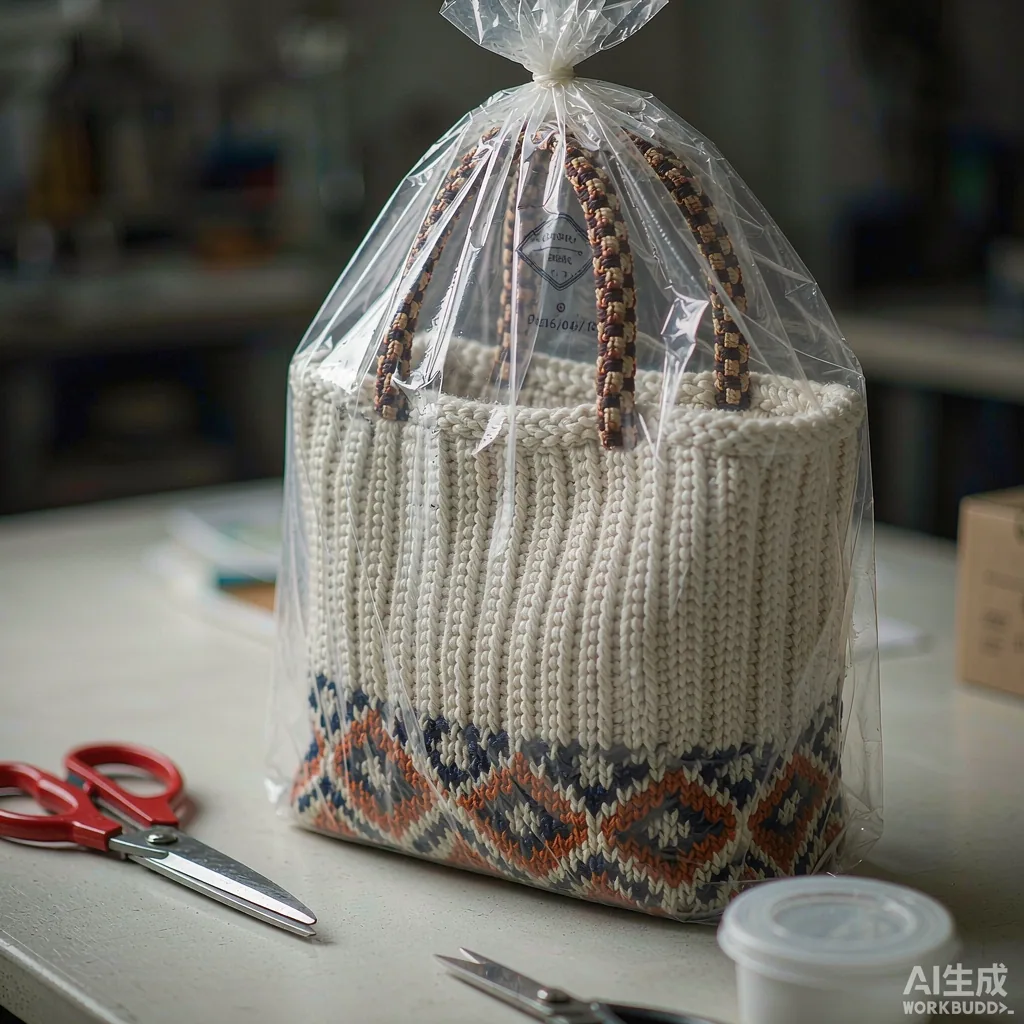
A flat bed produces a three-dimensional shape by changing the number of needles in work from course to course, so the panel is already shaped as it leaves the machine. Nothing is cut and nothing is attached. The second needle bed makes this possible by receiving transferred loops, which is what allows a taper, a flare or a rotation to be built into the sequence.
The consequence for a designer is that shaping is expressed as a rate rather than a line on a drawing. A 60 mm taper becomes 28 needles removed per side, taken one per side every three courses, which adds about 84 courses to the sequence. Once the design is written that way, changing it is arithmetic rather than draughtsmanship.
Buyers benefit from understanding this because it explains why some shapes are fast and others are not. Every shaping course runs at reduced carriage speed, so a heavily shaped piece costs more machine time than a simple one even when both use the same yarn and the same finished area.
What Is Narrowing and Widening in Practice?
A useful convention is to state rates in needles per side per course and to name the course count for each transition. That is enough for a technician to reproduce the geometry without seeing the original drawing, and it makes corrections traceable between rounds.
Rates also protect the loop. Transferring too many needles per course pulls the neighbouring loops sideways faster than the yarn can relax, which is why the practical ceiling sits at roughly two needles per side per course rather than whatever the machine can physically execute.
Narrowing takes needles out of work to make a panel narrower, and widening brings needles back to make it wider; the loop is carried across on the opposing bed until the needle re-enters, so no yarn end and no join is created. This is the mechanism behind a tapered tote mouth, a flared base or a shaped shoulder.
| Shaping technique | Working rate | Practical limit | Typical use |
|---|---|---|---|
| Narrowing | one needle per side every three courses | two needles per side per course | tapered tote mouth, shoulder shaping |
| Widening | up to two needles per side per course | beyond this loops distort visibly | gussets, flared bases |
| Short rows | part-row knitting, held needles | about 12 consecutive courses | rotating a section, shaping a base |
| Integral band | about 6 mm wide over 42 courses | band width limited by bed width | handle roots and load paths |
| Rib border | 18 to 24 courses at the mouth | longer borders add cycle time | openings and cuffs |
The rate is the specification. Stating one needle per side every three courses is more reproducible than drawing a curve, and it lets a technician correct a sample by changing one number rather than reinterpreting a sketch.
When Should a Design Use Short Rows?
Short rows are most valuable at the base of a bag, where the floor turns up into the wall. Building that turn by rotation rather than by sewing a separate base panel removes a join from the highest-abrasion line on the entire article.
Short rows suit any place where a section of the piece has to rotate relative to the rest — a base turning up into a wall, a shoulder sloping, a gusset opening — and they work by knitting part of a row while the remaining needles hold their loops. The held needles create the rotation without a seam.
The practical ceiling is about 12 consecutive short rows. Beyond that, the held loops sit too long without being knitted and the border shows tension marks that finishing will not remove. Where more rotation is needed, split the sequence with a full course between blocks.
Short rows are also the most economical way to add volume without adding material. Because the extra fabric comes from rotation rather than from more loops, a shaped base can be built with no measurable weight penalty at all.
How Is a Gusset Built Without Sewing?
A gusset is built by widening: needles are progressively brought into work over a defined number of courses, creating the extra width that lets the bag open; a 70 mm gusset typically runs over about 20 courses at a rate under two needles per side per course. The result is a three-dimensional corner with no join and no cut edge.
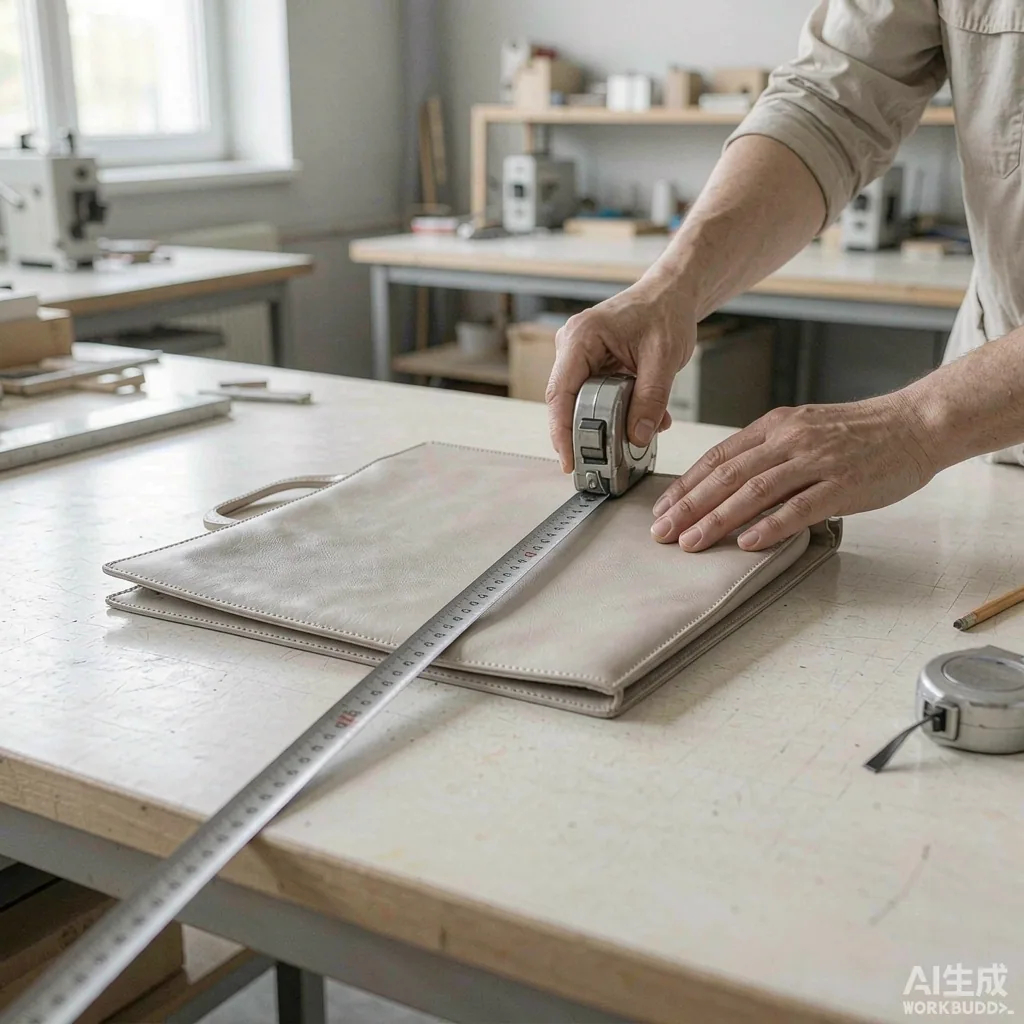
The gusset is where tolerance problems usually start, because it is a shaped feature measured in three planes. Naming the gusset width and its tolerance on the dimension sheet is the single most useful thing a buyer can do at the briefing stage.
What Does Shaping Do to Cycle Time?
Shaping lengthens cycle time because every transfer and every short row runs at reduced carriage speed; a 60 mm taper across 28 needles per side adds roughly 84 courses, which is close to a minute on a 9-minute cycle. Heavily shaped pieces therefore cost more per unit than simple ones at the same yarn and finished area.
This is the argument for designing shaping rather than adding it. Two 60 mm tapers that can share one sequence cost less than three bespoke transitions, and a shaped base built with rotation costs less material than one built with extra panels.
Cost the shaping in your design
Send the silhouette, dimensions and carried load. You receive a shaping plan with rates, course counts, predicted cycle time and a sampling window inside one business day. Open the contact page.
How Tight Can a Radius Be Before the Loop Distorts?
Radius interacts with gauge. The same 12 mm radius relaxes more readily at E14 than at E7, because the smaller loop can follow the curve. Designers moving a shape between gauges should expect the radius limit to move with it and re-sample rather than assume.
Around 12 mm is the working floor on a shaped border. Below that, loops are asked to change direction faster than the yarn can relax, and the result is tension marking that survives finishing. Where a design genuinely needs a sharper corner, an inserted component handles the geometry better than the knit.
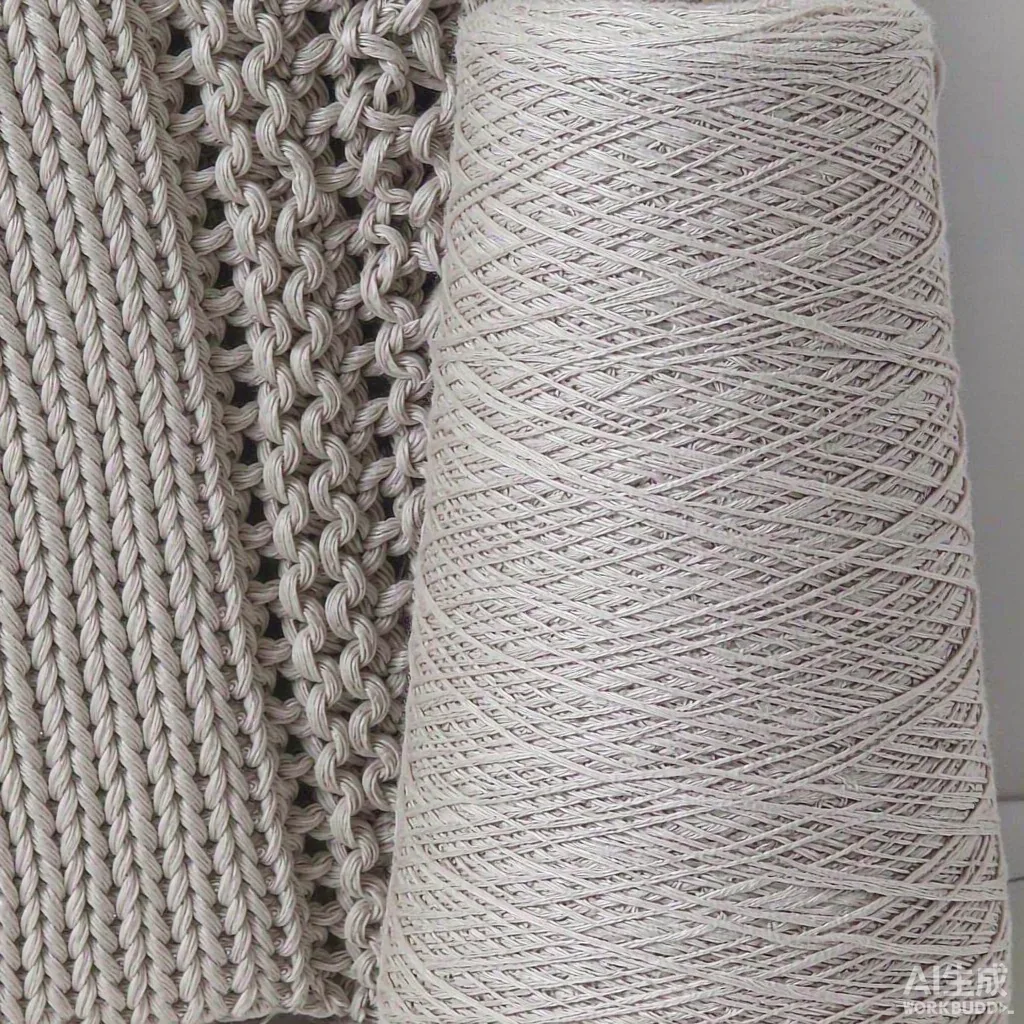
Radius interacts with gauge. The same 12 mm radius is easier at E14 than at E7, because the smaller loop can follow the curve more readily. Designers moving a shape between gauges should expect the radius limit to move with it.
Why Do Some Shaped Panels Curl?
Curl is usually a specification symptom rather than a knitting fault. Where a jersey field meets a cut opening with no border, the panel will curl regardless of how carefully the taper was programmed. Naming the border treatment on the sheet prevents the fault rather than correcting it.
Curling comes from unbalanced loop structure: a single-bed structure such as jersey relaxes toward its natural curvature, and a cut edge curls within a few millimetres. Rib and interlock are balanced and lie flat, which is why openings in jersey bodies are almost always ribbed or bound rather than left cut.
Diagnosing curl in a shaped panel
- Unbalanced structure: single-bed jersey relaxes toward its natural curvature and curls.
- Cut edges: an untreated edge will curl within a few millimetres of the cut.
- Over-tensioned courses: short loops hold stress that releases as curl after washing.
- Fix first: add a ribbed or bound border before changing the shaping sequence.
- Fix second: re-read take-down tension and confirm loop length against target.
Which Shaping Route Suits Which Silhouette?
Where a range shares one silhouette across sizes, share the shaping sequence too. Scaling the course and wale counts while keeping the rate constant reproduces the same geometry, and it avoids a second development cycle for the larger or smaller piece.
Match the route to the silhouette: a tapered shopper needs narrowing, a structured tote needs widening at the base plus short rows, a crossbody needs a small shaped gusset, and a backpack needs a shaped shoulder plus a reinforced load path. Most commercial bags combine two of the four rather than relying on one.
Tapered shopper
Narrowing at the mouth, one needle per side every three courses. Removes the need for a binding and keeps the silhouette clean.
Structured tote
Widening at the base over about 20 courses plus short rows for the turn. Builds volume without adding panels or seams.
Crossbody
A small shaped gusset, typically 40 to 70 mm. Keeps the body from collapsing while staying light enough for all-day carry.
Backpack
Shaped shoulder plus reinforced load path at the strap roots. Carried load governs the reinforcement rather than the outline.
How Should Shaping Be Written Into the File?
Version the file whenever a shaping rate changes and note what changed and why. Most programmes that lose a week lose it to an unexplained parameter edit rather than to a genuinely difficult shape.
Write shaping as three lines on the specification: the technique, the rate in needles per side per course, and the number of courses over which it runs. Those three lines let a partner quote the same shape and let a technician correct it without guessing what the drawing meant.
- Narrowing rate
- one needle per side every three courses
- Widening rate
- up to two needles per side per course
- Short-row limit
- about 12 consecutive courses
- Gusset reference
- 70 mm built over about 20 courses
- Minimum border radius
- about 12 mm on a shaped edge
- Cycle-time effect
- a 60 mm taper adds about 84 courses, near one minute
- MOQ
- 100 pcs per style / colourway
- Sampling, bulk, shipping
- 7 working days, 30 days, FOB Xiamen
Frequently Asked Questions
How does a flat machine shape a bag?
By changing how many needles are in work between courses. Removing needles narrows the panel, adding them widens it, and knitting part of a row while others hold rotates a section. The second needle bed receives the transferred loops, so no join or cut is needed. Written as a rate, shaping becomes repeatable and easy to correct.
What is the difference between narrowing and widening?
Narrowing takes needles out of work so the panel becomes narrower, while widening brings needles back into work so it becomes wider. Narrowing typically runs at one needle per side every three courses; widening can reach two needles per side per course. Both have a limit beyond which the loop visibly distorts.
When should a design use short rows?
Wherever a section has to rotate relative to the rest: a base turning up into a wall, a shoulder sloping, a gusset opening. The held needles create the rotation without a seam. Keep to about 12 consecutive short rows, and split longer sequences with a full course between blocks.
How wide can an integral gusset be?
Seventy millimetres is a comfortable commercial width, built over roughly 20 courses of widening at under two needles per side per course. Wider gussets are possible but lengthen the sequence and add cycle time. Because the gusset is measured in three planes, name its width and tolerance on the dimension sheet.
Does shaping increase the unit cost?
Yes, because shaping courses run at reduced carriage speed. A 60 mm taper across 28 needles per side adds around 84 courses, close to a minute on a 9-minute cycle. The practical response is to design shaping deliberately and share sequences between sizes rather than adding tapers late.
What is the tightest radius a shaped border can take?
About 12 mm in routine production. Below that, loops change direction faster than the yarn can relax, and tension marks remain after finishing. The limit also moves with gauge, because a finer loop follows a curve more readily than a coarse one. For sharper corners, use an inserted component.
Why does my shaped knit panel curl at the edge?
Because the structure is unbalanced. A single-bed structure such as jersey relaxes toward its natural curvature, and a cut edge curls within a few millimetres. Add a ribbed or bound border first; only if that fails should the shaping sequence be reconsidered. Over-tensioned courses can produce the same symptom after washing.
Can one piece use more than one shaping technique?
Yes, and most do. A structured tote might narrow at the mouth, widen at the base, and use short rows for the turn. Combining techniques costs cycle time, so the useful discipline is to plan the sequence before writing it rather than adding features during sampling.
How do I brief a shaping change without a new sampling round?
Supply the technique, the rate, the course count and the current measured values. A change expressed as numbers can often be made directly in the file. A change expressed as a redrawn outline usually cannot, because the technician has to reinterpret the intent.
How many sampling rounds does a shaped piece need?
Two is normal for a shaped knit: one to prove the structure and silhouette, one to prove the dimensions and the finishing route. A third usually means something was unspecified rather than badly made, and the gap is nearly always a tolerance or an acceptance limit.
What tolerance should a shaped bag body be held to?
About 3 mm on a 360 mm dimension after relaxation, tighter at finer gauge because more loops share the same distance. Always measure after controlled relaxation; a dimension taken straight off the machine is not the dimension the customer will receive.
What are the sampling and bulk windows for a shaped program?
Sampling takes 7 working days per round and bulk production runs 30 days from the approved file. The minimum is 100 pcs per style or colourway, which is low enough to trial two shaping routes side by side inside one selling season.
People Also Ask
What is narrowing in knitting?
Reducing the number of needles in work so the panel becomes narrower, with the displaced loop carried on the opposing bed. It is how a tapered mouth or shaped shoulder is produced without cutting.
What are short rows used for?
Rotating one section of a piece relative to another, by knitting part of a row while the remaining needles hold. Typical uses are base turns, sloping shoulders and opening gussets.
How tight can a knit corner be?
About a 12 mm radius in routine production. Sharper geometry distorts loops faster than they can relax, leaving marks that finishing will not remove.
Does shaping weaken a knit bag?
Not if the load path is designed. Shaping redistributes loops rather than cutting them; failures concentrate where reinforcement was omitted, not where the panel was shaped.
Can shaping replace assembly entirely?
Often, but not always. Shaping can build the body, base turn, gusset and handle roots. Hardware, moulded components and zips still have to be set during assembly.
Sources and further reading
Every figure on this page is either our own programme data or attributed below. Open the originals before you write them into a specification.
- WHOLEGARMENT knitting and shaped productionShima Seiki Reference for shaping capability on V-bed machines and the reduction in downstream assembly.
- ISO 13934-1 — Tensile properties of fabrics, maximum force by the strip methodISO Used to set mechanical acceptance limits for shaped bodies and their reinforced joints.
- ISO 12947-2 — Abrasion resistance of fabrics by the Martindale methodISO Referenced when confirming that a shaped body survives repeated set-down under load.
- Textile Exchange standards and certification programmesTextile Exchange Covers recycled-content standards applied to knitted bag yarn.
Where Shaping Meets the Rest of the Programme
Shaping is the point where the drawing becomes arithmetic, and it decides cycle time, tolerance behaviour and how many assembly operations remain. Settling the technique and the rate at briefing is what keeps a programme inside two sampling rounds rather than four.
The commercial frame stays fixed underneath: MOQ 100 pcs per style or colourway, sampling in 7 working days, bulk production in 30 days, inspection to AQL 2.5 under ISO 2859-1, and shipping FOB Xiamen with CIF or DDP available on request. Programme coordination has run on those terms since 2014 across 7 production lines producing about 200,000 pcs per month.
- Seamless bag body tolerance control
- Knit bag quality control and acceptance limits
- Custom knit bag programmes
For a first programme, the most useful artefact is one page carrying the silhouette, the three measured dimensions with their tolerances, the gauge, the yarn count and number of ends, the loop length target and the test methods. Everything else can be settled after the file exists, and usually should be.
Where a brief sits between two techniques, prototype both at the minimum quantity and test them on one yarn lot. That settles in a single round what an argument over drawings rarely settles at all.