Retail Bag Assortment Trends: Four Range Models Compared for Knitted Bag Programmes at MOQ 100 pcs
Retail bag assortment trends are moving in one direction — fewer styles, more depth, colour carried rather than shape — and the reason is arithmetic rather than taste. Four models now cover almost everything on a bag fixture: wide shallow, narrow deep, re-colour and capsule. Compared on piece commitment, they cost very different things at MOQ 100 pcs per style and per colourway. This article scores all four on cost, risk and speed, converts them into machine minutes at E7 to E12, and gives the retail door each one suits. The short version: narrow deep is winning, but it only works with the reorder clock counted.
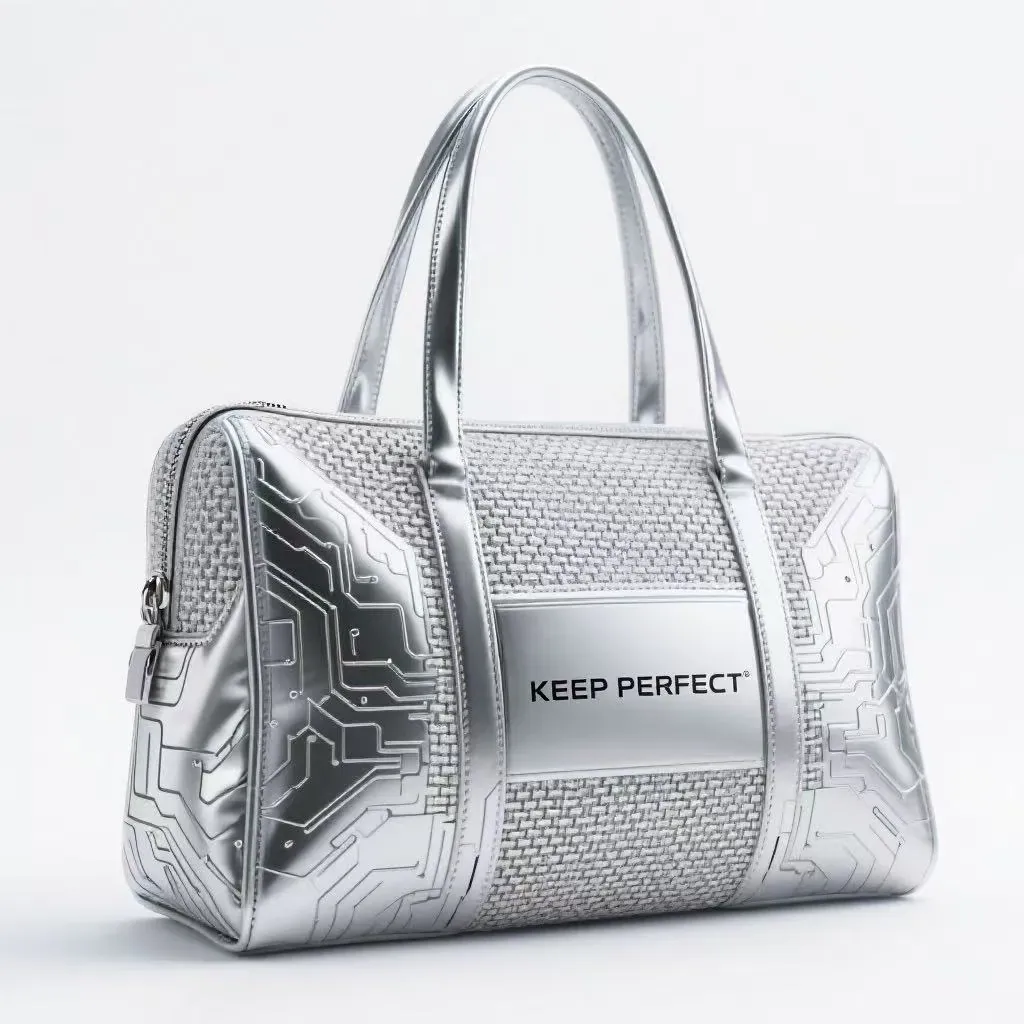
Four Range Models on the Bag Fixture
Retail bag assortment trends over recent seasons resolve into four range models — wide shallow, narrow deep, re-colour and capsule — and the movement has been away from the wide shallow open toward narrow deep, because depth concentrates pieces on the styles that earn them without raising the total commitment.
The mechanism behind the shift is the reorder clock rather than fashion. A wide shallow range spends its piece commitment across twelve styles at 100 pcs each and then discovers, at week four, that three of them are carrying all of the trade and nine are not earning their slot. Once that is visible, the range cannot be corrected quickly: bulk runs 30 days, and with freight and receipt the reorder lands about seven weeks after it was placed. A narrow deep range accepts fewer shapes in order to put 300 or 400 pieces behind each one, which keeps the winners in stock through exactly that gap. The models below differ in style count, colourway count and how much novelty each buys per piece.
Wide shallow
Twelve styles, one or two colourways. Maximum apparent choice, minimum depth, weakest cover on winners.
Narrow deep
Four styles with real depth behind each. Fewer files, faster concentration, strongest cover through the reorder gap.
Re-colour
Shapes carry over, shades change. Novelty at the cost of yarn procurement rather than a new knitting file.
Capsule
Three shapes in two shades for one door or one test drop. Smallest commitment, slowest learning curve.
Model One: The Wide Shallow Open
The wide shallow model opens twelve styles in three colourways — 3,600 pieces at MOQ 100 pcs — and it still suits one job: a retailer that must fill a fixture of known width in one delivery and cannot return to it within the season.
The trade made here is cover for presence. Each style receives about 100 pieces per colourway at opening, which on a twelve-style range means 300 pieces behind each shape across three shades; that is often fewer units than the strongest door sells in a month. Because there is no second delivery window, the range either holds or runs out, and running out early is worse than opening shallow, since a hole reads as neglect even where the remaining nine shapes are fully stocked. The recurring cost shows up in files: each style is its own knitting programme, so twelve styles means twelve files to write, debug and cost within one development round. Where a retailer can commit to a second delivery, this model is almost always beaten by one of the other three.
Model Two: The Narrow Deep Core
The narrow deep model opens four styles in three colourways — 1,200 pieces — with about 300 pieces behind each shape, and it is the model most knit programmes should default to because it buys cover on the winners without raising the total commitment.
Two things make this work better on knit than on cut-and-sew. First, the four shapes are enough for a fixture to read as a range: a shopper distinguishes silhouettes at about three metres and shades at about one, so three or four shapes do the entire job of bringing someone across the aisle. Second, concentration costs little at the reorder because the files already exist, so a second run of 300 pieces in one shape costs yarn and machine time rather than another development round. The caution is that depth must be placed after the first four weeks of trade rather than before, since pre-season concentration is a guess: if 60% of the pieces sit in a shape that turns out to be slow, the range is effectively out of stock in the shape everybody wanted. See knitted bag category map for how four shapes cover the main use cases.
Model Three: Re-colour Rather Than Re-shape
Re-colouring carries the shapes into a second season and replaces two of three shades, and it is the model that makes a returning knit range look new for the cost of yarn procurement instead of the cost of a new knitting file.
The economics are straightforward once counted. A new shade requires a yarn lot, a lab approval and a dye procurement step, typically three to five working days added before the 7 working days of sampling begins, and no change to the knitting programme at all. A new shape requires the file, a sample round, a fit check and often a hardware decision, all of which compete for the same production slot as the carry-over pieces. Teams nevertheless choose re-shaping most of the time, usually because a returning shape has gone stale to them rather than to the shopper, who has generally not seen it before. The rule worth holding is three of four shapes carried and two of three shades replaced: enough novelty to re-merchandise, enough continuity to be recognisable. Colour builds are governed by knitted bag colourway planning.
Model Four: The Seasonal Capsule
The capsule model opens three styles in two colourways — 600 pieces — for one door, one catalogue drop or one seasonal promotion, and it is the right first buy wherever the question is whether knit sells rather than how much of it sells.
The value of a capsule is that it answers a learning question at low commitment. Six hundred pieces is small enough that a wrong read is absorbed, and because all three shapes come from one machine platform the development cost stays proportionate. The risk is that it teaches the wrong lesson: at 100 pieces per cell there is rarely enough stock to observe what happens when a shape sells through, which is exactly the behaviour a range plan needs to see. The mitigation is to run the capsule in the doors with the fastest stock turn rather than the slowest, which compresses the learning into weeks. Where a capsule is used as the opening move, the plan should already say what the second season looks like — usually a step up to narrow deep, using the two best of the three shapes.
Comparison Matrix: Four Models Scored
Scored on the five things that decide a range plan — pieces, files, cover weeks, novelty and what failure looks like — the four models separate clearly, and the separation rarely favours the wide shallow open once a second delivery is available.
| Model | Pieces at open | Files to write | Cover on winners | How it fails |
|---|---|---|---|---|
| Wide shallow | 3,600 (12 styles, 3 shades) | 12 programmes | Weak; about 300 pcs per shape across all shades | Runs out in week five with nine shapes still fully stocked |
| Narrow deep | 1,200 (4 styles, 3 shades) | 4 programmes | Strong; about 300 pcs per shade, concentrated at reorder | Wrong four shapes chosen; recoverable at season two |
| Re-colour | Carry-over volume only | 0 new programmes | Carried from the prior season's proven depth | Too little novelty to earn a re-merchandise |
| Capsule | 600 (3 styles, 2 shades) | 3 programmes | Thin; about 100 pcs per cell by design | Under-observed; learns nothing about sell-through |

What Each Model Costs in Machine Minutes
A knit range consumes machine minutes rather than pieces, so the model that looks largest on paper is not always the one that occupies the most capacity — gauge decides that, and it is worth pricing before choosing between models.
A 38 cm by 42 cm tote body knitted at E7 takes roughly 19 minutes on the machine; the same panel at E12 takes roughly 33 minutes, because the finer gauge lays about 6.6 courses per centimetre against about 4.4 at E7 and each centimetre therefore carries more stitches. At E5 the same body takes roughly 14 minutes. What this means for a range model is that twelve styles at E12 can occupy more capacity than twenty-four styles at E5, even though the piece counts say the opposite. Programmes of this kind are planned against seven production lines running about 200,000 pcs per month, so a first drop of a few thousand pieces is not what constrains the schedule — but the slot still has to be booked, because an unbooked slot goes to another programme. Gauge selection is covered in how to choose knitted bag gauge.
Fixture Read: What Each Model Looks Like at Three Metres
What a shopper reads at three metres is silhouette and only silhouette, so the number of distinct shapes on the fixture — not the number of shades within them — is what decides whether a range model looks like a range at all.
This is the reason the wide shallow model is losing ground rather than gaining it. Twelve shallow shapes and four deep shapes look similar from across the aisle; what differs is that the second one is still full in week eight. The more interesting finding for range planning is that the third shape adds most of the perceived range — three silhouettes read as a collection where one shape in six shades reads as a single product laid out sideways. Where a range must be cut, therefore, the cut falls on colourways first, and the widths at which shoppers distinguish things is the whole argument: roughly three metres for shape, roughly one metre for shade. The practical instruction to merchandising is to hang shapes adjacent and shades within them, because the trade-up decision is made by comparison and rarely survives a walk.
Replenishment Clock: Cover Weeks by Model
Every model has to survive the seven-week gap between placing a reorder and seeing the goods on the shelf, and the number of weeks of cover a model holds is therefore what actually distinguishes them — not the style count.
- Reorder cycle
- 30 days of bulk, landing about seven weeks after placement with freight and receipt
- Decision point
- Week four of trade, when shape behaviour first becomes visible
- Opening cover target
- About eight to ten weeks on the narrow deep model; six on wide shallow for the same piece count
- Sell-through target
- 85% at full price across the season
- Second delivery
- Where none is possible, the wide shallow open is the only model that fits
- Concentration
- Applied at the reorder, not pre-season
Read against those numbers, the models sort themselves. Wide shallow typically delivers about six weeks of cover per shape for the same total pieces because the pieces are spread thinly; narrow deep reaches eight to ten weeks on the winner. Since the reorder decision realistically lands at week four and the goods at about week eleven, a model delivering six weeks leaves a hole in weeks ten and eleven, right through the strongest trading period. The correction available to a retailer without a second delivery is to buy the wide shallow model but book two slots eight weeks apart, which doubles the number of programmes and is rarely better than simply opening narrow and deep. Booking mechanics sit in knitted bag capacity booking.
Which Model Fits Which Retail Door
Model choice is really a question of which door is being served, because each door type has a different tolerance for depth, novelty and the wait between deliveries.
Matching a range model to the door
- Department store concession, one delivery: wide shallow, accepting the cover weakness.
- Multiple doors with a mid-season reorder: narrow deep; concentrate at week four.
- Returning season with known shapes: re-colour, changing two of three shades.
- Single-door test or catalogue drop: capsule of three shapes in two shades.
- Any door where freight lands eight weeks or more: increase depth before increasing width.
Two follow-on rules make the match work. First, where the buyer controls the shelves rather than the buyer's own store — a concession, a shop-in-shop — the range should be merchandised by shape group rather than by colour story, because the comparison that drives the trade-up happens inside the shopper's field of view. Second, anywhere a freight leg exceeds roughly eight weeks, depth buys more than novelty does, since a new shape arriving late is a new shape nobody sees until it is off trend. These two rules push most mixed-estate retailers toward narrow deep plus re-colour, with capsules reserved for genuine tests rather than used as a default caution.
Reading These Trends Into Your Own Grid
The practical way to read these trends is to write the grid before choosing a model: multiply intended styles by intended colourways, multiply by 100 pcs, and compare the result with the piece count the business can actually absorb in one drop.
Once that number is on paper, the model usually chooses itself — most plans that start at twelve styles discover they cannot afford the 3,600 pieces and land somewhere between narrow deep and re-colour. Two habits keep the read honest. Write the size variants in as styles, because each additional size on a knit body carries its own file and its own 100 pcs rather than being a simple grading exercise. And write the freight leg in weeks rather than as a shipping line, because the gap between the reorder decision and the goods landing is what every one of these models is really being tested against.
Score your own range model
Send the style count, colourway plan and the freight leg to your main market. The knit team will return a scored comparison of the four models against your piece count, the machine minutes at E7 to E12, and a reorder calendar at 30 days of bulk and release to AQL 2.5. Start on the contact page.
Frequently Asked Questions
What is the dominant trend in retail bag assortments?
Movement away from a wide shallow opening toward fewer shapes with more depth behind each. The driver is the reorder clock rather than taste: bulk runs 30 days and the goods land about seven weeks later, so depth buys cover that width cannot.
How many pieces does each range model commit?
Wide shallow commits 3,600 pieces at twelve styles in three shades. Narrow deep commits 1,200 at four styles in three shades. A capsule commits 600 at three styles in two shades. A re-colour commits carry-over volume only, with no new file.
Why is wide shallow losing ground?
Because it spends the same commitment thinly. Each shape holds fewer pieces, so it runs out around week five with nine shapes still fully stocked, and appearing empty reads as neglect even where the rest of the fixture is full.
How many shapes does a range need to read as a range?
Three or four. Shoppers distinguish silhouettes at about three metres and shades at about one, so three shapes do nearly all the work of looking like a collection, and the fourth adds little beyond choice within it.
How much does a gauge choice change the capacity used?
Substantially. A 38 by 42 cm body takes roughly 19 minutes at E7, about 33 minutes at E12 and about 14 minutes at E5. Twelve styles at E12 can occupy more machine time than twenty-four at E5, regardless of the piece counts.
When should depth be concentrated on the winners?
At the first reorder rather than pre-season. By week four the fixture behaviour is visible; concentrating before that means guessing, and if 60% of the pieces sit in a slow shape the range is out of stock in the popular one.
Is re-colouring better than re-shaping in a second season?
Usually. A new shade needs a yarn lot and a lab approval plus procurement time before sampling, while a new shape needs a knitting file, a sample round and often a hardware decision in the same production slot.
What is a capsule range good for?
Answering whether knit sells rather than how much sells it. Six hundred pieces across three shapes is absorbable if the read is wrong, though it can under-observe sell-through because 100 pcs per cell rarely runs out in the observation window.
How many weeks of cover should an opening hold?
About eight to ten weeks on the narrow deep model, against roughly six on wide shallow for the same total pieces. Since the reorder decision lands around week four and goods arrive near week eleven, six weeks leaves a hole in weeks ten and eleven.
What sell-through target suits a knit range?
85% at full price across the season. That leaves a residual small enough to move through a planned reduction rather than into a second season, where it competes with new stock for the same fixture width.
Should size variants be counted as styles?
Yes. A knit body is programmed to size rather than graded, so each additional size carries its own file, its own sample and its own 100 pcs commitment, exactly like a new style.
Which model suits a retailer without a mid-season reorder?
Wide shallow, accepting the cover weakness, or two slots booked eight weeks apart. Doubling the programmes costs more than opening narrow and deep, so the choice is usually made on whether any second delivery is possible at all.
People Also Ask
How many bag styles should a retail range open with?
Four in three colourways for most doors: 1,200 pieces at MOQ 100 pcs, three or four silhouettes that read as a collection at three metres, and depth enough to hold through the reorder gap.
Is it better to have more shapes or more shades?
More shapes up to about four, then more depth. A shopper reads silhouette at three metres and shade at one, so three shapes do the work of looking like a range and the shades close the choice.
Why does a knit range need depth rather than width?
Because the reorder cycle is slow. Bulk takes 30 days and goods land about seven weeks later, so pieces spread thinly across twelve shapes leave the popular one empty during the strongest weeks.
What does a second season of a knit range cost?
Less than the first, if the shapes carry. Re-colouring needs yarn procurement rather than a new knitting file; re-shaping puts a new programme into the same production slot as the carry-over pieces.
Does gauge affect how many styles fit in a season?
Yes, through machine minutes. At E12 a standard tote body takes roughly 33 minutes against about 19 at E7, so a fine-gauge range can occupy more capacity than a larger coarse-gauge one.
Sources and further reading
Every figure on this page is either our own programme data or attributed below. Open the originals before you write them into a specification.
- ISO 2859-1 — Sampling procedures for inspection by attributes, Part 1ISO The sampling scheme behind the AQL 2.5 release applied at each delivery in a two-drop range plan.
- Incoterms rulesInternational Chamber of Commerce Defines FOB Xiamen, the term against which the freight leg in each range model's reorder calendar is counted.
- Standards — including the Global Recycled StandardTextile Exchange The recycled-content scheme behind the transaction certificates a re-coloured range needs for its claims.
- STANDARD 100 by OEKO-TEXOEKO-TEX Restricted-substance testing graded into product classes by intended use, applied across every shade in a colourway plan.
- amfori — business social compliance initiativeamfori Social compliance auditing expected by most of the retail doors these range models are planned against.
Trends Are Choices, Not Forecasts
None of these models requires a view on where the category is going. Each is a decision about how to spend a fixed piece commitment against a known reorder cycle, and each fails in a predictable way. Reading them as choices rather than as forecasts is what lets a buyer change model between seasons — narrow deep for the launch, re-colour for the return, capsule for the test — without committing to a direction the category may not take.
For the buyer's-eye view of who makes these decisions, see brand bag sourcing trends and promotional bag market outlook. The wider category picture sits under knit bag market trends, and commercial terms under custom knit bags.