Promotional Bag Market 2026: Ten Checks a Gift Buyer Runs Before Booking a Knitted Bag Programme
What is actually moving in the promotional bag market is not the unit price but three constraints tightening at once: restricted-substance evidence, reusable-carrier expectations and fixed campaign dates. A reusable knit programme should therefore be booked like a small trial rather than a bulk throwaway, on a ten-check list. The arithmetic starts at MOQ 100 pcs per style and per colourway, with sampling in 7 working days, bulk in 30 days, release to AQL 2.5 under ISO 2859-1 and shipment on FOB Xiamen. This article sets the ten checks out in the order a promotional buyer runs them, from piece count through artwork, evidence and date.
What Actually Changed in the Promotional Bag Market
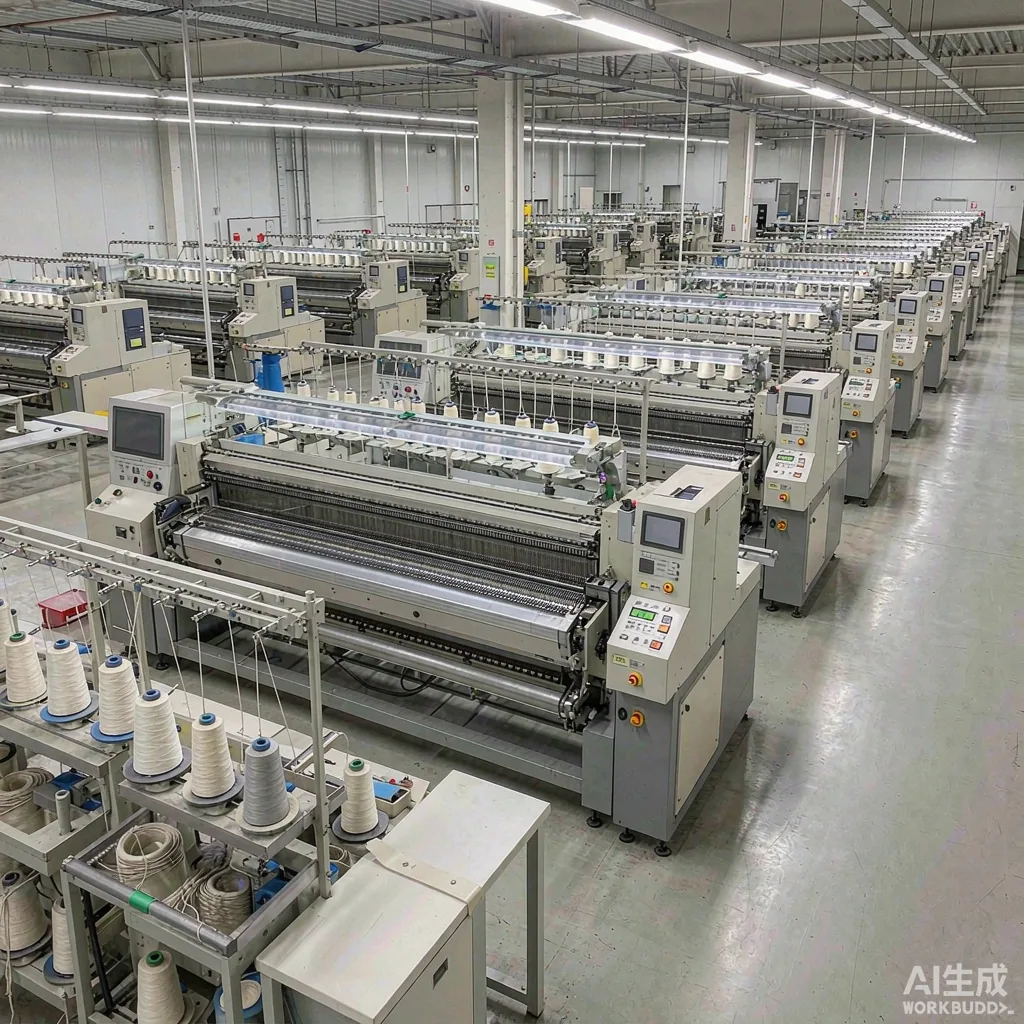
What changed in the promotional bag market is that the giveaway stopped being judged on unit price alone and started being judged on whether it clears three gates at once: chemical evidence, reusable-carrier policy and a fixed event date.
The policy layer is what gift buyers meet first. The EU has restricted certain single-use plastic products through Directive (EU) 2019/904, transposed differently in each member state, so the practical effect depends entirely on the importing country. Regulation (EU) 2024/1781 adds durability and product-data expectations on top. Neither turns a textile carrier into a regulated article by itself, but together they move the default expectation: something disposable now looks behind the market, something reusable looks current.
The second shift sits inside the buying organisation. Teams that once ordered on unit cost are now asked for restricted-substance evidence and assurance on the delivery date — paperwork and schedule questions rather than price questions. A knit body helps because the panel is programmed rather than cut and assembled, keeping the material list short enough to evidence.
Check One: Does the Piece Count Fit the Distribution List
A promotional knit order fits the campaign when its piece count is derived from the distribution list rather than rounded to a convenient figure, because MOQ is 100 pcs per style and per colourway and that grid rarely lines up with what the list actually requires.
The multiplication catches people because it happens twice. One style in one colourway is 100 pieces; two styles in two colourways is 400; three in three is 900. The useful trick is to let a colourway carry a recipient tier — VIP, staff, delegate — so one knitting programme is written once and only the yarn changes, and the grid buys segmentation rather than merely absorbing it. Where the list falls below the MOQ floor, consolidate tiers into one shade rather than abandoning knit. See knitted bag colourway planning for the colourway arithmetic.
Check Two: Can the Brand Mark Survive the Wash
A knitted logo survives the wash better than a transfer print, and it pays for that durability with resolution: at E7 gauge a legible capital letter needs roughly 5 mm to 6 mm of cap height and a minimum stroke of about two to three wales, and finer detail than that reads as noise rather than as a mark.
There are three routes. Intarsia or jacquard makes the mark part of the fabric, so nothing can peel, crack or fade separately from the body; geometry is its limit. A transfer or screen print allows fine detail and photography but adds an interface that can craze after repeated laundering. A sewn label or patch suits late changes but adds a component and a seam. The test that settles the choice is colour fastness to domestic laundering under ISO 105-C06, read against grey scale ISO 105-A02, where grade 4 to 5 after five washes at 40 °C is the usual target. See knitted bag artwork file requirements.
| Mark route | Minimum detail | What fails first | Best for |
|---|---|---|---|
| Intarsia in the knit structure | Cap height 5 mm to 6 mm; stroke two to three wales at E7 | The mark is the fabric; resolution is the limit | Wordmarks, long-life gifts |
| Jacquard all-over pattern | A motif cell of at least 8 by 8 wales and courses | Snagging if a float is left too long | Brand texture rather than a literal logo |
| Transfer print on the panel | Hairline stroke widths | Edge crazing after repeated washing at 40 °C | Photographic or gradient artwork |
| Sewn label or patch | Independent of the knit resolution | The seam, and one more component to evidence | Late changes and multi-brand programmes |
Check Three: Is the Structure Right for the Load
A gift bag has to survive one specific load — the load it is handed over with, plus the load it is reused for — and specifying to that load rather than to a generic grade is what keeps a promotional programme from being remembered for a broken handle.
The engineering answer for a conference pack is usually a body at 320 g/m² to 400 g/m² knitted at E7 or E8, with the handle taken integral to the body rather than sewn on, because integral handles remove the joint where gift totes fail. For a heavier bundle, move to about 480 g/m² and add a reinforcement course through the handle root. Two properties belong in the brief rather than in an assumption: tensile strength under ISO 13934-1 in the strap direction, and abrasion under ISO 12947-2 for the base panel at 20,000 rubs as a reasonable floor. A simple in-house check of 8 kg held for 30 minutes catches the handle-root failures that fabric testing never sees.
Check Four: What the Destination Market Demands in Documents
A promotional bag crosses a border under the same rules as a retail bag, which means the evidence file is needed even though nobody paid for the bag — and the file is the item most gift buyers discover too late.
For the EU, the restricted-substance position sits under REACH, and any declaration has to be traceable to the actual yarn lot rather than to a generic statement; this is the document buyers are most often asked to redo. Fibre composition labelling follows EU rules on textile names, which still apply to a gift bag. In the United States, California's Proposition 65 requires a warning where a listed substance exceeds the applicable threshold, so the practical answer is to test or to reformulate. Classification runs through HTSUS under Chapter 42 for many travel and sports-bag constructions. Where a gift is aimed at children, CPSIA adds lead and phthalate limits and tracking labels.
- Piece floor
- MOQ 100 pcs per style and per colourway, not per order
- Sampling
- 7 working days from a confirmed knitting file and yarn choice
- Bulk
- 30 days from approved sample to inspection-ready goods
- Release gate
- AQL 2.5 major defects under the ISO 2859-1 scheme
- Terms
- FOB Xiamen; CIF and DDP available on request
- Booking horizon
- About 120 days before the event date; 90 days is the shortest workable path
Check Five: How Much Time Is Left Before the Event Date
The shortest workable path from first brief to goods on the venue floor runs about 90 days, and the comfortable one is about 120, because the bulk cycle is only about half of the elapsed time and the rest is artwork, approvals and freight.
Counted forward, the critical path is artwork and knitting-file writing, then a confirmed file and yarn choice, then 7 working days of sampling, then the approval round, then 30 days of bulk, then inspection against AQL 2.5, then export. From Xiamen, sea freight typically adds about 25 to 35 days to northern Europe and about 18 to 26 days to the US west coast before customs entry and inland delivery. There is no expedite that compresses a knitting programme, so the only protection is to book the production slot against the date before the artwork is final — a slot not booked is allocated to someone else. See knitted bag capacity booking.
Check Six: Colour Accuracy Against a Brand Standard
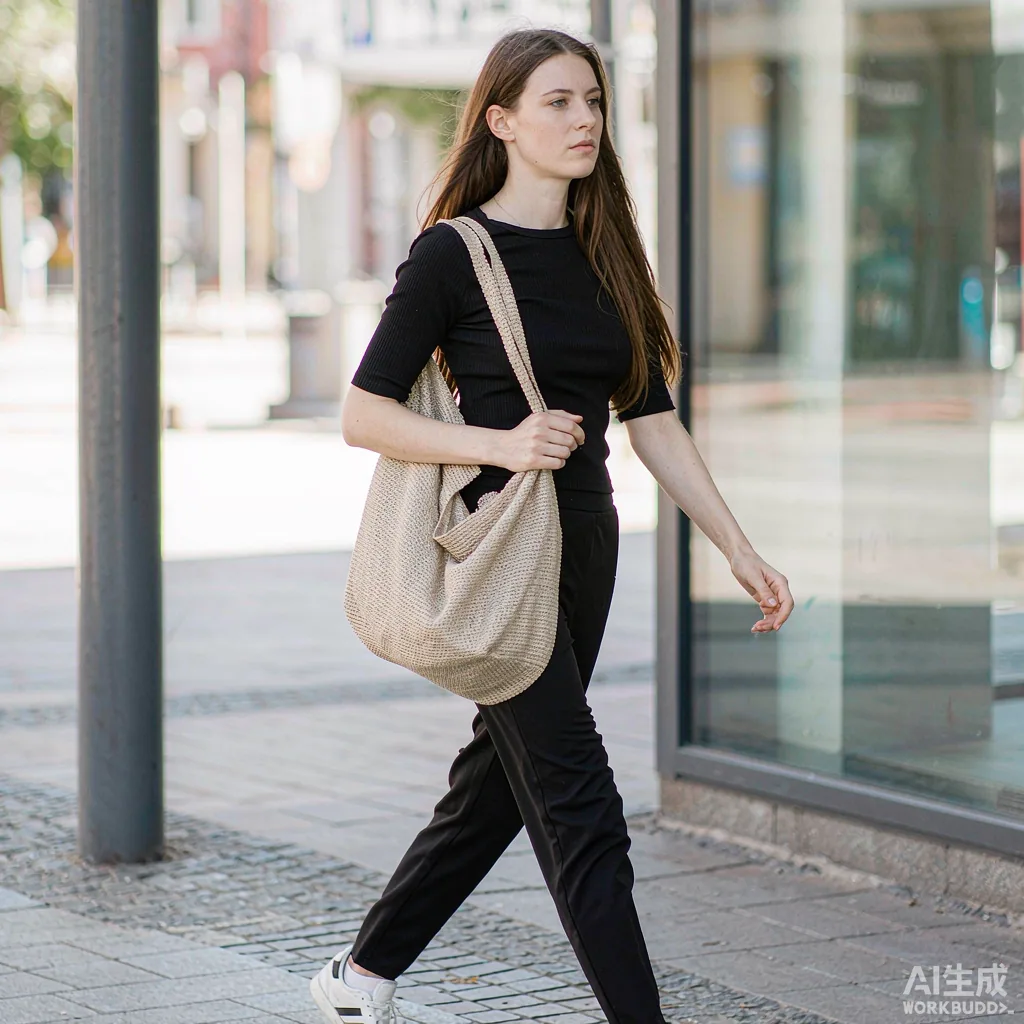
Colour accuracy on a knitted panel is set by the yarn lot rather than by the stitch, so hitting a governed brand shade depends on how the lot is dyed and approved before it goes on the machine.
There are two ways to arrive at a brand shade. Dyeing a lot to match a reference is accurate but brings a minimum dye quantity and a lead time ahead of the 7 working days of sampling. The second is to build the shade structurally by twisting or plating two stock yarns, trading a small loss of accuracy for no dye-lot minimum and no added time; at 100 pcs that is usually the better answer. Either way, state the target as a tolerable deviation under an agreed lighting condition, since a jacquard reads darker than a plain fabric in the same yarn.
Check Seven: What Happens to Returns and Claims
Promotional goods almost never come back, so defects surface as brand complaints rather than as returns — which means inspection is worth more on a giveaway than on a retail order, not less.
The release gate is AQL 2.5 on major defects under the ISO 2859-1 attributes scheme. What matters most is the defect classification rather than the sampling table itself: a critical defect — a broken handle root, a missing warning label — ends the lot regardless of count, while a minor mark inside the bag is tolerable within limits. Because there is no reverse logistics for giveaways, a defect rate a retailer would absorb through returns becomes a reputational cost here. Ask for the inspection report before shipment, and ask what happens if a lot fails. More detail sits in AQL 2.5 explained for bags.
Ten checks before you book a promotional knit programme
- Piece count derived from the distribution list, not rounded up to a round number.
- Mark method chosen on what it will survive: ISO 105-C06 at grade 4 to 5.
- Load specified: about 340 g/m² for a light gift, about 480 g/m² for a heavy bundle.
- Restricted-substance declaration traceable to the actual yarn lot.
- Slot booked roughly 120 days out; 90 days is the shortest workable run.
- AQL 2.5 inspection report requested before shipment, with a re-run clause agreed.
- Claim language written so it can be evidenced, then evidenced.
Check Eight: The Sustainability Claim and Its Evidence
A sustainability claim on a gift bag has to be provable at the level of the yarn lot, and the two schemes that make it provable are the Global Recycled Standard for recycled content and OEKO-TEX STANDARD 100 for restricted substances in the finished textile.
The Global Recycled Standard sets eligibility at a minimum recycled content with a higher threshold before the label itself may be used, and requires transaction certificates to follow the material between stages. That last requirement decides things at gift volumes: if the order is placed against a recyclate lot carrying certificates, the claim stands; if it is placed with generic yarn and the claim added later, it does not. OEKO-TEX STANDARD 100 grades products into four classes by intended use, so request the certificate matching the actual application. The claim that most often fails audit is recyclability — state monomaterial design rather than an end-of-life promise dependent on local infrastructure. See greenwashing risk in bag marketing.
Check Nine: Who Owns the Knitting File and the Design
A knitting programme is software, not a pattern card, and who owns that file decides whether a successful gift bag can be re-ordered next year from anyone — so it belongs in writing before the first sample rather than after the first issue.
Three questions settle it. May the buyer take the knitting file to another production partner, and on what terms? Is the exclusive structure either withheld from the same field of use or freely offered elsewhere, and who holds rights in artwork adapted into stitch form — usually the party who commissioned it, but only if the brief says so. Ask for confidentiality covering shape and artwork from the first exchange, and for the ownership position to appear on the quotation. See knitted bag design rights and ownership.
File stays with the programme team
Re-orders cost least because the file is already debugged, but moving later restarts at artwork.
Buyer takes the file
Portability across production partners, usually against a transfer fee and written confirmation of scope.
Exclusivity on the structure
The shape is not offered into the same field of use, protecting a campaign design for its term.
Open structure
Only the artwork and colourways are reserved. Lowest dispute risk and usually the default.
Check Ten: What the Unit Cost Actually Buys
At 100 pcs the dominant cost driver is set-up absorption rather than yarn, so the widest saving available to a gift buyer comes from raising the piece count or lengthening the re-order horizon, not from trimming the specification.
The arithmetic is worth doing once. Fixed development — the knitting file, the sample round, the pattern set-up — is unchanged whether the run is 100 pieces or 400, so its per-unit share falls roughly fourfold across that span. Yarn and machine minutes scale with the units. Gauge and mass are the two specification variables that do move the unit, since a finer gauge takes longer to knit and every 100 g/m² adds yarn across the panel. The strongest lever is therefore the piece count, and the costliest move is a late change once the file is written. See how to compare knitted bag quotes.
Run the ten checks against your campaign date
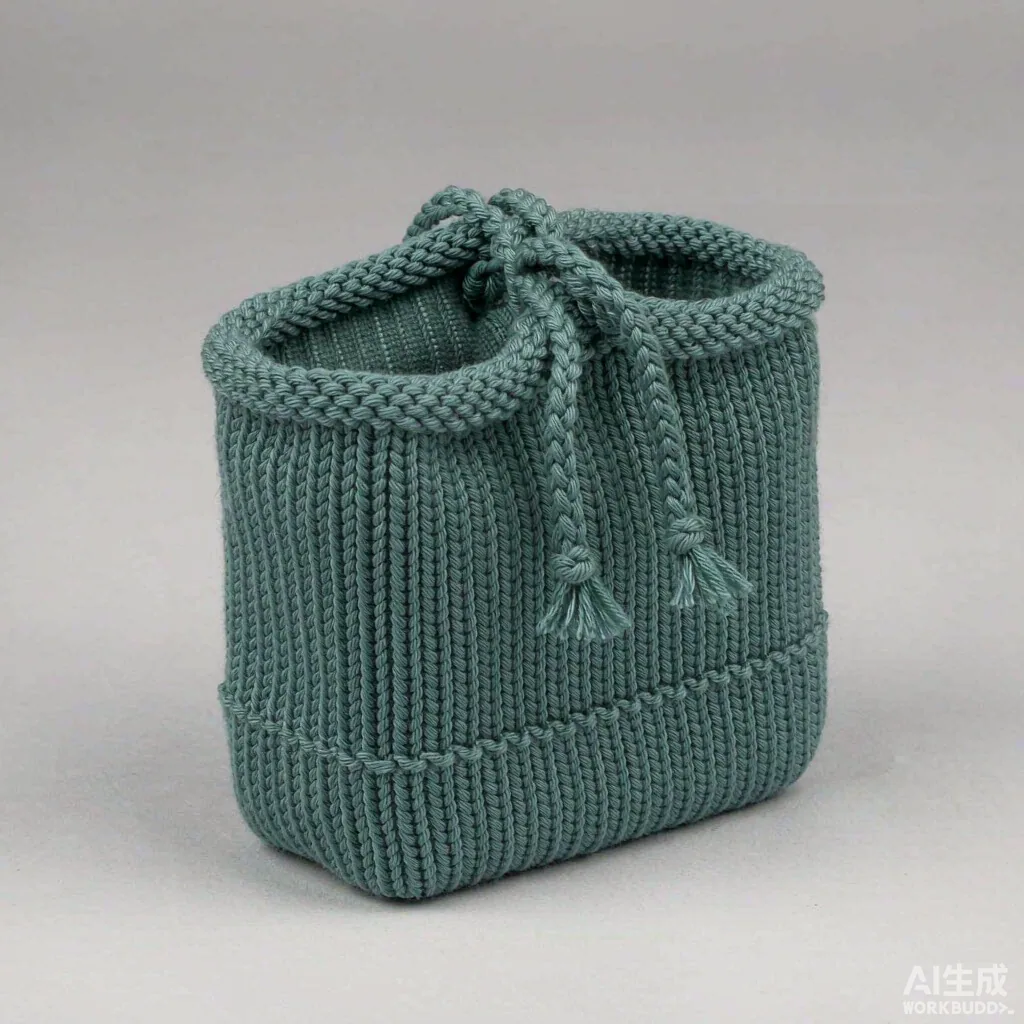
Send the distribution list, the event date and the artwork you have so far. The knit team will return a piece-count grid at MOQ 100 pcs per style and colourway, a timeline counted back from your date, and a specification at 7 working days of sampling and 30 days of bulk. Start on the contact page.
Frequently Asked Questions
Is a reusable knit carrier worth it for a giveaway instead of a disposable one?
It depends on the lifetime you need and on how the importing country treats single-use plastics. A knit panel has no film to tear, survives repeated laundering, and keeps the mark visible for months, so the impressions per unit run far higher even though the unit outlay is higher too.
What is the smallest promotional knit order I can place?
MOQ is 100 pcs per style and per colourway. One style in one colourway is 100 pieces; two styles in two colourways is 400. Where a distribution list falls below the floor, the usual answer is to merge recipient tiers into one shade rather than to abandon the knit structure.
How long before the event should I book a knit gift programme?
About 120 days is comfortable and 90 is the shortest workable path. Sampling takes 7 working days, bulk takes 30, and the remainder is artwork, approval rounds, inspection and freight. Sea transit to northern Europe typically adds a further 25 to 35 days before customs and inland delivery.
Can my logo be knitted rather than printed?
Yes, by intarsia or jacquard, which makes the mark part of the fabric with no interface to peel. The trade is resolution: at E7 gauge plan for a cap height of about 5 mm to 6 mm and a stroke of two to three wales. Fine gradients and photography still favour a print route.
Will the knitted logo fade before the body does?
A structural mark cannot fade separately from the yarn it is made of, because it is the yarn. A printed mark is assessed for colour fastness to domestic laundering under ISO 105-C06 and read against grey scale ISO 105-A02, with grade 4 to 5 after five washes at 40 °C the usual target.
Which documents does a promotional bag shipment need?
At minimum a restricted-substance declaration traceable to the actual yarn lot, a fibre composition label where required, and the standard commercial set. If the bag is given to children in the United States, CPSIA obligations attach, which brings lead and phthalate limits and tracking labels with them.
How do I test whether the handle will hold?
Ask for tensile testing under ISO 13934-1 in the strap direction and for abrasion on the base panel under ISO 12947-2, where 20,000 rubs is a sensible floor for a bag expected to be reused. A simple in-house check of 8 kg held for 30 minutes catches handle-root failures that fabric tests miss.
What inspection level applies to promotional goods?
AQL 2.5 on major defects under the ISO 2859-1 scheme, applied to the finished lot before shipment. Because giveaways have no reverse logistics, a defect rate a retailer would absorb through returns becomes a reputational cost instead, so inspection matters more here rather than less.
How close can a knitted panel get to a governed brand colour?
Very close where a lot is dyed to match, with the caveat of a dye-lot minimum and extra lead time before sampling. At 100 pcs the better route is often structural — twisting or plating two stock yarns — which trades a small loss of accuracy for no minimum and no added time.
What recycled-content claim can I make on a gift bag?
Only one supported by certificates that follow the lot. The Global Recycled Standard sets eligibility at 20% recycled content with a higher threshold for label use, and requires transaction certificates between stages. Recyclability depends on the local infrastructure, so state monomaterial design rather than an end-of-life promise.
Who owns the knitting file for my design?
Whoever the agreement says owns it, which is why it belongs on the quotation. Ask whether the buyer may take the file to another production partner, whether the structure is exclusive to the brand's field of use, and who holds rights in the artwork adapted into stitch form.
What reduces the unit cost most on a small gift order?
Quantity. Fixed development — the knitting file, the sample round, the pattern set-up — stays the same whether the run is 100 or 400 pieces, so its share per unit falls roughly fourfold. Cutting specification saves less, and a change made after the file is written costs more than either.
People Also Ask
What is replacing single-use carriers in promotions?
Reusable textile structures, including knitted bodies. Policy such as Directive (EU) 2019/904 and durability expectations under Regulation (EU) 2024/1781 moved the default, though the effect depends on how each member state transposes the rules.
How many pieces does a promotional knit run need?
At least 100 per style and per colourway. Two styles in two colourways commits 400 pieces, and three in three commits 900, so the grid should be derived from the distribution list rather than rounded up.
Can a knitted gift bag carry a fine logo?
Down to about 5 mm to 6 mm cap height at E7 gauge. Below roughly two wales of stroke the mark reads as noise, so fine gradients and photography still require a print route on the knitted panel.
How long does a promotional bag shipment take?
About 90 days is the shortest workable path and 120 is comfortable. Sampling is 7 working days and bulk is 30, with sea transit adding around 25 to 35 days to northern Europe before customs entry and delivery.
Do free gifts need compliance certificates?
Yes. A party-handed product crosses the border under identical rules. Expect a REACH restricted-substance declaration, fibre labelling, Prop 65 consideration for California, and CPSIA obligations where the gift is aimed at children.
Sources and further reading
Every figure on this page is either our own programme data or attributed below. Open the originals before you write them into a specification.
- ISO 2859-1 — Sampling procedures for inspection by attributes, Part 1ISO The attributes sampling scheme behind the AQL 2.5 release gate used on finished gift lots.
- REACH RegulationEuropean Commission The restricted-substance framework that a gift bag declaration has to answer to, traceable to the yarn lot.
- Directive (EU) 2019/904 on the reduction of the impact of certain plastic products on the environmentEUR-Lex The single-use plastics instrument that shifted giveaway expectations toward reusable carriers; effect depends on national transposition.
- Regulation (EU) 2024/1781 — Ecodesign for Sustainable ProductsEUR-Lex The durability and product-data expectations layered on top of the single-use rules.
- Proposition 65 — Safe Drinking Water and Toxic Enforcement ActOEHHA Requires either a warning or a reformulation where a listed substance is present above the applicable threshold in California.
- Standards — including the Global Recycled StandardTextile Exchange Sets 20% recycled content for eligibility with transaction certificates following the material between stages.
Ten Checks Beat One Unit Price
A promotional knit programme fails for one of four reasons: the grid was guessed rather than counted, the artwork was written for print rather than for stitch, the evidence file was requested after shipment instead of before, or the date was never counted backwards. None is a price failure, and none is recovered by negotiating the unit lower. The ten checks turn a campaign from a gamble into a schedule, on fixed numbers: 100 pcs per style and colourway, 7 working days of sampling, 30 days of bulk and AQL 2.5.
For the wider picture of how these programmes sit in the category, see knit bag market trends. For the buyer's-eye view of the same constraints, see US bag buyer requirements and European bag buyer requirements. Commercial terms are set out under custom knit bags, and the packaging decision that follows the shipment is covered in knit bag packaging.