AQL 2.5 for Knit Bags: What 2.5 Actually Means, the Sample Size It Sets, and Where It Misleads Buyers
What does AQL 2.5 mean on a knit bag order? It is an acceptance quality limit of 2.5 percent under ISO 2859-1, and it sets the accept and reject numbers for a sample whose size comes from the lot size and the general inspection level, not from the 2.5 itself. On a lot of 3,201 to 10,000 pieces at general inspection level II, the sample is 200 pieces with 10 accepted and 11 rejected. Stating AQL 2.5 without the lot definition and the inspection level leaves both numbers to be decided at the dock.
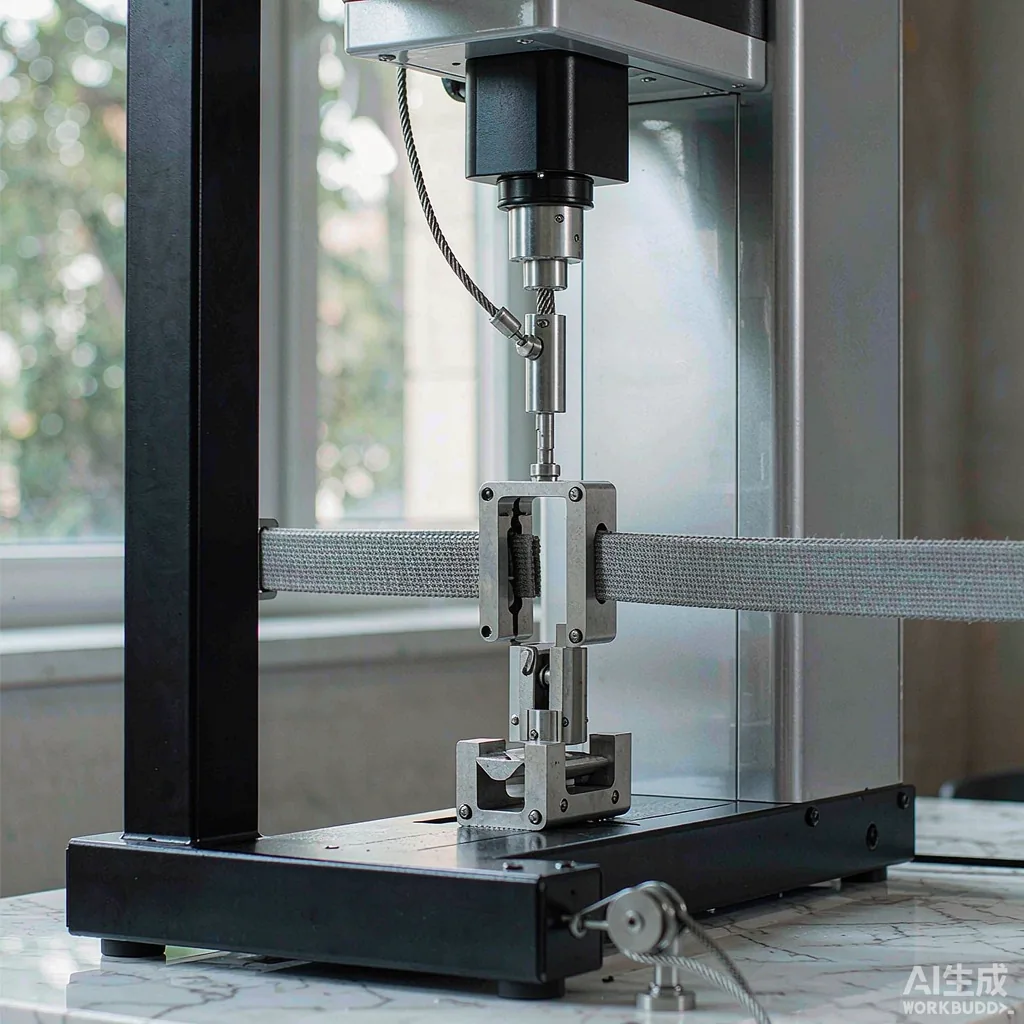
What AQL 2.5 Means in One Sentence
AQL 2.5 is the worst average process quality that a sampling scheme will still accept most of the time, expressed as 2.5 percent nonconforming. It is a property of the sampling plan, not a promise about the lot, and the distinction is the single most useful thing a buyer can carry into an inspection conversation.
That sentence has a consequence buyers rarely price in. A plan indexed at AQL 2.5 is designed to accept the majority of lots at or better than 2.5 percent nonconforming; it is not designed to reject every lot worse than that. A lot at 4 percent will sometimes pass, and a lot at 1 percent will occasionally fail, because sampling plans carry producer risk and consumer risk on both sides.
For a knitted bag programme, the practical reading is that AQL 2.5 is a routine commercial threshold, not a guarantee of uniformity. Where a buyer needs near-zero defects on a safety or child-related item, a tighter limit and a different plan are required, and the place to say so is the order acknowledgement rather than the inspection report.
AQL 2.5 Is Not a Sample Size
This is the error that costs the most time in a dispute. AQL 2.5 fixes the accept and reject numbers once the sample size is known, but the sample size itself comes from two other decisions: the lot size and the general inspection level. Both are chosen by the buyer, and if the buyer does not choose them, someone else does at the dock.
General inspection level II is the default in most bag programmes and is the right starting point. Level I halves the sample and is sometimes proposed because it is faster; level III roughly doubles it and is appropriate where a buyer has seen quality drift or is inspecting a first lot from a new programme. None of the three changes the AQL; all three change the sample.
| Lot size (pieces) | Sample size at level II | Accept | Reject |
|---|---|---|---|
| 91 to 150 | 20 | 1 | 2 |
| 151 to 280 | 32 | 2 | 3 |
| 281 to 500 | 50 | 3 | 4 |
| 501 to 1,200 | 80 | 5 | 6 |
| 1,201 to 3,200 | 125 | 7 | 8 |
| 3,201 to 10,000 | 200 | 10 | 11 |
| 10,001 to 35,000 | 315 | 14 | 15 |
| 35,001 to 150,000 | 500 | 21 | 22 |
| 150,001 to 500,000 | 800 | 21 | 22 |
Read the table as a chain rather than a lookup. Decide the lot, decide the level, read the sample, then read the accept number. A buyer who writes only AQL 2.5 has handed over the first two links in that chain and can be presented with a legitimate inspection on a sample of 20 when 200 was expected.
Critical, Major and Minor: Where Defects Are Classified
A single AQL figure applied to everything is a blunt instrument, and most bag programmes use three. Critical defects, covering anything unsafe or legally non-compliant such as a sharp exposed needle fragment or a choking hazard on a child's item, are normally held at zero tolerance regardless of the AQL. Major defects, covering anything that makes a bag unsaleable, typically sit at 2.5.
Minor defects, covering workmanship issues a customer would notice but probably not return over, commonly sit at 4.0. The split matters because a lot with one critical defect fails outright while a lot with eight minor defects on a sample of 200 may still pass at 4.0, and both outcomes are correct under the plan as written.
The classification list is where the real work is, and it should be written down before production. For a knitted bag that typically means dropped stitches and holes as major, handle misalignment beyond a stated tolerance as major, loose thread ends as minor, and shade variation beyond the approved reference as major on the darkest colourway first.
Checklist: Ten Things to Fix Before the Inspector Arrives
- Define the lot: one lot means one style, one colourway and one production run, not everything packed in one container.
- State the general inspection level in writing; level II is the normal default and level I quietly halves the sample.
- Write the defect classification list with critical, major and minor examples specific to a knitted panel.
- Set the AQL per class: zero for critical, 2.5 for major, and 4.0 for minor is the common bag programme split.
- Agree the dimensional tolerance in millimetres, because an inspector cannot classify a measurement against no limit.
- Confirm the approved reference sample is the one on the table, with its gauge and yarn count recorded.
- Decide whether inspection is at goods-in, during packing or both, and name who pays for a re-inspection.
- State what happens on rejection: segregate, rework, re-inspect, and who carries the re-inspection cost.
- Require photographs of every defect found, referenced to the piece number, not a summary defect count.
- Name the sampling standard and edition on the report, so the accept numbers can be checked against the plan.
Ten items is a short list and it resolves most of what turns into an argument. The reason these arguments happen is not disagreement about quality; it is that two people each assumed a different inspection level, a different lot definition or a different defect class, and the report is correct under both readings.
The Acceptance and Rejection Numbers Buyers Misread
An accept number of 10 on a sample of 200 means the lot passes when ten or fewer nonconforming pieces are found. It does not mean that up to 10 pieces in 200 may be defective by design, and it certainly does not mean the buyer has agreed to accept 5 percent bad goods. The number is a statistical threshold for releasing a process, not a licence for defects.
The rejection number sits one above it, at 11 in this example, and the gap between the two is deliberate. There is no outcome between accept and reject in a single sampling plan: ten passes, eleven fails, and a sample of 200 that finds exactly eleven nonconforming pieces is a rejected lot no matter how good the other 189 are.
Where a result lands close to the line, a double sampling plan offers a second sample before a decision, which is useful when a borderline result would otherwise trigger a costly re-inspection. The trade-off is administrative complexity, so most bag programmes use single sampling and settle the borderline case by agreement rather than by plan design.
Switching Rules: Normal, Tightened and Reduced
ISO 2859-1 is a system, not a single table. It includes switching rules that move a programme between normal, tightened and reduced inspection based on the recent run of results, and the point of the system is to concentrate effort where quality has drifted and relax it where quality has been stable.
Tightened inspection normally follows a defined run of rejected or marginal lots and raises the bar without changing the sample size, by lowering the accept number. Reduced inspection is available after a sustained run of good results and cuts the sample, which lowers inspection cost but also lowers sensitivity. A buyer should say whether reduced inspection is permitted at all, because it is often applied by default.
On a programme of repeated seasonal orders these rules are genuinely useful, because they convert inspection history into a decision rule instead of a judgement call. On a single order they do nothing, and stating a switching rule for a one-off lot adds complexity without benefit.
Where AQL 2.5 Misleads on Knitted Panels
A knitted panel carries failure modes a woven one does not, and a pure attribute count does not see them. Pilling propensity, loop distortion after load, and handle elongation under a repeated 5 kg cycle are performance behaviours, not visible defects at goods-in, and a bag can pass AQL 2.5 on the day and pill or stretch within a month.
Shade is the second trap. A knitted body and a knitted handle may be from the same dye lot and still read differently because the two structures reflect light differently, and an inspector working to a numeric shade tolerance on a flat swatch will pass what a customer sees as two colours. Where shade matters, inspect the assembled bag under the lighting it will be sold under.
The third trap is dimensional. A knit relaxes after knitting and again after packing, so a bag measured at goods-in can be within tolerance and change by a further percentage once it has hung on a retail fixture for a week. Setting the tolerance against a conditioned and rested specimen, under the standard atmosphere in ISO 139, is the fix and it costs one line in the order.
Pilling and abrasion
Not visible at goods-in. Cover it with ISO 12947 Martindale testing before bulk, with the end point agreed in cycles.
Handle elongation
A repeated load test on the joinery, not a visual check. Five pieces per colourway, pre-bulk, with a minimum force figure.
Structural shade
Body and handle can differ from one dye lot because the structures reflect differently. Judge the assembled bag, not the swatch.
Relaxation after knitting
Knits move after knitting and again after packing. Measure conditioned, rested specimens under the ISO 139 atmosphere.
Dropped stitches
The classic knit defect and genuinely visible. Classify by size and position: a dropped stitch on a front panel is major, on a base seam usually minor.
What the count misses
AQL 2.5 is an attribute count. It tells a buyer whether the lot looked right at one moment, not whether the bag will last a season.
Lot Definition: The Decision That Changes Everything
A lot is a defined quantity of product made under essentially the same conditions, and its size drives the sample. The mistake buyers make is letting the lot be defined by logistics, so that three colourways packed into one container become one lot of nine thousand pieces when they are really three lots of three thousand.
That distinction changes the sample and the risk. One lot of 9,000 gives a sample of 200; three lots of 3,000 give three samples of 200 for a total of 600 pieces inspected. The second reading is more work and substantially more sensitive, which is why a buyer with a shade concern should insist on lot-by-lot definition rather than per-shipment.
The same logic applies across machines and across days. On a floor running 7 production lines at around 200,000 pcs per month, a single style may be knitted on more than one machine, and defining the lot per machine catches a gauge difference between two machines that a single combined lot would average away into an accept.
Writing AQL 2.5 into a Purchase Order
The clause needs five fields and nothing else: the standard and edition, the AQL per defect class, the general inspection level, the lot definition, and what happens on rejection. Five fields, one line each, and the inspection becomes a check against a written plan rather than a negotiation on the day.
Two of those five are usually missing. The general inspection level is the most commonly omitted, and the rejection remedy is the second. Without the remedy, a rejected lot enters an open-ended conversation about rework and re-inspection cost at exactly the moment the buyer has least leverage and the least time.
The AQL clause in one line
- Inspection to ISO 2859-1, single sampling, general inspection level II, AQL 0 critical / 2.5 major / 4.0 minor, one lot per style and colourway, rejected lots segregated and re-inspected at the producing partner's cost.
Set the inspection plan for a knit bag order
Send the bag type, quantity per colourway and the market it ships to. We will return the lot definition, the general inspection level and the accept and reject numbers behind AQL 2.5, and quote FOB Xiamen at 100 pcs per style and colourway with 7 working days sampling and 30 days bulk. Start on the contact page.
Frequently Asked Questions
What does AQL 2.5 mean on a bag order?
It is an acceptance quality limit of 2.5 percent nonconforming under ISO 2859-1. It defines the accept and reject numbers for a sample whose size is set separately by the lot size and the general inspection level, and it releases a process rather than guaranteeing a lot.
Does AQL 2.5 mean 2.5 percent of the order can be defective?
No. It means a sampling plan indexed at 2.5 will accept most lots at or better than that level. A lot at 4 percent will sometimes pass and a lot at 1 percent will occasionally fail, because every sampling plan carries risk on both sides.
What sample size does AQL 2.5 use?
Whatever the lot size and inspection level produce. On 3,201 to 10,000 pieces at general inspection level II the sample is 200 with 10 accepted and 11 rejected; on 501 to 1,200 pieces it is 80 with 5 accepted and 6 rejected.
What is a general inspection level?
A setting in ISO 2859-1 that scales the sample to the lot size. Level II is the normal default, level I roughly halves the sample, and level III roughly doubles it. The level changes the sample size and therefore the discrimination of the plan, but never the AQL figure itself.
Why should a buyer state the inspection level?
Because if the buyer does not choose it, someone else chooses it at the dock. A legitimate inspection on 20 pieces where 200 were expected looks like a pass on paper and carries a fraction of the sensitivity. Naming level II in the order acknowledgement is a one line fix.
Should bag programmes use one AQL or three?
Three. Zero tolerance for critical defects such as a sharp fragment or a choking hazard, 2.5 for major defects that make a bag unsaleable, and 4.0 for minor workmanship issues a customer would notice but probably not return the bag over. One figure applied to everything cannot express any of that.
What counts as a critical defect on a bag?
Anything unsafe or non-compliant: sharp exposed hardware, a needle fragment, a detachable small part on a child's item, or a restricted substance finding. These are held at zero regardless of the AQL applied to everything else, and a single one is enough to reject the whole lot outright.
What is the difference between the accept and reject number?
They sit one apart and there is no middle outcome. On a sample of 200 at AQL 2.5, ten nonconforming pieces passes the lot and eleven rejects it, however good the remaining pieces are. A single sampling plan offers no second sample before the decision is made.
What are switching rules in ISO 2859-1?
Rules that move a programme between normal, tightened and reduced inspection based on recent results. Tightened lowers the accept number after a defined run of poor results; reduced cuts the sample after sustained good runs and should be permitted explicitly rather than applied by default. On a single order the rules add nothing.
How should a lot be defined for a bag inspection?
One lot per style, colourway and production run, not one lot per container. Three lots of 3,000 attract three samples of 200, totalling 600 inspected pieces, against 200 for a single combined lot of 9,000. The definition is chosen by the buyer and worth writing down.
What defects does AQL 2.5 not catch on a knit?
Pilling, abrasion life, handle elongation under repeated load, structural shade differences between body and handle, and post-knitting relaxation. These are performance behaviours measured in a laboratory on separate specimens, not visible attributes counted at goods-in. Each has its own ISO method and none is an attribute.
Why do knitted body and handle panels read as different colours?
Two knitted structures from one dye lot reflect light differently, so a numeric shade tolerance measured on a flat swatch can pass what a customer sees as two colours. Inspect the assembled bag under the lighting it will actually be sold under, rather than a swatch under a bench lamp.
When should a bag be measured for dimensions?
After conditioning and resting, under the standard atmosphere in ISO 139. A knitted panel relaxes after knitting and again after packing, so a fresh specimen can measure inside tolerance and then move once it has settled. Set the tolerance and the resting interval together. Both belong on the order acknowledgement.
What should the AQL clause in a purchase order say?
Five fields: the standard and its edition, the AQL per defect class, the general inspection level, the lot definition, and the remedy on rejection including who pays for re-inspection. Five lines, and the inspection becomes a check against a written plan rather than a negotiation on the day. Ask for all five on the report itself.
Why is the rejection remedy usually missing?
Because it is uncomfortable to negotiate before there is a problem. Without it, a rejected lot opens an unconstrained conversation about rework and re-inspection cost at exactly the moment the buyer has the least time and the least leverage available. One sentence in the order prevents all of it.
People Also Ask
What is AQL 2.5 in bag inspection?
An acceptance quality limit of 2.5 percent nonconforming under ISO 2859-1. It sets the accept and reject numbers for a sample sized by lot size and general inspection level.
How many pieces are inspected under AQL 2.5?
It depends on the lot. At general inspection level II, a lot of 3,201 to 10,000 pieces is sampled at 200 with 10 accepted and 11 rejected; a lot of 501 to 1,200 is sampled at 80.
Is AQL 2.5 the same as 2.5 percent defects allowed?
No. It is the quality level a plan will usually accept, not a defect allowance. Lots worse than 2.5 percent will sometimes pass, so the figure is a release threshold rather than a guarantee.
What AQL should be used for bags?
Commonly zero for critical defects, 2.5 for major and 4.0 for minor, with a written classification list. State all three in the order rather than a single figure applied to every defect.
Why does lot definition affect the inspection?
Sample size scales with lot size. Three colourway lots of 3,000 inspect 600 pieces in total, while one combined lot of 9,000 inspects 200, so per-container lot definition quietly reduces sensitivity.
Sources and further reading
Every figure on this page is either our own programme data or attributed below. Open the originals before you write them into a specification.
- ISO 2859-1:2026 Sampling procedures for inspection by attributesISO The AQL-indexed single sampling schemes, general inspection levels and switching rules referenced throughout this article.
- ISO 139:2005 — Textiles, standard atmospheres for conditioning and testingISO The conditioning atmosphere used before dimensional measurement, needed because a knitted panel relaxes after knitting and packing.
- ISO 12947-2:2016 — Textiles, determination of abrasion resistance by the Martindale methodISO The abrasion and pilling performance testing that an attribute inspection at goods-in does not cover.
- ISO 13934-1:2013 — Textiles, tensile properties of fabrics, Part 1: maximum force using the strip methodISO The tensile method used for handle joinery strength, measured pre-bulk rather than counted at inspection.