Yarn Lot Consistency and Colour Matching for Knitted Bags: A Buyer's Decision Sequence
Yarn lot consistency is decided by six choices taken in a fixed order: how many dye lots the programme will use, whether the standard is instrumental or visual, which illuminant decides the match, what inter-lot difference is acceptable, where panels from different lots may touch, and what happens when a lot runs out. A workable knit bag spec sets a single dye lot, an instrument tolerance of dE 1.0 under D65, and grey scale ISO 105-A02 grade 4-5.
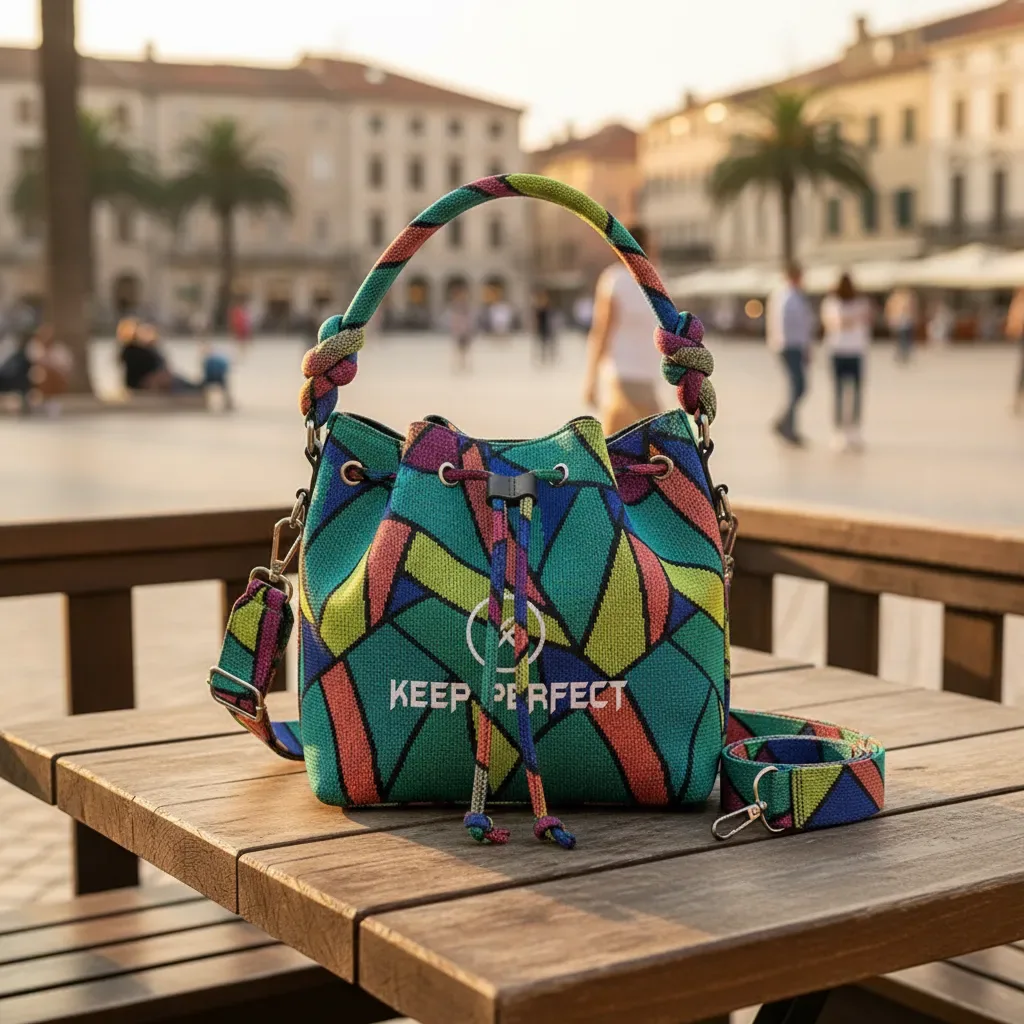
Decision 1: One Lot or Several, Taken Before Yarn Is Booked
The first decision is how many dye lots the programme will use, and it has to be taken before the yarn is booked because it sets the quantity ordered per lot. A single dye lot for the whole programme is the safest choice and it is achievable for most knit bag runs, because a dye lot for polyester or polyamide yarn is typically several hundred kilograms, which is far more yarn than a 100 pcs bag programme consumes. The constraint is not capacity; it is planning.
Single-lot working removes an entire category of dispute. Panels knitted from one lot cannot show a lot line, so there is nothing to argue about at inspection, and the colour approval applies to the whole shipment rather than to a portion of it. The cost is that the yarn has to be ordered up front in one quantity, which requires the colourway split to be reasonably settled before booking. Where a buyer genuinely cannot commit to a split, the answer is to accept several lots and to control the difference between them, which is what decisions two to five are for.
The default answer
- One dye lot per colourway per programme.
- It removes the lot-line defect entirely, and at 100 pcs per style and colourway the yarn quantity is well inside a normal dye lot size.
Decision 2: Instrument Tolerance or Visual Standard
The second decision is what the standard actually is. A physical approved swatch is necessary but it is not sufficient, because a swatch fades, gets handled and moves physically between the buyer and the production floor. An instrument tolerance turns the standard into a number: state the reference, the instrument geometry, the colour difference formula and the limit. A typical line reads dE 1.0, CMC formula, measured with a d/8 spectrophotometer, calculated under ISO 105-J03.
There is a trade-off between tightness and yield, and it should be understood before the number is written. A tolerance of dE 0.8 is achievable on a single lot with careful process control, but it raises the rejection rate at dyeing and therefore the cost. A tolerance of dE 1.5 is comfortably achievable and is usually invisible on a bag, because bags are large objects seen at distance in variable light. Most programmes do best at dE 1.0 on primary colourways and dE 1.5 on secondary ones, which concentrates the process effort where the brand is most visible.
Decision 3: Which Illuminant Decides the Match
The third decision is the illuminant, and it is the one most often left out of a spec. Colour matching is meaningless without a light source, because two panels can match under one illuminant and diverge under another. That divergence is metamerism, and it is common when a yarn is dyed with a different dyestuff combination from the reference, which happens whenever a mill substitutes a dye for availability or cost reasons. Naming the illuminant prevents the substitution from being invisible.
The practical standard is to evaluate under D65 as the primary illuminant and to check under at least one store lighting condition as a secondary. Retail environments vary widely, and a secondary check under a fluorescent store illuminant catches the metameric pair that would otherwise show up on a shop floor rather than in a light booth. Write both into the spec: primary D65 for acceptance, secondary check for information, and require the mill to report both readings on the lab dip.
- Primary illuminant
- D65 for acceptance decisions
- Secondary check
- one store illuminant, reported for information
- Instrument geometry
- d/8 spectrophotometer, specular included or excluded stated
- Colour difference formula
- CMC, calculated under ISO 105-J03
- Primary colourway tolerance
- dE 1.0
- Secondary colourway tolerance
- dE 1.5
- Grey scale assessment
- ISO 105-A02 grade 4-5
Decision 4: What Counts as an Acceptable Lot-to-Lot Difference
If the programme will run more than one lot, the fourth decision is the inter-lot window. This is a different number from the tolerance against the reference, and conflating the two is a common error. A lot can sit at dE 0.9 from the reference and another lot can also sit at dE 0.9, while the two lots differ from each other by dE 1.8, because they sit on opposite sides of the standard. The inter-lot window has to be written separately and it is usually tighter than the reference tolerance.
A workable window is dE 1.0 between lots measured against each other, with the additional rule that consecutive lots must fall on the same side of the standard. That second rule sounds pedantic and it is the one that actually prevents the visible line, because it stops the programme from oscillating around the reference. Where a programme is long enough to need three or more lots, ask for a shade sequence plan up front, so each lot is dyed deliberately rather than matched to whatever came before it.
Decision 5: Where Panels From Different Lots May Touch
The fifth decision is geometric: where in the bag may two lots appear next to each other. The sensitivity is not uniform. Two panels meeting along a long straight seam on the front of a tote will show a line that a customer sees immediately. The same two lots used on a front panel and an interior lining will never be compared by anyone, because they are not seen together in the same glance. Sorting lots by visibility costs nothing and it is the single most effective control after single-lot working.
The rule to write is simple: no two lots may appear on the same visible surface, and no two lots may meet along a seam longer than a short distance. Interior linings, base panels and pocket bags are the natural places to absorb a second lot. Where the bag is small, with one dominant panel, there is nowhere to hide a second lot, and the honest answer is that the programme has to run on one lot or accept the risk. That is a decision worth taking at specification stage rather than at inspection.
| Position in the bag | Lot sensitivity | Practical rule |
|---|---|---|
| Main front panel | highest | one lot only, never split across the panel |
| Side gusset meeting the front | high | same lot as the front panel |
| Back panel | high | same lot as the front panel |
| Base panel | moderate | a second lot can be absorbed here |
| Interior lining | low | the natural place for a second lot |
| Pocket bags and small parts | low | absorb remnant yarn from any lot |
| Handles and webbing | high if dyed to match | match the adjacent panel lot |
Decision 6: What to Do When the Lot Runs Out Mid-Programme
The sixth decision is the contingency, and it should be written before it is needed. A lot running out mid-programme is not a rare event; it happens when a colourway sells faster than forecast or when a defect rate at knitting is higher than planned. Without a written contingency, the decision gets made under time pressure, which is when programmes accept a second lot and discover three weeks later that the two do not sit together.
A workable contingency has three parts. Reserve additional yarn from the original lot at booking, typically 10% over the calculated requirement, held for top-up. Set a rule that any second lot must be approved as a panel against the original panel, not as yarn against the reference. And state where the second lot may be used, using the visibility map from decision five. Those three clauses turn an emergency into a procedure, and they cost nothing at the point of writing.
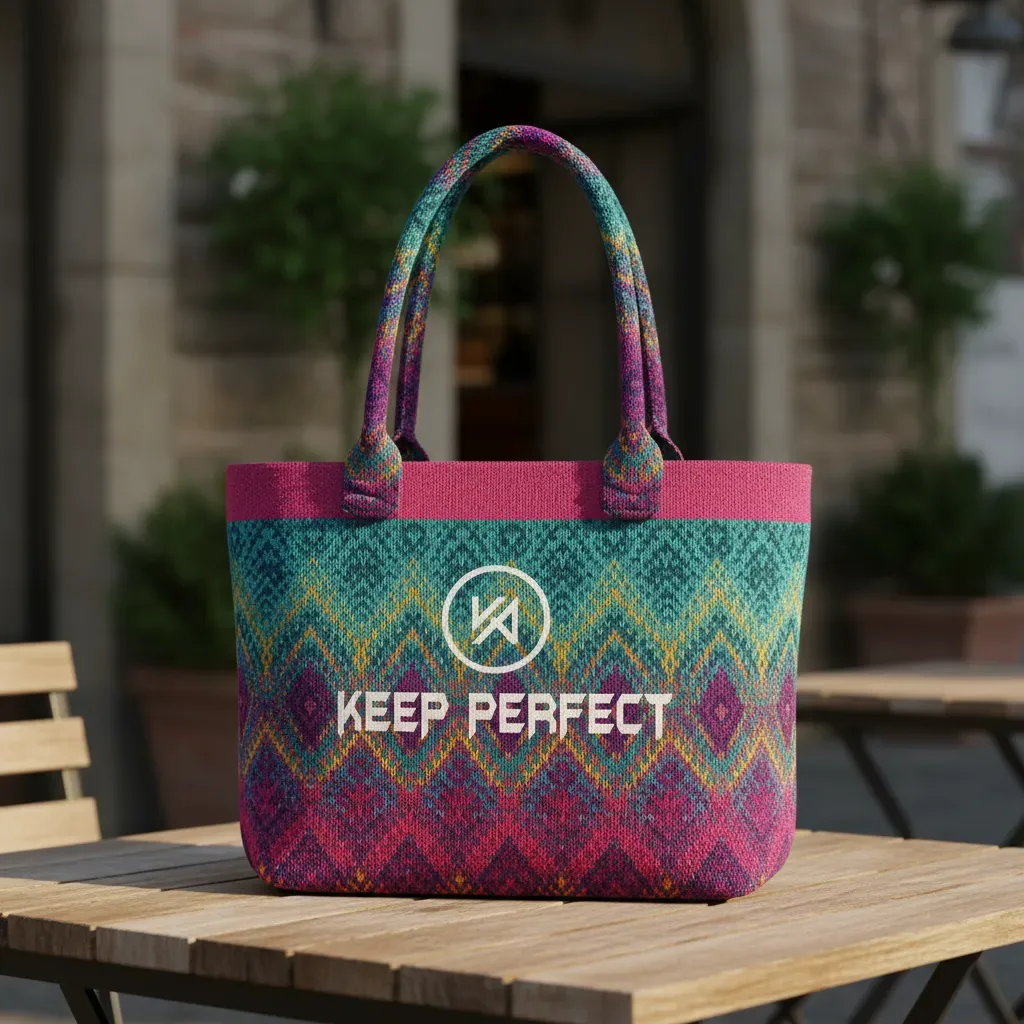
How a Dye Lot Is Built and Why It Drifts
Understanding where drift comes from makes the controls obvious. A dye lot is a fixed quantity of yarn dyed in one bath or one continuous run, and the variables that move colour between lots are the dyestuff weighing, the liquor ratio, the temperature profile and the dwell time. Polyester dyeing with disperse dyes runs near 130°C and polyamide with acid dyes nearer 100°C, and a few degrees of difference in the ramp changes exhaustion enough to shift the shade outside a dE 1.0 tolerance.
Water quality and substrate variation are the two that catch people out. Dyehouse water chemistry changes seasonally, and a recycled yarn substrate varies in base tint between input batches, so even a perfectly repeated recipe produces a slightly different shade on a different substrate. That is why the control has to be measurement at the end rather than recipe repetition at the start, and why a recycled programme needs a tighter lot plan than a virgin one.
- Dyestuff weighing and standardisation: small weighing errors shift shade measurably at dE 1.0 tolerance.
- Temperature profile: a few degrees of change in the ramp alters exhaustion on both polyester and polyamide.
- Liquor ratio and dwell time: both affect levelness as well as depth of shade.
- Water chemistry: seasonal variation in dyehouse water is a real and frequently overlooked variable.
- Substrate base tint: recycled yarn varies between input batches, so the same recipe gives a different shade.
Measuring Colour: Metamerism and the Instrument Question
Metamerism is the reason a visual approval is not enough. Two panels match under the light booth's D65 and separate under store lighting because their reflectance curves differ even where their tristimulus values agree under one illuminant. The instrument does not solve this on its own; it solves it when the spec requires readings under two illuminants, because a metameric pair will show a much larger difference in the second reading than a non-metameric one.
The instrument question itself is about repeatability rather than brand. Any modern spectrophotometer with d/8 geometry and UV calibration is adequate; what matters is that both parties state whether specular is included or excluded, because including specular component changes the reading on a shiny filament surface considerably. A knitted bag panel made from filament yarn is shiny enough for this to matter, so the spec should state the setting along with the tolerance.
Reference plus tolerance
Never accept a colour name alone. Write a numbered reference, an instrument tolerance, the formula and the illuminant, so the standard travels between parties without the physical swatch.
Two illuminants
Accept under D65 and report a second reading under store lighting. A large jump in the second reading is the signature of a metameric pair.
Specular setting
State whether specular component is included or excluded. On filament knitted panels the two settings differ enough to move a dE 1.0 decision.
Inter-lot window
Write the lot-to-lot difference separately from the tolerance against the reference, and require consecutive lots to sit on the same side of the standard.
Fastness Checks That Belong With the Colour Decision
Colour and fastness are decided together, because a shade that cannot hold its rating is not a usable shade. The three that matter for a knitted bag are wash fastness by ISO 105-C06, light fastness by ISO 105-B02 and rubbing by AATCC 8, and each has a staining and a change component that should be read separately. A deep shade can hold grade 4 on change of shade and fall to grade 3 on staining of an adjacent light panel, and only one of those numbers is visible in a finished bag.
The check that is most often skipped is colour transfer within the bag itself. Where a bag pairs a dark panel with a light lining, or dark webbing against a pale body, the risk is transfer rather than loss. Add a transfer clause to the spec requiring ISO 105-C06 staining assessment on the actual combination rather than on the panel alone, because the combination is what the customer receives and the panel is not.
Lot Records, Inspection and the Document Trail
A lot plan is only as good as its records. Every lot number should appear on three documents: the yarn cone label, the knitting production record, and the inspection report. When those three agree, a query about a colour issue can be answered by identifying exactly which bags came from which lot, and the answer takes minutes. When they disagree, the only safe response is to hold the whole shipment, and the cost of that falls on the programme rather than on the yarn.
Inspection is where the plan is tested. Inspection runs to AQL 2.5 under ISO 2859-1, which sets how many units to pull and how many defects to accept, and colour is a defect class that has to be defined in advance. The inspector needs the reference, the tolerance and the illuminant, plus a rule for where a lot line is acceptable. Without those, the inspection report records an opinion about appearance, and an opinion is not something a buyer can act on or dispute.
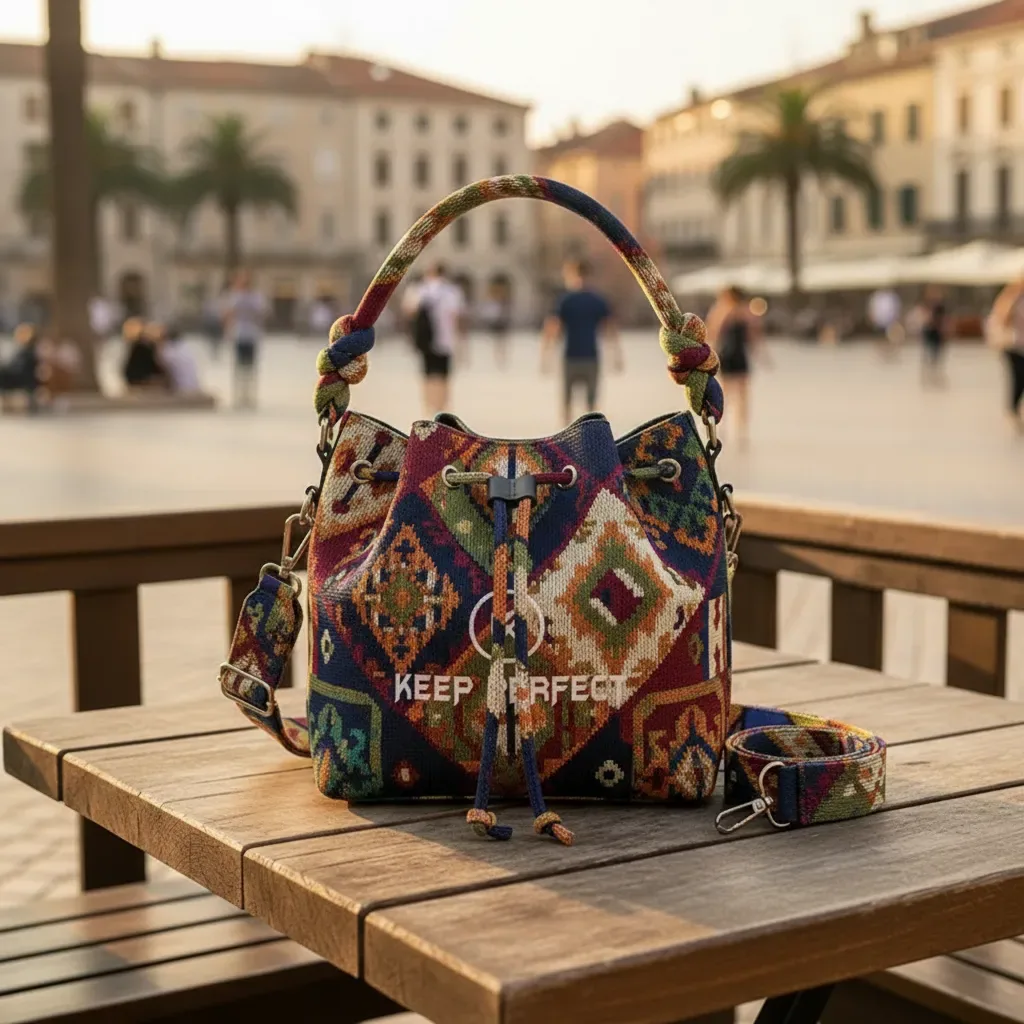
Six decisions, in order
- Lot count, standard type, illuminant, inter-lot window, where lots may touch, and the contingency.
- Take them in that order at specification stage and colour stops being a dispute.
Set a lot plan with your colourway list
Send the colourway split and the quantity per colourway. We will confirm whether a single dye lot covers it, quote FOB Xiamen at 100 pcs per style and colourway, and book the 7 working day sampling window. Start on the contact page.
Frequently Asked Questions
What is a dye lot and why does it matter for knitted bags?
A dye lot is a fixed quantity of yarn dyed in one bath or one continuous run. Colour varies between lots because dyestuff weighing, temperature profile, liquor ratio and water chemistry all move slightly. Two panels from different lots placed side by side in one bag show a visible line that reads as a defect even when every instrumental check passes.
How many bags can one dye lot cover?
Far more than a typical programme needs. A dye lot is usually several hundred kilograms of yarn, while a 100 pcs bag programme consumes a small fraction of that. The constraint on single-lot working is planning rather than capacity: the colourway split has to be reasonably settled before the yarn is booked.
What colour tolerance should be written into a spec?
A reference plus a number plus an illuminant. A typical line is dE 1.0, CMC formula, measured with a d/8 spectrophotometer and calculated under ISO 105-J03, evaluated under D65. Use dE 1.0 on primary colourways and dE 1.5 on secondary ones to concentrate process effort where the brand is most visible.
Why do two panels match in the lab but not in the store?
Metamerism. The two have different reflectance curves that agree under one illuminant and diverge under another, usually because a mill substituted a dyestuff for availability reasons. The control is to require readings under two illuminants: a metameric pair shows a much larger difference in the second reading.
What is the difference between tolerance and inter-lot window?
The tolerance measures a lot against the reference; the inter-lot window measures two lots against each other. Two lots can each sit at dE 0.9 from the reference and still differ from each other by dE 1.8 by sitting on opposite sides of the standard, so the window must be written separately and is usually tighter.
Where can a second dye lot be used safely?
Anywhere it will not be compared with the first lot in one glance. Interior linings, pocket bags and base panels absorb a second lot well. Never split a front panel or place two lots along a long visible seam, because that is where the line is immediately obvious.
How much extra yarn should be reserved from the original lot?
Around 10% over the calculated requirement, held for top-up. Lot exhaustion mid-programme is common when a colourway sells faster than forecast or when knitting defect rates run higher than planned, and reserved yarn turns an emergency into a routine reorder.
Does recycled yarn need a tighter lot plan?
Yes. Recycled substrates vary in base tint between input batches, so a repeated recipe still produces a slightly different shade. That means the control has to be measurement at the end rather than recipe repetition at the start, and a recycled programme benefits more from single-lot working than a virgin one does.
Which fastness tests belong with a colour specification?
Wash fastness by ISO 105-C06, light fastness by ISO 105-B02 and rubbing by AATCC 8. Read the staining and change components separately, because a deep shade can hold grade 4 on change and fall to grade 3 on staining of an adjacent light panel.
Should colour be checked on the panel or the yarn?
On the panel. Yarn and fabric read differently because loop formation changes the surface, and the customer sees the panel. Approving yarn against a reference and then discovering the knitted panel reads differently is a common and avoidable sampling round.
How does the instrument setting affect the reading?
Substantially on filament surfaces. Whether specular component is included or excluded changes the reading on a shiny knitted panel enough to move a dE 1.0 decision, so the spec should state the setting along with the tolerance and the geometry.
What should be recorded for each lot?
The lot number on three documents: the yarn cone label, the knitting production record and the inspection report. When those three agree, a colour query is answered by identifying exactly which bags came from which lot instead of holding the whole shipment.
How does a lot plan connect to AQL inspection?
AQL 2.5 under ISO 2859-1 sets how many units to pull and how many defects to accept, but colour has to be defined as a defect class in advance. Give the inspector the reference, the tolerance, the illuminant and a rule for where a lot line is acceptable, or the report records only an opinion.
What is a shade sequence plan?
A plan agreed up front for programmes needing three or more dye lots, in which each lot is dyed deliberately toward a planned position rather than matched to whatever came before it. That stops the programme oscillating around the reference, which is the pattern that produces visible lot lines.
Can a lot line be fixed after knitting?
Not reliably. Re-dyeing finished panels changes dimensional stability and hand, and re-knitting costs the yarn and the machine time. The control has to sit in the lot plan and the visibility map, which is why those decisions belong at specification stage rather than at inspection.
How does the lot decision affect the sampling window?
It affects yarn availability rather than knitting. Sampling runs 7 working days once yarn is on hand, and a single large dye lot has to be booked before that clock starts. Deciding the lot plan at yarn booking keeps the 7 working day window and the 30 day bulk plan intact.
People Also Ask
What is a yarn dye lot?
A fixed quantity of yarn dyed in one bath or continuous run, usually several hundred kilograms. Colour shifts between lots because dyestuff weighing, temperature profile and water chemistry all move slightly, so panels from two lots can show a visible line.
How do I avoid colour variation between lots?
Use a single dye lot per colourway, or write a separate inter-lot window and require consecutive lots on the same side of the standard. Sort lots by visibility so two lots never meet on one visible surface.
What does dE 1.0 mean in colour matching?
It is the instrumental colour difference from the reference under a stated formula and illuminant, here CMC calculated under ISO 105-J03 and evaluated under D65. On a bag, dE 1.0 is tight and dE 1.5 is usually invisible.
Why does colour look different under store lighting?
Metamerism: the reflectance curves differ even though the panels agree under one illuminant. Require a second reading under a store illuminant, because a metameric pair shows a much larger difference there.
Where should a second dye lot be used?
Interior linings, pocket bags and base panels. Never split a main front panel or place two lots along a long visible seam, because that is where the difference is immediately obvious to a customer.
Sources and further reading
Every figure on this page is either our own programme data or attributed below. Open the originals before you write them into a specification.
- ISO 2859-1:1999 Sampling procedures for inspection by attributesISO Sampling plan behind the AQL 2.5 inspection, where colour has to be defined as a defect class in advance.
- ISO catalogue of textile test standardsISO Source of the ISO 105 series parts used for colour difference, grey scale assessment and fastness testing.
- AATCC test methodsAATCC Publisher of AATCC 8 for crocking, one of the three colour fastness checks named in this guide.
- OEKO-TEX STANDARD 100OEKO-TEX Finished-fabric certificate to refresh when a colourway change alters the article submitted for certification.
- Textile Exchange standardsTextile Exchange Recycled content framework, relevant because recycled substrates vary more in base tint between lots.