Recycled Nylon Yarn for Knitted Bags: Sourcing, Performance and How to Document the Claim
Recycled nylon yarn for knitted bags is mechanically recycled polyamide 6, most often recovered from post-industrial waste and discarded fishing net, spun at roughly 4.0 cN/dtex tenacity against about 4.5 cN/dtex for virgin filament. That is around a 10% strength reduction, and it is manageable if the spec compensates with count, loop length or a zoned structure. The claim itself needs a GRS transaction certificate issued against the delivered lot, not a mill statement.
Where Does Recycled Nylon Yarn Actually Come From?
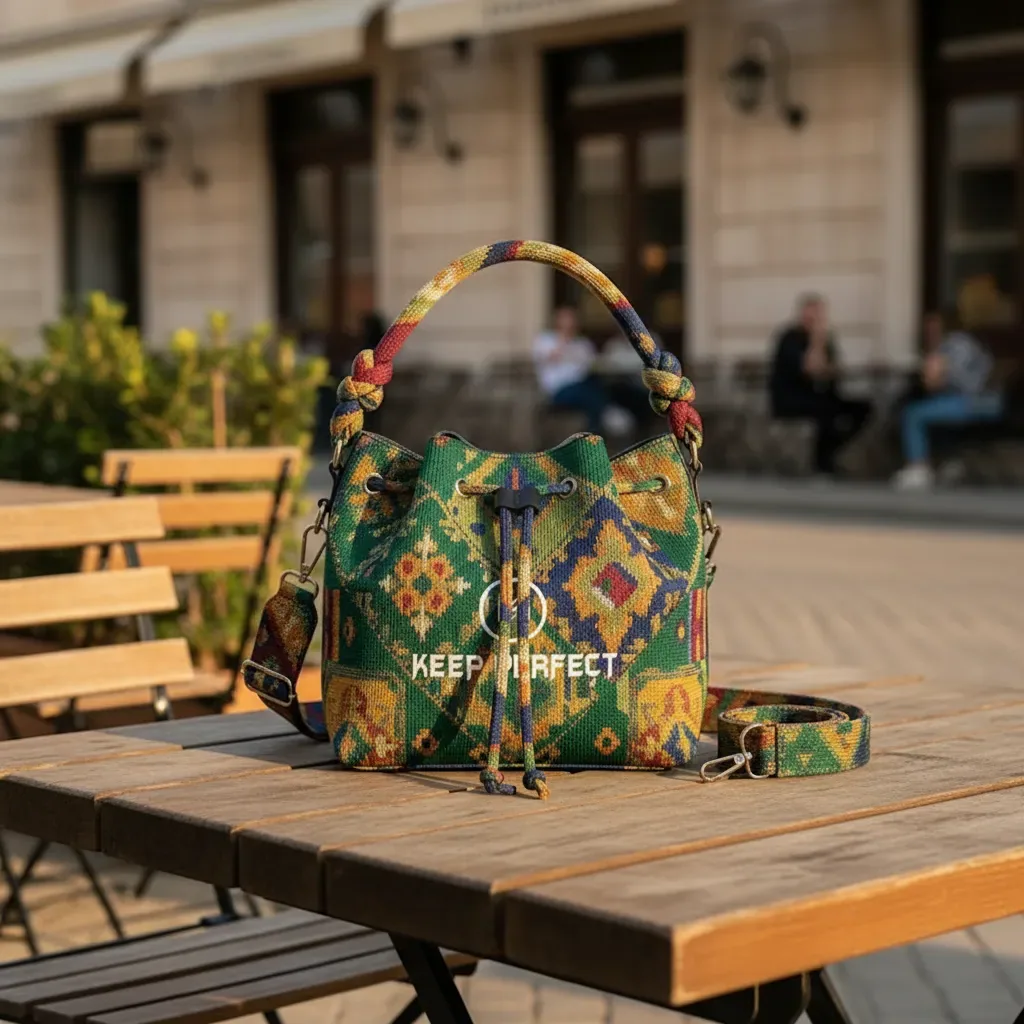
Recycled polyamide 6 comes from three main streams, and knowing which one you are buying explains most of the performance variation. Post-industrial waste from fibre and film production is the cleanest input and gives the most consistent yarn. Discarded fishing net, often called ghost net, is a post-consumer stream with real marketing value but more contamination and more colour variation. Carpet face fibre is a third stream, usually depolymerised or mechanically reprocessed depending on the route.
The route matters as much as the input. Mechanical recycling melts and re-extrudes the polymer, which shortens chains and costs tenacity. Chemical depolymerisation returns the material to caprolactam and repolymerises it, which recovers close to virgin performance at a higher cost and a much larger minimum. For a knitted bag programme at 100 pcs per style and colourway, mechanical recycling is the realistic route, and the spec should be written around its actual numbers rather than around the idealised ones.
There is a practical consequence for colour. Recovered polyamide carries a base tint that is rarely neutral, and mechanically recycled yarn tends toward a slightly grey or yellow cast. That limits the palette: bright whites and very pale shades are hard to achieve consistently on a recycled polyamide base. Plan the colour range around mid to dark shades on the first recycled programme, and treat optical white as a development project rather than a colourway choice.
Recycled nylon in one line
- Mechanically recycled PA6 at about 4.0 cN/dtex, best on mid to dark colourways, documented by a GRS transaction certificate issued against the delivered lot.
How Much Strength Do You Give Up?
Plan on roughly 10%. Virgin filament PA6 delivers about 4.5 cN/dtex tenacity with around 28% elongation at break; mechanically recycled PA6 typically lands near 4.0 cN/dtex with elongation closer to 26%. On a knitted bag panel that translates to a lower breaking force under ISO 13934-1 at the same count and gauge, and the size of the drop depends on how much of the yarn is recycled and how many times the polymer has been reprocessed.
The compensation is a choice between three levers, and the most economical one is usually structural rather than material. Increase count from 300D to 450D and the panel regains the lost strength but adds mass and cost. Shorten loop length and the panel gets denser and stronger without a heavier yarn, at the cost of a firmer hand. Add a zoned tuck structure in the base and handle roots and the strength goes exactly where it is needed. Most programmes do best with the third option plus a modest count increase.
It is also worth asking what the strength is actually for. A tote that carries 6 kg needs far less tensile capacity than a duffel that carries 15 kg, and recycled polyamide comfortably clears the first case at standard construction. Where recycled yarn struggles is in impact loading, because the lower elongation means less energy absorbed before failure. If the bag is likely to be dropped while loaded, that is the point at which the recycled option needs a structural answer rather than a material one.
What Changes in Dyeing and Colour?
Recycled polyamide dyes with acid dyes like virgin PA6, but it takes dye faster and less evenly because the recovered polymer has a broader molecular weight distribution. In practice that means higher exhaustion at the start of the cycle and a greater risk of unlevel dyeing on pale shades. The practical control is a slower ramp and a properly sequenced leveling agent, which adds process time rather than cost, and a lab dip on the actual production lot rather than on a representative one.
Fastness is where recycled yarn most often surprises buyers. Wash fastness by ISO 105-C06 and light fastness by ISO 105-B02 are normally achievable at grade 4 on mid and dark shades, but deep shades on recycled polyamide can struggle with wet crocking under AATCC 8. The remedy is a thorough reduction clear after dyeing rather than a different dyestuff class. Write the fastness floors into the yarn spec before the dye route is planned, because fixing crocking after bulk has been knitted means re-processing finished panels.
- Tenacity
- about 4.0 cN/dtex recycled against about 4.5 cN/dtex virgin
- Elongation at break
- about 26% recycled against about 28% virgin
- Moisture regain
- around 4.5%, the same order as virgin polyamide
- Melting range
- near 220°C, so heat setting stays below that
- Dye class
- acid dyes, slower ramp with a leveling agent
- Wash fastness target
- ISO 105-C06 grade 4
- Light fastness target
- ISO 105-B02 grade 4
- Crocking target
- AATCC 8 grade 4-5 dry, grade 4 wet
Which Counts and Gauges Does Recycled PA6 Run On?
Recycled polyamide is produced in the same count range as virgin, so 150D, 300D, 450D and 600D are all available, and the gauge mapping is unchanged: 150D at E12 to E14 for liners, 300D at E12 for bodies, 600D at E7 for base panels. The difference is consistency. Recycled filament yarn tends to show more count variation within a lot than virgin, and count variation shows up on a knitted panel as stitch density variation, which reads as a visual defect even when no mechanical test fails.
The control is a tighter incoming tolerance and a slightly more forgiving knitting setup. Ask for a count tolerance in the yarn spec, typically ±3% on denier, and set loop length with enough margin that a thin section still forms a clean loop. Where a programme is running a large single-colour panel, that margin matters more than it would on a small bag, because density variation across a big flat surface is far easier to see than across a small one.
| Parameter | Virgin PA6 | Recycled PA6 | What to change in the spec |
|---|---|---|---|
| Tenacity | about 4.5 cN/dtex | about 4.0 cN/dtex | raise count or shorten loop length |
| Elongation at break | about 28% | about 26% | add zoned structure for impact cases |
| Count tolerance | tight | wider, specify ±3% | write the tolerance into the yarn spec |
| Base colour | near neutral | grey to yellow cast | plan mid to dark colourways |
| Wet crocking | grade 4-5 typical | can fall to grade 3-4 on deep shades | require a reduction clear after dyeing |
| Price per kilogram | baseline | premium | weigh against fabric mass saved by zoned design |
| Documentation | composition report | GRS transaction certificate per lot | request at yarn booking |
How Is the Recycled Claim Documented?
The document that supports a recycled claim for resale is the GRS transaction certificate issued against the delivered yarn lot, stating the recycled percentage by mass. Under the Textile Exchange framework, a GRS claim requires a minimum of 20% recycled content, and a higher threshold applies before the GRS mark can be used on packaging. A mill scope certificate proves the mill is certified but says nothing about the yarn in your shipment, and a hangtag logo proves nothing at all.
Request the certificate at yarn booking rather than at shipment approval. Certificates are issued against lots, and lots exist before panels do, so asking early means a scope problem lands on yarn rather than on finished goods. Check three things when it arrives: the recycled percentage matches what you intend to print, the lot number matches the cone labels, and the scope covers a spun yarn rather than a chip or flake input, because certification at flake stage does not automatically carry through to yarn.
What Does Recycled PA6 Cost Compared With Virgin?
Recycled polyamide carries a premium per kilogram over virgin, and the premium is largest on small lots because the recycled route has minimum batch economics at the spinning and dyeing stages. At 100 pcs per style and colourway the premium is real, and it is worth pricing both options before deciding rather than assuming the recycled route is a cost saving. It is generally not; it is a marketing and compliance decision that happens to have a cost.
The premium can be partly offset in the design. Because recycled yarn is slightly weaker, there is a temptation to simply add mass, which compounds the cost: more kilograms and a higher price per kilogram. The better approach is zoned structure, which puts density where the load is and keeps total mass down. A programme designed that way often lands within a few percent of a virgin programme on total fabric cost, because the mass saved offsets part of the yarn premium.
- Price both routes before choosing; the recycled route is usually a premium, not a saving.
- Do not compensate for lower tenacity by adding mass everywhere; that compounds the premium.
- Use zoned tuck or float structures so added density sits in the base and handle roots only.
- Confirm dye lot minimums early, because recycled lots often carry higher batch minimums.
- Ask whether the premium shrinks at higher volume, and at what quantity.
Which Tests Should a Recycled Nylon Panel Clear?
The test set is the same as for virgin, with two additions. Keep tensile by ISO 13934-1, abrasion by ISO 12947-2 and tear by ISO 13937-2, set the floors at the level the bag actually needs rather than at the level virgin yarn happens to reach, and add a colour transfer check and a lot-to-lot colour check. The additions matter because recycled yarn varies more in count and in base tint, and both variations show up as colour before they show up as a failed mechanical test.
Set the abrasion floor realistically. A recycled polyamide panel at 300D and E12 typically reaches around 22,000 to 25,000 Martindale cycles at 12 kPa against roughly 25,000 to 30,000 for the virgin equivalent. That is a small gap and it is usually enough for retail use, but a spec written at 40,000 cycles will force a heavier yarn and erase the cost advantage of the design. Write the floor from the use case, not from the virgin baseline.
ISO 13934-1 tensile
Set the floor from the load case, not from the virgin baseline. A 300D recycled polyamide panel at E12 typically clears 400 N, against about 450 N for virgin.
ISO 12947-2 abrasion
Expect around 22,000 to 25,000 cycles at 12 kPa against roughly 25,000 to 30,000 for virgin. Raise the floor only in the base zone.
ISO 13937-2 tear
Around 32 N for a recycled mid-weight panel against about 35 N for virgin, enough to stop a snag becoming a split.
AATCC 8 crocking
Grade 4-5 dry and grade 4 wet. Deep shades on recycled polyamide need a reduction clear to hold the wet rating.
How Do You Write Recycled PA6 Into the Spec?
A recycled polyamide spec has to say more than a virgin one, because the material varies more. Write the polymer and the recycled route, the recycled percentage, the count and filament with a tolerance, the gauge and loop length, the mechanical floors with the standards, the colour reference with tolerance, and the document required. One extra clause is worth adding: a statement that the recycled percentage on the certificate must match the percentage printed on the product.
Two clauses prevent the most common disputes. First, fix the dye lot rule, because recycled yarn shows more lot-to-lot colour variation and two lots placed in one bag will show a visible line. Second, set a count tolerance, because recycled filament varies more within a lot and the variation shows as density change on a knitted panel. Both are checkable at yarn approval and neither is fixable after bulk has started.
- Name the polymer and route: mechanically recycled PA6, with input stream if it matters to the claim.
- State the recycled percentage and require the certificate to match what is printed.
- Set count and filament with a tolerance, typically ±3% on denier.
- Set gauge and loop length, and leave margin so a thin section still forms a clean loop.
- Set mechanical floors with standard numbers, written from the use case rather than the virgin baseline.
- Fix the dye lot rule and require a single lot per programme.
- Require a GRS transaction certificate for the delivered lot, requested at yarn booking.
What Goes Wrong in Bulk and How Do You Prevent It?
Three things go wrong repeatedly on recycled polyamide programmes, and all three are visible at yarn approval if someone looks. The first is lot colour drift, which shows as a seam-like line where panels from two lots meet. The second is count variation, which shows as density change across a large panel. The third is a certificate that covers a previous lot, which shows up at retail onboarding rather than in the goods at all.
The prevention is a short incoming check rather than a complex one. Weigh a known length of yarn to confirm count, knit a small swatch and compare it against the approved swatch under the specified illuminant, and match the certificate lot number to the cone labels. That is perhaps thirty minutes per lot and it catches all three problems while they are still yarn problems. Bulk runs 30 days from approved sample, and a lot problem found on day one costs a re-order; the same problem found on day twenty costs the season.
When Should You Choose Recycled PET Instead?
Recycled polyester is the better choice whenever shock recovery is not the deciding property. It is the more mature recycled route, it varies less between lots, it costs less per kilogram than recycled polyamide, and it holds pale colourways better because bottle flake is a cleaner input than recovered net. For a promotional tote, a liner, or any bag where the load case is modest, recycled PET will give a steadier programme at a lower price.
Recycled polyamide earns its place where the bag takes repeated impact or where the hand matters. Polyamide recovers from stretch in a way polyester does not, which is why handle roots on a heavily loaded bag behave better in PA6, and the surface reads warmer and less plastic. The honest recommendation is to run the decision as a load case question: if the answer involves impact or repeated flexing, pay for recycled polyamide; if it involves carrying weight steadily, recycled polyester is the more reliable route.
Choosing between recycled PA6 and recycled PET
- Impact and flexing point to recycled polyamide.
- Steady load, pale colourways and lot stability point to recycled polyester.
- Both need a GRS transaction certificate against the delivered lot.
Price a recycled nylon programme against virgin
Send the bag type, load case and colourway range. We will quote both routes at 100 pcs per style and colourway on FOB Xiamen, confirm yarn availability for the 7 working day sampling window, and state which recycled percentage can be documented. Start on the contact page.
Frequently Asked Questions
What is recycled nylon yarn made from?
Mechanically recycled polyamide 6 is recovered from post-industrial fibre waste, discarded fishing net and carpet face fibre, then melted and re-extruded. The input stream explains most of the performance variation: post-industrial waste is the most consistent, while recovered net brings contamination and colour variation along with its marketing value.
How much weaker is recycled nylon than virgin nylon?
Plan on about 10%. Virgin filament PA6 delivers roughly 4.5 cN/dtex with around 28% elongation, while mechanically recycled PA6 lands near 4.0 cN/dtex with elongation closer to 26%. On a panel that becomes a lower breaking force under ISO 13934-1 at the same count and gauge.
Can recycled nylon meet the same abrasion floor as virgin?
Usually, within a small gap. A 300D recycled polyamide panel at E12 typically reaches around 22,000 to 25,000 Martindale cycles at 12 kPa under ISO 12947-2, against roughly 25,000 to 30,000 for virgin. A floor of 40,000 cycles would force a heavier yarn and remove the design advantage.
Why are pale colours harder on recycled nylon?
The recovered polymer carries a base tint, usually grey to yellow, so bright whites and very pale shades are inconsistent. Recycled polyamide also takes acid dye faster and less evenly, because the molecular weight distribution is broader. Plan mid to dark colourways for a first recycled programme and treat optical white as a development project.
Which dye class is used for recycled polyamide?
Acid dyes, the same class as virgin polyamide. The process control differs rather than the chemistry: a slower ramp and a properly sequenced leveling agent reduce the risk of unlevel dyeing, and a lab dip should be run on the actual production lot rather than on a representative one.
How is wet crocking held on dark recycled nylon?
With a thorough reduction clear after dyeing rather than a different dyestuff class. Deep shades on recycled polyamide can fall to grade 3-4 on AATCC 8 wet crocking, and the remedy is process rather than chemistry. Write the fastness floor into the spec before the dye route is planned.
What document proves a recycled nylon claim?
A GRS transaction certificate issued against the delivered yarn lot, stating the recycled percentage by mass. Under the Textile Exchange framework a GRS claim requires a minimum of 20% recycled content, with a higher threshold before the GRS mark is used on packaging. A mill scope certificate does not cover a shipment.
Does recycled nylon cost more than virgin nylon?
Yes, per kilogram, and the premium is largest on small lots because the recycled route has minimum batch economics at spinning and dyeing. It is usually a marketing and compliance decision rather than a cost saving. Part of the premium can be offset by zoned structure that keeps total fabric mass down.
What counts and gauges does recycled nylon run on?
The same range as virgin: 150D at E12 to E14 for liners, 300D at E12 for bodies, 600D at E7 for base panels. The difference is consistency, so write a count tolerance of about ±3% on denier into the yarn spec and leave loop length margin so a thin section still forms a clean loop.
Why does recycled nylon vary more between lots?
Because the input stream varies. Recovered polymer has a broader molecular weight distribution and a less consistent base tint, which shows as colour and count variation before it shows as a failed mechanical test. Fix a single dye lot per programme and set a count tolerance to control it.
What should be checked when a recycled yarn lot arrives?
Three things: weigh a known length to confirm the count, knit a small swatch and compare it with the approved swatch under the specified illuminant, and match the certificate lot number to the cone labels. That takes about thirty minutes and catches the lot problems while they are still yarn problems.
When is recycled polyester the better choice?
Whenever shock recovery is not the deciding property. Recycled PET is the more mature route, varies less between lots, holds pale colourways better and costs less per kilogram. Choose it for promotional totes, liners and steady load cases, and reserve recycled polyamide for impact and repeated flexing.
Can recycled nylon be used in a load-bearing handle?
Yes, with a structural answer. The lower elongation means less energy absorbed before failure, so a handle root should carry a zoned denser structure and a wider webbing attachment rather than relying on the yarn alone. Test the assembled handle under static load rather than the fabric strip.
Does recycled nylon change the GSM of the panel?
No. Fabric mass is a function of count, gauge and loop length, not fibre origin. What changes is the strength available at that mass, so a recycled panel may need a marginally denser structure to hit the same tensile floor that virgin yarn reaches at the same GSM.
How early should the recycled certificate be requested?
At yarn booking. Certificates are issued against lots and lots exist before panels do, so requesting early means a scope problem lands on yarn rather than on finished goods. Requesting after bulk knitting moves the same problem onto completed panels and costs the full lot.
What happens if the recycled percentage changes between lots?
The printed claim has to change with it, and the certificate has to be reissued. A programme should require the certificate percentage to match the percentage printed on the product, so a drift in recycled content is caught at documentation stage rather than at a retail audit.
People Also Ask
Is recycled nylon strong enough for bags?
Yes for most load cases. At about 4.0 cN/dtex against 4.5 for virgin, a 300D recycled panel at E12 typically clears 400 N tensile and 22,000 to 25,000 Martindale cycles, which suits retail use. Impact loading is the case that needs a structural answer.
What is the minimum recycled content for a GRS claim?
Under the Textile Exchange framework a GRS claim requires a minimum of 20% recycled content by mass, with a higher threshold applying before the GRS mark can be used on packaging. The transaction certificate states the actual percentage for the delivered lot.
Why is recycled nylon harder to colour match?
The recovered polymer carries a grey to yellow base tint and takes acid dye faster and less evenly because of a broader molecular weight distribution. Mid to dark shades run reliably; pale shades need a lab dip on the production lot.
Should a first recycled programme use dark colours?
Usually yes. The base tint of recovered polyamide makes bright whites and very pale shades inconsistent, so starting with mid to dark colourways reduces sampling rounds and keeps the dye route predictable.
How do you stop lot variation in recycled yarn?
Require a single dye lot per programme, set a count tolerance near ±3% on denier, and run a thirty minute incoming check: weigh a known length, knit a comparison swatch, and match certificate lot to cone label.
Sources and further reading
Every figure on this page is either our own programme data or attributed below. Open the originals before you write them into a specification.
- Textile Exchange standardsTextile Exchange Framework behind the GRS transaction certificate and the recycled content thresholds used for resale claims.
- OEKO-TEX STANDARD 100OEKO-TEX Finished-fabric certificate to request when a recycled yarn replaces the certified material in a specification.
- Substances restricted under REACHECHA Restricted substance reference for recycled inputs, where recovered streams carry higher contamination risk.
- EU strategy for sustainable and circular textilesEuropean Commission Policy driver behind recycled content requirements and digital product information for textiles placed on the EU market.
- ISO 2859-1:1999 Sampling procedures for inspection by attributesISO Sampling plan behind the AQL 2.5 inspection applied at final inspection.