Recycled Polyester Yarn for Knitted Bags: How One 12,000-Piece Programme Switched From Virgin to rPET
Is recycled polyester yarn good enough for a knitted bag programme? Yes, provided the specification is written around the two things rPET does differently: it loses roughly 0.4 cN/dtex of tenacity through the extra melt cycle, and it needs a transaction certificate for every shipment. A 300D/96f rPET at 4.2 cN/dtex runs cleanly at E12 for totes and gym bags. MOQ 100 pcs per style/colourway, sampling 7 working days, bulk 30 days, FOB Xiamen.

The Enquiry That Came With a Four-Week Approval Window
A 12,000-piece tote programme with a four-week approval window is the hardest kind of recycled yarn brief, because the certificate trail always moves slower than the knitting.
The brief arrived as a single paragraph and a photograph: a soft-structured shopper, 380 x 400 mm, flat webbing handles, and a requirement that the shell carry a recognised recycled-content claim. The buying team wanted the claim on the hangtag, which meant the claim had to survive an audit rather than just a marketing review. The technical side was straightforward; the documentation side was what threatened the calendar.
We split the work in two and ran them in parallel. The technical track knitted the sample from 300D/96f rPET at E12 and measured it against the virgin-polyester reference the buyer had been running for two seasons. The documentation track chased the transaction certificate for the specific yarn lot and the scope certificate for the spinner. The sample was approved in the 7-working-day sampling window. The certificate took nine days longer, and that is the number worth planning around.
What rPET Actually Is: Flake, Chip and Filament
Recycled polyester reaches a knitting machine as filament yarn, but it starts as bottle flake, and every melt cycle between flake and filament costs intrinsic viscosity and tenacity.
The mechanical route runs collected bottles through sorting, washing and grinding into flake, then melt-extrudes the flake into chips, then spins the chips into filament. Virgin bottle-grade PET enters that route at an intrinsic viscosity near 0.80 dl/g and comes out of the second melt closer to 0.72 dl/g. The measurable consequence at the yarn stage is tenacity: a virgin 300D textured polyester sits around 4.6 cN/dtex, and the equivalent rPET lands closer to 4.2 cN/dtex.
The chemical route depolymerises the feedstock back to monomer and repolymerises it, producing material that is analytically indistinguishable from virgin. It solves the tenacity question and the colour-cast question at once, and it carries a higher price and far less available capacity. For a 12,000-piece seasonal programme the mechanical route is normally the realistic one; for a programme that must match a bright brand shade year after year, the chemical route earns its premium. The Textile Exchange standards page sets out which claims each route supports.
Three Numbers That Decide Whether a Recycled Lot Will Run
Denier, filament count and tenacity in cN/dtex are the three yarn numbers that decide whether a recycled lot knits cleanly at a given gauge.
| Yarn | Tenacity (cN/dtex) | Typical knit gauge | Best fit | Watch point |
|---|---|---|---|---|
| 150D / 48f rPET | 4.4 | E14 | Pouches, linings, sleeves | Snagging on coarse needles |
| 300D / 96f rPET | 4.2 | E12 | Totes, shoppers, gym bags | Cover on dark linings |
| 450D / 144f rPET | 4.0 | E12 | Weekenders, structured totes | Handle extension under load |
| 600D / 192f rPET | 3.8 | E7 | Duffels, base panels | Bulk at folded corners |
Denier sets the yarn diameter, and diameter has to suit the needle hook. Running 600D at E14 is possible on some machines and produces a stiff, boardy fabric with poor recovery; running 150D at E7 produces an open, unstable structure. The useful pairing is 300D at E12, which is why it appears in most knit bag programmes. Filament count matters more than buyers expect: a 300D/96f yarn is softer in the hand and more abrasion-resistant than a 300D/48f of the same denier, because the load is spread across more filaments.
Where Recycled Yarn Behaves Differently on the Machine
Recycled polyester knits about 2 to 3 per cent tighter than virgin in loop formation, so the fix is a small loop-length compensation in the programme, not a change of machine or needle.
- Yarn
- 300D / 96f rPET, mechanical route
- Tenacity
- 4.2 cN/dtex (virgin equivalent 4.6)
- Intrinsic viscosity
- 0.72 dl/g
- Loop length compensation
- +0.15 mm against virgin setting
- Knitting gauge
- E12
- Shell GSM target
- 520 g/m²
- Heat setting
- 130 °C, 2.8 % residual shrinkage
- Abrasion target
- 40,000 cycles to ISO 12947-2 at 12 kPa
- Colour tolerance
- Delta E 1.2 against approved swatch
- Dye lot minimum
- 300 kg per colour
The tighter loop formation comes from slightly higher yarn-to-metal friction in recycled filament, which varies more between lots than virgin does. In practice that means the technician should check loop length at the start of every lot rather than once at the start of the programme, and the specification should state loop length in millimetres rather than delegating it to a machine setting number. A 0.15 mm difference is invisible in a swatch and obvious in a 12,000-piece run.
Tension consistency is the other variable. Recycled filament with a denier tolerance of ±2 per cent will show as barré — faint horizontal bands — in a plain jersey body but is largely hidden in a rib or a textured structure. Where a style must run plain, ask for the lot to be knitted in a single yarn lot and cross-check the lot number against the transaction certificate before the bulk slot is booked.
Certificate Files, Not Certificate Logos
The document that matters is the transaction certificate for the specific shipment, because it is the only paper that ties a recycled claim to the yarn actually loaded on the machine.
Transaction certificate
Issued per shipment by an approved certification body, naming the seller, the buyer, the product and the recycled percentage. Without it the claim cannot be carried onto a hangtag.
Scope certificate
Shows that the spinner or texturiser itself is certified and lists which processes the certificate covers. It supports the transaction certificate but does not replace it.
Test report
Tenacity in cN/dtex, elongation and shrinkage measured on the delivered lot, so the knitting programme can be set to the yarn that arrived.
Chemical statement
REACH and Prop 65 declarations for the dyed fabric, plus OEKO-TEX STANDARD 100 where the retailer requires it.
The certificate chain is why recycled programmes slip. Knitting a 300D rPET sample takes 7 working days; getting a transaction certificate for the lot the sample was knitted from can take another nine to twelve days depending on where the spinner sits in the queue. Book the certificate request the same week the yarn is ordered, not the week the sample is approved.
Colour Matching Across Recycled Lots
Recycled base polymer carries a grey cast, so a bright brand shade needs more colourant and a wider tolerance band than the same shade on virgin polyester.
The practical consequence is visible in the mid-tones. A heathered grey or a charcoal runs almost identically on rPET and virgin; a saturated cobalt or a bright coral does not, because the grey cast in the base polymer eats into the chroma. Agreeing Delta E 1.2 instead of the Delta E 1.0 typical of virgin programmes removes most disputes at goods-in without changing what the customer sees on the shelf.
Dope dyeing changes this calculus and is worth considering where a programme runs a small number of high-volume shades. Adding pigment at the spinner rather than dyeing the finished fabric gives better light fastness and lower water use, but it requires committing to a 300 kg minimum per colour. That suits a core shade that repeats across seasons; it does not suit a fashion shade that may not return.
Cost and Calendar: What Actually Changes
Switching a 300D style from virgin to recycled polyester adds roughly 10 to 20 per cent to yarn cost and two to three weeks to first delivery, and almost all of that delay sits in documentation rather than knitting.
On the cost side, the premium covers flake sorting, the extra melt filtration and the certification fees. It does not change the machine time: an E12 body still takes about 11.5 minutes of knitting whichever yarn is loaded. That is the useful framing for a costing conversation — the premium is a material cost, not a conversion cost, so it scales with grams and can be reduced by adjusting GSM rather than by changing the yarn.
On the calendar side, the production slot is unchanged at 30 days for bulk. What moves is the approval date, because the recycled-content claim has to be documented before the goods ship. Programmes that run recycled season after season solve this by keeping one standing yarn lot on the certificate; programmes that change shade every season absorb the delay each time.
Three Checks Before Approving a Recycled Yarn Lot
Three documents settle whether a recycled lot can go on the machine: the transaction certificate for the lot, the tenacity test report, and the dye-lot reference.
- Transaction certificate — check the lot number on the cone matches the lot number on the certificate, and that the recycled percentage matches what the hangtag will claim.
- Tenacity report — confirm the delivered lot reaches 4.2 cN/dtex or whatever figure the specification states; a lot 5 per cent low will change loop length and finished GSM.
- Dye-lot reference — keep a retained swatch from the approved lot so the next season's lot can be compared under the same light source.
- Gauge confirmation — record which machine and gauge produced the approved sample, since the same yarn behaves differently at E7, E12 and E14.
These four items take an afternoon to assemble and remove most of the arguments that surface later. They also make the annual audit straightforward, which is the part of a recycled programme that buying teams tend to underestimate in the first season.
When Virgin Polyester Is Still the Better Specification
Virgin polyester remains the right call when a style needs a very bright shade, a very fine filament, or a delivery slot that cannot absorb a certificate delay.
Bright shades are the clearest case. If the brand colour sits at the edge of what polyester can produce, the grey cast in mechanically recycled polymer will move it off-brand, and the chemical-recycled alternative may not be available at the volume required. Fine filaments are the second case: a 150D/48f rPET can show more filament breakage during texturing, which shows up as a slightly hazy surface on a dark shade.
The third case is purely commercial. Where a programme is re-ordering a core style with a short window, the certificate chain may not fit. In that situation the honest recommendation is to run virgin for the urgent delivery and convert the next cycle, rather than to ship a recycled claim on paper that has not cleared.
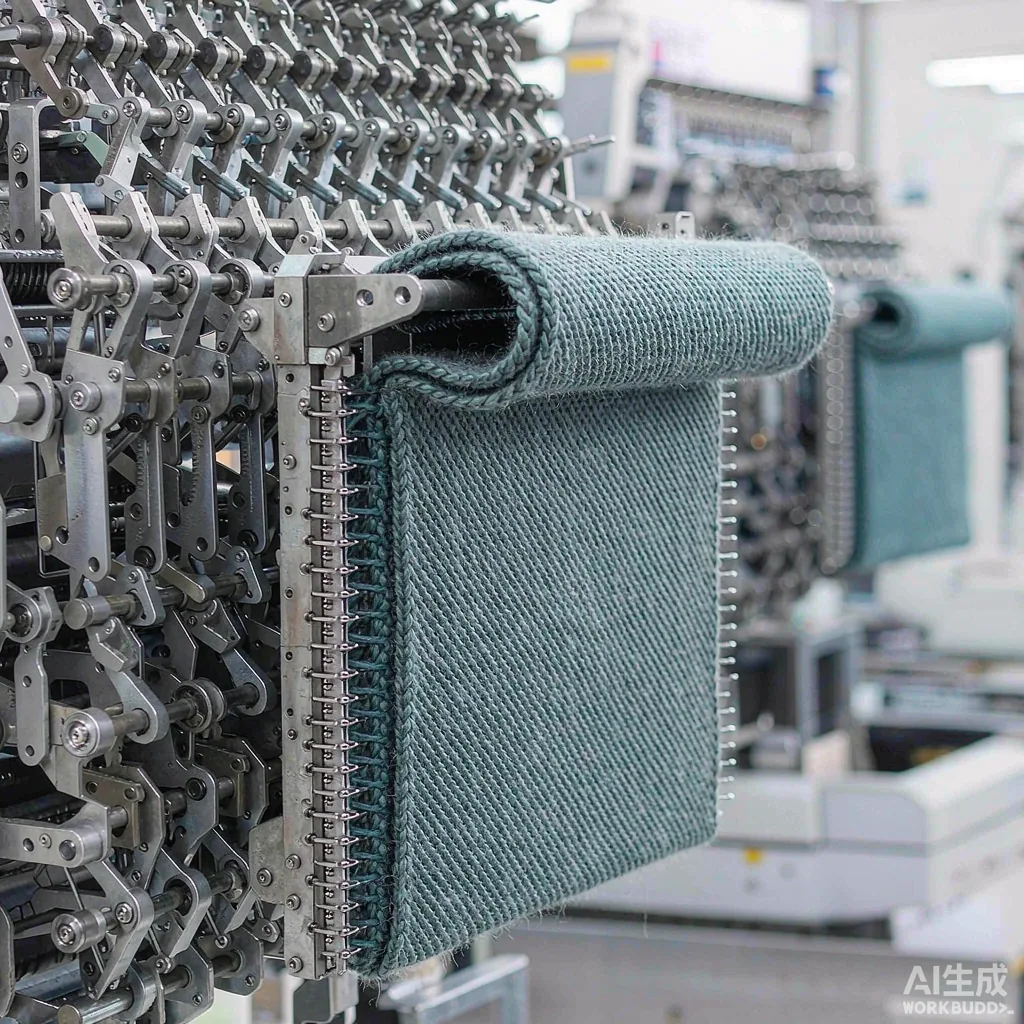
One recurring question is whether the recycled route changes the knitting programme itself. It does, but only slightly. Loop length is the main variable: recycled filament forms a marginally tighter loop under the same setting, so carrying a virgin setting across produces a body a few per cent heavier in GSM than intended. Re-setting loop length at the start of each lot is the whole correction.
The other variable is tension consistency. Recycled filament with a denier tolerance of ±2 per cent will show as barré in a plain jersey body but is largely hidden in a rib or textured structure. Where a style must run plain, keep the production lot to a single yarn lot and cross-check the lot number against the transaction certificate before the bulk slot is booked.
Convert a style to recycled yarn
Send the current yarn specification and target shade and we will return a recycled alternative with tenacity, GSM, certificate requirements and a sampling slot. Request a recycled yarn comparison
Frequently Asked Questions
What is recycled polyester yarn made from?
Most recycled polyester yarn used in knit bags comes from post-consumer PET bottles. Bottles are sorted, washed and ground into flake, the flake is melt-extruded into chip, and the chip is spun into filament. A chemical route depolymerises the feedstock back to monomer instead, producing material that performs like virgin.
How much weaker is recycled polyester than virgin?
The gap sits around 0.4 cN/dtex in the deniers used for bags. Virgin 300D textured polyester measures close to 4.6 cN/dtex, and the mechanical rPET equivalent lands near 4.2. A programme absorbs the difference by re-setting loop length for the delivered lot rather than by changing construction.
Which denier of rPET suits a knitted tote?
300D/96f is the default for shoppers and gym bags knitted at E12, giving a shell near 520 g/m² with good cover. Move to 450D/144f for a structured weekender that must hold its shape, and down to 150D/48f at E14 for pouches, linings and sleeves.
What is a GRS transaction certificate?
It is the shipment-level document issued by an approved certification body that records the seller, the buyer, the product and the recycled percentage. It is the paper that lets a recycled-content claim travel with the goods and appear on a hangtag, and it is issued per shipment rather than once a year.
How long does a recycled yarn certificate take?
Plan for nine to twelve working days from the request to the issued transaction certificate, on top of the 7 working days for sampling. The delay is administrative queueing at the certification body, so the request belongs in the same week the yarn is ordered.
Does recycled polyester change the colour of a knitted bag?
It can, because mechanically recycled base polymer carries a slight grey cast. Heathers, charcoals and mid-tones transfer almost unchanged, while saturated brights lose chroma. Agreeing a slightly wider tolerance, around Delta E 1.2 rather than 1.0, removes most disputes at goods-in. Ask the spinner for the certificate that covers this specific lot.
What does recycled polyester cost compared with virgin?
Expect a premium in the 10 to 20 per cent range on yarn, covering flake sorting, additional melt filtration and certification fees. Machine time is unchanged, so the premium is a material cost that scales with grams and can be managed through GSM. Confirm this on a knitted panel rather than on the yarn cone.
Can recycled yarn be used for knitted bag handles?
Yes, but check extension rather than strength alone. A 22 mm handle knitted in 620 g/m² rPET reaches roughly 460 to 480 N to ISO 13934-1, which is ample; the risk is permanent extension after a static 8 kg hold, so set a 4 mm recovery limit.
Is recycled polyester less abrasion resistant?
Marginally. Lower tenacity shows up as roughly 5 to 10 per cent fewer cycles to breakdown. A two-layer base knitted from 300D rPET still reaches about 40,000 cycles to ISO 12947-2 at 12 kPa, which clears most retail luggage requirements. Record it on the tech pack so the next lot can be compared.
What is a good first recycled yarn specification?
Start with 300D/96f post-consumer rPET at E12, targeting about 520 g/m², plated or single depending on the structure. Confirm tenacity on the delivered lot and book the transaction certificate in the same week as the yarn order. Most programmes verify this before the bulk yarn is committed.
How is a recycled-content claim checked at goods-in?
Confirm the transaction certificate lot number matches the cones on the floor, review the tenacity report to ISO 13934-1, and approve a lab dip against the retained swatch. Inspection itself follows AQL 2.5 to ISO 2859-1. Treat any figure without a test report behind it as provisional.
Does rPET run differently on the knitting machine?
Slightly. The extra melt cycle lowers intrinsic viscosity to about 0.72 dl/g, which makes the yarn less forgiving of high tension. The standard correction is to open loop length by about 0.15 mm and check tension at the start of each lot.
How many pieces are needed for a recycled yarn colour?
MOQ is 100 pcs per style/colourway, but most spinners set a dye or masterbatch lot minimum near 300 kg. At a 520 g/m² shell that is roughly 500 mid-size totes before the colour can be spun. Check whether the spinner can hold this across repeat orders.
People Also Ask
What does GRS certification actually verify?
It verifies recycled content and chain of custody, and adds social, environmental and chemical criteria. Certification starts at 20 per cent recycled content, while a consumer-facing claim on a hangtag requires 50 per cent.
How is recycled polyester tested before bulk knitting?
By measuring tenacity and elongation to ISO 13934-1 on the delivered lot, checking intrinsic viscosity, and approving a lab dip against the retained reference swatch under an agreed light source.
Can rPET be used in a seamless knit bag body?
Yes. A 300D/96f rPET knitted at E12 gives a shell near 520 g/m² with good cover, and the recycled-content certificate travels with the shipment as a transaction certificate.
Does recycled yarn affect the knitting programme?
A little. Slightly higher yarn-to-metal friction means loop length should be re-set, about 0.15 mm more open than the virgin setting, and tension should be checked at the start of every lot.
What is the difference between mechanical and chemical recycling?
Mechanical recycling re-melts flake into chip, losing about 0.4 cN/dtex. Chemical recycling returns the material to monomer, giving virgin-equivalent performance at higher cost and lower available capacity. Compare it with a virgin control knitted to the same specification.
Sources and further reading
Every figure on this page is either our own programme data or attributed below. Open the originals before you write them into a specification.
- Standards — Recycled Claim Standard and Global Recycled StandardTextile Exchange Sets out the chain-of-custody and transaction certificate requirements that a recycled-content claim for knitted bags must satisfy.
- GRS-202 Guide to Recycled MaterialsTextile Exchange Guidance on recycled input definitions, recycled percentage calculation and documentation for the Global Recycled Standard.
- ASTM D5035 Breaking Force and Elongation of Textile Fabrics (Strip Method)ASTM International Test method behind the tenacity and breaking force figures quoted for recycled and virgin polyester bag yarns.
- OEKO-TEX STANDARD 100OEKO-TEX Restricted substance testing standard that retailers typically add on top of a recycled-content claim for knitted bag fabrics.