Nylon vs Polyester Knitted Bag Yarn: The 12-Point Checklist Buyers Run Before Approving a Lot
Which yarn is right for a knitted bag programme, nylon or polyester? Nylon 6.6 wins on abrasion and handle, reaching around 60,000 Martindale cycles against 40,000 for polyester, and it is about 17 per cent lighter by volume. Polyester wins on cost, dimensional stability and colour fastness, absorbing 0.4 per cent moisture against nylon's 4.5 per cent. MOQ 100 pcs, sampling 7 working days, bulk 30 days, FOB Xiamen.
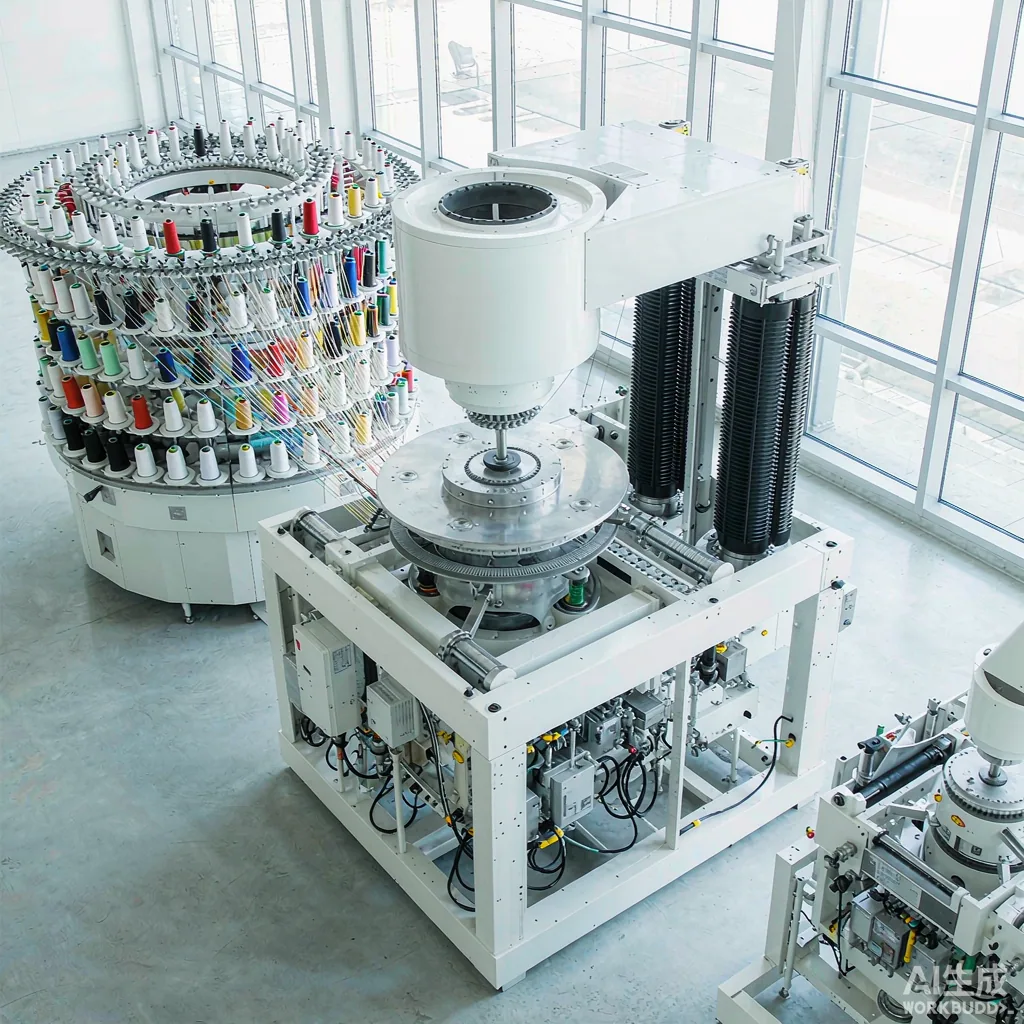
Four Questions That Eliminate Half the Options
Ask about use environment, target weight, shade depth and unit cost ceiling before comparing yarns, because those four answers decide the fibre in most knit bag programmes.
A beach tote that lives in a wet car boot, a laptop sleeve that lives in an office and a promotional shopper that ships flat have almost nothing in common technically, even though all three can be knitted at E12 from 300D. Once the use environment is fixed, the remaining variables reduce to grams and price, and the comparison becomes short.
The following twelve checks are the ones buying teams actually run. They are ordered the way the decisions happen: first whether the yarn survives the environment, then whether it knits to the target specification, then what it costs. Each check has a pass number attached so it can be dropped straight into a specification.
Checks 1 to 3: Moisture, Drying and Dimensional Stability
Nylon absorbs about eleven times more moisture than polyester at standard conditions, and that single difference drives most of the dimensional behaviour buyers notice after the first wash.
- Check 1 — Moisture regain. Nylon 6.6 sits near 4.5 per cent at 65 per cent relative humidity; polyester sits near 0.4 per cent. A nylon bag shipped from a humid port carries measurably more mass than the same bag conditioned dry.
- Check 2 — Dimensional movement. Nylon relaxes more during laundering, so a style that must hold ±3 mm on body height is easier to hold in polyester. Where nylon is specified, build in a second boarding pass.
- Check 3 — Drying and care. Nylon holds water longer after washing. For gym and swim bags this matters more than the fibre's strength advantage, and it is the reason many sport programmes still run polyester.
If the answer to all three is that the bag lives indoors and rarely gets wet, nylon keeps its advantages. If the answer involves rain, salt water or frequent washing, polyester takes the specification.
Checks 4 to 6: Tenacity, Abrasion and Tear
Nylon 6.6 filament yarn is both stronger and more abrasion resistant than polyester filament of the same denier, typically by 10 to 15 per cent on tenacity and roughly 50 per cent on Martindale cycles.
| Property | Nylon 6.6 | Polyester (PET) | Test reference | Which wins |
|---|---|---|---|---|
| Tenacity | 5.0 cN/dtex | 4.6 cN/dtex | ISO 13934-1 | Nylon |
| Abrasion, base zone | 60,000 cycles | 40,000 cycles | ISO 12947-2 at 12 kPa | Nylon |
| Tear resistance | 35 N | 28 N | ASTM D1424 | Nylon |
| Moisture regain | 4.5 % | 0.4 % | Standard conditioning | Polyester |
| Specific gravity | 1.14 g/cm3 | 1.38 g/cm3 | Fibre density | Nylon for low weight |
The density figure surprises people. Because nylon is the lighter fibre by volume, a bag knitted to the same dimensions in the same denier comes out lighter in nylon, and that matters for styles sold with a weight claim or shipped by air. The strength advantage matters most where the construction is fine: at 150D and E14, nylon's extra tenacity is the difference between a pouch that survives a season and one that does not.
Tear resistance deserves its own check because it does not track tenacity. A knit structure resists tear propagation largely through loop mobility: the more a loop can slide, the more the structure blunts a tear. Nylon's higher elasticity helps here, which is why it reaches about 35 N to ASTM D1424 against roughly 28 N for polyester at the same denier and gauge. Where a style carries a structural opening, such as a drawcord channel or a cut-out handle, that margin is the difference between a small snag and a failed bag.
Checks 7 to 9: Hand, Weight and Cover
Hand is the check most often left out of a specification and most often argued about later: nylon is softer and recovers faster, polyester is crisper and holds a shape better.
- Hand, nylon 6.6
- Softer, faster recovery from crush
- Hand, polyester
- Crisper, holds structure when empty
- Shell GSM at 300D, E12
- Nylon 495 g/m² vs polyester 520 g/m²
- Cover at 3.6 mm loop
- Comparable; nylon slightly lower
- Pilling after 7,000 cycles
- Nylon grade 4 vs polyester grade 3-4
- Stretch recovery after 30 % extension
- Nylon 97 % vs polyester 93 %
Those recovery and pilling figures are the reason nylon holds its premium in soft-structured bags. A shopper that gets crushed in a suitcase and is expected to spring back is a nylon job. The same shopper sold as a structured gift-with-purchase item that must stand up on a shelf is a polyester job, because the crisper hand does the work that would otherwise need a stiffener.
Checks 10 to 12: Dye Route, UV and Unit Cost
Nylon dyes with acid dyes at around 98 °C and polyester with disperse dyes at around 130 °C, and that difference sets the colour range, the energy cost and the choice between dope dyeing and piece dyeing.
Dye route
Nylon takes acid dye at about 98 °C, giving deep shades at lower energy. Polyester needs disperse dye near 130 °C, or pigment added at the spinner for dope-dyed shades with better light fastness.
UV behaviour
Polyester resists UV better and is the safer choice for bags used outdoors. Nylon loses strength and yellowing becomes visible on pale shades after prolonged exposure.
Unit cost
Nylon 6.6 filament typically costs 30 to 50 per cent more per kilogram than polyester filament of the same denier, which is the premium a buying team has to justify to the brand.
The dye route also decides how flexible a programme can be late in the season. Piece-dyed polyester allows a shade decision to be made after knitting, which protects against a slow-moving colour. Dope-dyed nylon locks the shade in at the spinner, which gives better fastness but commits the programme to a minimum lot earlier.
A practical way to decide is to count how many shades in the range are repeat shades. Where three or four shades return every season and two are new each time, the answer is usually mixed: dope-dye the core shades to lock fastness and reduce water use, and piece-dye the fashion shades to keep the option open. That split costs little to set up and avoids committing the whole range to one route.
Where Nylon Wins in a Knitted Bag Programme
Choose nylon 6.6 when abrasion, crush recovery or low weight is the selling point — gym bags, packable shoppers, travel pouches and anything that gets folded and stuffed repeatedly.
The abrasion margin is the strongest argument. A base zone knitted from 300D nylon 6.6 reaches around 60,000 cycles to breakdown to ISO 12947-2 at 12 kPa, roughly 20,000 cycles more than the same construction in polyester. Over a two-season life that margin is what keeps corners from going grey and furry, which is the first thing a customer notices and the last thing a lab report captures. Specifying that margin is straightforward: name the test, the load and the pass number on the tech pack, then confirm the delivered lot against it before the bulk slot is booked.
The weight argument is quieter but real. At 1.14 g/cm³ against 1.38 g/cm³, a nylon shell of identical dimensions and denier is meaningfully lighter. For a packable tote sold with a folded weight on the hangtag, that difference is the product.
Where Polyester Wins in a Knitted Bag Programme
Choose polyester when unit cost, dimensional stability, light fastness or recycled content drives the brief — promotional shoppers, retail gift programmes, outdoor totes and any style with a recycled claim.
Stability is the technical reason. With 0.4 per cent moisture regain, a polyester knit body barely moves between a humid factory and a dry warehouse, so the ±3 mm height tolerance holds without a second boarding pass. That is worth several days in the calendar on a 30-day bulk slot.
Recycled content is the commercial reason. Post-consumer rPET is available at volume with an established certification trail, whereas recycled nylon supply is thinner and pricier. A programme that requires a recognised recycled claim on the hangtag will almost always land on polyester.
The Comparison Matrix Buyers Circulate Internally
One page of side-by-side numbers is usually enough to settle the fibre choice inside a buying team, provided the numbers carry test references.
| Decision factor | Nylon 6.6 | Polyester | Comment |
|---|---|---|---|
| Abrasion | 60,000 cycles | 40,000 cycles | Nylon for bags that get dragged |
| Moisture regain | 4.5 % | 0.4 % | Polyester for wet environments |
| Dye temperature | 98 °C | 130 °C | Nylon uses less energy to dye |
| Light fastness | Grade 4 | Grade 5-6 | Polyester for outdoor use |
| Recycled availability | Limited | Established | Polyester for certified claims |
| Relative yarn cost | 130-150 | 100 (index) | Nylon carries a clear premium |
The matrix works because it forces the trade-off into the open. A programme that wants abrasion resistance, low weight and a recycled claim will not get all three from one fibre, and the matrix shows which one to give up before the sampling round starts rather than after.
The matrix is also the document that survives a change of buyer. Fibre decisions made in an email chain disappear when the person who made them moves on; a one-page comparison with test references attached to the tech pack does not. That is worth the extra hour when a style reorders eighteen months later and nobody remembers why nylon was chosen.
Five Mistakes When Switching Between the Two
Every one of these five mistakes costs a sampling round, and all five come from changing the yarn without changing the specification around it.
- Keeping the loop length. Nylon and polyester form loops differently; carry over a virgin polyester setting and the nylon body comes out loose and low in GSM.
- Keeping the board temperature. Nylon relaxes at a lower temperature, so a polyester boarding cycle over-sets it and flattens the handle.
- Keeping the shade reference. Acid and disperse dye routes produce different depth; a lab dip is needed rather than a Pantone reference alone.
- Assuming the same GSM. At equal denier and loop length the two fibres land a few per cent apart in grams per square metre.
- Skipping the colour fastness check. The fastness profile of the new fibre and dye class has to be re-tested, not assumed from the previous yarn.
Running all five through the specification at the start of a switch is a few hours of work. Finding them during bulk is a re-cut, a revised programme and a shipping delay, because yarn already committed to a lot cannot be un-committed.
One recurring question is whether the fibre choice changes the knitting programme itself. It does, but less than buyers expect. Loop length is the main variable: nylon forms a marginally tighter loop under the same setting, so carrying a polyester loop length across produces a body that is a few per cent heavier in GSM than the reference. Re-setting loop length at the start of each lot is the whole correction.
The other variable is boarding temperature. Polyamide relaxes at a lower temperature than polyester, so a cycle set for polyester will over-set a nylon body and flatten the handle. Programmes that run both fibres usually keep two recorded cycles on the specification rather than trying to find a compromise that suits neither.
Programmes that switch fibre between seasons should treat the move as a new specification rather than a substitution. Loop length, board temperature, shade reference and colour fastness all need re-confirming. That is a single 7-working-day sampling round, which costs far less than discovering the drift after 30 days of bulk production has already been committed and shipped.
Compare yarns for your style
Send the style, target GSM and unit cost ceiling and we will return a fibre comparison with test references and a 7-working-day sampling plan. Request a yarn comparison
Frequently Asked Questions
Is nylon or polyester better for a knitted bag body?
It depends on the environment. Nylon 6.6 reaches about 60,000 Martindale cycles against 40,000 for polyester and recovers faster from crushing. Polyester holds dimension better in wet conditions, resists UV longer and costs 30 to 50 per cent less per kilogram. Test both fibres on the same panel before committing to either.
Why does a nylon knitted bag feel softer?
Two reasons: nylon 6.6 filament is intrinsically more flexible, and it recovers about 97 per cent after a 30 per cent extension against roughly 93 per cent for polyester. That recovery is what makes a crushed bag spring back rather than stay creased. Confirm this on a knitted panel rather than on the yarn cone.
How much more does nylon yarn cost?
Nylon 6.6 filament typically runs 30 to 50 per cent above polyester filament of the same denier. Set against that, the abrasion margin can extend usable life enough to justify the premium on styles that get heavy everyday use. Record the value on the tech pack so the next lot can be compared.
Which yarn dries faster after washing?
Polyester, by a wide margin. With 0.4 per cent moisture regain against 4.5 per cent for nylon, a polyester bag holds far less water after a wash cycle, which is why sport and swim programmes usually specify it. Most programmes verify this during the first production sample.
Does nylon fade faster than polyester?
In light exposure, yes. Polyester typically reaches light fastness grade 5 to 6 to ISO 105-B02 where nylon sits nearer grade 4. For bags used outdoors or displayed in windows, polyester keeps its shade longer. Treat any comparison without a shared test method as unreliable.
Can nylon and polyester be knitted in the same panel?
Yes. Plating or intarsia structures let a programme place nylon where abrasion matters, such as the base, and polyester elsewhere for stability and lower cost. Each additional yarn change costs roughly 40 seconds per bag. Check whether the spinner can hold the same figure across lots.
Do the two fibres need different loop lengths?
Yes. Nylon forms a slightly tighter loop under the same setting, so carrying a polyester loop length across produces a loose, low-GSM body. Confirm loop length on the delivered lot rather than reusing the previous programme number. Ask for the test report that names the method and the machine.
What board temperature suits each fibre?
Polyester bodies are commonly boarded near 130 °C with about 45 seconds of dwell; nylon relaxes lower, nearer 110 °C. Boarding nylon on a polyester cycle over-sets the structure and flattens the handle. The difference is small in isolation but compounds across an order. Confirm the result after laundering, not only on the greige panel.
Which fibre is better for a promotional knit bag?
Polyester, on cost and stability. It runs 30 to 50 per cent lower per kilogram than nylon, holds dimension in transit, and offers an established recycled-content route for programmes with a sustainability claim. Decide the fibre before the gauge, since one constrains the other. Test both fibres on the same panel before committing to either.
How is abrasion compared between nylon and polyester?
By Martindale testing to ISO 12947-2 at 12 kPa, recording cycles to breakdown on the base zone. ASTM D4966 is the North American equivalent. Test the same construction and gauge, since gauge affects the result as much as fibre. Confirm this on a knitted panel rather than on the yarn cone.
Does the fibre choice change the MOQ?
No. MOQ is 100 pcs per style/colourway for either fibre. What can change is the dye lot minimum: most spinners set around 300 kg per colour, and recycled nylon lots can carry a higher threshold than rPET. Record the value on the tech pack so the next lot can be compared.
Which yarn suits a knitted laptop sleeve?
Nylon at 150D/48f knitted at E14, for the softer hand and the extra tenacity in a fine construction. Where a recycled claim is required, rPET at E14 is the compromise and performs acceptably in a mid-tone rather than a bright. Most programmes verify this during the first production sample.
People Also Ask
Is nylon stronger than polyester for bags?
Yes in filament form. Nylon 6.6 measures around 5.0 cN/dtex against about 4.6 for polyester, and reaches roughly 50 per cent more Martindale cycles before breakdown.
Why do some knitted bags feel softer than others?
Fibre choice, loop length and gauge all affect handle. Nylon is the softer fibre, a longer loop gives a looser face, and E14 produces a smoother surface than E7 at the same yarn.
Which fibre is better for a promotional knit bag?
Polyester, on cost and stability. It runs 30 to 50 per cent lower per kilogram, holds dimension in transit, and offers an established recycled-content route for programmes with a claim.
Does nylon absorb water in a gym bag?
Yes, measurably. At 65 per cent relative humidity nylon 6.6 holds about 4.5 per cent moisture against 0.4 per cent for polyester, so a nylon gym bag carries more water and dries more slowly.
How do you test which yarn lasts longer?
Run Martindale abrasion to ISO 12947-2 at 12 kPa on the base zone and tensile testing to ISO 13934-1 on the handle, using the same gauge and construction for both fibres so the comparison isolates the material itself.
Sources and further reading
Every figure on this page is either our own programme data or attributed below. Open the originals before you write them into a specification.
- Standards — Recycled Claim Standard and Global Recycled StandardTextile Exchange Reference for recycled-content claims and chain-of-custody requirements when a knit bag programme specifies rPET.
- ASTM D5034 Breaking Strength and Elongation of Textile Fabrics (Grab Test)ASTM International Grab test alternative to the strip method for comparing breaking force across nylon and polyester knit structures.
- ASTM D1424 Tearing Strength of Fabrics by Falling-Pendulum ApparatusASTM International The tear-resistance method behind the comparative figures quoted for the two fibres.
- OEKO-TEX STANDARD 100OEKO-TEX Restricted substance testing applied to the dyed knitted fabric regardless of which fibre is specified.