Yarn Count and Knitted Bag Weight: A Comparison Matrix for Denier, Gauge and Finished GSM
How does yarn count affect knitted bag weight? Count sets yarn diameter, diameter has to suit the needle hook at a given gauge, and gauge plus loop length then fix grams per square metre. Move from Ne 30/2 at E14 to Ne 20/2 at E7 and shell GSM rises from about 320 to 620 g/m², which roughly doubles the yarn mass in the same panel. MOQ 100 pcs per style/colourway, sampling 7 working days, bulk 30 days, FOB Xiamen.
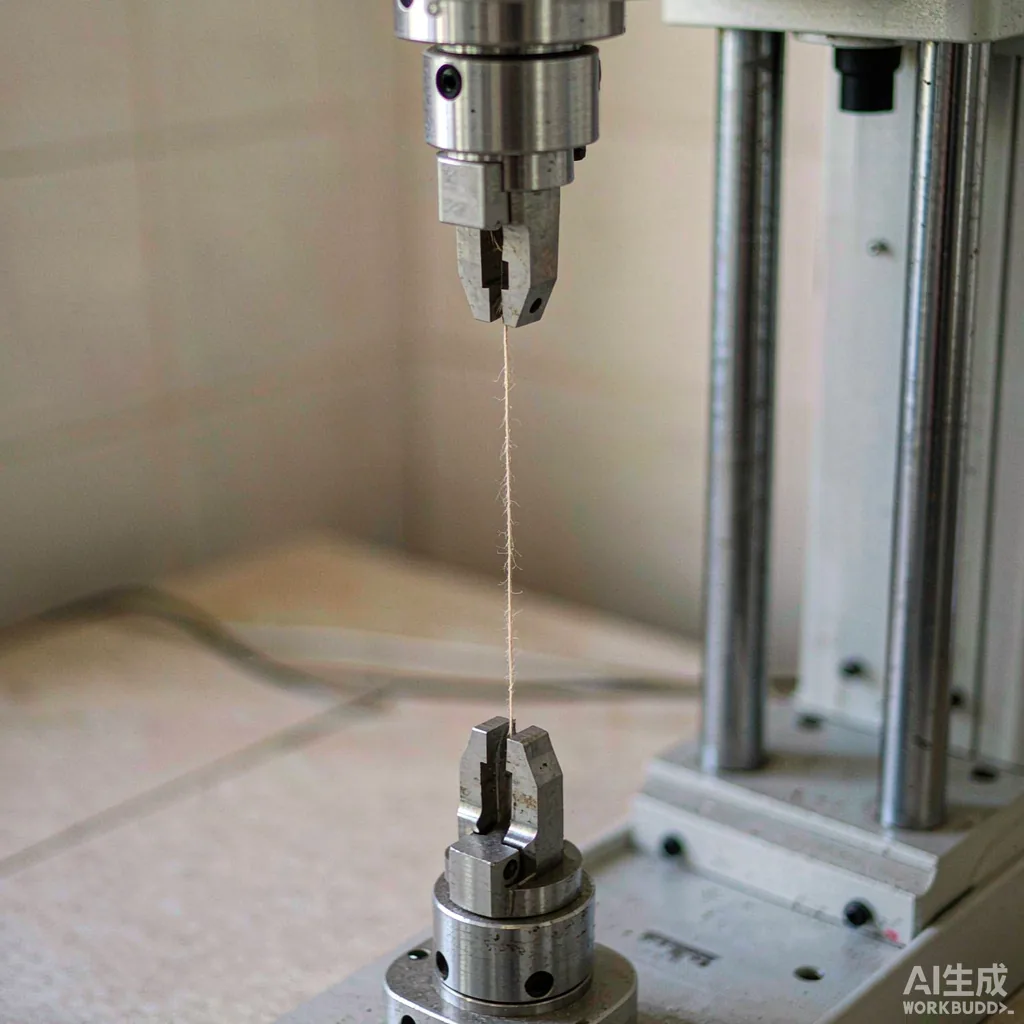
Three Ways to Express Yarn Count, and Why They Disagree
Denier, Tex and cotton count all describe the same property — mass per unit length — but they run in opposite directions, which is why the same yarn looks heavier in one system and lighter in another.
Denier is grams per 9,000 metres, Tex is grams per 1,000 metres and dtex is grams per 10,000 metres. All three are direct counts: a bigger number means a thicker yarn. Cotton count, written Ne, is indirect: it counts how many 840-yard hanks weigh one pound, so a bigger number means a finer yarn. A buyer comparing a 300D polyester with an Ne 20/2 cotton-blend is comparing 333 dtex with a resultant of roughly 59 tex, and the second is the thicker yarn by a wide margin.
The conversion worth keeping on the tech pack is the pair: multiply Ne by denier and you get about 5,315, and Tex is roughly 590.5 divided by Ne. For plied yarns the resultant count is the singles count divided by the number of plies, so Ne 20/2 behaves as Ne 10. Getting this wrong is the most common reason a first sample comes back at the wrong weight: the specification asked for the singles count when the yarn was supplied plied.
Matrix 1: Denier Against Gauge
Three pairings cover almost every seamless knit bag programme: 150D at E14, 300D at E12 and 600D at E7.
| Pairing | Denier / dtex | Resultant tex | Loop length | Shell GSM | Typical product |
|---|---|---|---|---|---|
| 150D at E14 | 150D / 167 dtex | 16.7 tex | 2.8 mm | 320 g/m² | Pouch, sleeve, lining |
| 300D at E12 | 300D / 333 dtex | 33.3 tex | 3.6 mm | 520 g/m² | Shopper, gym bag |
| 450D at E12 | 450D / 500 dtex | 50.0 tex | 4.0 mm | 600 g/m² | Weekender |
| 600D at E7 | 600D / 667 dtex | 66.7 tex | 5.2 mm | 620 g/m² | Duffel, base panel |
The reason the pairings are narrow is mechanical. A yarn that is too thick for the needle hook jams and breaks filaments; a yarn that is too thin for the hook produces an open, unstable loop. In practice the usable window is about plus or minus one gauge step for a given denier, which is why 300D appears at E12 and E14 but not at E7.
That window has a commercial consequence worth planning for. A programme that specifies a denier outside the natural pairing for the gauge it wants will still be quoted, but the quotation will carry extra machine time, a higher breakage allowance and usually a tighter GSM tolerance to hold quality. In effect the buyer pays twice: once in yarn and once in conversion. Choosing the pairing the machine likes runs lower in cost than forcing the one the design sketch suggests.
Matrix 2: Loop Length Against GSM
Loop length is the single most powerful weight lever on a knitting machine: at fixed gauge and yarn, opening the loop by 0.4 mm typically moves shell GSM by 40 to 50 g/m².
| Loop length | Resulting GSM | Cover | Handle | Abrasion cycles | Comment |
|---|---|---|---|---|---|
| 3.2 mm | 560 g/m² | Full | Firm | 45,000 | Maximum durability |
| 3.6 mm | 520 g/m² | Full | Balanced | 40,000 | Default setting |
| 4.0 mm | 470 g/m² | Slight show-through | Softer | 34,000 | Weight-saving option |
| 4.4 mm | 425 g/m² | Visible structure | Loose | 28,000 | Only for open styles |
The trade is worth stating plainly, because it is the one most programmes get wrong under cost pressure. Saving 95 g/m² by opening the loop from 3.2 mm to 4.4 mm cuts material cost by roughly 17 per cent and cuts abrasion life by roughly 38 per cent. On a shopper that is a bad trade. On a beach tote that will never be dragged across concrete, it is a reasonable one.
Matrix 3: Yarn Count Against Finished Weight
For a fixed panel geometry, finished weight scales almost linearly with shell GSM, which means count selection is really a weight decision made four steps earlier.
| Specification | Shell GSM | Shell mass (g) | Hardware (g) | Finished weight (g) |
|---|---|---|---|---|
| 150D, E14, pouch 240 x 180 mm | 320 | 28 | 12 | 40 |
| 300D, E12, shopper 380 x 400 mm | 520 | 158 | 34 | 192 |
| 450D, E12, weekender 450 x 300 x 220 mm | 600 | 372 | 48 | 420 |
| 600D, E7, duffel 500 x 280 x 280 mm | 620 | 416 | 62 | 478 |
Hardware is the number that surprises buying teams. A zip, two end stops, a pull and a pair of D-rings add 30 to 60 g depending on gauge of metal, and on a lightweight pouch that is a larger share of finished weight than the fabric. Where a programme has a weight claim on the hangtag, weigh the hardware separately at sampling stage rather than estimating it.
Cotton Count, Denier and Tex: The Conversion Buyers Need
Three numbers convert between the systems: Ne x denier is about 5,315, Tex is about 590.5 divided by Ne, and dtex is ten times Tex.
Direct counts
Denier is grams per 9,000 metres and dtex is grams per 10,000 metres. Higher means thicker. Filament yarns for knit bags are quoted in denier, normally with filament count, such as 300D/96f.
Indirect counts
Cotton count Ne counts 840-yard hanks per pound, so higher means finer. Spun and blended yarns for knit bags are usually quoted in Ne, with ply shown as Ne 20/2.
Resultant count
For plied yarns divide the singles count by the number of plies. Ne 20/2 behaves as Ne 10, which is about 531 denier or 59 tex, and that is the figure to use in any weight calculation.
Tightness factor
K is the square root of resultant tex divided by loop length in millimetres. Weft knit structures sit between roughly 1.2 and 1.6, and holding K steady is the cleanest way to keep handle consistent across sizes.
Tightness factor is the tool that makes the whole matrix usable across a size range. If a programme scales a shopper from 380 x 400 mm to 480 x 500 mm and keeps gauge and yarn constant, the loop length has to change to keep K in the same band, otherwise the larger bag ends up loose and sloppy. Writing K into the tech pack alongside GSM is the simplest way to prevent that.
Two Worked Specifications and What They Cost
Two specifications built from the same matrix show how quickly weight and yarn cost diverge: a 300D E12 shopper lands near 192 g finished, and a 450D E12 weekender near 420 g.
- Shopper yarn
- 300D / 96f polyester, 33.3 tex
- Shopper gauge
- E12, loop length 3.6 mm
- Shopper shell
- 520 g/m², 158 g shell mass
- Shopper finished weight
- 192 g including 34 g hardware
- Weekender yarn
- 450D / 144f polyester, 50.0 tex
- Weekender gauge
- E12, loop length 4.0 mm
- Weekender shell
- 600 g/m², 372 g shell mass
- Weekender finished weight
- 420 g including 48 g hardware
- Sampling window
- 7 working days per round
- Bulk window
- 30 days, FOB Xiamen
The weekender uses a little over twice the yarn mass of the shopper, which is the number a costing conversation turns on, and it is the number that moves when a target price has to be met. Both styles knit at the same gauge on the same machine family, so the conversion cost per minute is close; the gap is material. Both styles knit at the same gauge on the same machine family, so the conversion cost per minute is similar; the difference is material. That is why the first question to ask when a target price looks impossible is which of the two levers can move: grams per square metre, or panel area.
When a Lighter Count Is the Wrong Answer
Dropping to a finer count is the wrong answer whenever the failure mode is abrasion, cut or handle rather than weight, because a finer yarn gives less material to wear through.
- Base panels and corners — these lose material to abrasion, not weight. Keep the coarser yarn there and take grams out of the body instead.
- Handles and load paths — a finer yarn raises extension under load. The load path is the last place to remove mass.
- Structured styles — a shopper that must stand up empty needs stiffness, which comes from GSM rather than from the stitch alone.
- Pale shades — a finer, more open structure shows the lining and any contents, which reads as low quality on a shelf.
- Outdoor use — UV resistance drops as material per unit area drops, so a light body ages faster in sun.
Themes run through all five: remove mass from low-stress, high-area zones and leave it in high-stress, low-area ones. A programme that follows that rule can usually take 8 to 12 per cent out of yarn cost without shortening product life, which is a better outcome than a uniform GSM cut across every panel.
How to Write Count and Weight Into a Tech Pack
A knit bag tech pack needs five numbers on yarn and weight: resultant count, filament count, gauge, loop length and shell GSM with a tolerance.
Write the resultant count, not the singles count, so there is no ambiguity about ply. State the filament count, because 300D/96f and 300D/48f behave differently in the hand and under abrasion. Name the gauge in E-number, state loop length in millimetres, and give shell GSM as a target with a tolerance — plus or minus 5 per cent is normal and achievable on a running line.
Then add the acceptance numbers that turn those targets into a pass or fail: finished weight to ±5 g, body height to ±3 mm, handle drop to ±5 mm, abrasion cycles on the base zone, and the inspection level, AQL 2.5 to ISO 2859-1. A specification written that way can be quoted against, sampled against and inspected against, which is the whole point of measuring the anatomy in the first place. The last item is the one most often skipped, and it is the one that makes the other four enforceable: without a stated inspection level and sample size, a tolerance is an aspiration rather than a term of the contract.

Costing is where the count decision usually gets made, and it is worth stating the arithmetic plainly. Yarn cost per bag is grams of yarn in the bag multiplied by yarn price per kilogram. Machine cost per bag is knitting minutes multiplied by the line rate. A finer yarn lowers the first and raises the second, which is why the two numbers belong on the same line of the costing sheet.
Where a programme has to hit a target weight rather than a target price, work backwards instead. Convert the finished weight into a shell GSM allowance, then choose the count and gauge pair that reaches it at a tightness factor inside the 1.2 to 1.6 band. That approach avoids the common failure of hitting the weight and losing the handle.
Get the count-to-weight matrix
Send panel dimensions and target finished weight and we will return the yarn count, gauge and loop length combination that hits it, with a 7-working-day sampling slot. Request a count calculation
Frequently Asked Questions
What is yarn count in knitting?
Yarn count is mass per unit length. Direct counts such as denier and tex rise as the yarn gets thicker; indirect counts such as cotton count Ne fall as the yarn gets finer. Filament yarns for knit bags are quoted in denier, spun and blended yarns in Ne.
How does yarn count change knitted bag weight?
Count sets yarn diameter, diameter must suit the needle hook at the chosen gauge, and gauge with loop length then fixes grams per square metre. Moving from 150D at E14 to 600D at E7 roughly doubles shell GSM, though finished weight rises less. Confirm the count on the yarn ticket and again on the knitted panel.
What does Ne 20/2 mean on a yarn specification?
It means two singles yarns of cotton count 20 plied together. The resultant count is Ne 10, roughly 531 denier or 59 tex. Always calculate with the resultant, because the singles figure understates the thickness by half. Record both the count and the resultant tex on the tech pack.
How do I convert denier to cotton count?
Divide 5,315 by the denier. A 300D yarn is about Ne 17.7 and a 150D yarn about Ne 35.4. For the reverse, divide 5,315 by the Ne figure. Tex is 590.5 divided by Ne, and dtex is ten times the tex value.
What GSM target suits a knitted tote?
About 520 g/m² for a standard shopper knitted at E12 from 300D polyester. Go to 600 g/m² for a structured weekender that must hold its shape, and down to about 320 g/m² for a lightweight pouch or sleeve knitted at E14. Most programmes check this against a retained reference swatch.
What is tightness factor and why does it matter?
Tightness factor K is the square root of resultant tex divided by loop length in millimetres. It describes how tightly a structure is knitted independently of gauge. Weft knits sit between about 1.2 and 1.6, and holding K steady keeps handle consistent. Treat any weight figure without a stated tolerance as incomplete.
Can weight be changed without changing yarn?
Yes. Loop length is the fastest lever: opening it by 0.4 mm at E12 with 300D moves shell GSM by roughly 40 to 50 g/m². The trade is cover and abrasion, so it suits open or lightly used styles. Ask the spinner to state the count tolerance it works to.
Does gauge or yarn count affect weight more?
Yarn count, because it changes mass per metre directly. Gauge changes loop size and therefore loops per unit area, which is a smaller effect across the usable window of about one gauge step either side. Weigh five panels rather than one, which hides the spread.
How much tolerance is realistic on GSM?
Plus or minus 5 per cent on shell weight is normal and achievable on a running line. Tighter is possible but usually costs machine time in monitoring, and looser shows up as visible variation between panels in one shipment. Re-check the figure after the fabric has been relaxed and boarded.
Why does my bag weigh more than the approved sample?
Usually one of three causes: the yarn lot changed and ran heavier, loop length drifted after a maintenance cycle, or hardware was substituted with a heavier gauge. Weigh the shell and the hardware separately to find which. Convert both counts to tex before comparing quotations.
Does a heavier yarn always mean a stronger bag?
Not necessarily. Heavier yarn raises breaking force, but abrasion and tear behaviour depend on filament count and structure as much as mass. A 300D/96f can outlast a 300D/48f of identical weight. Confirm the shell is conditioned before it is weighed. Record both the count and the resultant tex on the tech pack.
How does yarn count interact with the MOQ?
It does not change the 100 pcs per style/colourway minimum, but it does interact with dye lot minimums. Most spinners set around 300 kg per colour, so a heavier yarn reaches that threshold in fewer pieces. Record both the count and the resultant tex on the tech pack.
What should be written on the tech pack for count?
Resultant count in denier or tex, filament count, gauge in E-number, loop length in millimetres, and shell GSM with a tolerance. Add finished weight, body height, handle drop, abrasion cycles and the AQL 2.5 inspection level to complete the acceptance criteria. Most programmes check this against a retained reference swatch.
People Also Ask
What is the difference between denier and cotton count?
Denier is a direct count — grams per 9,000 metres — so higher means thicker. Cotton count Ne is indirect — 840-yard hanks per pound — so higher means finer. Filament yarns use denier; spun and blended yarns use Ne.
How do I calculate knitted fabric weight from yarn count?
Use tightness factor: square root of resultant tex divided by loop length in millimetres, held between 1.2 and 1.6 for weft knits. Then confirm actual GSM on a cut specimen from the delivered lot rather than relying on the calculation alone.
Which yarn count suits a lightweight packable tote?
Around 150D/48f knitted at E14, giving roughly 320 g/m². That keeps the folded weight low while retaining enough cover for a mid-tone shade; avoid very pale colours at that weight, as the lining shows through.
Does heavier yarn always cost more per bag?
Yes, because yarn is priced per kilogram and heavier yarn means more kilograms per bag. Machine time is broadly unchanged, so the extra cost is material rather than conversion. Treat any weight figure without a stated tolerance as incomplete.
What GSM tolerance should a purchase order state?
Plus or minus 5 per cent on shell GSM is normal. State it alongside finished weight to ±5 g and dimensional tolerances, then inspect against AQL 2.5 to ISO 2859-1 so the criteria are enforceable at goods-in.
Sources and further reading
Every figure on this page is either our own programme data or attributed below. Open the originals before you write them into a specification.
- ASTM D5034 Breaking Strength and Elongation of Textile Fabrics (Grab Test)ASTM International Test method for confirming breaking force on knitted bag structures once a yarn count and gauge have been chosen.
- Standards — Recycled Claim Standard and Global Recycled StandardTextile Exchange Relevant where a count is specified in recycled polyester, since certification follows the material not the construction.
- OEKO-TEX STANDARD 100OEKO-TEX Restricted substance testing applied to the finished knitted fabric, independent of yarn count or gauge.
- ISO 2859-1 Sampling procedures for inspection by attributesISO Defines the AQL 2.5 sample size and accept or reject number used to inspect weight and dimensions at goods-in.