rPET Yarn Sourcing: A Decision Tree for Knitted Bag Programmes, From Content Claim to Landed Cost
How should a buyer source rPET yarn for knitted bags? Work the claim first, then the route, then the certificate, then the yarn: GRS needs 20 per cent recycled content to certify and 50 per cent before a hangtag claim is allowed, while RCS starts at 5 per cent and covers content only. Then match denier to gauge — 300D/96f at E12 is the default. MOQ 100 pcs, sampling 7 working days, bulk 30 days, FOB Xiamen.
Start at the Claim, Not at the Yarn
Source rPET by deciding what claim the finished bag has to carry, because the claim sets the certification route, and the route sets which yarn lots are available.
Most sourcing problems in recycled knit bag programmes are not yarn problems. They are claim problems discovered late: a hangtag has been printed, a retailer has asked for evidence, and the yarn in the bag was never certified to a standard that supports the wording. Starting at the claim costs an hour at the beginning and saves a re-spin at the end.
The tree below runs in seven steps, and each step narrows the options. Two programmes can arrive at the same yarn by different paths — one because the brand wants a hangtag, another because a retailer audit demands traceability — and the paperwork they need will still differ. That is why the certificate step sits in the middle of the tree rather than at the end.
Decision 1: How Much Recycled Content Do You Actually Need?
Textile Exchange sets the recycled-content thresholds: RCS applies from 5 per cent, GRS certifies from 20 per cent, and GRS product claims such as a hangtag require 50 per cent.
- RCS threshold
- 5 % recycled content minimum
- GRS certification
- 20 % recycled content minimum
- GRS product claim
- 50 % recycled content for hangtags and labelling
- Typical knit bag programme
- 90-100 % post-consumer rPET
- Blended option
- 50/50 rPET and virgin polyester
- Recycled cotton blend
- 50/50 rPET and recycled cotton, Ne 12-16
- Verification
- Transaction certificate per shipment
- Common error
- Claiming a percentage the certificate does not state
The gap between the 20 per cent certification threshold and the 50 per cent claim threshold catches buyers out. A lot can be GRS certified at 20 per cent and still not support a printed hangtag claim, because the claim requires the higher figure. Where the brand intends to print a percentage on-pack, specify the higher figure at yarn ordering stage.
Most knit bag programmes land at 90 to 100 per cent post-consumer content, simply because the premium for partially recycled yarn is not proportionate to the marketing value of a lower number. The blended option earns its place where a programme needs the tenacity or shade performance of virgin fibre and still wants a verified recycled claim.
Decision 2: Mechanical or Chemical Recycling Route?
Mechanical recycling re-melts flake into chip and costs about 0.4 cN/dtex of tenacity; chemical recycling returns the feedstock to monomer and performs like virgin at a higher price.
| Factor | Mechanical route | Chemical route |
|---|---|---|
| Recycled content verified | Yes | Yes |
| Tenacity, 300D | 4.2 cN/dtex | 4.6 cN/dtex, virgin equivalent |
| Intrinsic viscosity | 0.72 dl/g | 0.80 dl/g |
| Colour range | Grey cast on brights | Full range including brights |
| Relative yarn cost | 100 (index) | 150-200 (index) |
| Availability at volume | Established | Limited |
The mechanical route is what most programmes use, and its limitation is specific rather than general. Intrinsic viscosity drops from about 0.80 dl/g to about 0.72 dl/g through the second melt, which shows up as roughly 0.4 cN/dtex of lost tenacity and a slight grey cast in the base polymer. For heathers, charcoals and mid-tones the cast is invisible; for saturated brights it is not. Sorting at the flake stage is what controls the size of the effect, which is why two mechanically recycled yarns of identical denier can differ visibly in shade depth.
The chemical route removes both problems, because depolymerisation strips out the colourants and the contaminants along with the polymer chains. It is the correct choice where a brand shade has to be matched season after season, and the practical constraint is capacity rather than technology. Book it early or expect to fall back to mechanical for part of the volume.
Decision 3: Which Certification Trail Applies?
Two documents carry a recycled claim: the scope certificate, which shows a site is certified to handle certified material, and the transaction certificate, which ties a specific shipment to that claim.
Scope certificate
Issued to the spinner or texturiser, listing the processes and material categories the site is certified to handle. Check the validity date and the site address against the yarn invoice.
Transaction certificate
Issued per shipment, naming seller, buyer, product and recycled percentage. This is the document an auditor follows from the fabric back to the flake.
Test report
Tenacity, elongation and shrinkage measured on the delivered lot, so the knitting programme is set to the yarn that arrived rather than to a nominal figure.
Chemical statement
REACH and Prop 65 declarations for the dyed fabric, with OEKO-TEX STANDARD 100 where the retailer's restricted substance list requires it.
Only the transaction certificate travels with the goods. That is the point most programmes miss when they ask for a certificate and receive a logo or a one-page summary — neither supports an on-pack claim, and both will be rejected in a retailer audit. Ask for the document by name, and check that the lot number matches the cones on the floor. A file that is requested early costs nothing and can be re-issued if the lot changes; one that is requested after bulk has started cannot catch up with the production schedule.
Decision 4: Denier, Filaments and Intrinsic Viscosity
Three yarn measurements matter at the machine: denier, filament count and intrinsic viscosity, and rPET differs from virgin on the third.
Denier and filament count behave the same way in recycled and virgin polyester: 300D/96f is the default pairing for E12, 150D/48f for E14, 600D/192f for E7. What changes is viscosity, because the extra melt cycle shortens the polymer chains. In practice that means the recycled lot is a little less forgiving of aggressive machine settings, particularly at high take-down tension.
The compensation is small and worth stating on the tech pack: open the loop length by roughly 0.15 mm against the virgin setting and add a tension check at the start of every lot. A programme that does both sees almost no difference in breakage rate between recycled and virgin at the same gauge.
Decision 5: Dye Route and Lot Size
Choose the dye route before the yarn is ordered, because it sets the minimum lot size and the colour tolerance the programme has to live with.
- Piece dyeing — flexible shade choice after knitting, but higher water and energy use and a wider colour tolerance band.
- Dope dyeing — pigment added at the spinner, better light fastness, lower water use, but a minimum of about 300 kg per colour.
- Package dyeing — a middle route for spun and blended yarns, consistent penetration, moderate minimums.
- Stock or fibre dyeing — used for recycled cotton blends where fibre shade variation is part of the look.
In recycled polyester the usual tolerance is Delta E 1.2 against the approved swatch, slightly wider than the 1.0 typical of virgin programmes, because flake variation carries through into the base polymer. Agreeing that figure before the lot is spun removes most colour disputes at goods-in.
Where a programme carries both core shades and seasonal shades, the mixed approach is standard: dope-dye the core colours to lock fastness and reduce water use, and piece-dye the seasonal colours to keep the shade decision open until closer to the selling window.

Decision 6: Certificate Queue and Lead Time
Sampling takes 7 working days and bulk takes 30 days, but a recycled programme should plan for eight to twelve additional working days for the transaction certificate to be issued.
| Step | Working days | Who owns it | Can it run in parallel? |
|---|---|---|---|
| Tech pack and yarn specification | 2-3 | Buyer and programme team | Yes, with sample request |
| Sampling round | 7 | Knit programme team | No, needs the specification |
| Yarn lot reservation | 1-2 | Spinner | Yes, with sampling |
| Transaction certificate issue | 8-12 | Certification body | Yes, once lot is fixed |
| Bulk production | 30 | Production floor | No, needs approval |
| Inspection, AQL 2.5 | 1-2 | Inspection team | No, after bulk |
The table shows why recycled programmes slip. Every step except the certificate can be squeezed; the certificate queue cannot, because it depends on a third-party body's workload. The practical fix is to reserve the yarn lot and request the certificate in the same week that sampling starts, rather than waiting for the sample to be approved.
Where a programme re-runs the same shade across seasons, a standing certificate arrangement removes the delay entirely. That is worth setting up after the second repeat order, when it is clear the shade is a permanent part of the range rather than a one-season experiment.
Decision 7: Landed Cost and the Packaging Question
Recycled yarn adds roughly 10 to 20 per cent to material cost, and the packaging choice determines whether that premium is visible or wasted at the shelf.
On a 300D E12 shopper the yarn is the largest single material line, so a 15 per cent yarn premium is a real number in the costing sheet. It does not change the conversion cost: the body still takes about 8 minutes of knitting time regardless of whether the yarn is recycled or virgin. Programmes that can offset the premium do it by adjusting GSM, not by changing fibre.
Packaging is where the claim either lands or is lost. A recycled knit bag shipped in virgin plastic defeats the argument the brand is making, and a claim printed on a hangtag with no supporting document is a liability. Match the pack to the claim — recycled paper or a reusable knit pouch — and keep the transaction certificate on file next to the purchase order. Where the programme ships direct to retail, check the carton marking and the claim wording together, because a mismatch there is the one error a store colleague will notice before a customer does.
The Two Branch Outcomes the Tree Produces Most Often
Most recycled knit bag programmes end at one of two places: 100 per cent post-consumer rPET at 300D/96f and E12 with a full GRS trail, or a blended yarn where only part of the shell carries the claim.
The first branch suits brands and retailers that want the strongest possible on-pack statement and can plan four to six weeks ahead for certification. It is the cleanest story, the easiest to audit and the one most retail buying teams recognise without explanation. The discipline it requires is calendar discipline: the lot has to be reserved and the certificate requested before the design is final, which is the opposite of how most seasonal programmes are run.
The second branch suits programmes where performance, shade or timing constrains the specification. It is a legitimate position and often the more honest one, provided the wording on the pack matches the percentage the certificate actually states. A partial claim, stated accurately, survives an audit; an overstated claim does not.
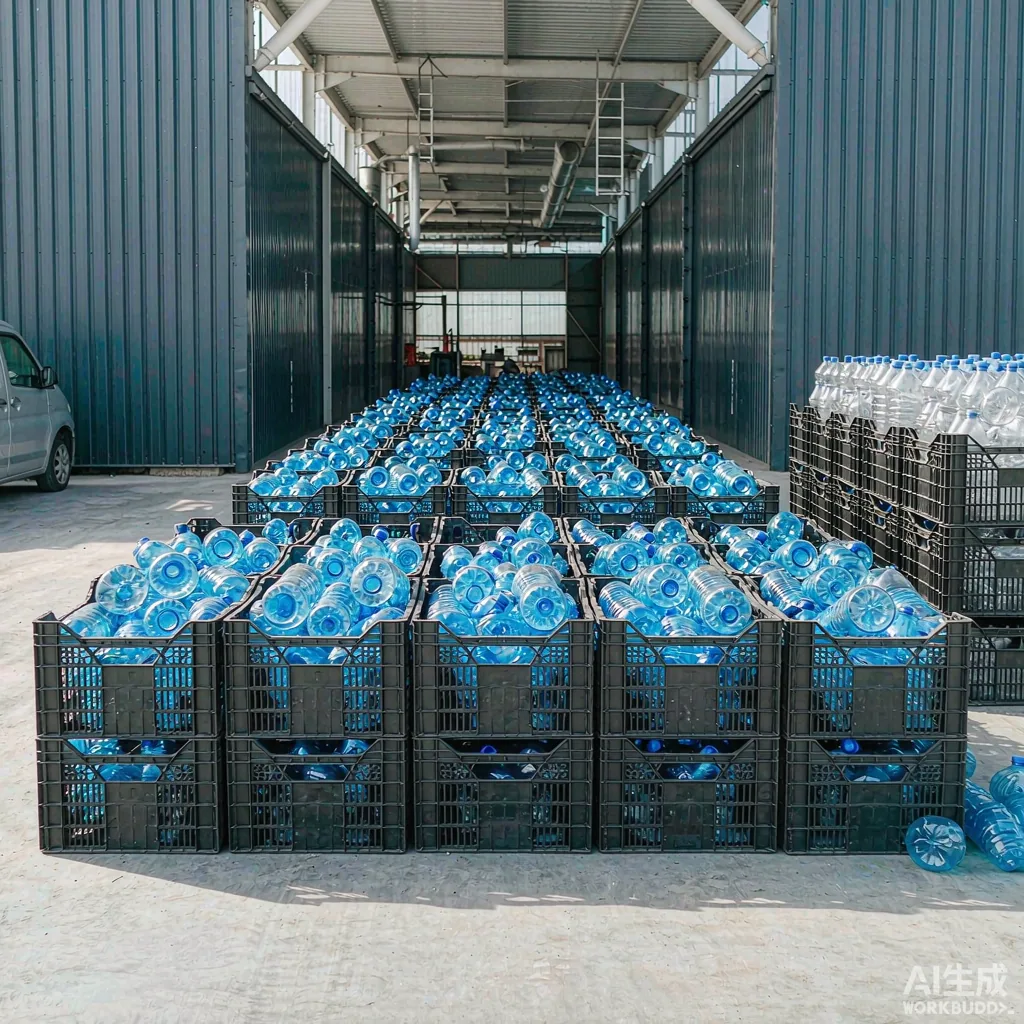
Two documents decide whether a recycled programme clears a retailer compliance desk. The scope certificate shows that the recycler, the spinner and any trader sit inside one certified chain of custody. The transaction certificate covers the specific volume shipped and carries the lot numbers printed on the cones. A scope certificate alone does not prove the yarn in a particular delivery is recycled, and a transaction certificate without a lot reference cannot be reconciled against the goods.
Volume planning matters as much as documentation. A dope-dyed rPET colour minimum of about 300 kg converts to roughly 1,900 mid-size shoppers at a 520 g/m² shell, so a first order of 500 pieces in one colourway will not justify its own shade. Either the colour is already standard to the spinner, the programme commits to the minimum and holds the balance in store, or the first run goes piece dyed and the switch is made on the second order. Naming which of the three applies at quotation stage avoids the argument later.
Plan a recycled yarn programme
Tell us the claim you need to make and the volume, and we will return a sourcing route with certificate requirements, denier recommendation and a sampling calendar. Plan an rPET programme
Frequently Asked Questions
What is the minimum recycled content for a GRS claim?
Textile Exchange sets two figures: GRS certification starts at 20 per cent recycled content, but a consumer-facing product claim such as a hangtag requires 50 per cent. Most knit bag programmes specify 90 to 100 per cent post-consumer content so the claim is straightforward to support.
How is a transaction certificate different from a scope certificate?
A scope certificate shows that a site, such as the spinner, is certified and lists which processes it may handle. A transaction certificate is issued per shipment and records seller, buyer, product and recycled percentage. Only the transaction certificate travels with the goods and supports an on-pack claim.
How long does rPET yarn certification take?
Plan for eight to twelve working days for a transaction certificate after the yarn lot is fixed. The delay sits with the certification body's queue rather than with testing, so request the certificate when the lot is reserved rather than after the sample is approved.
Does recycled polyester cost more than virgin?
Yes, typically in the 10 to 20 per cent range on yarn, covering flake sorting, additional melt filtration and certification fees. Conversion cost is unchanged, so the premium is a material line that scales with grams per bag. Ask the spinner for the certificate covering this specific lot.
Can recycled and virgin polyester be blended in one yarn?
Physically yes, but the recycled percentage cannot be verified once the two are combined in a single lot, so it does not support a claim. The practical route is separate zones: a recycled body with virgin trim, with the claim covering only the recycled portion.
What recycled content percentage do retailers usually ask for?
Most retail programmes with a recycled claim run 90 to 100 per cent post-consumer content, because a higher number is easier to market and the incremental premium over a 50 per cent blend is small. Check the retailer's own claims policy before fixing the figure.
Which certification bodies issue GRS transaction certificates?
Approved third-party certification bodies issue them, including names such as Control Union, Intertek and SGS. The issuing body must be approved by Textile Exchange for the scope in question, and the buyer should check the certificate against the body's own validity record. Confirm this on a knitted panel rather than on the cone.
Does rPET behave differently on the knitting machine?
Slightly. The extra melt cycle lowers intrinsic viscosity to about 0.72 dl/g, which makes the yarn less forgiving of high tension. The standard correction is to open loop length by about 0.15 mm and check tension at the start of every lot.
What is the dye lot minimum for recycled polyester?
Around 300 kg per colour for dope-dyed rPET. At a 520 g/m² shell that is roughly 500 mid-size totes, which is why dope dyeing suits core shades that repeat across seasons rather than one-season fashion colours. Record it on the tech pack so the next lot can be compared.
Is recycled content enough for a sustainability claim?
Recycled content is one element. Retailers increasingly ask for chemical compliance as well, such as REACH and Prop 65 declarations and OEKO-TEX STANDARD 100, plus social audit evidence such as BSCI or Sedex SMETA. The claim and the evidence have to match. Treat any claim without a transaction certificate as unverified.
People Also Ask
What is the difference between RCS and GRS certification?
RCS is a content-claim standard starting at 5 per cent recycled content and verifies content and chain of custody. GRS starts at 20 per cent, requires 50 per cent for consumer-facing claims, and adds chemical, environmental and social criteria.
Can post-consumer bottles really become bag yarn?
Yes. Collected bottles are sorted, washed and ground into flake, re-melted into chip, then spun into filament yarn. Roughly 1.4 kg of collected bottles yields about 1 kg of washed flake before losses in extrusion and spinning.
How do you check a recycled yarn lot before bulk?
Confirm the transaction certificate lot number against the cones, review the tenacity test report to ISO 13934-1, and approve a lab dip against the retained swatch. Then book the 30-day bulk slot.
Does GRS certification cover the whole bag?
It covers the certified material through the chain of custody. Non-certified components such as hardware and lining sit outside the claim, so on-pack wording has to reflect the certified portion rather than the whole product.
Is chemically recycled polyester worth the premium?
It is when a brand shade must be matched season after season, because depolymerisation removes the colourants and contaminants that cause the grey cast in mechanically recycled polymer. Capacity is the limiting factor.
Sources and further reading
Every figure on this page is either our own programme data or attributed below. Open the originals before you write them into a specification.
- Standards — Recycled Claim Standard and Global Recycled StandardTextile Exchange Confirms the recycled-content thresholds: RCS from 5 per cent, GRS from 20 per cent, and 50 per cent before a GRS product claim may be used on labelling.
- GRS-202 Guide to Recycled MaterialsTextile Exchange Guidance on qualifying recycled inputs, calculating recycled percentage and maintaining the documentation an auditor will follow.
- OEKO-TEX ECO PASSPORTOEKO-TEX Certification route for the dyes and auxiliaries used on recycled polyester knits, supporting chemical compliance alongside a content claim.
- EU Strategy for Sustainable and Circular TextilesEuropean Commission Policy context for recycled-content and circularity requirements that retailers apply to textile and bag programmes.